
Autor Cointelegraph By Sam Bourgi

a16z-backed TrueFi launches DeFi lending market for asset managers

Stablecoin operator TrustToken has launched a new lending marketplace that allows asset managers to create their own decentralized finance products, potentially opening the door to wider mainstream adoption of DeFi solutions. The new lending marketplace, which is offered on unsecured lending protocol TrueFi, gives independent financial institutions the ability to design, launch and fund new investment products. Asset managers also have access to TrueFi’s pool of lenders and borrowers as well as TrustToken’s institutional offerings. Version 1 of the TrueFi protocol was shipped to institutional clients in November 2020 around the same time that the native TRU token launched. The protocol allows for the creation of collateral-free loans denominated in the TrueUSD stablecoin and vetted using on-chain credit scores. In 2021, the protocol originated $1 billion worth of loans. TrueFi is described as an “app store for lending,” but instead of developers launching applications, the protocol enables asset managers to launch new financial portfolios directly on-chain. Institutions are bullish on #Bitcoin! The amount of BTC held by public companies has gained significant market share from that held in spot ETFs. https://t.co/DZP2AlMXlh— Cointelegraph (@Cointelegraph) January 3, 2022On Thursday, Delt.ai, a Mexico-based Y-Combinator startup, was announced as TrueFi’s first non-crypto financial partner. Since December, the startup has used TrueFi to originate millions of dollars worth of loans and expects to lend up to $25 million to Latin American businesses by the end of 2022. TrueFi’s current lenders are “largely private, pseudo-anonymous individuals and family offices in DeFi, participating at a range of investment sizes,” TrustToken CEO Raphael Cosman told Cointelegraph in a written statement. TrueFi’s borrowers are likewise increasingly diverse, representing crypto hedge funds, venture capital-backed startups and soon-to-include traditional financial institutions. Related: Crypto infrastructure firm Fireblocks valued at $8B following $550M raiseWhen asked about the driving force behind the growing institutional adoption of blockchain-based financial products, Cosman told Cointelegraph that “capital will always seek the best risk-adjusted yields,” regardless of whether it’s coming from DeFi or traditional finance. “The best yields are no longer in traditional markets, like equities or bonds, but in DeFi,” he said. “That promise of lucrative returns is the biggest force pulling traditional finance on-chain, and we expect it to continue.”Even with the promise of higher yields, the transition to the unfamiliar world of crypto isn’t easy for many financial institutions. Cosan explained:“First, it takes any organization time to understand and become comfortable with the “wild west” of crypto. This includes understanding the technology, the risks, the mechanisms for trading and custody of assets, and how to bring money into and out of crypto […] The same goes for compliance and regulatory clarity.”Institutions want Bitcoin now more than ever, and Fidelity just revealed that 90% of their biggest clients are clamoring for crypto. https://t.co/MdsFljbqhL— Cointelegraph (@Cointelegraph) August 17, 2021

Related: SBF ‘optimistic’ about institutional crypto adoption in 2022Institutional involvement in the blockchain industry has broadened considerably over the past year, with asset managers buying into cryptocurrency funds and financial institutions utilizing crypto transactions with greater frequency. Several crypto-focused companies have also expanded their service offerings to target institutions, chief among them being ConsenSys, the blockchain infrastructure provider behind popular wallet extension MetaMask. In May 2021, the company announced a new service designed to onboard institutional players to the DeFi ecosystem.

Čítaj viac

Crypto-focused enterprise payment platform Tribal Credit raises $60M

Crypto-focused enterprise payment platform Tribal Credit has raised $60 million in an oversubscribed investment round, putting the company on track to continue its expansion in Latin America — a region that has seen significant uptake of blockchain-based cross-border payments. The Series B investment round was led by SoftBank Latin America Fund, a venture fund that has invested in several fintech and software companies throughout the region. Coinbase Ventures also participated in the round alongside venture firms BECO Capital, QED Investors and Rising Tide. Tribal said it will use the cash injection to fund its operations across the region, including building local teams in Brazil, Mexico, Colombia, Peru and Chile. As Cointelegraph reported in January, Tribal secured $40 million in a “hybrid” debt round that was funded by dollars and stablecoins. Stellar Development Foundation (SDF), the non-profit organization supporting the Stellar blockchain, led the effort. Tribal Credit began integrating with Stellar in April 2021. The company has also partnered with Latin American crypto exchange Bitso to provide cross-border payment and settlement services for small- and medium-sized enterprises. In December 2021, Tribal announced that business owners in Mexico will be able to pay for goods and services in their native peso currency and have their counterparts in the United States receive payments in dollars. The cross-border payment service is being facilitated by Bitso and Stellar. Related: 2021: A year of mass adoption for cryptocurrencies in BrazilLatin America has emerged as a major epicenter of crypto adoption and experimentation, with locals and even governments looking to digital assets to combat inflation and promote economic growth. In June 2021, El Salvador became the first country in the world to recognize Bitcoin (BTC) as a legal tender. Brazil, the region’s largest economy, has also made significant strides in crypto, with as many as 10 million Brazilians now participating in the market, according to CoinMarketCap.

Čítaj viac

Is the bottom in? Institutional crypto funds record second week of inflows

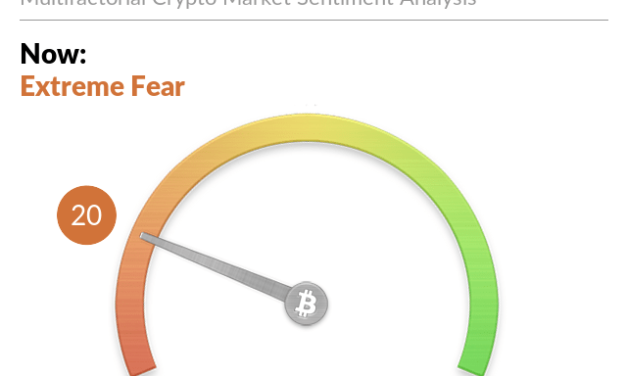
After recording heavy outflows at the start of 2022, cryptocurrency investment funds have seen a gradual uptick in investor demand over the past two weeks, offering cautious optimism that the worst of the market downturn had passed.Digital asset investment products saw $19 million worth of cumulative inflows last week, according to CoinShares. Bitcoin (BTC) and multi-asset funds led the gains with $22 million and $32 million worth of inflows, respectively. The news wasn’t all positive, as Ether (ETH) continued to suffer from negative sentiment with outflows totaling $27 million. That marked eight consecutive weekly outflows for ETH-focused funds. Solana (SOL), Polkadot (DOT) and Cardano (ADA) products also registered outflows for the week.Digital asset products have seen heavy outflows since December, as institutional investors took profits and reduced their positions amid extreme selloffs in the market. So far this year, Bitcoin funds have seen a net $131.8 million worth of outflows, according to CoinShares data. Ether ) funds have seen $111.2 million worth of drawdowns. Bitcoin’s price rose to as high as $38,778 on Monday, according to Cointelegraph Markets Pro and TradingView. However, the flagship cryptocurrency is down over 20% in January, marking its worst start to the year since 2018. Related: Bitcoin price down 20% so far in 2022 after worst January since 2018The Crypto Fear & Greed Index, which monitors market sentiment using several sources, remains in a state of “extreme fear” with a reading of 20. The index, which sides along a scale of 1 to 100, plunged as low as 13 last week. Nevertheless, net inflows into Bitcoin and multi-coin funds suggest that institutional money is slowly returning to the market. While traders remain at odds over whether the market has actually bottomed, long-term investors posit that a sub-$40,000 Bitcoin is an attractive buy opportunity.

Čítaj viac

Litecoin is finally launching its major Mimblewimble upgrade

After two years of development, Litecoin (LTC) has finally launched its highly anticipated Mimblewimble upgrade, opening the door to more privacy-oriented transactions on the network. Mimblewimble’s integration into Litecoin came by way of the Mimblewimble Extension Block, also known as MWEB, which allows the network’s users to opt-in to confidential transactions. MWEB lead developer David Burkett, who has been sponsored by the Litecoin Foundation, said the upgrade improves Litecoin’s viability as a fungible currency that can be used for everyday transactions, pay employee salaries and even purchase real estate. Mimblewimble is a privacy-focused decentralized protocol that derives its name from a tongue-tying spell that was first made famous in the Harry Potter book series. The protocol has a confidentiality feature that allows users to conceal transaction information. It also provides a framework for other blockchains to enhance the usability of their cryptocurrency. “You’re a wizard, Harry.”Mimblewimble is not just a tongue-tying spell used in the magical series, but it’s also a privacy-oriented decentralized protocol that structures and stores transactions on the blockchain. https://t.co/XCpNlb5AiD— Cointelegraph (@Cointelegraph) November 22, 2021Litecoin first embarked on Mimblewimble integration in a pair of Litecoin Improvement Proposals dating back to October 2019. The network launched its first Mimblewimble testnet in October 2020 following initial delays due to low community participation. The testnet was also launched around the time that regulators in Europe — chiefly, Europol — were sounding the alarm over privacy coins. Related: Crypto policy advocacy group warns of ‘disastrous’ provision in a new US billPrivacy coins that promote anonymity and attempt to obfuscate digital ledger transactions have come under scrutiny around the world. As Cointelegraph reported, several exchanges ditched their support of leading privacy coins Monero (XMR), Zcash (ZEC) and Dash (DASH) in early 2021 amid regulatory heat. In addition to anonymity and private transactions, Mimblewimble’s technology places heavy emphasis on fungibility and scalability — key features that are currently lacking across many blockchains. The Litecoin Foundation believes the Mimblewimble integration will contribute to LTC’s status as “sound money,” which is a broad concept that refers to stable monies that are less susceptible to depreciation and influence from monetary policy. Despite being one of the earliest cryptocurrencies to hit the market, Litecoin has struggled to stay relevant over the years. LTC is currently ranked 21st in the market cap rankings with a total value of $7.5 billion.

Čítaj viac

Solana ecosystem wallet Phantom raises $109M

Software wallet and browser extension Phantom has raised $109 million in Series B financing to continue expanding its cross-platform capabilities beyond Solana. The funding round was led by Paradigm, an investment firm focused on cryptocurrency and Web3 companies. Other venture firms to have supported Phantom in prior funding deals include Andreessen Horowitz, Jump Capital and Variant Fund.According to Phantom, the funding will help enhance the wallet’s technical capabilities, such as better app discovery, as well as allow the company to hire additional employees. In addition to its funding round, Phantom also announced Monday that its mobile app is now available for iOS devices.Phantom currently boasts of over 2 million monthly active users, having doubled its user count in less than three months. Much of that growth is tied to Solana ecosystem adoption, especially around nonfungible tokens, or NFTs. Phantom provides support to Solanart, a Solana-based NFT marketplace that currently ranks eighth in terms of trade volume, according to DappRadar. 1,000,000 active users just in time for @SolanaConf!!pic.twitter.com/d7Pc2j9tA2— Phantom (@phantom) November 6, 2021While NFT trade volumes have weakened in recent months amid a broad cooldown in the crypto markets, Phantom co-founder and CEO Brandon Millman told Cointelegraph that overall adoption of the software wallet is “still really strong” and that the “NFT ecosystem has played a huge role.” He added that, “while the market is down a bit, some NFT collections have really held their value and even grown.” Related: Got crypto? Here are 3 software wallets for storage, staking and swappingPhantom has also been optimized to support the growing world of decentralized finance (DeFi), which is another corner of the market that has cooled considerably in recent months. When measured in terms of total value locked, or TVL, the decentralized finance industry has lost over 30% from its peak in the fourth quarter, according to DeFi Llama.

Čítaj viac

Získaj BONUS 8 € v Bitcoinoch

nakup bitcoin z karty

Registrácia Binance

Burza Binance

Aktuálne kurzy