Autor Cointelegraph By Sam Bourgi

Kalshi see valuation double to $22B after $1B raise as prediction markets boom

Prediction marketplace Kalshi has reached a $22 billion valuation after closing a $1 billion Series F funding round, underscoring growing venture capital appetite for prediction markets amid surging retail adoption.The new valuation doubles Kalshi’s worth from just five months ago. The funding round was led by Coatue Management, with participation from Andreessen Horowitz, Sequoia Capital, Morgan Stanley and Ark Invest.The raise comes as investors increasingly view prediction markets as one of the fastest-growing segments of digital finance. Andreessen Horowitz’s crypto unit, a16z crypto, recently raised $2.2 billion for its latest fund and identified prediction markets as a major investment theme.Kalshi has emerged as one of the industry’s dominant platforms. A company spokesperson told Bloomberg that Kalshi’s annualized revenue run rate has surpassed $1.5 billion.Unlike rival Polymarket, which operates on decentralized blockchain infrastructure, Kalshi runs a centralized and federally regulated marketplace that allows users to trade on the outcomes of real-world events, including elections, economic data releases and sports. Together, Kalshi and Polymarket accounted for the bulk of the more than $25 billion in prediction market trading volume recorded last month.Prediction market volumes by platform. Source: Bitget WalletKalshi has also expanded its crypto ambitions. The company recently appointed John Wang as its head of crypto, and he told Forbes that, “We would like to have Kalshi’s prediction markets in every large crypto app.”Related: Polymarket odds of Hormuz Strait traffic normalizing by end of May spike to 73%Regulatory scrutiny intensifies as prediction markets expandThe latest wave of venture backing comes as Wall Street analysts argue that prediction markets are evolving beyond retail speculation into institutional financial tools.In a recent research note, Bernstein said prediction markets are entering an “institutional era,” driven by demand for bespoke block trades and custom event contracts that allow firms to hedge against specific macro and geopolitical risks.At the same time, the sector faces mounting legal and political scrutiny in the United States.According to NPR, Kalshi is involved in at least 19 federal lawsuits over whether its event contracts violate state gambling laws.States including Massachusetts, New Jersey, Arizona, Nevada, Illinois and Connecticut have challenged Kalshi’s operations, arguing that some of its sports and event-based contracts amount to unlicensed gambling.The political pressure has also intensified in Washington. Democratic lawmakers have called for tighter oversight of prediction markets following concerns over “suspicious trades” tied to geopolitical events.Source: Stephanie CutterIn response, Kalshi has expanded its policy and regulatory bench. The company recently brought on former Obama staffer Stephanie Cutter as a policy adviser, a move widely seen as an effort to strengthen its relationships in Washington and navigate the growing scrutiny surrounding prediction markets.Related: Crypto Biz: Capital has no consensusCointelegraph is committed to independent, transparent journalism. This news article is produced in accordance with Cointelegraph’s Editorial Policy and aims to provide accurate and timely information. Readers are encouraged to verify information independently.

Čítaj viac

Switzerland's Amina becomes first regulated bank to custody Canton Coin

Swiss crypto bank Amina has added custody and trading support for Canton Coin, becoming the first regulated bank to offer services for the token tied to the Canton Network, an institutional-focused network.In a Wednesday announcement, Amina said clients will gain regulated access to the Canton Network, a public blockchain designed for capital markets and tokenized finance. The network was developed by Digital Asset and is backed by the Depository Trust & Clearing Corporation, Visa, BitGo, Goldman Sachs and Citadel.The move allows institutional clients to hold and trade Canton Coin through a banking platform regulated by the Swiss Financial Market Supervisory Authority (FINMA) rather than relying on a crypto-native exchange or custodian, potentially supporting companies that use Canton for tokenization and settlement.Source: AMINA BankThe announcement builds on Amina’s broader push into tokenized finance infrastructure. In March, the Zug, Switzerland bank became the first regulated banking participant on the EU-regulated blockchain securities platform 21X, which operates under the bloc’s DLT pilot regime for tokenized securities markets.Related: Tennessee Bankers Association names Stablecore as preferred digital asset providerCanton expands institutional finance footprintCanton Network is positioning itself as blockchain infrastructure for traditional financial institutions, with a focus on tokenized assets, settlement, collateral management and repo markets. Its Canton Coin token is currently valued at around $0.15, with a total market capitalization of $5.7 billion, according to CoinMarketCap data. Canton Coin (CC) market capitalization. Source: CoinMarketCapIn April, BitGo expanded its Canton Coin services beyond custody to include trading and onchain settlement, broadening institutional access to the network’s token and related financial activity.Meanwhile, S&P Dow Jones Indices recently brought its US Treasury Index benchmark onto the Canton Network, allowing institutions to access fixed-income benchmark data through tokenized infrastructure.Canton faces competition from several enterprise blockchain networks targeting institutional finance. Among them is R3’s Corda, which was designed for banks and regulated financial markets with an emphasis on privacy and permissioned transactions.Another competitor, Hyperledger Fabric, has seen broad adoption in enterprise blockchain environments, particularly among financial institutions and large corporations.Related: Bernstein cites $4T tokenized credit opportunity for Figure Technology stockCointelegraph is committed to independent, transparent journalism. This news article is produced in accordance with Cointelegraph’s Editorial Policy and aims to provide accurate and timely information. Readers are encouraged to verify information independently.

Čítaj viac

Forward Industries, RockawayX back OnRe to build onchain reinsurance on Solana

Forward Industries and crypto investment company RockawayX have co-led a strategic investment in OnRe, a startup building reinsurance infrastructure on the Solana blockchain, in a move aimed at bringing traditional risk-transfer markets onto decentralized rails.The companies said Tuesday they co-led OnRe’s $5 million Series A round, with Forward planning to allocate up to $25 million into the platform’s yield-bearing token on Solana.The funding will be used to expand OnRe’s platform and attract more institutional participants to onchain reinsurance, a niche but emerging segment within decentralized finance.OnRe is attempting to shift parts of the reinsurance market — where insurers offload risk to third parties — onto blockchain infrastructure, using tokenization and smart contracts to manage underwriting and capital flows.The initiative reflects a broader push to experiment with real-world financial services, including insurance and reinsurance, on blockchain networks, although adoption remains at an early stage.Forward Industries (FWDI) is the largest corporate holder of Solana (SOL), with more than 7.01 million SOL on its balance sheet, according to industry data. Its Nasdaq-traded shares gained about 5.8% in Tuesday’s regular session, according to Yahoo Finance. In after hours activity, at last look, most of that increase evaporated. SOL was last trading hands at $86.61, up about 2.7%.Forward Industries’ SOL accumulation over time. Source: CoinGeckoRelated: Dubai Insurance launches crypto wallet for premium payments, claimsBlockchain pilots target inefficiencies in global reinsurance marketWhile estimates vary, the global reinsurance market is valued at more than $600 billion, with growth driven by rising demand for risk transfer. Total reinsurance premiums are closer to $2 trillion in value. Blockchain-based platforms are being tested as a way to streamline traditionally manual processes by introducing shared ledgers for real-time tracking, underwriting and claims settlement.OnRe is not alone in this effort. Re, a decentralized reinsurance protocol, is another project aiming to connect institutional capital with collateralized insurance risk while offering tokenized yield products.Other protocols are also emerging to provide insurance and reinsurance coverage for decentralized finance applications and smart contracts, though the sector remains early-stage and largely experimental.There are also efforts to apply blockchain and digital assets across different parts of the insurance value chain. For example, insurance broker Aon has tested the use of stablecoins for paying insurance premiums. Tim Fletcher, CEO of Aon’s financial services devision, said tokenized assets are likely to become increasingly integrated into traditional financial systems. Related: Crypto Biz: Capital has no consensusCointelegraph is committed to independent, transparent journalism. This news article is produced in accordance with Cointelegraph’s Editorial Policy and aims to provide accurate and timely information. Readers are encouraged to verify information independently.

Čítaj viac

Tennessee Bankers Association names Stablecore as preferred digital asset provider

The Tennessee Bankers Association (TBA), a trade group representing the state’s commercial banks, has selected Stablecore as a preferred technology provider for digital asset services, highlighting growing interest among regional lenders in crypto infrastructure.In a Tuesday announcement, the TBA said Stablecore will provide infrastructure that enables community and regional banks to offer products such as stablecoins, tokenized deposits and digital asset-backed lending through their existing systems.The endorsement gives Stablecore exposure to the association’s roughly 175 member institutions, potentially accelerating adoption among smaller banks that lack in-house digital asset capabilities.The partnership reflects a broader trend among traditional financial institutions of seeking third-party providers to integrate crypto-related services rather than building the infrastructure internally.Stablecore develops backend infrastructure that allows banks to issue and manage tokenized assets, including stablecoins and deposit tokens, while handling compliance and integration with core banking systems.As previously reported by Cointelegraph, Stablecore recently joined the Jack Henry Integration Network, which provides digital banking technology to around 1,670 banks and credit unions across the United States.Related: Crypto Biz: Capital has no consensusBanks eye digital assets as US lawmakers debate market structure rulesTSA’s endorsement of Stablecore comes as more regional lenders look to roll out digital asset services, even as US lawmakers continue to debate the regulatory framework.Tennessee’s junior US Senator Bill Hagerty, a member of the Senate Banking Committee, said last month that there is “still a lot more work to do” before Congress can advance comprehensive market structure legislation. Meanwhile, Senator Thom Tillis told reporters last week that he plans to push the Senate Banking panel to take up crypto market-structure legislation when lawmakers return to session on May 11.Proposed bills aim to clarify how stablecoins are issued and supervised, which could give banks a clearer path to offering tokenized deposits and related services.Source: Eleanor TerrettAt the same time, banking groups continue to raise concerns about stablecoin design, particularly whether issuers should be allowed to offer yield or interest. Industry advocates argue that recent compromises fall short of fully restricting yield-bearing stablecoins, potentially blurring the line between bank deposits and digital assets.The Independent Community Bankers of America last month called on Congress to ensure the measure addresses concerns with what it called “the harmful impact on local economies of allowing crypto exchanges and other intermediaries to pay interest or yield on payment stablecoins.”Related: Key US senator lifts block on Trump’s Fed pick Kevin WarshCointelegraph is committed to independent, transparent journalism. This news article is produced in accordance with Cointelegraph’s Editorial Policy and aims to provide accurate and timely information. Readers are encouraged to verify information independently.

Čítaj viac

Bernstein cites $4T tokenized credit opportunity for Figure Technology stock

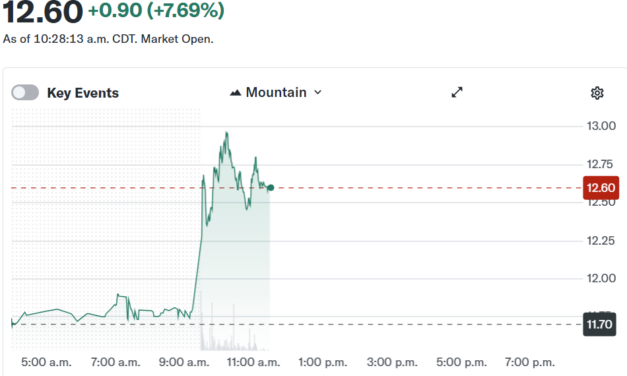
Shares of Figure Technology Solutions have risen nearly 10% over the past month, but the stock still appears undervalued as the company pivots beyond its roots as a fintech lender, according to Bernstein.In a Tuesday research note, the firm reiterated its “Outperform” rating on Figure (FIGR), with a $67 price target, implying roughly 67% upside from current levels, and maintained its previous outlook.Figure Technology Solutions (FIGR) stock. Source: Yahoo FinanceBernstein’s thesis centers on Figure’s transition from a home equity line of credit (HELOC) originator into a broader platform spanning blockchain infrastructure and AI-driven credit markets.A key part of that shift is tokenization — in this case, converting loans into tradable onchain assets that can settle in real time. Bernstein estimates the addressable market for tokenized credit at around $4 trillion, positioning Figure to tap into a significantly larger opportunity than traditional HELOC lending.The note also pointed to strong momentum. Loan volumes reached $1.34 billion in April, up 108% year over year and marking the second consecutive month above $1 billion. Bernstein expects that growth to continue, projecting total loan volumes to climb to $16.5 billion by 2027 from $8.4 billion in 2025 .Related: RedStone launches settlement layer to address RWA liquidity gap in DeFi lendingTokenized credit market could draw from wide swathBernstein’s estimate of a $4 trillion addressable market refers to the total annual volume of credit origination across multiple loan categories that could eventually move onchain as tokenized assets.That includes lending such as mortgages, auto loans, home equity lines of credit and small-business loans — segments where Figure is expanding beyond its core business.Tokenized credit market. Source: RWA.xyzTo be sure, tokenized credit remains a small segment of the broader real-world asset (RWA) market. However, industry data shows the sector is currently valued at around $5.5 billion, highlighting the gap between today’s adoption and the longer-term growth opportunity Bernstein outlines.Other projects are already experimenting with bringing credit onchain. Centrifuge has expanded its decentralized finance platform to include tokenized credit and US Treasury products on new blockchain networks, aiming to connect institutional-grade assets with DeFi liquidity.Figure has moved into areas such as auto loans through its Hastra ecosystem, where tokenized credit products are designed to plug into decentralized finance and broader blockchain markets.Related: Crypto Biz: Capital has no consensusCointelegraph is committed to independent, transparent journalism. This news article is produced in accordance with Cointelegraph’s Editorial Policy and aims to provide accurate and timely information. Readers are encouraged to verify information independently.

Čítaj viac

Získaj BONUS 8 € v Bitcoinoch

nakup bitcoin z karty

Registrácia Binance

Burza Binance

Aktuálne kurzy