Autor Cointelegraph by Robert Lakin

Strategy's Saylor needs clarity in BTC pivot message to convince investors: StanChart

Strategy founder and chairman Michael Saylor again took to social media on Sunday to offer his latest signal to investors as one analyst sees Saylor’s messaging as needing more clarity to help Bitcoin regain its momentum.“Orange dots tell only part of the story,” was Saylor’s message on Sunday in a post that accompanied a chart from Saylortracker.com, similar to previous social media messages that have preceded news of Strategy’s Bitcoin (BTC) purchases, typically announced the day after his posts.In recent weeks, the largest digital asset treasury company and a major BTC holder, has moved away from its long-time “never sell Bitcoin” approach to a willingness to sell the biggest crypto as needed to fund dividends for holders of its STRC preferred stock and to replenish its cash reserves. Earlier this month, Strategy sold $216 million worth of Bitcoin, reducing its total holdings to 843,775 tokens, according to a July 6 filing with the US Securities and Exchange Commission.“Orange dots tell only part of the story.” Source: Michael SaylorDays earlier, Strategy unveiled a capital framework allowing Bitcoin sales to fund dividends, increased the annual dividend rate on its STRC preferred stock to 12%, and disclosed that its US dollar reserve had grown to $2.55 billion.Standard Charter’s global head of digital assets research, Geoff Kendrick, believes recent Strategy’s actions — and Saylor’s manner of communicating them — “are muddying the waters for BTC near-term.”“We think effective communication of MSTR’s new strategy (using BTC to back STRC) is key to reassuring markets that wholesale selling is unlikely; this should in turn support BTC prices,” Kendrick wrote in a note to clients on Friday. “Indeed, if this signalling proves effective, it should remove the need for MSTR to actually sell any BTC by supporting STRC’s price,” he said.Related: Crypto Biz: Did Michael Saylor buy the Bitcoin bottom for once?StanChart sees inconsistencies in “never sell” approachKendrick said that Strategy’s long-held “never sell” approach limited what the company could with its industry-biggest digital asset treasury.“The problem with the ‘never sell’ approach is that it limits what MSTR’s BTC holdings can do — or, perhaps more importantly, what they are perceived to be doing,” the StanChart analyst said. “MSTR has started to shift its communication strategy on this in recent months. It has sold BTC twice and recently announced a BTC monetization program.”Source: Standard Chartered BankStill, he sees Strategy’s “market signaling” will improve soon. He expects that to bring clarity to the outlook for Bitcoin, on which StanChart maintains its $100,000 year-end forecast.Shares struggle from year low ahead of earnings reportInvestors who bought into the Strategy narrative have not had an easy time in the past 12 months. The STRC preferred shares were formulated to hold a price of $100 apiece. Shareholders saw that par value fall to the wayside last month, to the lowest value since the preferred stock was introduced a year ago.The common shares, trading under the MSTR ticker, have lost more than 70% of their value since July 2025, closing at $94.64 per share on Friday, down from a 52-week high of $457.22.The company is slated to report second-quarter earnings on July 30, with analysts consensus of $4.28 per share, according to Yahoo Finance data. Earnings have fallen short of analyst forecasts in six of the last eight quarters, according to Fintel.io data, including a 33.76% negative surprise in the first quarter of 2026. Magazine: Will the crypto lobby’s $189M campaign get CLARITY over the line?

Čítaj viac

FCA warns of major shakeup as AI agents meet tokenized money

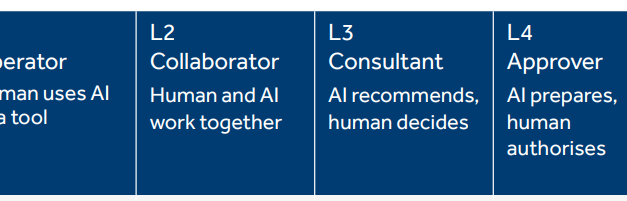
The United Kingdom’s Financial Conduct Authority (FCA) has issued a broad regulatory blueprint for retail financial services, warning that retail financial services are hurtling toward total automation driven by autonomous “agentic AI.”The landmark report, “AI and the future of retail financial services,” spearheaded by executive director Sheldon Mills, details a structural shift away from periodic, human-led decisions toward continuous, automated financial services that could increasingly rely on programmable financial infrastructure.“The central shift is from human-led, episodic financial activity towards services that are AI-enabled, continuous and delegated,” Mills wrote. In January, the FCA launched a review into the implications of advanced AI on consumers, retail financial markets and regulators. The 147-page report comes at an inflection point where generative AI meets institutional crypto adoption. As financial systems transition to autonomous portfolio and cash management, legacy fiat banking rails are seen as structurally incapable of matching machine transaction speeds. This positions systemic stablecoins and tokenized bank deposits as potential settlement infrastructure for AI-driven financial services.It outlines seven recommendations for the FCA to consider, including enabling “the foundations for agentic finance,” which would support the development of trusted agent protocols that would underpin use of agentic AI and “scaling up the FCA’s AI Lab to support AI models and system innovation in financial services.”Related: UK plans payments rule changes for stablecoins, tokenized depositsFCA envisions agents on “autonomy spectrum”The Mills Report suggests that the catalyst is the rapid evolution of AI from predictive models into independent agents operating on an “autonomy spectrum.” At the far end of this spectrum, humans act as mere “observers” while AI continuously manages capital.Screenshot of table header that sets out how FCA sees operator activities may change as they move across the AI autonomy spectrum. Source: Financial Conduct Authority.The acceleration of this shift has outpaced prior regulatory timelines, with more than 20 frontier models released since late 2025 alone.“Firms are moving from systems that recommend actions to systems empowered and trained to take them, and consumers will soon gain agents that act on their behalf,” Mills said in the report’s foreword. FCA research shows that 20% of UK adults are already open to letting AI make autonomous financial choices.For these AI agents to execute multi-layered transaction strategies seamlessly, they require programmable, instantaneous settlement mechanisms. Traditional multi-day settlement latency remains an operational bottleneck. Because systemic stablecoins and tokenized assets live natively on programmable ledger networks, they provide the friction-free, atomic settlement needed for automated protocols to move capital instantly without human clearance.However, this automation introduces severe corporate governance risks regarding legal accountability. The review highlights growing industry anxiety over this ambiguity, noting that one CEO observed that the financial sector may eventually require a “Turing test” to accurately distinguish between human intent and autonomous algorithmic behavior in the market. “The FCA’s Mills Review reinforces that firms should treat agentic AI as an accountability and governance issue now, while providing greater confidence to innovate responsibly as AI adoption accelerates,” Emma Banymandhub, CEO of The Payments Association, said in a statement. “AI has enormous potential for financial services, but realising that potential will depend on strong governance, clear accountability and maintaining consumer trust.”Mills, who is leaving after eight years at the FCA, told The Financial Times ahead of the report’s release that managers would still need to be accountable for the actions of their AI models. “You need a human on the hook for what they’re doing,” he said.Magazine: AI is banking the unbanked in Africa… faster than crypto

Čítaj viac

BIS warns stablecoins risk fragmenting global financial system

The Bank for International Settlements (BIS) warned that the rapid expansion of stablecoins risks fragmenting the global monetary system and weakening sovereign monetary control, urging central banks and the financial industry to accelerate the development of tokenized forms of central bank and commercial bank money as a safer alternative.In its Annual Economic Report published Sunday, the Basel-based institution delivered a sharp assessment of the approximately $316 billion stablecoin market, arguing that tokens pegged to fiat currencies lack the institutional features required to serve as safe, reliable money at scale. BIS pointed to structural vulnerabilities in reserve asset management and warned that a significant migration from commercial bank deposits into private digital tokens could reduce bank funding and constrain credit to the real economy.The report also provides a signal to policymakers that the current regulatory approach to stablecoins may prove insufficient if private digital currencies continue expanding. Rather than positioning stablecoins as a durable foundation for the future monetary system, BIS said that tokenized commercial bank deposits, combined with tokenized central bank money operating on regulated infrastructures, offer a more robust path toward modernizing payments while preserving monetary stability.Demand for foreign stablecoins connects FX markets with crypto ecosystem. Source: BIS Annual Economic Report 2026.The report focuses particular attention on “stablecoin dollarization,” that is, the growing use of dollar-denominated stablecoins in economies with weaker domestic currencies. According to BIS, this trend could weaken monetary sovereignty, erode the effectiveness of domestic monetary policy, reduce bank intermediation and increase exposure to volatile cross-border capital flows, particularly in emerging market economies.Related: BIS Project Agorá shows tokenized payments can settle in secondsBIS raises fresh concerns about public blockchains’ limitsThe report also delivers one of BIS’s strongest critiques yet of public permissionless blockchains such as Bitcoin and Ethereum as a foundation for the monetary system. It argues that decentralized networks relying on distributed validation and lacking a central governance structure struggle to meet the requirements for scalability, legal accountability and settlement finality expected of systemically important financial infrastructure.BIS raises concerns on rising fragmentation across layer 1 and layer 2 networks.Source: BIS Annual Economic Report 2026.At the center of BIS’s critique is the economics of decentralized consensus. The report argues that public permissionless blockchains compensate validators through transaction fees that rise as network activity increases, making congestion, longer confirmation times and higher costs structural features of the system rather than temporary technical shortcomings. According to BIS, these characteristics undermine the efficiency and network effects that are essential for a unified monetary system.The Basel-based institution further argues that permissionless blockchains lack the clear governance and accountability frameworks required for institutional finance. Without an identifiable entity responsible for maintaining the integrity of the system, resolving disputes or ensuring compliance with financial integrity standards, BIS contends that such networks face significant obstacles to supporting large-scale regulated financial activity.Rather than rejecting tokenization itself, BIS advocates a “unified ledger” architecture that combines tokenized central bank money, tokenized commercial bank deposits and tokenized financial assets on programmable platforms operating within regulated legal and institutional frameworks. By preserving the benefits of tokenization, including programmable transactions and faster settlement, while maintaining the institutional foundations of the existing monetary system, BIS said that financial markets can improve efficiency without sacrificing monetary stability, financial integrity or public trust.Related: Why stablecoins and SWIFT may have to coexist

Čítaj viac

EU Watchdog EBA Details Big Crypto Fines as Landmark Laws Bite

The European Banking Authority on Friday unveiled a sweeping framework to penalize cryptocurrency issuers that violate the European Union’s digital-asset laws, signaling a tougher enforcement stance as the trade bloc finalizes its historic regulatory architecture.The consultation paper published June 26 establishes a standardized playbook for hitting non-compliant issuers of what the EBA considers “significant” tokens with potentially multimillion-euro penalties. Under the proposal, the Paris-based watchdog will deploy a strict two-step process to determine fines, assessing the baseline severity of an infraction before factoring in aggravating or mitigating behavior.The move represents the sharpening of teeth for the EU’s landmark Markets in Crypto-Assets (MiCA) regulation. Introduced to bring order to a historically freewheeling sector, MiCA is the world’s first comprehensive regulatory regime for digital assets, forcing token issuers and crypto service providers to operate with bank-like compliance, consumer protections and capital reserves if they want access to the single European market.The stakes for non-compliance are explicitly designed to be punitive. According to the EBA’s consultation paper, final penalties could reach statutory ceilings of 12.5% of annual turnover for issuers of significant asset-referenced tokens and 10% for significant e-money tokens, or two times the profits generated by the violation, caps meant to deter even the largest global digital-asset operators.Cover screenshot of European Banking Authority’s 14-page consultation paper. Source: EBAThe roll-out of the penalty framework comes at a critical juncture for Europe’s digital asset industry, landing just days ahead of a crucial July 1 deadline. By the start of next month, cryptocurrency firms must have secured formal licenses from national regulators to legally offer their services or market stablecoins within the 27-nation bloc, ending a transitional grace period that allowed many operators to function under looser local rules.Related: Binance faces EU service limits next week as MiCA rules take effectFirms that fail to secure their regulatory passports by July 1 face the prospect of being forced to halt operations entirely or risk triggering the exact infractions, such as unauthorized public disclosures or organizational failures, that the EBA’s new framework is built to penalize.Binance pushes “pause” on EU operations after license failThe world’s biggest exchange operator, Binance, last week notified European Union users that access to key services will be restricted after the exchange failed to secure MiCA authorization from a member state before the July 1 deadline after it withdrew its MiCA license application in Greece. Those restrictions include halting the onboarding of new EU users and limiting certain services for EU-based accounts effective July 1, according to exchange notices shared by users on social media.Notice sent by Binance to customers in Poland. Source: IT_Tech_PLThe notices said users will still be able to withdraw their assets after that date, stating that “all digital assets are still available for withdrawal,” in line with applicable regulatory requirements.Binance recorded $1.96 billion in daily net outflows on Wednesday, following its withdrawal announcement, according to DefiLlama data viewed by Cointelegraph on Sunday. The exchange then saw another $2.52 billion and $1.46 billion in net outflows over the following two days.EU move shows sharp contrast with US enforcement approachThe timing underscores the European Union’s broader strategy to position itself as the dominant global standard-setter for digital finance, contrasting sharply with the regulation-by-enforcement approach seen in the United States. By laying out clear financial penalties right as the licensing mandate takes effect, authorities in Brussels are telling the market that the era of leniency is officially over.The industry now has a three-month consultation window ending September 28 to lobby for changes to the EBA’s penalty methodology. However, with the July 1 licensing cliff edge just days away, executives will have to navigate an unforgiving compliance environment long before the final fining guidelines are formalized under law.

Čítaj viac

Bernstein says Figure's Q1 results shows uniqueness of blockchain marketplaces

Bernstein analysts said Friday that Figure Technology Solutions’ first-quarter earnings report shows that the fintech is fast becoming a company that is unique among blockchain marketplaces.Figure’s May 11 earnings report soundly beat Wall Street estimates on both revenue and EBITDA, with a business that seeks to turn real-world credit assets into blockchain-native instruments that can be traded, funded and financed more efficiently.  As Figures builds out a blockchain-native capital market ecosystem, the analysts expect the company will surprise investors with how it differs from balance sheet-based fintech lending platforms, seeing FIGR stock as a real-time reflection of blockchain loan volumes.“FIGR’s live blockchain data suggests an all-time high record Q2 upcoming,” Bernstein analysts said in a May 15 note to clients. “As the market gets more efficient in tracking live blockchain volume data, we believe FIGR’s stock price should become a real-time reflection of blockchain loan volumes,” they said.Figure is trying to sell Wall Street and the DeFi world on the idea that it is not merely a fast-growing home equity lender (HELOC) wrapped in crypto branding, but a full-stack blockchain capital markets platform. Figure Technology’s ecosystem. Source: BernsteinOn management’s May 12 earnings call, executive chairman and co-founder Mike Cagney said that after bringing Figure’s digital assets over to DeFi for financing about a year ago, it faced a challenge common to all real-world assets (RWA) on blockchain. “DeFi is asset-based lending. The premise is that the collateral backing the loan is liquid. What are the collateral as a whole loan? Given an LTV breach, how does a lender take a fractional position in the whole loan? Even if they could, where would they sell it?” Cagney said that the company’s Forge platform converts whole loans into small, single-dollar liquid participation units.Bernstein said it sees Figure building a complete marketplace where real-world assets, both loans and eventually equitie, can serve as active collateral for borrowing and lending liquidity. “That’s going more towards a model where FIGR simply clips a small fee of the entire blockchain economy within its ecosystem,” they said.Meanwhile, institutional investors remain skeptical of blockchain-for-finance narratives, something CEO Michael Tannenbaum acknowledged in the call, arguing that Figure’s advantage is operational rather than ideological. He described AI as “the brain” and blockchain as “the nervous system,” arguing that blockchain-native data structures make underwriting, compliance and loan verification easier to automate.Related: Tokenized RWA market grows 420% since 2025 on regulatory clarity, accessTokenized credit market could draw from wide swathIn previous research, Bernstein has put an estimated value of $4 trillion on the addressable market for total annual volume of credit origination across multiple loan categories that could eventually move onchain as tokenized assets.That includes lending such as mortgages, auto loans, home equity lines of credit and small-business loans — segments where Figure is expanding beyond its core business.Tokenized credit remains a small segment of the broader RWA market. Industry data shows the sector is currently valued at around $5.14 billion, highlighting the gap between today’s adoption and the longer-term growth opportunity Bernstein outlines.Snapshot of current size and scope of global tokenized credit market. Source: RWA.xyzOther projects are already experimenting with bringing credit onchain. Centrifuge has expanded its decentralized finance platform to include tokenized credit and US Treasury products on new blockchain networks, aiming to connect institutional-grade assets with DeFi liquidity.Figure has moved into areas such as auto loans through the Hastra DeFI protocol, where tokenized credit products are designed to plug into decentralized finance and broader blockchain markets. Launched last year by the Provenance Blockchain Foundation, the protocol swaps wrapped yields for a Prime token. Recently, Hastra announced its launch on the Morpho protocol on Ethereum, opening up an even larger addressable DeFi market.Magazine: Guide to the top and emerging global crypto hubs — Mid-2026

Čítaj viac

Získaj BONUS 8 € v Bitcoinoch

nakup bitcoin z karty

Registrácia Binance

Burza Binance

Aktuálne kurzy