
Autor Cointelegraph By Rich Feldman

Needed: A massive education project to fight hacks and scams

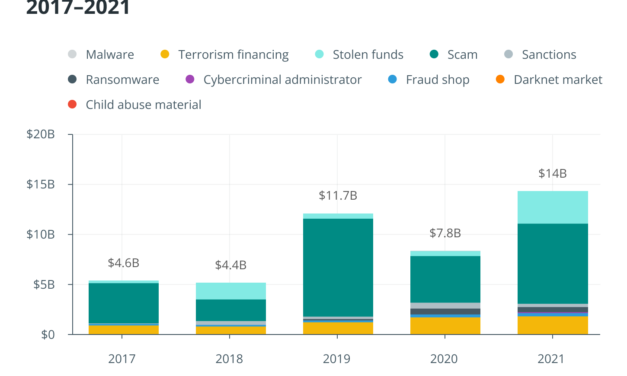
The common narrative around the prevailing threats to mainstream adoption of cryptocurrencies is that regulators will put the kibosh on their legality, it has to get much easier for “ordinary” people to use, and the magnitude of its volatility has to be tempered.All of these are true. But there’s something perhaps just as consequential: scams, hacks, fraudulent exchanges, dumps and the like. Why? Every attack leaves a scar. And the scars are mounting fast.According to a study by Chainalysis, scammers got away with $14 billion worth of crypto in 2021, which represents hundreds of thousands — maybe millions — of victims in a community where every negative experience has a voice in an echo chamber.Today, very few are immune to scams and attacksThe urgency for reigning in the dark web is rooted in behavioral economics: loss aversion. For most in the mainstream, once they lose a “significant” amount of money to a scam or hack, there’s a good chance they’ll be done with the whole asset class — if not forever, for a very long time. The specter of loss drowns the potential for gain.And, unfortunately, the likelihood today of virtually every crypto trader and/or user being victimized is quite high. (Even Vitalik Buterin, co-founder of Ethereum, was the victim of a scam, which is described in the book The Cryptopians.) The bad guys are simply that good.Example one. You read on your Reddit that your favorite token is doing an airdrop. You’ve heard about others receiving these “free gifts of money,” so you jump on the link and are taken to a page where you see what looks like a live trade book. “For every token you send us, up to 500, we’ll send you back two as your reward,” it says. And there’s a timer indicating just 30 minutes left in the event; you better rush to get your tokens. So you do. What you soon learn is that the Reddit channel where you learned about the “offer” wasn’t official; the airdrop was a scam; the timer continuously restarted itself; and you just sent your tokens to a total stranger.Example two. You type in the URL “coinbase.pro.com” and are presented with a screen saying your account has been compromised — and given a number to call. The person on the other side asks for your date of birth, email address and account information so that they can reset your username and password. You start to grow suspicious but are feeling pressured. So, you provide what they’ve asked for, while a knot in your gut senses that you provided way too much information than you should have. Before long, coins are missing from your account. The proper URL it turns out was “pro.coinbase.com.” Example three. You’re new to the space and feel like you’ve missed out on the coins that have been “overnight sensations” and made so many people so much money. So, when you see the opportunity to invest in SQUID Coin — which will become part of a pay-to-play online game based on Squid Game, the popular Netflix series, you jump on it. Two weeks later, however, you learn that the developers — whose names are nowhere to be found — have abandoned the project and cleverly set an exit trap called an “anti-dumping mechanism.” Your coins are worthless. You’ve just had the rug pulled out from under you.Now imagine these actual scams, and thousands of others, being repeated over and over and over again — 24/7. Related: 4 clever crypto scams to beware — Dubai OTC trader Amin RadWith each passing day, momentum and enthusiasm are compromisedAgainst that constant, devious drumbeat, high-profile attacks further accentuate doubts: Axie Infinity’s $650-million Ronin Bridge hack, Beanstalk Farms’ $182-million flash loan attack, and Crypto.com’s $33-million hack of user wallets, for example. (These have all happened just this year.)Before long, a lawless narrative dominates. Meanwhile, ongoing mainstream adoption brings along with it even more nefarious opportunities as “newbies” — who simply aren’t paying attention to best practices in safeguarding their funds — are further victimized. Millions of would-be participants are now watching on the sidelines and preaching “I told you so” to the newest victims.Which leads me to my central proposition: an urgent need to go on the offensive. A marketing offensive.Yes, the quest for innovative new safeguards and security features is warranted and welcomed. But it’s not enough. Related: In defense of crypto: Why digital currencies deserve a better reputationWhat’s needed now is a Manhattan Project, a Marshall Plan, or any other analogy you can think of that means galvanizing massive resources quickly and producing a viable solution to a problem. Because let’s face it, revolutions in tech can be bumpy; it’s going to get a lot worse before it gets better. Crypto needs a rallying cry, a manifesto, and an educated public to ensure that its awesome potential is realized. In short, get in front of the narrative, lead the discussion, empower safe adoption, and help the crypto community’s newest participants grow hand-in-hand with its creators. Crypto needs a member-funded, coordinated campaign.Introducing the Crypto With Confidence ProjectHere’s what I propose: The top 25 projects by market capitalization, the top 10 centralized exchanges, the top five prime brokers, the top three global trade associations and other stakeholders band together to create a foundation, a decentralized autonomous organization, or other entity in which category consumer education is all it does to ensure that people can Crypto With Confidence. (Treat “crypto” like a verb? Why not.)Members of the group, which provide funding and marketplace leadership, are promoted as “sponsors” of the ensuing campaigns, which help them to assert their commitment to security and advocate their brands. It also projects unity. Job 1: Create the equivalent of public service announcements and “how to” content to help consumers be more vigilant about the threats they face. Nestled somewhere between “You can do it!” and “Watch out!” — with “Isn’t new technology awesome!” wedged in between — the idea is to groom and educate an activist public in thwarting crypto crime and provide the calm and confidence to enthusiastically participate in crypto and Web3.Job 1a: Create a mnemonic such as PARK that can be used universally. For example: “Before you put a transaction into motion, shift into PARK — Pause, Assess, Request, Keep.” Pause to ask the question(s), Is it too good to be true? Is it unusual? Assess the company, project and/or people you’re engaging with. Do you know them? Do they know you? Have you done your homework? Request information, ask questions, and make sure you’re behaving responsibly. Keep your private keys safe and share them with nobody other than those you’re okay with having access to your funds. There are, of course, many ways to approach this.Now, to set the right tone and ensure it succeeds, it’s critical to make the effort “entertaining.” Really entertaining — so that I can’t avoid paying attention, so that a sense of seriousness is communicated without it being turn-me-off serious, so that it’s clear that something which is destined for mainstream adoption is acting in a very mainstream manner. Think Marvel characters defeating punk scammers or a rotating cast of A-list actors playing the pseudonymous Satoshi Nakamoto. And this can’t be a one-and-done kind of thing. It needs to kick off big then become a continuous campaign.Incorporate marketing best practices: create a curriculum of content, including a course that concludes with certification; drive continuous engagement via newsletters, Discord or Telegram channels, email journeys, etc.; reward them for taking the time to become smarter and more vigilant with — you got it — crypto.Think of it: not only will the Crypto With Confidence Project accelerate best practices in safety and security, it’ll help mitigate a central argument of regulators; consumers and investors can’t protect themselves.Look, Web3 is still in its infancy. The perceptions, attitudes and behaviors that are forged today are likely to have material impact for decades to come. If venture capitalists can raise billions to fund new projects and protocols, the community can certainly come together to make a massive statement about how it is collectively looking out for the welfare and best interests of the people it hopes to engage.So, let’s go. I’m in. Are you?This article does not contain investment advice or recommendations. Every investment and trading move involves risk, and readers should conduct their own research when making a decision.The views, thoughts and opinions expressed here are the author’s alone and do not necessarily reflect or represent the views and opinions of Cointelegraph.Rich Feldman leads the marketing for Finario, a global enterprise capital-planning software-as-a-service provider. Rich has lectured on strategy at New York University and Syracuse University Newhouse School and is an adjunct professor at Western Connecticut University, where he is an advisory board member of the Ancell School of Business. He is also the author of the book Deconstructing Creative Strategy published by the Association of National Advertisers.

Čítaj viac

NFTs: Forget apes and penguins — Let’s talk diapers, hardware and museums

Though the likes of Bored Apes and Pudgy Penguins take the headlines, and the potential for decentralized finance (DeFi) and play-to-earn gaming is undeniably grand and exciting, the marketing potential for nonfungible tokens (NFTs) deserves equal attention. It boils down to this: With NFTs, virtually anything can be gamified to promote desired marketing outcomes.Gamification — defined by Gabe Zichermann, author of The Gamification Revolution, as a “process of using game thinking and game dynamics to engage audiences and solve problems” — is not new to sales and marketing. What is new are the mechanisms by which you can engage and motivate prospects and customers. And, gosh, they are exciting. To illustrate the point, here are five example use-cases of NFTs for marketers.Co-marketing to in-market segmentsLet’s say you’re one of the approximately 40 million people in the United States who move each year. As a “new mover,” you are highly coveted by a slew of brands that are keen to meet your highly-predictable needs.In the past, if Sherwin Williams (paint), Simplisafe (home security), Spectrum (cable), Stanley Black & Decker (hardware), Sony (electronics) and Pottery Barn (furniture) wanted to get together as one to market to you at your time of abundant need, it would be virtually impossible. After all, differing internal systems, an entrenched hesitancy to share data, dissimilar promotional structures and loyalty program designs, overlapping points of distribution and other roadblocks invariably create insurmountable gridlock.Now, imagine those brands teaming together to create a Move Me NFT or something similar. Consumers purchasing these would create revenue for all the participating brands and put our New Mover into a virtual community where they can tour neighborhoods, attend a house-warming party in the Metaverse with a celebrity, enter to win digital real estate, hang their digital art and, of course, learn about how each brands’ products/services can help them along with an “exclusive and generous” discount.Moreover, you could offer our hyper-coveting consumer Bitcoin (BTC), Ether (ETH) or other coin rewards as incentives for buying from two or more of the Move Me brands — funded from the NFT revenue pool or contributions from the program participants on a relative scale.Name your segment: The possibilities are virtually endless. Related: Why are major global brands experimenting with NFTs in the Metaverse?Cross-brand loyalty marketingSuppose you’re a brand with multiple consumer packaged goods (CPGs) products in your portfolios such as diapers, detergent, oral care, over-the-counter medicines and skincare. Your goal: To create a mechanism for rewarding customers for buying across your portfolio, more of the time.Most attempts at something like this in the past have been colossal failures. The combination of a burdensome proof-of-purchase mechanism and lack of a truly behaviorally-motivational cross-currency have doomed the efforts.But, what if their customers could create a My [insert brand name here] wallet and link it to their store cards such as Food Lion’s MVP Program, Kroger Plus or CVS ExtraCare, for example. Now, proof-of-purchase can be effortless cross-brand. Armed with transaction data and a broader customer profile, any of the participating brands can airdrop NFT rewards (an offer to add their newborn’s picture to collectible art, for instance), metaverse experiences and even currency. Even the retailer can get in on the action.While getting small sums back in fiat currency or dollars-off a future purchase can be traditionally underwhelming for the effort of engaging, the addition of crypto with its swapability and potential to accumulate value can become a true game-changer. Think value perception.Related: The biggest consumer brands that engaged with crypto in 2021Experiential marketing Imagine this: You’re home on your computer in Manchester dreaming of a trip to Manhattan. So, you take a virtual tour of the city’s iconic destinations and also visit specific stores, restaurants, clubs, theaters and more that are promoted within the tour in an effort to have you add them to your itinerary.As you visit each destination, you can collect NFTs, which could serve as digital souvenirs to dial up the excitement for your trip while also gaining you priority access, unique experiences, special offers and more. Let’s say you’ve added the Museum of Modern Art to your itinerary. Your NFT could get you access to an exclusive auction of NFTs of iconic NYC art and perhaps even entry to a “hidden exhibit” at the museum. Oh, and crypto opens up a whole new fundraising mechanism for nonprofits like MOMA.[embedded content]Show your NFT to the restaurants on your list and you get a surprise amuse-bouche or the opportunity to order a “hidden” menu item. I could go on and on. The opportunities to promote tourism are vast.New product launchesNow, consider the automobile manufacturer that has no issues connecting with someone who’s in-market for a new car, as they’re already everywhere this customer is searching, but has a much higher hill to climb in exciting existing customers not in-market to upgrade to a significant model-year update.If that manufacturer, however, nurtures its community of customers to express its shared passion for the brand, affinity to their current product and the binding interest and excitement of NFTs, all that can change. Picture a dynamic NFT drop to this community that teases the new model at first, then adds additional looks and features over a set time period to drive engagement. At each juncture, there are additional opportunities to see a virtual demonstration of those features and, of course, request a test drive.At the dealership, the NFT brings with it “exclusive offers” and, based on content the consumer has watched, enables the dealer to provide a more focused and customized test drive experience. And, of course, the NFT becomes a collectible — particularly if the customer chooses to actually purchase the product.Team-building for salesWhen it comes to the annual sales kickoff meeting, what can be more underwhelming than a “Steve Balmeresque” speech that goes off the rails, interminable stock-photo littered slide decks and talks of meeting an annual “stretch” target which is, in actuality, a euphemism for lotsa luck buddy.Now, imagine every member of your team selecting from a gallery of NFTs the one that they think embodies their approach to driving success in the upcoming year. Then, having members choose (or be chosen on) teams based on their likemindedness or compatibility.Teams could be revealed at your kickoff meeting (live or virtual). Each team would then be given a series of challenges designed to immerse themselves in the strategy that has been set and the dynamics of their marketplace, among others. These, along with meeting set goals baked into smart contracts, could reward members with crypto, other NFTs, or any other “currency” you want to consider. And, the NFTs themselves become badges of achievement with varying degrees of rarity.Related: We haven’t even begun to tap into the potential of NFTsThe concept can be taken further by making it evergreen, allowing trading, making airdrop “bonuses” and more. To see another example of the concept in action, check out what Enjin did for Microsoft to engage its developer community.But, first things firstTechnology and consumer adoption are still in their relative infancy, of course. But, things are moving very fast, driven by huge injections of investment capital, a literal “land grab” among major players and the transcendent powers of FOMO.In the meantime, a massive consumer education campaign supported by the entire industry is in order. Not just in how to buy, sell and exchange crypto and NFTs, but – perhaps more importantly – how to do so safely. Because, let’s face it: if you think the scams, phishing, hacking and other nefarious actors are sophisticated and evil now (and they are) it’s only going to get worse the more mainstream the multiverse becomes. Yes, fortune favors the brave. But, let’s face it, trust and confidence are essential pillars of possibility. So, the next time you shrug off as “insane” that a Beeple collage sold for $69.3 million, think instead of what the technology holds for the future. Think big. Test aggressively. And, educate, educate, educate.This article does not contain investment advice or recommendations. Every investment and trading move involves risk, and readers should conduct their own research when making a decision.The views, thoughts and opinions expressed here are the author’s alone and do not necessarily reflect or represent the views and opinions of Cointelegraph.Rich Feldman currently leads marketing for Finario, an enterprise capital planning SaaS provider. Prior, he was chief marketing officer at PrimaHealth Credit and was an agency owner/partner and chief strategy officer at Doner CX (part of the MDC Partners Network), where he led the CRM, analytics, digital media and other strategic areas of the business. Rich has lectured on strategy at the New York University Master’s Program in marketing, at Syracuse University and is an adjunct professor at Western Connecticut University — where he is an advisery board member of the Ancell School of Business. He is also the author of the book, Deconstructing Creative Strategy.

Čítaj viac

Získaj BONUS 8 € v Bitcoinoch

nakup bitcoin z karty

Registrácia Binance

Burza Binance

Aktuálne kurzy
