Autor Cointelegraph By Raymond Hsu

Business owners should get off PayPal and move to the blockchain

Do you believe that in five years every second transaction in e-commerce will be settled on blockchain? No? Well, that’s what people thought of plastic credit cards versus cash a few decades ago when it came to traditional stores. There is no doubt that Web3 will drastically transform the way e-commerce operates. Using cryptocurrency payments in e-commerce stores will become just as common as accepting PayPal, Klarna, Visa or Mastercard. Stores that don’t adapt their e-commerce platforms to accept cryptocurrencies will soon find themselves out of business.How Web3 has changed the e-commerce landscapeThanks to the converging forces of Web3 — blockchain, decentralized finance (DeFi), AI and machine learning — new, smart algorithms can analyze and adapt to provide user-centric experiences. In addition, Web3 will be much more inclusive than previous versions of the Web. The decentralized nature of Web3 creates the perfect platform for the fast and transparent flow of information that’s not subject to censorship by a central authority. In addition, Web3 eliminates intermediaries like Facebook that take a cut of users’ cash (and personal data) when they buy something online. At the same time, all the details of our transactions are public — for better or worse. Enhancing the security and convenience of online transactions will increase the volume of e-commerce transactions and encourage businesses to adopt crypto payments.Related: Latin America is ready for crypto — Just integrate it with their payment systemsAs more businesses move from Web2 to Web3, many merchants and consumers have begun using crypto payment solutions. In Web2, most online payment platforms such as PayPal and Stripe charge transaction fees of around 4%. This, of course, makes it difficult for businesses to stay competitive without raising prices. Not only are crypto payments frictionless, but they’re also gaining traction as a payment method. With stablecoins today, people no longer have to worry about converting to fiat and the hassle of withdrawing funds to their bank accounts.The power of blockchain in old and new business modelsSimilar to the Web2 e-commerce adoption, there’s a long road ahead before Web3 can provide the full range of benefits mentioned earlier. However, the introduction of smart contracts and Web3 platforms like Hyperledger has drastically changed the landscape of value exchange. Hyperledger Fabric was developed by enterprises like IBM for specific business cases that optimize supply chain operations. Access to the ledger using Fabric allows businesses to view the same unchangeable data, which guarantees accountability and minimizes the chance of counterfeiting.Consumers can keep up with the progress of their orders and trace each item back to its origin. At the same time, supply chain operators can monitor inventory levels and shipments, take appropriate action to resolve issues and detect fraud. This allows the consumer and the company to expect delivery at a certain time. All of the packages can be easily monitored via the blockchain explorer while protecting the customer’s privacy.Additionally, with blockchain, a global whitelist of genuine or reliable customers and vendors can be created and owned, something that Unstoppable Domains is doing with its identity verification for Web3. Such a whitelist reduces false positives and helps detect actual fraud. Unlike traditional e-commerce payments, Web3 allows people to place their orders easily by eliminating intermediaries and chargebacks.A new regulatory environmentThe advent of Web3 in e-commerce will change compliance requirements related to personal data, including the European Union’s General Data Protection Regulation, raising important questions such as identity authentication without revealing personal, sensitive information. However, Web3 developers already experiment with the use of zero-knowledge proofs as the solution to prove to the other party that they are in possession of certain information (such as nationality or age above the limit) without actually revealing the details.It is not necessarily going to be up to clients to decide how much personal data they’re going to give. That is only going to happen if companies adopt the applicable technology and regulators allow it. However, that may not happen unless someone is willing to make an argument in favor of it.Related: PayPal enables transfer of digital currencies to external walletsWith such vast possibilities, more businesses should be considering jumping on the Web3 bandwagon. After all, they can elevate their transparency, reputation, and cost management in the e-commerce game to stay ahead of the curve while moving digital data safely and freely across borders. For that to happen, clear regulations must be devised to support the broader adoption of blockchain technology in this space.Companies would also have an instrumental role to play in the world of Web3: ensuring that they are equipped with the latest security solutions to prevent themselves from becoming the target of cybercriminals. Recent occurrences of cyber crimes have seen hackers making away with funds, as well as the personal private information of customers, which inevitably leads to reputational damage to the organization. Having the latest tools and systems would mean little without having a sufficiently staffed team of information security professionals to ensure that key systems vulnerabilities are addressed on a timely basis, and key controls are subject to testing on a regular basis. Adequate resources and attention would definitely have to be devoted by Web3 companies in order to address these areas of risk in the course of their business.Raymond Hsu is a co-founder and the CEO of Cabital, a cryptocurrency wealth management platform. Prior to co-founding Cabital in 2020, Raymond worked for fintech and traditional banking institutions, including Citibank, Standard Chartered, eBay and Airwallex.This article is for general information purposes and is not intended to be and should not be taken as legal or investment advice. The views, thoughts, and opinions expressed here are the author’s alone and do not necessarily reflect or represent the views and opinions of Cointelegraph.

Čítaj viac

Build business: An outlook on the Web3 industry during the downtrend

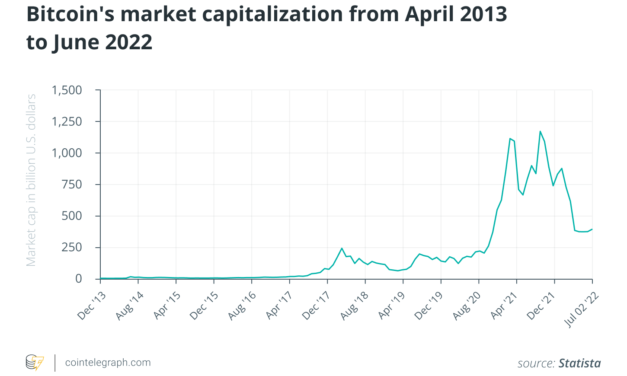
By the end of May, Bitcoin’s (BTC) price had dropped 40%, Ether (ETH) had lost 50% of its value, and the entire crypto market dipped below its $1-trillion capitalization for the first time since January 2021. As we enter a clear bear market trend, it’s essential to focus on what the blockchain industry has always suggested: build.Bitcoin, Ether and the broader crypto market’s downturn correlate to macroeconomic uncertainty. The uncertainty is driven by rising interest rates coupled with quantitative tightening, resulting in asset price sell-offs across the stock exchange and the crypto market. It’s entirely possible that we can see the repeat of events like the Terra ecosystem’s unwinding, crypto lending service Celsius’ fallout, and the hedge fund Three Arrows Capital’s $400-million liquidation losses.2022’s market crash to 2018’s crypto winterThe 2018 crypto winter was brought about by negative market sentiment and loss of confidence; however, 2022’s crypto winter is a direct result of macroeconomics. Decentralized finance (DeFi) is down, equities are down and global markets are down. This bear market is not isolated to crypto alone, with leverage unwind simultaneously occurring across several markets.Venture capitalists and private investors pumped no less than $30 billion into blockchain projects. A third of that amount went to gaming and virtual world projects to lay the foundations of the Web3 metaverse.As we witness an exodus of talent from Web2 projects, we also anticipate increased growth of Web3 brands, with several brands such as Yuga Labs, The Sandbox and RTFKT already partnering with retail giants, including Adidas, Nike, HSBC, Warner Bros and others. Blockchain-powered decentralized applications (DApp) and DeFi have the potential to lead the Web3 evolution in the future and seize control from a handful of centralized gatekeepers.This indicates that the transition to Web3 is imminent and dependent on a catalyst to proliferate. A crypto winter can undoubtedly be considered a significant catalyst, as it affords Web3 projects downtime, wherein they can focus on scalability and sustainability.Related: Hiring top crypto talent can be difficult, but it doesn’t have to beCrypto winter is not a time to hibernate, but to continue buildingDuring the 2018 crypto winter, we saw a notable rise in several disruptive projects, such as OpenSea and Uniswap. Despite the downward trend, the projects leading the blockchain space were committed to building and enhancing their products.These projects took years to be successful. In 2021, OpenSea generated $20 billion in nonfungible token (NFT) sales, while Uniswap adoption grew significantly, showcasing the potential of a decentralized financial system. Other examples in DApps, DeFi, NFTs and Web3 games are abundant.The key to expanding the Web3 community is utilityDuring the current crypto winter, there’s likely to be more venture capital available to fund new projects, so they may not only survive but thrive during the next big surge. And that’s the key to survival — utility. Projects that offer utility succeed, while those that are fundamentally flawed, over-hyped and non-utilitarian end up failing. A crypto winter, therefore, separates the proverbial wheat from the chaff.One of the best ways for crypto projects, whether DeFi, GameFi or NFT-related, to transition from Web2 to Web3 is to consider the implication of housing processes on-chain. Not only that but accelerating business growth through cost-cutting is essential. Payment gateways charging inflated fees should be the first to be scrutinized, and it certainly makes sense to consider a viable approach to the intrinsic practice of turning a profit.Related: Governments, enterprise, gaming: Who will drive the next crypto bull run?Crypto payment solutions that allow crypto on- and off-ramps are helping Web3 firms accelerate their business as the solution enables transactions to happen off-chain, which makes the fees involved dramatically cheaper than standard payment methods. It also facilitates improved conversions and revenue by enabling a project’s users to buy and sell crypto at competitive rates within the project’s platform. Crypto platforms looking to streamline their payment infrastructure should consider fully integrated on- and off-ramps.The demand for API solutions like on-and-off-ramp platforms is steadily growing because they help businesses to settle different currency and cryptocurrency transactions, reducing the counterparty risk and costs, thereby empowering businesses and their users. Such platforms also offer price transparency with leading exchange rates with low conversion spreads, so users know what they’re going to pay and what they’re paying for.In this ensuing winter, this is the type of opportunity that we should seek: projects that are ground-breaking and scalable infrastructure that will drive the next evolution of the digital asset ecosystem. As always, the key to knowing when to be greedy when others are fearful, and fearful when others are greedy isn’t as simple as it would sound, but business platforms built upon solid foundations stay reliable in the long run and have a built-in resilience that will see them through good times and bad, such as the crypto winter we’re going through.This article does not contain investment advice or recommendations. Every investment and trading move involves risk, and readers should conduct their own research when making a decision.The views, thoughts and opinions expressed here are the author’s alone and do not necessarily reflect or represent the views and opinions of Cointelegraph.Raymond Hsu is a co-founder and the CEO of Cabital, a cryptocurrency wealth management platform. Prior to co-founding Cabital in 2020, Raymond worked for fintech and traditional banking institutions, including Citibank, Standard Chartered, eBay and Airwallex.

Čítaj viac

The United States turns its attention to stablecoin regulation

The United States continues to be a global leader in embracing the cryptocurrency industry thanks to the work of Sen. Patrick Toomey, with the White House being at the forefront of crypto regulation. Last year, President Joe Biden signed a $1.2 trillion bipartisan infrastructure bill — and it included some new legislation that would impact the crypto sector. And more recently, the U.S. president announced a “whole-of-government” approach to regulating cryptocurrency in an across-the-board executive order directing multiple government agencies to answer specific questions on cryptocurrencies. The U.S. for the last year has clearly been seeking to help make the crypto industry more sustainable, which will make it significantly easier for cryptocurrency platforms to operate.But the Stablecoin Transparency of Reserves and Uniform Safe Transactions Act of 2022, dubbed the Stablecoin TRUST Act for short, makes the U.S. likely the only country, or at least the only Western country, to fully regulate and accept stablecoins as an official part of the financial and banking system. Introduced by Sen. Toomey, the ranking member of the Senate Banking Committee, the Stablecoin TRUST Act forces stablecoin issuers to adhere to certain rules. The regulations in the act are sweeping and comprehensive. The bill clarifies that payment stablecoins are not securities, which is a great thing for the industry. The bill also refers to stablecoins as “payment stablecoins” — digital assets that can be “convertible directly to fiat currency by the issuer” and that have a “stable value relative to a fiat currency or currencies.” Related: Regulations set the table for more talent, capital and building in crypto industryStablecoin issuers would have to choose between securing the Office of the Comptroller of the Currency (OCC) license, a state money transmitter, or similar license or a traditional bank charter. Stablecoin issuers operating in the U.S. would be subject to a disclosure regime that would require them to secure regular audits, detail clear redemption policies and specify what actually backs the stablecoins they issue.Any need for a U.S. CBDC?With the discussion draft of the bill circulating and garnering feedback in congress, I beg the question: If the act becomes law, would the U.S. government still need to develop a central bank digital currency (CBDC), or what some call the digital dollar? It doesn’t appear to be necessary for the U.S. to develop a digital dollar if private stablecoin issuers are accepted as part of the broader financial system. Would there be a need for the government to have both private and public digital dollars, one issued by providers and another by the federal government? These questions will play out over the coming months as U.S. regulators continue to tackle them. But it’s clear that part of Biden’s executive order includes placing “urgency on research and development of a potential United States CBDC, should issuance be deemed in the national interest,” according to an accompanying fact sheet released by the White House. Related: Fitting the bill: US Congress eyes e-cash as an alternative to CBDCIt would be the first time in history in which a nation allows both private stablecoin issuers and the government-issued stablecoin to operate in a single market. Some countries have banned private stablecoins because they want to promote their own CBDC, but the U.S. is taking a different route that could spur significant innovation in the stablecoin industry — and, of course, make it more transparent and sustainable. But there are problems, with possibly serious consequences. Interest rates will be capped — expect consolidation The Stablecoin TRUST Act regulates what assets can back their USD-pegged stablecoins, which would be cash, where interest rates are incredibly low, and Treasury Bills (T-Bills), where interest rates aren’t much better. This poses a major problem to both current stablecoin issuers and future players, as they won’t be able to earn higher interest from riskier assets. Right now, certain stablecoin issuers back most of their tokens by higher paying commercial papers, which cannot be evaluated without more transparency and an audit. According to USDT stablecoin issuer Tether on March 31, 2021, over 65% of their reserves were backed by commercial papers, only around 4% were backed by cash, and about 3% are backed by T-Bills. Therefore, Tether and other stablecoin providers will have to completely change the composition of their reserves to fall in line with the Stablecoin TRUST Act if it becomes law.Competition may slow down in the stablecoin industry and we may see some consolidation. Since stablecoin issuers will not be able to use higher-paying assets to generate high interest, it will become difficult for them to make profit while managing compliance risk, HR taxes and general management costs. Related: Regulators are coming for stablecoins, but what should they start with?The big players will find a way to make it work, more than likely, but smaller stablecoin issuers will find it difficult to make profit if the bill becomes law. Let’s get the Stablecoin Trust Act passed Although the Stablecoin TRUST Act may set up some barriers to new participants in the industry, I do believe that it will make the industry more transparent and sustainable. Enforcing disclosure and redemption requirements for the USD stablecoins will make them significantly more safe and transparent in the future. One of the best parts about the Stablecoin TRUST Act is that it really does bring stablecoins into the traditional U.S. financial system. OCC-licensed issuers will have access to the Federal Reserve’s master account system, which would give them the ability to tap the broader financial system and larger amounts of liquidity in transacting.There is still some time before the Stablecoin TRUST Act becomes law, but if it stays true to its current form, the U.S. will continue to set the gold standard in cryptocurrency regulation. So, let’s work together to make sure that the act becomes law. This article does not contain investment advice or recommendations. Every investment and trading move involves risk, and readers should conduct their own research when making a decision.The views, thoughts and opinions expressed here are the author’s alone and do not necessarily reflect or represent the views and opinions of Cointelegraph.Raymond Hsu is the co-founder and CEO at Cabital, a cryptocurrency wealth management platform. Prior to co-founding Cabital in 2020, Raymond worked for fintech and traditional banking institutions, including Citibank, Standard Chartered, eBay and Airwallex.

Čítaj viac

Every Bitcoin helps: Crypto-fueled relief aid for Ukraine

The people of Ukraine require the world’s help more than ever before. As the conflict between Russia and Ukraine continues to rage on, the world must rally behind the Ukrainian government to bring back peace and stability to the Eastern European nation.The crypto community has done just that with nonfungible token (NFT) companies, decentralized autonomous organizations (DAOs) and crypto users all over the world leading the effort to help aid Ukraine with donations of Bitcoin (BTC), Ether (ETH), Polkadot’s DOT and even NFTs.It is impressive how fast the crypto community got behind the Ukrainian people. Two days after the Russian military entered Ukrainian territory, the Ukrainian government asked for crypto donations on Twitter, sharing Bitcoin and Ethereum wallet addresses. Vice Prime Minister of Ukraine Mykhailo Fedorov confirmed on his Twitter account that the call for donations was real and asked people to stand with the nation.Stand with the people of UkraineNow accepting cryptocurrency donations. Ethereum. Bitcoin and Tether (USDTtrc20)BTC — 357a3So9CbsNfBBgFYACGvxxS6tMaDoa1PETH — 0x165CD37b4C644C2921454429E7F9358d18A45e14USDT (trc20) — TEFccmfQ38cZS1DTZVhsxKVDckA8Y6VfCy— Mykhailo Fedorov (@FedorovMykhailo) February 26, 2022Crypto community rushes to Ukraine’s defenseSoon after Ukraine’s vice prime minister tweeted the government’s crypto addresses, crypto started to zip into the Ukrainian government’s wallets at unprecedented speeds. In fact, Ukraine ranks fourth on the Global Crypto Adoption Index, compiled by data firm Chainalysis, which estimates that roughly $8 billion worth of cryptocurrency enters and exits the country annually. According to the New York Times, the daily volume of cryptocurrency transactions stands at around $150 million, exceeding the volume of interbank exchanges in the hryvnia. First, the Ukrainian government raised $4 million, then $13 million, then $37 million by March. Days after, the total amount of crypto the Ukrainian government raised was over $55 million. And just recently, Ukraine’s government announced that it had received a total of “close to $100 million” in crypto donations, according to Alex Bornyakov, Ukraine’s deputy minister at the ministry of digital transformation and the de facto crypto spokesperson of the government. Ukraine hit $108 million a week ago, as tracked by Cointelegraph. This is a clear testament that the crypto community is doing exactly what they have been trying to do since day one — to move capital effortlessly, seamlessly and cheaply without any middlemen, as its users believe it is the right thing to do. The crypto community across the globe has shown, with its massive donations, that it supports peace, stability and, to be frank, the people of Ukraine.Related: NFT philanthropy demonstrates new ways of giving backFrom an economic standpoint, the millions of dollars worth of crypto sent to the Ukrainian government could be the breakthrough. It is a clear demonstration that people stand in support of Ukrainian President Volodymyr Zelenskyy. Crypto’s ability to remove bureaucratic red tape is one of the best ways to provide immediate service to the Ukrainian people, as they need help more than ever before. This is what Bitcoin was made for — to move capital to where it’s needed without any hindrance.NFTs, DAOs and Web3 communities come to the rescueNFT platforms, DAOs and other players in the development of Web3 have shown the world what they stand for as they donate everything from crypto to NFTs to the Ukrainian government.Related: Fighting economic warfare with crypto’s double-edged swordThe people behind Bored Ape Yacht Club (BAYC) donated $1 million in ETH to the Ukrainian government. The BAYC team donated the funds to match BAYC community members, who also raised almost $1 million in donations to Ukraine. In addition, Everstake, a Ukraine-based decentralized staking provider, sent the first tranche of financial aid to Ukraine to the tune of $1 million, which had been donated by the extended Solana community.It’s been inspiring seeing our community come together in support of Ukraine – almost $1m in ETH has been donated to @Ukraine by wallets containing a BAYC ecosystem NFT. Today we’re matching that with a $1m ETH donation of our own. ♥️— Bored Ape Yacht Club (@BoredApeYC) March 8, 2022

There are countless examples of how NFTs and DAOs are rushing behind the request of the Ukraine government, from someone transferring CryptoPunk #5364, worth over $200,000, into Ukraine’s Ethereum wallet to UkraineDAO raising over $6 million via an NFT sale to aid Ukrainian citizens. DAOs and NFT companies have made their position clear — they are anti-war and want to see the Russian invasion end as soon as possible.Crypto: The future of supporting causes?During this tragic situation in Europe, we have seen that blockchain allows us to scale our efforts in a way that simply wasn’t possible before. The old ways of raising money were slow, expensive and, a lot of the time, riddled with fraud and corruption.The borderless form of money has transformed the way people contribute money to causes that they want to support. With Bitcoin and other crypto, donors can be 100% certain that the causes and campaigns will receive the funds. They simply need the wallet’s address and send the crypto to that address. They can go to the blockchain, such as Etherscan, and see their donation — providing peace of mind to all donors that their capital has made to the recipient.Related: Is the Ukraine war intensifying regulatory pressure on crypto firms?Bitcoin and other cryptocurrencies have demonstrated that they are the cheapest, fastest, most secure way to make financial transactions across the world. The Ukrainian government can safely store crypto without having to worry about an invading force stealing it from them or their financial system collapsing because of the war. Let’s be clear: For Ukraine, digital coins have lived up to their reputation for easily moving money across international borders.This article does not contain investment advice or recommendations. Every investment and trading move involves risk, and readers should conduct their own research when making a decision.The views, thoughts and opinions expressed here are the author’s alone and do not necessarily reflect or represent the views and opinions of Cointelegraph.Raymond Hsu is the co-founder and CEO at Cabital, a cryptocurrency wealth management platform. Prior to co-founding Cabital in 2020, Raymond worked for fintech and traditional banking institutions, including Citibank, Standard Chartered Bank, eBay and Airwallex.

Čítaj viac

Získaj BONUS 8 € v Bitcoinoch

nakup bitcoin z karty

Registrácia Binance

Burza Binance

Aktuálne kurzy