Autor Cointelegraph By Rachel Wolfson

Texas a Bitcoin ‘hot spot’ even as heat waves affect crypto miners

Record-breaking heat waves are being documented across the world as extreme weather is worsening due to climate change. States throughout America are continuing to see temperatures rise above 100 degrees Fahrenheit (38 degrees Celsius), while the United Kingdom recently saw temperatures reach 104 degrees Fahrenheit (40 degrees Celsius). While hot climates may be unusual for many of these regions, Texas — a state notorious for its boiling summers — is experiencing hotter-than-usual temperatures. The Electric Reliability Council of Texas (ERCOT) recently stated that Texas’ power load demand has been breaking records consistently this month. Unsurprisingly, Texas’ continuous heat wave is having a major impact on crypto miners located throughout the Lone Star State. As Cointelegraph recently reported, a number of miners in Texas had to cease operations entirely earlier this month in order to accommodate Texas’ energy grid load. Lee Bratcher, president of the Texas Blockchain Council, told Cointelegraph that there are about 10 industrial-scale crypto miners and 20 smaller-scale miners currently located in the region. Earlier this month, ERCOT asked businesses and residents to voluntarily conserve electricity during the Texas heat wave. A Riot Blockchain spokesperson told Cointelegraph that its Whinstone facility in Rockdale is now participating in ERCOT’s Four Coincident Peak program, noting that the facility will curtail all power to help stabilize the grid during peak hours of demand. “As part of Riot’s participation in the program, in June the company curtailed energy consumption for a total of 8,648 megawatt hours,” the spokesperson said. Peter Wall, CEO of Argo Blockchain — a crypto mining company that recently opened a data center in West Texas — also told Cointelegraph that the company curtails mining operations when ERCOT sends out a conservation alert. On July 19, 2022, he said that Agro had to undergo this, along with many other mining operators in the area.As a result, Bitcoin (BTC) miners saw the biggest drop in computing power on July 21, 2022, since China banned crypto mining in May 2021. This came as a surprise to industry experts who would have expected the Bitcoin hash rate difficulty to increase based on current trends. Frank Holmes, CEO of Hive Blockchain Technology — a publicly traded crypto mining company with operations in Canada and Europe — told Cointelegraph that Bitcoin’s hash rate difficulty was supposed to rise 3% each month based on financial models, but that this hasn’t been the case due to a number of reasons. He said:“As the price of Bitcoin fell, many S9 mining machines went off, or electricity surged and miners had to stop operations. But more importantly, many machines that were going to be plugged in are now unable to be utilized, which has also made the difficulty go down.” Holmes noted that the drop in Bitcoin computing power has been beneficial for Hive since their facilities have not been impacted by climate change or other factors. He added that new mining machines are being delivered to Hive each month and that slots are being filled to accommodate growth. Yet, Holmes shared that Hive continues to scout out locations to establish its next mining facility in Texas, which will serve as the company’s first U.S. establishment. Despite Texas’ extreme weather conditions on miners, Holmes explained that Hive’s method of using 100% green energy to mine both Bitcoin and Ether (ETH) will not disrupt the state’s power grid. Holmes elaborated that Hive’s future Texas facility will operate as a solar wind farm, which will not be subject to ERCOT’s regulations. “There are various locations in Texas that have the infrastructure we require for this. There are also credits to ensure that we build a solar farm.” Recent: 3AC: A $10B hedge fund gone bust with founders on the runWhile Holmes is confident that Hive will soon operate in Texas, he explained that the company has big ambitions for the facility, noting that it would require 300 megawatts of power. Given this, Holmes explained that Hive is being cautious about setting up in Texas too quickly, noting that a large-scale mining operation is risky when it comes to delivering on time. “We don’t want to scare communities or disappoint our shareholders,” he remarked. Issac Holyoak, chief communications officer of CleanSpark — a sustainable Bitcoin mining and technology company — also told Cointelegraph that the firm is planning to open a mining facility in West Texas. While the bulk of CleanSpark’s miners is located in Georgia, Holyoak explained that the company has a co-location agreement in West Texas with the energy company, Lancium. He said:“Lancium performs controlled load response, so they build large data centers that can power up or down based on the power supply curve. If there is a lot of energy required due to a hot afternoon, they can power down to compensate for this. Alternatively, if there is a low demand for energy, they can power up and mine Bitcoin.”According to Holyoak, CleanSpark and Lancium’s Texas-based mining facility will launch in December of this year. Like Hive, Holyoak noted that CleanSpark has been benefiting from miners in Texas shutting down since there is less network competition. But, he believes it’s beneficial for the company to have operations in Texas due to the abundance of renewable energy in the region, along with the welcoming nature of counties looking to bring in additional commerce from mining operations. “It’s a very unique market and it does have renewable resources that are extremely important to sustainable miners,” he said. With locations in Georgia and a few in upstate New York, Holyoak added that it’s important for CleanSpark and other miners to diversify their locations, noting that climate change and other extreme weather events can happen anywhere. Will sustainable mining help Texas miners?Even though Texas-based miners are being impacted by severe heat, Holmes believes that many of them are handling the situation well by powering off when needed. However, as more sustainable miners enter the state, already established operators may want to reconsider their mining techniques. For example, Holmes explained that Hive educates authorities in the regions where they are based to help them understand their long-term environmental, social and governance targets. He said: “In Quebec, we have a 40,000 square foot building with 30 megawatts of electricity, and we send the heat generated from our ASIC mining machines to heat 200 square feet of the building. The energy is recycled and is meant to accommodate the unique building structures in New Brunswick.”This being the case, Holmes noted that having a long-term sustainable vision when it comes to mining can be very beneficial. He added that Hive’s Sweden location has software that ensures the company’s mining operations are down between the hours of 7–9 a.m. and 5–7 p.m., five days a week. “These are sensitive, peak demand times. We have a strategic relationship with the region to ensure our operations stop when needed,” said Holmes. He further shared that Hive mines about 9.8 BTC and 100 ETH per day. Taking a different approach, CleanSpark uses immersion cooling to mine Bitcoin. Matthew Schultz, executive chairman of CleanSpark, told Cointelegraph that the company is among the first large-scale data centers of its type in North America to purchase immersion cooling infrastructure for their Norcross mining facility. He explained: “Immersion cooling is a technique that we use for Bitcoin mining. The mining machines are prepared via the removal of their fans and submerged in tanks of biodegradable mineral oil. This increases mining efficiency by an estimated 20%. The oil is recycled through the facility and re-used while running through a heat exchanger that keeps the temperature around 125 degrees F.”Holyoak added that most fan-based mining operations are kept cold by using ambient air, so hotter climates will impact the performance of machines, but immersion cooling can help mitigate this factor. Recent: How blockchain can address Austria’s energy crisisHe noted that immersion cooling will not be impacted by excessive heat. However, heat waves can spike energy prices which in turn may make it uneconomical to run machines. According to Holyoak, this is likely the case with Riot, as the company announced last year the use of immersion cooling at their Whinstone facility. All things considered, industry experts believe that utilizing clean energy sources will help miners prevail against climate change. Elliot David, carbon management specialist at Sustainable Bitcoin Protocol — a company that verifies sustainable Bitcoin mining practices — told Cointelegraph that based on recent events, every mining company will have to think about climate resilience, whether they are based in a hot climate like Texas or cold climates like Norway:“Utilizing clean energy sources is also an important solution because while they are intermittent, energy systems are all really exercises in balance. The grid has to meet demand with supply, and flexible loads such as Bitcoin make those balancing acts much easier.” 

Čítaj viac

FTX CEO and Solana co-founder offer advice for building Web3 ecosystems

The blockchain ecosystem is constantly evolving, yet there always seems to be one overarching sector dominating at a given time. For example, decentralized finance (DeFi) projects received an impressive amount of venture capital funding in 2021, making it the most invested sector last year. Findings further show that nonfungible tokens (NFTs) were the second most invested sector, while Web3 and infrastructure ranked third. Now, Web3 is proving to be the most sought-after investment sector in the blockchain industry. New findings from Cointelegraph Research confirm this, showing that Web3 captured around 42% of all individual deals during Q2 this year, while DeFi came in a distant second at 16%. Increasing interest in Web3 has also become apparent as venture capital giants like Andreessen Horowitz (a16z) close billion-dollar funds dedicated to investing in Web3 projects. Web3 has also captured the attention of Wing Venture Capital, a Silicon-Valley-based investment firm focused on early-stage enterprise technology companies. Wing recently hosted a virtual Web3 Builders Summit with Sam Bankman-Fried, CEO of FTX, and Anatoly Yakovenko, co-founder of Solana, to help early-stage founders better understand best practices for building Web3 ecosystems. Zach DeWitt, partner at Wing and host of the summit, told Cointelegraph that the firm has been investing in Web3 since 2017 but that structurally there is more capital than ever before dedicated to the sector. “The best time to invest is in bear markets historically. Prices are down and tourists are scared off,” he said. Come join me tomorrow at 10am PST for discussions with @SBF_FTX and @aeyakovenko about building in Web3!https://t.co/aARnfa9GRM— Zach DeWitt (@ZacharyDeWitt) July 18, 2022Yet, confusion around Web3 still remains, as DeWitt noted that although Wing conducts many interviews with founders, there are still a handful of early-stage companies that may not be aware of how to build and scale. Given this, DeWitt commented that the recent Web3 Builders Summit aimed to address these issues. “We wanted this virtual summit to focus on building, scaling and founder lessons — things that the early Web3 community can absorb and which will hopefully make the whole ecosystem stronger,” he remarked. Learning from mistakesWing’s Web3 Builder’s Summit began with Bankman-Fried discussing some of the mistakes he made early in his career. “There were plenty of things we screwed up,” the executive admitted. For example, Bankman-Fried shared that an embarrassing moment for him occurred when FTX was initially launched, noting that, at the time, he thought that 99% of uptime would be a great achievement: “I thought this would be damn good, even though 100% would have been better. But this didn’t turn out to be correct, as it turns out that it’s incredibly important for customers to trade whenever they want to trade. It would be horrific if we are down for even 10 minutes every month, so we had to go back and rework some of our systems.”Bankman-Fried also mentioned that early on, FTX was focused heavily on product prioritization, yet he noted that many products the crypto exchange initially launched did not receive traction. Recent: Demand for widely used euro stablecoin is huge, says DeFi expert“When you look at institutional traders, order throughput means a lot. We should have prioritized that earlier,” he said. Bankman-Fried further pointed out that FTX customers were phished during the exchange’s early days. He said that FTX had security features that could have prevented this, yet these were optional. “Many of these features are now mandatory because we realized this was really important for our users. Security can’t be optional,” he remarked. Yakovenko, who formerly worked at Qualcomm leading the development of operating systems, told Cointelegraph that he has helped develop products such as the Amazon Fire phone and other devices that have previously failed. With this in mind, Yakovenko explained that he intends to build Solana’s Android mobile device Saga for a small audience consisting of the Solana developer ecosystem and the crypto community. “The initial user target are developers, hard core Solana folks that use Magic Eden NFTs and DeFi. There are already about 2 million monthly active users, but our goal is to reach 50,000 active Web3 mobile users moving forward,” he said. During his fireside chat, Yakovenko added that founders launching Web3 products should pick their partners intelligently. To put this in perspective, Yakovenko explained that he connected with Bankman-Fried early in his career, noting that the FTX CEO told him there was a need to make blockchains faster. Yakovenko explained that FTX’s engineers then slammed the Solana network, which led the company to develop Project Serum, a decentralized derivatives exchange for Solana. “Early-stage founders need partners who are aligned on their visions and can help execute immediately,” said Yakovenko. According to DeWitt, one of the biggest takeaways from the Web3 Builders Summit was hearing Bankman-Fried and Yakovenko discuss their mistakes. “It’s just awesome to watch those CEOs operate with such humility and transparency,” he said. DeWitt further pointed out that both Bankman-Fried and Yakovenko are quick to announce platform issues on Twitter to keep their communities informed. “Twitter is where the core of the crypto community is, which is why it’s important for FTX to use the platform regularly,” Bankman-Fried commented. Evaluating Web3 hiring cultureThe Web3 hiring process was also a topic of conversation during the Builders Summit. These takeaways are key, considering that Web3 developer growth has skyrocketed since 2021. Bankman-Fried initially stressed the notion that many companies tend to overhire rather than under hire. However, he pointed out that this often leads to less productivity in the long run. He said:“When running a business it’s easy to fall into a trap where you hire a lot of good people and then end up with a total diffusion of responsibility. You then have too many cooks in the kitchen and no one is sure what anyone should be doing.”Bankman-Fried also said that companies shouldn’t hire new employees unless they will be entering a team that is already run well but has too many responsibilities allocated. “The current team needs to have been at the company long enough that they know how to do their jobs. They also need to have the management capacity to teach someone new,” he said. In terms of hiring developers, Yakovenko shared that during the 2018–2019 bear market, this was difficult due to the lack of interest in layer-1 blockchains. “We hosted small events and sometimes I was the only one there,” the founder said. Yet, Yakovenko explained that Solana’s developer ecosystem took off following FTX’s incubation of Serum in July 2020. Best Web3 use casesAlthough Web3 is quickly gaining traction, it’s important to recognize the potential behind different use cases. For instance, Yakovenko explained that NFT marketplaces like Solana’s Magic Eden and OpenSea are both generating billions in revenue each year without using any elements of the Web2 economy. “There are no ad exchanges involved or stealing of user data,” he remarked. Yakovenko believes this demonstrates a fundamental shift in how businesses can operate moving forward in terms of digital ownership. Yakovenko also mentioned that it’s becoming critical for Web3 applications to operate on mobile devices, noting that crypto has “been stuck on desktops” for years:“If you look at most of the activity and sales happening on Magic Eden and OpenSea you will see that everything is mainly taking place on desktops. This is crazy, considering that every application now is mobile first.”According to Yakovenko, this is due to poor user experiences of crypto-based applications on mobile devices. He said that app stores still don’t support crypto natively, noting that the newly released Solana Mobile Stack aims to solve these challenges by making “crypto first class citizens on mobile.” Yakovenko stated that Web3 applications built on the Solana Mobile Stack will not require usernames and passwords, as they will be privacy-first by default. “Everything will be designed through a ‘mobile wallet adapter,’ which is a protocol for connecting web apps and native Android apps to wallets on mobile devices. Once developers have the opportunity to build user experiences, we will see apps drive adoption for Saga.”While Web3 mobile experiences are compelling, Bankman-Fried pointed out that FTX is interested in blockchain-based social media platforms. “I think blockchain can help bridge different social media platforms, creating unifying layers of data transfer,” he said during his fireside chat. Bankman-Fried also highlighted this use case in a detailed Twitter thread he posted on July 16. 31) Let’s say that, instead, we put messages on a blockchain.So if you used Blockchain-Twitter (BT):–You type the message in BT’s interface–BT posts the message on a public blockchain–Your friend pulls out Blockchain-Facebook (BF)–BF reads your message and displays it— SBF (@SBF_FTX) July 16, 2022

Driving mainstream adoption for Web3Recent data from Apptopia found that apps with “Web3” in the title or description available for download on iOS or and Google Play are growing almost 5x faster in 2022 than in 2021. But, mainstream adoption of Web3 platforms and applications is still very much underway. According to Bankman-Fried, the biggest hurdle to mainstream adoption is scalable blockchains. “We need to get blockchains up to a million transactions per seconds to support a billion users,” he said. In addition, he believes there should be native integrations with mobile devices and point-of-sale devices that can accept blockchain payments. While these elements will help boost adoption, however, Bankman-Fried is also aware that regulatory clarity is required in order for these features to be achieved. He said, “Having regulator clarity will allow institutional investors to get involved in this space and feel more comfortable.”Yakovenko mentioned that product market fit is another challenge facing Web3 growth, noting that it’s been challenging for teams to develop “good products that people want.” Although Yakovenko is optimistic that Saga will revolutionize mobile devices, he commented that Solana’s recent network outages have been the biggest hurdle to overcome. Recent: Technicals suggest Bitcoin is still far from ideal for daily paymentsWhile Solana suffered full or partial outages at least seven separate times over the past 12 months, Yakovenko explained that Solana’s recent 1.10 release has helped the network run smoothly. “There are a lot of technologies in that release that we haven’t activated yet to make the network stable from the congestion attacks we have seen,” he added.Fortunately, Web3 is still in its early stages and both Bankman-Fried and Yakovenko are optimistic about where the sector is headed. Bankman-Fried concluded his fireside chat by sharing that FTX is focused on becoming a leader in market structure, noting that the exchange is currently working on building this out to ensure improvements. He also mentioned that FTX is looking into creating a payments network. As for Yakovenko, he explained that his victory lap will occur when a Web3 application becomes so compelling that consumers buy Web3-enabled mobile devices as a result. “Crypto revolutionized how people use the web, as we’ve seen chrome extensions utilized. If we can prove this in mobile devices, that will be a game changer.” 

Čítaj viac

DeFi for financial services: Alex Tapscott’s ‘Digital Asset Revolution’

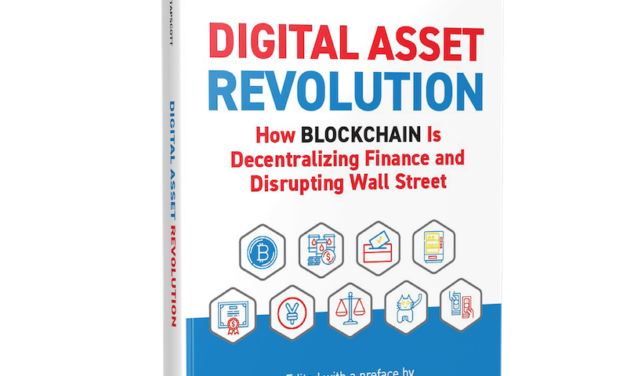
Decentralized finance (DeFi) has massive potential to transform traditional financial services. Data from Emergen Research recently found that the global DeFi platform market size is expected to reach $507 billion by 2028. Moreover, the total value locked within DeFi currently exceeds $75 billion, demonstrating fast-paced growth compared to previous months this year.Yet, DeFi’s potential may still not be realized by business leaders unfamiliar with the blockchain ecosystem. This notion is highlighted in Alex Tapscott’s recent book, Digital Asset Revolution. Tapscott, co-founder of the Blockchain Research Institute and managing director at Ninepoint Digital Asset Group, told Cointelegraph that he believes digital assets are going to be an important building block for a new internet, along with a financial industry that will change business models and markets. However, Tapscott noted that, to date, very few resources have been available to help enterprise leaders understand the relevance of digital assets. He said:“Words like nonfungible tokens, central bank digital currencies and stablecoins are alien to people who are not involved in the world of crypto and blockchain. It’s our goal at the Blockchain Research Institute to illuminate the potential behind different digital assets, explaining what these are and why people should care about them in language that is easy to understand.”How DeFi relates to the financial industryIn order to help readers understand the concepts behind DeFi, the first chapter of Digital Asset Revolution gives a broad overview of how decentralized finance could reinvent financial services. Tapscott begins by briefly summarizing how DeFi relates to nine specific functions of the finance industry: storing value, moving value, lending value, funding and investing, exchanging value, insuring value and managing risk, analyzing value, accounting for and auditing value and authenticating identity.For example, in regard to storing value, Tapscott mentions that individuals and institutions can use noncustodial wallets like MakerDAO to act as their own banks. In terms of funding and investing, Tapscott notes that aggregators such as Yearn.finance and Rariable could potentially disintermediate investment advisers and robo advisers. Given these different use cases, Tapscott points out that the lines between traditional finance and DeFi will eventually blur as adoption rates grow. Yet, this most likely will not be the case in the immediate future, as skepticism around DeFi still remains.Chapter one also addresses how a new ecosystem of digital assets is emerging from the growth of DeFi. This is an important aspect of the book, as co-author Don Tapscott told Cointelegraph that business leaders are still very much confused about what crypto represents. In order to clarify this, Digital Asset Revolution describes nine different digital asset classes, focusing on cryptocurrencies, protocol tokens, governance tokens, nonfungible tokens (NFTs), exchange tokens, securities tokens, stablecoins, natural asset tokens and central bank digital currencies (CBDC).Cover of Digital Asset Revolution. Source: Blockchain Research InstituteWhile each of these assets is important, readers may be inclined to focus on the digital assets that are gaining momentum today. For example, the book features an entire chapter on stablecoins, demonstrating how these hold the potential to transform legacy payment infrastructures like SWIFT.Recent: Crypto payments gain ground thanks to centralized payment processorsThis does appear to be the case with some stablecoins, like Circle’s USD Coin (USDC). USDC was recently adopted by Banking Circle, a European bank focused on cross-border payments. But, some stablecoins are proving to be controversial. This was displayed following the collapse of the algorithmic stablecoin TerraUSD Classic (USTC) or Luna Classic (LUNC). As such, readers of Digital Asset Revolution should still conduct their own research when looking into different digital asset use cases, especially since the sector is constantly evolving.CBDCs are another interesting topic mentioned throughout the book. Chapter four is dedicated entirely to CBDCs and features an edited transcript from a webinar hosted by the Blockchain Research Institute with J. Christopher Giancarlo, former chair of the United States Commodity Futures Trading Commission and co-founder of the Digital Dollar Project.In this chapter, Giancarlo explains what a “digital dollar” represents, noting that the concept is very different from stablecoins, which are often tied to another asset of value. Giancarlo remarks that a digital dollar, also known as a CBDC, is a thing of value itself. While a number of concerns remain around CBDCs, Giancarlo also details why privacy is important in order for a digital dollar to be successful:“At the Digital Dollar Project, we believe that developing the jurisprudence around the U.S. government’s approach to commercial activity using the sovereign currency, if it’s done right, could be a feature of a digital dollar that could be superior to other global reserve currencies.”The chapter on NFTs may also pique readers’ interest, given the hype surrounding these digital assets. Alan Majer, founder of Good Robot — a company exploring artificial intelligence, robotics, blockchain and the metaverse — contributed to the chapter on NFTs, noting that “NFTs breathe life into digital notions of ownership.”Given this, the author points out that enterprise leaders must start thinking creatively about tangible and intangible property rights. For example, Majer includes a chart here that displays NFT use cases, one being for intellectual property. The chart states that “NFTs could potentially confer licenses or titles not just of copyrighted works but also trademarks and patents as with 3D printing design files.” Another interesting use case displayed relates directly to DeFi, as NFTs have the potential to expand the range of assets to securitize, customize and derive additional value.Digital assets aside, interoperability is discussed throughout chapter two of the book. According to Tapscott, interoperability is important for enterprise leaders to understand because this essentially allows different blockchain networks to communicate with one another.“Smart contract platforms must interoperate seamlessly for DeFi and other new blockchain use cases to reach their full potential,” he writes. Tapscott then points out that smart contracting platforms like Cosmos and Polkadot were developed to address this issue. Anthony Williams, co-founder and president of the Digital Entrepreneurship and Economic Performance Center, elaborates on this throughout the second chapter, explaining how Cosmos and Polkadot allow blockchain networks to transfer value in a trustless and efficient manner.Challenges of DeFi adoptionWhile Digital Asset Revolution provides an in-depth overview of how different digital assets associated with DeFi can impact traditional finance, Tapscott is also aware of the challenges associated with adoption. The author mentions these dilemmas at the end of chapter one, noting that DeFi is still in its early days and requires growth.For instance, he explains that blockchain networks powering DeFi applications still require a lot of energy. While a number of DeFi applications are built on Ethereum, statistics show that Ethereum’s annualized footprint in electricity consumption grew during 2021, exceeding the consumption of countries like Colombia or Czechia.Tapscott also notes that governments may regulate DeFi, which could hamper growth. Additionally, Don Tapscott mentioned that DeFi may become bigger than the billion-dollar fintech sector, but this would require senior executives and intermediaries like banks to understand the value of decentralized finance. “The challenge of course is that leaders of the old middle are typically last to embrace the new middle,” he said.Recent: Blockchain-based solutions aim to address US disaster reliefAll things considered, though, Tapscott ends his overview in chapter one, suggesting that organizations that fail to implement DeFi aspects will be engulfed by “this hot new industry.” Tapscott added that releasing a book on DeFi during a bear market demonstrates a valuable lesson. He said:“We are in crypto winter, which is actually the best time to drill down on ideas and get educated. Bull markets are for earning while bear markets are for learning.”The views and opinions expressed here are solely those of the author and do not necessarily reflect the views of Cointelegraph.com.

Čítaj viac

Blockchain-based solutions aim to address US disaster relief

Natural disasters in the United States are becoming more prevalent, resulting in increasing costs, a lack of transparency between state and government organizations and a slew of other issues impacting relief systems. The Pew Research Center found that the Federal Emergency Management Agency’s (FEMA) public assistance program spent 23% more on natural disasters between 2010–2019 than it did during 2000–2009. Data from Climate.gov further shows that 2021 was the third costliest year in history for natural disasters in the U.S., totaling over $145 billion in damages from 20 weather-related incidents. But as disasters become more common and costs continue to increase, relief organizations are looking toward digital solutions to help solve certain challenges. For instance, a number of cloud-based solutions from vendors like Dell and Amazon are gaining popularity, falling under the category of Disaster Recovery as a Service, or DRaaS. A recent report from global technology research company Technavio found that the DRaaS market is expected to grow by $40 billion between 2022–2025. However, Technavio’s findings also suggest that open-source disaster recovery tools will challenge the growth of DRaaS moving forward. Blockchain to automate disaster relief effortsThis may very well be the case, as a number of blockchain-based solutions are being applied for disaster relief efforts. In particular, many of these solutions can automate manual processes in order to ensure cost-efficiencies, automated workflows and data sharing across organizations. For example, the Disaster Services Corporation Society of St. Vincent de Paul (DSC) — a 175-year-old organization that helps people in situational poverty brought on by natural disasters — is partnering with the Algorand Foundation to assist disaster survivors across the United States. Elizabeth Disco-Shearer, CEO of the DSC, told Cointelegraph that the organization is specifically working with the foundation — the organization behind Algorand’s monetary supply economics, governance and ecosystem — to use digital wallets to reimagine their House in a Box program, which provides household furniture for families without insurance that have been impacted by a disaster. According to Disco-Shearer, these digital wallets will be equipped with vouchers worth certain amounts of money that disaster survivors will be able to use at specific vendors to purchase new furniture. Disco-Shearer explained that currently DSC’s “House in a Box” program does all of its work on the ground in rented warehouses, where a variety of furniture is purchased and shipped beforehand and then categorized by volunteers based on family size. “We started this program in 2014, after Hurricane Katrina. Since then, we have served over 100,000 households across America, but it has become more and more labor intensive due to the intensity and frequency of disasters,” Disco-Shearer said. Using a blockchain wallet will soon make this process entirely digital. “For instance, we may issue a family of four a digital voucher of $3,200 that will immediately appear in their digital wallet. This will be restricted for use at specific vendors that we partner with, where we have already bought furniture in bulk for these types of situations,” Disco-Shearer commented.Matthew Keller, impact and inclusion lead at the Algorand Foundation, told Cointelegraph that its digital wallet solution for disaster relief efforts will most likely launch in September of this year. He added that Algorand is supplying the resources to build a volunteer’s wallet that will ensure disaster relief volunteers are properly compensated for their time. He said:“Volunteer wallets will accumulate and track hours, allowing for disaster relief organizations to show state disaster relief agencies funded by FEMA the amount of time volunteers spend helping. This is a huge deal because it allows organizations like St. Vincent de Paul to attract more resources through federal and state levels. This solution will also be used by the National Voluntary Organizations Active in Disaster.”While blockchain-based digital wallets are proving to be helpful for facilitating fast payments, open-source networks also ensure data sharing between organizations. This feature can be useful when a number of different organizations are involved in the same initiative. For example, openIDL is a Linux Foundation project that uses Hyperledger Fabric to enable insurance carriers, regulators and intermediate agencies to obtain a harmonized, permissioned data model for more efficient reporting following natural disasters. Recent: Syrian refugee turned civil activist found calling as blockchain evangelistTo put this in perspective, Jeff Braswell, executive director of openIDL, told Cointelegraph that every state in the U.S. has its own insurance regulator or commissioner, noting that every insurance carrier that writes policies in a state must report information to each such state regulator. Braswell explained that the requirement for each insurance company to report to a state regulator individually is time-consuming and costly. In addition, when commercial agencies are contracted to help perform this reporting on behalf of insurance companies, the data is not accessible and cannot be utilized by the industry after submission. Flooded I-10/I-610/West End Boulevard interchange northwest New Orleans and Metairie, LouisianaOne objective of openIDL, per Braswell, is to ensure that information segregated by carriers or state regulators can be made available in an aggregated and anonymized manner to the industry with appropriate consent and permission. This would allow insurance regulators and carriers to have a better understanding of disasters across different territories and regions. He said:“This model would enable more efficient insurance reporting by carriers that is, or may be, requested by different state regulators. In turn, this will create a tremendous efficiency in cost-savings, while enabling a better collection of information across different sectors. For insurance regulators, this is also highly desirable and more timely than waiting for an annual report. There are lots of benefits to this model.” For instance, Braswell shared that openIDL did a case study with a southern state to better understand how providers might anticipate the adequacy of insurance coverage for regions that were projected to be impacted by hurricanes or incidents occurring in the Gulf Coast. “This is about helping providers understand where that coverage may be sufficient and where it may not be, along with how things can be improved based on more timely information,” he said. Using the Hyperledger Fabric network, Braswell said that a number of insurance providers and state regulators can share information in an open and controlled environment. “No individual policy details need to be revealed, as information can be reported in aggregate, and anonymized using a private, and secure, Hyperledger Fabric permissioned blockchain.”Such a use case also demonstrates how open-source networks are challenging the notion of DRaaS. Braswell shared that openIDL was initially created based on an idea from the American Association of Insurance Services (AAIS) noting that the organization was seeking digital transformation to provide better services for its clients and state regulators. After settling on the benefits of a distributed ledger platform, AAIS engaged IBM to develop a proof-of-concept built on top of Hyperledger Fabric. Yet, Braswell noted that AAIS subsequently chose to switch from IBM cloud services to AWS but continued to work with the open-source Hyperledger Fabric project. AAIS then partnered with the Linux Foundation to create the openIDL Foundation project, transitioning the ongoing management and development of the initiative to openIDL. He added:“Moving this project to the Linux Foundation is helpful because it ensures that organization members are not locked in by a single service vendor or proprietary technology. The oversight of network services and work to grow the collaborative community of the private and public sector participants has now transitioned from AAIS to openIDL, which is tightly coupled with support from the Linux Foundation and Hyperledger.” Open and public blockchain networks are also being used by enterprises to improve disaster efforts. For example, Equideum health uses the Ethereum blockchain to transform healthcare and life sciences. Heather Flannery, founder and CEO of Equideum, told Cointelegraph that the company is a spin-off from ConsenSys Health and combines zero-knowledge cryptography with off-chain hybrid blockchain infrastructures. She said:“My thesis about the needs of the healthcare and life sciences industry has long been that blockchain is necessary, but not sufficient. Our approach has been a convergence of three different emerging technologies, one of which is blockchain. The other two are advanced privacy technologies, both hardware and software dependent modalities to ensure off-chain confidential compute in cloud enclaves. Finally, data decentralization will figure prominently in terms of disaster relief and recovery.” Flannery mentioned that all of the use cases Equideum enables involve enterprise data to power what she refers to as a Web3 data economy. “The financial exchange of data is a new market architecture to provide ethically sourced data monetization,” she said. To put this in perspective, Flannery explained that Equideum is working with U.S. veterans, their families and caregivers to enable privacy-preserving clinical trial matching. Although this differs from emergency disaster situations, Flannery noted this use case is timely given the COVID-19 pandemic. “Right now, pharmaceutical companies need to get new medicines and vaccines into the market, meaning they require research subjects for clinical trials. However, most subjects do not represent the general population,” she pointed out. With this challenge in mind, Flannery noted that Equideum’s privacy-preserving clinical trial matching will eventually allow pharmaceutical companies the option to view structured data procurements across the Ethereum network.Fire cloud from the Dixie Fire, the largest in the history of California wildfires. Source: Frank Schulenburg“This will be sourced from our enterprise partners and consumer users. The very first thing to happen though will be for big pharma companies to do data procurements from U.S. veterans through the apparatus that we’re creating. This will also give that population access to clinical research as a care option, the ability to monetize their information and so on.” Moreover, Flannery remarked that having patient data on a blockchain network can help in various ways when natural disasters occur. “Let’s say a terrible flood brings down a community’s health infrastructure — IT systems go down, along with the ability to identify patients. Web3 means that a person’s basic existence will live in a digital-first society,” she said. According to Flannery, this means that health systems of the future will include an individual’s personal data, along with their ability to control its sharing.Will businesses actually want to use blockchain solutions?While different blockchains can provide innovative solutions for disaster relief efforts, it remains questionable if businesses will want to use these networks. For instance, new findings from ReasearchAndMarkets.com suggest that the global blockchain market is expected to reach $117.77 billion by 2028 (currently valued at $4.56 billion), but concerns around uncertain regulations and compliance is one of the major factors that may hinder market growth. Yet, Keller noted that regulatory challenges are not an issue as of now for Algorand’s digital wallet solution. Disco-Shearer mentioned that getting disaster survivors and volunteers to use a digital wallet involves a higher degree of learning, which could also create complexities. In terms of data sharing among enterprises, Braswell explained that one of the intended benefits of openIDL for insurance carriers and analytical services is the ability to mine aggregated and anonymized industry data to inform coverage needs and policy. He added that no raw data from insurance carriers can be extracted or compromised. “Hyperledger Fabric supports the operation of private and secure ‘channels’ between two parties — in this case a carrier node and an analysis node. If there are 10 carriers, there are 10 private channels created. Data is not shared amongst contributors, but submitted for analysis and reporting purposes to trusted advisory firms who are accredited to join openIDL and perform such services,” he explained. Recent: The search term ‘Bitcoin Crash’ is trending — Here’s whyAnd although openIDL is still functioning essentially as a startup, Braswell pointed out that the organization is currently working with five major carriers and several state regulators.Flannery also stated in a recent “Enterprise Ethereum Alliance Business Readiness Report” that a number of major companies are using Ethereum as a business platform. “There are few if any other layer-1 blockchains out there that have anything like this kind of community. There is no doubt that Ethereum needs upgrading before it is really ready for business on a large scale. But, as we know, this is happening,” she said. Finally, it’s notable that cryptocurrency solutions tied to blockchain platforms are being implemented across the world to deliver aid for humanitarian efforts. According to the findings previously mentioned from ResearchAndMarkets.com, the legalization and utilization of cryptocurrencies will push market participants to put in the effort to improve their services in order to acquire a competitive advantage. In turn, more enterprises will likely use blockchain solutions that prove to be beneficial.

Čítaj viac

NFTs become physical experiences as brands offer in-store minting

Nonfungible tokens (NFTs) have taken the world by storm over the last year. Digital collectibles that were characterized solely as CryptoKitties in 2017 have since evolved into famous pieces of art, digitized music, high-end fashion for the Metaverse and a way for communities to connect with others across the globe. Even with the current crypto bear market, recent findings from the research firm Security.org found that NFT ownership has doubled over the last year, rising from an estimated 4.6 million people to 9.3 million people. The report also discovered that while the vast majority of Americans are not ready to purchase NFTs, about 16.3 million potential customers are likely to buy nonfungible tokens in the next 12 months. Consumers experience NFTs with IRL mintsGiven the potential of NFTs, it shouldn’t come as a surprise that a handful of retailers and brands are beginning to incorporate nonfungible tokens into their product offerings. While this has been proven by brands bridging physical goods to digital NFTs, a handful of retailers are now incorporating NFT technology into physical store locations. This was recently demonstrated by the luxury Italian brand Salvatore Ferragamo. Ferragamo’s new concept store opened on June 24, 2022, in New York’s Soho neighborhood, the day after NFT NYC concluded. From the outside, the Ferragamo store located at 63 Greene Street appears ordinary, but once consumers step inside, they are able to experience Web3 firsthand via immersive shopping features. Daniella Vitale, CEO of Ferragamo North America, told Cointelegraph during a preview of the store that the Soho location is merging technology with the world of luxury by incorporating an NFT installation alongside a custom hologram sneaker program. She said:“Everyone is always talking about NFTs, so we wanted to bring an actual experience into the Soho store that allows people to create their own NFTs. We hope to acquire new customers that are well versed in Web3, but this is also about getting our existing customers to be a part of this world. I think this will be a huge success.” Vitale added that Ferragamo’s NFT installation — which was created in partnership with digital artist Shxpir (pronounced like the English poet and playwright Shakespeare) — is the first of its kind, noting that no other Ferragamo store contains such a feature. “We didn’t want our Soho store to be so static — we wanted it to have a technology angle. The NFT booth was integrated directly into the store design to encompass the entire shopping experience,” she said. Vitale added that she hopes these immersive features allow customers to learn about Web3 technology rather than be intimidated by the advancing sector. NFT installation at Ferragamo’s Soho shop. Source: FerragamoIn order to ensure this, a representative from the multidisciplinary studio De-Yan — which worked with Ferragamo on the installations and has helped with immersive projects for Louis Vuitton and Dior — told Cointelegraph that minting a Ferragamo NFT does not cost customers anything. Recent: Web3 will unite users from social media platforms, says Aave exec“This will be the first NFT for a lot of people, so Ferragamo will be paying all the Ether gas fees on transfers.” In addition, he noted that representatives will be available to help customers throughout the entire minting process. He further shared that the NFT installation will be ongoing but that the store is limiting the inaugural collection to 256 NFTs. “There are 972 potential combinations the NFTs can take, but only 256 can be minted as of now,” he said.NFT installation touch screen at the Soho Ferragamo store. Source: CointelegraphIn terms of the actual minting process, he explained that the experience is entirely immersive, noting that the NFT installation is enclosed in a mirrored room to ensure that customers get a 360-degree view of the NFT they are creating. “Customers get to customize their NFT and are then able to film a video with that NFT to share on social media afterward,” he said. Following the mint, customers are sent a claim email that asks for their wallet address. “The NFT is then sent to their Ethereum address and will appear in their OpenSea account a day or so later,” he explained.Ferragamo NFT featuring digital artwork by Shxpir. Source: Shxpir and FerragamoWhile Ferragamo may be one of the first luxury fashion brands to offer in-store NFT minting, the Web3 media and entertainment brand known as Doodles provided its community with a similar feature. Doodles set up an offsite house during NFT NYC 2022 to allow fans and community members a chance to mint the newest NFT drop, view Doodles’ artwork and purchase exclusive merchandise like sweatshirts and t-shirts. Julian Holguin, chief operating officer at Doodles, told Cointelegraph that the goal of the Doodles house was to elevate the brand by allowing people to experience everything in real life. He said:“We just announced the pre-sale for our second NFT drop, which is what is happening here. People are here to physically mint a ‘Genesis Box,’ which is a crate of wearables that will be the next level of rarity. People can buy a wearable today at a fixed price to reserve their spot for this mint.”NFT installation at the Doodles house during NFT NYC. Source: DoodlesTo date, the Doodles NFT project has generated around $500 million worth of secondary sales since its launch in October 2021. With over 6,000 Doodles’ owners, Holguin explained that the minting experience should be “fun and joyful,” noting that this is what the brand stands for. “I believe that when people can touch and feel things it creates an emotional response. They can then experience those emotions online,” he said. Like the Ferragamo NFT installation, the Doodles House at NFT NYC hosted a machine for guests to mint their Genesis Box NFT reservation. Upon completion, a golden card resembling a credit card was deposited from the machine, which guests could take as a keepsake. Users were required to pay for the gas fees, which cost about $127 dollars and could be purchased using a credit card. The importance of bringing NFTs to lifeFor instance, John Crain, co-founder and CEO of SuperRare — a digital art marketplace launched in 2018 — told Cointelegraph that having a physical art gallery associated with NFTs presents a great opportunity for both crypto-natives and the crypto-curious to experience NFTs. This in mind, SuperRare opened its first physical art gallery in May this year, which is also located in New York’s Soho neighborhood. Crain said:“I think people see headlines about celebrities buying Bored Apes, which is exciting, but at the same time there is a cultural renaissance happening where independent artists are being empowered by this technology. It’s hard to see this, which is why it’s important to have a physical gallery where the community can experience the art first hand, while also meeting the artists and curators.” Crain shared that the SuperRare gallery in Soho will be open till the end of August, with the possibility of extending or expanding to other cities. “We are hosting different exhibitions every two weeks, which is a great way to promote community building while adding a deeper context to the art displayed. This is hard to get from a purely digital experience,” he remarked. Physical card generated by the NFT installation at the Doodles House. Source: DoodlesDe-Yan’s representative added that he believes the mix of technology and customization will be important for the retail sector in the future. He said:“Ferragamo has chosen a particular approach that we think is a good start. I wouldn’t be surprised if we saw other brands following our lead. That’s the fun part about the NFT space — right now everyone is thinking about NFTs as pictures or videos, but there is a whole physical and application layer to it.” While bringing digital NFTs alive in physical spaces could be revolutionary, it’s also important to point out challenges that may hamper adoption. For example, while in-store mints may be fun and interactive, users that are new to the crypto space may still find it difficult, especially people of older generations. Inside the Soho SuperRare gallery. Source: CointelegraphAccording to the findings from Security.org, individuals between the ages of 25 to 34 were more likely to purchase NFTs in the next 12 months compared with older or younger generations. The research also found that men are slightly more interested than women in purchasing NFTs in the next year. Recent: How the Metaverse can revolutionize the fashion industryGiven this, fashion brands like Ferragamo may have difficulty getting customers to obtain NFTs. In order to prevent this from happening, De-Yan’s representative explained that Ferragamo is sharing instructions on how people can get started with NFTs. “MetaMask is probably the easiest way. Ferragamo is also initiating the transfer, so all a customer needs is a wallet address,” he said. The fact that Ferragamo is paying for gas fees is indeed appealing, as Security.org also found that the primary problem with NFTs continues to be the high costs associated with minting. Given this, Vitale noted that the current crypto bear market will unlikely deter customers from creating Ferragamo NFTs. “Paying for gas fees is an important gesture, especially in moments like this,” she said.

Čítaj viac

Získaj BONUS 8 € v Bitcoinoch

nakup bitcoin z karty

Registrácia Binance

Burza Binance

Aktuálne kurzy