Autor Cointelegraph By Rachel Wolfson

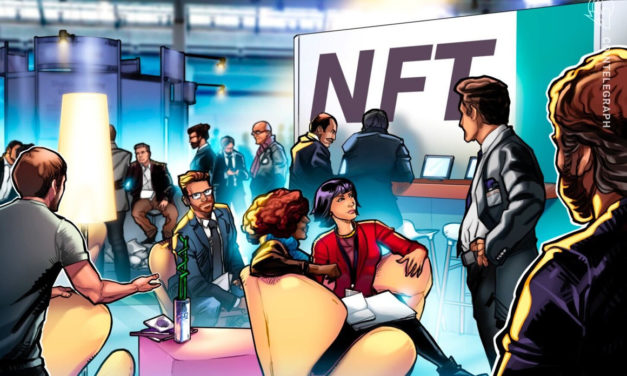
NFT NYC 2022: A look inside a massive NFT conference

Cointelegraph senior reporter Rachel Wolfson spent a day exploring NFT NYC 2022 to learn about emerging nonfungible token projects,or NFTs, and how the sector may advance. A recent market report published by Verified Market Research (VMR) predicts that the NFT market could reach a value of $230 billion by 2030. NFT NYC 2022 certainly demonstrated the potential of the NFT sector, highlighting some of the most promising use cases and industry experts. For instance, Camila Russo, founder of The Defiant and author of The Infinite Machine, told Cointelegraph that NFT products should advance to bring value to holders, whether that comes in the form of community building or funding for new projects. Cointelegraph also visited offsite houses hosted by Ripple and Doodles. David Schwartz, chief technology officer of Ripple, told Cointelegraph about the advantages and disadvantages of NFT projects, while Julian Holguin, chief executive officer of Doodles, explained the importance of a physical NFT minting experience. Cryptocurrency influencers “Girl Gone Crypto” and “Tech Con Catalina” also shared their thoughts on the advancing NFT ecosystem. Watch the full video here.

Čítaj viac


Blockchain firms fund university research hubs to advance growth

The demand for organizations to adopt blockchain technology is growing rapidly. Recent findings from market research and advisory firm Custom Market Insights found that the global blockchain technology market size was valued at $4.8 billion in 2021, yet this amount is expected to reach $69 billion by 2030. While notable, it’s become critical for the industry to enable rigorous research into the development of the blockchain sector. Tim Harrison, vice president of community and ecosystem at Input Output Global (IOG) — the developer arm behind the Cardano blockchain — told Cointelegraph that during the past year, the blockchain ecosystem has witnessed various risks from projects that have taken a “go fast and break things” approach. “Not only do these companies run these risks for themselves, but mistakes and failures can also negatively impact their end consumers,” he said. As such, Harrison believes that peer-reviewed research can help prevent such situations while also resolving issues that continue to linger from earlier iterations of blockchain development. Companies fund university-led research hubsIn order to ensure that blockchain projects are thoroughly researched moving forward, Harrison noted that IOG recently funded a $4.5 million Blockchain Research Hub at Stanford University. According to Harrison, the hub’s goal is to enrich the body of scientific knowledge within the blockchain and distributed ledger industry while driving a greater focus on fundamental research. Although the Blockchain Research Hub at Stanford was just announced on August 29, 2022, Aggelos Kiayias, chief scientist at IOG and a professor at the University of Edinburgh, told Cointelegraph that he believes the center will help the industry collectively solve current challenges. For instance, Kiayias pointed out that IOG previously donated $500,000 to fund research for blockchain scalability with Stanford. This was an important initiative, as blockchain scalability remains one of the biggest issues hampering industry adoption. Yet, Kiayias noted that Stanford’s new Blockchain Research Hub will take this a step further since the projects being funded will come from researchers across a range of disciplines and backgrounds. Kiayias added that research hubs associated with universities will likely add more value than typical blockchain-focused courses. “Stanford’s research hub will allow researchers to investigate the kinds of subjects that they are specifically interested in, giving them more freedom than taking a standard class,” he remarked. While many universities currently offer blockchain courses within their curriculum, research hubs funded by the industry may be the next step for universities aiming to advance the industry. For example, Dawn Song, founder of Oasis Labs and a professor at the University of California at Berkeley, told Cointelegraph that Oasis Protocol, along with a number of other blockchain companies, has provided funding for the Berkeley Center for Responsible, Decentralized Intelligence (RDI). According to Song, RDI was founded about one year ago as a multi-disciplinary, campus-wide initiative focused on advancing the science, technology and education of decentralization. Song explained that the research at RDI is focused on areas including blockchain scalability, security and privacy, usability and decentralized autonomous organizations (DAOs). For example, Song noted that research for zero-knowledge proofs is critical for ensuring scalability and privacy for blockchain projects. Given this, she pointed out that RDI researchers have started working on a project called Orion, which is a new zero-knowledge argument system. Song also mentioned that RDI researchers are developing a new type of key maintenance mechanism that will ensure greater usability. The project is known as the “multi-factor key derivation function” and expands upon password-based key derivation functions with support from other popular authentication factors.While innovative, Song added that RDI’s research is unique in the sense that the center is interdisciplinary: “RDI contains faculty from Berkeley’s computer science department, finance and economics and the law school. RDI’s research covers many different disciplines that are more in-depth in comparison with blockchain courses. We focus on research, education and entrepreneurship, which can then help develop courses to train a new generation of students entering this industry.” In addition to physical research facilities at universities like Stanford and Berkeley, virtual research hubs are being established. For example, Klaytn, an Asia-based layer-1 blockchain, recently committed $20 million in funding for a virtual research institute to support industry growth. Known as the “Blockchain Research Center” (BRC), this program will be run by a global consortium led by researchers from the Korea Advanced Institute of Science and Technology (KAIST) and the National University of Singapore (NUS). Sangmin Seo, representative director of the Klaytn Foundation, told Cointelegraph that researchers from KAIST and NUS will also work closely with an international team of principal investigators from six other universities, such as UC Berkeley, Princeton University and Georgia Institute of Technology. “With BRC operating in an open-source manner, other researchers beyond these universities will be able to participate in ongoing research projects or submit their own proposals,” he remarked. Seo shared that BRC research will span seven pillars focused on topics such as consensus, privacy, smart contacts, decentralized finance (DeFi) and the Metaverse. He added that although BRC is virtual, the program will regularly conduct community outreach efforts such as hosting conferences and workshops. In addition, the Alogrand Foundation, which is responsible for maintaining the Algorand blockchain ecosystem, has committed $50 million in funding for a virtual research program. The Algorand Centres of Excellence (ACE) program started in August 2022 and takes a strong focus on the development of real-world blockchain solutions, along with social impact and sustainability projects.Hugo Krawczyk, principal researcher at Algorand Foundation and head of the ACE program, told Cointelegraph that research teams are located across the globe to ensure a focus on local communities. He added that ACE researchers are tackling a number of problems associated with cryptography since this is the backbone of blockchain security: “We are also analyzing errors in smart contracts as errors in these can lead to huge losses of money and confidence.” Importance of university-led blockchain research hubs While it’s noteworthy that blockchain projects are supporting the development of university-led research programs, the scope of these initiatives extend far beyond marketing tactics or research for a company’s own project. Shedding light on this, Krawczyk explained that although the Algorand Foundation is committed to developing its own ecosystem, emerging research hubs such as ACE are focused on advancing the entire blockchain industry:“This is not just about educating developers to work on our own projects, but it’s about researching multiple projects that can help advance the blockchain sector. Even though we compete with each other, collaborating with others is beneficial for the space to mature and evolve.”Echoing this, Harrison mentioned that although there is a lot of competition in the blockchain space, healthy competition is a vital part of any growing industry. “Especially in its early days, every player also needs to play its part in growing the space as a whole,” he remarked. Indeed, collaboration seems to be key when it comes to these research centers. For instance, Song mentioned that Berkeley’s RDI will work closely with Stanford’s blockchain research hub. Krawczyk added that there is an ACE research center at Yale University that collaborates with Columbia University and the City College of New York. Another important point to note is that while it’s innovative for universities to offer blockchain courses as part of their curriculum, research hubs go a step further. Steven Lupin, director of the Center for Blockchain and Digital Innovation at the University of Wyoming, told Cointelegraph that university research hubs offer distinctive, hands-on learning opportunities. He said: “These programs allow students to roll up their sleeves and develop and deploy blockchain and digital asset projects in a real-world environment. Universities also take a leading role in developing standards and governance that’s more difficult for the industry to create due to competitive pressures.” For instance, Lupin mentioned that the University of Wyoming Center for Blockchain and Digital Innovation — which was founded in 2019 and is focused on developing educational programs and applied projects across campus — is working on a smart contract research group to develop standards, governance and interoperability to allow smart contracts to be deployed more effectively.While university-led blockchain research centers may be the next logical step for advancing the blockchain ecosystem, more work needs to be done to ensure that such programs are created. “With Web3 still in its early stages, one research center alone is unable to solve all the challenges that lie ahead. More research centers are required to collectively solve such challenges,” Seo remarked. He added that research centers such as Klaytn’s BRC are multi-year projects that take time and effort to develop.

Čítaj viac

Organizations bring Africa, Costa Rica and Ukraine to the Metaverse to raise awareness

The Metaverse is quickly becoming one of the most important places for companies and individuals looking to expand their reach. New findings from research firm MarketsandMarkets predict that the Metaverse market size will grow from $61.8 billion in 2022 to $426.9 billion by 2027. In addition, a recent report from Juniper Research links nonfungible token (NFT) growth to metaverse use cases. According to these findings, metaverse-related NFTs will experience an increase from 600,000 transactions in 2022 to 9.8 million by 2027.Given this potential, a number of regions across the globe have started to establish a virtual presence. For example, the emirate of Dubai announced the launch of the Dubai Metaverse Strategy in July this year. As Cointelegraph previously reported, the Dubai Metaverse Strategy aims to attract companies and projects from abroad while also providing support in metaverse education aimed at developers, content creators and users of digital platforms.While the concept may sound futuristic, industry experts believe that this is a logical progression. Hrish Lotlikar, co-founder and CEO of Superworld — an augmented reality content platform — told Cointelegraph that as Web3 technology becomes integrated into everyday lives, future-forward regions, governments and organizations will capitalize on communication, gamification and monetization opportunities in the Metaverse. Organizations bring regions to the Metaverse for a purposeThis appears to be the case, as many organizations are focused on establishing geographical territories within Metaverse ecosystems. For example, Africa can be accessed virtually in Ubuntuland, a Metaverse platform that houses a land called Africarare. Mic Mann, co-founder and CEO of Africarare, told Cointelegraph that Africarare connects Africa to the global digital economy:“Africa is one of the fastest growing populations in the world, and by 2050, it’s predicted that it will be one of the biggest populations. Therefore, we thought this was the perfect time to upskill Africa’s youth for this new world. Africarare aims to create the future of work for Africans and organizations who wish to connect with people across this continent.”Mann added that Africarare has secured a 12×12 village, or 144 plots, of virtual real estate in Ubuntuland to establish its visibility. He explained that users are defined by digital avatars, which can enter Africarare’s “central hub” land to partake in custom experiences. “These range from art to education and include experiences like galleries, live performances, stand-up comedy, video content channels, film festivals, safaris and more.” Image from Africarare. Source: AfricarareAlthough Mann believes that Africarare will enable a sense of virtual tourism, he pointed out that the project is meant to create improved work and educational opportunities for the African population. “We believe that the Metaverse is the world’s greatest equalizer. Through Africarare, we can allow Africans to partake in this new space and thrive,” he said. In order to ensure this, Mann explained that the World Data Lab — a data enterprise based in Austria — recently acquired a 6×6 village in Ubuntuland to develop their presence and connect to other organizations within this part of the Metaverse. According to Mann, World Data Lab plans to use this collaboration to raise awareness of key-impact topics through virtual initiatives. “This includes developing a data science “metaversity,” to better understand Africa’s growing population.” Mann further commented that companies establishing a digital presence in Ubuntuland will seek to recruit a digital workforce from the platform’s user base. Mann noted that users in Ubuntuland will use the UBUNTU token as its currency, which is built on the Ethereum blockchain and will be made available later this year. In the meantime, Mann remarked that art galleries across Africarare have already been established and are dedicated to showcasing Africa’s prolific creativity. “Over 15,000 users visited the platform during an alpha launch we did in October 2021 with our Mila Gallery,” he said. Based on this success, Mann noted that the Mila gallery, which means “tradition” in Swahili, will continue to host curated collections by some of Africa’s foremost artists. He also shared that Africarar’s Inuka gallery — Swahili for “rise” — will feature works by emerging African artists. “Both galleries will stage various exhibitions on an ongoing basis with art pieces being sold as NFTs,” he said. While Ubuntuland is focused on Africa’s metaverse, a project known as Alóki will allow users to virtually experience the Central American country of Costa Rica. Bartek Lechowski, chief operating officer of Alóki, told Cointelegraph that the platform reconnects people to nature through blockchain technology. “This play-to-own metaverse will enable users to do good for the planet and help build a sustainable future for society at large,” he said. To accomplish this, Lechowski explained that Alóki offers its users the chance to virtually explore Costa Rica’s rainforests while participating in sustainable development. This will be accomplished through the project’s blockchain-based game in which digital actions mirror those in the real world via NFT ownership. Lechowski said:“Alóki aims to make people pay attention to the climate change problem and be interested in contributing to something useful. For example, planting a tree in the Alóki metaverse can result in a real tree being planted in the Alóki Sanctuary of Costa Rica.”Lechowski — who is also an owner of the Alóki Sanctuary, which is a 750-acre patch of rainforest in Costa Rica — said that thei project aims to plant more than 10,000 trees through its Metaverse initiative. Image from Alóki. Source: Alóki“We currently have a 10-person team of sustainable farmers and are in the process of hiring even more. We’re working hard to create harmonious heaven — we’ve already planted a whopping 11,000 fruit trees,” he added. In addition to ensuring sustainability, Lechowski remarked that the project aims to create communal buildings that will house coworking spaces and social spaces. “Our online users will eventually be able to come and enjoy Alóki Sanctuary as a reward for their sustainable actions,” he said. Although Alóki has yet to launch, Lechowski explained that the project will take a simplified metaverse-like model approach that will gradually be developed overtime. “We plan to launch Alóki for our community as soon as there is a common Metaverse standard implemented to work across different platforms,” he remarked. Fortunately, work being done by the Open Metaverse Alliance is currently focused on implementing such standards.It’s also notable to mention that a nonprofit organization known as The Heritage Hub will soon allow users to experience Ukrainian history within the Metaverse. Brittany Kaiser, co-founder of the Heritage Hub, told Cointelegraph that the organization uses digital scanning, 3D modeling, and NFT tokenization to preserve local heritage to be shared globally in a metaverse museum. She said:“The problems it solves are three fold: Firstly to have a digital archive of all heritage and cultural sites, artifacts, art and other items of importance to a nation’s history and identity. Secondly, it allows all items to be encrypted on the blockchain for tracking and traceability in case of destruction or disappearance. Lastly, it allows us to use Web3 business models to fund the historic preservation of these sites and items.”Kaiser explained that the first Metaverse being built is for Ukraine to ensure that anyone in the world will have a chance to experience the important cultural heritage of the country. Taras Gorbul, co-founder of the Heritage Hub, added that people will also be able to contribute to digital tourism revenue that will help the country rebuild after the war:“Users will be able to visit sites that are still standing, but that are difficult to visit. Eventually, through an avatar, users will also be able visit sites that have been destroyed in the war but have been rebuilt digitally.”A metaverse with purpose to drive adoptionAlthough it’s innovative for organizations to recreate various regions in the Metaverse, it remains questionable if users will want to engage with these platforms. For instance, market research firm Ipsos recently conducted a survey for the World Economic Forum that found half of adults across 29 countries are familiar with the Metaverse. While notable, the study also found that excitement for metaverse adoption is significantly higher in emerging countries in comparison to most high-income countries. The report noted: “More than two-thirds of people in China, India, Peru, Saudi Arabia and Colombia say they feel positive about engaging with extended reality, compared to fewer than a third in Japan, Great Britain, Belgium, Canada, France and Germany.”This in mind, Mann believes that education is still needed in order to drive adoption. “Education and access is needed to up skill and empower Africans and the general population about these new technologies and how they can create equal opportunity,” he said. Echoing this sentiment, Lotlikar noted that regions like Dubai that are looking to enter the Metaverse also require education that extends beyond the hype of NFTs and blockchain technology. “The vast majority of people need to understand how they can benefit from this technology in the real world,” he remarked. In addition, Lechowski pointed out that a Metaverse with purpose will be essential moving forward. “Simply redirecting daily activities into the Metaverse is not going to drive massive adoption. We believe that providing custom experiences might do just that.” For instance, even if a Metaverse is only capable of providing an imitation of reality, Lechowski believes that Alóki has the potential to democratize access to nature in the long term.Kaiser further noted that as more culturally important parts of Ukraine are added to the Heritage Hub’s digital museum, the initiative will be able to roll out tools for more teams wanting to add items to the museum themselves. “In the future, other countries will be able to use the Heritage Hub tech stack to create digital tourism revenue and to open source access to their heritage for education and recreation.”

Čítaj viac

Ethereum advances with standards for smart contract security audits

The Ethereum ecosystem continues to witness a flurry of activity that has individuals and organizations deploying token contracts, adding liquidity to pools and deploying smart contracts to support a wide range of business models. While notable, this growth has also been riddled with security exploits, leaving decentralized finance (DeFi) protocols vulnerable to hacks and scams. For instance, recent findings from crypto intelligence firm Chainalysis show that crypto-related hacks have increased by 58.3% from the beginning of the year through July 2022. The report further notes that $1.9 billion has been lost to hacks during this timeframe — a figure that doesn’t include the $190 million Nomad bridge hack that occurred on August 1, 2022. Although open source code may be beneficial for the blockchain industry, it can unfortunately easily be studied by cybercriminals looking for exploits. Security audits for smart contracts aim to solve these challenges, yet this procedure lacks industry standards, thus creating complexity. An industry standard to ensure smart contract security Chris Cordi, chair of the EthTrust Security Levels Working Group at the Enterprise Ethereum Alliance (EEA), told Cointelegraph that as the Ethereum blockchain industry grows, so does the need for a mature framework to assess the security of smart contracts. In order to address this, Cordi, along with several EEA member representatives with auditing and security expertise, helped establish the EthTrust Security Levels Working Group in November 2020. The organization has since been working on a draft document of a smart contract specification, or industry standard, aimed at improving the security behind smart contacts. Most recently, the working group announced the publication of the EthTrust Security Levels Specification v1. Chaals Nevile, technical program director of the EEA, told Cointelegraph that this specification describes smart contract vulnerabilities that a proper security audit requires as a minimum measure of quality:“It is relevant to all EVM-based smart-contract platforms where developers use Solidity as a coding language. In a recent analysis by Splunk, this is well over 3/4 of mainnet contracts. But, there are also private networks and projects that are based on the Ethereum technology stack but running one their own chain. This specification is as useful to them as it is for mainnet users in helping to secure their work.”From a technical perspective, Nevile explained that the new specification outlines three levels of tests that organizations should consider when conducting smart contract security audits.“Level [S] is designed so that for most cases, where common features of Solidity are used following well-known patterns, tested code can be certified by an automated ‘static analysis’ tool,” he said.He added that the Level [M] test mandates a stricter static analysis, noting that this includes requirements where a human auditor is expected to determine whether the use of a feature is necessary or whether a claim about the security properties of code is justified. Nevile further explained that the Level [Q] test provides an analysis of the business logic the tested code implements. “This is to ensure that the code does not exhibit known security vulnerabilities, while also making sure it correctly implements what it claims,” he said. There is also an optional “recommended good practices” test that can help enhance the security behind smart contracts. Nevile said: “Using the latest compiler is one of the ‘recommended good practices.’ It’s a pretty straightforward one in most cases, but there are a lot of reasons why a contract might not have been deployed with the latest version. Other good practices include reporting new vulnerabilities so they can be addressed in an update to the spec and writing clean easy-to-read code.”Overall, there are 107 requirements within the entire specification. According to Nevile, about 50 of these are Level [S] requirements that arise from bugs in solidity compilers. Will an industry standard help organizations and developers? Nevile pointed out that the EthTrust Security Levels Specification ultimately aims to help auditors demonstrate to customers that they are operating at an industry-appropriate level. “Auditors can point to this industry standard to establish basic credibility,” he said. Recent: Web3 games incorporate features to drive female participationShedding light on this, Ronghui Gu, CEO and co-founder of blockchain security firm CertiK, told Cointelegraph that having standards like these help ensure expected processes and guidelines. However, he noted that such standards are not by any means a “rubber stamp” to indicate that a smart contract is entirely secure: “It’s important to understand that not all smart contract auditors are equal. Smart contract auditing starts with understanding and experience of the specific ecosystem that a smart contract is being audited for, and the technology stack and code language being used. Not all code or chains are equal. Experience is important here for coverage and findings.”Given this, Gu believes that companies wanting to have their smart contracts audited should look beyond the certification an auditor claims to have and take into account the quality, scale and reputation of the auditor. Because these standards are guidelines, Gu remarked that he thinks this specification is a good starting point. From a developer’s perspective, these specifications may prove to be extremely beneficial. Mark Beylin, co-founder of Myco — an emerging blockchain-based social network — told Cointelegraph that these standards will be incredibly valuable to help smart contract developers better understand what to expect from a security audit. He said: “Currently, there are many scattered resources for smart contract security, but there isn’t a specific rulebook that auditors will follow when assessing a project’s security. Using this specification, both security auditors and their clients can be on the same page for what kind of security requirements will be checked.” Michael Lewellen, a developer and contributor to the specification, further told Cointelegraph that these specifications help by providing a checklist of known security issues to check against. “Many Solidity developers have not received recent formal education or training in the security aspects of Solidity development, but security is still expected. Having specs like this makes it easier to figure out how to write code more securely,” he said. Recent: Ethereum Merge prompts miners and mining pools to make a choiceLewellen also noted that most of the specification requirements are written in a straightforward manner, making it easy for developers to understand. However, he commented that it’s not always clear why a requirement is included. “Some have links to external documentation of a vulnerability, but some do not. It would be easier for developers to understand if they had clearer examples of what compliant and noncompliant code might look like.”The evolution of smart contract security standards All things considered, the security level’s specification is helping to advance the Ethereum ecosystem by establishing guidelines for smart contract audits. Yet, Nevile noted that the most challenging aspect moving forward is anticipating how an exploit could occur. He said: “This specification doesn’t solve those challenges completely. What the spec does do, though, is identify certain steps, like documenting the architecture and the business logic behind contracts, that are important to enabling a thorough security audit.”Gu also thinks that different chains will start to develop similar standards as Web3 advances. For instance, some developers within the Ethereum industry are coming up with their own smart contract requirements to help others. For example, Samuel Cardillo, chief technology officer at RTFKT, recently tweeted that he has created a system for developers to publicly rate smart contracts based on good and bad elements in terms of development: Few days ago I started a little Google Sheet to rate publicly smart contracts in order to raise awareness and help both collectors and developers – it wil also contain do and don’t for when developing a contract.https://t.co/2ixBpkNeoc— SamuelCardillo.eth – RTFKT (@CardilloSamuel) August 15, 2021Although all of this is a step in the right direction, Gu pointed out that standards take time to be widely adopted. Moreover, Nevile explained that security is never static. As such, he explained that it’s possible for individuals to send questions to the working group who wrote the specification. “We will take that feedback, as well as look at what the discussions are in the broader public space because we expect to update the specification,” Nevile said. He added that a new version of the specification will be produced within six to eighteen months. 

Čítaj viac

Web3 games incorporate features to drive female participation

Although there is still an apparent lack of women in the Web3 sector, blockchain-based games geared toward women may help drive inclusivity. A recent report from the Entertainment Software Association found that 48% of gamers in the United States identify as female. It has also been noted that nearly half of all gamers in the world are women. The interest that women have taken in the billion-dollar gaming sector is notable. This, combined with the massive growth being projected by the GameFi industry, is a key reason why a number of Web3 games are being built specifically for female users. Beryl Chavez Li, co-founder of Yield Guild Games — a global play-to-earn gaming community — told Cointelegraph that she believes blockchain-based games like Axie Infinity have started to see an uptick in women players. “Although statistics show that play-to-earn games appeal more to male users, we believe that more women will start to take an interest,” she said. Yat Siu, co-founder and executive chairman of Animoca Brands, further told Cointelegraph that finance and Web3 games are closely related, noting that over time, this will naturally attract all types of people to the space. Yet he believes that women, in particular, will be drawn in given their tendency for greater financial responsibility. “This is particularly evident in developing countries where microfinance and specifically microlending is led predominantly by women,” he remarked. Web3 games incorporate features to attract women A number of Web3 games are coming to fruition with the goal of appealing to a predominantly female audience. For example, Fashion League is a free, play-to-earn mobile game that allows users to develop their own fashion empire. Theresia Le Battistini, CEO and founder of Fashion League, told Cointelegraph that the game allows users to create virtual clothing lines that could eventually be sold as nonfungible tokens, or NFTs, while brands can leverage the game to display digital products: “We believe that everything will be gamified in the future, as our statistics have found that the gaming market will exceed $300 billion by 2027. Web3 games need to be inclusive.”To drive female participation, Le Battistini explained that Fashion League contains certain features that are naturally appealing to women. “The aesthetics of the game are important, along with the fact that it will first be accessible on mobile devices. Women like to play games on mobile, as there is a low barrier to entry,” she explained. Recent statistics show that 62% of people install a game on their phone within a week of owning it. Moreover, these findings note that the current mobile gaming gender split is 51% for women and 49% for men. Regarding aesthetics, a report from The Female Quotient found this to be the most important factor i attracting women to the Web3 space. Fashion League avatars. Source: Fashion LeagueChavez Li, who serves on Fashion League’s advisory board, further pointed out that many Web3 games focus on first- and third-person shooter games, yet lack creativity. She noted that Fashion League encourages individuals to create digital items, which can eventually evolve into sellable NFTs. “We are enabling the creator economy through a fun game. The more users play, the more points they can earn. In-game cash can then be exchanged for tokens that can be converted to fiat,” she said. Chavez Li also mentioned that players can compete and interact with each other during events like fashion shows, adding a layer of socialization to the game. In addition to Fashion League, Mishi McDuff, founder of digital fashion brand Blueberry, told Cointelegraph that the company launched a 3D boutique shopping experience on the gaming platform Roblox. Known as “BlueberryXWorld,” McDuff explained that the Web3 game was designed to create a fun and safe environment for gamers to explore their digital identity:“Avatars can browse Blueberry’s two-story boutique and try on clothing and accessories. The clean lines and silhouettes of the collections are juxtaposed with flints of attitude such as miniskirts, crop tops and party girl metallics, along with fun accessories such as cat backpacks. In addition, a variety of hairstyles are available for further customization.”Like Fashion League, BlueberryXWorld was created entirely by female designers and developers. While McDuff noted that the game can be enjoyed by everyone, she believes that this element ensures female creators are able to have their perspectives heard. She elaborated: “In most traditional games, you see women represented in such an unrealistic way: no cellulite, no stretch marks, no body fat. Our avatars have love handles, stretch marks, and all the other things that make us human.”McDuff also pointed out that community is an underlying principle of the game, which she believes will greatly appeal to women: “Players can stop by the cafe to grab a drink and chat with one another. Women have always had a knack for building strong, close-knit communities, so it will be no surprise to see this in Web3.”BlueberryXWorld avatars. Source: BlueberryLenny Pettersson, chief operating officer of Antler Interactive — a Sweden-based mobile game studio — and acting CEO of “My Neighbor Alice,” told Cointelegraph that some of the most important features behind the Web3 game focus on player collaboration and in-game connections. Pettersson explained that the game allows users to gather resources to shape an archipelago together. Pettersson shared that player collaboration has already become apparent in the game’s Discord channel, noting that players write messages and post screenshots to the channel indicating where to find the best places to fish, for example. Given this type of community involvement, Pettersson explained that much of the inspiration behind My Neighbor Alice has been drawn from traditional games that have been popular among a female target audience. For example, he noted that the art style plays a big part here. “A colorful and playful art style resembling a fairytale is intentional.” Imagery from My Neighbor Alice. Source: My Neighbor AliceWhile aesthetics, customization and community building are all important features for attracting women to Web3, better representation is also critical. Marcus Bläsche, CEO and co-founder of Rumble Kong League (RKL) — a game that combines basketball, play-to-earn and NFTs — told Cointelegraph that basketball and Web3, unfortunately, both share the challenge of thunderrepresentation of female users. To combat this, Bläsche explained that RKL recently partnered with Round 21, a woman-led Web3 native sports lifestyle brand with an emphasis on collaboration and community. Related: Organizations look toward multiparty computation to advance Web3According to Bläsche, this partnership has helped to launch a new NFT game collection called “The Rookies,” which creates an even split of male and female “rookies” to ensure female athletes are represented in Web3. Jasmine Maietta, founder of Round21, told Cointelegraph that the organization is specifically helping RKL create equal opportunities for anyone — no matter their gender, ethnicity or social background, adding:“We believe that the Web3 world provides a unique opportunity to create a fair and equal ecosystem from scratch. Our Rookie collection is the first step in this direction, putting male and female athletes on the same page, and we plan to continue this narrative with anything we do in the future.”Rookie Avatar. Source: Rumble Kong LeagueWill games increase women’s participation in Web3?All things considered, it’s still difficult to determine if Web3 games geared toward women will actually result in increased participation. For instance, Pettersson believes this is a tough question to answer as of now. Yet, he noted that it would be sufficient to say that high-quality Web3 games geared toward women will have an impact on bringing more women into the sector: “The first “Web2” games were specifically designed and oriented toward boys and men. Over the decades more and more games were designed for girls and women.”Related: Reinventing yourself in the Metaverse through digital identityWith this in mind, he believes that the Web3 sector is already aware that women like games and want to be involved, thus taking a heightened focus on this gender class. However, Pettersson added that it will be difficult to determine the real impact these games will have, noting:“The challenge for Web3 games is also tied to the mass adoption of crypto, which is not specifically related to a gender question, but rather to a worldwide mass adoption of crypto. And there’s still a way to go when it comes to accessibility and user-friendliness for that to happen.”Siu also commented that games are becoming less gender-dependent, while Maietta remarked that Web3 has the opportunity to base its culture on intentional inclusiveness. While notable, it’s important to recognize that the Web3 gaming space is still underway. As such, some in the industry believe that developers are currently more focused on building out the ecosystem rather than inclusivity. For example, Olga Ivanova, content and community manager at Spielworks — a blockchain gaming platform — told Cointelegraph that she believes Web3 game devs are more concerned with “creating robust in-game economies and elevating the game design to at least the AAA standard.”

Čítaj viac

Získaj BONUS 8 € v Bitcoinoch

nakup bitcoin z karty

Registrácia Binance

Burza Binance

Aktuálne kurzy