Autor Cointelegraph By Rachel Wolfson

Celsius users concerned over personal info revealed in bankruptcy case

Crypto lending platform Celsius filed for Chapter 11 bankruptcy on July 13, 2022. Although the Celsius case involves digital assets, it remains subject to United States Bankruptcy Code under the Bankruptcy Court for the Southern District of New York. While this may be, a series of unusual events have ensued since Celsius filed for bankruptcy. For instance, Chief United States Bankruptcy Judge Martin Glenn — the judge overseeing the Celsius case — stated on Oct. 17 that the court will look abroad for guidance. Glenn specifically mentioned that “Legal principles that are applicable in the United Kingdom are not binding on courts in the United States,” yet he noted that these “may be persuasive in addressing legal issues that may arise in this case.” While the treatment of the Celsius case will abide by U.S. bankruptcy laws, Glenn still aims to determine how the Celsius case should be handled. Additionally, publicly available court documents related to Celsius’ bankruptcy proceedings have revealed personal data from thousands of the platform’s customers. A large financial disclosure form filed on Oct. 5 contains customer names, account balances, timing of transactions and more. While this may have come as a shock to Celsius users, releasing this information is subject to U.S. Bankruptcy Code. Adam Garetson, general counsel and chief legal officer at WonderFi Technologies, a regulated cryptocurrency exchange based in Canada, told Cointelegraph that bankruptcy proceedings should be open, public and transparent:“It is a strong way of avoiding any suggestion of impropriety by the courts and the persons and entities involved in the proceeding. As such, courts can make requests and impose orders on the bankrupt entity, including with respect to release of information which is available publicly.”Yet, it is unusual that committee investigations have revealed such a large amount of customer information. This point was highlighted in an article from The National Law Review published on Oct. 18, which states, “Debtor filings and Committee investigations have revealed a great deal more to the public about the Debtors’ financial affairs, insider activity, and the path and direction of the bankruptcy case.” The article also states that even though so much personal information has been disclosed, “there is still little indication of how claims will be treated and repaid in this case.” Celsius users face unintended consequencesWhile Celsius customers continue to wait for decisions to be made by the U.S. Bankruptcy Court, the release of personal information has resulted in additional stress. To add insult to injury, customer data was recently made public on a website called Celsiusnetworth.com. The website allows anyone to search Celsius users by their name to reveal their losses, along with the cryptocurrencies they had invested on the platform. If this wasn’t bad enough, the website includes a leaderboard that lists customers in terms of rankings for the greatest losses. Customer information can then be tweeted from the website, as a tweet button appears once user information is shown. The creators of Celsiusnetworth.com — who go by the name “Avnx” — told Cointelegraph that the website was built using the public data published as a result of Celsius’ legal operations. The source further remarked that the data on the website shouldn’t be considered as a leak, although they noted that releasing this information may have consequences similar to the Ledger data leak that occurred in Dec. 2020. “This data has been made public by Celsius. Whether we like it or not, it is a fact,” Aznx said. According to Garetson, sites like these are uncommon when it comes to bankruptcy proceedings. However, he mentioned that such occurrences may arise from high-profile events that generate specific media attention, or the attention of a particular community. Indeed, Avnx mentioned that Celsiusnetworth.com was designed to create a “buzz,” rather than making it easy for individuals to explore losses of Celsius Creditors. Avnx said: “For example, the Twitter button is a humorous approach, although nothing is funny in these events. Yet this creates a buzz to highlight several things, such as the fact that this information has been revealed, the amounts lost, or the balances of certain strategic people within Celsius.”In any case, the information revealed via the Celsiusnetworth.com website has resulted in unintended consequences for many Celsius users. For example, John Carvalho Jr., a Celsius user based in Massachusetts, told Cointelegraph that his personal information released on Celsiusnetworth.com resulted in a large amount of chaos, particularly on Crypto Twitter. Carvalho explained that he has the same name as the CEO of Synonym, which is a Bitcoin (BTC) software company. As a result of information being made public, multiple users on Crypto Twitter assumed that John Carvalho — the CEO of Synonym — had invested thousands of dollars on Celsius. This created an uproar on Twitter, as users started accusing the CEO of “buying altcoins,” among other things. Carvalho said:“I joined Twitter in 2020 but didn’t use it much. However, on the morning of Oct. 10, I was tagged multiple times, as Crypto Twitter had confused me for John Carvalho, CEO of Synonym. Users were talking lots of trash, accusing John Carvalho of being a ‘shitcoiner’ and calling him a ‘dummy.’““I had no idea who John Carvalho was. It’s unfortunate that user information was leaked initially, but this was made even worse when it spread on Twitter,” he added. I jumped to conclusions on the Celsius list, attributing the John Carvalho to @BitcoinErrorLog. This was wrong and I apologise to John for this, a lesson learned.— Peter McCormack ‍☠️️‍ (@PeterMcCormack) October 10, 2022Carvalho noted that the situation was clarified following a tweet sent from the Synonym CEO’s personal account, which referenced the mixup. Meet @JohnCarvalho. We have the same name, but recently some shitcoiners tried to use his misfortune to smear my reputation.John has a new baby girl and lost everything on Celsius. So I am asking you to help by donating some BTC to him here:3Q5m2LTLZABvELbqUvSRmQnFFA8z2vP2qb pic.twitter.com/ViM5OIYdSh— John Carvalho (@BitcoinErrorLog) October 10, 2022

Carlos DePaz, a Celsius user and certified public accountant, told Cointelegraph that, while he thinks it’s unfortunate that user information has been made public, he doesn’t feel personally impacted. “If I was number one on the leaderboard list on the website, I may feel differently. It may be embarrassing for those individuals for others to know how much money they lost. But for me personally, it’s not a big deal. It’s a live and learn situation,” he said. Another Celsius creditor who wishes to remain anonymous told Cointelegraph that, while he wasn’t impacted by public information being leaked, he believes this specific situation violates user privacy:“I am not sure if information of this sort is always public knowledge in similar cases, but it definitely feels like a violation of privacy being that the information is financial by nature.”Lessons learnedWhile it’s unfortunate that Celsiusnetworth.com was created as a result of publicly available user information, this demonstrates the need for further education and regulatory clarity within the cryptocurrency sector. For instance, DePaz shared that he initially viewed Celsius as a legitimate crypto lending platform, stating, “Celsius was partially intriguing because the website and regular ask-me-anything segments seemed very legitimate. It seemed like Celsius was run by people who knew what they were talking about, as they mentioned the platform was licensed.” Carvalho added that he viewed Celsius as an opportunity to build financially for the future of his family: “I would regularly listen to the ask-me-anything segments and would hear Celsius say ‘put your money with us and we will give you yield.’ I didn’t realize the risks involved at the time.”Ben Samaroo, CEO of WonderFi Technologies, told Cointelegraph that what’s unique about the Celsius case is that a lot of disclosure wasn’t initially provided to customers. He said: “High returns were being promised, yet the risks that came with that may have not been disclosed or understood by customers. This especially could have been the case for entry-level users, but it also impacted those who had already been in the industry.” While Samaroo is responsible for operating a regulated cryptocurrency exchange based in Canada, he pointed out that WonderFi was also put under pressure from investors during the 2021 bull run to offer lending products similar to Celsius, stating, “We couldn’t do this anyway, as this would have required us to go through regulators in Canada. We would have needed to present a plan and do risk assessments, while making sure safeguards and investor protections were in place.” The current state of the Celsius case also demonstrates that platforms involving digital assets are still subject to traditional U.S. laws. Shedding light on this, Garetson mentioned that this case is yet another example that broad, formal regulation in the U.S. over the crypto asset sector remains pending. “Traditional legal concepts like contracts, property and bankruptcy law continue to apply regardless of the status of any ‘crypto’-specific law,” he said. As a result, Garetson noted that the outcomes of the Celsius case are going to be determined in real-time — not by congress or a panel of experts, but rather by individual courts who are likely less familiar with the industry. “This emphasizes a greater need for thoughtful and harmonized regulation in the near term, particularly as it relates to oversight of centralized trading platforms,” he said.

Čítaj viac

Web3 projects focus on education to bring Latin American women to the sector

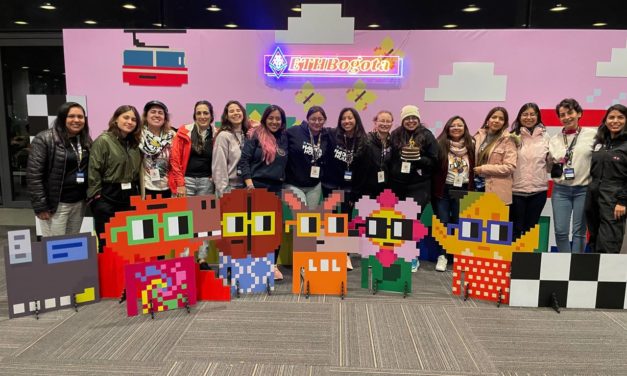
Interest in Web3 continues to grow despite the crypto bear market. A recent article from McKinsey noted that venture capital investments in Web3 exceeded $18 billion during the first half of 2022. Findings from Cointelegraph Research also show that Web3 attracted the most interest from venture capitalists in comparison to other blockchain sectors during Q2 of this year. While notable, a lack of diversity has become apparent within the Web3 sector. For instance, it was found that only 16% of nonfungible token (NFT) creators are women. Although this number is low, women are taking an interest in owning digital assets. Given this, industry experts believe that a lack of education around Web3 is creating a barrier to entry for women, especially for those who are from underrepresented regions, such as those from Latin America.Initiatives to bring Latin American women to Web3Sandy Carter, senior vice president and channel chief of Unstoppable Domains — an NFT domain name provider and digital identity platform — told Cointelegraph that she has seen increased demand for Web3 content from women living in Brazil, Columbia and several additional Spanish-speaking countries, including Spain. “On March 8, 2022, Unstoppable Domains launched ‘Unstoppable Women of Web3,’ which is a diversity and education group focusing on training talent to equalize the playing field in Web3. Following this, a number of Latinas reached out requesting Web3 content in various languages,” she said. Recent: Crypto adoption: How FDIC insurance could bring Bitcoin to the massesIn order to cater to these requests, Carter explained that Unstoppable Domains recently initiated a goal to onboard 5 million Latin American women into Web3 by 2030. Carter added that this initiative is being launched in partnership with H.E.R. DAO LATAM — a women-led developer decentralized autonomous organization (DAO) championing diversity — along with the Spanish-language crypto education platform CryptoConexión. She said: “Education is the first step to building a more inclusive Web3. We have partnered with women from 25 different groups to help create educational materials around Web3 in Spanish. We are also distributing over $25 million worth of free NFT domains to five million Latinas to help them build and control their digital identity as a gateway into the sector.” According to Carter, initiatives like these are becoming more important, as she pointed out that women who live in or trace their ancestry to Latin America continue to be underrepresented in the tech industry. To put this in perspective, data from the online tech community Built In found that only 2% of computing-related jobs in the United States are held by women of Latin American descent. The same applies in Latin America itself, where women are significantly underrepresented in science, technology, engineering and math fields, according to research from IDB. Monica Talan, founder of CryptoConexión, told Cointelegraph that organizations must take an education-first approach that incorporates different languages to bridge the Web3 diversity gap, stating, “CryptoConexión has an initiative called ‘WAGMI LatAm,’ where our mission is to ensure access to Web3 content in English, Spanish and Portuguese.” Additionally, Laura Navarro Muñoz, governor of H.E.R. DAO LATAM, told Cointelegraph that the organization is helping women in Latin America transition to Web3 by providing travel scholarships to events and hackathons. Women participating at the Devcon Bogota hackathon. Source: H.E.R. DAO LATAMGroups like H.E.R. DAO LATAM and CryptoConexión have already started making an impact. Bricia Gabriela Guzmán Chávez, community manager at Web3Equity — a Web3 platform promoting gender equality — told Cointelegraph that she got her first job in the sector after obtaining a scholarship from H.E.R. DAO LATAM to attend a cryptocurrency event: “I heard a speaker say, ‘If we want to have more inclusion, we have to do it.’ That day, I joined the H.E.R. DAO Global Telegram where someone shared a position for ‘Discord moderator.’ I applied, and my life changed. Yet, at that moment, I didn’t have the hard skills that I have right now, so I’m grateful that they gave me their vote of confidence.”According to Guzmán Chávez, H.E.R. DAO LATAM also created a scholarship program following ETH Mexico called “Hacker Mom Scholar.” Through this, she was able to attend Devcon VI with her three children. “Currently, I’m working full-time remotely on Web3 projects, and each chance that these projects provide me to attend Web3 events is an opportunity to improve the quality of my life,” Guzmán Chávez mentioned. Talan further remarked that it’s important for Latin American women to get involved in Web3 due to the demand the sector is witnessing in the region, especially in places like Mexico. “Mexico is seeing more people use crypto for remittances,” she said. According to World Bank statistics, Mexico was the second-largest recipient of remittances in the world last year. Given this, a number of Web3 companies are setting up shop in Mexico to enable crypto remittances. “We need information available about how crypto remittances can be used. I believe this can be better achieved if we have more women building these products,” Talan said. Challenges for Latin American women seeking jobs in Web3While it’s notable that organizations are focused on bringing women from Latin America to the Web3 sector, challenges such as hiring freezes and access to technology may hamper adoption. For instance, data from Crypto Jobs List noted that the number of job listings and talent interested in the space has declined about 30%–40% in comparison to the last bull market in February 2022.On the flip side, Web3 is enabling more remote job opportunities, which may help drive a diverse workforce. “Web3 is helping people get high-paying jobs regardless of their location. All they need are the skills, which is why we are focused on education first,” Navarro Muñoz pointed out. Recent: Institutional crypto adoption requires robust analytics for money launderingDiana Carolyn Olvera Gómez, a Web3 researcher, told Cointelegraph that H.E.R. DAO LATAM gave her the opportunity to participate in her first hackathon. The organization also presented her with educational content in Spanish. In turn, Olvera Gómez shared that she remotely serves as a contributor to Web3Montréal, a Canadian nonprofit focused on Web3, and to Coinmiles, a Bitcoin (BTC) rewards platform. However, Olvera Gómez mentioned that access to technology, such as Web3 initiatives, can be complicated for many women living in regions like Latin America. Yet she believes that a ripple effect will drive women’s involvement as more get involved.“Web3 communities dedicated to women provide an opportunity to bridge the gender gap in the workplace.” Carter added that demand from women wanting to participate within Web3 is there, yet supplying the correct educational content is the next challenge: “We are in a bear market, but this is the time for building. Energy and enthusiasm around the space haven’t waned. We just need to figure out how to supply education to those interested in learning more.” 

Čítaj viac

NFTs and crypto provide fundraising options for breast cancer awareness

The hype around nonfungible tokens (NFTs) may be fading, yet a number of organizations continue to implement Web3 initiatives. Nonprofit organizations and activists, in particular, have begun implementing nonfungible token projects to help fundraise and generate awareness for certain causes. While these methods are still new, NFT projects for philanthropy have been met with relative success. A recent report from crypto donation platform The Giving Block found that nonprofits using The Giving Block received more than $12.3 million dollars in cryptocurrency donations from NFT-related charitable giving initiatives in 2021. The report further noted that charitable organizations using NFTs are presented with the opportunity to connect with younger donor demographics while diversifying donation methods. NFT projects for Breast Cancer Awareness Month Benefits such as these can be especially helpful for raising awareness around life-threatening diseases. number of breast cancer-focused organizations have started implementing NFTs this October to highlight Breast Cancer Awareness Month. For example, Shaney jo Darden, founder of the Keep A Breast Foundation (KAB) — a California-based nonprofit that aims to reduce breast cancer risk — told Cointelegraph that KAB focuses on engaging with younger generations to bring attention to breast cancer. She said:“Even though women over the age of 40 are typically diagnosed with breast cancer, early detection can result in a 98% survival rate. Given this, KAB aims to generate awareness about breast cancer through encouraging and fun ways, like using NFTs to educate young women.” Darden said that last year, KAB hosted an exhibition in the CryptoVoxels metaverse to raise money for breast cancer research. “We wanted to do an event in the Metaverse as opposed to conducting a membership drive or gala, since this opens access globally,” she noted. Based on the success of this, Darden explained that she wanted to continue to implement Web3 initiatives — especially those involving artwork created by women — to generate awareness around breast cancer. Most recently, Darden partnered with the NFT project NFTitties to raise funds for KAB’s breast cancer prevention and educational initiatives. Carlota Dochao Naveira, founder of NFTitties, told Cointelegraph that the women-led project celebrates women, art and breasts to raise funds to fight breast cancer. “Emerging artists and activists were invited to submit an artwork representing breasts, following a set of visual guidelines. The artworks were then vetted and, if selected, included in the first release of NFTitties,” she said. NFTitties #1.14 by Medici_Labs. Source: OpenSeaAccording to Dochao Naveira, almost 30 NFTs were sold during the first week the project launched on Oct.1. She further pointed out that NFTitties has helped onboard more women into the Web3 ecosystem since the initiative encourages women artists, activists and others to submit their artwork to be presented as nonfungible tokens. Other organizations are implementing different forms of NFTs to educate individuals on this type of cancer that affects one in eight women. For example, the women’s handbag designer Vera Bradley announced on Oct. 3 that it will be donating almost 100% of the proceeds generated from its fashion NFT drops to The Vera Bradley Foundation for Breast Cancer.Jennifer Bova, vice president of marketing at Vera Bradley, told Cointelegraph that to date, the foundation has raised and donated more than $38 million to support critical advancements in breast cancer research. Yet, Bova noted that Vera Bradley has started focusing on marketing in the Metaverse to attract new users by attaching philanthropic utility to its digital and physical fashion NFTs. “Through its NFT PFP backgrounds, Vera Bradley hopes to drive awareness for fundraising, as well as female-led conversations and initiatives in Web3,” she said.We’re proud to announce through @TheGivingBlock, we’re now accepting #DOT donations to support lifesaving research in all areas of #breastcancer, from basic biology to prevention to treatment & to survivorship. Donate @Polkadot and 80+ other #cryptos today https://t.co/XoT7atRdV5 pic.twitter.com/JgTYBx1JkQ— Susan G. Komen (@SusanGKomen) August 10, 2022It’s also notable that Susan G. Komen, a leading breast cancer research foundation, recently began accepting crypto donations to enable cryptocurrency holders to give back. Michelle Strong, vice president of marketing strategy at Susan G. Komen, told Cointelegraph that about a year and a half ago, the organization began receiving requests from individuals interested in donating cryptocurrency:“We implemented this feature nearly a year ago with the help of The Giving Block. This has driven interest from both current and new donors, as crypto donations have opened doors to those who haven’t been able to give before but were interested in being charitable.” Based on the successful implementation of crypto donations over the past year, Strong mentioned that Susan G. Komen will be incorporating crypto donations, along with other digital donations received during the week of Oct. 9–15, to fund the organization’s metastatic breast cancer excellence in research award. “Oct. 13 this year is ‘metastatic breast cancer’ day, which is the most advanced stage of the disease. Susan G. Komen is giving out the excellence in research award to bolster investment around this specific area of research and cryptocurrency is another great way to support this,” she remarked. Web3 initiatives are helpful, but not necessarily betterWhile the use of NFTs and crypto donations to support breast cancer is innovative, these initiatives are still only helpful ways to bring attention to certain causes. For instance, Bova pointed out that driving awareness and funds for breast cancer research in the Metaverse is not necessarily better but rather an additive resource to tap into new donors and volunteers. Echoing this, Darden mentioned that incorporating NFT projects with KAB enables the organization to diversify its funding, yet it hasn’t proven to be a better solution in comparison to traditional fundraising mechanisms:“Many NFT projects die out over time, so KAB is taking a risk by being a part of certain projects. However, NFTitties has a clear goal and beautiful art that resonates with the KAB community.”Indeed, even though there are a number of risks associated with NFT projects, nonfungible tokens remain appealing when it comes to increasing user engagement and interest. “Susan G. Komen is happy to benefit from NFT projects that others are able to pull together. We are currently in conversation with an NFT project that aims to benefit our organization,” Strong noted. Yet, it’s also important to point out that, in addition to risks, there are challenges associated with implementing such projects. According to Dochao Naveira, targeting traditional NFT investors can be difficult when it comes to women-led initiatives “There tends to be a bro-culture in the Web3 space that doesn’t care as much about certain projects. There can also be difficulties with helping mainstream users set up a MetaMask wallet,” she said. But, as time progresses, Web3 projects aim to incorporate new features to help ease onboarding and educate new users. For example, Carmen Toal, CEO and co-founder of Sprkl NFT Studios — a platform working with nonprofits and individuals to implement NFT technologies — told Cointelegraph that mainstream users typically need more guidance when it comes to participating in NFT projects. As such, she mentioned that Sparkl NFT Studios incorporates familiarities with charitable NFT initiatives. “We sometimes include a ‘donate now’ button that is not directly attached to an NFT,” she said. Most recently, Sprkl NFT Studios partnered with the National Breast Cancer Foundation, Inc. (NBCF) on an NFT artwork fundraising campaign for Breast Cancer Awareness Month. Candice Hensley, senior manager of strategic partnerships at NBCF, further told Cointelegraph that working with Sprkl NFT Studios is part of the organization’s strategic plan to diversify its funds. Sprkl NFT Studios commissioned artist Pola a Yim to create and draw an original flower bouquet for a digital NFT to support Breast Cancer Awareness. Source: Sprkl NFT Studios

Čítaj viac

Web3 had a small, yet important presence at Paris Fashion Week

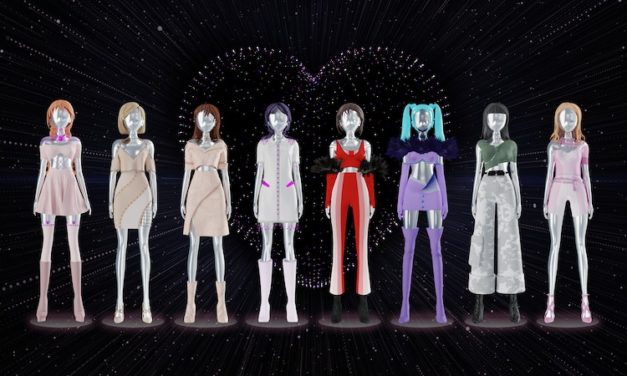
Paris Fashion Week 2022 consisted of 64 shows and 42 presentations, many of which demonstrated the future of fashion. From the sprayed-on dress worn by supermodel Bella Hadid at the Coperni show to upcycled fresh looks consisting of recycled garments, Paris Fashion Week brilliantly highlighted trends for upcoming seasons. While the majority of Fashion Week attendees and designers celebrated physical elements — such as in-person fashion shows and tangible designs — a handful of creators incorporated Web3 features to demonstrate fashion’s enormous digital potential. Web3 democratizes fashionShedding light on this, Victor Weinsanto, a French designer who launched his brand in 2020 after spending two years working with the famous Jean Paul Gaultier, told Cointelegraph that virtual worlds allow creators to design without having to use real fabrics and materials. “In a sense this ensures sustainability, even though a lot of energy and time is used to create such collections,” he said. Weinsanto revealed his first digital collection M3TALOVE immediately following his fashion show that took place in the Marais district of Paris on Sept. 26. Unlike traditional fashion week experiences, The M3TALOVE collection was showcased as 3D holograms within a series of glass cases housed in a dark room, equipped with bright lights and a DJ. Such a setting seemed appropriate, as the collection was a collaboration between Weinsanto and K-Pop girl band Lightsum. The “M3TALOVE” collection from Weinsanto and BNV. Source: BNVRichard Hobbs, founder and chief operating officer of Brand New Vision (BNV) — the Web3 platform behind M3TALOVE — told Cointelegraph that the idea for this collection was inspired by the possibilities of merging K-pop culture with fashion. “This was a collaborative experience with Victor presenting his concepts to each of the eight members of Lightsum, who then gave their comments and suggestions before BNV converted the sketches into digital outfits, along with individual customized avatars for the eight girls.”Weinsanto added that the M3TALOVE collection was one of the best ways to use nonfungible tokens (NFTs) to showcase a collaboration between music, the Metaverse and fashion. “I wanted a collection that could be wearable, but still have details that would be impossible to incorporate in real life.” Going beyond realistic concepts is indeed one of the most important features offered by Web3 fashion. Hobbs remarked that M3TALOVE is an entirely digital collection, noting that this allows for more imaginative concepts, along with the sustainability. “BNV’s business is digital fashion. If people can wear more virtual products and express themselves in that world while consuming less in the real world, that’s probably a good thing,” he said. Hobbs makes an important point, as it was previously reported that a typical New York Fashion Week emits up to 48,000 metric tons of carbon dioxide. The French luxury fashion house Balmain also showcased its Web3 presence at Paris Fashion Week this year. Balmain introduced “Balmain Thread,” which is the brand’s Web3 hub powered by the XRP Ledger that is designed to unite their community with NFT projects. Txampi Diz, chief marketing officer of Balmain, told Cointelegraph that Olivier Rousteing — who has been the house’s creative director since 2011 — along with the entire Balmain team, have become acutely aware of the need to democratize fashion. According to Diz, this led to the creation of the Balmain Thread. He said:“We are stressing the need to open up fashion, democratizing a previously closed-off universe. We knew that we had to introduce the Balmain Thread during our annual Balmain Festival, which is a celebration that mixes our runway presentation for Paris Fashion Week with a one-of-a-kind live concert that is live streamed on Balmain.com.”Diz explained that Balmain Festival attendees were presented with the opportunity to join the Balmain Thread community when they received their tickets. He added that those live-streaming the festival were provided with links to join on Balmain.com. “And all of those in the audience on the evening of the festival were invited to join by launching ‘The Moment,’ which is a mobile photo experience app powered by MintNFT that allows participants to transform their favorite Balmain Festival fashion moment into their own unique NFT.” While innovative, Diz pointed out that the ultimate goal behind Balmain Thread is to ensure new forms of communication with the brand’s followers while opening access to those who haven’t been involved with Paris Fashion Week before. He elaborated:“Inclusion is a keyword in fashion, as we all know that the old vision of exclusivity and closed-off experiences is just not feasible for the new generation of fashion lovers. Web3 is one of the many interesting new tools that allow us to open our world to those who wish to enter.”While such a concept is catching on with renowned fashion houses like Balmain, emerging brands are also incorporating Web3 experiences to provide greater accessibility for both consumers and creators. For example, the Paris-founded fashion company Faith Connexion highlighted their Web3 platform, Faith Tribe, during fashion week this year. Maria Buccellati, co-owner and co-founder of Faith Connexion, told Cointelegraph that Faith Tribe is an incubator under Faith Connexion that allows independent creators to design and customize digital and physical fashion assets that can then be minted into NFTs. Buccellati said:“We had a showroom at Paris Fashion Week this year to display some of the collaborative names and labels that are part of Faith Tribe. This makes Faith Connexion an inclusive brand, which is different from the major players like LVMH. We are leveraging Web3 to give power back to creators.” To put this in perspective, Buccellati shared that Faith Connexion announced during Paris Fashion Week that Gavin Magnus, a fifteen-year-old pop star and social media influencer, will be partnering with the brand to create an NFT line. Wahid Chammas, co-owner of Faith Connexion, further told Cointelegraph that Faith Connexion is already working with hundreds of new designers to provide them with tools such as virtual studios, IP registrations and NFT minting capabilities to expand their presence. Unlike BNV, which focuses strictly on digital collections, Chammas explained that Faith Connexion emphasizes physical production associated with digital twins. “We believe that any designer will be able to create and curate for us under their own brand, while we enable NFT tags to ensure consumers have digital ownership,” he said. The idea behind NFTs for physical designs will also allow creators under Faith Connexion to have wearables in Metaverse environments that can be used to dress avatars. Web3 will evolve within the fashion industryAlthough Web3 has massive potential to expand the fashion industry’s reach, the fact remains that very few brands and designers are incorporating these elements. While this was apparent at Paris Fashion Week this year, innovative designers like Weinsanto are hopeful that Web3 concepts will catch on. Image from Weinsanto’s opening night showcasing the  M3TALOVE collection. Source: @alekkatar #tendaysinparis“I think that the Metaverse is not yet well known by designers, but soon everyone will want to create collections in the Metaverse, as it is stimulating and exciting, but also easily accessible,” he remarked. Diz added that it’s inevitable that more and more fashion houses will follow Balmain into the Web3 space since it democratizes the industry. However, he pointed out that education remains a key challenge, which is why Balmain Thread aimed to make the process of joining its community as easy as possible. He said:“We made it clear that those joining the Balmain Thread community would never need to master any of the complex workings of crypto or blockchains in order to engage creatively with the house – all memberships were minted on the XRP Ledger, while MintNFT guaranteed security by proving authenticity via their video verification technology.”Although Balmain decided to take this route, some industry experts believe that educating designers and creators at major events like Paris Fashion Week is critical. For example, Enara Nazarova, vice president of Metaverse at Hype — an agency that helps brands get started in the Metaverse — told Cointelegraph that Hype hosted its second digital fashion soirée at Paris Fashion Week to educate attendees on Web3: “Inspired by the success of our New York Fashion Week soirée, we convened at the top of Centre Pompidou, where we welcomed the leading builders in the Web3 space to discuss what comes next for the fashion industry.” While Nazarova believes that Web3 has advanced within the crypto space, she noted that education, along with onboarding users is key for driving adoption. Although this is happening slowly, she is confident that Web3 will have a bigger presence at flagship fashion events in the future. “Web2 brands can’t ignore digital fashion’s power to connect with millions of consumers through virtual products. Yet transitioning from Web2 to Web3 is not a one-size-fits-all solution, so companies have to embrace experimentation. I think the opportunities for fashion to leverage Web3 infrastructure are just starting to emerge.”

Čítaj viac

NFT space bridges passions for tennis legend Maria Sharapova

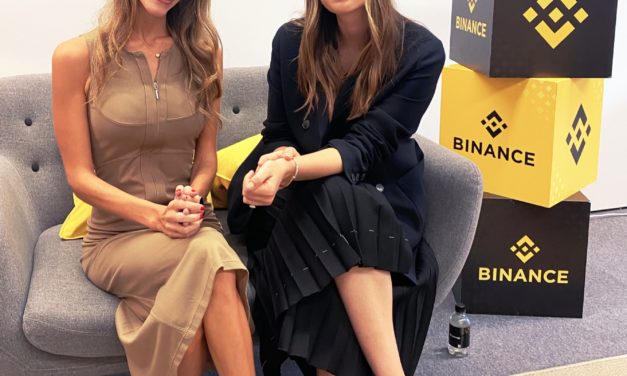
Tennis legend Maria Sharapova appeared at the Binance Blockchain Week Paris 2022 to share her interest in nonfungible tokens (NFTs).During an exclusive interview with Cointelegraph, Sharapova mentioned that “she is exposing herself to this new world of crypto and Web3,” noting that the sector will help her better engage with her fans. Sharapova was also one of the strategic investors behind MoonPay’s Series A financing round, yet she mentioned that she aims to bridge her personal experiences to the digital world moving forward. Maria Sharapova (right) with Cointelegraph senior reporter Rachel Wolfson (left) at Binance Blockchain Week Paris 2022. Source: Rachel WolfsonCointelegraph: What are you doing here today at Binance Blockchain Week Paris?Maria Sharapova: I’m crypto curious and would like to figure out how to bridge the incredible physical experiences that I’ve been able to have with my fans over so many years. I’m now finding ways to include experiences in the digital world, so that’s what I’m most excited about. Also, as a female entrepreneur, I believe it’s important to pave the way for other women to enter Web3. Money is a topic that I feel we don’t speak enough about as women.CT: Do you have plans to launch an NFT project?MS: I’ve been looking at this space for several months now, as I’m someone who is more in favor of opportunities for the long haul. When I saw the opportunity to bridge physical with digital experiences, I knew I wanted it to be a long-term experience for myself. Storytelling is very important and it’s a huge component of Web3. I think stories will be told better for both parties when thinking about a project long-term. Recent: The Caribbean is pioneering CBDCs with mixed results amid banking difficultiesCT: Do you think NFTs can help create better fan engagement?MS: Absolutely. NFTs are about finding ways to communicate with the right communities interested in what I’m doing within a different type of space. For example, I was seen on a television screen every week playing tennis for so many years, yet I no longer have that platform on a daily basis because I retired a couple of years ago. The Web3 experience has given me access to my fans in entirely new ways. I feel like I’m more engaged with them, as opposed to them just being engaged by watching me compete. CT: As a female entrepreneur and former athlete, do you have plans to get more women involved in Web3?MS: I want to allow women to have a space where they experiment with Web3. For example, I was 17 when I won my first grand slam and social media was in no way part of that experience. It took years for me to get comfortable with social media over time. I think Web3 is also an area where one has to get out there in order to learn and grow from it. As I mentioned earlier, the conversation about money, finance, crypto and blockchain is a taboo conversation. People may feel that unless they know about these topics, they shouldn’t speak up. But I think this should be the other way around — you learn a lot more if you ask questions and get involved. CT: Why did you decide to invest in MoonPay?MS: I want to diversify my portfolio. In the beginning, my investments were around consumer goods. For example, I invested in the sunscreen brand Supergoop early on. I am now exposing myself to an entirely new category. CT: What do you think are the biggest challenges associated with Web3 and how can we overcome these?MS: I’d love to see the quality of Web3 experiences come through a bit more and improve, specifically in the digital space. Recent: Are decentralized digital identities the future or just a niche use case?CT: Any additional comments?MS: I’m really interested in the NFT space because it bridges my passion for fashion, interior design and creating spaces that are unique to individuals and communities. I’ve become more interested in this space because it has more of a design perspective. It’s also an entirely new revenue stream that both artists and women are discovering.

Čítaj viac

Získaj BONUS 8 € v Bitcoinoch

nakup bitcoin z karty

Registrácia Binance

Burza Binance

Aktuálne kurzy