Autor Cointelegraph By Rachel Wolfson

Showtime: NFT tickets take the stage in 2022, connecting artists and fans

Nonfungible tokens have proven to be successful across a number of industries. From gaming to high-end luxury fashion, NFT use cases have demonstrated the importance of creating lasting connections between a company or a brand and its users/customers.As such, it shouldn’t come as a surprise that the billion-dollar event-ticketing industry is on its way to being disrupted by nonfungible tokens. Specifically, the online event-ticketing sector — which is expected to reach $60 billion by 2026 — will likely see an increase in NFT ticket platforms and marketplaces that issue virtual tickets across a blockchain network.Colby Mort, head of marketing and communications at Get Protocol — an NFT ticketing infrastructure provider — told Cointelegraph that every ticket issued using Get Protocol’s platform is minted as an NFT on the Polygon blockchain. He added that “Since 2016, Get Protocol has processed over 1 million on-chain registered tickets for events across the world, with 500,000 being NFT tickets processed during 2021.”While notable, it’s important to point out that NFT tickets are gaining popularity since they aim to solve inefficiencies faced by traditional ticketing systems. Josh Katz, founder and CEO of YellowHeart — a marketplace for music and live-event NFT ticketing — told Cointelegraph that NFT tickets allow fans to have more control, along with offering ongoing royalties for artists. Katz noted that these points are important when considering the problems associated with traditional ticketing models:“There are tremendous challenges around ticketing today, including counterfeiting, bad actors, rampant fraud and, more than anything, fragmentation. For instance, when a major ticketing platform releases a ticket, it can be bought and sold across secondary marketplaces multiple times. NFT tickets solve all of these problems.” According to Katz, the initial premise behind NFT ticketing platforms is to redirect money from third-party ticket sellers back to artists. He explained that NFT tickets can provide ongoing royalties to stakeholders, artists and event organizers: “The artist take is 95% primary and 5% secondary, currently. But when YellowHeart secondary opens in Q2, artists will be able to set their own secondary rate and keep up to 100% of revenue flow.” Echoing Katz, Mort commented that Get Protocol’s white-label ticketing product consists of a mobile application, event dashboard, ticket webshops and other supplementary features. Mort explained that these elements help eradicate ticket scalping while giving event organizers full control over their secondary market ticket sales: “This ensures that event organizers rightfully make more revenue for their event ticket sales while keeping a direct connection between artist and all fans that would previously have been lost to external platforms.”It could be argued that control over secondary market sales is one of the most important features provided by NFT tickets, especially as ticket brokers continue to buy thousands of event tickets to resell at inflated prices. Shedding light on the matter, Marc Brownstein, co-founder and bassist of The Disco Biscuits — an American jam band — told Cointelegraph that as a musician, he fully supports the idea of NFT tickets. Disco Biscuits has already explored NFTs elsewhere, having recently announced their second NFT album launch. Brownstein said: “As creators and artists, being able to have some stake in the secondary ticket market is valuable. For example, if you are releasing a 500-ticket show and each ticket is $50, these can sell out instantly and then be listed on Stubhub for $500 each. This is a scenario artists know too well, so having commission on secondary sales is very opportunistic.” NFT tickets create lasting engagement between fans and artists In addition to giving back to artists and event organizers, Katz mentioned that NFT tickets contain everlasting utility. For example, Katz shared that the Kings of Leon’s tokenized NFT album generated close to $1.45 million during the first five days of sales on OpenSea. Part of this release contained VIP fan experiences, band meet-and-greets, exclusive tour merchandise and more. Katz explained that live music events that have returned since the end of COVID-19 lockdowns can now issue NFT tickets with similar utility: “Individuals who buy NFT tickets are opted into a community for that artist or event. Merchandise booths may also become available where orders can be placed digitally, show transportation can be provided, and more. NFT tickets also allow for contracts to change, so leading up to a show or an event, holders can be treated as VIPs. Additionally, there are post-show utility features.” While the concept behind NFT tickets is still emerging, the potential is becoming apparent to the mainstream. Most recently, the National Football League announced the launch of its limited-edition NFTs for the post-2021 season. Dallas Cowboys NFT. Source: NFLRobert Gallo, senior vice president of club business development at the NFL, told Cointelegraph that the NFL began releasing virtual commemorative tickets in the form of NFTs at no cost to fans in November 2021. “Since then, we’ve distributed over 250,000 free NFTs to fans who attended select games.” Gallo added that the goal behind the launch was to create more one-to-one experiences using innovation and technology while providing fans with new and unique ways to commemorate game-day experiences:“Following the popularity of the regular-season virtual commemorative ticket NFTs, we will continue to release NFTs during the postseason and up through the Super Bowl. Select fans who attend postseason games will receive a free virtual commemorative ticket NFT, and a limited number of NFTs will also be made available to all fans for purchase for each round of the playoffs as teams progress, and to commemorate each team’s run through the postseason.”Will centralized ticket providers hamper innovation? Gallo further explained that the NFL’s NFT marketplace is powered by global ticketing giant Ticketmaster. Despite this being the case, Katz mentioned that a number of artists have come to YellowHeart to launch NFT tickets but have had difficulty due to companies like Ticketmaster vetoing the notion by not offering NFT support at affiliated concert venues. “Artists want to reap the upsides here, but incumbents have forced them to stick with a centralized ticketing model. I’ve had roughly 10 to 20 acts during 2021 wanting to tour through YellowHeart, but Ticketmaster or Live Nation shut them down,” said Katz. On the contrary, some industry experts believe that large centralized institutions will encourage adoption. Colin Fitzpatrick, CEO of Animal Concerts — a Metaverse concert organizer — told Cointelegraph that Ticketmaster and other large institutions are accelerating their strategies toward embedding NFT capabilities into their existing business. Indeed, this already appears to be the case. For instance, Akshay Khanna, general manager of North America for StubHub, told Cointelegraph that StubHub has been watching the prevalence of NFTs in recent years and has formulated creative views of what this could mean for StubHub’s business in the future:“We believe in the magic and novelty that comes with each live experience, and any innovation that brings more personalized fan engagement to live events is good for the industry as a whole. While we haven’t yet developed anything unique on this front, as a trusted ticket marketplace of the NFL, we have been a distribution channel for NFTs that the league is distributing to ticket buyers for various games.”Mort added that large, centralized companies might stand to gain the most by applying some type of NFT ticketing model. Mort shared that Get Protocol has received much interest and many questions from existing ticketing companies about what would be possible for them. Given this, Get Protocol has developed a “Digital Twin” product to allow these companies to explore the benefits of NFT tickets. He elaborated: “This works by ‘twinning’ their ticketing operations through Get Protocol. For every ticket they issue, an NFT copy is created, allowing business as usual for the integrating ticketing company with zero operational risk while opening the door for a variety of value-adding features such as tickets becoming digital collectibles for fans and extensibility into Web3.” Although this solution is innovative, Mort explained that big companies will be hesitant to adopt an NFT ticketing model if it hurts their revenue. “It’s a matter of showing lasting added value in areas that might not be available now. It’s less utopian from a blockchain enthusiast’s view, but finding that middle ground is the quickest way to mass NFT adoption.”The Metaverse will push NFT tickets forwardChallenges aside, NFT tickets will likely gain popularity in 2022 with the rise of the Metaverse. For instance, NFTs could be a way for the music industry to boost revenues that have been lost since the start of the COVID-19 pandemic. For example, Fitzpatrick explained that Animal Concerts allows users to purchase tickets in the Metaverse with the company’s token, ANML. This gives users full access to Metaverse concerts in familiar ecosystems like Decentraland and The Sandbox. Next, the company plans to build out its own Metaverse concert venue. Animal Concerts recently announced a partnership with South Korean unicorn Kakao’s Klaytn network to increase its exposure to the Korean entertainment industry. Related: Concerts in the Metaverse could lead to a new wave of adoption, Cointelegraph MagazineKatz added that YellowHeart is looking into applying its NFT tickets within Metaverse environments: “We are working on securing venues and partnerships in the Metaverse, as this will be a disruptive angle.” However, Katz pointed out that Metaverse ecosystems will never be able to fully replace live concerts: “The Metaverse will complement live music, ensuring that we have both options available now.”

Čítaj viac
AI-generative art predicted to be next trend for NFT sector

Sales of nonfungible tokens, or NFTs, reached $25 billion in 2021, demonstrating that the sector is one of the most sought-after markets in crypto. Art NFTs, in particular, made a big impact last year with Christie’s reporting over $93 million in nonfungible token sales during its fourth annual Art+Tech Summit that took place this past August. While notable, much of the crypto art scene appears to be dominated by cartoons and memes, as projects like CryptoPunks and Bored Ape Yacht Club have taken center stage. Although these projects are some of the most successful to date, a new subset of NFTs is emerging based on advanced technologies and the human imagination. AI-generative NFTs become a new art genreKnown as “AI-generative NFTs,” these nonfungible tokens are becoming increasingly popular within the art community, along with those interested in emerging technologies like artificial intelligence, blockchain and the Metaverse. In order to create AI-generative NFTs, one would typically use generative adversarial networks, or GANs. These are algorithms that leverage computers to use data to train models to produce machine-made images resembling art. Claire Silver, an AI-collaborative artist, told Cointelegraph that AI-generative NFT art is a relatively new genre, noting that the basic principle is that art is created in tandem with some semblance of artificial intelligence, like GAN: “There are code-heavy options and completely code-free tools that anyone can work with. I use the latter in my work. Being able to work with an AI to bring your ideas to life is an experience like no other, it augments creativity in a way that feels like freedom, a type of play you haven’t experienced since you were a child.”In order to create AI-generative NFTs, Silver explained that she leverages a text-to-art generator called “Eponym.” Developed by the AI-generated art company, Art AI, the Eponym tool allows users to create art based on their text of choice and then mint these creations directly to the largest NFT marketplace, OpenSea. “Cassandra Ex Machina” Source: Claire SilverEyal Fisher, co-founder of Art AI, told Cointelegraph that Eponym allows for any phrase to be transformed into a unique NFT art piece that will forever be etched onto the Ethereum blockchain as a visual representation. Fisher explained that Eponym was built on algorithms for personalized generated art that lets people create art by interacting with a computer. “Eponym is a collaborative NFT project. Users access it by coming to the website and typing any phrase or word into a text box. The AI then generates artwork based on the text entered.” Fisher added that each text prompt can only be generated once. “There is only one Eponym called ‘Bitcoin,’” he said. “$btc” image produced by Eponym. Source: EponymAlthough AI-generative art is a fairly new concept, Fisher shared that the first Eponym project sold out overnight on OpenSea, making it one of the largest collaborative art projects created by 3,500 different artists. “This is an experiment in decentralizing art. People who own Eponyms are creators of that art and want to curate it,” he said. While Eponym lets users create their own art NFTs, Metascapes is another project that was developed by three photographers looking to combine human expression with computer algorithms. Ryan Newburn, one of the photographers behind Metascapes, told Cointelegraph that the project consists of 3,333 rare AI-generated NFTs based on photographs taken across the world. Like Eponym, Metascapes leverges AI algorithms to create nature-inspired NFTs. According to Newburn, the first Metascapes collection is planned to be minted by the end of this month or early February.”Ice Journey” Source: MetascapesThe AI-team behind Metascapes — which goes by the name Versus Labs — explained that the artwork in each collection is created by training data to recognize real-world images:“We have images and labels for our photographs, which are called ‘training data.’ When it’s time to generate the output model, we put in a label that tells the model what type of images to put out. For example, ice caves and volcanoes were two categories the photographers have done work for in the past, but this wasn’t a majority of the input data, so we wanted to make sure the output contained examples of ice caves and volcanoes.”Versus Labs added that Metascapes’ AI learns as it goes, noting that the generator that outputs data gets better over time since two models of learning are being used in tandem. “The generator outputs random noise at the beginning and the discriminator model tells the generator how to improve the output, so it looks more like the training data. This cycle continues, ensuring both models improve over time.” Iurie Belegurschi, another photographer behind Metascapes, told Cointelegraph that as photographers, the Metascapes team chose to work with AI to generate images because everything related to NFTs and Web3 is about machines, computers and code:“We decided to collaborate with a machine to create an entirely new world in the Metaverse. Everyone now is buying PFP avatars, but in our case, people will get a unique piece of land in the Metaverse.” AI’s impact on artists and NFT collectors Although AI-generated NFTs are still an emerging concept, this model has started to impact both artists and NFT collectors. For instance, the digital artist known as “Kami was Here” told Cointelegraph that working with AI has fundamentally changed the role of the human artist:“The human needs the algorithm and the algorithm needs the human. For me, this new role meant data collection, writing code, curation, the inspiration to create a theme and, most of all, ‘coaching’ an algorithm. The process is dynamic and the outcome collaborative.” “The Cartographer” Source: Kami was HereIn terms of how generative art NFTs differ from other nonfungible tokens, “Kami was Here” explained that each result is fully unique since it is birthed from an algorithm. “Generative art explores the future of a society hardwired with human-computer interaction,” the artist mentioned. Moreover, Fisher pointed out that accessibility and a newfound desire to own NFTs has been an outcome of AI-generated images. “Many of our users are creating NFTs for the first time, while NFT collectors and buyers are making their own creations. This is unusual, as most people in our community are not professional artists.” Dr. Alex Alter, principle AI-scientist for Altered State Machine — a protocol that uses NFT intelligence to create smart AI agents — further told Cointelegraph that not only do AI-generated NFTs look unique, but they also bring a deeper abstract feeling to individuals. “These NFTs are truly unique in the sense that there is no single area in any of the AI works that have similar pixels. Also, in the future, people will be able to create AI artwork through DAOs and chatbot technology. This is far more than what other NFTs can do today.” “Singularity by AIIV” Source: Dr. Alex AlterCan AI be trusted to create meaningful NFTs?While the potential for AI-generative NFTs is apparent, the question of whether or not artificial intelligence can be trusted to generate quality images based on text or photographs remains a concern. As such, Newburn mentioned that Metascapes carefully curates each of their collections. “Our AI team has generated tens of thousands of images. Not all of these will be showcased in our mints. If we aren’t satisfied with the category, we strategize and retest what categories will work with each other. Our AI has learned from multiple tests.” It’s also important to note that there are different ways to generate AI-based NFTs. For instance, Fisher mentioned that Eponym has two versions of its generator available to the public, one on the company’s Discord channel operating as a chatbot and the other as a private link that contains more complex algorithms capable of creating more advanced images. “Kami was Here” further pointed out that some AI-art pieces can take only a few minutes to generate, while others can take longer: “There are free apps now like Wombo that can easily generate images. It’s simple for people to create. On the other hand, AI art can also take months to build and train your algorithms, collect input data and pay for processing power. AI art can also be very resource intensive and personalized.” Technology aside, AI-generative NFTs are bound to be a disruptive trend moving forward. According to Dr. Alter, AI-generated art has already seen huge volumes on OpenSea, noting that the market will continue to grow this year. He mentioned that this will be the case partially due to the functionality of AI-generative NFTs. “In the future, people will be able to own their own ‘AI artist’ NFT (AI which can produce art) or use a DAO AI to create art together with that AI artist.” Additionally, the rise of the Metaverse should prompt the growth of AI-based NFTs. For example, Fisher remarked that Eponym’s next project will feature interactive virtual identities where users can take their own portraits to create 3D avatars and animate them using artificial intelligence. “Our idea is to use AI that will allow for avatars to take different shapes that are compatible in metaverse environments like Sandbox. In February, the company will be introducing additional algorithms that will allow users to generate personalized avatars.”

Čítaj viac

Unlocking utility is key for fashion brands launching NFTs in 2022

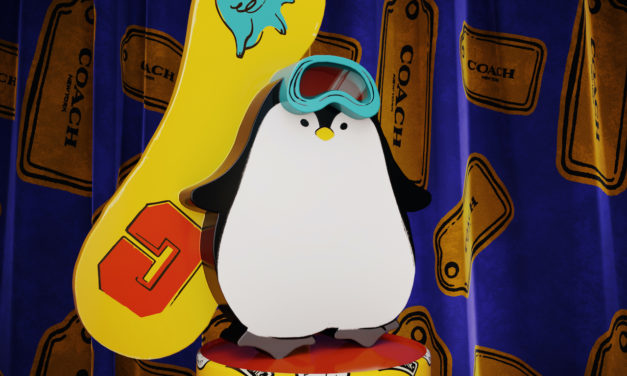
Nonfungible tokens, or NFTs, have become one of the most discussed markets in the crypto space this year. A recent report from Cointelegraph Research found that NFT sales are aiming for a $17.7 billion record by the end of 2021. This may very well be the case, as a number of mainstream brands have begun launching NFTs. According to recent research from Bain & Company and the online luxury fashion platform Farfetch, digital interactions with consumers are becoming increasingly important for brands. The report specifically states that “digital interaction with peers is on the rise when choosing to purchase a product.” As such, nonfungible tokens tied directly to brands and their consumers are now more important than ever before. Understanding what utility means for fashion NFTsWhile it’s notable that mainstream labels like Adidas, Dolce & Gabbana and others have already released NFTs, the utility behind nonfungible tokens is proving to be the real key to a fashion brand’s success. Karinna Grant, co-chief executive officer of The Dematerialised, a digital fashion marketplace, told Cointelegraph that utilities are what give nonfungible tokens purpose and value:“Just as in real-life, where a physical card can scan you access into a club, a utility can be anything from using the NFT as a membership pass to the ability to wear an asset in a game, or incorporating a sustainability or social responsibility benefit for purchasers of the NFT.”Grant noted that The Dematerialised has experimented with multiple forms of utility with each of the fashion NFT drips the platform has launched. She explained that previous releases have included utilities like wearing or playing with a 3D asset in augmented reality, or unlocking access to brand communities. “With Rebecca Minkoff’s sold-out NFT collection in September, the highest tier of NFTs unlocked VIP access to brand experiences for a year.” She added: “Karl Lagerfeld’s “x Endless” collection provided an opportunity for owners of Karl collectibles, an IRL and URL ticket to a brand event in Paris in 2022, which will feature another launch where only Karl holders will be invited to take part.”It’s become clear that fashion NFTs must offer some type of consumer engagement, allowing brands to interact with individuals in both the physical and the digital worlds. Avery Akkineni, president of VaynerNFT — an NFT consultancy agency — told Cointelegraph that while the utility of some NFTs can simply be for the sake of art, brands launching NFTs require deeper functionality built upon an existing community. For example, Akkineni shared that VaynerNFT recently helped the global fashion house, Coach, launch its first NFT collection, which featured eight Coach Holiday animals from the brands’ Snow City digital game. Akkineni added that the NFT launch was also in celebration of Coach’s 80th birthday, which resulted in the creation of 80 unique digital art pieces featuring the eight Coach holiday animals. “Bella the Penguin” from the Coach NFT collection. Source: VaynerNFTAkkineni explained that each digital Coach NFT also grants the right for the initial holders to receive one complimentary made-to-order physical rogue bag in 2022. “Something that Coach wanted to do was to explore this new world of NFTs, but wanted to in a way that wouldn’t commercialize their IP or ask consumers to pay for anything,” she said. To efficiently engage with the Coach community, Akkineni mentioned that the Coach NFTs were given away for free during Dec. 17–24 this year: “The Coach NFTs were claimable on the Polygon blockchain. Coach made sure not to commercialize too early and to learn about the space to gauge demand to see if their audience was interested in NFTs.” Fashion NFTs must also function in the MetaverseThe fact that brands must now interact with consumers both virtually and in real-life has also added an extra layer of technical utility to NFTs. As Bain & Company’s latest luxury goods report states, “new keywords and phrases — such as metaverse, personalization at scale, and tech stack — will come to the fore as the industry grows and evolves.” As such, some companies have started to explore NFTs in the Metaverse. For example, Pet Krewe — a pet apparel e-commerce company — recently opened a digital commercial space in the Metaverse community known as “ShibaVerse.” Allison Albert, founder and chief executive officer of Pet Krewe, told Cointelegraph that the company is promoting its brand by featuring its NFT pet clothing in a Metaverse containing balloon dogs called “Shibaloons.” Source: Pet KreweAccording to Albert, Pet Krewe’s NFTs will be worn as unique designs that fit the Shibaloons. While Albert pointed out that these costumes can be held and swapped out on different Shibaloon dogs within ShibaVerse, Pet Krewe is using this digital commercial space as another form of brand engagement or marketing. “We can connect with dog-loving customers in a dog-centric Metaverse. This is reaching our customer base in an entirely different marketing element.”The 18-year-old fashion label Mishka has also entered the NFT space with its famous eyeball logo. The collection of 6,696 NFTs is known as “The Keep Watch Crew,” or “KWC” for short. Greg Mishka, founder of Mishka NFT and the Keep Watch Crew, told Cointelegraph that Keep Watch is the most iconic and well-known branding element of Mishka, for both fans and the streetwear and fashion community. Andy Milonakis KWC NFT. Source: MishkaGiven the label’s strong user base, Mishka explained that the KWC NFTs are the next chapter for the brand. “The KWC is your ticket into what we like to call the MISHKAVERSE. Immediate utilities include lifetime discounts and exclusive merchandise,” he explained. Mishka added that the label is working on integrating Web3 elements to their website. “This would allow for consumers to verify the NFTs they own in order to access exclusive pages and drops via the website.” Should fashion NFTs still be tied to physical items?While the utility of fashion NFTs extends beyond simply offering digital items connected to physical goods, some in the industry believe that this is still one of the most important functions. For instance, Grant noted that connecting physical items to digital NFTs is a critical part of the adoption process for nonfungible tokens of all categories. She elaborated:“We have a very interesting split perspective with our current community, with half asking for more physicals and half asking more digital-only. However, when we survey outside of our current community the figure is much higher. This makes sense as first-time or new NFT owners tend to still hold more traditional beliefs that physical products are more “valuable” than digital ones.” Echoing Grant, Mishka commented that it’s important to have physical items that can be claimed or achieved by acquiring something in the Metaverse since most consumers still live in the “real world.” This is why it shouldn’t come as a surprise that a mainstream fashion label like Coach gifted NFT holders with physical made-to-order rogue bags. Interestingly enough though, Akkineni mentioned that sometimes NFT holders don’t redeem their physical items, which has proven to be the case for other drops associated with consumer-facing brands. “VaynerNFT did a collaboration called “Anwar Carrots x Veefriends,” which was a collection sold at Nordstrom and made available to all “Self-Aware Hare” NFT holders. It was only after some reminders that the holders did claim the physical items,” she commented. Fashion NFTs will be a trendThe rise of NFTs in 2021 has demonstrated growth moving forward for major brands. While companies like Nike have already taken steps to enter the Metaverse, more labels will follow suit. This has become the case as the world moves toward digital business models, which have also been promoted by the rise of COVID-19. For instance, Albert explained that Pet Krewe is still unsure of how COVID-19 is going to play out in 2022, noting that current supply chains are still being disrupted:“We need to hedge our bets on alternative revenue streams. Entering into a metaverse that aligns with our own company values means that we can add additional revenue streams through art NFTs and digital wearables.”Grant further remarked that The Dematerialised is excited for “behavior-changing launches,” which include using NFTs to disrupt physical production methods. However, it’s important to point out that brands will face challenges along the way. According to Grant, fashion labels will encounter three main obstacles, with the first being a shift in thinking when it comes to the value of Web3 and digital ownership. Secondly, Grant explained that understanding the purpose and narrative of an NFT launch is important: “We support launches that are part of long term strategic commitments to Web3, not a marketing gimmick to briefly drive revenue.”Finally, Grant pointed out that it will be challenging for major brands to ensure a 3D asset design pipeline in house. Yet Grant remains optimistic that these challenges will be resolved: “Mainstream adoption will come as more major fashion brands, influencers and creators get involved.”

Čítaj viac

Spreading holiday joy through charitable giving with cryptocurrency

The holidays are the perfect time of the year for giving back, and the rise of cryptocurrencies has created even more opportunities for charitable initiatives. This was highlighted during Giving Tuesday 2021, the Tuesday after Thanksgiving which saw over $2.4 million raised in cryptocurrency from the nonprofit fundraising platform The Giving Block.As crypto philanthropy becomes a new subsector of the cryptocurrency economy, some in the industry believe that crypto donations will only continue to increase. Alex Wilson, co-founder of The Giving Block, told Cointelegraph that last year the organization raised about $4 million in crypto donations, noting that this year, over $100 million in crypto donations will likely be received.According to Wilson, this growth is partly due to the fact that donating crypto is more tax efficient than fiat donations. “Anyone who donates before December 31 is able to claim a deduction for the 2021 tax year. This is a great way to offset some of your gains.” Wilson added that over 1,000 nonprofits currently accept crypto donations through The Giving Block, a few of which include St. Jude, Save the Children and United Way. “Next year, we have a lot of partnerships that are going live and we expect our growth to accelerate. We’re estimating that we’ll process nearly $1 billion in donations next year and work with over 6,000 nonprofits.”Cryptocurrency giving campaigns for the holidaysWhile a number of nonprofits have started to accept crypto donations, it’s also notable that campaigns centered around cryptocurrency philanthropy are being launched this holiday season. For example, in early December, Upbring Innovation Labs — a Texas-based organization seeking to advance technology in the nonprofit sector — launched the Give Big TX Crypto Fund. Ryan Park, vice president of innovation of Upbring, told Cointelegraph that the fund is a joint cryptocurrency campaign working with twelve Texas-based nonprofits: “You can think of this as a ‘cause fund.’ The cause here is to make Texas a better place to live. This is also about showing nonprofits that they can adopt new Web 3.0 technologies to advance. The larger goal overall is to see Texas emerge as a leader in crypto philanthropy.” Park shared that the Give Big TX Crypto campaign is partnering with organizations including Austin Pets Alive, Big Brothers Big Sisters Lonestar, Catholic Charities of Central Texas and eight other nonprofits. He added that the Texas Blockchain Council — a 501 C (6) organization — is also part of this initiative given the group’s involvement in advancing blockchain throughout different industries in Texas. Kelsey Driscoll, senior innovation program strategist at Upbring, further told Cointelegraph that the campaign will be accepting over 40 different types of cryptocurrencies for donations through Dec. 31, all of which are facilitated by The Giving Block. “When donations are made, The Giving Block automatically converts them to United States dollars, so accepting crypto has been just as easy as accepting fiat donations, if not easier,” she remarked. Driscoll added that the subreddit group r/Bitcoin will be matching Bitcoin (BTC) donations when contributions are made to any of the charities supported by The Giving Block. Pawthereum, a decentralized community-run project supporting animal shelters, has also launched a charitable cryptocurrency campaign this month. John Weathers, community manager for Pawthereum, told Cointelegraph that its 12 Days of Crypto Giving campaign allows for crypto donations to be made for specific projects that help animals in need. The Pawthereum project was created as a fork of the meme cryptocurrency project Grumpy Cat Coin, which raised $70,000 in crypto funds for the Sterling Animal Shelter in Massachusetts. Most recently, Pawthereum raised $25,000 through crypto donations for Muttville Senior Dog Rescue, a San Francisco-based animal shelter caring for dogs with special needs. According to Weathers, close to $400,000 worth of crypto has been donated since the campaign was launched on Dec. 14.Related: Is crypto a boys’ club? The future of finance is not genderedNonfungible tokens, or NFTs, are also being leveraged for donations this year. Given that the market growth for NFTs sales is expected to reach $17.7 billion by the end of 2021, this sector is launching one of the largest crypto charity events this season. Known as Right-Click, Give!, this is an auction open to the public hosted on the NFT platform Opensea. The auction ran through Dec. 24, and all proceeds will be donated to Blankets of Hope, a charity that provides warm blankets to the homeless while also teaching kindness to children in school. Mike Fiorito, co-founder of Blankets of Hope, told Cointelegraph that as an avid NFT collector, he is well aware of how welcoming the NFT community is as a whole. As such, he believes that more NFT-focused charitable campaigns will emerge. “There are a lot of kind people in the NFT space that are making fortunes — no matter how big or small — and want to give back,” he said. Park also pointed out that the Give Big TX Crypto campaign is allowing NFT artists to work directly with nonprofits to donate proceeds earned from minting nonfungible tokens. “Many artists doing NFT drops are looking to work with nonprofits and this is an opportunity to do so. We have two NFT projects donating proceeds from their mints to our fund.” Will charitable crypto campaigns catch on?Although there are currently only a handful of charitable crypto campaigns present, the benefits associated with cryptocurrency donations may result in mainstream adoption moving forward. While U.S. donors don’t have to pay capital gains taxes on any crypto assets they donate to a registered nonprofit, there are other technological advantages. For instance, Nawzad Amiri, community leader for Pawthereum, told Cointelegraph that the transparency provided by a blockchain network, along with the speed of transactions, is impressive when it comes to crypto donations versus fiat. Moreover, statistics from The Giving Block found that crypto donors may be willing to contribute more to charity, noting that $11,000 is the average cryptocurrency donation size on The Giving Block. Donation data from Giving USA found that $737 was the average charity donation for Americans in 2020. While the benefits may be clear to some, education seems to be the biggest challenge hampering adoption. For example, although Texas is growing into one of America’s biggest crypto capitals due to its friendly stance toward blockchain and mining power capabilities, Park shared that it has been challenging to bring Texas nonprofits on to the Give Big TX Crypto campaign: “We reached out to about 60 nonprofits and are partnering with 12 total. It seems like this would have been a shoo-in but there is still a long way to go in terms of educating the world on the potential of crypto philanthropy.”Another challenge worth mentioning is that while NFT’s may appear as ideal donation assets, there is uncertainty regarding tax deductions. Fiorito explained that he is still trying to determine if donating NFTs is considered a tax-deductible event. “This is a cloudy area because we are so early in the NFT space,” he commented. Due to this uncertainty, the Right-Click, Give! Auction is also accepting cryptocurrency donations through The Giving Block. Related: Biggest NFT drops and sales in 2021Challenges aside, it’s clear that crypto philanthropy has opened a new door of opportunities to a generation eager to give back. For instance, Park pointed out that the donor base for many of the nonprofits partnering with the Give Big TX Crypto campaign is over the age of 70. According to statistics from The Giving Block, the average age of crypto users is 38 years old, as Wilson added:“The people donating here are individuals that live and breathe Web 3.0 or that have held crypto for a long time. A big piece of this now is just educating those people that this opportunity exists.”

Čítaj viac

Beware of sophisticated scams and rug pulls, as thugs target crypto users

This year has been monumental for the cryptocurrency sector in terms of mainstream adoption. A recent report published by Grayscale Investments found that more than one-quarter of United States investors (26%) surveyed own Bitcoin (BTC), up from 23% in 2020. With the holidays around the corner, financial services provider MagnifyMoney also found that nearly two-thirds of surveyed Americans hope to receive cryptocurrency as a gift this year. While crypto’s growth is notable, there has also been an increase in the number of scams associated with digital assets. A Chainalysis blog post highlighting the company’s “2022 Crypto Crime Report” revealed that scams were the dominant form of cryptocurrency-based crimes by transaction volume this year. The post notes that over $7.7 billion worth of cryptocurrency has been taken from scam victims globally. According to Chainalysis’ previous research, this number represents an 81% increase compared to 2020, a year in which scamming activity dropped significantly compared to 2019. Source: ChainalysisScams are the biggest threat for building trust in crypto Kim Grauer, head of research at Chainalysis, told Cointelegraph that while there are many different crypto-related crimes, scamming has become the largest in terms of value received by criminals. She added that scams represent a significant threat to building trust within the crypto ecosystem, as this may prevent people from investing in digital assets.Grauer further mentioned that scams related to decentralized finance (DeFi) have been on the rise this year. With an annualized revenue in all DeFi protocols estimated at around $5 billion, this shouldn’t come as a surprise. More interesting, though, is that Chainalsyis has discovered that “rug pulls” have contributed to this year’s increase in scam revenue. According to Grauer, Chainalysis defines rug pulls as an instance when a person or developer decides to unexpectedly cease a project and run away with funds:“Rug pulls have accelerated the amount of scamming the crypto space has seen this year. In addition to financial scams, rug pulls have exploited different vulnerabilities in the crypto space. Overall, they have taken $2.8 billion of cryptocurrency.” Although rug pulls are a relatively new crime, Grauer believes these cases are becoming common in the growing DeFi ecosystem. To put this in perspective, the Chainalysis blog post notes, “Rug pulls have emerged as the go-to scam of the DeFi ecosystem, accounting for 37% of all cryptocurrency scam revenue in 2021, versus just 1% in 2020.” The Chainalysis blog post also provides examples of some of the biggest rug pulls of 2021. For instance, the AnubisDAO case is mentioned as the second-biggest rug pull of this year, with over $58 million worth of cryptocurrency stolen. According to the post, AnubisDAO launched on Oct. 28, 2021, with claims of offering a decentralized currency backed by a number of assets. However, the project didn’t contain a website or white paper, and all of the developers went by pseudonyms. Miraculously, AnubisDAO still managed to raise nearly $60 million overnight, yet 20 hours later, all of those funds disappeared from AnubisDAO’s liquidity pool. While AnubisDAO demonstrates a large-scale DeFi rug pull, new cases are occurring almost daily. An early Ethereum and DeFi investor who wishes to remain anonymous told Cointelegraph that they fell victim to a rug pull on Dec. 19, 2021. The anonymous source shared that the project is called “up1.network,” noting that many early Ethereum investors were discussing Up1 in a Discord chat group. They added:“People I trusted were mentioning the project so I checked it out. I thought it was strange to see Up1 giving away airdrops, but thought it could have been affiliated with a DeFi token I had. I then connected my MetaMask wallet and clicked on ‘get airdrop’ but kept getting an error message. I did this three times, which gave the project access to my account.” Unfortunately, once Up1 gained access to their account, three DeFi tokens worth $50,000 were instantly taken. “I revoked access after the fact on Etherscan so they couldn’t steal any more tokens,” they mentioned. The Ethereum investor then checked the DeFi platform Zerion where they saw the notifications that the DeFi tokens had left their wallet. Zerion also provided them with a wallet address to where the funds went, along with a message:“0xc28a580acc42294787f44cffbaa788eaa4958056; You gave a web3 site / smart contract unlimited access to your funds (check who you gave access to and revoke here).”While both AnubisDAO and Up1 are examples of DeFi rug pulls, it’s important to point out that the nonfungible token (NFT) ecosystem is also vulnerable to rug pulls. Most recently, the Bored Ape Yacht Club community fell victim to a rug pull when some members decided to connect their wallets to mint NFTs from a link posted in the group’s Discord channel. Even more surprising is that rug pull scams are also targeting mainstream NFT projects. For example, on Oct. 28, 2021, the global beauty pageant Miss Universe sent out an official tweet announcing the launch of its NFTs on the Wax blockchain. Unfortunately, the people who minted these nonfungible tokens were part of a rug pull.As a reminder: DON’T MINT from the links posted in Discord.Due to amazing members of the community, we’ve obtained pertinent information about the hackers.We’re working diligently to fix this. Priorities are restoring the server, prosecuting, and making it up to the minters— Jenkins The Valet (@jenkinsthevalet) December 21, 2021Jessica Yang, an NFT photographer, told Cointelegraph that when Miss Universe announced the launch of an NFT project, she didn’t question whether it was a scam or not because the pageant is widely known. “The price of each NFT was 0.06 Ethereum. That translates to around $230 for one. The artwork also has the beauty contestant’s face and country they are associated with plastered on it,” she remarked. Yang also mentioned that the project was geared toward women, noting that Paula Shugart, the president of Miss Universe, previously stated:“Miss Universe is going to be the first brand in the NFT space that is about women, about women’s empowerment, and embracing the technology, and moving forward. I love it; this is the first one that is away from other more male-oriented spaces.” Given the brand’s reputation and appeal, Yang and many others minted Miss Universe NFTs, connecting their wallets to the platform. Yet Yang noted that the next day, Miss Universe deleted its official Instagram account. She then noticed that her funds disappeared entirely. Yang added:​​”One red flag I saw was coming from their Discord. The moderators kept trying to get everyone to buy Miss Universe NFTs, promising that they were going along with the roadmap. Their roadmap promised monthly AMAs, signed prints, and much more. Even Steve Harvey vetted the project.”Do your own researchAs the DeFi and NFT ecosystems continue to mature and grow, these environments will, unfortunately, be prone to rug pull scams until industry solutions are developed. In the meantime, the best course of action is for users to do their own research. For instance, Grauer shared that every DeFi project should have a code audit available to make investors feel safer. “Many of the DeFi platforms that have been hacked don’t have code audits,” she remarked. The Chainalysis blog post also pointed out that “rug pulls are prevalent in DeFi because with the right technical know-how, it’s cheap and easy to create new tokens on the Ethereum blockchain or others and get them listed on decentralized exchanges (DEX) without a code audit.”In addition to code audits, the anonymous Ethereum investor shared that after reviewing the Up1 site more closely, they could tell that it was fake. “For instance, the team was all anonymous, with just first names that couldn’t be clicked on to open a Twitter or LinkedIn profile.” Even with these precautions the anonymous source mentioned that wallet providers also need to do a better job of keeping users safe:“If there is a questionable site, wallets should seek them out. I believe this technology can scale, but it has to be able to handle these scams. Otherwise, people will lose all their money.” Following the Up1 rug pull, the anonymous source contacted MetaMask and shared that they got a response noting that it would flag the website. It’s also important to point out that while a clear industry solution is yet to be developed, Grauer noted that, unlike fiat-related crimes, crypto payments can be traced to their source. With this in mind, she added that some cryptocurrency platforms are starting to take action to keep users safe from scams. For example, crypto exchange Luno partnered with Chainalysis in 2020 to protect against a scam targeting South African crypto users. Eva Crouwel, head of financial crime at Luno, told Cointelegraph that one of the requirements from a regulatory framework point of view is to be able to monitor and act upon transactions that have a suspicion of money laundering, terrorist financing, sanctions or any other type of illicit activity. She noted that on-chain transactions must be monitored, as well as the design and the development of case management and user interface. In terms of crypto investors keeping themselves safe from scams, Crouwel recommends staying away from offers that sound too good to be true, adding:“Start by doing as much due diligence as possible. Look at the company’s/token’s social media profiles to see what other users’ experiences have been. You should also go through the company directors’ personal social media pages and look into their industry connections and employment background so ensure their history is sound.”

Čítaj viac

Získaj BONUS 8 € v Bitcoinoch

nakup bitcoin z karty

Registrácia Binance

Burza Binance

Aktuálne kurzy