Autor Cointelegraph By Rachel Wolfson

Is Austin the next US crypto hub? Officials approve blockchain resolutions

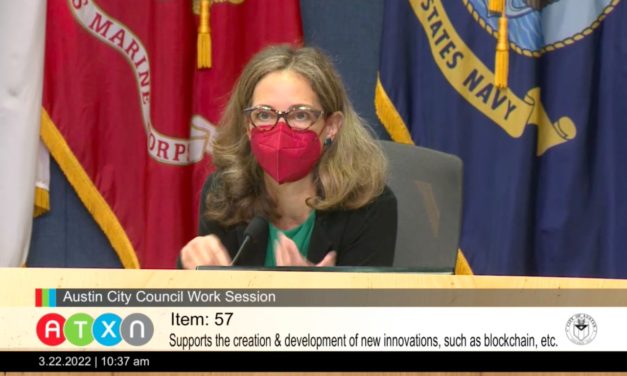
Innovative cities across America are racing to become the next hot spot for cryptocurrency and blockchain adoption. Miami was the first city to adopt its own part of CityCoins last year, allowing it to implement its own cryptocurrency called “MiamiCoin” to be used for civic engagement. New York City has also made a name for itself as a crypto-friendly city by implementing educational initiatives and withMayor Eric Adams receiving his paycheck in Bitcoin (BTC) in January this year. Austin takes a strong stance Most recently, Austin — the state capital of Texas that goes by the slogan “Keep Austin Weird” — has taken a strong interest in cryptocurrency and blockchain technology. While Texas’ desire to lead the way for crypto innovation was established about a year ago when Governor Greg Abbot tweeted that he is a “crypto law proposal supporter,” the city ofAustin has taken additional measures to ensure the acceptance of cryptocurrency for city services.Count me in as a crypto law proposal supporter. It is increasingly being used for transactions and is beginning to go mainstream as an investment. (Fidelity, etc. trying to get Bitcoin ETF).Texas should lead on this like we did with a gold depository. https://t.co/1z25mtgnmu— Greg Abbott (@GregAbbott_TX) March 29, 2021On March 9, 2022, Austin city council member Mackenzie Kelly put forth a resolution to direct the Austin city manager to explore possible use cases of cryptocurrency to benefit Austin and its residents. The resolution specifically asks for the city manager to examine how the city could adopt Bitcoin and other cryptocurrencies for financial transactions.Kelly told Cointelegraph that her resolution directs the city manager to conduct a fact-finding study to determine what would be required for the city to accept Bitcoin or other cryptocurrency payments for city services:“This is more of a feasibility study. We currently don’t have enough information as council members to know if we can accept crypto as payment for city services. We need to know more about this before we can decide. In doing so, there is security information we need to look at to see if this is even viable or if we can keep crypto on our books financially. We don’t know if we can bill it as an asset — that would prevent us from being able to accept crypto as payment. There’s also the financial stability of crypto as a whole, and if we can even accept it in that regard.”Image from Austin city council meeting on March 24, 2022.  Source: Austintexas.govAlthough questions remain, Kelly mentioned that Austin has always been a forward-thinking and innovative city, noting that many cryptocurrency investors currently live and work in Austin. Kelly added that Austin Mayor Steve Adler is a co-sponsor of her resolution. Given this support, Kelly believes cryptocurrency payments will serve as a useful alternative to allow individuals the flexibility of paying for certain city services. She elaborated:“If someone gets a speeding ticket, for example, and doesn’t have a bank account but has cryptocurrency, they could use crypto as payment. Or, if they wanted to pay their taxes or electric bills using Bitcoin or dedicate a park in their name using crypto. This is all part of the analysis for allowing the city of Austin to accept crypto payments.”This could certainly make a huge impact, as recent data from Finder.com found that 8% of Texans already own Bitcoin and that adoption in the state could hit 14% by the end of the year. Austin, in particular, could benefit from crypto payments for city services, as Google data shows that Austin ranks at the number one city in Texas that searches for the keywords “Bitcoin” and “crypto.”All things considered, it shouldn’t come as a surprise that Kelly’s resolution was approved during Austin’s city council meeting that took place on March 24. Now that the resolution has passed, Kelly explained that the next step for approval will occur in mid-June when the Austin city manager can determine if crypto can indeed be accepted as payment. This will be based on the city’s research regarding financial stability, security, equity and inclusion and consumer benefits or risks.In addition to Kelly’s resolution, Adler’s resolution focusing on blockchain technology was also passed during Austin’s March 24, 2022 working session. During the meeting, city council member Sabino Renteria explained that Austin started exploring the use of blockchain four years ago to ensure that the city’s homeless population would have control of their personal records at all times. “The concept was what if we use blockchain technology to be able to give folks ownership and access to all of their records,” he remarked. Renteria added that he is “excited at the prospect of what blockchain can do.”While both resolutions are innovative, some Austin city council members expressed concerns during the meeting. Councilmember Leslie Pool mentioned that her single biggest concern regarding blockchain implementation is its “lack of a central authority.” She added:“It may be tamper evident and tamper resistant, but that is all that it is. It’s a digital ledger. So there may be some unique uses for this or for the city to promote its use, but at this point, given its relatively recent entry into data storage or other digital arenas, I’m really cautious relating to the city diving into adopting or using it. I very much want to hear from our financial office staff or experts on these technologies before taking decisions to adopt these items.”Regarding the cryptocurrency resolution put forth, council member Pool added:“I continue to believe crypto is too volatile, a form of currency to risk tax payer dollars or employee retirements. Crypto is unregulated. It’s not just unregulated. It’s also unprotected. There’s an element for me of gaming involved here. THat leaves me really uneasy. Crypto as a form of payment or investment is inconsistent with the role of a municipality in safeguarding the community’s revenue.”Austin pushes forward, despite concernsConcerns aside, Austin residents remain positive regarding cryptocurrency and blockchain innovation within the city. For example, Jesse Paterson, chair of the education committee at ATX DAO — a chain-agnostic decentralized autonomous organization (DAO) in Austin — told Cointelegraph that the organization aims to serve as a local resource to help educated city council members and residents on the implications of the recently passed resolutions:“Some ATX DAO members were at city hall showing our support for the resolutions, yet we still lent some caution because we are still in the early days of crypto. Therefore, it takes time to understand the space before diving into projects.”DAO representatives @CrystalGravy2 @theSamPadilla and @realitycrafter showed up for today’s Austin City Council Meeting to give public comment in support of resolutions 55 + 57. ATX DAO is glad to offer support to any city projects or investigations into the web3 space. pic.twitter.com/8zzIEQVyNz— ATX DAO (@ATXDAO) March 24, 2022

Ryan Harvey, ATX DAO community manager and long-time resident of Austin, added that, based on the wording of both council member Kelly’s crypto resolution and Mayor Adler’s blockchain resolution, it’s clear that these are still fact-finding missions. However, he noted this is a positive step in the right direction:“New information is always a good thing. But, even beyond fact-finding, both resolutions show that Austin is open for business and encourages innovation, which is fantastic.”During the March 24 council meeting, Harvey took a few minutes to share his thoughts with city council members. He stated that, “There are organizations here in town like ATX DAO — and I was excited to see DAOs mentioned in the resolution — that can be a point of reference.”ATX DAO community manager, Ryan Harvey commenting at the March 24 city council meeting. Source: Austintexas.govIn addition to efforts being made by ATX DAO, other Austinites are creating initiatives with crypto and Web3 elements to give back to the community. For example, City Magic is a project aiming to bring communities in Austin together through grants in the form of nonfungible tokens (NFTs). City Magic founder Raffi Sapire told Cointelegraph that the project awards $1,000 grants to those in the Austin community who want to create a friendly space or event for neighbors or for civic engagement. “City Magic is for civically-minded people and for those who care about the community. It also helps build a bridge for people who may not have interacted with tokens before. Grants are NFTs, and the cost to join our committee is equal to one grant that will benefit civic engagement.”Adler recently demonstrated his support for Sapire and other blockchain-focused Austin entrepreneurs and businesses in a tweet that read, “Austin is excited to support the businesses and innovations that will turn the promises of Web3, cryptocurrency, and blockchain technology into reality.”Moreover, Austin may soon join the ranks of Miami and New York City by implementing its own CityCoin. A CityCoin community member spoke about how this may play out in a presentation conducted at ETH Austin, a two-day long event that took place during South By Southwest. The community member shared that CityCoins’ main goal is to work with the city of Austin to help officials like Mayor Adler and council member Kelly better understand how Austin’s own cryptocurrency can be successful. “We need to define this and make sure we do it right before we go about anything. Ideally, we’d like to have an announcement on this during Consensus 2022, set to happen on June 9.”CityCoins community member presenting at ETH Austin. Photo Credit: Rachel WolfsonWhen asked about a CityCoin being implemented in Austin, Kelly remarked, “I’m open to the idea, but my financial conclusion of that depends on my resolution passing and knowing that it’s feasible for the city of Austin to accept crypto as a whole.” 

Čítaj viac
Crypto and NFTs at F1: What are firms bringing to the races beyond sponsorships?

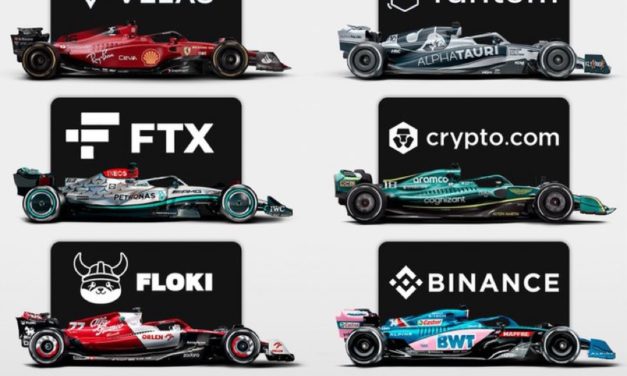
The cryptocurrency community has always put an emphasis on decentralization and globalization. Therefore, it shouldn’t come as a surprise that a number of crypto companies are sponsoring Formula 1 (F1) racing teams in an attempt to further connect with audiences across the world. Research by global analytics company Nielsen Sports found that Formula 1 has the potential to reach about one billion fans globally this year, with the 16–35 age group accounting for the biggest share. The appeal of F1 is clearly on the rise, and cryptocurrency companies are jumping on board to demonstrate their presence. To put this in perspective, there are 10 F1 teams for the 2022 season and crypto companies are currently sponsoring eight.Source: Motorsport.comCrypto and F1: An ideal marketing matchMark DiMassimo, founder and creative chief of DiGo — a New York-based marketing agency — told Cointelegraph that the interest crypto companies are taking in Formula 1 certainly makes sense from a marketing perspective. “You can argue that F1 is a natural extension from a sponsorship standpoint for crypto companies since both sectors are international, exciting and involve money,” he said.To DiMassimo’s point, the F1 racing team, Red Bull Racing, recently entered a three-year partnership with Singapore-based crypto trading platform Bybit for $50 million per year. Prior to this, the cryptocurrency exchangeCrypto.com announced a $100 million partnership with Formula 1 for its 2021 “Sprint Series.”Igneus Terrenus, head of communications at Bybit, told Cointelegraph that the crypto exchange views sports sponsorships as a key part of its global marketing strategy to build brand awareness and sentiment in major markets. “We are also partners to some of the top e-sports teams in the world, but Formula 1 remains the most popular international racing series,” said Terrenus. He added that Formula 1 has a larger and more global following than almost every other sport:“2021’s Abu Dhabi GP culminated in a dramatic nail-biting final-lap decider that saw Red Bull Racing’s Max Verstappen prevail over Mercedes’ Lewis Hamilton — this attracted an audience of 108 million. Whereas Super Bowl 2022 between the Rams and Bengals drew an audience of 101 million.”Patrick Hillman, chief communications officer at Binance, told Cointelegraph that F1 is a sport the crypto industry gravitates toward, given its global presence and fan base. “Binance recently announced a partnership with the BWT Apline F1 Team. There are very few sports as global as F1,” he said.Blockchain companies are also getting involved with Formula 1. In January 2022, Fantom Foundation, a layer-one blockchain platform, announced its sponsorship with the Italian Formula 1 racing team, Scuderia Alpha Tauri. Fantom CEO Michael Kong told Cointelegraph that this partnership is important for several reasons, with exposure being a primary benefit. “It puts a lot more eyeballs on Fantom since F1 is watched by hundreds of millions worldwide. “This has partly been responsible for user growth on the Fantom network,” he said.F1 sponsorships expand as NFTs gain tractionBut, while crypto companies may have initially been drawn to F1 sponsorships from a marketing perspective, the rise of nonfungible tokens (NFTs) is presenting new opportunities for organizations involved with Formula 1. For instance, a recent Deloitte Global study anticipated that in 2022 alone, sports NFTs will generate more than $2 billion in transactions — double the volume seen in 2021. Additionally, the study predicts that by the end of this year, roughly five million sports fans around the globe will own an NFT sports collectible. Given this, the majority of crypto and blockchain companies sponsoring Formula 1 racing teams have also launched NFTs to coincide with sponsorships.On March 22, 2022, Fantom announced a sponsorship with the Brazilian-American Formula 1 racing drivers Pietro and Enzo Fittipaldi. According to Kong, the duo drivers will display Fantom imagery on their race suits and helmets throughout the F1 2022 season. In addition to the sponsorship agreement, the Fittipaldi Brothers will launch their first NFT series on the Fantom network. “Both Pietro and Enzo have demonstrated a strong interest in emerging technologies. These NFTs will deliver unprecedented access to fans, allowing them to engage with the popular athletes through a new medium,” Kong said.”The return of a Fittipaldi Grand Prix Debut” NFT created by artist Rich. Source: Infinity NFTPietro Fittipaldi further told Cointelegraph that he and his brother decided to launch an NFT series with Fantom due to their involvement in the crypto world:“We wanted to be able to share some of our most exclusive items with our fans and the people who support us through the NFT community. We have always been very active on the digital side of things. My brother and I won the first F1 virtual world championship, so to be able to do something else digitally through NFTs made a lot of sense.”Fittipaldi explained that the NFTs will be designed by the Brazilian artist Rich, who is famous for his graffiti artwork. “These art pieces will then be digitized into unique NFTs that offer access to exclusive F1 championships, along with access to my indy 500 F1 helmet and virtual mini-world championship replica helmet,” said Fittipaldi.”Virtual World champions 2021 NFT” created by artist Rich. Source: Infinity NFTKong added that NFT agency Infinity NFT will support the Fittipaldi Brothers sale by delivering four NFT categories for fans to choose from, each offering varying levels of direct engagement.In addition to Fantom’s recent NFT launch, Terrenus said that Bybit will serve as the primary marketplace for the NFTs released by F1’s Oracle Red Bull Racing team. Bybit’s NFT marketplace was launched in January 2022, but Terrenus believes that it has already generated impressive support from the community.Bybit will also issue fan tokens for the Oracle Red Bull Racing team, expected to launch next year. According to Terrenus, fan tokens will ensure that the community’s voice is amplified when it comes to the team’s decision-making processes.F1 community learns about blockchainWhile it’s notable that crypto companies are sponsoring F1 racing teams and drivers, some may question how the mainstream will receive these partnerships and NFTs. This is especially important to consider, given the fact that NFTs are still a new and sometimes unclear concept for non-crypto natives. For instance, recent research from the NFT Club found that although NFTs have increased in popularity since Dec. 2020, the most popular question of 2021 was “where to buy NFTs.” This demonstrates that there is still a large sector of individuals unfamiliar with the NFT space.Kong noted that Fantom has had a positive experience collaborating with Alpha Taur, noting that the company was able to explain NFTs, their benefits and possibilities when Fantom worked with Alpha Tauri F1 driver Pierre Gasly on his NFT launch. “Hopefully, we’ve been able to further introduce them to blockchain technology,” Kong commented.Fittipaldi added that he believes NFTs will be well received by non-crypto natives due to the utility behind the tokens. “A lot of times, people think NFTs are just about buying digital artwork, but behind these creations is access to exclusive F1 championships.” With this in mind, Fittipaldi shared that he and his brother plan to launch more NFT collections moving forward. “The whole idea behind this drop is for our community and fans to have something exclusive, which we plan to offer more of moving forward.”Moreover, crypto sponsorships also seem to be resonating well with F1 team leaders. An article published this month on motorsport.com highlighted this notion, as the Formula 1 Mercedes team boss Toto Wolff stated that “it was fascinating to understand crypto exchanges,” in reference to FTX’s sponsorship with Mercedes. 

Čítaj viac

SXSW 2022 showcased immersive NFT experiences, lacking crypto and Bitcoin sessions

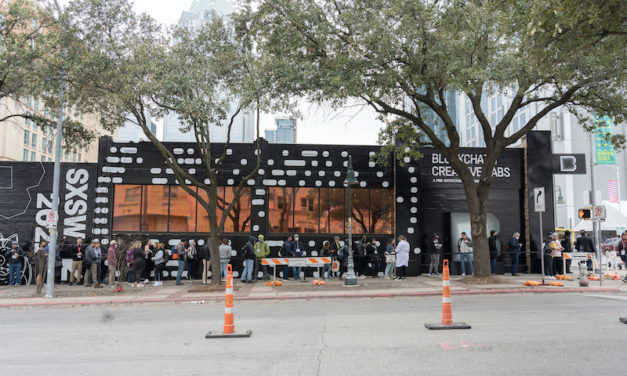
South by Southwest — commonly referred to as “South By” or “SXSW” — has returned to Austin, Texas this year to showcase the latest trends in interactive media, music, art, film and technology. While SXSW runs through March 20, 2022, the entertainment and technology festival kicked off its first weekend with a large focus on Web3 and nonfungible tokens (NFTs).NFT activations and panelsSXSW’s attendees’ interest in NFTs and the future of the internet was particularly evident at the venue hosted by Blockchain Creative Labs (BCL) — a business and creative unit formed by FOX Entertainment in 2021. On March 11, the first day of SXSW, a line consisting of hundreds of people wrapped around the streets of Fifth and Trinity in downtown Austin as SXSW badge holders anxiously awaited entrance to BCL’s interactive NFT venue that also showcased Web3-focused panels.BLOCKCHAIN CREATIVE LABS AT SXSW: Atmosphere behind the scenes at the Blockchain Creative Labs House in downtown Austin, TX. © 2022 FOX Media LLC. Cr: Matt Lief Anderson for BCLBCL CEO Scott Greenberg told Cointelegraph that the company was the exclusive blockchain sponsor of SXSW this year:“SXSW is a place for independent musicians, filmmakers and content creators to come together to find a way to foster business entertainment innovation. Given this, Blockchain Creative Labs felt that SXSW was the perfect place to come and tell a story while serving as a center for activation.”Indeed, BCL’s event space appeared to be one of the most widely attended SXSW spots, especially for those interested in nonfungible tokens. The venue, which was open through Sunday, March 13, included a gallery of NFTs created by leading content creators, exclusive NFT drops of music from official SXSW artists, NFTs from feature films premiering during the festival, along with a number of thought leadership sessions on Web3 development. “We had over 60 speakers and 40 panels on Web3, entertainment and how this provides new value to creators. SXSW 2022 was really about NFTs and the Metaverse, and our goal was to educate attendees. I think we achieved this,” said Greenberg. Greenberg said that BCL’s SXSW activation space consisted of interactive rooms to provide attendees with hands-on educational experiences to learn about the decentralized internet, also known as “Web3.” For example, BCL allowed festival-goers to create proof-of-attendance-protocols (POAPs) to document their attendance at SXSW. BCL’s POAPs served as NFT badges given to attendees of both virtual and in-person events that took place during the first weekend of South By. The venue also featured a “BCL_RecordBlocks” station, which enabled attendees to “listen and earn” music NFTs from over 30 musicians. “The concept here was to let attendees choose from over 100 songs to listen to. After listening, a QR-code would appear on the screen in front of them that could be scanned for a music NFT,” explained Greenberg. He said that the exhibit let attendees better understand how to obtain music NFTs while also enabling individuals to connect directly with the musicians featured. “In gaming, you have play-to-earn. This is listen-to-earn to show how we can connect artists and fans together using NFTs,” said Greenberg. Given that the Web3 space is still developing, BCL had staff members in white lab coats managing the exhibit to help onboard users to MetaMask, Coinbase or Rainbow wallets where they could then store their NFTs.BLOCKCHAIN CREATIVE LABS AT SXSW: Atmosphere behind the scenes at the Blockchain Creative Labs House in downtown Austin, TX. © 2022 FOX Media LLC. Cr: Matt Lief Anderson for BCLThe BCL venue also featured an “SXSW x BCL NFT Ledger” room which showcased a visualization of all SXSW-related data being recorded in real-time. “This exhibit featured Polygon wallet addresses from people claiming our free NFTs like Record Blocks. Everything displayed comes from the BCL marketplace,” explained Greenberg. He said that data will be recorded during the entirety of SXSW and will then be minted into an NFT. Greenberg said:“This serves as a time capsule of SXSW events. Data is updated on a regular basis to visually show how information is recorded on the Polygon blockchain. This is also an art exhibit, as we will mint this as a 1-on-1 NFT that we may eventually sell.”BLOCKCHAIN CREATIVE LABS AT SXSW: Atmosphere behind the scenes at the Blockchain Creative Labs House in downtown Austin, TX. © 2022 FOX Media LLC. Cr: Matt Lief Anderson for BCLNFTs main topic of discussion at “The AlgoRanch”NFTs were also widely discussed at “The AlgoRanch,” a pop-up event hosted by Algorand, a blockchain network designed to solve security, scalability and decentralization issues. Algorand has also taken an interest in NFTs, specifically when it comes to ensuring sustainability since the network uses a Pure proof-of-stake (PoS) consensus protocol. In order to demonstrate recent NFT innovation, Algorand featured a number of sessions during its SXSW pop-up focused on nonfungible token projects. For instance, Shrina Kurani — a Democrat running for Congress in California’s 41st District — appeared on a panel to shed insight on the launch of her NFT collection. Known as “Kurani for Congr3ss,” she explained that this is a collection of 230 NFTs designed to raise awareness for her campaign while highlighting climate-friendly solutions in the Web3 space. In order to detail the importance of her NFT collection being carbon neutral, Kurani was on stage alongside Priya Samant, CEO of Abris — a sustainable NFT marketplace built on Alogrand that partnered with Kurani on this particular drop. “The main collection featured 230 NFTs that represent the 230 billion tons of carbon remain in the world‘s ‘carbon budget,’” explained Kurani. Kurani further told Cointelegraph that she is the first-ever federal candidate to launch NFTs for a congressional campaign:“We are leveraging NFTs as a way to support a campaign to make a real impact on the future. It’s important to be connected to both Web3 and the real world to bridge the gap between politics and crypto — NFTs are a way of doing this.”Kurani added that NFTs allow congressional candidates to represent the American population, claiming that 3 out of 10 Americans under the age of 30 engage with cryptocurrency. “This is a way to get those individuals involved. We can also reach more people and educate the population on financial literacy. The main thesis of Web3 is about decentralization, consumer empowerment and ownership, which is why we are excited about NFTs,” she remarked. In addition to Kurani’s NFT collection, the American Rapper Darryl McDaniels also known as “DMC,” announced the tokenization of his song Million Scars at Algorand’s SXSW pop-up event. For this launch, McDaniels used Stoi.org, a technology platform built on the Algorand blockchain that features a carbon-neutral footprint and low transaction costs. McDaniels told Cointelegraph that blockchain technology allows musicians to solve common problems in the music industry:“Run DMC has always brought people together for the better. What I’m doing with Algorand will help us manifest solutions needed to put power back into the creator‘s hands. Everything in the music industry has been exploited and separated, and now we have solutions to make it inclusive for everyone involved.” NFTs made a splash at RippleThe Ripple House, hosted by fintech firm Ripple, also featured a variety of NFT projects to highlight the company’s new Creator Fund. Monica Long, general manager of RippleX — Ripple’s innovation arm — told Cointelegraph that the fund is a $250 million commitment to help creators with their NFT projects:“While creators are starting to understand the benefits of NFTs, they typically don’t know how to go about developing these projects. They either lack funding or marketing and technical expertise, so we wanted to launch the Creator Fund to solve these three challenges. We’ve already had over 4,000 applications, most from independent creators looking to grow their audiences.” According to Long, Ripple’s Creator Fund examines a variety of NFT use cases, but the company plans to focus primarily on sustainability, real estate, music and entertainment moving forward. Long added that developers can currently experiment with NFT functionality on the XRP Ledger using NFT-Devnet, a beta environment for developers to use XLS-20d — the native NFT standard RippleX is proposing.“We are working on a new standard to make the NFT minting, management and burning experience more natively built into the protocol. Other chains have NFTs programmed through smart contracts, so a lot of these capabilities are now built into the XLS-20d standard,” said Long. The executive added that Ripple anticipates the standard to go up for mainnet amendment voting in early April.In the meantime, some were already demonstrating how the XRP Ledger could be used for NFTs. Kaj Leroy, co-founder and CEO of Xpunks — an NFT project built on the XRP Ledger — gave a glimpse into the project by creating custom JPG avatars for attendees. Leroy told Cointelegraph that Xpunks is currently waiting for the XLS-20d standard to be released before minting the actual Xpunk NFTs. “These are just JPGs now, but once XLS-20d launches we will make a big collage of all these JPGs, mint it, then send it to everyone who came to our booth at SXSW.” Ripple House at SXSW 2022. Source: RippleStellar hosted an NFT artist challengeStellar also jumped on the opportunity to showcase NFT development during SXSW this year. The open-source decentralized protocol hosted a 48-hour NFT hackathon during the first weekend of South By, bringi newcomers and experienced developers together to build a project on the Stellar network that incorporates nonfungible tokens. According to the prompt, artists were instructed to create NFT artwork that “embodies the metaverse.” Stellar then sent XLM funds to users’ Litemint wallet addresses to cover the minting fees. Participants had the opportunity to win $1,500 worth of XLM prizes for participating in the challenge. Fluf World highlighted a “Metaverse Manifesto” Another major topic of conversation during SXSW this year was Web3 and the rise of the Metaverse. Some of the most in-depth conversations regarding metaverse development took place at Fluf World’s Fluf Haus. Alex Smeele, co-founder and CEO of Non-Fungible Labs and Metaverse environment Fluf World, told Cointelegraph that the company wanted to use SXSW as an opportunity to discuss plans for the launch of its “Metaverse Manifesto.” Fluf World venue at SXSW 2022. SourceL Fluf WorldWhile there are a number of different definitions for the Metaverse, Smeele explained that he believes it represents the future of the internet and how people will engage with it. As such, Smeele noted that the Metaverse requires standards that Web3 companies must address:“The Metaverse Manifesto is a call to arms for industry leaders to address the wider issues we are facing. Everyone is charging headfirst into this space with big ideas, but there are still questions that need to be answered if we are going to drive things forward correctly. If we can bring the smartest people in the industry together to define these standards, it will save hassle moving forward.” Smeele said that the sessions hosted at Fluf Haus focused on sustainability, inclusion, diversity and other topics shaping the Metaverse. “We had about seven ecosystem partners present to discuss these topics. Altered State Machine, Carbon Click, The Seekers, Silo team and a number of others came together to address important issues. Decentralization is about putting power back in the hands of individuals, but with great power comes great responsibility,” commented Smeele. Alex Smeele, co-founder of Fluf World on a panel at Fluf Village during SXSW. Source: Fluf World Little attention for Bitcoin and crypto overall Although it’s notable that NFTs and Web3 were major topics of discussion during SXSW 2022, cryptocurrency and Bitcoin (BTC) were largely left out of the conversation. Dan Held, growth lead at Kraken and a serial Bitcoin entrepreneur, highlighted this point in his recent recap of SXSW. In his post, Held noted:“On Sunday morning at 10AM, I was the moderator of the ONLY Bitcoin panel at the conference called ‘Bitcoin DeFi’ where I chatted alongside Pomp, Alyse Kileen, and Tony Cai about the basics of Bitcoin, DeFi, and the intersection of the two. Pretty wild to think that we were the only Bitcoin talk!”A few pop-up events during SXSW focused on the crypto ecosystem. The Grit Daily host featured a fireside chat on March 10 with Alex Mashinsky, CEO of Celsius Network. Tal Bentov, vice president of lending at Celsius told Cointelegraph that she believes there was a genuine interest in crypto at SXSW, which is why it was important for Celsius to be one of the few crypto companies that showed up. So, there were very few official SXSW panels related to cryptocurrency. One of the panels that did discuss crypto in-depth was entitled Financial Surveillance in a Cashless Society. Sheila Warren, head of data, blockchain and digital assets at the World Economic Forum, was one of the panelists for this session. Warren told Cointelegraph that the discussion focused on policy and how regulators think about central bank digital currencies versus cryptocurrency. “We didn’t necessarily conclude anything specific, but the more we go digital, the more opportunities there are for tracking and tracing. There are ways to mitigate the ability for private and public sectors to track what you are up to online, though,” said Warren.She added that an impressive number of SXSW attendees were present for this panel, demonstrating how important this topic is for many people, along with those who work in policymaking. Warren further remarked that while she thinks NFTs are the gateway into crypto, she hopes that South By attendees realize that a lot more is happening within the crypto ecosystem aside from NFTs:“There is a lot going on in the ecosystem and, now, the industry is getting taken seriously by many different people all over the world. I’m happy to see this activity and that people are realizing it can be a fun technology, but it’s also serious and life-changing. I hope next year at SXSW we get more opportunities for discussion within the crypto world as a whole.”

Čítaj viac

Financial future or false promises? Crypto firms go big on ads in 2022

Advertisements are in abundance everywhere we go — from billboards seen throughout road trips to commercials displayed every fifteen minutes or so during television shows. It’s also the case that most advertisements today display messages from major internet-based brands like Amazon, which was ranked as the largest advertiser in the United States in 2020. Telecommunication providers and payment giants like American Express have also been listed as some of the biggest advertisers in the United States. These companies typically spend billions of dollars per year on marketing messages aimed to inform, persuade and remind consumers about their products and services. 2022 is the year for crypto advertisingWhile dot-com brand commercials and social media advertisements continue to bombard consumers, some advertising executives believe that crypto companies will dominate advertising in 2022 and in the years to come. Mark DiMassimo, founder and creative chief of DiGo — a New York-based marketing agency — told Cointelegraph that he believes crypto-focused ads will dwarf the dot-com and social media phenomenon due to the rise of Web3 and the integration of crypto assets within digital ecosystems known as the Metaverse.” DiMassimo said:“This is not typical consumer language, but almost every startup I work with or LinkedIn job offerings I see mention the Metaverse and Web3 now. Cryptocurrency is central to all this. Therefore, I think this will be a bigger ad boom than the dot-com and social boom.” DiMassimo added that the rise of nonfungible tokens (NFTs) has also increased the popularity of cryptocurrency. This, in turn, has allowed crypto companies to obtain large advertising budgets. “Many early adopters focused on word of mouth marketing or advertising through Reddit, Discord and other social channels. We’ve reached the next level though, which is being displayed through classic marketing and advertising techniques,” explained DiMassimo. For instance, DiMassimo pointed out that crypto commercials displayed during the 2022 Super Bowl highlighted the notion that blockchain companies will dominate the advertising world moving forward. “I called the 2022 Super Bowl the ‘Crypto Bowl,’” he joked. To DiMassimo’s point, though, 2022 Super Bowl ads from leading crypto companies like FTX and Coinbase did make an impact, attracting an abundance of media attention while also demonstrating that crypto companies have massive advertising budgets. An NBC executive disclosed that NBC was selling 2022 Super Bowl ads for $6.5 million for 30-second spots to put this in perspective. Bloomberg reported that some ads sold for as much as $7 million this year. “Production values are going to ‘Mars’ and crypto companies want to have their voices heard in the real world,” said DiMassimo. As such, he believes that more crypto organizations will sponsor ads with celebrities or with sports stadiums to prove they mean business. Are crypto commercials selling false promises?While the rise of crypto ads is notable, some industry experts are aware of the dangers associated with cryptocurrency companies promoting advertisements to the masses. For instance, Richard Smith, an investing expert and chief operating officer of risk management tool RiskSmith, told Cointelegraph that this year’s Super Bowl ads from crypto companies were a disappointment in the sense that they completely failed to be honest with their audience: “These commercials didn’t disclose any risks involved with high levels of financial speculation. There was no recognition of risks at all in fact — only rewards. I understand that Super Bowl ads are supposed to be fun and lighthearted, but these were not authentic.”Smith elaborated that the Coinbase Super Bowl commercial boasted the reward of getting free Bitcoin (BTC) simply by scanning a color-changing QR code, which silently moved across the television screen. When scanned, the QR code redirected users to Coinbase’s landing page that promoted a Bitcoin giveaway and sign-up promotions. Coinbase 2022 Super Bowl ad. Source: DiGoSmith added that eToro’s Super Bowl commercial promised users the ability of “going to the moon” by trading cryptocurrency and stocks. eToro 2022 Super Bowl ad. Source: eToroWhile these commercials may have been captivating, Smith believes that in the long run, these advertisements will ultimately be disadvantageous to crypto companies due to what he believes is a lack of authenticity. “I think cryptocurrency is more about independence and transparency, and those who care about crypto will be turned off by these obviously pandering messages,” he remarked. Smith was not the only one frustrated by 2022 Super Bowl advertisements from crypto companies. As Cointelegraph previously reported, United States Senate Banking Committee Chairman Sherrod Brown also blasted the ad-makers for not including appropriate warnings and risks involved. “I don’t think crypto ads should be bluntly disingenuous about the benefits of their product. People are getting hurt badly today because of the whole advertising-driven meme madness,” said Smith. DiMassimo begs to differ, noting that the reason crypto Super Bowl ads generated criticism was that they resonated with the mainstream. According to DiMassimo, Super Bowl advertising isn’t about educating consumers in 30–60 seconds but rather about leaving people with a memorable feeling. He added:“For example, with Coinbase and the QR-code, the idea was to get people to sign up and remember their exchange while also creating conversations. Coinbase increased the chances of this with digital repetition, so people will likely remember their brand over others. Emotions are more important in advertising than rational. I think we will most likely see more people sign up for Coinbase as a result.” Rationale behind the advertisements To DiMassimo’s point, many Super Bowl watchers did respond to the Coinbase commercial. Coinbase published a blog post the day after the event in which Kate Rouch, chief marketing officer for Coinbase, stated that the exchange saw over 20 million hits on its landing page in one minute. “Volume that was historic and unprecedented,” wrote Rouch. He added that engagement was six times higher than the company‘s previous benchmarks. Unfortunately, Coinbase’s website crashed following its 2022 Super Bowl ad, resulting in a slew of additional issues. However, this technical mishap didn’t seem to create major issues for the cryptocurrency exchange. As Rouch wrote, “understandably, this volume led to us temporarily throttling our systems.”While the Coinbase QR-code commercial created quite the scene during this year’s Super Bowl, Brad Michelson, head of U.S. marketing at eToro, told Cointelegraph that eToro views the Super Bowl as one of the best brand-building opportunities in the U.S. “This makes it the perfect opportunity for our brand to put a stake in the ground, particularly in the scope of the ‘crypto bowl’ that we saw this year,” said Michelson. In regards to eToro’s To the Moon commercial, Michelson explained that the ad showed how the company perceives social investing: “It was especially important for us to include nods to the crypto community. But, it was also a priority to help make investing in these assets as approachable as possible. Our team was able to accomplish exactly that through this campaign.”Michelson added that eToro has had a large crypto advertising footprint in the U.S. for the past few years, noting that the company has experimented across television, radio and print channels to reach new audiences. While this may be one goal, Michelson also mentioned that eToro believes education is the key to investing and will, therefore, be investing more time in this area moving forward. “Crypto is part of eToro‘s lifeblood and we plan to continue promoting the industry through our advertising into the future,” he remarked. Smith expressed skepticism, however, remarking that crypto companies should be disclosing how blockchain technology makes digital sovereignty possible, rather than pushing out ads for free Bitcoin that may invoke fear of missing out, or FOMO. With this in mind, Smith mentioned that one crypto company did connect more with users in his opinion. He noted that Binance’s Jimmy Butler ad that appeared before the 2022 Super Bowl across social media channels was less about hype and more about trust: “This is what crypto is about.” Indeed, Binance’s 30-second social media ad featured American basketball star Jimmy Butler who stated that he doesn’t know much about cryptocurrency. Butler added that Super Bowl watchers should always do their own research, regardless of what advertising messages say.Patrick Hillman, chief communications officer at Binance, told Cointelegraph that while Binance looked at the opportunity to run an ad during the 2022 Super Bowl, the company decided against it and instead launched its message on social channels before the game:“The actual return on investment of Super Bowl ads is tough to gauge. Most companies want to do this for brand awareness, which isn’t our goal. I also think it’s bizarre to advertise Web3 and blockchain in between beer and Coca-Cola ads.” Hillman added that while most crypto campaigns are celebrity-driven to create brand awareness, Binance aims to focus more on addressing education for new users through channels like Twitter, Discord and Telegram. “We are taking a different approach from many of our peers. The crypto industry has no ceiling when it comes to innovation. There are a lot more new users now than educated users, so finding ways to effectively educate these individuals is important,” he said. And, although Binance’s “unofficial” 2022 Super Bowl campaign did feature a well-known figure, Hillman argued that the goal was to use a notable name to flip the advertising model around to encourage users to do their own research when it comes to crypto. “We want people to fully understand the opportunities associated with cryptocurrency and this simply can’t be done in a 30-second Super Bowl ad.” Given the fact that Binance’s advertisement was not displayed during the Super Bowl, some may wonder if the message was effective. According to Hillman, this wasn’t an issue, noting that Binance’s official Twitter account ad received 55,000 clicks in the first quarter of the 2022 Super Bowl. “We then pushed it to a number of communities on Reddit and from there, it went viral,” explained Hillman. Even more impressive, Hillman remarked that Binance spent a tenth of what the company’s peers did on Super Bowl advertisements. What’s next for crypto advertisers? While crypto companies are ramping up their advertising efforts, it’s important to point out that other forms of marketing are also on the horizon. Although the 2022 Super Bowl demonstrated the impact of cryptocurrency-focused commercials, billboards advocating for crypto, Web3 and NFTs are also being seen more widely.For example, Christian Hasker, chief marketing officer at Hedera Hashgraph — a layer-1 distributed ledger technology platform — told Cointelegraph that the company is advertising on billboards and using online video ads to cater to prospective Web 3 developers. “We recently ran billboard ads at Denver Airport for EthDenver. The ad campaign was well received and the return on investment exceeded our expectations,” said Hasker. In turn, Hasker mentioned that Hedera will build upon this momentum at other upcoming blockchain events.Hedera Hashgraph EthDenver billboard. Source: Hedera HashgraphNFT-related billboards are also becoming more common. Most recently, SaveArtSpace — a nonprofit art patronage organization — helped Nadya Tolokonnikova, a conceptual artist and member of the Russian punk-rock collective Pussy Riot, display NFT artwork across the United States. Tolokonnikova selected 10 artworks to be exhibited on billboard ad spaces in New York, California, Tennessee, Nevada, Missouri, Arizona, Georgia, Louisiana and Alabama. Michele Pred, Equal Pay billboard Located at Sunset Blvd & N Normandie Ave, in Los Angeles. Source: SaveArtSpaceTravis Rix, co-founder of SaveArtSpace, told Cointelegraph that Tolokonnikova’s exhibition aims to challenge the mainstream ideas that are currently held. “Women make less than men for the same work in addition to all the other issues women face. We aim to challenge the viewer to change or force for change,” explained Rix. He added that SaveArtSpace has new billboard exhibitions just about every month: “It‘s very effective, even if people only see one of our billboards for a second, it may stick with them all day. And, if they pass these every day for a month, it may change the way people think.”Regardless of a company’s advertising choice, DiMassimo warned that crypto organizations that are new to the ad space must have a clear strategy in mind. “Money can be soaked up fast if you are unsure of what you are doing in the ad world. This is still a new and volatile space, and it will be turbulent for advertisers that can’t afford to sustain strategies.”

Čítaj viac

Valkyrie Investments‘ Leah Wald on Bitcoin ETFs and the future of digital assets

Cointelegraph sat down with Leah Wald, CEO of digital asset investment firm Valkyrie Investments, to learn more about the importance of a Bitcoin (BTC) exchange-traded fund (ETF) and the future of digital assets. For context, Valkyrie Investments was launched in 2021 and is one of the only asset managers to have three Bitcoin-adjacent ETFs trading on the Nasdaq. Valkyrie launched a Bitcoin Strategy ETF in October 2021 that offered indirect exposure to BTC with cash-settled futures contracts following a United States Securities and Exchange (SEC) approval for a similar ETF from ProShares. Valkyrie also has a balance sheet opportunities ETF that invests in public companies with exposure to Bitcoin. In addition, the investment firm’s Bitcoin Miners ETF began trading on the Nasdaq on February 8, 2022, under the ticker WGMI. According to Wald, Valkyrie focuses on “taking the mystery out of investing in Bitcoin” for new investors. “We want to ensure that everybody is able to participate in this ecosystem,” Wald told Cointelegraph.In addition, Wald explained the importance of a Bitcoin ETF, noting that this topic has been important ever since the Winklevoss twins first filed for a Bitcoin trust. Wald said that a Bitcoin ETF ultimately allows access to an asset class for many people who didn’t have access previously. Wald also stated that there are various ETFs, such as Valkyrie’s futures-based ETF and thematic ETFs. While Wald pointed out that we “shouldn’t hold our breath” for a Bitcoin spot ETF — which she refers to as the “holy grail” — she said that it’s Valkyrie’s mission to eventually ensure a Bitcoin spot ETF, noting that the firm is “fighting hard and working with regulators” to get there. In addition to her thoughts on ETFs, Wald commented on how the traditional world of finance may view Bitcoin and digital assets. “The most common question is still around volatility and how to allocate accordingly,” said Wald. She added that typical portfolio structures are seen as “bunk” or narrow, which is why the traditional financial world requires a new paradigm shift. Wald further remarked that some of the basic questions she has received focuses on what Bitcoin is, or if Ether (ETH) is the same as Bitcoin. “I think sometimes in our industry, we believe and expect a lot of individuals to be as far down the rabbit hole as we may be, but some of the conversations are still at the very basic level,” she mentioned.Cointelegraph asked Wald about Valkyrie recently passing $1 billion in assets under management. While impressive, Wald believes that this demonstrates how quickly institutional interest in digital assets is growing. She noted this represents a “stark difference” from when Valkyrie was first launched in 2021. As such, Wald explained that this signals large pools of wealth stepping into the crypto sector. Before concluding the interview with Wald, Cointelegraph asked the executive to share her price prediction for Bitcoin this year. While she mentioned that she is clearly bullish on Bitcoin, Wald predicts that BTC will reach $70,000 by the end of 2022. “We are very bullish for the second half of the year and especially Q4. It sounds like we should just hold tight, but we‘re shooting for $70,000 by the end of the year.”

Čítaj viac

Získaj BONUS 8 € v Bitcoinoch

nakup bitcoin z karty

Registrácia Binance

Burza Binance

Aktuálne kurzy