
Autor Cointelegraph By Rachel Wolfson

Crypto Bahamas: Regulations enter critical stage as gov't shows interest

The crypto community and Wall Street converged last week in Nassau, Bahamas, to discuss the future of digital assets during SALT’s Crypto Bahamas conference. The ​​SkyBridge Alternatives Conference (SALT) was also co-hosted this year by FTX, Sam Bankman-Fried’s cryptocurrency exchange.Anthony Scaramucci, founder of the hedge fund SkyBridge Capital, kicked off Crypto Bahamas with a press conference explaining that the goal behind the event was to merge the traditional financial world with the crypto community:“Crypto Bahamas combines the crypto native FTX audience with the SkyBridge asset management firm audience. We are bringing these two worlds together to create a more equitable financial system.”Traditional finance eyes crypto as regulations take shapeThe combination of traditional financial institutions with crypto natives was indeed one of the most notable and noticeable (a number of men and women were wearing suits, while some sported shorts and flip flops) aspects of Crypto Bahamas. For instance, Kevin O’Leary — the Canadian entrepreneur better known as “Mr. Wonderful” for his role on Shark Tank — told Cointelegraph that the people present at the Crypto Bahamas proved to be the most important aspect:“We have governments from around the world here, along with institutional investors that don’t actually own any cryptocurrency, but are watching the momentum in politics. They are starting to realize that a big change is coming.”According to O’Leary, recent crypto regulatory frameworks fromUnited States Senator Kirsten Gillibrand and Senator Cynthia Lummis, along with the Stablecoin Transparency Act proposed on March 31, 2022, by Representative Trey Hollingsworth and Senator Bill Hagerty, are now attracting institutional interest in crypto. “They’ve come to the conclusion that this is an asset class that is here to stay,” O’Leary remarked. While this may be, he pointed out that many traditional financial institutions still don’t own any cryptocurrency and will not own any digital assets until policy is implemented. “I think cryptocurrency will become the twelfth sector of the S&P. We will be paying 20-30% more when institutions start indexing this. That’s the big debate happening at this conference.”To O’Leary’s point, while some members of thecrypto community may find institutional players to be intrusive, Henri Arslanian, senior crypto adviser at PwC, told Cointelegraph during the conference that the crypto ecosystem should welcome the entry of institutions, noting that these centralized players provide the level of maturity and experience needed for working with institutional investors. “This can be beneficial for the entire crypto ecosystem,” said Arslanian.Scaramucci further told Cointelegraph that crypto is still in its infancy, but he predicts that the market will undergo major innovations in the next five years. “In the long term, I’m excited about where everything is going, but in the short term we will witness headwinds as a result of post COVID-19, the war between Russia and Ukraine, the specter of inflation and supply chain issues,” he remarked. Scaramucci added that he believes FTX will be the most transformational player in the space overall because “their mission is to transform the entire financial ecosystem by tokenizing all markets.”Recent: Has New York State gone astray in its pursuit of crypto fraud?If you build it, they will comeIn the meantime, it appears as if the Bahamas will likely become the world’s next crypto hotspot. While FTX moved its headquarters from Hong Kong to the Bahamas in September 2021, it’s anticipated that more crypto companies will do the same. Bahamian Prime Minister Philip Davis told Cointelegraph that the country has a regulatory regime in place and recently published a policy white paper framework to help crypto businesses understand how to operate in the country:“This will help companies understand how they can grow and prosper, and what we can expect from them. The policy also takes into account concerns people have about cryptocurrency and the risks associated with digital assets. Policy is implemented to protect consumers and the integrity of the space, and at the same time ensure that we minimize all risks that may be associated with businesses here.”Scaramucci said that he believes the Bahamas is becoming a crypto-centric region that will be known in the next five years as one of the most “forward thinking and economic visionary countries.” Arslanian added that crypto-friendly jurisdictions seen in regions like the Bahamas and Dubai have the opportunity to become global hubs by attracting top-performing crypto companies. “These jurisdictions are clearly focused on the future of crypto,” he said. On the other hand, Arslanian pointed out that the U.S. is still lacking in regulatory clarity when it comes to cryptocurrency innovation:“I moderated a panel before this interview with Chris Giancarlo, the former chairman of the U.S. Commodity Futures Trading Commission. I asked him how he would rate crypto regulations on a scale of zero to 10 in the U.S., and he answered zero. Jurisdictions have the agility, but they also need the will to embrace crypto.”In terms of understanding how the U.S. may improve upon crypto regulations moving forward, Arslanian explained that models inDubai such as the newly formed Dubai Virtual Asset Regulatory Authority (VARA) may be helpful for other regions to implement. “VARA is a specialized crypto regulator, so they know this vertical very well. We need more regulators specializing in this policy in other regions.” While VARA is a recent innovation, FTX expanded its operations in the United Arab Emirates in March of this year byreceiving a virtual asset exchange license in Dubai, which was granted under VARA.Crypto undergoing “regulatory madness,” but future looks brightOverall, regulatory developments within the cryptocurrency sector were widely discussed at Crypto Bahamas. For example, stablecoins and central bank digital currencies (CBDCs) were a hot topic of debate.Sheila Warren, CEO of the Crypto Council for Innovation, moderated a panel discussion entitled “DeFi Future: Inside the making of a new financial system.” Warren told Cointelegraph that the next two to three years will determine the trajectory of Web3 and blockchain technology for generations to come, given innovation currently happening within the crypto sector. “The biggest threat, but also the greatest opportunity for crypto right now is in the policy making space. We have evidence and hard data now to demonstrate how technology can achieve public policy goals that we can all agree is important for society,” she said.In regard to stablecoins and CBDCs, Warren explained that both of these have a role to play within financial systems based on different use cases. “CBDCs may make sense in a contained financial system, but in most cases, I remain skeptical of CBDCs beyond interbank settlements and cross border payments.” In contrast, Warren believes that stablecoins have tremendous potential when it comes to being used as programmable money. She said:“There is a role for stablecoins that is critically important. For instance, I think USD Coin is one of the most important innovations we are currently seeing in the ecosystem in terms of the bridge it can provide between different assets while enabling programablity in smart contracts. I’m bullish on stablecoins, but I want to see how regulatory environments treat them — this is important for our entire ecosystem.”O’Leary thinks the first crypto-friendly policy to be adopted in the U.S. will focus on stablecoins. He believes this will be the case due to the Stablecoin Transparency Act introduced earlier this year, which aims to audit stablecoins on a 30-day cycle. “This is similar to money market accounts that Fidelity and Schwab have, so they are looking at this as a way to bring transparency to stablecoins. Let’s say USDC is the first stablecoin to receive this license — others will soon do the same,” O’Leary said. Recent: DAOs: A blockchain-based replacement for traditional crowdfundingHe added that such regulations could be transformative for the traditional finance space. “For example, with FX trading, I’m currently getting overrun by fees, as I have to convert U.S. dollars into euros or British pounds when I buy European stocks. But, if there was a stablecoin, there would be more transparency, less friction and it would be auditable. I could transfer money in seconds,” he explained.O’Leary further pointed out that stablecoin regulation legislation will likely occur after the U.S. midterm elections that are set to take place November 8 this year. “There will be a change in leadership,” said O’Leary. Warren added that the crypto sector is currently witnessing “regulatory madness,” noting that there is not a single jurisdiction not focused on crypto innovation at the moment, “This is the most important effort of our time. We are currently laying the foundation for crypto moving forward.”To put this in perspective, Scaramucci told Cointelegraph that retirement plan providerFidelity Investments announcing 401(k) retirement saving account holders the option to invest in Bitcoin (BTC) is a seismic event in terms of pushing crypto regulation forward. “I predict that Fidelity will do for Bitcoin and possibly other crypto what it did for the U.S. stock market in the 80s and early 90s. Fidelity has $2.4 trillion dollars in retirement accounts under custody, so just imagine a small sliver of that moving into Bitcoin.”Scaramucci also revealed that SkyBridge will soon be offering a Bitcoin retirement option plan to its employees. Yet, he pointed out that a Bitcoin exchange-traded fund (ETF) within the U.S. is the biggest elephant in the room at the moment. “I’m hoping we will see a Bitcoin cash offering by the end of this year. If this happens, it will force all major financial services companies to have a Bitcoin cash offering moving forward.”

Čítaj viac
Web3 solutions aim to make America’s real estate market more accessible

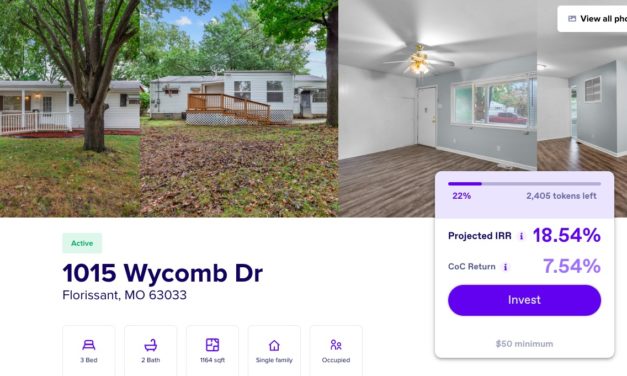
America’s housing market may soon be facing its next bubble as home prices across the country continue to be fueled by demand, speculation and lavish spending that could result in a collapse. Moreover, many homeowners are opting to stay put due to climbing mortgage rates, creating a housing shortage. Data from the Federal National Mortgage Association, commonly known as Fannie Mae, found that 92% of homeowners think their current home is affordable. Yet, findings further show that 69% of the general population, consisting of both homeowners and renters, believe it’s becoming too difficult to find affordable housing.Web3 and the real-estate marketWhile the fate of the United States housing market remains unclear, the rise of Web3 business models based around nonfungible tokens (NFTs), blockchain technology and cryptocurrency aim to solve many of the problems currently plaguing America’s trillion-dollar real estate market.Jerry Chu, CEO of tokenization platform Lofty AI, told Cointelegraph that although real estate is one of the best asset classes for wealth creation across the globe, most people can’t access it due to three main reasons:“Real estate, especially today, is expensive. Even if someone could get a mortgage, many times a down payment requires too much cash. The real estate process is also frustrating, as mortgages need to be approved and a title escrow process could take up to 60 days. Finally, there isn’t much liquidity in real estate, therefore sellers will likely lose money if they wish to quickly liquidate.”In order to make real estate attainable for the masses, Chu decided to create a platform that could fractionalize properties. Known as Lofty AI, Chu explained that the platform is built on the Algorand blockchain and consists of various turnkey rental properties that multiple investors can fractionally purchase for as little as $50. “You can think of every property as its own mini blockchain on the Algorand network. Assets, or unique tokens, are created for every property listed. The token supply is different depending on how expensive the properties are,” said Chu.While the concept of tokenizing real estate has become rather common — for instance, Cointelegraph research recently found that thereal estate sector makes up 89% of all traded security tokens — Chu pointed out that Lofty is an active investing platform. “Similar platforms invest in real estate and flip properties to customers, but we allow investors to manage these properties and continually earn rewards and income.”A property featured on Lofty AI. Source: Lofty AIElaborating on this, Chu explained that Lofty is based on a co-ownership model where the deeds for each property listed on the marketplace are held and owned by a limited liability company, or LLC. When investors purchase tokens, they immediately become a member of that entity, meaning they own a percentage of that business.Like other decentralized finance (DeFi) platforms, Lofty has a governance system that allows token holders to vote on how to manage the properties they own. “Token holders need to reach a supermajority vote of 60% for decisions to be acted upon. The winning vote is then sent to the property manager to carry out. These decisions could include maintenance, rent changes, eviction decisions and more.” Chu added that investors can also earn portions of rental income generated from tenants, which can either be withdrawn to a bank account or donated to Mercy Housing, an affordable housing organization. “Most Lofty users care about the appreciation of their tokens on the properties they buy into, and, therefore, donate their earned income to affordable housing programs,” Chu mentioned.While this may be, Chu emphasized that the goal behind Lofty is to make real estate investing more accessible simply. “This seems to be the case, as the platform launched last year and already has close to 4,000 users,” he said. Takahito Torimoto, a solutions architect and Lofty user, further told Cointelegraph that he has been a real estate investor for a few years, but Lofty has been an ideal solution due to the platform’s liquidity and returns. “There are no fees for users, and given the current real estate market, Lofty appears much better for a very big part of my ‘early retirement’ strategy,” he remarked.In addition to Lofty, mortgage lender LoanSnap launched a mortgage-backed stablecoin on their Bacon Protocol at the end of last year. Karl Jacob, CEO of LoanSnap and co-founder of Bacon Protocol, told Cointelegraph that while a mortgage-backed token solves many issues associated with stablecoins, these digital assets also benefit current homeowners and buyers.Technically speaking, LoanSnap has minted NFTs tied to individual mortgage liens, which are property ownership rights that collateralize mortgage loans. Those NFTs are then used to back LoanSnap’s stablecoin known as the “bHome token.” Jacob explained that this system is beneficial for a number of reasons:“Mortgage-backed stablecoins are advantageous to homeowners and buyers because speed is everything in a real-estate transaction. This process works quickly since it leverages the Ethereum blockchain. You can see a loan getting closed and funded in a matter of 24-hours or less, depending on state compliance.”In other words, wrapping an NFT around a mortgage lien and putting that asset on a blockchain network allows anyone access to those records. “We provide the minimal amount of data, so individuals can only see the address of a property, the lien size and property value,” said Jacob.Jacob claimed that the bHome stablecoin also opens up access to the U.S. housing market. “Investors that buy into the bHome token are gaining exposure to the housing market without having to own a home. This is simply a pool of mortgages across the country that offers a great way to participate without the costs associated with homeownership.” While the platform is fairly new, Jacob shared that about 30 mortgages on LoanSnap are being used for its stablecoin pool, noting that the platform has lent out over $7 million against its $42 million home value on the platform.Some U.S. real estate properties have also recently been sold as NFTs, a concept that seems to be attracting Generation-Z homebuyers. This is important, as data shows that Gen Z’s only made up 2% of all home sales in 2020. Natalia Karayaneva, CEO and co-founder of Propy — a blockchain-based real estate platform — told Cointelegraph that Proppy hasrecently sold three NFT properties: one in Kyiv and two in Florida. “We are the first platform to sell real estate as NFTs, which has resulted in a number of benefits for first-time buyers and sellers,” said Karayaneva.Tampa home that recently sold as an NFT on Propy. Source: PropyOn a technical level, Karayaneva explained that Propy is able to do this by selling tokenized LLC properties. The purchase records for each property live on the Ethereum blockchain. Once a property sells, the ownership rights are transferred as an NFT to the homebuyer’s wallet address. Karayaneva elaborated:“The most recent NFT property that sold in Tampa was purchased using the USD Coin stablecoin. Bidding happened in real-time and ownership was transferred in 15 minutes upon closing the sale, which simplifies and speeds up the entire traditional home buying process. This is important because the U.S. housing market is so competitive today that people don’t have time to wait. NFT properties are also fully transparent, so prospective buyers can make informed decisions by seeing any appraisals, contingencies and anything else up front.”Given the transparency and fast-paced nature of NFT home sales, Karayaneva mentioned that the concept is particularly appealing to the younger generation. “The two properties we sold in Florida attracted many Gen Z’s since you can now buy a house with the click of a button,” she said. Karayaneva added that older clients have expressed interest regarding how secure this process is since everything is recorded on an immutable blockchain ledger.Giving homeowners access to their data with NFTsBlockchain Home Registry (BHR) is yet another Web3 project using NFTs to represent homeownership. BHR is a DeFi platform built on the Ethereum blockchain that allows homeowners to claim a verified NFT of their property, giving them access to a permanent, transferrable historical record of their home. James Rogers, CEO of Torii Homes — a real estate technology company that developed BHR — told Cointelegraph:“While people today own their homes, they don’t own the data associated with it. For example, a title company often knows more about an owner’s home history than they do.There is an opportunity for the entire real estate industry to collaborate with homeowners to make sure individuals own the data associated with their homes.”Rogers explained that BHR allows homeowners to claim their home as a verified NFT upon completion of a thorough Know Your Customer (KYC) process. Once verified, homeowners’ NFTs are placed on the BHR platform, which then allows for organizations across the real estate industry to build services by consuming data from the platform. This allows both organizations and homeowners the ability to monetize their data.Blockchain Home Registry dashboard example. Source: Torri HomesZach Gorman, co-founder of Torri Homes, told Cointelegraph that homeowners are able to see all their home documents in a dashboard on the BHR platform. “Homeowners can add and maintain their records over time and can then choose to monetize that data by letting other organizations access it.” For example, Gorman explained that an insurance company could more efficiently quote policies using data about homes listed on BHR:“At the same time, the data added would inform homeowners about risks such as fire or flood that they could face. And, when another insurance company builds an integration on top of the data added, they would compensate the first company for their data. Even if the homeowner chooses to work with the latter company, the former still wins, as well.”Gorman added that although BHR just launched on April 26, a number of homeowners and service providers have expressed interest in using the platform. “The power of data has never been put on the table before for homeowners, so this is a huge opportunity to democratize that and put power back into homeowners’ hands.”Challenges may hamper adoptionWhile Web3 solutions may help solve many of the challenges currently facing homeowners and buyers, it remains questionable as to how the mainstream will react to these innovations.For instance, Karayaneva shared that properties sold as NFTs through Propy must be purchased using the USD Coin (USDC) stablecoin, yet this may be challenging for non-crypto natives. Even though Karayaneva mentioned that Propy helps facilitate the transfer of fiat to USDC, users who wish to buy an NFT home may also find it difficult due to the fact that loans cannot be taken out. “Currently, we are only accepting full cash offers, but we are working on incorporating a solution to get crypto enabled mortgages on the spot,” said Karayaneva.Moreover, getting the mainstream to adopt blockchain solutions may also be complicated. For instance, Rogers explained that BHR is initially launching with MetaMask. Although it’s notable that MetaMask’s monthly average user base is growing, MetaMask and other popularcrypto wallets are vulnerable to malware attacks and hacks.From a technical perspective, it’s important to point out that most of the Web3 solutions mentioned are based on the Ethereum blockchain, which is infamous for high gas fees. Jacob shared that, while using the Ethereum network has been beneficial for Bacon Protocol, the team behind the project has worked hard to hide high gas fees from bHome purchasers. On the other hand, Chu said that he chose to build Lofty on the Algorand blockchain due to its low gas fees. “Lofty sends small transfers to user’s wallets regularly, so if this was built on another chain with high gas fees that would cost much more,” he said.Finally, it’s important to point out that legal issues may arise when applying NFTs and DeFi standards to real estate transactions. With this in mind, Jacob shared that LoanSnap conducted massive amounts of research when considering the regulatory components associated with a mortgage-backed stablecoin. “LoanSnap is regulated and audited by the state, so we already have regulations in place. The question people ask is if this is a security, but the interesting thing about mortgages is that they are not securities.”Challenges aside, Rogers said that homeowners and buyers using Web3 solutions like BHR don’t need to fully understand the components behind the platforms, they just need to know that they work. “When I explain BHR, people are interested even if they don’t know much about NFTs and blockchain. The idea here is to onboard new users to the Web3 space and transform the traditional real estate industry. That is what excites us.”

Čítaj viac

As labor struggle takes center stage, can DAOs democratize work?

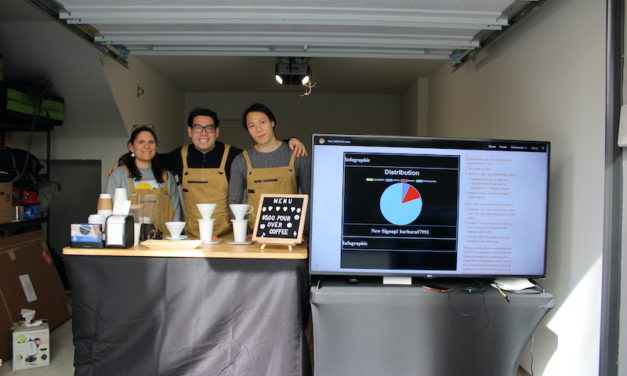
Web3 has given rise to a number of innovative business models. In particular, decentralized autonomous organizations (DAOs) have started gaining traction as Web3 as the creator economy comes to fruition. Natalie Salemink, CEO and founder of Prismatic — a tooling and treasury management platform for DAOs — told Cointelegraph that DAOs are internet-native organizations that utilize smart contracts to facilitate coordination and governance in pursuit of a common goal. When it comes to traditional businesses, though, one of the most interesting aspects a DAO structure can provide is leadership based on computer-generated code rather than individual authority. The idea of operating a business without any central governance has become especially intriguing to brick and mortar companies struggling to incorporate fair rights for workers. For instance, Starbucks, Amazon and Apple employees are currently uniting across America to form unions to ensure that retail workers receive fair benefits and humane working conditions. Yet, some members of the Web3 community believe that DAOs could serve as another way for employees to receive equal representation.Brick-and-mortar DAOsFor example, Daniel Carias, co-founder of TheCaféDAO, told Cointelegraph that TheCaféDAO seeks to disrupt the corporate coffee shop model by serving as one of the world’s first brick-and-mortar business DAOs. “The idea for a brick-and-mortar DAO developed from a Reddit post I posted in August 2021,” said Carias.Given the unique nature of a brick-and-mortar DAO, Carias’s Reddit post caught the attention of several other individuals who agreed that a physical DAO, rather than a digital DAO, could be an innovative business model. For instance, Dustin Tong, who also serves as the co-founder of TheCaféDAO, told Cointelegraph that Carias’s Reddit post was the only search result he found when researching “brick-and-mortar DAOs.”After discovering the post, Tong joined TheCaféDAO’s Discord channel, where the community eventually decided to create a physical coffee shop based on a DAO governance model. According to Carias, TheCaféDAO was established to solve a real-world problem rather than just serving cups of coffee to a community of people who believe in Web3 models:“We are solving a societal issue, which is how to give workers true ownership over their work. I believe that a DAO structure could help ensure this. I know that worker cooperatives and labor unions currently exist, but I believe that DAOs could serve as a happy medium.”Like traditional DAO protocols with clear goals, voluntary participation and distributed ownership, Carias explained that TheCaféDAO aims to provide ownership to anyone who enters its coffee shop. The first instance of this will be demonstrated at TheCaféDAO’s pop-up taking place at the Seattle nonfungible token (NFT) museum from April 30 through May 1, 2022. “Customers who purchase one cup of coffee can immediately become co-owners of TheCaféDAO and steer the future of the business,” explained Carias.Tong added that while the economics behind TheCaféDAO is still in development, the DAO will use a combination of Ethereum signatures and blockchain technology to ensure that everyone who makes a purchase at the Seattle pop-up location will be offered ownership of the DAO. He said:“We are starting off by tracking every purchase made using Google Sheets. We know this is centralized, but we are going to be very public about each transaction. We are also providing a simulated distribution of our coffee tokens to everyone who makes a purchase at our upcoming pop-up. The coffee tokens serve as a piece of ownership into the DAO.”TheCaféDAO founding members gearing up for their first pop-up shop. Source: TheCaféDAOMoreover, Tong explained that holders of coffee tokens will be able to vote on decisions regarding how the DAO is governed and managed.”The DAO can do what it wants with the tokens based on votes from customers and employees. The tokenomics model here is that ownership is created off the profits generated from the DAO.” Staying true to traditional DAO ideals, Tong also mentioned that DAO ownership is voluntary, meaning that only customers who wish to participate in the DAO can do so. “We are only collecting Ethereum signatures and tying those to a Discord handle for customers who wish to partake in governance.”While TheCaféDAO is still an emerging concept, Carias pointed out that a DAO model applied to a brick-and-mortar business demonstrates the flaws in today’s corporate structure:“Traditionally, corporations are a hierarchy built from the top down, but now we are seeing workers push back and form unions or join existing unions to counterbalance that power imbalance. But, we believe there is another option that no one is talking about yet, and we are trying to carve that out slowly through TheCaféDAO.”Recent: Brain drain: India’s crypto tax forces budding crypto projects to moveChange corporate governanceAlthough it’s unclear if TheCaféDAO will be successful, the concept certainly does have potential. Shedding light on this, State Senator Chris Rothfuss, minority leader in Wyoming’s State Senate, told Cointelegraph that the idea behind a brick-and-mortar coffee shop DAO does make sense, even if the DAO itself is not tangible. “While the shop will serve coffee, the business model with ownership stakes translates to a governance approach based on an algorithmic model as to how decisions are made and how corporate governance is translated through underlying smart contracts,” he said. Given the logic behind algorithmic management models, Rothfuss further noted that he believes DAOs are a natural evolution of brick-and-mortar businesses:“With a DAO corporate structure, businesses will be able to optimize in a way that wasn’t possible before. Management can be automated in a more efficient way that doesn’t have to directly engage human decisions on a moment-by-moment basis. I do see this as the future and think we will get to a point where almost every business will have DAO components integrated with it, depending on the need.”Rothfuss helped draft the legislation forDAOs to be recognized as corporate structures, or limited liability companies, in Wyoming. “The first DAO in Wyoming was registered on July 1, 2021. We now have over 250 DAOs registered in Wyoming,” he said. While innovative, the senator further recognizes that DAOs have the potential to bring more opportunities to America’s workforce:“Nothing provides a better opportunity to bring workers into the value chain while ensuring them with the right to influence outcomes and share in profits or benefits than a DAO structure. A DAO could very well be the union of the future.”In addition, a DAO structure allows for customers to partake in governance for the first time. Yat Siu, co-founder and chairman of Animoca Brands — a Hong Kong-based gaming and venture capital company — told Cointelegraph that most for-profit companies view customers as a resource from which value must be extracted. “This is the classic capitalist zero-sum approach based on ownership and governance by a few. But in a DAO, growth tends to both originate and benefit the very group that is typically targeted for value extraction in zero-sum scenarios: the customers,” he explained. As such, Siu believes that DAOs are more likely to deliver value to all constituents involved. “The customers are also stakeholders and, therefore, have the potential to increase standards of equitability and fairness in the business.”Too slow?While a DAO structure may provide traditional workforces with greater rights on multiple fronts, these business models will likely take months or even years to develop due to regulations and corporate governance structures already in place.For instance, Rothfuss shared that the State of Wyoming spent five years passing over 30 pieces of blockchain-friendly legislation to serve as the foundation for enabling DAOs to be effective in Wyoming:“The work of the uniform law commission in the past year has paved the way for how we’ve been able to do things in Wyoming, but we still have to make sure we are properly reflecting property, currency and the authority of smart contracts under statute to be legally binding.”Recent: Grassroots initiatives are bringing Bitcoin education to communities across AmericaThat being said, Rothfuss is aware that while other states in America are interested in passing DAO legislation, the proper underlying laws must be in place to accommodate for this growth. “Many states will want to adopt the law like Wyoming did, but will likely have bad outcomes because they skipped to the finish line without doing the hard work,” he said.In regard to traditional business models, some Web3 innovators believe that DAO structures simply won’t resonate, resulting in slow growth. Sam Peurifoy, CEO of Playground Labs — a company developing DAOs for play-to-earn gaming environments — told Cointelegraph that he doubts DAOs will soon be more common than traditional businesses:“There’s not much immediately obvious application for such real-world entities yet. But, one can imagine a world, terrifying or not, filled with autonomous drones plugged into a sprawling network of smart contracts executing business operations autonomously at the behest of tokenholders.”Although this may be the case currently, projects like TheCaféDAO are certainly a step in the right direction, even if they take time to develop. Tong explained that while the DAO model may not resonate with everyone, it’s an efficient system for individuals looking to gain ownership within their workplace. “I do believe DAOs are a better way of doing things. They are not easy to form yet and we have run into many difficult decisions, but once we understand how to effectively execute as a DAO this model will ultimately be applied to similar industries.” 

Čítaj viac

How Web3 is redefining storytelling for creators and fans through NFTs

Nonfungible tokens (NFTs) have come a long way in a relatively short period of time. In 2017, the NFT projectCryptoKitties made headlines as the largest decentralized application on the Ethereum network. While CryptoKitties accounted for a notable portion of Ethereum transaction volume in 2017, these NFTs mainly served as digital collectibles geared toward the crypto community. It wasn’t until March 2021 when NFT artwork started gaining traction due to the financial potential behind these creations. This was demonstrated when digital artist Mike Winkelmann, also known asBeeple, sold his NFT piece titled “Everydays: The First 5,000 Days,” which raised over $69 million through Christie’s auction house. Following Beeple’s sale, artwork NFTs started becoming more popular, attracting a larger audience of both creators and fans.Web3 enables community storytelling through NFTsFast forward almost a year later, and the rise of Web3 has given creators additional opportunities to make nonfungible tokens that have utility in virtual ecosystems. This has also allowed NFTs to extend beyond just aesthetically pleasing images, giving rise to community building through new forms of storytelling within different mediums.To put this in perspective, Yat Siu, co-founder and chairman of Animoca Brands — a Hong Kong-based gaming and venture capital company — told Cointelegraph that collaborative narrative forms, like fan fiction and YouTube videos, became quite popular with the development of Web2. “But, what was missing was an efficient way to share collaborative efforts for recognition and economic benefit in a scalable and equitable manner. Web3 can help to change that,” Siu said.Siu believes that Web3 has made it possible for content creators such as writers, artists, film directors and others to collaborate with individuals on various creative efforts. Siu shared that this is partly due to the fact that Web3 content contributions to be tracked on-chain:“This opens up so many possibilities for collaborative creativity across virtually all media formats. Imagine interweaving stories constructed by a myriad of end-users in a user generated content manner, but with full tracking of each contributor and narrative origin.”To Siu’s point, a number of Web3 projects are coming to fruition, which are utilizing trackable NFTs to enable project creators and fans to collaborate on various forms of storytelling. For instance, the billion-dollarcomic book industry has taken an interest in using NFTs for storytelling. Palm NFT Studio recently launched an NFT project with Warner Bros. Consumer Products’ DC Comics known as “The Bat Cowl Collection.” This project features 200,000 unique 3D-rendered Batman cowl NFTs that allow fans to shape the stories of future comic book narratives.Josh Hackbarth, head of NFT commercial development for Warner Bros. Entertainment, told Cointelegraph that Warner Bros. had been thinking about new ways to bring Batman to life for fans, which eventually led to the exploration of Web3: “As the lead for the ‘Bat Cowl Collection,’ I was excited to see how Web3 could bring us closer to fans by allowing them to collaborate with us in new ways.” Hackbarth added that each NFT will then be integrated into future DC Comics’ stories over time.Bat Cowl NFTs. Source: DC ComicsStraith Schreder, executive creative director for Palm NFT Studio, told Cointelegraph that each “Bat Cowl” NFT serves as part of the storytelling process:“This allows for fans to become protagonists, which makes this project exciting because it enables an opportunity for shared experiences and co-creations. Fans will soon see their bat cowls integrated into future projects from DC Comics. This is the promise of Web3 and generative art, as it allows fans to shape their own superheroes and tell their own stories.”In order to get fans’ creative juices flowing, Hackbarth said that each “Bat Cowl” NFT will also contain unique traits. “We call this ‘badging,’ which allows fans to badge up in different worlds using their cowls. This will help create the stories behind the various cowls.” Hackbarth further pointed out that while some comic books in the early 1990’s allowed fans to dial a 1-800 number to vote on how comic books may end, Web3 finally allows users to be an integral part of the storytelling process. “This is no longer about conducting an anonymous vote or dialing a 1-800 number. NFTs allow fans to become authenticated verified participantsin this entire process. That is what we are excited about,” he remarked.DC Comics isn’t the only comic book publisher aware of the potential of Web3. HeroMaker Studios — an NFT-native comic book studio — is also allowing fans to create their own narratives. Gareb Shamus, founder of HeroMaker Studios and Comic-Con International, told Cointelegraph that HeroMakers recently launched a project called “Kumite.” According to Shamus, this is the company’s first character franchise series featuring an NFT collection of 9,600 generative superheroes and villains. “These characters will be featured in a forthcoming comic book, game and merchandise drop, all driven by our community,” said Shamus.Kumite artwork “Rivals” NFT. Source: HeroMakerStudiosShamus added that HeroMakers has over 30 character franchises, noting that Kumite is the first to be released. “‘Kumite’ is built on a backstory of a fighting tournament between villains and superheroes. HeroMakers is currently writing a story about ‘Kumite,’ but the backstory of this will be a comic book told by our NFT holders,” he said. Shamus believes it’s important for fans to be a part of the storytelling process when it comes to NFTs since it allows for constant engagement:“We will continually have comic books coming out to tell these stories. We are also going to license fans with commercial rights to allow for users to take this concept and the world behind these characters to create their own stories based in the HeroMakers universe.”Shamus said that there is also potential to do this through film, television and gaming models moving forward. Recent: Decentralizing the grid: Operators test blockchain solutionsGiven Web3’s potential within gaming, Siu believes that preferences will emerge from user-generated content that will inspire and inform professional game developers to create new narrative opportunities for indie game studios. “Web3 enables a more collaborative approach to content creation. This is not very different to what happens in some other areas such as fan fiction,” Siu remarked.In addition to comic books and gaming narratives, Web3 has given rise to artwork NFTs that allow users to shape their own visual stories. Kira Bursky, a filmmaker and NFT artist, told Cointelegraph that artwork NFTs have huge potential to enable community building. “With NFTs, I have an opportunity to create a world surrounding my art. I’m not just selling these pieces because there is meaning that extends far beyond that,” she said.Based on this belief, Bursky recently launched an NFT collection called “Magic Mind” to celebrate and raise awareness around mental health and self-care. “‘Magic Mind’ is about diving into ourselves and reflecting where we are in life,” she said. In order to evoke this, Bursky explained that each art piece in the ‘Magic Mind’ collection contains various mental traits that can be expanded upon by the NFT holders:“For example, an NFT may contain the ‘ADHD’ trait. In order to interpret the meaning behind this trait and others, we created a resource called the ‘Mindopedia’ to help users better understand each trait and guide their own storytelling experiences. With mental health, there is such an array of experiences and I wanted to reflect that to help people tell and better understand their personal stories.”Magic Mind NFTs. Source: Kira BurskyBursky shared that down the line, she plans to create a short film based on the different NFT artworks. “We want to animate this art and bring it to life to tell a story about mental health and self-care. The overall goal here is to create a foundation within the Web3 community that encourages a healthy lifestyle.”Magic Mind “Mindopedia” Source: Kira BurskyEngagement encourages fans to collect rather than sellSince Web3 has given rise to new mediums of storytelling, it’s interesting to point out that NFT collectors may be more inclined to hold nonfungible tokens rather than sell them for profit.Commenting on this, Hackbarth explained that the “Bat Cowl Collection” released by DC Comics is intended to engage with fans long-term. “The intent here isn’t about prices going up, but rather to be a part of the Batman community in a way that wasn’t previously possible.” As such, Hackbarth explained that a Bat Cowl NFT serves as a digital pass to a community where different types of content can be accessed and new stories can be created by fans.Schreder, who is behind the narrative development of the “Bat Cowl Collection,” added that fan engagement will hopefully result in more meaningful NFTs that fans will cherish over time, especially since narratives are endless. “I love the idea that stories feel exponential now and that endings aren’t written. This has been satisfying as a participant on this project, which also allows us to see more possibilities to bring in fans and their creativity,” she remarked.Echoing this, Shamus explained that HeroMakers wants to engage with fans long-term through its character franchises. “We built this in such a way that it can work in different dimensions. For instance, there is a gaming system involved with how the ‘Kumite’ universe works. The concept itself is evergreen, which allows for endless stories to be told.” Shamus added that HeroMakers may only publish a few comic books per month, but an infinite number of fans will now have the opportunity to write their own stories based on NFT characters. Siu is also aware that Web3 narratives are ongoing due to the inclusivity these models evoke. “No matter how sophisticated or ‘complete’ a work or experience is, someone can always choose to compose on top of it to create an even bigger or different new experience,” he said.Recent: The aftermath of Axie Infinity’s $650M Ronin Bridge hackWill Web3 storytelling resonate with the mainstream?While it’s notable that Web3 is revolutionizing storytelling within various mediums, it’s important to recognize that the sector is still in its infancy. As such, mainstream adoption may take longer than expected.According to Siu, mass adoption will only happen once the world fully understands the potential and meaning behind Web3. “What Web3 is and what it can allow us to do also has to become mainstream. We’re not there yet, but we’re all working on it.”Indeed, innovating is clearly underway, as Hackbarth remarked that he is optimistic about the future. “We are trying to bring in both people from the NFT space and those immersed in the comic book world. This is a delicate tightrope we have to walk, which is why we need to make sure we are catering to both audiences. Ultimately, I think we will look back and see this moment as a shift of how people view Web3 models,” he said. Shamus added that he believes storytelling elements enabled by Web3 will attract the mainstream over time:“Storytelling is at the heart of everything we do. It serves as the basis of the relationships people have with our characters and eventually becomes an emotional bond that lasts a lifetime. Web3 allows people to actively participate in different ecosystems, which is a huge opportunity.” 

Čítaj viac

Decentralizing the grid: Operators test blockchain solutions

The world’s energy market is rapidly evolving, moving from hydrocarbon plants to a future centered around clean energy enabled by wind and solar power. As such, today’s energy market is shifting to an increasingly decentralized, real-time model based on distributed energy resources (DERs) including battery energy storage systems, solar arrays, natural gas generators and more. Recent findings from Allied Market Research show that the global distributed energy generation market size was valued at $246.4 billion in 2020, yet this number is predicted to reach $919.6 billion by 2030. Web3 technologies for managing energy assetsGiven today’s advancing energy market, Jesse Morris, CEO of Energy Web — a nonprofit that develops operating systems for decentralized energy grids — told Cointelegraph that grid operators around the world are moving to systems in which customer-owned assets will be used to balance energy grids. “Technology that was previously located within physical substations including monitoring equipment is now spread across the distribution network as the number of DERs increases,” said Morris. While this shift is innovative, Morris pointed out that regulated companies remain unaware of how to manage a decentralized system. With this problem in mind, Morris explained that Energy Web recently formed a partnership with Stedin, a Dutch distribution system operator (DSO) that caters to the province of South Holland and in parts of North Holland and Friesland to use a blockchain solution for managing distributed energy assets. According to Morris, Energy Web’s solution allows for energy assets to communicate directly with Stedin’s IT systems:“Stedin is using Energy Web’s tech stack and Web3 technologies to establish a digital relationship with customer-owned assets, along with creating a secure, asset management system for their own controlled assets. This is the first instance I’m aware of where an enterprise is using Web3 technology to manage their own physical infrastructure and assets.” Specifically speaking, Morris explained that Energy Web’s blockchain network is being combined with decentralized identifiers (DIDs) to provide digital identities to Stedin’s internal and customer-facing energy assets. “The joint Energy Web-Stedin solution currently comprises a management system which assigns each distribution asset a secure digital identity, or DID, anchored on the pre-existing SIM card in each asset,” said Morris. Once this has been enabled, Morris noted that Stedin is able to send cryptographically signed information and control signals or commands to and from an asset. “This creates a decentralized managed system by ensuring that each asset operates as an independent point of encrypted security,” he remarked.Shedding light on this, Arjen Jongepier, innovation head at Stedin, told Cointelegraph that Stedin was seeking a general asset management solution given the evolving energy market: “In this case, we required supplier agnostic registration of Internet of Things (IoT) assets via our SIM cards. We anticipate a number of benefits from this, including easier and fewer-step installation of IoT assets, increased data reliability and, in the near future, local prosumer interaction, which could involve home energy storage systems and EVs being able to sell energy back to the grid.”Digital identity enables greater cybersecurity and data ownershipWhile this use case speaks volumes about how the future of the energy market may take shape, the application of DIDs ultimately enables better cybersecurity for grid operators. For instance, when compared with traditional Web1 or Web2 approaches, Morris explained that most grid operators use a centralized database to manually enter information about sensors or hardware located on utilities within their network. Yet, such an approach could allow for grid operators to collect user data and even gain control of those sensors. “This level of centralization is a cybersecurity risk, which is why our solution with Stedin also proves to be a cybersecurity application,” Morris remarked.Jongepier added that Stedin was indeed looking to raise the bar on its cybersecurity. “Blockchain is effective for this because it provides the ground rules for utilizing decentralized identifiers for Stedin’s IoT assets, serving as a solution for raising the bar on security.” This is an important point, as Morris shared that the primary difference between Stedin’s application of Energy Web’s solution versus previous implementations is that it demonstrates enhanced cybersecurity using DIDs.Sam Curren, decentralized identity architect at Indicio — an organization that works with governments and businesses to integrate DIDs in their systems — told Cointelegraph that the purpose of a DID is to provide a unique identifier in which ownership or control can only be proven by the possession of a private key. In the case of Stedin, Morris explained that Energy Web is responsible for private key storage and making sure that user administration is fully decentralized. Given this level of decentralization, Curren noted that applying DIDs for energy assets is more secure than storing information in a database where data can be easily accessed by administrators and potentially manipulated.Using DIDs for energy asset management and security also demonstrates the notion that current energy grids are undergoing an ownership question similar to what the internet is facing with the rise of Web3. For instance, Morris pointed out that grid operators can take a decentralized open-source approach to energy asset management or allow large companies like Google to manage their infrastructure in the future.Roscoe wind farm in Texas. Source: Matthew T RaderWill decentralized solutions appeal to grid operators?Given that there are other options available when it comes to DER management, this may lead some to wonder if large grid operators will actually want to pursue a decentralized approach. For instance, Paul Brody, global blockchain lead at EY, told Cointelegraph that where centralized grid operators already exist, the demand for decentralized systems may not be high:“Regulators will not be comfortable with allowing people to cherry-pick their access to the grid or allowing the grid to hollow out, as these systems are cheapest for everyone when everyone uses them. We’re already seeing issues like this affecting parts of the U.S. with very high solar panel penetration. While some trials are happening in mature markets, it is likely that the biggest demand will come from parts of the world without grids or reliable grids.” Jongepier further shared that Stedin had to go through a learning cycle to understand blockchain, its operations and its use case in order for Energy Web’s solution to be implemented: “The IoT team actually challenged the idea of using blockchain as opposed to progressing with more common, centralized solutions. With any new technology, it’s important to continually challenge it against the current solution and decide where it can most effectively be implemented.”Yet, in terms of effectiveness, Jongepier explained that Stedin’s technology team found that decentralized solutions enabled by blockchain are the most suitable for prosumer interaction in the future. It’s important to note, though, that the joint Energy Web-Stedin solution is currently undergoing rigorous testing within a sandbox environment. “It is expected that this sandbox will run for the duration of Q1 before the solution goes live later this year,” said Morris. In the future, Morris hopes that this specific project can be adapted for other energy grids in partnership with national DSOs to improve asset security and management. But, Morris is aware that this may take years to play out, given regulatory challenges, along with blockchain’s misunderstood reputation with enterprises. “People often think that all blockchains inherently have very high energy consumption, when that’s not true, along with associations with crypto-price volatilities negatively affecting the image of blockchain and token stability,” mentioned Jongepier. Morris added that solutions such as this one only make sense if prosumer energy assets like EVs and photovoltaics are able to participate in energy markets. “In many geographies across the world, they are not, so until this regulatory challenge is solved, our technology stack will remain limited.” 

Čítaj viac

Získaj BONUS 8 € v Bitcoinoch

nakup bitcoin z karty

Registrácia Binance

Burza Binance

Aktuálne kurzy