Autor Cointelegraph By Rachel Wolfson

Elusive Bitcoin ETF: Hester Peirce criticizes lack of legal clarity for crypto

The crypto sector may be maturing, but regulatory clarity around the treatment of digital assets continues to remain cumbersome. This was recently highlighted by Commissioner Hester Peirce — also known as the United States Securities and Exchange Commission’s (SEC) “crypto mom” — in remarks she made at “The Regulatory Transparency Project Conference on Regulating the New Crypto Ecosystem: Necessary Regulation or Crippling Future Innovation?”Peirce began her speech by emphasizing the importance of “regulating the new crypto ecosystem.” While this may be, Peirce also noted that the crypto industry is still in search of an actual regulator. She said: “A bipartisan bill announced last week attempts to answer that question. Some people in the crypto industry are celebrating the allocation of certain authorities to the Commodity Futures Trading Commission (CFTC) instead of the Securities and Exchange Commission. This view is likely rooted in a disappointment that the SEC has not used more proactively the authorities it already has to sensibly regulate crypto.” Everyone asks me when a spot bitcoin ETP will be approved. Here’s my answer: https://t.co/25M5kCDF1Q— Hester Peirce (@HesterPeirce) June 15, 2022After noting this, Peirce added that she is “hopeful that we can change course and use our existing and any prospective authorities wisely.” Yet, before explaining how this may be accomplished, Peirce was quick to point out that her criticisms on topics such as the denial of a Bitcoin (BTC) exchange-traded product (ETP) are targeted at the SEC Commission rather than the staff. “The staff appropriately is following the Commission’s lead, and the Commission has not been leading well,” she remarked.Regulatory matters for crypto industryWhile a number of digital asset bills have been passed this year, the first half of Peirce’s speech focused on the approval of a spot Bitcoin ETP in the United States, which she mentioned is the question she gets asked about most. While spot ETPs have successfully launched in other regions such as Europe and Canada — which saw 1 billion Canadian dollars in assets under management a month after its launch in 2022 — the SEC has continued to push back on this offering. Unfortunately, Peirce remarked that she still “has no idea” when the SEC would approve a spot Bitcoin ETP, noting that “the Commission has added crypto-specific hurdles to what used to be fairly straightforward processes for approving these pooled investment vehicles.” Moreover, while Peirce is aware that the Commission’s resistance to a spot Bitcoin product is difficult to understand, she noted that the Commission has “determined to subject anything related to Bitcoin.” Indeed, while the U.S. crypto ecosystem continues to push forward, industry experts are still left pondering whether a spot Bitcoin ETP will soon be approved. Eric Balchunas and James Seyffart, an exchange-traded fund (EFT) analyst for Bloomberg, recently said that if crypto platforms fall under the SEC’s regulatory framework, a spot ETF may occur in mid-2023. However, the bipartisan crypto bill, also known as the “Responsible Financial Innovation Act” that was introduced in the United States Senate on June 7, 2022, has yet to determine if the SEC or CFTC will be responsible for the allocation of digital assets. Regardless, the push for a spot Bitcoin ETP remains a strong-willed battle, especially for digital asset management firms like Grayscale Investments. Michael Sonnenshein, CEO of Grayscale, recently said that the firm is gearing up for a legal fight if Grayscale’s Bitcoin spot ETF is denied by the SEC. Shortly after this disclosure, Grayscale hired Donald B. Verrilli, a former U.S. Solicitor General, to join the firm to help push for a Bitcoin spot ETF. During a press conference at Consensus 2022, Verrilli went into detail about his plans to convince the SEC to convert Grayscale’s Bitcoin Trust into a spot-based ETF. According to Verrilli, the SEC’s approval of a Bitcoin futures ETF proved to be consistent with U.S. Security Laws, demonstrating that there was no significant underlying risk or fraud and manipulation. As such, Verrilli believes this created a situation where the approval of a Bitcoin spot ETF should be treated similarly to that of a futures ETF. He said:“The Administrative Procedure Act is a federal statute that regulates the conduct of all federal agencies, including the SEC. It sets out rules about what kinds of procedures agencies have to comply with. One of the most fundamental of these is that the agency not be ‘arbitrary and capricious.’ There is a common sense understanding that it’s arbitrary and capricious to treat cases that are alike in a different manner, and that is what the problem is here for not granting approval of a spot ETF.” Recent: Blockchain’s potential: How AI can change the decentralized ledgerPeirce further explained in her remarks that the SEC allowed futures-based Bitcoin ETFs to begin trading in October 2021, saying: “Enabling the change was a clear signal from Chair Gary Gensler, who pointed to the 1940 Act protections, along with the CFTC’s oversight of the futures markets, as a key basis for his comfort with such products. These funds proved popular, but demand for a spot-based product remains because futures products are more expensive to manage and may not as closely track the spot price.” Peirce elaborated on the importance of a spot ETP, noting that this type of product “could enable retail investors to gain exposure to Bitcoin through a securities product that, because of the effective ETF arbitrage mechanisms, likely would track the price of spot Bitcoin closely.” She added that it would likely be inexpensive to manage such a fund, while sitting “conveniently in an investors’ brokerage account alongside other securities.” In addition to the approval of a Bitcoin spot ETP, regulatory clarity around stablecoins is becoming more important than ever before. This has become the case mainly due to the recent collapse of the Terra ecosystem. Senator Pat Toomey, the ranking member of the Senate Banking Committee, told Cointelegraph that the Terra collapse influences legislation in the sense that it serves as a “wake-up” call to the federal government. “My own view is that algorithmic stablecoins should be treated separately from fiat-asset backed stablecoins. They are totally different creatures,” he said. However, Toomey added that there is currently no regulatory regime for asset-backed stablecoins. Yet, he believes this is important to establish, noting that stablecoins backed by traditional instruments like cash and securities plug into the conventional financial system. Given this, it’s important to point out that Toomey recently drafted a regulatory framework for stablecoins, known as the Stablecoin Transparency of Reserves and Uniform Safe Transactions Act, or TRUST Act. This framework proposes that digital assets be identified as “payment stablecoins,” or a convertible digital currency used as a medium of exchange that can be redeemed for fiat by the issuer. While the TRUST Act remains a framework, Toomey mentioned that stablecoin regulation might appear at the end of 2022. Shedding light on this, Kevin O’Leary — venture capitalist and Chairman of O’Leary Ventures — told Cointelegraph that while the bipartisan bill sponsored by senators Cynthia Lummis of Wyoming and Kirsten Gillibrand of New York addresses stablecoin regulation, he thinks that the frameworks proposed by Toomey, along with the Stablecoin transparency ACT sponsored by Senator Bill Hagerty, will likely pass first: “Both of these are the same in the sense that they only contemplate stablecoins. In terms of regulation, these suggest that stablecoins open themselves up for an audit every 30-days, and that no asset inside these tokens can be there longer than a duration of 12-months.”According to O’Leary, this is a money-market strategy. He added that Circle’s USD Coin (USDC) stablecoin hasn’t broken its U.S. dollar peg, even with recent crypto market volatility and the Terra collapse. “There is a lot more promise today from something backed 100% by the U.S. dollar than there is from something algorithmically backed.” Enforcement actions short-cut regulatory process According to Peirce, the lack of regulatory clarity within the crypto ecosystem has proven that the SEC Commission requires a more productive path to regulation. “The Commission’s reluctance to approve a spot Bitcoin ETP is of a piece with its more general reluctance to build a regulatory framework for crypto using standard regulatory processes,” she stated in her speech. As such, Peirce pointed out that the SEC has “cobbled together a regulatory framework through enforcement actions.” Peirce demonstrated this by referencing the BlockFi and SEC settlement that took place in February 2022. She noted that the SEC laid a foundation for BlockFi to register under the Securities Act, which, if successful, could likely become the standard for regulating crypto lending. While notable, Peirce explained that a better approach would have been to first identify crypto lending as implicating the securities laws and to then invite lenders and other members of the public involved with the case to discuss an appropriate path forward. Toomey also mentioned that SEC Chair Gensler has been “pushing the limits of authority,” mentioning this last week during his press conference at Consensus 2022:“I also think he has claimed that virtually all crypto assets are securities without explaining how and why that is so. This is not reasonable because it creates concern about an enforcement action without someone fully understanding what will result in enforcement action and what won’t. Regulation by enforcement is a terrible approach.” Optimism for change Given crypto’s current regulatory environment, it’s notable that Peirce concluded her speech on a high note, remarking that she is “optimistic that we can change course,” as long as both investors and the SEC take a more proactive approach. Although this “approach” remains rather vague, some examples of how this may take shape have come to fruition. For example, O’Leary explained that WonderFi Technologies, a decentralized finance (DeFi) platform, will become the first Canada-regulated digital asset exchange to be listed on the Toronto Stock Exchange (TSX). Recent: Regulations and exchange delistings put future of private cryptocurrencies in doubt“TSX has never listed a crypto exchange before, but invited WonderFi to list because they are fully compliant and there is institutional interest in the sector,” he said. O’Leary also mentioned that he believes cryptocurrencies will become the twelfth sector of the S&P 500 over the next decade because of the potential digital assets provide, such as reducing high fees and speeding up financial services in various economic sectors. All things considered, the listing of WonderFi on the TSX is important for U.S. regulators because it demonstrates how investors can work with regulators to make strides in the industry. O’Leary also mentioned that G7 country regulators talk to each other daily, noting that he thinks the SEC views advancements in Canada as potential use cases that may work in the United States:“Regulators in Ontario allowed the first Bitcoin and Ethereum ETF. If the SEC didn’t approve this, the Ontario Securities Commission never would have allowed this. The Ontario Securities Commission is proving to other jurisdictions that these products can be regulated and issued.” 

Čítaj viac
The crypto industry must do more to promote encryption, says Meltem Demirors

“I like to call myself a future, or aspiring, cult leader,” Meltem Demirors, chief strategy officer of CoinShares — a publicly listed investment firm managing around $5 billion in assets — told Cointelegraph. Demirors, who first entered the Bitcoin (BTC) space in late 2012, further mentioned that it has been “fun to see how big the crypto sector has become,” noting that people from all walks of life are now interested in the cryptocurrency space. As such, Demirors explained that “crypto cults” are bringing people together in a positive manner, especially since it gives people a sense of purpose and belonging. When it comes to regulations — one of the most important topics facing the crypto industry today — Demirors expressed skepticism. “Having been in this industry professionally for eight years, I’m tired of talking about regulations, particularly in the United States,” she said. While U.S. regulators continue to pass frameworks around the treatment of digital assets, Demirors pointed out that there has been “too much talk and not enough cogent action.” Moreover, Demirors remarked that a number of crypto bills are attempting to minimize consumer use of encryption, which she believes to be the backbone of the internet. Demirors elaborated on this topic, along with the development of decentralized autonomous organizations (DAOs) during an interview with Cointelegraph at Consensus 2022. Cointelegraph: What are your thoughts on recent regulatory frameworks in the United States? Meltem Demirors: I do think that the Lummis-Gillibrand bill and the Token Taxonomy Act of 2021 have been good attempts at categorizing and classifying digital assets. But, the challenge I have with so many of the crypto bills and regulations is that all are all focused on financial services and taxation. They are focused on where and how we govern, tax and extract value for the government. Therefore, the biggest issues I’m excited about are those centered around consumer privacy, self-sovereignty and freedom of speech, which are not being addressed in these bills.Unlike so many bills that focus purely on the side of the financial services, the industry needs to focus on crypto infrastructures like data centers, connectivity, computations, semiconductors and the actual plumbing that makes any technology function. We also need to make sure that the U.S. is a friendly jurisdiction for people to develop not only software but also hardware that can be deployed at scale. Today, we have seen no cohesive action on this. The industry has seen a piecemeal approach with the State of New York taking a very draconian approach, while states like Texas and Wyoming want to become homes for crypto mining. Moreover, the right to consumer and financial privacy are also not being addressed. In fact, most of these bills want more financial surveillance. As an industry, it’s important for us to continue to push back on this, particularly in a world where central bank digital currencies (CBDCs) are being explored. CT: Any suggestions on what the crypto industry can do to preserve privacy and financial freedom? MD: I think the biggest movement we’ve seen has been the crypto wars — and I’m talking about cryptography. In the early 90s, there was a massive debate around encryptions and the use of encryption for a variety of consumer-focused applications. Encryption is truly the backbone of the internet and we are seeing a number of bills now attempting to minimize consumer use of encryption and to create back doors. Yet, once backdoors to encryption are created, they won’t just be used to surveillance consumers but rather will be used against our government. This is now a matter of national security. Therefore, I think the war of encryption is still alive and well. I also think there is more that we can do as an industry to preserve and promote encryption instead of using taxpayer dollars to run challenges that try to crack encryption algorithms, like SHA-256, which is the backbone of Bitcoin. I also think that preserving code and speech is important. For example, open-source code is a big part of the crypto community, along with anonymous developers. Unfortunately, there are a number of efforts underway to hold open-source developers criminally liable for how their software is leveraged, which is antithetical to the entire open-source movement. In addition, we need to consider the treatment of virtual asset service providers, or VASPs. For example, if someone is running a node or if two people are transacting peer-to-peer on an open blockchain protocol, classifying them as VASPs and forcing them to comply with regulation is concerning. There is a bill now that makes people report their social security numbers to anyone sending crypto over an amount of $10,000. This is preposterous and we don’t have that same rule for cash. These are all factors around privacy that make it easier for the government to target individuals that are in the crypto space, so it’s important that the industry pushes back. CT: You mentioned DAOs during your talk at Consensus, can you share your thoughts on this area, please?MD: Yes, DAOs have been interesting because a lot of what I do at CoinShares is focused on strategy, which means investing, but also looking at what’s happening in the crypto industry and how it’s relevant to the world of investing. So, I experiment with things happening in crypto. For example, I joined a few DAOs recently. I joined Friends With Benefits last year, which was my first DAO experience. I also started two DAOs with friends. One is Hashes DAO, which is an art collecting-focused DAO. The second is a DAO called DAO Jones, which is a funny play, but it’s an investment DAO that uses Syndicate, a platform that allows users to create investment clubs as DAOs that fit into a legal framework. I’ve learned a lot about DAO tooling, infrastructure and the exciting opportunities around DAOs, along with the inherent limitations. The biggest thing I’ve learned though, is that all communities need leadership. In particular, communities need strong principled leadership to uphold and reinforce community values but to also push the community forward. We have seen so many communities in crypto begin with strong leaders, but then those leaders leave and challenges are created that splinter the community. We saw this with Bitcoin — we saw a struggle for power five years after Satoshi left the Bitcoin community. Overall, I think DAOs are an exciting area of experimentation, but from an investing perspective, I think DAOs are still very early. There are many people building DAO tooling right now without understanding what emergent behaviors we need to focus on. Governance is not a technology or crypto problem but rather a very human problem that has existed since the early days of civilization. While I’m excited about the future of DAOs, I think there is still a lot of work to do before DAOs get to scale and become implemented in ways that allow for good governance. CT: What are you most excited about in terms of the crypto space moving forward? MD: I’m really excited about community-owned infrastructure, or physical infrastructure. Today, crypto is so dependent on centralized service providers like AWS being used for utilities. But, there are a number of efforts underway to build peer-to-peer networks that will enable us to perform computations, have better telecommunications, better broadband connectivity and decentralize and make the energy grid more resilient. I’m excited about taking crypto and combining it with energy computations and connectivity in new ways. This will also make our global systems more resilient, which typically comes with decentralization.I’m also excited about more developer tools and infrastructure. Right now, the surface area of crypto is so large, so it’s been difficult for people to enter the space to build. Standardization, modulation and convergence around core consensus algorithms are really important. Experimentation has been fun, but we are now learning what does and doesn’t work. Also, thinking about decentralized identifiers and verifiable credentials, along with using Bitcoin as a communication protocol excites me.

Čítaj viac

Consensus 2022: Web3, unpacking regulations, and optimism for crypto’s future

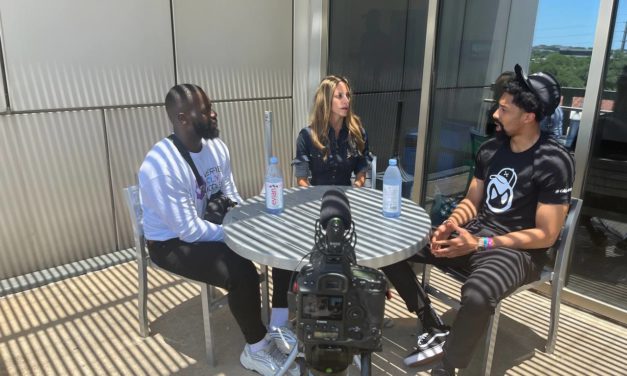
“Everything is bigger in Texas” proved to be true during Consensus 2022. The crypto conference took place June 9–12 in Austin, Texas, this year, attracting 17,000 people from across the globe, despite the 100-degree plus weather. According to the event sponsors, Consensus 2018, which was held at the Hilton Hotel in New York, had previously drawn in almost 9,000 attendees. Caitlin Long, CEO of Custodia — the Wyoming-based digital asset bank — told Cointelegraph that the event this year speaks volumes. “New York has sent a lot of this industry fleeing to places like Austin, Wyoming and Miami. It will be interesting to see if New York makes a comeback.”Aside from its new location, current market conditions were another defining factor of the event. However, attendees remained optimistic about the crypto ecosystem as a whole. In general, new projects and the rise of Web3 were the main discussion points rather than cryptocurrency prices. Ray Youssef, founder and CEO of Paxful — a peer-to-peer cryptocurrency marketplace — told Cointelegraph that crypto winters allow for building phases to start, which he fully supports. “We are now seeing projects build platforms that are real and empowering.”Building the crypto ecosystem in a bear marketTo Youssef’s point, Web3 and new tools to advance crypto ecosystems were hot topics of discussion. For example, Meltem Demirors, chief strategy officer of CoinShares — a digital asset investment firm — told Cointelegraph that despite the bear market, she has seen an increase in people interested in different facets of the crypto industry:“There are different niches and pockets of crypto I’m now seeing, some of which I haven’t even heard of. For example, the STEPN group is here, which is a whole move-to-earn movement. The music NFT and fashion NFT scene is also big here. These are newer communities I’ve read about and have engaged with, but seeing them congregate and host their own events has been really fun.”Demirors gave a keynote at the event on cults and how the crypto community is currently creating shared identity, belief systems and lifestyle rituals around emerging projects. “Cults usually have a negative connotation, but there is a massive crisis of meaning in our world today. People no longer focus on their occupation, religion or nationality. Crypto is filling this interesting role, bringing together people through memes, capitalism and community values,” she explained. As such, Demirors noted that she believes “crypto cults” are attracting many people because it provides a sense of purpose, along with capital. “There is an interesting convergence happening,” she said.While the crypto space continues to attract more participants, Staci Warden, CEO of the Algorand Foundation, told Cointelegraph that Alogrand views this crypto winter as an opportunity for building. “We think that there will be some shakeout in the industry and we are ready to innovate,” she remarked. Specifically, Warden explained that one area the Algorand community is focused on is what Web3 means for financial inclusion. “With Web2, everything went back to huge platforms, but with Web3, creators and contributors receive incentives and benefits for their participation.” With the rise of Web3 on the horizon, Warden shared that Algorand is “laser focused on real world use cases of financial inclusion and the monetization of creators for the work they do.”Web3 is also impacting a number of mainstream industries such as fashion and the creator economy. Shedding light on this, Justin Banon, co-founder of the Boson Protocol — a decentralized network for commerce — told Cointelegraph that last year, the crypto sector witnessed the nonfungible token (NFT) craze, which has prompted the fashion industry’s participation. “Physical fashion isn’t going away, but digital is arriving. It’s become obvious that the two will combine and become facets of the same thing,” he said. Banon also mentioned that a majority of the world’s population will undoubtedly spend more time in the digital world, which is why he believes there will be a need for digital fashion. “This will allow us to identify and differentiate ourselves,” he said. Regarding the creator economy, Solo Ceesay, co-founder of Calaxy — an open social marketplace for creators — told Cointelegraph that Calaxy recently raised $26 million in strategic funding to expand its operations and development efforts.Cointelegraph interviewing Solo Ceesay (left) and Spencer Dinwiddie (right) of Calaxy at Consensus 2022. Source: Rachel WolfsonWhile the emergence and growth of Web3-focused projects are notable, it’s also important to point out that current market conditions have been challenging for other key players. Peter Wall, CEO of Argo Blockchain — a cryptocurrency mining company — told Cointelegraph that many Bitcoin miners raised equity in 2021, but this has become difficult for some, given the bear market. “There are only two ways for miners to raise capital now, which is either through debt or by selling Bitcoin,” he said. Although this may be, Wall elaborated that only miners with a reputable track record will receive loans. “They need to be able to execute with clear plans, while not being over committed to machine purchases and bills they can’t pay.”Crypto’s regulatory landscape in the United StatesRegulations were also heavily discussed at the conference. This shouldn’t come as a surprise, as a number of key regulatory events took place leading up to the event. For example, the bipartisan crypto bill, also known as the “Responsible Financial Innovation Act,” was introduced in the United States Senate on June 7, 2022. According to a statement, the bipartisan bill sponsored by senators Cynthia Lummis of Wyoming and Kirsten Gillibrand of New York, “addresses CFTC and SEC jurisdiction, stablecoin regulation, banking, tax treatment of digital assets, and interagency coordination.”Senator Pat Toomey, the ranking member of the Senate Banking Committee, told Cointelegraph that he thinks the bipartisan bill is “terrific,” further noting that the bill contains modest differences in how stablecoins are treated compared with his stablecoin approach, which was drafted in April this year. Toomey added that while he has not released a bill yet, there are “bridgeable differences” between his draft and the legislation from Lummis and Gillibrand:“Kirsten Gillibrand said on our panel that we can bridge those differences on some of the things I said, but it’s also very constructive to have a Democrat and Republican senator introducing a pretty comprehensive bill that sensibly creates a regulatory framework that is meant to allow this space to thrive. From that point of view, I think it’s very constructive.”Echoing Toomey, Long mentioned that the bipartisan bill is an important advancement for the crypto sector, stating, “This is the bill to watch in Washington. There are now 50 different crypto bills that have been introduced in Congress and there is only one that is bipartisan sponsored by the powerful senator from New York State, along with the powerful senator on senate banking from Wyoming, which is the state leading digital assets. That is quite a combination.”Long added that stablecoin regulations and central bank digital currencies (CBDCs) will be major topics of discussion this year. For instance, although President Biden released an executive order in March 2022 calling for the research and development of a potential U.S. central bank digital currency, Long remarked that she does not believe the U.S. will issue a CBDC. “The Federal Reserve will put out the FedNow Service by the end of this year, which is only six months away. However, no rules have been revealed yet, so we don’t know what this will look like.”Moreover, Long predicts that stablecoins will be a main focus for regulators, pointing out that Wyoming’s special purpose depository regime falls into this category, alongside The New York State Department of Financial Services (DFS) regulatory guidance for U.S. dollar-backed stablecoins issued by DFS-regulated entities. Yet, Long explained that “it will be a couple of years before we realistically see what happens in terms of a law that actually passes” regarding stablecoins. She further remarked that regulators have had the opportunity to create regulations around stablecoins but have yet to act. She said:“Regulators have sat on legitimate applications of parties that have sought permission, while the scams have proliferated in this industry. It’s tough, but I firmly believe the regulators could have acted sooner. A lot of people wouldn’t have been hurt if they had done so.”Cointelegraph meeting with Senator Pat Toomey at Consensus 2022. Source: Rachel WolfsonTo Long’s point, Toomey said that he thinks there is now pressure and momentum to pass stablecoin legislation. “U.S Secretary of the Treasury Janet Yellen said in front of the banking committee that we should do it this year and I think that is realistic,” said Toomey. He added that the pressure has become greater due to the recent collapse of the Terra ecosystem.“I think it influences legislation in the sense that it has drawn attention to the crypto space, and it’s a wake up call to the federal government. My own view is that algorithmic stablecoins should be treated separately from fiat/asset backed stablecoins,” he said, adding, “But let’s be clear: Terra was very large, and when something that large can collapse, the natural inclination of a regulator is to look out across the field to see what other similar instruments and products are there, and the dangers that may arise.”Optimism reignsGiven the current state of cryptocurrency markets, it’s notable that many ecosystem participants remained optimistic about the future. In particular, Austin’s cryptocurrency community appears to be thriving, as it has become a hot spot for crypto mining companies and a number of Web3 projects.Patrick Stanley, core contributor to City Coins — thecryptocurrency project that has been implemented in New York State and Miami — told Cointelegraph that AustinCoin (ATX) can be activated at any time, noting that there is a group currently working on a proposal for getting new CityCoins up and running. “We want to be more deliberate about launching AustinCoin. We already have people on the ground in Austin, we have the capital, and there is clear commitment. We just want to ensure all of this before activating AustinCoin.” Stanley added that Austin Mayor Steve Adler is a “cryptocurrency progressive,” noting that he understands that CityCoins leaves less of a footprint than having big tech companies move to Austin. “CityCoins is like getting the tax revenue of a large company without the footprint and real estate going up. This has been very compelling to Mayor Adler,” he shared.Demirors also pointed out that she is excited about the advancement of crypto infrastructures, such as new data centers, semiconductors and the overall “plumbing” that makes cryptocurrency and any technology function properly. “We need to make sure the U.S. is a friendly jurisdiction for people to develop not only software, but also hardware to deploy at scale,” she said. While Demirors recognizes that most legislation currently isn’t being drafted around this aspect, she is hopeful that Texas and other states continue to take a welcoming approach to initiatives such as mining. Demirors also noted that the right to consumer and financial privacy isn’t being considered in crypto regulations, remarking that most of these bills want more financial surveillance. “I think as an industry, it’s important for us to push back on that, particularly in a world where CBDCs are being explored.”Finally, it’s important to point out that the crypto industry is continuing to bring on key players to help with advancements. For example, Grayscale Investments recently hired Donald B. Verrilli, a former U.S. Solicitor General, to join the firm to help push for a spot Bitcoin exchange-traded fund (ETF). Verrilli mentioned during a press conference at Consensus last week that he is trying to take public policy and move it in a constructive direction.As such, Verrilli aims to convince the U.S. Securities and Exchange Commission (SEC) to convert Grayscale’s Bitcoin Trust (GBTC) into a spot-based ETF. In order to accomplish this, Verrilli explained that it’s “arbitrary and capricious” to treat cases that are alike in a different manner, in which he referenced the SEC’s approval of a Bitcoin futures ETF, but not a Bitcoin-spot ETF. “It seems like this is a common sense point. I am new to this, but looking at it so far, it’s very hard to see what argument there could be for treating these things differently.”

Čítaj viac

Pride in the Metaverse: Blockchain tech creates new opportunities for LGBTQ+ people

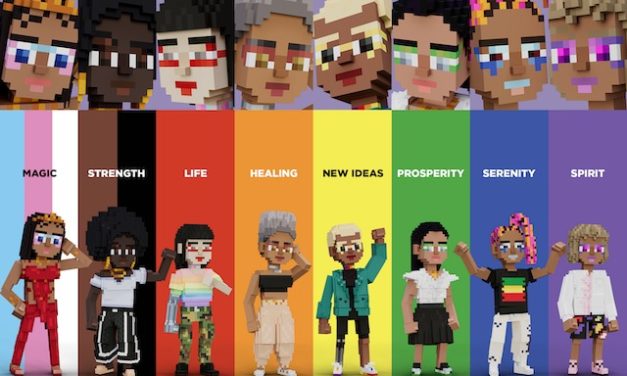
A number of social gatherings have started to take place in the Metaverse as companies across the globe begin to understand the value that virtual interactive environments can have for consumers. It shouldn’t come as a surprise then that Pride Month — a month-long celebration held in June to commemorate the 1969 Stonewall Riots — will be celebrated in various metaverse environments this year. Pride in the Metaverse creates open accessAkbar Hamid, co-founder of People of Crypto Lab (POC) — an innovation hub dedicated to increasing diversity and representation in Web3 — told Cointelegraph that the Metaverse is an incredible way to allow people around the world to partake in events they may not be allowed to participate in otherwise. “We want Pride Month 2022 to be an event anyone can join, even in countries where people are not allowed to participate,” he said.Although Pride Month is celebrated openly in many places, 71 countries ​​currently criminalize being LGBTQ+. In order to push against this, Hamid explained that POC has collaborated with The Sandbox — a blockchain-based metaverse project — to launch a virtual diversity, equity and inclusivity hub during Pride Month. Known as Valley of Belonging, this unique youth center will enable people across the world to celebrate, said Hamid:“Marginalized communities tend to be left behind, so POC’s goal with Valley of Belonging is to ensure that each community has access to events they can openly participate in. And given the current climate of rising discrimination against LGBTQIA+ and other minorities, there has never been a more important time to build a safe space that welcomes all.”In order to achieve the goal of “belonging,” Simone Berry, co-founder of POC Lab, told Cointelegraph that Valley of Belonging will consist of 8,430 nonfungible token (NFTs) avatars that represent different ethnic, gender and sexual identities. “All of our avatars are non-binary, meaning they don’t identify with any gender or sexual orientation. This is also the first NFT project in The Sandbox that allows users to customize avatars using pronouns,” explained Berry. She added that avatar traits will consist of over 36 different skin shades while incorporating features that celebrate differences like prosthetic limbs, along with cultural identifiers like a hijab.POC’s avatars featuring NYX makeup. Source: People of Crypto LabBerry also noted that NYX Professional Makeup — a subsidiary of L’Oreal — will integrate into The Sandbox to feature voxelized makeup looks, which will further help drive adoption. “In order to demonstrate that makeup is genderless, all of the avatars in our mint, which will take place June 17, will feature makeup from NYX,” she said. Yasmin Dastmalchi, general manager of NYX Professional Makeup, told Cointelegraph that the partnership with POC and The Sandbox is important since it allows diverse communities a forum for true self-expression, noting that the Metaverse “has become a form of digital identity.”Decentraland will also allow users to openly celebrate Pride Month 2022 in its blockchain-based Metaverse with a month-long event featuring entertainment, experiences and curated content. Iara Dias, head of Metaverse Pride and senior producer at Decentraland, told Cointelegraph that Metapride Land is debuting its headquarters in Decentraland to celebrate Metaverse Pride:“This will offer a permanent safe space for the global LGBTQIA+ community to engage and meet other members around the world. Users will be able to access the space year-round, not just during Pride Month, further ensuring Decentraland and its partners’ commitment to supporting the LGBTQIA+ community.”Dias added that Decentraland will host Metaverse Pride on June 11, which is a celebration honoring the LGBTQIA+ community. She elaborated:“Debuting during Pride, the long-awaited ‘kissing’ emote will allow avatars to kiss each other and express their feelings towards one another. Furthermore, couples from all sexual orientations can get married in the metaverse and receive NFT certificates of their union.”According to Dias, these features present a unique opportunity for same-sex couples who reside in countries in which they are not allowed to express their commitment. “There will also be drag queens presenting for the first time in the Metaverse, along with a special vogueing-capoeira performer that marks the first time this type of dance and presentation have entered the Metaverse,” she commented.“Metapride Land” in Decentraland. Source: DecentralandHow safe is the Metaverse?While it’s notable that both The Sandbox and Decentraland will host Pride events this year to ensure new opportunities and access, it’s important to point out that safety and security are still ongoing challenges in the Metaverse. Online communities like gaming chat rooms are notorious for hate speech against racial and sexual minorities. Indeed, budding metaverse communities have been shown to be hotbeds for racism, bigotry and misogyny.One researcher who recently entered Meta’s social-networking platform Horizon World using an Oculus virtual-reality headset announced that her avatar was raped in the virtual space.Recent: Crypto knocking on the WEF’s door: The view from DavosGiven these concerns, Sebastien Borget, co-founder and chief operating office of The Sandbox, told Cointelegraph that the platform is taking security very seriously as more events are hosted virtually. “Education on security in The Sandbox is critical to onboarding the next billion users to the Metaverse,” he said. Borget added that The Sandbox’s recent partnership with hardware wallet Ledger will help promote security in the Metaverse.Given that Decentraland is also a blockchain-based platform, Dias pointed out that users’ data and privacy protection are paramount. “The only user identifications on Decentraland are usernames and wallet addresses. This allows users who wish to remain anonymous the ability to fully express themselves without the fear of being identified,” she said. In regard to appropriate behavior, Dias mentioned that Metaverse Pride has laid out behavioral guidelines, allowing users to block others if they experience harassment. “We’ll use non-player characters to offer guidance on how to do this, but we have also made this very user-friendly.”Web3 takes Pride to new heightsChallenges aside, Web3 as a whole is allowing Pride Month to extend far beyond what has previously been possible. Shedding light on this, Dias commented that compared with real-life Pride events, the Metaverse enables people around the world — even in dangerous places — to participate. In addition, she said that a person’s digital identity defined via an avatar can give users the courage to be whoever they wish. “I wouldn’t be surprised to hear stories of people saying their avatar helped them to be brave, and finally come out and be their authentic self.”A number of artwork NFTs are also being launched to celebrate and raise awareness for Pride Month. For example, Serge Gay Jr. and Dan Nicoletta, both photographers and close friends of Harvey Milk — an American politician and the first openly gay man to be elected to public office in California — recently launched a limited edition NFT art series inspired by Milk’s legacy.From “The Friends of Harvey Milk Plaza” NFT collection. Source: Serge Gay Jr. and Dan NicolettaNicoletta told Cointelegraph that the goal behind “The Friends of Harvey Milk Plaza” NFT collection is to foster support for LGBTQ+ civil rights and within the emerging NFT art market: “I’m not seeing a lot of LGBTQ+ content in that realm yet, so I am excited about the possibilities and to be working in that medium for the first time.”Recent: Anonymous culture in crypto may be losing its relevanceBrian Springfield, executive director of The Friends of Harvey Milk Plaza in San Francisco, further told Cointelegraph that proceeds from the NFT project will go to the Friends of Harvey Milk Plaza to support creating a safe, inclusive space in San Francisco’s Castro district.“The goal of The Friends of Harvey Milk Plaza NFT Collection is to raise awareness around The Memorial at Harvey Milk Plaza project in San Francisco, and to inspire other cities to build similar spaces in their own communities,” he said.“Castro Street fire escape revelers 1978.” Source: Danny Nicoletta, original imagePride Icons is another NFT project that aims to highlight the LGBTQ+ community. Regev Gur, chief marketing officer of Pride Icons, told Cointelegraph that the NFT collection features images of important people within the LGBTQ+ community, such as Andy Warhol and Elton John.Andy Warhol NFT. Source: Pride IconsGur shared that he grew up with a gay father who hid his true identity for years. As such, he explained that the biggest goal behind Pride Icons is to put a spotlight on the LGBTQ+ community while making blockchain accessible to those who may not be aware of the benefits associated with the technology: “This is really about education — we need to educate people of all backgrounds on the power of Web3 and NFTs.”

Čítaj viac

Digital identity in the Metaverse will be represented by avatars with utility

The Metaverse is poised to become tech’s next trillion-dollar opportunity, as an increasing number of companies are showing interest in immersive virtual spaces that will allow consumers to go beyond what’s possible in real life. This was highlighted in a recent report from CB Insights, which found that the Metaverse will disrupt at least 13 leading industries including fashion, retail, gaming, education and more. While notable, various metaverse environments are still underway. For example, tech giant Microsoft announced on May 24 the creation of an “industrial metaverse,” which will allow workers to wear augmented reality headsets to manage supply chains. On the other hand, venture capital firm Andreessen Horowitz (a16z) believes that gaming infrastructure and technologies will be “key building blocks of the Metaverse.”Utility is keyAs such, it remains unclear which type of metaverse ecosystem will resonate the most with consumers. Given recent developments, however, it appears certain that avatars in the form of nonfungible tokens (NFTs) will play a critical role in the Metaverse, serving as a user’s digital identity within virtual spaces.For instance, Sebastien Borget, co-founder and chief operating officer of The Sandbox — a blockchain-based metaverse project — told Cointelegraph that avatars are the new representation of a user’s identity in the Metaverse:“By leveraging avatars, anyone can express themselves digitally in ways that weren’t possible before. Moreover, truly owning your identity and being able to carry it through an NFT across multiple decentralized applications and virtual worlds is one very concrete and easily understandable example by mainstream audiences.”Borget added that avatars in the Metaverse are capable of representing a user’s different moods, tastes and appearances. “Avatars ultimately shape how we interact within the Metaverse,” he said.To put this in perspective, Borget shared that The Sandbox plans to create Elvis Presley avatars to be used within their metaverse ecosystem, which would allow millions of users to “transform” into Elvis Presley.Borget mentioned that Elvis avatars will transport fans through a virtual time capsule to complete entertaining tasks. “Users will be able to advance as a Memphis Mafia member in The Sandbox Metaverse,” he said. Borget believes that such a feature could be quite entertaining, as the Memphis Mafia was the nickname given by the media to a group of Elvis Presley’s friends, associates and employees who accompanied and protected Elvis throughout his career.Elvis On-Chain Sandbox Avatar Close Up; Source: The SandboxDavid Porte, creative director for Run it Wild, further told Cointelegraph that the studio’s collection of 5,000 unique Elvis avatars will be able to interact with all other avatars in The Sandbox.While entertaining, these features — also known as an avatar’s utility — are one of the most important elements for ensuring digital identity within a metaverse ecosystem. For instance, Porte remarked that Run it Wild’s ultimate goal through this specific project is to establish a virtual meeting place for Elvis fan culture by using Web3 rails, like utility, to transcend boundaries.Shedding light on this, Aaron McDonald, co-founder of FLUF World — a 3D Metaverse ecosystem — told Cointelegraph that while avatars visually engage a broader community in using Web3 functionalities, utility is what gives purpose to a user’s character. “Utility helps users participate in the economy of the Metaverse, which is important since Web3 is about community ownership and community value creation,” he said.For example, McDonald pointed out that each character within the FLUF ecosystem has the ability to be its owner’s avatar, serving as their representative in the Metaverse, with a unique purpose and functionality. McDonald explained that FLUFs are the apex avatar. “They are the keys to the ecosystem — not only do they act like a pass for much of the value we create in the ecosystem, but they also have breeding functionality to help create the starting characters in FLUF World.” McDonald added that Party Bears have a focus on music — a feature he believes will be a primary part of the early metaverse — while Seekers are avatars that are keys to the decentralized communications network.FLUF World various 3D NFTs. Source: FLUF WorldAdditionally, McDonald pointed out that “thingies” are avatars within the FLUF ecosystem that are backed by artificial intelligence, or AI, capabilities. “Using the power of our sister company, Altered State Machine’s AI protocol, each avatar can have a ‘brain’ aimed at a specific function or functions,” he explained. Erin Zink, head of strategy at Altered State Machine (ASM), told Cointelegraph that the company is introducing diversity and randomness to the Metaverse through AI-powered avatars. “These avatars have different strengths and weaknesses, are unpredictable and unique,” she said. Zink elaborated that ASM’s AI agents have two components:“One is a visual representation of the AI, like a Bored Ape Yacht club NFT, or 3D avatars in FLUF World, or even a chatbot on a website. But, this is just the aesthetics. The other half of the agent is the Brain. Brain NFTs are capable of learning and evolving and are interoperable across different forms and worlds.”In order to demonstrate how Brains work, Zink explained that ASM recently launched Artificial Intelligence Football Association NFTs, which consist of 40,000 3D customizable soccer characters. According to Zink, these avatars will compete in teams of four in ASM’s forthcoming decentralized play-and-earn soccer game called AIFA. “Combine each of your AIFA all-stars with an ASM Brain and create teams of four to play. You can train them and rise the ranks to become the global champion,” she said. Zink added that ASM plans to soon launch a boxing game called “The Next Legends” that will also use AI-powered characters.AIFA Allstar NFTs. Source: Altered State MachineThe future of digital identity in the MetaverseWhile it’s difficult to fully determine how metaverse environments will evolve, industry experts believe that avatars and utility are key elements for social interactions and identity moving forward.Dorian Johannink, co-founder of Seekers and Sylo — creators of the 3D animated NFT robots that appear in FLUF World — told Cointelegraph that as NFTs move beyond the JPEG phase, it will be essential to provide more ways to allow users to engage with assets in the Metaverse: “Character avatars are a jump off point, but in order to develop long term engagement these assets and environments need to continue to provide deeper unique functionalities that help immerse and provide functional benefits to holders.”With this in mind, Borget shared that The Sandbox is working actively to enable more collections of avatar NFTs to come to life in its metaverse, like Bored Ape Yacht Club, for instance. The Sandbox’s official Twitter account sent a tweet out on March 27 referencing this. “We would, of course, love to see 3D voxelized versions of every 2D collection. And, there are certain collections such as the upcoming People of Crypto that will build utility in the Avatars themselves right at the drop. In this case, owners will be able to join Metapride, the first Metaverse Pride Parade,” Borget remarked.While this may soon be the case, there are challenges that may hamper development. For example, Borget touched upon the difficulties of transforming 2D NFT collections into interactive avatars, noting that the aesthetics of voxels requires talent and creativity. Moreover, James Dewhirst, co-founder of Dinodawg Kingdom — an NFT avatar project built on the Solana Network — told Cointelegraph that projects cannot yet build a universal avatar model that can be used across all platforms: “In order for us to offer different utilities, we need to ensure our Dinodawgs can work equally well on Unreal Engine as they do on Unity, for example. This is a bespoke and highly intricate process, and we need to work closely with each partner to ensure our avatars can operate seamlessly on their platforms.” Echoing this, Nick Rose, founder of Ethernity and CEO of Ethernal Labs — a creative studio for NFTs — told Cointelegraph that currently, the biggest challenge is that varying metaverses are not interoperable:“If one takes a 60,000 foot overview of the Metaverse ecosystem today, it certainly doesn’t look like the world’s globe with various continents interconnected via water. Instead, it’s a corrugated patchwork of siloed worlds building up their own communities.”

Čítaj viac

Získaj BONUS 8 € v Bitcoinoch

nakup bitcoin z karty

Registrácia Binance

Burza Binance

Aktuálne kurzy