
Autor Cointelegraph By Prashant Jha

Indonesian Islamic organization issues new fatwa against crypto use

The Tarjih Council and the Central Executive Tajdid of Muhammadiyah, one of the largest non-government Islamic organizations in Indonesia, issued a new fatwa against cryptocurrency use, deeming it haram, or unlawful, for Muslims.The fatwa, a ruling on the point of Islamic law, was issued on Tuesday and pointed towards two critical issues with cryptocurrencies that make them illegal as an investment tool and a medium of exchange under Islamic laws:The speculative nature of cryptocurrencies makes them imperfect as an investment tool. The crypto tokens are believed to contain “gharar” (obscurity) which means they are not backed by anything like gold, which makes them unlawful under Islamic laws.Cryptocurrencies don’t meet the standards of Islamic barter or medium of exchange laws which require them to be legal tender and accepted by both parties.The fatwa read:”This speculative nature and gharar is forbidden by the Shari’a as the word of God and the hadith of the Prophet SAW and does not meet the values ​​and benchmarks of Business Ethics according to Muhammadiyah.”Muhammadiyah became the third Indonesian Islamic organization to issue a fatwa against cryptocurrency use. Earlier, in November 2021, the Indonesian Ulema Council (MUI), the highest clerical body in the country declared crypto haram as a transactional tool. However, it noted that crypto assets can be used as an investment tool if they abide by sharia tenets. In October 2021, another major Islamic organization the Nahdlatul Ulama (NU) also deemed crypto haram due to its speculative nature.Related: Russian Orthodox Patriarch is not a Bitcoiner, church clarifiesDespite the growing calls for a ban on crypto use by Islamic organizations in Indonesia, the country has seen a mammoth rise in adoption. The country recorded $9.8 billion in crypto transactions in 2021, recording a 1,222% rise over 2020. Not just investments and transactions, the recognition of crypto as a trading commodity has made it the primary choice of many international crypto exchanges.

Čítaj viac
EU securities regulator calls for proof-of-work crypto mining ban

Erik Thedéen, the vice-chair of the European Securities and Markets Authority has raised concerns over the growing use of renewable energy for Bitcoin mining.In a recent interview with the Financial Times, Thedéen said that Bitcoin (BTC) mining has become a “national issue” and warned cryptocurrencies could pose a risk to climate change goals. He called upon European regulators to take special exception to proof-of-work mining which is primarily used by Bitcoin and a few other forked altcoins. He also advocated for proof-of-stake as a better, energy-efficient alternative:“We need to have a discussion about shifting the industry to a more efficient technology.”Melanion Capital, a Paris-based alternative investment firm, has addressed the growing call for a ban on PoW mining back in November 2021, called it “completely misinformed”The investment firm said that due to the decentralized nature of Bitcoin, there is no lobby or group to defend its interests, which “should not be taken as an opportunity to implement measures rendering illegal an industry for its lack of defensive powers.”Related: Swedish call to ban crypto mining ‘completely misinformed,’ says fund managerThe Bitcoin network’s energy usage was one of the most controversial topics in 2021 that saw the likes of Elon Musk, Jack Dorsey and Michael Saylor engage in several debates. Tesla even discontinued the Bitcoin payment option citing the Bitcoin network’s energy usage. However, unlike Thedéen, most of the critics until now had no issue with clean energy usage. Musk has claimed that if 50% of the Bitcoin network’s energy comes from renewable sources, Tesla would rethink adding a Bitcoin payment option.China’s Bitcoin mining ban in May last year turned out to be a boon for the ecosystem, as it not only disintegrated the highly centralized Bitcoin mining industry, it also helped in moving towards renewable energy usage. According to the Q3 report from Bitcoin Mining Council, renewable energy usage by the Bitcoin network reached 58% by the third quarter of 2021.Global Sustainable Energy Index Source: BMC Report

Čítaj viac

Iran to reportedly pilot central bank digital currency soon

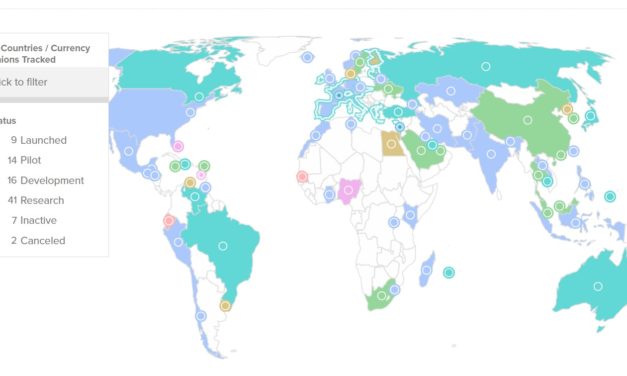
The Central Bank of Iran (CBI) is reportedly planning to launch a central bank digital currency (CBDC) pilot soon.According to a report by the Iranian Labour News Agency, the CBI vice governor said that CBDCs could help the country resolv financial inconsistencies. The development of a sovereign digital currency in Iran began in 2018 at the Informatics Services Corporation — the executive arm of the CBI. The development phase has been completed and a pilot will be launched soon. However, CBI didn’t reveal many details about the time frame.The Iranian CBDC was reportedly developed using the Hyperledger Fabric platform hosted by the Linux Foundation. Cointelegraph reached out to Hyperledger for a comment but didn’t get a response at the publishing time.Iran has experienced significant financial and economic difficulties as a result of heavy economic sanctions levied on it by the United States. Amid these problems, Iran has turned to crypto and was among the first countries to legalize Bitcoin (BTC) mining in hopes of reviving the economy, however, it had to temporarily shut mining operations on numerous occasions due to acute power shortages and blackouts. Iran is also looking to use cryptocurrencies for international trade, in hopes of bypassing the trade sanctions. As reported by Cointelegraph, CBI, and the Ministry of Trade reached an agreement to link the CBI’s payment platform to a trading system allowing businesses to settle payments using cryptocurrencies. At present, nearly 100 nations are working on a sovereign digital currency, while only a handful of them have reached the pilot phase. China is currently at the forefront: it completed its CBDC development in 2019 and is currently mass testing it across various provinces and retail sectors. Related: Iran halts authorized crypto mining to save energy for winterFrance and Switzerland have carried out multiple cross-border pilots. South Korea, Japan, and Russia are expected to carry out trials in 2022, while the U.S. is still in the discussion phase. According to the Atlantic CBDC tracker, nine nations have already launched their CBDC, 14 are in the pilot phase, 16 are in the development phase, 41 nations are still researching and two nations have canceled their CBDC plans.CBDC development tracker Source: Atlantic Council

Čítaj viac

El Salvador’s Bitcoin wallet onboards 4M users with Netki partnership

El Salvador, the first country to make Bitcoin (BTC) a legal tender has onboarded 4 million users for its government-backed BTC wallet Chivo in partnership with digital identity provider Netki, according to an announcement.Netki has announced that Chivo wallet onboarded over 4 million new users in 45 days using the company’s flagship KYC/AML product, OnboardID. The platform also claimed that it had facilitated the compliant onboarding of 70% of the country’s previously unbanked population. El Salvador passed the Bitcoin bill in June last year and officially made Bitcoin a legal tender along with the U.S. dollar in September. Nayib Bukele, the President of the small Central American nation, made it clear that the goal was to offer digital banking facilities to more than 70% unbanked population in the country. To promote BTC use and ease of transactions, the government launched a national crypto wallet named Chivo and a $30 airdrop in BTC.Major financial institutions, including the World Bank and the IMF, shared drastic forecasts while warning El Salvador of unwarranted economic consequences. However, President Bukele continued to promote Bitcoin use in the country and rebuked all the fear-mongering. After the IMF rejected $1 billion financial aid, the El Salvador government launched Bitcoin volcanic bond as Bitcoin proponent Max Keiser advised.Earlier today, President Bukele also responded to Moody’s recent downgrading of El Salvador’s sovereign debt and said, “BREAKING: EL SALVADOR DGAF”BREAKING: EL SALVADOR DGAF https://t.co/VuJ25PcvQL— Nayib Bukele (@nayibbukele) January 17, 2022 Related: El Salvador’s dollar debt dives on Bitcoin bond plansChivo has been instrumental in making El Salvador the first country to make Bitcoin easy as using fiat. Apart from transferring money worldwide, Chivo wallets are being used for daily transactions at restaurants, cafeterias, malls and every other retail market. The government has also deployed hundreds of Bitcoin ATMs across the country that facilitates millions in cross-border remittance. Chivo has managed to do what banks haven’t been able to do in decades. 

Čítaj viac

UK Treasury wants to remove blockchain reference from crypto definition

The United Kingdom is actively looking to regulate the crypto market and has proposed many new policies to bring various crypto markets under the rule of law. However, among the various newly proposed suggestions, what turned many heads is the request to remove blockchain and Distributed Ledger Technology (DLT) references from the definition of crypto assets.BRITAIN SETS OUT PLANS FOR REGULATING CRYPTO ASSETS, PROPOSES TO REMOVE REFERENCE TO BLOCKCHAIN FROM THE DEFINITION OF CRYPTO ASSETS— *Walter Bloomberg (@DeItaone) January 18, 2022A new crypto report titled “Cryptoasset promotions: Consultation response” from the Her Majesty’s (HM) Treasury noted that, while most crypto assets use DLT or blockchain as an underlying technology, it might change over time the industry evolves. Thus, crypto assets must be exempt from the reference of DLT to “future-proof the definition for innovations.” The official statement said:“Most crypto assets currently use distributed ledger technology (DLT), it might be that this changes as the technology and industry evolve. Therefore, the government proposes to remove the reference to DLT from the definition of qualifying crypto assets. “Related: UK 3rd for ETH ownership as crypto adoption grows 1% in December: SurveyApart from the controversial crypto-asset definition change, the HM Treasury paper also discussed bringing decentralized finance (DeFi) under the scope of regulation on a case-to-case basis and said the government would closely monitor the fast-growing industry. The official paper read:”Whether certain crypto assets lending activities or decentralized finance platforms are within the scope of the regime ultimately depends on the activities being carried out and promoted. As such, this will need to be considered on a case-by-case basis.”Many crypto proponents believe the removal of blockchain and DLT reference as proposed by the committee could cast a danger on the decentralized nature of the crypto market. For example, Chinese CBDC e-CNY or digital yuan is said to be based on blockchain technology, however, it’s more of a private blockchain and highly centralized, controlled by the government. The British government seems to be following a similar path with a definition change.

Čítaj viac

Získaj BONUS 8 € v Bitcoinoch

nakup bitcoin z karty

Registrácia Binance

Burza Binance

Aktuálne kurzy