Autor Cointelegraph By Prashant Jha

South Korean crypto market grows to $45.9B in 2021 despite strict regulations

South Korea’s crypto market grew to 55 trillion Won ($45.9 billion) by the end of 2021, as per a new study from the country’s chief financial regulator, the Financial Service Commission.South Korea is considered among the strictest crypto markets in terms of regulatory policy implementations and made regular headlines throughout 2021 for its new travel rule and Know Your Company requirements. However, the Korean crypto market has bloomed to new heights despite the regulatory scrutiny in 2021.The FSC analyzed transaction data from the 24 licensed crypto exchanges and revealed that daily transactions on Korean crypto exchanges reached 11.3 trillion won ($9.4 billion). The combined operating profit of 24 businesses came to 3.37 trillion won ($2.8 billion). A total of nine crypto exchanges reported a net loss over the past year.The crypto trading market was dominated by national fiat Korean-won which accounted for 95% of the total crypto transactions which mainly came from Upbit, Bithumb, Coinone and Korbit.The domination of won in the Korean crypto market is attributed to a new crypto license regulation issued in 2021, that required crypto exchanges to open real-name bank accounts of traders in association with a certified bank. The particular regulations forced nearly 200 small and medium crypto exchanges out of business as banks refused to partner or offer any of their services.Related: Korea’s crypto market is among the strongest — and the strangest — in the worldThe FSC report published by The Korea Herald suggests there are a total of 15.3 million registered crypto exchange users, out of which only 5.58 million people participated in trading in 2021. Out of these 5.58 million crypto users, nearly 3.1 million users hold crypto assets worth below 1 million won ($850), while 15% of the traders hold virtual assets over 10 million won ($8,500).South Korea’s crypto license regulations wiped the majority of the medium and small exchanges out of the country and those who survived had to adhere to strict privacy laws, banning transactions from the private wallets and flagging transactions above a certain amount. Another proposal was issued in November for token issuers aimed at recovering illegally gained funds, doling out criminal punishments, and protecting investors from future malfeasance. Another proposal was issued in November for token issuers aimed at recovering illegally gained funds, doling out criminal punishments, and protecting investors from future malfeasance.By the final quarter of 2021, the Korean regulators focus shifted towards crypto taxation, with a proposal to impose a 20% tax on crypto profits. However, in absence of clear regulations for the market, the tax policy was delayed for another year. The country has also shifted its focus on nonfungible tokens in the recent past and might become one of the first nations to issue NFT tax regulations.

Čítaj viac
eBay to add crypto payment options soon, says CEO

Major e-commerce marketplace eBay could integrate crypto payments soon, said CEO Jamie Iannone in a recent interview.The internet marketplace is among the oldest e-commerce platforms, now looking to become the go-to platform for Gen Z and Millennials. The CEO said in an interview with The Street that the firm is looking to integrate crypto payment options for quite some time and an official announcement could be made during the upcoming investor’s day on March 10.During his interview, Iannone revealed that the e-commerce giant is looking to transition to new payments modes as they are already managing $85 billion of volume on its platform directly.Related: EBay Denies Rumors It Will Start Accepting Crypto, Despite Advertising at Crypto EventTalking about eBay’s stance on emerging technology such as blockchain and cryptocurrencies, Iannone pointed toward the growing popularity of nonfungible tokens trading on its platform without making any official announcement regarding the same.Iannone said that the company changed its policies last year to make the e-commerce platform a place to buy and sell anything be it a physical or digital commodity. eBay didn’t respond to Cointelegraph’s request for comments at publishing time.The rise in popularity and demand for cryptocurrencies has made several online platforms add crypto payments options. eBay, with its focus on capturing Millennial and Gen Z customers, aims to do the same. However, it won’t be the company’s first attempt at crypto payments — eBay first tried integrating BTC payments in 2014. As Cointelegraph reported in May 2021, eBay was exploring Bitcoin payment integration last year as well along with NFT trading. The crypto payment integration plan now seems to be near finalized as crypto has become mainstream and more acceptable among the masses.

Čítaj viac

Bitcoin network's carbon emission jumped 17% after China ban: Report

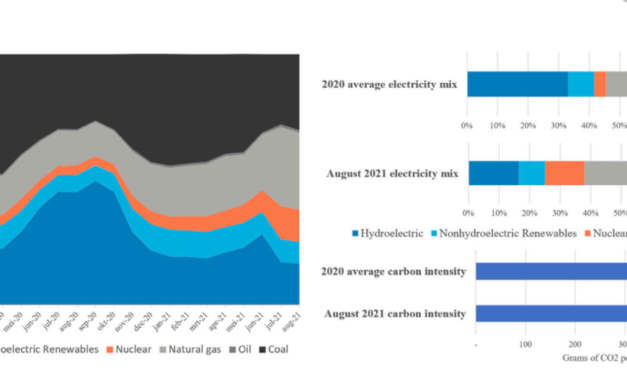
Bitcoin network’s proof-of-work mining consensus has been a topic of evironmental, social and governance (ESG) debates for a long time and a new study may only add to the growing controversy around BTC’s carbon footprint.A new research report titled “Revisiting Bitcoin’s carbon footprint” published in the peer-reviewed scientific journal Joules has highlighted that the Chinese crypto mining ban might not have contributed to the reduction in the carbon footprint of the Bitcoin network as propagated by many Bitcoiners, on the contrary, it has increased by 17%.China was the primary hub for Bitcoin miners before May 2021 and accounted for more than 60% of the total Bitcoin network hashpower. However, the blanket ban imposed by the government led to the migration of most of the mining farms out of the country. China’s BTC mining hashpower share fell from over 60% in May to near zero in August, with miners moving to the United States, Russia and Kazakhstan.Crypto pundits predicted that the migration of miners out of China would not only make BTC mining more decentralized as well as greener but, the new Joule report shows otherwise. The new research report highlighted that the amount of renewable energy used to power BTC mining has declined from 42% to around 25% since last August.Top Electricity Sources for Bitcoin Mining   Source: JouleRelated: Georgia punches well above its weight for Bitcoin mining: ReportThe study tracked the source of electricity powering mining operations to calculate the carbon emissions of the BTC network and found that the top crypto blockchain emits 65 megatons of carbon dioxide annually. The study concluded that miners in China were more renewable energy-focused than most of the top mining countries today.Alex de Vries, one of the authors of the report, told Cointelegraph:“The study in general highlights how Bitcoin mining got even dirtier after the Chinese mining crackdown of last year. A lot of the hydropower miners previously had access to here have now been replaced by natural gas (in the U.S.). On top of that, the coal-based electricity in Kazakhstan is also dirtier than Chinese coal-based electricity. Altogether, that makes proof of work mining even more carbon-intensive than it already was.”The Joule journal study further contradicts a report pushed by the Bitcoin Mining Council led by MicroStrategy CEO Michael Saylor, which claimed that the Bitcoin network utilizes up to 66% sustainable energy.

Čítaj viac

Senator Ted Cruz invokes Canadian unrest to advocate for Bitcoin again

Republican Senator Ted Cruz during his Conservative Political Action Conference (CPAC) speech on Friday advocated for Bitcoin (BTC) again while lauding its decentralization.Cruz said he is very bullish on Bitcoin because it is highly decentralized and cannot be controlled by any government or entity. He went on to cite the example of an ongoing issue in Canada, where the government enforced emergency laws as a retaliation to the Freedom Convoy trucker’s protest against COVID-19 mandates.The Canadian government asked financial institutions and banks to freeze accounts of protesters followed by an order to crypto exchanges and crypto wallet service providers to do the same. A non-custodial wallet service provider Nunchuck received a similar order, and their response to the government went viral which eventually found its way to CPAC via Cruz.One of the reasons I’m bullish on #Bitcoin is because it’s decentralized.The Left hates Bitcoin because they can’t control it. #CPAC2022 pic.twitter.com/D4PYNacNBZ— Ted Cruz (@tedcruz) February 25, 2022Cruz read the response of the Bitcoin wallet service provider which asked the Canadian government to read up on self custody wallets and private keys. The response also notified that they don’t have access to any of their user’s financial information beyond their email address, which is by design. The Republican senator called Nunchuck’s response “spectacular” and went on to cite the example of the Chinese crypto ban to suggest Bitcoin cannot be controlled by governments.Related: US senator submits resolution to allow crypto payments in Capitol ComplexSenator Cruz has joined the growing list of American politicians rallying behind Bitcoin, who has advocated for use of waste natural gas for Bitcoin mining in Texas and recently bought the Bitcoin dip. However, his propagation about the left being anti-Bitcoin citing Justin Trudeau as an example wasn’t received well among crypto Twitter. One user wrote, Bitcoin is apolitical and politicizing it as “Left vs Right” is a wrong move.Politicizing it as left vs right is the wrong angle Senator. Bitcoin is apolitical.— Ben Fairclough (@BFairclough23) February 25, 2022

Another user noted that Cruz being a politician is using Bitcoin knowledge to his advantage and suggested the opponents become more pro-Bitcoin to counter him.He’s a politician using his understanding of #bitcoin to his advantage.The only winning move for his political opponents are to be more pro-bitcoin.— Seha Islam⚡ (@sehaislam) February 25, 2022

It is important to note that while there are policymakers who are making efforts at the judicial level to bring changes to the law for Bitcoin adoption, such as Miami Mayor Francis Suarez, Wyoming Senator Cynthia Lumis and a few others, however, a majority of them seems to be focused on using it as a tool for their political campaigns.

Čítaj viac

China’s Supreme Court adds digital currency to list of illegal fundraising methods

China’s hardline policy on crypto took another turn on Thursday as the country’s Supreme Court revised its judicial interpretation for illegal fundraising to include digital currency transactions.The Chinese Supreme Court issued a revised version of its “Decision on Amending the Interpretation of the Supreme People’s Court on Several Issues Concerning the Specific Application of Law in the Trial of Criminal Cases of Illegal Fund Raising.”Just In: For the first time, the Supreme Court of China has included virtual currency transactions in the judicial interpretation of illegal fundraising, which is mainly to punish the behavior of absorbing funds in the name of virtual currency. https://t.co/hr2NspSYf8— Wu Blockchain (@WuBlockchain) February 24, 2022The revision also improved upon the conviction and punishment for crimes related to illegal fundraising. While maintaining four of the original characteristics of the law, it added crime, online lending, digital currency transactions, financial leasing and a few others to the revised list, local media reported.The inclusion of cryptocurrency transactions in the new revised judicial interpretation would mean that those found illegally raising funds from the public in the name of digital currencies would be punishable under the newly revised law. The new law comes into effect on March 1, 2022.Related: BTC price falls below $38K as Tencent leads worst China tech rout since JulyChina’s strict crypto policy is nothing new, as the country has announced more than a dozen bans against various crypto-related activities over the past decade. One of the biggest crackdowns came in 2021 when a committee consisting of some of the top regulators came out to issue a blanket ban on all crypto-related activities.The new guidelines declared all crypto transactions illegal in mainland China and prohibited foreign crypto exchanges from offering any of their services. Since then, state regulators have continued to implement the policies and have weeded out the majority of centralized mining and trading from the country.

Čítaj viac

Získaj BONUS 8 € v Bitcoinoch

nakup bitcoin z karty

Registrácia Binance

Burza Binance

Aktuálne kurzy