Autor Cointelegraph By Prashant Jha

Finance Redefined: DeFi ‘Godfather’ Cronje quits, CAKE launches $100M venture arm and more

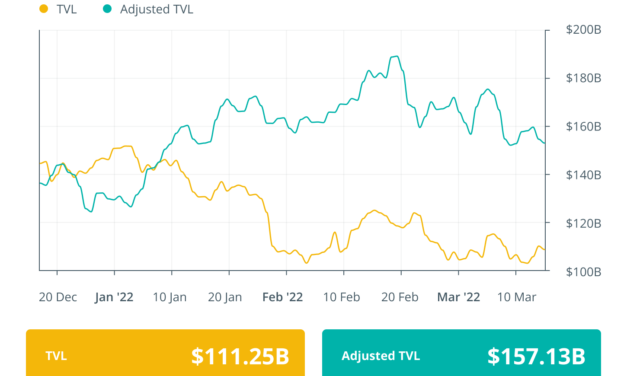
The decentralized finance (DeFi) ecosystem had quite an eventful week with several new developments and price action. The week started with DeFi “Godfather” Andre Cronje announcing his departure from most of his projects, leading to a massive drop in prices of projects that Cronje was associated with.CAKE DeFi launched a new $100 million venture fund to support Web3 initiatives, ThorChain spiked over 34% after activating synthetic assets and Polygon network suffered an extended outage post new upgrade that impacted its price momentum.DeFi “Godfather” Cronje quits as TVL and tokens tank for related projectsDeFi architect, Fantom Foundation technical adviser and Yearn.finance founder Andre Cronje has left the decentralized finance space reeling after deactivating his Twitter account.Cronje’s long-time colleague at the Fantom Foundation Anton Nell stated in a Sunday tweet that both he and Cronje were leaving the crypto space entirely. However, concerns arose about the fate of roughly 25 decentralized applications (DApps) and services they have been operating up to now. Among the affected apps and services are yearn.fi, keep3r.network, multichain.xyz, chainlist.org, bribe.crv.finance and the new solidly.exchange.Continue readingCake DeFi launches $100M venture arm for Web3, gaming and fintech initiativesSingapore-based decentralized finance services firm Cake DeFi announced the launch of a $100 million venture arm dedicated to serving as accelerators for Web3, gaming, nonfungible tokens (NFT) and other crypto initiatives.The newly launched $100 million venture arm, Cake DeFi Ventures (CDV), will fund crypto startups that complement the company’s core business. According to Cake DeFi, the venture firm “will be focused on investing in tech startups across Web3, the metaverse, the NFT space, gaming, esports and fintech spaces.”Continue readingTHORChain spikes by 34% after activating synthetic assetsThe price of the native asset for cross-chain decentralized exchange THORChain (RUNE) has spiked by 34% in a day following the activating of synthetic assets on the network.THORSwap Finance highlighted the advantages of the synthetic assets via a Thursday blog post, noting that “synths have great utility for traders and arbitrageurs, as they can be transacted nearly instantly and at a fraction of the cost compared to native L1 swaps.”Continue readingPolygon network suffers from extended service outage after upgradeLayer-2 Ethereum scaling solution Polygon has not produced a new block for over 11 hours, with developers attributing the issue to a technical upgrade on the network.On March 10, 4:20 pm UTC, Polygon network developers notified users on the project’s forum that there would likely be downtime starting at about 5:50 pm UTC due to maintenance required on one of the network’s three layers. A recent upgrade is thought to have caused an error in the network’s ability to achieve consensus.Continue readingDeFi market overview:Analytical data reveals that DeFi’s total value locked has maintained a similar value to the last week with a minor increase, reaching a figure of $111 billion.Data from Cointelegraph Markets Pro and TradingView reveals that DeFi’s top 100 tokens by market capitalization performed reasonably well across the last seven days.The weekly performance of the majority of the DeFi tokens has remained flat, with most of them either traded in green/red with a single-digit percentage change. Terra (LUNA) maintained its dominance for the third week in a row, rising by over 8% in the past week, rising to a new all-time high above $104. Ankr (ANKR) registered a 7% gain over the past week, followed by ThetaFuel (TFUEL) with a 1% overall gain.Before you go!A week that didn’t see much in terms of price action, but the likes of ThorChain and LUNA continued to defy the market trends aided by their synthetic asset ecosystem. The gas fee on Ethereum has plummeted to a nine-month low. Data shows that the average gas price on Ethereum has been dropping rapidly since the start of the year, plunging from 218 Gwei on Jan.10 to 40.82 on Wednesday.Thanks for reading our summary of this week’s most impactful DeFi developments. Join us again next Friday for more stories, insights and education in this dynamically advancing space.

Čítaj viac

Celo foundation proposes to deploy Uniswap V3 on its native blockchain

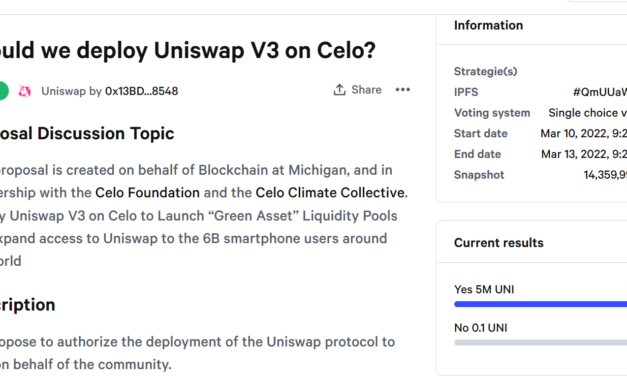
A new community proposal was introduced in the Uniswap governance forum to deploy the protocol on the Celo blockchain, which is a mobile-first, carbon-negative and Ethereum Virtual Machine-compatible network.The new proposal was created on behalf of Blockchain at Michigan, and in partnership with the Celo Foundation and the Celo Climate Collective. Once passed, Uniswap will be accessible to nearly six billion mobile phone users. Currently, MetaMask mobile app enables using Uniswap or other decentralized exchanges via an in-app browser.The Celo foundation will commit $10 million of CELO in Uniswap-specific user incentives and grants along with $10 million in financial incentives for Uniswap specifically, The main focus of deployment would be the introduction of green asset liquidity pools with natural capital-backed assets such as tokenized carbon credits. The foundation also plans to introduce nature-backed assets issued on Celo like land and forests in near future.Celo foundation aims to rebalance its reserves using natural blacked assets with the help of Uniswap’s decentralized mechanism. Currently, the foundation is dependent on centralized exchanges for rebalancing, however, these exchanges don’t support green assets and thus the role of Uniswap becomes even more prominent.Related: Kickstarter plans to migrate to platform built on Celo blockchainThe foundation has been working towards advancing the use of natural capital-backed currencies and hopes the recent association with Uniswap would help them achieve those goals.The voting on the proposal is open until Sunday. An early snapshot of the current votes shows 100% of people have voted in favor of the proposal. Once deployed, the Celo foundation aims to build more green use cases on top of Uniswap.Uniswap Governance Proposal Voting SnapshotCelo is one of the evolving blockchains with a focus on Environmental, Social, and Governance (ESG) goals. Uniswap on the other hand is a leading DeFi ecosystem facilitating billion in daily transactions. The DeFi protocol also helped people to donate towards the Ukrainian government by building an altcoin swap interface.

Čítaj viac

LimeWire makes a comeback after a decade with an NFT marketplace

Limewire, a popular peer-to-peer file-sharing website from the early 2000s that went defunct in 2010, is making a reentry in the market with a digital collectible marketplace at the hands of its new owners.In an official announcement on Wednesday, the platform revealed its plans to launch a nonfungible token marketplace focused on the art and music industry. The NFT marketplace is expected to launch in May, and an official NFT with a token reward system is due later this year.The marketplace will be fully curated and is launching with major artist partnerships from the music industry. LimeWire has also partnered with Algorand for cost and energy-efficient minting.Brothers Paul and Julian Zehetmayr bought the rights of the company with hopes of reviving the brand in the Web3 era. Given LimeWire’s connection with the music (it was primarily used for downloading pirated songs) industry, the new era for the brand will be focused on supporting artists and the music industry.The CEO brothers addressed the controversial past of the platform and claimed it was one of the key reasons for them to revive the brand and support true artists and their content. Related: Crypto.com airdrops LeBron James NFT collection to eagle-eyed Super Bowl ad viewers“LimeWire is returning as a platform for artists, not against them. On LimeWire, the majority of the revenue will go directly to the artist, and we will be working with creators to allow full flexibility, ownership and control when it comes to their content.”, said Julian.Limewire’s controversial past had been the reason for several lawsuits from music labels and the founder of the platform Mark Gorton agreed to pay $105 million as a penalty to record labels for copyright infringement in May 2011.The CEOs of the firm stressed that the relaunch is focused on making things right and building a digital collectible marketplace for the music community.

Čítaj viac

CBDCs will not impact private stablecoin market, says Tether CTO

Paolo Ardoino, the chief technology officer at Tether, believes that the growing developments around central bank digital currencies (CBDCs) globally wouldn’t really impact the role of private stablecoins.Ardoino shared his two cents in a Twitter thread on the growing discussion around CBDCs and what their role could be in the current payment system. He said CBDCs would only replace the age-old centralized payment networks as SWIFT and use private blockchains to fulfill most transactions.He went on to explain that CBDCs are not about digitizing the fiat currency as it has already been done, given most modern-day transactions are digital. The main goal of CBDCs is to use private blockchains as a modern and cost-controlled tech infrastructure, where most of the bank transfers and credit/debit card transactions will be settled via CBDCs.2/- CBDCs are based on the idea that #tether had 8 years ago creating the first stablecoin- CDBC will replace SWIFT etc- banks will accept transfers via CBDCs as any wire- CBDCs will settle most of credit/debit card flow, especially over the weekend— Paolo Ardoino (@paoloardoino) March 10, 2022Tether CTO claimed that private stablecoins such as USDT will remain relevant even in the age of government-issued digital currencies given, private stablecoins would give users the option to transfer across chains and would be available across multiple blockchains of their choice, something CBDCs won’t do.3/- CBDCs will use private blockchain as modern and cost-controlled tech infrastructure – CBDCs won’t be issued on your favourite chain, private stablecoins will continued to serve that use casePoint being: tech evolves but nothing actually changes.Only #bitcoin is our edge.— Paolo Ardoino (@paoloardoino) March 10, 2022

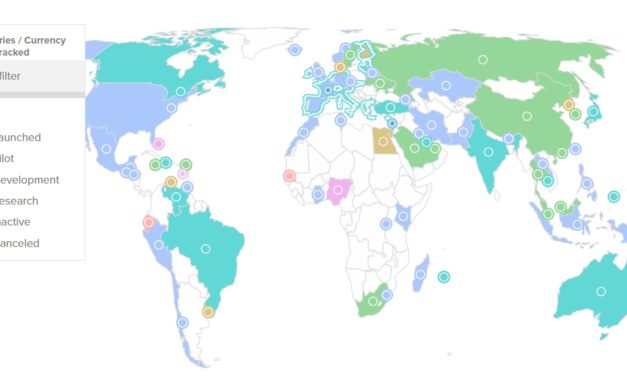
Ardoino’s response comes in the wake of growing debate around whether CBDCs would cut the role of the private stablecoin sector. A discussion gained momentum in the United States after calls from several lawmakers to regulate the stablecoin market.According to the Atlantic CBDC tracker, 86 countries are currently in the process of developing their sovereign digital currency, with an increase of over 100% since May 2020. Out of these 86 nations, nine countries have launched their CBDC while fifteen countries are in the pilot phase.World CBDC Development Tracker Source: Atlantic CouncilAmong the world’s, China is leading the CBDC race with a fully functional digital yuan currently being tested out across the country. Several European nations such as France and Switzerland have started cross-border trials, while the U.S. has yet to finalize any plans for a digital dollar.

Čítaj viac

Crypto.com gives users in excluded countries one week to repay loans

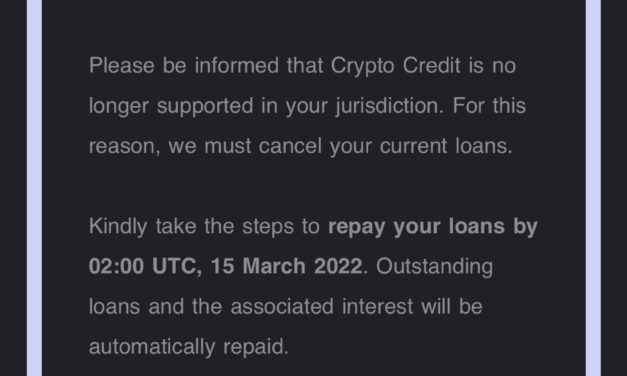
Crypto.com is reportedly giving users from countries restricted from its loan program until March 15 to repay their crypto loans. The firm updated the list of restricted countries to include the United States, the United Kingdom and 38 others. Users from European nations such as Germany, Switzerland and the U.K. have all shared emails from the company regarding the loan closure date. It‘s worth noting that some of these users who do not have crypto loans on the platform have also received the emails.According to the new policy, if users fail to repay their loans by March 15, their collateral will be sold and loan positions will be closed by the exchange. Crypto.com didn‘t respond to Cointelegraph‘s requests for comments at the time of writing.Related: Crypto lending firms on the hot seat: New regulations are coming?The sudden policy change has left Crypto.com customers anguished and in disbelief, with many claiming that the exchange‘s recent splurge on advertisements and marketing has started to take a toll on its balance sheet. The exchange‘s aggressive marketing splurge over the past year has raised many eyebrows, given the company, unlike many other crypto unicorns, hasn‘t raised much capital from investors.A THREAD ON @cryptocom @cryptocomcs @Kris_HK It looks like the splurge in marketing is starting to take it’s toll on the balance sheet I have a fair amount of #XRP – for sure not where my *BAGS* are, but… pic.twitter.com/quLEKNiAEK— XRPGLOBAL (@xrp_ninja) March 8, 2022Crypto.com’s marketing budget, which includes millions being spent on celebrity endorsements, buying of arenas and much more, have been a topic of discussion on the internet for a long time. However, the sudden change in its lending policy has only made the theory more prominent.Crypto lending products have been under regulatory scanner for over a year now, with several crypto firms getting a security violation notice from respective state regulators. Gemini and Celsius offered lending products that came under U.S. Securities and Exchange (SEC) investigation in January, while BlockFi was slapped with a $100 million penalty for offering unregistered crypto lending products in February.Additional reporting by Brian Quarmby.

Čítaj viac

Získaj BONUS 8 € v Bitcoinoch

nakup bitcoin z karty

Registrácia Binance

Burza Binance

Aktuálne kurzy