
Autor Cointelegraph By Prashant Jha

Tax man: India’s new tax policies could prove fatal for crypto industry

Indian crypto tax policy has become the hottest topic for Indian crypto traders and exchange operators as it is set to become law on March 24 and will come into effect starting on April 1. The proposed 30% crypto tax is the highest in the country and is equivalent to the tax imposed on gambling and lottery tickets. While the high tax bracket was already a cause of concern for many new and small traders, a recent clarification from the government has made things even more complicated for the Indian traders.The parliamentary clarification on March 22 indicated that each crypto trading pair would be independently considered and traders can’t offset their losses against profit on another trading pair. This means if a trader invests $100 each in two tokens and incurs losses on one investment while making a profit on another trade, they would have to pay taxes on their profitable trade without accounting for the losses.Nischal Shetty, founder of WazirX crypto exchange, told Cointelegraph, “As per response by P.P. Chaudhary in the parliament today, investors will not be able to offset losses from one crypto trading pair by gains from another type. Moreover, it also mentions that the mining infrastructure costs will not be included in the cost of acquisition to be claimed as a deduction.” “Treating profits and losses of each market pair separately will discourage crypto participation and throttle the industry’s growth. It’s very unfortunate, and we urge the government to reconsider this.”Previously, a 1% transaction deduction at source (TDS), which was supposed to come into effect on June 1, was the primary concern for crypto entrepreneurs and exchange operators, as they believed a 1% TDS on each crypto trade would dry up liquidity on exchanges. If you start with a capital of RS 51000, by trade no 11 – 10% of your capital will be locked as TDS and 50% by trade no 69.— Aditya Singh (@CryptooAdy) March 24, 2022However, many believe that this recent clarification about traders not being able to offset their losses against gains could potentially kill the nascent industry.Akash Girimath, a crypto trader and technical analyst, told Cointelegraph that a 30% tax bracket might not be that bad of a thing, given the crypto market is still volatile and prone to scams. He said a high tax barrier would help discourage “unbeknownst investors from diving headfirst into cryptocurrencies.” In light of the news about offsetting losses, however, Grimath believed it would not be a wise tax model, stating, “If the recent reports about the crypto tax bill are true and if traders cannot offset their losses from one crypto by gains from another or vice versa, will definitely discourage traders from reporting their gains.”“The regulators need to understand that it is not hard to skirt the law, especially with the recent interest in Web3 and the rise of decentralized exchanges and mixers. It will be interesting to see how the Indian watchdogs plan to curb or regulate and tax the decentralized finance space.”Grimath said that from a trader’s standpoint, the 30% tax isn’t as scary as the 1% TDS. He stated that if the TDS is levied on crypto transactions, it will be a massive blow to traders. But, if it is applicable only at on/off-ramps, then it will make life much easier for crypto traders. Another crypto trader, who preferred to remain anonymous, bashed the recent government policy and said it sends out the wrong message to entrepreneurs in the country. Talking about the high 30% tax bracket, he said:“It will impact adversely. It’s not a system that embraces or accepts crypto, it’s a crypto penalty tax and a desperate measure to earn extra tax income. Nothing has affected the crypto ecosystem to date and the crypto tax is nothing new. People always find better ways to be in crypto.”Namish Sanghvi, crypto trader and entrepreneur, suggested traders should sell all their holdings before April 1 and start fresh. He also acknowledged that if the crypto tax policy is made into a law, “trading will be entirely stopped. Only investing for a longer-term is being encouraged.”My suggestion to sell off everything applies to those who are in overall profit. That way you can still offset your losses with profits before March 31. If you’re only in profit, or only in loss across all your investments, then it’s wise to just hold! https://t.co/4RxKH8xKOT— Naimish Sanghvi (@ThatNaimish) March 21, 2022

High crypto taxation policies have failed around the worldIndia is not the first country to propose a high crypto tax policy. The Southeast Asian nation of Thailand previously proposed a 15% tax on crypto gains but faced a wave of criticism from small and retail traders in the country. As a result, the government not only scrapped the 15% crypto tax proposal it also exempted traders from the 7% mandatory value-added tax for trading on regulated exchanges.South Korea, which is known for its strict regulatory policies, proposed a 20% tax on crypto gains above 2.5 million Korean won. Due to the lack of clear regulations around the crypto market, however, lawmakers postponed the high tax proposal by one year.Conversely, Singapore, one of the fastest-growing crypto hubs in Asia, does not have a capital gains tax on crypto at present, although it does have a nonfungible token (NFT) trading tax introduced in March 2022. The country is also one of the most evolved in terms of crypto regulations. In Portugal, cryptocurrencies are only taxable if done as a professional trading activity. While the country follows European Union guidelines on digital asset regulations, the policies in the country encourage traders and investors with tax-free crypto earning policies. The Indian government, on the other hand, seems to be more determined to discourage people from getting into crypto with its regressive policies. Despite growing outrage, the government has failed to establish a dialogue with stakeholders of the thriving crypto industry in the country. Varun Sethi, Indian tech lawyer and a crypto enthusiast, told Cointelegraph that the first logical step should be setting up a regulatory authority for cryptocurrencies quite similar to what Dubai, Singapore, Australia and the United Kingdom have done. He also acknowledged that comparing the crypto law of Singapore, Dubai, Hong Kong and the United States with India may not be completely fair since these countries don’t exercise capital controls.The Indian crypto ecosystem has thrived over the years despite uncertainty on crypto regulations and regular calls for a blanket ban by the Indian central bank. India has produced several crypto unicorns such as WazirX, CoinDCX and CoinSwitch over the past couple of years. Many more foreign investors have been eagerly waiting for better regulatory clarity to invest further. However, the latest tax policy poses a severe threat to the years of infrastructure developed by crypto firms.Mohammed Danish, chief legal officer at BitDrive Exchange, told Cointelegraph that the government’s policies would push traders to look for alternatives and may force them into gray markets:“The Government is axing its own foot by introducing such punitive tax rules on crypto trading and investments. Indian crypto exchanges use Know Your Customer processes before allowing any person to trade on their platform with government authorities using this KYC data to trace down the miscreants for law violations. Now, this newly proposed tax rule of 30% rate, coupled with 1% TDS and no allowance for setting off trading losses, is likely to drive away crypto traders to gray markets and will prove detrimental for the crypto exchanges, which are eyes and ears of the government during legal investigations.”India has shown great potential in the fintech industry, as a significant number of crypto projects have Indians in key roles. Killing the nascent industry with an impractical tax policy would only lead to brain drain. India cannot afford to miss on the crypto boom as it did during the late 90s and early 2000s dot com boom, and only better and inclusive policies could help them achieve that.

Čítaj viac

Digital currencies could get a boost from the international crisis: Blackrock CEO

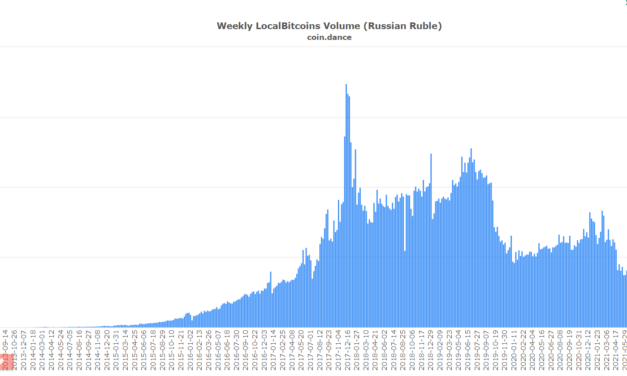
Larry Fink, the CEO of the world’s largest asset manager BlackRock, believes the ongoing Russia – Ukraine crisis has boosted the case for digital currencies as a tool of settlement for international transactions.In a shareholders letter, Fink noted that the ongoing war would force nations to reassess their currency dependencies which could eventually make way for a global digital payment network, reported Reuters He said the war has put an end to the globalization forces at work over the past 30 years.Fink’s observation about the boost in the digital currency market is quite spot on, as trade sanctions on Russia have already led many countries that import oil and gas from them to look for alternate payment networks beyond centralized SWIFT. India is reportedly developing a direct INR payment gateway to buy energy supplies while discussion about a digital payment network is also on the rise.”A global digital payment system, thoughtfully designed, can enhance the settlement of international transactions while reducing the risk of money laundering and corruption”, Fink said.According to rumors, Ripple partner The Clearing House is in talks with Wells Fargo to develop a SWIFT alternative.Huge #XRP News!Earlier I posted a video about a guy who revealed that Wells Fargo has been training on a #SWIFT replacement.Now, I got a online service agreement updatefrom WF, talking about Real Time Payments by Clearing House, a #Ripple partner! Strap in! 1/2 pic.twitter.com/PuYcrs5vnS— Esoteric XRP ✨ (@Naturalmed777) March 15, 2022Russian local Bitcoin trading volume has also registered a spike in March after seeing a constant decline over the past year. That said, prior to the Ukraine invasion, the country was looking to regulate the cryptocurrency market positively.Related: Crypto trading in rubles falls even as ECB warns again on sanctionsUkraine on the other hand legalized cryptocurrencies on 16th March 2022 after receiving millions in crypto aid from around the world. The war-torn nation has already raised over $100 million in crypto donations, which they have used to reinforce their army and buy supplies.Cryptocurrencies over the years have proven to be a great hedge against troubled times, but with the ongoing conflict in Ukraine, it has become a prominent tool for international settlements and sending out quick relief.

Čítaj viac

Marvel NFT partner Veve closes its marketplace after an in-app token exploit

Veve, a nonfungible token (NFT) marketplace with licensed digital collectibles, faced an exploit on Tuesday, resulting in millions of gems (in-app tokens) being acquired illegally. The platform is quite popular among mainstream brands such as Marvel, Pixar, and Coca-Cola, that have chosen Veve as their official launch partner.In an official tweet published on Wednesday, Veve acknowledged the exploit on its platform and said that the attackers managed to acquire a “large amount” of gems illegitimately. The app-based NFT platform has shut the marketplace along with the gems purchase option until the investigation is complete.As a result of this exploit, we have closed the Market, Gem purchases and transfers while we investigate. We will update you on the expected timing of Market opening as soon as we can.— VeVe | Digital Collectibles (@veve_official) March 23, 2022Gems are the VeVe in-app token that users use to exchange for collectibles during drops or in the Market. Early reports suggest that the exploiters behind the attack managed to mint millions of gems without having to pay for it by exploiting a bug in buying mechanism. One user wrote that their friend accidentally purchased gems using an expired credit card and the transaction went through.From what I heard someone was informed by their friend they accidentally purchased gems with an expired credit card and the transaction went through anyway. So it sounds more like an expired credit card exploit than stolen credit cards. No confirmation by Veve yet though.— ⭕ Garlic Shrimp ⭕ (@GARLICxSHRIMP) March 22, 2022

The platform has also restricted several user accounts that reportedly tried buying the cheap gems from fraudulent accounts. While the NFT platfrom didn’t disclose the exact amount of gems that were exploited, a Twitter user has claimed the figure could be in millions and might be the biggest heist on the platform. Veve didn’t respond to Cointelegraph’s requests for comments at the time of publishing.Related: Nifty News: Wolf snaps up Punk, Disney NFTs, Economist mag cover fetches $422K…The Twitter user also shared a timeline of events of the exploit where Veve first registered the largest 3-day buying of the in-app token gems, followed by a crash in the price of the token off app by half, falling from 0.5 to 0.25 and then the marketplace goes into maintenance.Soooo…. apparently about 7M gems were fraudly purchasedMultiple accounts that interacted with them are now disabled Veve will need to recover those gems and this will be their biggest exploit to date Users that purchased cheap gems off app will likely lose funds https://t.co/7YG3BBXjMe— niftyswaps.eth ⭕ (@niftyswaps) March 23, 2022

The gem exploits on Veve also resulted in a massive decline in the price of the listed NFTs on the platform, where one user realized why their NFT value plunged by 80% within a week after Veve’s official Twitter post.@veve_official just saw your latest tweet, now I understand why my secret rare goofy dropped 80% in value from the ATH at Market in a matter of weeks and I panic sold it finally. Very unhappy! 1st BOTS and now Gem exploit???— joker_del_mar (@jai_sond) March 23, 2022

Čítaj viac

Japanese crypto exchange Coincheck eyes Nasdaq listing after $1.25B SPAC deal

Coincheck Inc., a Japan-based crypto exchange with over 1.5 million verified customers, is eyeing Nasdaq listing after a special purpose acquisition company (SPAC) merger with Thunder Bridge Capital Partners IV, Inc.The combined holding company would be called Coincheck Group, N.V and is expected to list on Nasdaq after finalization of the deal by the second quarter of 2022 with the ticker symbol CNCK.SPACs are publicly traded corporations that do not conduct business. They sell their stock to the public to obtain funding for the future acquisition of a private company.The value of the merger deal is reported at $1.25 billion for 125 million shares and upon completion, the combined holding company will receive $237 million in cash held in trust by Thunder Bridge IV. The deal has been approved by the board of directors of Coincheck, Coincheck parent company Monex Group, Inc. and Thunder Bridge IV. Coincheck and Thunder Bridge didn’t respond to requests for comments from Cointelegraph at the time of publishing.After a data breach in 2018, Coincheck crypto exchange was acquired by Monex Group for $33.5 million and the new combined holdings would act as a subsidiary of the crypto exchange’s parent company. Monex Group, Inc. currently owns 94.2 percent of Coincheck and will keep all of its shares at closing. The parent company is expected to own 82 percent of the merged firm.Related: Japanese crypto exchanges aim to catch up with coin listings: ReportCoincheck won’t be the first firm eyeing a public listing via a SPAC merger, in fact, in 2021, several renowned crypto services providers and mining firms took the SPAC merger deal. Bakkt went public with a SPAC while a $3.3 billion mining company chose the SPAC merger along with several others.Many market experts claim the reason for the high popularity of SPAC mergers is its distinct advantages over other kinds of finance and liquidity. SPACs often offer higher valuations, less dilution, faster access to finance, more certainty and fewer regulatory requirements than traditional IPOs.

Čítaj viac

BIS joint pilot: Institutions can use CBDCs for international settlements

Bank of International Settlement (BIS) Innovation Hub has completed an experimental central bank digital currency (CBDC) platform pilot for international settlement with the central banks of Australia, Malaysia, Singapore and South Africa. The multi-national experimental CBDC project, dubbed Project Dunbar, has been developed to facilitate direct cross-border transactions between financial institutions using multiple currencies connected across multiple central banks.The joint CBDC pilot was announced in September 2021, and a final report regarding the same was released on Tuesday. The experimental joint CBDC program turned out to be a success and proved  financial institutions can use CBDCs issued by central banks to transact directly with each other on a shared platformThe project took several aspects into consideration before developing prototypes. Some of the key issues that the project is trying to solve include resolving cross-border remittance issues in accordance with the regulatory requirements, and bringing in key payment infrastructure across national borders.The project was successful in developing functioning prototypes and demonstrating practical solutions, establishing that the notion of multi-CBDCs was technically realistic. The prototypes proved that the design approaches used to address three major issues: access, jurisdictional boundaries, and governance were effective.The developers of the project claimed that Project Dunbar illustrated how governance structures enforced by robust technology means can meet important concerns of trust and shared control. Andrew McCormack, head of the BIS Innovation Hub Centre in Singapore said:“Project Dunbar demonstrated that key concerns of trust and shared control can be addressed through governance mechanisms enforced by robust technological means, laying the foundation for the development of future global and regional platforms,”Related: BIS joins France and Switzerland’s central banks on cross-border CBDC projectPrior to BIS innovation hub’s multi-CBDC platform, the likes of Switzerland and France have also experimented with cross-border remittance in a joint venture for a digital Euro. Now, the findings of the experimental CBDC program could aid in the adoption of CBDC international settlement for G-20 nations.With over 95 nations currently working towards their sovereign digital currency, CBDC use for international settlements could become a reality, especially at a time when many governments are already looking to build alternatives for centralized payment gateway like SWIFT.

Čítaj viac

Získaj BONUS 8 € v Bitcoinoch

nakup bitcoin z karty

Registrácia Binance

Burza Binance

Aktuálne kurzy