Autor Cointelegraph By Prashant Jha

Finance Redefined: MetaMask institutional offering, Polygon to go carbon neutral, and more

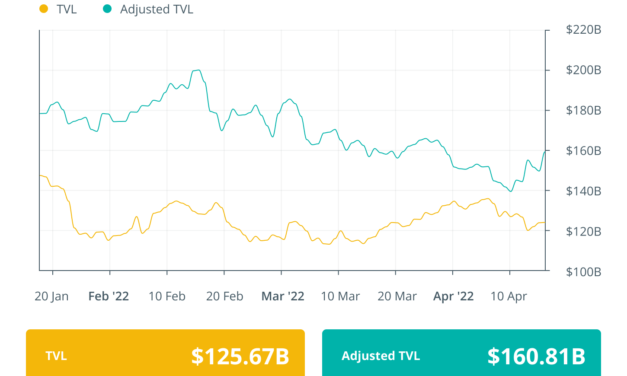
The decentralized finance (DeFi) world saw another week of increased on-chain and developer activity while token prices entered the second week of the bear market, with many of the tokens bleeding in double digits over the past week. MetaMask expanded its institutional offering by partnering with four institutional custodians, while Polygon has pledged to go carbon neutral.We will also look at how users can bridge different tokens to the Polygon network and look into Reputation DAO, a project that collateralizes users’ private information for DeFi loans.MetaMask expands institutional offering by integrating new crypto custodiansDeFi wallet and browser extension MetaMask formed a new strategic partnership with four major crypto custodians: Gnosis Safe, Hex Trust, GK8 and Parfin.MetaMask Institutional, the institutional version of the popular Ethereum wallet MetaMask, announced on Wednesday that the new integration will provide decentralized autonomous organizations (DAOs) with key management tools to participate in DeFi activities.Continue readingHow to bridge tokens from other chains to the Polygon NetworkBridging assets could help solve issues like scalability, speed and high fees. Bridging means users can move their tokens between blockchain networks quickly and cost-effectively. The Polygon Bridge is used for cross-chain transactions between the Polygon and Ethereum blockchains. It allows users to transfer ERC-20 tokens and NFTs to the Polygon sidechain through smart contracts. This guide will show you how to bridge Polygon with other blockchains. Continue readingReputation DAO: Would you give up privacy for unsecured loans in DeFi?An ambitious new decentralized autonomous organization has built a data service for lending platforms that records a user’s financial reputation to reduce the amount of collateral needed for a loan. It has partnered with Chainlink and that protocol’s founder, Sergey Nazarov, is an early backer.Users of Reputation DAO will have traditional financial data such as Anti-Money Laundering and Know Your Customer, credit scores and banking data tied to their account. The data is designed to help ease friction in obtaining a loan from a decentralized platform but raises questions about security and the principles of zero-knowledge lending.Continue readingPolygon commits to going carbon neutral in 2022The Polygon network announced on April 12 its commitment to going carbon neutral and climate positive this year by releasing their “Green Manifesto: A Smart Contract with Planet Earth.” They also made a $20 million pledge to offset their carbon footprints and buy extra credits to eventually become carbon negative.Part of the Ethereum scaling solution’s plan for a more sustainable future includes providing resources for ecosystem partners who also want to offset their carbon footprint. Additionally, they hope to facilitate NGOs to make donations that go toward fighting climate change.Continue readingDeFi market overviewAnalytical data revealed that DeFi’s total value locked has registered a $5 billion dip over last week, reaching $125 billion at the time of writing. Data from Cointelegraph Markets Pro and TradingView shows that DeFi’s top 100 tokens by market capitalization saw another week of bearish decline.Before you go!The case of the $600 million Axie Infinity Ronin Bridge hack saw another twist on Thursday as United States officials tied the perpetrators of the hack to the infamous North Korean hacker group Lazarus. Thanks for reading our summary of this week’s most impactful DeFi developments. Join us again next Friday for more stories, insights and education in this dynamically advancing space.

Čítaj viac

Github suspends accounts of Russian developers linked to sanctioned firms

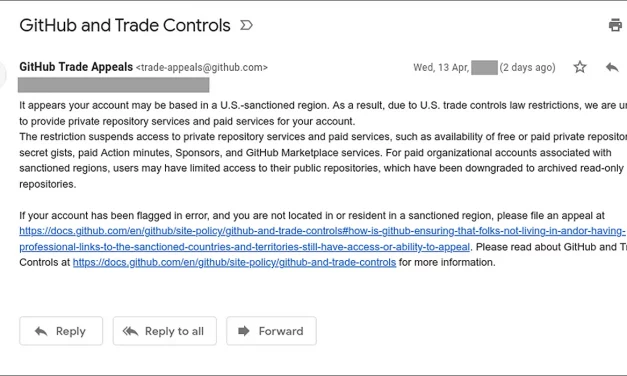
Major developer platform Github has reportedly blocked more than a dozen accounts of Russian developer’s associated with organizations sanctioned by the United States government. The sanctioned accounts include some of the largest banks in Russia: Sberbank and Alfa-Bank, as well as individual developers with links to the sanctioned firms. However, many individual accounts with no links or ties to sanctioned firms were also blocked in the process, Researcher Sergey Bobrov, who reportedly has no links to any such firm, reported that his account was suspended on April 15 and then immediately restored.My github account is unlocked, thanks everyone. The ban was related to the sanctions imposed on my previous employer.— Sergey Bobrov (@Black2Fan) April 15, 2022Another individual developer, Vadim Yanitskiy, wrote:“My Github account has been suspended without prior notification. Perhaps because I am ethnically Russian. ‘GitHub’s vision is to be the home for all developers, no matter where they reside,’ they said.”Github is a popular software development platform used for storing, tracking and collaborating on software projects. It enables developers to upload their own code files and to collaborate with fellow developers on open-source projects. It has become a core part of the crypto ecosystem because of its open-source nature. As per early reports, most of the firms and developers facing suspension belong to private Russian banks and no crypto firm or developer was impacted. Github didn’t respond to Cointelegraph’s request for comment at publishing time.Related: North Korea-obsessed Ethereum dev gets 5 years for breaking sanctionsAfter a few Russian developers contacted Github regarding the suspension, they received a response, explaining the reasons behind their suspension with an added link through which they could appeal.Github Reponse to DevelopersThe blocking of individual developers’ accounts has raised many questions, especially when the open-source platform has promised “ to ensure free open source services are available to all, including developers in Russia,”

Čítaj viac

Paris Blockchain Week, April 14: Latest updates from the Cointelegraph team on the ground

Disclaimer: This article is updated all day long. All time codes are in the UTC time zone, updates in reverse order (the latest update is placed at the top).Paris Blockchain Week Summit (PBWS) hosts multiple thought leaders from the crypto and blockchain universe on its second day, and the Cointelegraph ground team is at the venue to deliver the most recent developments from the event. Paris NFT Day, the prequel event to the PBWS, saw the announcement of Cointelegraph France. On Wednesday, the Cointelegraph team delivered the important tidbits from sessions, as well as quotes from exclusive interviews, in a near real-time manner. CT reporters had the chance to interview key people from the crypto ecosystem, including Binance CEO CZ, Tether chief technology officer Paolo Ardoino and Binance’s NFT platform lead Helen Hai.Don’t forget to check this article regularly to get notified about the most recent announcements from the event.8:10 — “Crypto use cases for remittance and even paying wages have seen a surge in Latin America and Central Africa. Nigeria at the moment is the most underrated crypto hotspot with a vibrant crypto economy,” says ZenGo CEO Ouriel Ohayon.Bitfinex CTO Paolo Ardoino noted that Tether (USDT), a stablecoin, is seen as a reserve asset in Turkey, Venezuela, Argentina and other similar countries. It’s sad because it should be supposed to work as an FX currency, he added:“Bitcoin, DEX and CEX are financial solutions for nearly 2 billion unbanked population around the world.”8:00 — The second day kicked off with The Future of Crypto Exchanges in Emerging Markets session.

Čítaj viac

Paris Blockchain Week, day 1: Latest updates from the Cointelegraph team on the ground

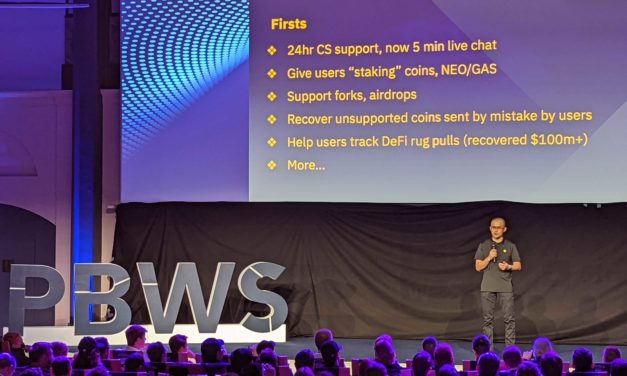
Paris Blockchain Week Summit (PBWS), a flagship European blockchain conference hosted at Palais Brongniart in Paris, started on Wednesday with an all-star cast. Fresh after announcing its French version, Cointelegraph has set up a team for the event to present the latest updates for the event in a real-time fashion. The first day of event will see significant names in the crypto and blockchain ecosystem to speak about the crucial topics for the ecosystem. The Cointelegraph ground team will present last-minute updates in one easy-to-read article with time codes. Don’t forget to check this article regularly to get notified about the most recent announcements from the event. All time codes are in the UTC time zone7:30- Binance CEO’s keynote concludes with the announcement of a new partnership with Station F, a major startup campus in France.7:29- CZ says France is very uniquely positioned in terms of regulations, talent and expertise and has the potential to become a leading crypto hub in Europe. “I think France has one of the most progressive and open-minded governments that could help in developing pro-crypto regulations.”7:25- Talking about how he manages such a large consortium of crypto platforms, CZ said: “The key secret is they should not do very much.”Binance’s growth depends on the growth of the ecosystem and “This is why we don’t see other crypto platforms as competitors and rather as their peers.”7:22- Binance plans to offer [customer] support in all 31 languages that it supports in the near future.7:18- CZ explains how regulations have evolved over the years and how the approach of regulators has changed significantly.Binance CEO CZ on the stage at the PBWS “We have seen a great shift of attitude towards crypto over the past year until last year regulators were talking in a negative way while many regulators today approach us with a positive note.”7:15 – Binance is now available in over 70 countries out of the top 100. Binance Labs, the investment arm of the exchange, has invested more than $100 million in about 100 crypto projects whose combined liquid market cap of $7 billion, seeing a 66X increase in three years.07:06 – Binance CEO Changpeng Zhao is on the stage. Started his speech with a basic question: “How many of you hold Bitcoin (BTC) or crypto?”

Čítaj viac

The aftermath of Axie Infinity’s $650M Ronin Bridge hack

In late March, Ronin, an Ethereum sidechain built for the popular play-to-earn nonfungible token game Axie Infinity, was hacked for over 173,600 Ether (ETH) and 25.5 million USD Coin (USDC) for a combined value of over $600 million. The breach on the Ronin bridge was confirmed by Sky Mavis, the developers behind the popular play-to-earn (P2E) game:There has been a security breach on the Ronin Network.https://t.co/ktAp9w5qpP— Ronin (@Ronin_Network) March 29, 2022The official report from the company noted that the hackers managed to get access to private keys to validator nodes resulting in the compromise of five validator nodes, which is also the threshold required to approve a transaction. The Ronin chain currently consists of nine validator nodes and the hacker managed to get access to four of them along with a third-party validator run by decentralized autonomous organization (DAO) Axie DAO.The root cause for the exploit could be traced back to last year when Axie DAO gave access to Sky Mavis to sign off on transactions on its behalf to mitigate user volume. However, this access was never revoked, which eventually led to backdoor access by hackers resulting in the $600 million hacks.The exploit took place on March 23, only to be discovered nearly a week later after hackers behind the attack used the stolen funds to short Axie Infinity (AXS) and Ronin (RON). The hackers hoped to make more money on their exploit, thinking the news about the biggest crypto hack would eventually bring down the market, however, they got liquidated before the news broke:You cannot make this upHacker steals $600MM in ETH from Ronin blockchain the one underlying Axie Hacker then goes short Ronin & AXS (Axie token) knowing as soon as news breaks that tokens will plummet But NO ONE notices and they get liquidated on short before news breaks— Eric Golden (@ericgoldenx) March 29, 2022

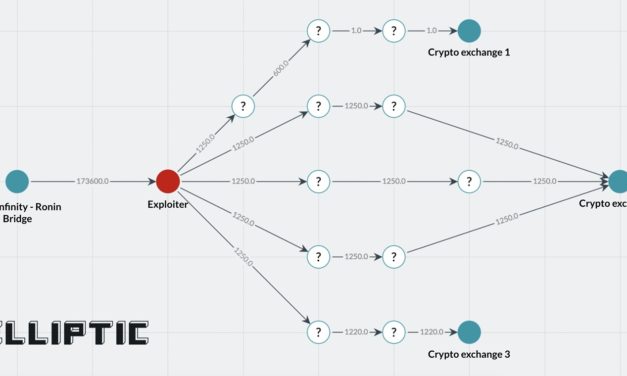
The Ronin bridge was closed in the aftermath, with all deposits and withdrawals halted until the investigation was complete and it may take several weeks before the bridge opens for public use again. The developers behind the game have since sought help from various crypto exchanges and crypto analytic group Chainalysis to track the movement of funds and recover them.Sky Mavis has ruled out technical vulnerabilities as the core cause behind the exploit and blamed it on social engineering. The developers also promised to reimburse and recover the stolen funds:“This was a social engineering attack combined with human error from December 2021. Sky Mavis tech is solid and we will be adding several new validators to the Ronin Network shortly to further decentralize the network,” said Axie Infinity co-founder and chief operating officer Aleksander Leonard Larsen.Laundering and reimbursement The exploit on the Ronin bridge was quite similar to what happened on the Wormhole bridge for Solana, where the exploiters managed to get away with $320 million worth of crypto funds from the cross-bridge platform. Later in February, Jump Crypto — a venture capital firm — bailed out exploited users and replenished 120,000 ETH.Sky Mavis had made a similar promise in the aftermath of the exploit, claiming they would ensure that affected users are reimbursed even if the lost funds aren’t recovered. On April 6, the creators of the popular game raised $150 million led by crypto exchange Binance and other investors.A Sky Mavis spokesperson told Cointelegraph:“Out of the total amount stolen, around $400 million belongs to users. The new round, combined with Sky Mavis and Axie balance sheet funds, will ensure that all users are reimbursed. The 56,000 ETH compromised from the Axie DAO treasury will remain undercollateralized as Sky Mavis works with law enforcement to recover the funds. If the stolen funds are not fully recovered within two years, the Axie DAO will vote on the next steps for the treasury.”Many in the crypto world hoped that, like the exploiter of the Poly Network, the hacker behind the Ronin Bridge exploit would eventually return the stolen funds, as it’s quite difficult to launder such a high amount of money. However, there hasn’t been any evidence of such communication between game developers and the hackers and the company declined to comment on the status of such communications.Elliptic, a crypto data analytics company, has traced down $540 million of the stolen funds and believes the hackers have already begun laundering the money. First, the stolen USDC was swapped for ETH on decentralized exchanges (DEXs) in order to avoid it being frozen. Movement of Stolen Funds from Ronin Bridge Hacker Wallet Source: EllipticAfter swapping USDC for ETH, the hackers started to launder the ETH via three centralized exchanges. The wallet belonging to the hackers of the Ronin Bridge has also started sending funds to currency mixer services such as Tornado Cash. It’s worth noting that the Poly Network exploiter did the same at first but finally decided to return the funds as laundering such a large sum became increasingly difficult. According to a PeckShield report, the hackers laundered about $42 million worth of funds, or around 7.5% of the total.Laundering of Stolen Funds by Ronin Bridge Hacker Source: PeckShield“Hacking is the easiest part. The hardest part is planning enough in advance to make sure that cashing out the funds is successful. Moreover, the larger the hack, the more unlikely it is that hackers will be able to make off with all the funds,” said Jonah Michaels, communications lead at Immunefi — a Web3 bug bounty platform.Could this hack have been avoided?While not all blockchains are made equal, they are all established on the principle of decentralization, which ensures that power and security are not concentrated in the hands of a single entity. The need for decentralization is highlighted by this enormous hack on Ronin. When designing systems for the public with the goal of distributing power and security, it must be just that: distributed. The use of nine validators, four of which are controlled by a single party, has been proved to be insecure.While the makers of the game claim that the exploit didn’t take place because of any technical shortcomings, the fact that hackers managed to exploit and get a backdoor entry to one of their validator nodes because the developers forgot to revoke access to the third-party validator certainly highlights a certain level of centralization in the validator approval process. This eventually became the reason for the loss of $600 million worth of crypto assets. For a game like Axie Infinity with a $4 billion valuation and a user base ranging in millions, the developers could have definitely done better with cross-bridge security, especially when cross-bridge platforms have been at the receiving end of some of the biggest crypto heists in the past couple of years.Jean-Paul Faraq, head of community and partnerships of Unstoppable Games, told Cointelegraph:“Axie and their blockchain Ronin clearly have good intentions and a grand vision. Indeed, considering the state of scaling on Ethereum when Ronin was built, you may argue it was the right choice at the time, but they also had the funds to explore robust measures to ensure their blockchain was better protected. They will surely take a long hard look at how to improve and likely come out the other side with a more robust product.”The developers of the game have promised to increase the number of validator nodes from nine to 21 in the coming quarter. They also assured that if the stolen funds are not recovered within two years, the Axie DAO would vote for the next steps for its treasury.

Čítaj viac

Získaj BONUS 8 € v Bitcoinoch

nakup bitcoin z karty

Registrácia Binance

Burza Binance

Aktuálne kurzy