Autor Cointelegraph By Prashant Jha

Finance Redefined: Hacker bungles DeFi exploit, dYdx's decentralization goals, and more

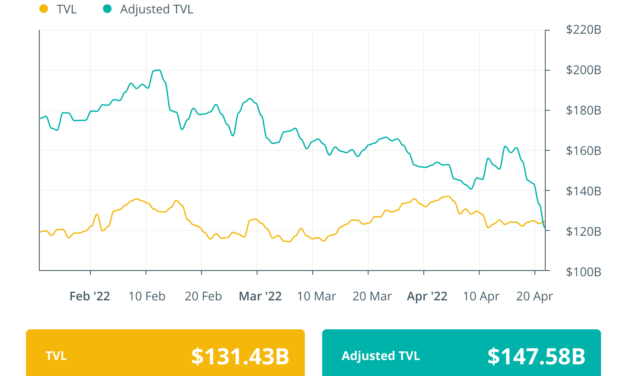
The decentralized finance (DeFi) ecosystem was filled with ups and downs —mostly the latter— this week, with two very distinct hack attempts and a heartbreaking departure of a DeFi veteran. In this week’s newsletter, we will also look at derivative exchange dYdX’s plans to go fully decentralized by the end of the year. The price momentum of the DeFi tokens remained neutral, with several tokens registering a bullish surge. However, the market volatility meant many of them couldn’t hold onto those gains.Hacker bungles DeFi exploit: Leaves stolen $1M in contract set to self destructIn a rare comedic bungle among DeFi exploits, an attacker has fumbled their heist at the finish line leaving behind over $1 million in stolen crypto. Blockchain security and analytics firm BlockSec shared on Thursday that it had detected an attack on a little-known DeFi lending protocol called Zeed, which styles itself a “decentralized financial integrated ecosystem.”The attacker exploited a vulnerability in the way the protocol distributes rewards, allowing them to mint extra tokens which were then sold, crashing the price to zero but netting just over $1 million for the exploiter.Continue readingDerivatives exchange dYdX to become ‘100% decentralized by EOY’Ethereum layer-2-based crypto derivatives trading platform dYdX has vowed to become “100% decentralized by EOY” via the protocol’s v4 update.At present, only certain components of dYdX are decentralized including its Ethereum smart contracts, governance and staking. However, its “order book and matching engine” are managed by dYdX Trading Inc. — the team that developed the platform.Continue readingAndre Cronje sees a ‘necessity for regulation’ ahead of crypto’s new eraAndre Cronje, former Fantom Foundation technical adviser and Yearn.finance founder, resurfaced on Monday via Medium after announcing his departure from the DeFi and crypto space last month. In a post titled “The rise and fall of crypto culture,” Cronje expressed his lamentations of crypto culture as he called for increased regulation and legislation in the industry.The top highlight in the post is the phrase: “Crypto culture has strangled crypto ethos.” According to Cronje, he has a “disdain” for crypto culture but a “love” for crypto ethos. He explained that the culture, which prioritizes “wealth, entitlement, enrichment and ego,” has suppressed the principles of “self-sovereign rights, self custody and self-empowerment.” Continue reading Beanstalk Farms loses $182M in DeFi governance exploitCredit-based stablecoin protocol Beanstalk Farms lost all of its $182 million collateral from a security breach caused by two sinister governance proposals and a flash loan attack.The problem with the protocol was seeded by suspicious governance proposals BIP-18 and BIP-19, which were issued on Saturday by the exploiter, who asked for the protocol to donate funds to Ukraine. However, those proposals had a malicious rider attached to them that ultimately created the sinkhole of funds from the protocol, according to smart contract auditor BlockSec.Continue reading DeFi market overviewAnalytical data reveals that DeFi’s total value locked remained almost unchanged compared to the last week, registering a minor dip of $200 million to sit around $124.8 billion. Data from Cointelegraph Markets Pro and TradingView reveals that DeFi’s top 100 tokens by market capitalization registered a week filled with volatile price action, with many getting back in the green.The weekly performance of several tokens saw a bullish surge in double digits, barring a few tokens that remained in the red. In the top-100 DeFi list, 0x (ZRX) was the biggest gainer with a surge of 22.5% over the past week, followed by PancakeSwap (CAKE) with a 16.85% surge. Terra (LUNA) bulls also made a comeback with a 15% surge in the last week.Before you go!Another update on Axie Infinity’s stolen funds: Binance has frozen nearly $5.8 million of the stolen funds after the hacker group tried to move it using 86 accounts. Binance CEO Changpeng Zhao wrote earlier today:“The DPRK hacking group started to move their Axie Infinity stolen funds today. Part of it was made to Binance, spread across over 86 accounts. $5.8M has been recovered. We [have] done this many times for other projects in the past too.”Thanks for reading our summary of this week’s most impactful DeFi developments. Join us again next Friday for more stories, insights and education in this dynamically advancing space.

Čítaj viac


DEX aims to take on Uniswap with its concentrated liquidity bet

Decentralized exchange (DEX) protocols have become a key part of the decentralized finance (DeFi) ecosystem where liquidity and liquidity providers play a pivotal role in keeping the vastly growing space moving.While DEX protocols have seen billions in daily trading volume, the liquidity market is making a gradual shift from traditional liquidity methods toward concentrated liquidity. Earlier liquidity was distributed uniformly along the price curve between zero and infinity while in the new system liquidity is allocated within a custom price range.For example, In the case of a stablecoin/stablecoin pair, a liquidity provider (LP) can decide to allocate capital entirely to the $0.99 – $1.01 range. As a result, traders will have more liquidity around the mid-price, and LPs will earn more trading fees with their cash.The concentrated liquidity formula aims to improve capital efficiency by compensating for the original formula’s shortcomings. Liquidity can now be assigned to a price interval in the new model, resulting in a concentrated liquidity position. LPs can open as many positions in the pool as they want, allowing them to create their own price curves based on their specific needs and preferences.Uniswap switched to concentrated liquidity with its move to V3 in May last year and has already been reaping the benefits, seeing a 500% increase in daily volume after the switch. Similarly, another DEX called Algebra has come forward to put its contentions in the DEX race with concentrated liquidity integration.On one hand, Uniswap works on top of Ethereum, while Algebra chose Polygon as its base layer. The new DEX claims to be more efficient with its dynamic pricing, built-in farming and cross-chain integration support.Talking about the major advantages of Algebra over Uniswap, Alexandra Korneva, the co-founder of the DEX told Cointelegraph:“Uniswap doesn’t have on-platform farming, so users have to apply to external smart contracts to farm tokens. To improve this situation, Algebra has introduced built-in farming; allowing users to push their extra tokens to pools and earn rewards. You don’t need to access external platforms to farm and gain profit.” Related: Uniswap launches venture capital wing for Web3 investmentsConcentrated liquidity pools seem to be the latest trend among the DEX players as not just on Ethereum, there have been several concentrated liquidity projects on Solana and Binance Smart Chain as well.

Čítaj viac

Goldman Sachs reportedly eyes FTX alliance with regulatory and public listing assistance

Goldman Sachs is reportedly pursuing an alliance with one of the top cryptocurrency exchanges FTX.The chief executive officer of Goldman Sachs David Solomon reportedly met with Sam Bankman-Fried, the founder of FTX in a closed-door meeting in March to discuss various prospects of working together, reported Financial Times.According to the report, the major points of discussion were around mitigating regulatory compliance in the United States and Goldman Sachs offered to help them, especially with the Commodity Futures Trading Commission. Apart from regulatory assistance, the Wall Street bank also offered to help with future funding rounds.The latest report highlights the growing relationship between traditional Wall Street giants and emerging crypto companies. Goldman Sachs has also shown interest in helping FTX with its public listing. However, people familiar with the matter claimed that Bankman Fried is currently looking for more private fundraising opportunities.Related: FTX crypto exchange wins license in Dubai to open local headquartersFTX has racked up a valuation of $32 billion after three funding rounds ranging in hundreds of millions of dollars. The last funding round came towards the end of January when the crypto firm closed a $400 million funding round, which is also the smallest of the three funding rounds.Goldman Sachs like many other Wall Street giants has come a long way from its early days of Bitcoin bashing and currently looking to take a pie in FTX, one of the biggest crypto market companies at the moment. Goldman Sachs and FTX didn’t respond to requests for comments from Cointelegraph at the time of publishing.The reports of an alliance between one of the biggest wall street banks and one of the largest crypto exchanges come at a time when FTX had filed an application with CFTC requesting to eliminate brokers such as Wall Street banks in the financial markets with its crypto futures products.

Čítaj viac

Brain drain: India’s crypto tax forces budding crypto projects to move

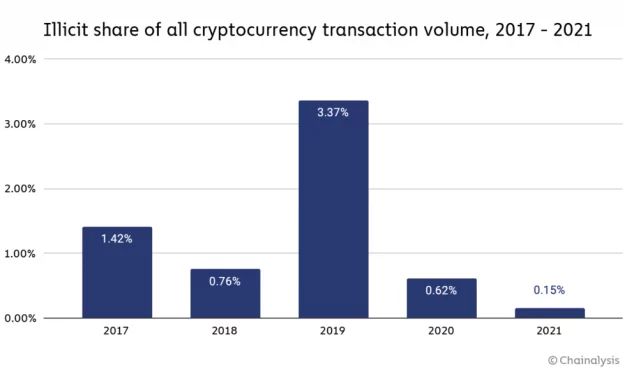
India’s 30% crypto tax came into law on March 31 and was effective April 1, despite warnings from several stakeholders about its possible ill impact on the budding crypto industry. As predicted, within just a couple of weeks of the new crypto tax law coming into effect, trading volume across major crypto exchanges dropped as much as 90%. The decline in trading activity was attributed to traders either moving their funds away from centralized crypto exchanges or adopting a holding strategy over trading.Many crypto exchanges were hoping that a crypto tax would at least offer some form of recognition to the crypto ecosystem and help them get easy access to banking services. However, the effect has been the opposite.On April 7, the National Payment Corporation of India (NPCI) issued a statement claiming they were not aware of any crypto platforms using the Unified Payments Interface (UPI) — the national fiat payment gateway.While crypto exchanges were not using the UPI directly, they previously partnered with several payment processors with UPI access to facilitate fiat to crypto onboarding. This is a common strategy incorporated by several leading crypto platforms around the world. Binance has done it in the United Kingdom, Malaysia and a few other jurisdictions after it was prohibited from directly accessing the national fiat payment gateway in respective countries.Following the NPCI’s April 7 statement, however, payment service providers — ostensibly from an overabundance of caution toward the government’s hostile stance on crypto — began to sever ties with crypto platforms.Now, Indian crypto exchanges can’t even find a third-party payment processor despite the newly introduced crypto tax laws. This, combined with the draconian tax policy, is causing crypto platforms in the country to consider moving to more crypto favorable jurisdictions, with Dubai being a primary choice. Sathvik Vishwanath, CEO of Indian crypto exchange Unocoin, told Cointelegraph:“Unfair tax policies in India are making people consider alternative countries like UAE for their new projects. On the other side, people are more likely to consider working for foreign countries to avoid tax confusion. India needs to fix up their taxation laws for the crypto industry.”The brain drain has begun The Indian crypto ecosystem has thrived over the past few years, producing several unicorns despite a lack of regulatory clarity. Many stakeholders of the ecosystem had expressed faith in the government with hopes of getting some clarity soon. However, with the regressive tax laws coming into effect, many crypto platforms are already deciding to move abroad.A physical cryptocurrency exchange in India. Source: Bitcoin.comA local crypto educator and expert familiar with the matter who preferred to remain anonymous told Cointelegraph that Polygon, one of India’s leading Ethereum scaling solutions, is looking to shift its base along with Push Token to Dubai. None of these firms responded to the queries of Cointelegraph at the time of publishing.Pushpendra Singh, a leading crypto entrepreneur and founder of crypto media platform SmartView AI, told Cointelegraph:“India’s dithering on whether to embrace digital assets is causing thousands of developers, YouTubers, startups, investors and traders to leave for places with more friendly regulation countries like Dubai or El Salvador. According to a recent report, the Dubai DMCC Free Zone has said 16% of the new company registrations recorded in Q1 of 2022 were crypto and blockchain companies. Millions of young talented Indians from various disciplines have left Indian soil in search of better opportunities. Most countries are encouraging Web3, metaverse and blockchain development.”The Indian government has failed to submit a draft crypto bill despite assurance on the same since 2018. At the same time, it has hurriedly formulated new crypto tax laws within two months that are heavily inspired by the country’s gambling and betting laws. The government has failed to take input from stakeholders in the crypto ecosystem and the disastrous impact is for everyone to see within the first month.In March, Polygon co-founder Sandeep Nailwal warned about the possible crypto brain drain scenario. He said at the time that the Indian government’s approach toward crypto would certainly lead to a crazy brain drain situation:“I want to live in India and promote the Web3 ecosystem. But, overall, the way the regulatory uncertainty is there and how big Polygon has become, it doesn’t make sense for us or for any team to expose their protocols to local risks.”Crypto exchange WazirX founder Nischal Shetty, who has reportedly shifted his base to Dubai, shared similar concerns with Cointelegraph:“The challenges that crypto investors are facing today can lead to an array of disadvantages for the entire system. It can also lead to traders transacting on peer-to-peer exchanges instead of the Indian exchanges that are Know Your Customer compliant. It will also result in the government losing out on tax revenues. Under such unfavorable circumstances, we will see more and more startups in crypto and Web3 move abroad. We must stop this brain drain by bringing in more conducive and concrete policies that will help us make it in India.”Is there a solution?The Indian central bank is currently the biggest advocate for a blanket ban on crypto use while many ministers in the current regime have demanded a higher crypto tax, citing its use for illicit activities. Looking at the current stance of the government and ministry in charge of formulating crypto regulations, there is little hope of a change of stance and by the time the government realizes the harm it has inflicted with its policies. The majority of Indian crypto platforms may have already moved.A major concern for Indian ministers seems to be the use of crypto for illicit activities. However, that notion has been debunked several times over the years and the latest report from Chainalysis indicates crypto use for illegal activities has gone down to less than 1% of the total circulation supply.The need of the hour is a formidable crypto framework and the government can take inspiration from its Asian counterparts such as Thailand and Malaysia. Thailand scrapped its early proposal of a 15% crypto tax on capital gains and also exempted traders from value-added taxes on regulated exchanges to promote the use of crypto. The Indian government will have to act fast to undo the damage. Otherwise, it will be a spectator in the Web3 race.Mohammed Danish, chief legal officer at crypto exchange BitDrive, concluded, “While India is leading from the front in producing some exceptionally talented builders in the Web3 space who are adding great value to the industry worldwide, it has miserably failed to provide a conducive atmosphere for the Web3 projects to operate from India due to its ambiguous regulatory policy regarding the activities involving the use of crypto.” “The recent move to cut off retail payments for crypto exchanges is a fresh example that caused the trading volumes to tumble to as low as 90% on some of the platforms. There is no legal justification to deny payments access to the exchanges. Such unexpected and unwarranted actions are also pushing Web3 projects to shift their base to more comfortable jurisdictions like Dubai, Singapore, Portugal and others. There is an urgent need for the government to take corrective measures to stop this brain drain in the best interest.”

Čítaj viac

Indian minister wants global crypto rules to curtail money laundering risk

Indian Finance Minister Nirmala Sitharaman in her address to the International Monetary Fund called for a global cryptocurrency framework to keep a check on the use of cryptocurrencies for illicit activities. LIVE NOW: A panel discussion on the policy challenges and opportunities of #DigitalMoney to the international monetary system. #CBDC https://t.co/JznM8apoGt— IMFLive (@IMFLive) April 18, 2022Sithraman’s comments came during the “Money at a Crossroad” panel discussion of the International Monetary Fund (IMF), and the World Bank in Washington on Monday. The panel discussion also featured Kristalina Georgieva, managing director at the IMF, Roberto Campos Neto, president of the Central Bank of Brazil, and Ravi Menon, managing director of the Monetary Authority of Singapore.The Indian minister called upon the support of world leaders to come together and formulate comprehensive crypto regulations to mitigate terror financing and money laundering risks“I think regulation using technology is the only answer. Regulation using technology will have to be so adept, that it has to be not behind the curve, but be sure that it is on the top of it. And that’s not possible. If any one country thinks that it can handle it. It has to be across the board.”During her address, Sithraman also raised concerns over unhosted crypto wallets being used for international remittances and how it could prove to be a major risk in assessing the flow of money outside a nation. Related: Coinbase suspends crypto payment services days after India launchAmid Sithraman’s call for a global crypto framework, back home, Indian entrepreneurs have been demanding crypto regulations for nearly four years now. Despite this, the Indian government has introduced a highly controversial 30% crypto tax law without offering any clarity on the future of crypto in the country. This regressive tax law has reportedly forced several crypto startups and entrepreneurs to look for more favorable jurisdictions outside India.While politicians around the globe keep making claims about the use of crypto for illicit activities, a Chainalysis report found that the use of crypto for illegal activities has been on a constant decline, as it is far more complex to launder or transfer illegal funds and easier to track those funds when compared to fiat.Share of illicit transaction in crypto. Source: Chainalysis

Čítaj viac

Získaj BONUS 8 € v Bitcoinoch

nakup bitcoin z karty

Registrácia Binance

Burza Binance

Aktuálne kurzy