Autor Cointelegraph By Prashant Jha

Blockchain and crypto can be a boon for tracking financial crimes

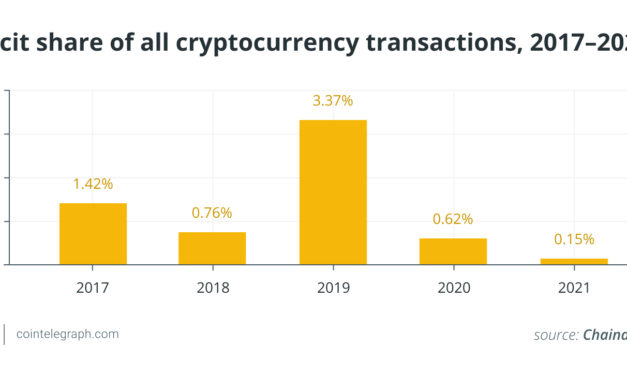
Governments around the globe have also become more aware of the crypto market and the various ways in which it can be regulated. Despite a growing adoption rate and involvement of mainstream financial giants, however, naysayers continue to portray crypto as a tool for miscreants and criminals.Several crypto platforms and decentralized finance (DeFi) protocols have been compromised over the years, owing to various code vulnerabilities or centralization problems. However, stealing of money is the easiest part, while moving that money and cashing it out is nearly impossible. This is primarily because most crypto transactions are recorded on a public ledger which acts as a permanent trail, and even if the hacker uses various coin mixing services to hide its origins, powerful transaction monitoring tools can eventually identify such illicit trails.Even coin mixing services themselves have started to block transactions associated or flagged as illicit. Through rigorous study, crypto forensic firms such as Chainalysis and Elliptic have further debunked the notion that cryptocurrency provides an ideal tool for financial crimes and masking illicit activity.A recent report by Chainalysis shows that the percentage of crypto transactions associated with illicit activities in 2021 was a mere 0.15%.Cryptocurrencies have become more mainstream over the past couple of years, with the public prescription of the crypto market evolving from an internet bubble a couple of years ago to a reliable investment option today.Dmytro Volkov, chief technology officer at crypto exchange CEX.IO, told Cointelegraph why the notion of crypto being primarily used by criminals is outdated:“The misconception that crypto is predominantly used by criminals probably has roots in the days of the Silk Road. The truth is that the immutable aspect of the blockchain makes hiding transactions very difficult. In the case of Bitcoin, whose blockchain ledger is publicly available, a serious exchange with a competent analytics team can easily monitor and thwart hackers and launderers before the damage is done.”He added that “as long as the security team stays proactive and ahead of the curve on blockchain technology, we can continue protecting our customers. As this industry continues to grow, I believe that this myth of crypto being used mainly by criminals will fade.”Volkov noted that there is an “arms race going on between cybercriminals and the security teams of cryptocurrency ecosystems,” as ne’er-do-wells still try to find instruments to facilitate illicit activities. However, “this is not exclusive to the digital asset industry,” Volkov claimed. A “paper” trailThere have been several instances in which criminals were found to be trying to launder stolen cryptocurrencies years after the fact, the most recent example being Bitfinex. Law enforcement agents were able to follow the stolen Bitcoin (BTC) — estimated to be around $4 billion in today’s value — through the blockchain to eventually detain influencer Heather Morgan and her husband Ilya Lichtenstein, a cybersecurity specialist.Related: Making sense of the Bitfinex Bitcoin billionsDerek Muhney, executive vice president at Coinsource — a Bitcoin ATM provider — told Cointelegraph:“Look at the outcome of the 2016 Bitfinex hack. The individuals involved attempted to launder approximately $4.5 billion in cryptocurrency by employing several methodical laundering techniques. Still, law enforcement was able to follow the money through the blockchain, identify the perpetrators and recover a significant portion of the stolen money. Cases like this prove that criminals may try to take advantage of crypto but they won’t succeed. Crypto was created for the people and will continue to be for the good guys.”From an outside perspective, using cryptocurrency for criminal activities might seem ideal. Online transactions can be done quickly and without having to physically move sums of money across far distances. But, those in the crypto world know there are robust protocols in place that allow law enforcement to keep records and verify the identity of customers if need be.Crypto exchanges play a key roleCrypto exchanges play a key role in identifying and blocking or freezing stolen funds, as they effectively serve as off-ramps for crypto to fiat. Recently, Binance blocked $6 million worth of stolen funds associated with the Ronin bridge hack. The crypto exchange revealed that the hacker tried to cash out $5.8 million out of the total $600 million via 86 accounts in small batches. As laundering via centralized exchanges with heavy Know Your Customer (KYC) policies has become difficult, hackers have then turned to decentralized exchanges (DEX) in hopes of anonymizing their movements. Most of the time, however, these hackers convert their stolen crypto into stablecoins, which, once flagged, can be easily frozen by the issuer. Thus, laundering via DEX platforms has become increasingly difficult as well.Tigran Gambaryan, vice president of global intelligence and investigations at Binance, told Cointelegraph that while criminals will continue to use crypto for laundering, exchanges are the first line of defense against them:“Criminals will launder money no matter what form it comes in. When it comes to cryptocurrency, exchanges are the first line of defense and have to be prepared for that. What exchanges need to do is to have a sufficient number of people with the right expertise and the necessary tooling to stop and identify suspicious transactions. Proper KYC and transaction monitoring tools are essential.”Binance has also helped take down a cybercriminal ring laundering $500 million in digital assets received through ransomware attacks. The exchange has also worked with local governments and law enforcement agencies to tackle ransomware risks.Fiat currencies are more vulnerable to illicit activitiesSome of the biggest naysayers that propagate the narrative of crypto as a tool for criminality are traditional bankers, who themselves are not innocent of ill financial deeds.Despite governments pouring billions of dollars into stringent banking regulations, including Anti-Money Laundering (AML) measures, major banking institutions have paid over $300 billion in fines since 2000 for a slew of various conduct violations including but not limited to insider trading and AML deficiencies. Some of the biggest naysayers that propagate the narrative of crypto as a tool for criminality are traditional bankers, who themselves are innocent of ill financial deeds.Despite governments pouring billions of dollars into stringent banking regulations, including Anti-Money Laundering (AML) measures, major banking institutions have paid over $300 billion in fines since 2000 for a slew of various conduct violations including but not limited to insider trading and AML deficiencies.

Čítaj viac

Bitcoin network hash rate hit a new record high amid price volatility

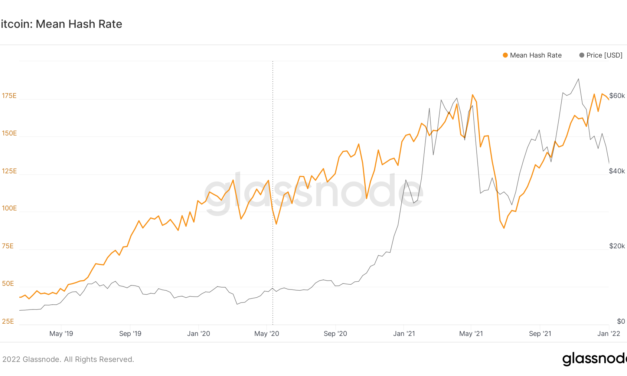
The hash rate of the Bitcoin (BTC) network hit a new ATH, even when the price of the top cryptocurrency struggled to get past the $40,000 mark.The network’s hash rate hit a new record high of 258 EH/s on Thursday before settling around the 220 EH/s mark. The recent rise in the BTC network hash rate signifies the growing number of miners on the blockchain. The Bitcoin network hash rate has grown more than 400% since the Chinese crypto mining ban last year when it fell below 70 EH/s.The Bitcoin network managed to recover from the significant hash rate drop by the end of last year and has only grown in 2022. Bitcoin network also saw an increase in mining difficulty to new historic highs, reaching 29.70 trillion. The mining difficulty is adjusted to keep the block generation time of 10 minutes constant. A rise in the mining difficulty signifies that more miners are competing against each other to mine the next block.Related: Bitcoin miners believe global hash rate to grow ‘aggressively’According to data from BTC.com, Bitcoin mining difficulty increased by 5% on April 27 and has seen three positive re-adjustments and two negative ones in 2022. The next difficulty adjustment is slated for May 10.Bitcoin network has stood the test of times and various regulatory onslaughts. The rise in mining difficulty and network hash rate also comes at a time when there is a significant push for Bitcoin’s change to proof-of-stake from its current proof-of-work mining consensus. Greenpeace, along with other climate groups and co-founder and executive chairman of Ripple (XRP) Chris Larsen, has launched a new campaign aimed at changing Bitcoin to a more environmentally friendly consensus model. However, core Bitcoin proponents continue to advocate for the current mining mechanism as it offers true decentralization.While Bitcoin’s energy consumption has become a controversial topic, it has often been used to peddle fake narratives such as “BTC will use up all the energy by 2022.” With BTC gaining mainstream popularity, clean mining has become a priority for several mining companies.

Čítaj viac

Fidelity to reportedly allow 401(k) retirement savings accounts to invest in Bitcoin

The United States-based retirement plan provider Fidelity Investments will reportedly allow 401(k) retirement saving account holders to directly invest in Bitcoin (BTC).The new Bitcoin retirement investment plan would go live later this year. It will allow over 23,000 companies associated with Fidelity to administrate their retirement accounts to offer Bitcoin investment options to the customers, reported The Wall Street Journal.If the proposal to allocate BTC to their savings account gets approval from employers, it will allow retirement savers to allocate up to 20% of their portfolio in Bitcoin. Fidelity is currently in discussions with several of the employers that use its services, and MicroStrategy has reportedly already agreed to the BTC investment plans.The case for retirement savings accounts to invest in Bitcoin is not new. Earlier in June 2021, another retirement plan provider, ForUsAll, partnered with Coinbase to offer BTC exposure to its retirement savings accounts holders. However, Fidelity’s interest in the sector would definitely elevate the idea into the mainstream.Related: Fidelity: Bitcoin is a ‘superior form of money’Dave Gray, head of workplace retirement offerings and platforms at Fidelity Investments, noted that the decision to offer Bitcoin exposure to 401(k) plan holders was based on high client demand. He said:“We started to hear a growing interest from plan sponsors, organically, as to how could Bitcoin or how could digital assets be offered in a retirement plan. We fully expect that cryptocurrency is going to shape the way future generations think about investing for the near term and long term.”Gray also noted that apart from its initial support for Bitcoin, the company would add other crypto assets to the investment option depending on the client’s demand.With over $4 trillion worth of assets under management, Fidelity was among the early mainstream financial institutions to dwell into crypto with the launch of its digital asset arm in 2018. Since then, the investment firm has been one of the biggest advocates for Bitcoin.

Čítaj viac

The Central African Republic reportedly passes a bill to regulate crypto use

The Central African Republic (CAR) has become the center of a hot buzz in the crypto world amid various reports of it adopting Bitcoin (BTC) quite similar to El Salvador. However, contrary to popular headlines, the African nation has not adopted BTC as a legal tender, instead, it has reportedly legalized the use of cryptocurrencies in the financial markets.The cryptocurrency bill was introduced by Justin Gourna Zacko, the Minister of Digital Economy, Post and Telecommunications on April 21 and was unanimously approved by the lawmakers in the parliament despite a protest from the opposition, reported RFI.The crypto law aims to establish a favorable environment for the inclusive growth of the crypto sector in the region. Minister Zacko also highlighted the growing difficulties in sending money from the African nation and believed the adoption of crypto would help in resolving that issue.The new law would reportedly allow traders and businesses to make crypto payments and also make way for tax payments in crypto through authorized entities. The new crypto law has also made provisions for offenders who break the laws. According to one report, offenders could be jailed for up to 20 years and fined between 100,000,000 to 1,000,000,000 Financial Community of Africa (CFA) francs.Related: Four years on, Telegram’s blockchain project gains ground in AfricaGloire, the founder of Kiveclair, a Bitcoin Beach-inspired refugee project in the Congo explained the details of the new law and told Cointelegraph:“The real implication for people is that they can now have access to currencies other than the FCFA (this is the local currency) while being protected by law, and transfer money at a lower cost. Above all, they can carry out financial transactions without banks (while being protected by law). “A total of 14 countries use the CFA franc pegged to the euro, printed in France and its monetary policy is controlled by Western powers. While the official peg was set at 1 euro to 655.96 CFA francs, the fiat has been depleting in value for quite some time. Thus, Bitcoin and other cryptocurrencies are growing in popularity among countries troubled by the national economic crisis.

Čítaj viac

Beyond collectibles: How NFTs are revamping the ticketing industry

The concept of nonfungible tokens (NFT) came into existence in 2015, and it first got some traction in 2017 when many prominent digital collectibles such as CryptoPunks and EtherRock were created. NFTs got early traction among premier sports clubs but burst into mainstream popularity after digital artist Beeple’s artwork was sold as an NFT for over $69 million. The Beeple event caught the attention of the world and proved to be a breakout movement for the NFT ecosystem.Today, most of the mainstream household brands, premium sports and clothing brands, celebrities, sports stars and influencers have got involved in the NFT frenzy. While many believed the hype and frenzy around the market would become the cause of its downfall, the NFT ecosystem has seen a rapid expansion beyond the digital collectible market.Gaming is another key industry that NFTs have impacted quite significantly, with play-to-earn (P2E) and integrated NFT rewards becoming all the rage in 2021. Games such as Axie Infinity have become a source of livelihood for many in Vietnam, and market experts have predicted that within 10 years, the majority of the video games will have turned to P2E models.While digital collectibles and the gaming industry have become two of the most well-known use cases of NFTs, there are several other industries where the use of nonfungible tokens is on the rise. In one prominent example, the ticketing industry is eyeing an overhaul by integrating NFTs.Recent: Georgia crypto mining’s potential: What’s driving growth in the industry?How NFTs shape the ticketing marketWhile the ticketing market has become digital enough over the course of the past few years, aided by the pandemic, it’s highly centralized, which helps in the growth of secondary and underground markets. In today’s world, tickets to any major concert or event are bought early by hoarders that are then sold at an exaggerated price on these markets in a practice known as “scalping.” On many occasions, scalpers will even sell fakes, with customers having no way to confirm authentic tickets before buying.NFTs offer proof of authenticity, as it saves data on a blockchain. The same mechanism can be applied by putting tickets on a blockchain, which would ensure not only the authenticity of the ticket but whether it was being sold by a legitimate organizer.These NFT tickers also have the potential to tap into the secondary ticketing market. For a long time, the secondary market has been mostly inaccessible to event organizers, venues and artists. Unregulated and speculative, it affects both fans frustrated by high prices and artists who are beleaguered by an unhappy fanbase. With NFT ticketing, this problem could disappear. Artists and event organizers can create smart contracts that govern the resale of their tickets. NFT benefits can range from royalties coming from resales, limiting the upper or lower pricing limit to packing all sorts of utility add-ons in the NFT. With NFT tickets, the community gets much closer to the artist or sports team. This means they play a larger role in their favorite artists or team’s decisions.NFT tickets go way beyond access. It’s a collectible but can also be a goodie bag for all sorts of perks. It can be a wallet that holds monetary value securely. You can grant access to specific areas in an event or award a t-shirt, a burger, a signed poster, or $100 worth of purchases in the concert venue.NFTs are closing the gap between separate experiences markets. The same NFT can be used to hold access to a concert but also be the key to your hotel stay, visit a nearby theme park, and even the key to your rental car on your next trip.Mike Dragan, chief operating officer of NFT ticketing marketplace Oveit, told Cointelegraph how NFT tickets are already in big demand, with a market value that can exceed hundreds of billions of dollars:“From our data, 18% of ticketed events are using or consider using NFTs as a way to improve their fans’ experience. This number is up from just 2% in July 2021. We expect the number to increase even more over the coming year as the technology is being rolled out and crypto wallets are getting more popular. We expect the NFT ticketing market to reach 25% of total ticketing market by 2017 — at approximately $18.5 billion — in the live events industry only. We expect a similar level of adoption, although on a longer time scale in the tourism and hospitality industry.”What’s the future of NFT ticketing?Many founders and creators in the NFT ticketing market agreed that the frenzy around NFTs among mainstream brands has definitely helped the ticketing market attract more organizers. NFT ticketing is still an emerging technology, so there is plenty of space to grow. For the right solution, the ceiling is as high as the industry itself, with a projected market volume of $94.27 billion by 2026. Despite a fast growth rate, the NFT ticketing industry also faces certain challenges on the way. Colby Mort from Get Protocol, an NFT ticketing solution, told Cointelegraph that the interest in exploring NFTs from clients is incredibly high, but the tech barrier is still a challenge:“The challenge that has always existed for NFTs is the accessibility barrier into the space for mainstream audiences. There is a strong need for a warm introduction into the space through friendly user experiences and guidance. We believe NFT ticketing represents a Web2.5 step between mainstream audiences and Web3.”Recent: Quantum computing to run economic models on crypto adoptionCharlie Gardiner, content manager at Seatlab NFT, believes NFT tickets have the potential to throw big players. He told Cointelegraph:“Ultimately, so long as the process of buying and selling tickets on an NFT marketplace is frictionless, NFT ticketing platforms have the potential to dethrone the big players in this industry. By integrating fiat on- and off-ramps and focusing on user experience, we’re creating a future that, on the surface, works similarly to current offerings but fundamentally improves the experience for fans, increases revenue for artists, and reins in the wildly out of control secondary ticketing market.”Mainstream brands are beginning to understand the value of NFT technology and that it’s not a passing craze. The use of NFTs in the event ticketing space requires educating brands on how they can use the underlying technology for more than just digital collectibles. They already have a degree of trust and understanding in NFT tech, and thus, the future of NFT ticketing seems like the next best use case.

Čítaj viac

Získaj BONUS 8 € v Bitcoinoch

nakup bitcoin z karty

Registrácia Binance

Burza Binance

Aktuálne kurzy