Autor Cointelegraph By Prashant Jha

How Terra’s collapse will impact future stablecoin regulations

The collapse of the Terra ecosystem, which subsequently depegged its algorithmic stablecoin TerraUSD (UST) value and crashed it to an all-time low of $0.30, has cast doubt over the future of not just algorithmic stablecoins but all stablecoins in general.UST’s success and stability were intertwined with its sibling, LUNA, which creates arbitrage opportunities that, in theory, should keep UST’s price steady. If UST’s price drops below $1, it can be burned in exchange for LUNA, which lowers the supply of UST and raises its price. Conversely, if UST’s price goes above a dollar, LUNA can be burned in exchange for UST, which increases the supply of UST and decreases its price. As long as conditions are normal and everything functions correctly, this creates both a mechanism and incentive for keeping the price of UST at $1.Though algorithmic stablecoins are not usually backed by assets such as other stablecoins, the organization responsible for developing UST and the broader Terra ecosystem, the Luna Foundation Guard (LFG), has nevertheless built a war chest of Bitcoin (BTC) to be used in the event that the UST becomes depegged from the United States dollar. The idea is that if UST’s price ever drops significantly, the BTC can be loaned out to traders who’ll use it to buy UST and push the price back up, repegging it to the dollar. So, when UST went into a deep dive, LFG deployed more than $1.3 billion dollars worth of BTC (42,000 coins at a price of $31,000 each) to traders who were going to use it to purchase UST, creating demand pressure and bolstering its price. However, that couldn’t save the collapsing ecosystem either, and the spiral effect eventually collapsed the price of the LUNA token as well as its stablecoin.In the aftermath of the collapse, even centralized stablecoins, such as Tether’s USDT, lost their dollar peg, falling to a low of $0.95. Since stablecoins act as a bridge for various decentralized finance ecosystems, the Terra crash led to high volatility in the decentralized finance market.Justin Rice, vice president of ecosystem at the Stellar Development Foundation, was pretty skeptical of the future of algorithmic stablecoins in light of the UST collapse. He told Cointelegraph:“What we’re seeing now, and not for the first time, is an optimistic balancing mechanism unraveling due to natural human responses to market conditions. It is challenging to have algorithmic stablecoins keep their peg when things go sideways, and you have to rely on outside intervention to set things right.”He also advocated for full transparency from stablecoin issuers with third-party audits. Denelle Dixon, CEO and executive director at the Stellar Development Foundation, hoped the recent debacle would push the conversation about stablecoin regulations among lawmakers. She told Cointelegraph:“We’ve seen significant progress moving the conversation of stablecoin legislation in the United States. We’ve seen bills from both sides of the aisle that understand the issues and can move this industry forward by providing clarity and guardrails. We also know that this is a global issue and think the same rules should apply with respect to stablecoins and are working to help create that consistency.”Stablecoin regulations around the globeFor a long time, stablecoins have been on the radar of regulators in many major economies, but the UST collapse acted as a catalyst, forcing U.S., South Korean and many European regulators to take note of the vulnerabilities in these not-so-stable digital dollar pegs. U.S. regulators are using the incident as grounds to push for more stringent rules around stablecoins and their issuers, with Treasury Secretary Janet Yellen announcing plans for legislation by the end of the year. Yellen said it would be “highly appropriate” to aim for a “consistent federal framework” on stablecoins by the end of 2022, given the growth of the market. She called for bipartisanship among members of Congress to enact legislation for such a framework.These could easily be imposed on collateralized stablecoins, such as USD Coin (USDC) and USDT, which are backed by a traditional-style treasury and held by a centralized entity. Max Kordek, co-founder of blockchain developer platform Lisk, believes the UST collapse will be used by lawmakers to push for central bank digital currencies (CBDC). He told Cointelegraph:“Trust in algorithmic stablecoins is likely to have greatly diminished because of this incident, and it will be a while before that trust is restored. This will, unfortunately, be used by politicians as an example of why the world requires CBDCs. We don’t need CBDCs; what we do urgently need, though, is reliable, decentralized stablecoins.”The Congressional Research Service, a legislative agency that supports the U.S. Congress, published a report on algorithmic stablecoins analyzing the UST crash. The research report described the LUNA crash as a “run-like” scenario that lead to several investors pulling out money from the ecosystem at the same time. The research paper noted that these conditions in the traditional financial sector are protected by regulations that guard against such scenarios, but without any regulations in place, it might lead to market instability in the crypto ecosystem.Jonathan Azeroual, vice president of blockchain asset strategy INX, told Cointelegraph: “Algorithmic stablecoins backed by super volatile assets are especially at risk of a ‘run’ on the funds backing them if investors lose confidence in the mechanism created to ensure its stable value or simply if the value of the assets backing them falls below the amount of stablecoin issued.”He believes the U.S. government will certainly attempt to expedite their power over regulating stablecoins, as it shows they are not a viable answer to a regulated digital economy. The regulators might require “stablecoins to be issued by federally regulated banks or by regulating them as securities, which will make them be overseen by the SEC [Securities and Exchange Commission].”David Puth, CEO of the Coinbase-founded Centre Consortium, hoped for constructive regulations in the wake of the UST collapse. He told Cointelegraph:“The fact remains that stablecoins are a critical piece of the growing crypto ecosystem, and industry organizations in the United States have been vocal about their desire for clear and constructive regulation.”Puth is hoping for a “thoughtful and pro-innovation regulation that will keep the United States at the forefront of the blockchain economy.”Apart from the U.S., South Korea is another nation that has gotten serious about stablecoins after the Terra collapse. The founder of Terra, Do Kwon, has been summoned before the country’s legislature for a hearing. A Korean regulatory watchdog has also started risk assessment of various crypto projects operating in the country.The key lessons While regulatory discussions around the stablecoins have gained pace in the light of the UST debacle, it has also highlighted that the crypto market has evolved enough to absorb a $40-billion run-down. This proved that the crypto market has grown enough to absorb a setback as big as Terra without posing a threat to broader market stability.It’s essential to notice that the collapse of Terra, together with the overall market correction, has led to a cascade of second-order effects, such as increased exchange outflows, a significant spike in liquidations (most obviously in derivatives and decentralized finance), at least a temporary slowdown in DeFi (total-value locked and activity have decreased), and liquid staking issues.Thomas Brand, head of institutions at Coinmotion — a Finnish virtual asset service provider — told Cointelegraph:“Regulators, I assume, are especially interested in how crypto, and now especially stablecoin, risks might affect TradFi and CeFi via contagion and (in)direct exposure. Thus far, these risks have not materialized systemically. Still, regulators might pay closer attention to these matters soon — mainly if they conclude that at least some stablecoins remind a form of shadow banking.”Terra wasn’t at this point a systemic risk but rather, its meltdown was limited, although effects could be seen throughout various interlinked ecosystems. Derek Lim, head of crypto insights at Bybit exchange, told Cointelegraph that while the UST collapse has definitely attracted regulator scrutiny, the crypto market managed to recover without seeing colossal damage across the board. He explained:“I would like to point out that one of the key concerns that U.S. regulators have made clear in several reports is that a stablecoin bank run could destabilize the broader financial system. This incident has shown that a bank run on the third-largest stablecoin by market cap has barely affected the wider crypto markets, let alone the S&P and beyond.”Terra’s spiral disaster not only highlights the need for transparency from stablecoin issuers but the importance of a regulated market as well. With clear regulations in place, there would have been several gatekeepers to prevent small investors from losing their money. The event has already prompted regulators around the world to take notice. The Terra collapse could prove to be a turning point for stablecoin regulations around the globe, quite similar to what Libra’s global stablecoin plans did for CBDCs — i.e., prompting regulators to accelerate their own plans.

Čítaj viac

Hacker tastes own medicine as community gets back stolen NFTs

The tales of traders getting scammed out of their nonfungible tokens (NFTs)  were quite common at the peak of the NFT boom. However, in an interesting turn of events, the Solana community came together to “scam” a scammer in order to get back some stolen NFTs.It all started with the Discord channel hack of cross-chain gaming development studio Uncharted NFT, where scammers managed to drain out 109 user wallets. The scammers got away with 150+ SOL tokens and 25 World of Solana (WOS) NFTs, including three rare and highly valuable digital collectibles.2/It all began when @UnchainedNFT_ Discord got hacked two days ago.A hacker drained the wallet of 109 users for a total of 150+ $SOL. The most affected person was a WOS whale with 25 WOS NFTs that got stolen. This whale also owned 3 top 100 @MoonRankNFT WOS NFTs ⤵️ pic.twitter.com/R2PWe3gPMX— World Of Solana {WOSup} (@worldofsolana) May 25, 2022WOS is a collection of 2,222 unique heroines with the most expensive avatar currently listed for 123 SOL ($5,600). The current floor price of the collection is 2.03 SOL.In the aftermath of the hack, the community decided to get back the stolen NFTs. The WOS team got in touch with their dev partner who goes by the Twitter name “Cyberfrog” and raised royalties on stolen NFTs 98% from the default 5%.Related: Nifty News: Solana NFT sales pass $1.6B, wash trading on LooksRare and more The community was asked to keep an eye on the Solana NFT marketplace MagicEden for any new listings. The scammer fell for the trap within two days, and the community managed to buy back 15 NFTs, while the other 10 were sniped.Sniping is a process of waiting until the last few seconds of an NFT auction in order to make a winning bid. This strategy is used to prevent other NFT bidders from placing a higher bid before the auction ends.The community managed to retrieve the other 10 sniped NFTs as well and return the 25 WOS NFTs to the rightful owner.4/Two days later, around 2am EST, the hacker listed the 25 WOS NFTs on @MagicEden.@WorldofSolana community managed to buy 15 and a sniper took the other 10.We sent a @FamousFoxFed DING to the sniper and he gladly accepted to cooperate. pic.twitter.com/3TCRnnZ4qQ— World Of Solana {WOSup} (@worldofsolana) May 25, 2022

The Twitter thread detailing the events of the hack and the community work to get it all back also asked community members to “always use a burner wallet and be careful when minting.” The small NFT community has managed to get back at scammers twice now.

Čítaj viac

WEF 2022: Metaverse should be developed from children’s perspective, says LEGO VP

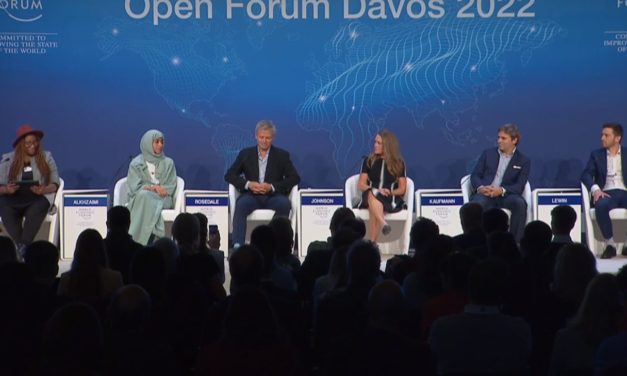
Metaverse and Web3 dominated the discussions on the fifth day of the ongoing World Economic Forum (WEF).A panel discussion on “The Possibilities of the Metaverse” was joined by High Fidelity co-founder Philip Rosedale, Mindfire Foundation founder Pascal Kaufmann, Magic Leap CEO Peggy Johnson, New York University – Abu Dhabi assistant research professor Hoda AlKhzaimi and Lego Group vice president Edward Lewin.The key point of discussion revolved around the building blocks and future prospects of the metaverse. The panelists discussed the technical aspects, security and role of human sentiments in building a sustainable augmented reality-based digital world.On a question about the developments around the metaverse, Peggy Johnson, the CEO of augmented reality development firm Magic Lap said that the building blocks are in place, even though, “It is in the early stage but innovation is certainly progressing towards a digital future.”She went on to cite the use of augmented reality in the medical field and predicted metaverse would make complex jobs easier across different fields of work.Lego Group VP for global affairs talked about building a future for children in the metaverse. He said:“One in three people using the internet are young adults and children, so I would really focus on building from kids’ perspective, given they are the future users.”He went on to add how augmented reality can change the way children learn today, citing the example of a volcano. He said, learning about a volcano through a two-dimensional book and seeing it in augmented reality are two vastly different experiences while adding, “it could be a great way for learning for future generations.”Related:  WEF 2022: Satoshi Nakamoto could be a woman, says Meta VP Nicola MendelsohnNew York University – Abu Dhabi assistant research professor Hoda AlKhzaimi believes the metaverse will be a place of “interconnectivity for knowledge and resources. ” She also stressed the need to rebel against the current systems to build a formidable digital world. She said:“We need to rebel against the existing technological system be it the current computer codes or rules to build a formidable metaverse.”Mindfire Foundation President Pascal Kaufmann said metaverse will be inclusive and disruptive while adding that it will be a place for revolutionizing science.The panel agreed upon the need for building a place that prioritizes the privacy and security of individuals and allows them to be whatever they want to be.

Čítaj viac

WEF 2022, May 25: Latest updates from the Cointelegraph Davos team

Disclaimer: This article is being updated all day long. All timestamps are in the UTC time zone, with updates in reverse order (the latest update is placed at the top).WEF 2022, the first in-person World Economic Forum event since the pandemic started, continues to bridge traditional finance with the future of money on its third day. The Cointelegraph ground team, including editor-in-chief Kristina L. Corner, head of video Jackson DuMont and news reporter Joseph Hall, is deployed in Davos, where the event is held, to get the most recent developments from WEF 2022.The fourth day of WEF 2022 will see the likes of Anthony Scaramucci & David Branch discuss the journey of crypto investors. Our editor-in-chief Kristina is moderating an Equality Lounge’s panel on “Why Web3 Needs Women at the Forefront” and more in today’s coverage.Don’t forget to check this article regularly to be notified about the most recent announcements from the event.11:00 am UTCCointelegraph editor in chief Kristina Lucrezia Cornèr moderated a panel on ‘Why Web3 Needs Women at the Forefront” joined by Meta vice president Nicola Mendelsohn, Global Blockchain Business Council CEO Sandra Ro, Harvard Business School’s Sarah Endline and Splunk government relations head Bill Wright. Read the full discussion here.10:00 am UTCOn a discussion around women role models, Meta VP quipped that Bitcoin creator Satoshi Nakamoto who remains pseudo-anonymous to date could very well be a woman. She explained:“I will give you one- Satoshi Nakamoto, I mean we all assume it’s a man right, is that our bias? It’s just a name it could well be a woman.”Cornèr added that she believes the creator of Bitcoin is a group of people comprising of males and females rather than an individual.Sandra Rao, GBBC CEO on the future of women in web3:“I am very bullish on women’s future. We are in an era of collaboration irrespective of borders and countries. We need to support woman entrepreneurs from all walks of life.”9:30 am UTCCointelegraph team greeted the renowned blockchain advocate Dr. Anino Emuwa, the founder of 100Women@Davos, Avandis Consulting.

Čítaj viac

WEF 2022: Satoshi Nakamoto could be a woman, says Meta VP Nicola Mendelsohn

The fourth day of the ongoing World Economic Forum (WEF) saw major discussion around the role of women in Web3 and how the decentralized ecosystem is the place for inclusiveness.Women are investing in crypto at half the rate of men. Join us at #WEF22 to hear about solutions we can implement to get women at the forefront of this digital revolution. @KristinaLCorner @sarahendline @Billwrightv @nicolamen @srolondon https://t.co/jBbiauzSWi pic.twitter.com/xWlhqv5p5m— The Female Quotient (@femalequotient) May 25, 2022Cointelegraph editor in chief Kristina Lucrezia Cornèr moderated a panel on ‘Why Web3 Needs Women at the Forefront” joined by the likes of Meta VP Nicola Mendelsohn, Global Blockchain Business Council CEO Sandra Ro, Harvard Business School’s Sarah Endline and Bill Wright, Head, Government Relations at Splunk.Talking about women role models in the web3 and crypto space, the panelists highlighted the contribution of key women representatives in the nascent space. Meta VP quipped that Bitcoin creator Satoshi Nakamoto who remains pseudo-anonymous to date could very well be a woman. She explained:“I will give you one- Satoshi Nakamoto, I mean we all assume it’s a man right, is that our bias? It’s just a name it could well be a woman.”Cornèr added that she believes the creator of Bitcoin (BTC) is a group of people comprising of males and females rather than an individual.The panel also discussed the challenges faced by women today and things that could be done better and improved upon. GBBC CEO Sandra Rao highlighted the growing contribution of women in the nonfungible token space and also raised concerns over the lack of it in the crypto trading space. She explained: “While NFT domain has seen a great proportion of women participants but crypto trading certainly concerns me because of the lack of women representation.”She also stressed the need to create an “environment to accommodate women representatives on the crypto trading side.”Related: WEF 2022: Trust and clarity are missing in discussions of carbon emissions and cryptoBill Wright, Government Relations head at Splunk and the only male panelist belives web3 and blockchain space is inclusive by nature. He said:“I think web3 by nature aims to be an inclusive environment, and more diverse people involved would result in better outcomes. By research, it has been proven that diverse groups focused on a problem will come up with a better solution. ”The panelists agreed that the decentralized world has seen a significant increase in women representatives over the years and hoped to see that proportion growing in the future.

Čítaj viac

Získaj BONUS 8 € v Bitcoinoch

nakup bitcoin z karty

Registrácia Binance

Burza Binance

Aktuálne kurzy