Autor Cointelegraph By Prashant Jha

Binance.US faces class-action lawsuit over LUNA and UST sale

Binance.US, the sister company of global cryptocurrency exchange Binance, is facing a class-action lawsuit from investors for the sale of LUNA and TerraUSD (UST).A group of investors filed a class-action lawsuit in the Northern District of California on Monday, alleging that Binance sold unregistered securities in the form of LUNA and UST to investors and mislead them into buying them.The lawsuit was filed by law firms Roche Freedman and Dontzin Nagy & Fleissig on behalf of several investors who lost their money during the recent LUNA and UST spiral collapse. The lawsuit alleged that Binance.US is not registered as a broker-dealer in the United States and thus clearly violates U.S. securities laws. The plaintiffs in the case accused the crypto exchange of knowingly promoting a flawed project in which the parent company had invested earlier.The lawsuit filing pointed out that the crypto exchange not only supported and promoted a security token, but its parent company also listed the second version of LUNA 2.0 after the failure of the first. Related: Binance ends support for anonymous Litecoin transactionThe lawsuit also accused the crypto exchange of false advertising, pointing towards their claims of UST being fiat backed, which has been redacted after the collapse.An excerpt from the lawsuit read:“Binance U.S.’s failure to comply with the securities laws, and its false advertisements of UST, have led to disastrous consequences for Binance U.S.’s customers.”The plaintiffs in the case have demanded a trial by jury for all charges that are deemed trialable. Binance didn’t respond to Cointelegraph’s request for comments at press time.Kyle Roche, founder of Roche Freedman had earlier requested LUNA investors to contact the firm in case they bought LUNA on any of the leading crypto exchanges in the U.S. Thus, the lawsuit against Binance could be the first of many.If you purchased $LUNA or $UST on either @coinbase @krakenfx @binance or @Gemini, please reach out to TerraRecovery@rochefreedman.com . My firm is coordinating an effort to help those who lost funds from the recent collapse of #terra and #luna.— Kyle Roche (@KyleWRoche) May 13, 2022While investors in S.Korea filed a lawsuit against the founders of the LUNA project the same week it tanked, the latest case against Binance.US is the first in America. Looking at the earlier tweet of the law firm involved in the lawsuit, other U.S.-registered crypto exchanges might face similar lawsuits in the near future.Binance’s legal trouble continues to mount in the U.S. as the lawsuit comes at a time when the SEC is already investigating its BNB ICO from 2017.

Čítaj viac

Binance ends support for anonymous Litecoin transactions

Crypto exchange Binance announced they are ending support for Litecoin (LTC) transactions sent through the latest MimbleWimble (MWEB) upgrade.Binance warned that any transaction sent through the MWEB function would be lost since the crypto exchange can’t verify the sender’s address. The crypto exchange didn’t respond to Cointelegraph’s request for comments at the time of publishing.The announcement comes just days after major South Korean crypto exchanges delisted LTC due to the latest upgrade that makes transaction information confidential. The delisting came just weeks after five crypto exchanges issued warnings similar to Binance. However, the delisting didn’t come as a surprise as S.Korea is known for its strict privacy laws that prohibit anonymous transactions on crypto exchanges.The MWEB upgrade on LTC is one of the critical updates that went live earlier this year, nearly two and half years after it was first proposed. The upgrade added several privacy features and made the LTC blockchain more scalable.Related: Crypto exchange Binance seeks critical licenses in Philippines, CEO saysThe decision to end support for the MWEB function also comes at a time when the leading crypto exchange has been marred in controversies. Binance was recently accused of facilitating $2.5 billion worth of illicit transactions by Reuters. Chagpeng Zhao (CZ), the CEO of Binance refuted all such allegations, pointing to the data released by blockchain analytics firm Chainalysis.The Reuters article yesterday is a huge waste of time and resources. This is the last I’ll say on it, and the last our team will interact with the writer.The author continues to wear it as a badge of honor on Twitter when his fiction pieces get fact-checked after he publishes.— CZ Binance (@cz_binance) June 7, 2022The United States Securities and Exchange Commission also opened a Security violation investigation regarding Binance’s BNB ICO sale in 2017.The privacy feature that was seen as an important upgrade, has turned out to be a bane for one of the oldest cryptocurrencies. The MWEB upgrade comes at a time when the regulatory oversight is at its highest and privacy features have become the primary target of regulators around the globe.

Čítaj viac

Finance Redefined: Number of DAOs surge, Solana launches $100M DeFi fund

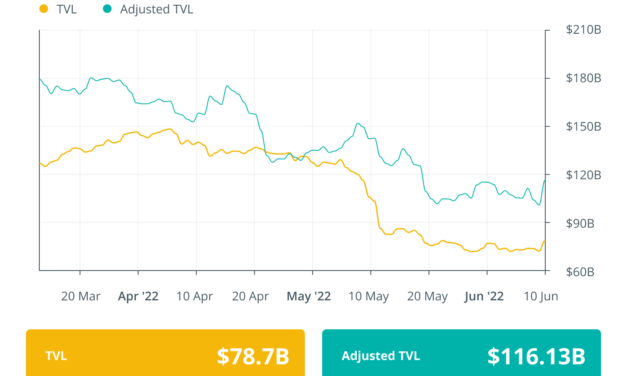
This past week, the decentralized finance (DeFi) ecosystem was ruled by decentralized autonomous organizations and new fund launches for the growth of the Web3 ecosystem. The total number of DAOs surged by eight times while Solana launched a $100 million DeFi fund.Optimism, an Ethereum layer-2 protocol that Vitalik Buterin recently praised for its governance model, lost 20 million tokens due to a mix-up of layer-1 and layer-2 addresses. A leaked 600-page copy of a United States crypto draft bill also grabbed the community’s attention, as it proposes heavy regulatory scrutiny for DeFi and DAOs.The top-100 DeFi tokens showed mixed market performance, with several tokens registering double-digit gains in the last seven days, while a significant majority remained bearish on the weekly charts.Number of DAOs increases 8x along with a spike in votes and proposalsThe total number of decentralized autonomous organizations (DAO), the number of governance proposals put forward and the number of votes cast have all seen astounding growth over the past 12 months.Data compiled by Snapshot Labs and shared by Electric Capital engineer Emre Caliskan in a Thursday tweet highlighted that DAO numbers have increased over eight-fold, from 700 in May 2021 to 6,000 now. The number of proposals has increased by 8.5 times, and the number of total votes has increased by 8.3 times over the past 12 months, from 448,000 to 3.7 million.Continue readingSolana Ventures sets up $100M fund for GameFi and DeFi in South KoreaSolana Ventures and the Solana Foundation have formed a $100-million fund to help support the growth of nonfungible tokens (NFTs), blockchain gaming and DeFi projects in South Korea.In addition to supporting projects built on Solana, the fund will help keep some Terra-based projects afloat following the collapse of that ecosystem last month.Continue readingLeaked copy of the U.S draft bill shows DeFi and DAOs under regulatory lensA leaked copy of a United States draft bill concerning cryptocurrency started doing the rounds on Twitter earlier on Tuesday. The 600-page copy of the leaked bill highlights some of the key areas of concern for regulators including DeFi, stablecoins, decentralized DAOs and crypto exchanges.User protection seems to be the primary focus of regulators, with policies intended to require any crypto platform or service provider to legally register in the U.S., be it a DAO or DeFi protocol.Continue readingOptimism loses 20M tokens after L1 and L2 confusion exploitedThe honeymoon period for the Optimism layer-2 scaling solution has been cut short, as an exploit in its market maker’s smart contract led to the loss of 20 million OP tokens.The exploit took place on May 26 but has only just been reported to the community. One million tokens valued at about $1.3 million were sold on Sunday. An additional 1 million tokens valued at about $730,000 were transferred to Vitalik Buterin’s Ethereum address on Optimism earlier today at 12:26 am UTC. The remaining tokens are dormant for now but could be sold at any time or used to sway governance decisions.Continue readingDeFi market overviewAnalytical data reveals that DeFi’s total value locked registered a slight dip over the past week, with the value dipping below $80 billion again. Data from Cointelegraph Markets Pro and TradingView reveals that DeFi’s top-100 tokens by market capitalization registered a week filled with volatile price action but broke out of the bearish trend over the past couple of days.The majority of the DeFi tokens in the top-100 ranking by market cap traded in the green, Chainlink (LINK) was the biggest gainer with a 29% surge, followed by Theta Network (THETA) with a 17.2% rise. Tezos (XTZ) registered a 14.14% price rise, while PancakeSwap (CAKE) grew by 1.23% over the last seven days.Thanks for reading our summary of this week’s most impactful DeFi developments. Join us again next Friday for more stories, insights and education in this dynamically advancing space.

Čítaj viac

Mastercard to allow 2.9B cardholders to make direct NFT purchases

International payment processing giant Mastercard is expanding its payment network for nonfungible token (NFT) markets and Web3.The financial service provider announced that it has been working on expanding their payment networks to NFTs over the past year. The firm has partnered with a number of leading NFT marketplaces to allow 2.9 billion cardholders to directly make NFT purchases without buying crypto first.Currently, users need to buy crypto to bid on and buy NFTs. However, with the latest Mastercard partnership, billions of cardholders can now bypass the process of buying a transferring crypto to NFT marketplaces. The firm said:“These integrations are designed to make crypto more accessible and help the NFT ecosystem keep growing, innovating and bringing in more fans.”Mastercard stated that it has partnered with multiple NFT marketplaces namely Immutable X, Candy Digital, The Sandbox, Mintable, Spring, Nifty Gateway and Web3 infrastructure provider MoonPay.Related: Mastercard expands consulting with crypto-dedicated practices with 500 new hiresThe NFT card-purchase service was first launched in January this year in a partnership with Coinbase, allowing users to buy NFTs directly using credit cards.The decision to expand its payment network to the rapidly growing NFT ecosystem was also based on the company’s latest survey of 35,000 respondents from 40 countries, which showed that 45% of the consumers have either bought an NFT or arconsidering doing so. 50% of the surveyed consumers also showed interest in getting more flexible options to make purchases.The firm claimed they are also working on offering world-class security to customers with its latest payment option, similar to “when making transactions in a store or online with a Mastercard card.”The payment processing giant has shown keen interest in the crypto and NFT markets over the past couple of years. Earlier in April this year, Mastercard filed for 15 metaverse and NFT-related trademarks. The top two mainstream payment processing companies, Visa and Mastercard, have come a long way from their early days of blocking crypto transactions on their network, and are currently competing to become leading financial services providers in the decentralized space. Visa launched an immersion program back in March to allow creators to build their business with NFTs

Čítaj viac

Self-regulatory orgs for crypto keep ecosystem afloat pending clear regulations

The crypto market is growing at a rapid pace, with governments and various regulatory bodies actively trying to study and keep up with the growth. While many policymakers around the globe have come to realize that banning the crypto market is not an option, many are yet to come up with a formidable framework to regulate the nascent market in their respective countries.Even some of the most crypto-friendly countries have only managed to regulate parts of the crypto market such as crypto trading while a significant chunk of crypto-related activities still remains a gray area. Thus, for a rapidly growing industry like crypto, which often remains under heavy government scrutiny, surviving becomes a complex task. This is where self-regulatory organizations (SRO) come into play. Self-regulatory organizations have complete authority in developing policies, maintaining guidelines, enforcing policies and resolving conflicts. Although self-regulatory groups are private, they are subject to government scrutiny; if there is a discrepancy between the regulations of the two bodies, the government agency takes precedence.Bradley, founder of crypto trading platform Y-5 Finance, told Cointelegraph:“SROs are becoming more commonplace within countries lacking any official cryptocurrency regulation. Technology such as blockchain does not fit easily into traditional regulation and proponents of SRO state that they can help integrate a new complex industry into existing traditional agencies. SRO’s are self-funded and self-governed, and some have received criticism for taking the side of their members rather than the public.”An SRO is a non-governmental organization formed by participants of a particular industry or sector to assist in the regulation of enterprises in that area. These SROs facilitate collaboration between industry experts and government policymakers and try to fill the regulatory vacuum until a widely recognized framework comes into play. Financial Industry Regulatory Authority (FINRA), is a prime example of an SRO that works in accordance with the United States Securities and Exchange Commission (SEC) to enforce the regulatory bodies’ broader objective. Similarly, several crypto-based SROs have cropped up in various jurisdictions that have helped the crypto industry thrive.Tony Dhanjal, head of tax at crypto taxation platform Koinly, told Cointelegraph:Recent: US central bank digital currency commenters divided on benefits, unified in confusion“In the absence of official or government-backed regulation, self-regulation and governance have been witnessed before in other industries. it demonstrates a degree of intent and responsibility toward ‘protecting investors.’ This further fuels confidence in the industry and accelerates innovation. SROs aim to ‘foster consumer protection and market integrity’ — they certainly seem to be making the right sounds.”How SROs have helped across the globeOver the past year, the crypto industry has managed to create the highest number of unicorns, or startup firms worth over $1 billion, as a significant chunk of investment from the traditional market has flowed into the crypto industry. The growing confidence of traditional markets in the crypto industry has been possible in part because of the self-regulatory measures that the industry has incorporated in the absence of government regulation.Justin Newton, CEO of leading compliance digital identity verification technology firm Netki, told Cointelegraph:“Eight years ago, I forecasted that regulations were coming to the cryptocurrency space, it was just a matter of when and under what conditions. It was clear even then that the industry would be best served by getting out ahead of regulators in terms of reducing risks and providing appropriate Anti-Money Laundering controls. We are more likely to get good frameworks if we design them rather than if we wait for regulators to force the issue.”He went on to add that the crypto industry needs to be more proactive in offering solutions to the issues regulations attempt to address rather than fighting the inevitable interference from policymakers. He said that “self-regulatory bodies are a specific kind of organization that is created and empowered by legislation and regulation, which may not be the right fit for our industry, particularly due to the inevitable cross-border nature of the businesses participating in the ecosystem.”There has been a global push for crypto exchanges to self-regulate. Japan and South Korea are considered pioneers of the self-regulatory industry and were among the first nations to establish SROs for crypto.The Japan Blockchain Association (JBA) boasts 127 members and 35 crypto exchanges among them. It sets standards and promotes the development of a sound business environment and user protection system of virtual currency and blockchain technology. Over the years, the JBA has worked toward bringing awareness around the crypto market and holds regular meetings and discussions around the advent of new use cases with its latest focus being on nonfungible tokens (NFTs).CryptoUK, a trade association with its own self-regulatory code of conduct, was founded by the United Kingdom’s seven largest crypto firms. The motto of the association is to help people in times of crisis, especially in case of a hack. Similarly, seven top crypto exchanges in India partnered with the Internet and Mobile Association of India to form a self-regulatory body.South Korea’s blockchain association has 25 members and propagates the use of nascent blockchain tech among the masses. The SRO has been responsible for issuing crypto exchange guidelines and has also been a part of making crypto tax policies. The Korean blockchain association lobby has formally advised against the 20% crypto tax proposed in the country.In the United States, the Gemini crypto exchange was the first to propose an SRO in the form of the Virtual Commodity Association. Later in 2018, a group of 10 financial and tech firms created the Association for Digital Asset Markets (ADAM). According to its website, ADAM now has 31 members and five partnering law firms. Gabriella Kusz, CEO of the Global Digital Asset and Cryptocurrency Association — a global self-regulatory association for the digital asset and cryptocurrency industry — explained how the self-regulatory organization functions and works toward building policies to promote growth. She told Cointelegraph:“Around the world, the Global DCA maintains a number of Memorandums of Understanding with other emerging self-regulatory movements so we can speak intelligently to the other global movements we are seeing develop credibly in this regard. In particular, we see excellent progress through leadership and stewardship in Nigeria through the Stakeholders in Blockchain Technology Association of Nigeria as well as with the Internet and Mobile Technology Association of India. Both of these are emerging self-regulatory movements, but they have sought to bring around a diverse and inclusive group of firms to advance standards, education and gentle advocacy to support public and private sector dialogue.”Europe is currently lagging behind in terms of accommodating self-regulatory bodies, with Switzerland being the only stand-out nation. Why should regulators pay attention to SROs?The nature of a particular industry, the level of competition in the sector and its need for regulation usually will determine if an SRO is necessary. Either the member firms of the industry agree and create the organization themselves or the government could mandate the creation of an SRO. In many cases, SROs also serve as forums for producing educational materials or managing certifications within their industry.Justin Hutzman, CEO of Canadian crypto exchange Coinsmart, explained the importance of how government regulations and SROs can go hand in hand. He told Cointelegraph:“Along with country-specific regulations, the industry needs to take specific measures to self-regulation to meet certain global standards. Recently, CoinSmart and other exchanges from Canada, the U.S. and Singapore joined the Travel Rule Universal Solution Technology (TRUST) to boost its AML efforts. TRUST takes measures to reduce money laundering by ensuring that members are compliant with the travel rule while protecting user data.”Self-regulatory organizations are adopting self-imposed standards for participants in the digital asset ecosystem that reflect compliance practices in traditional financial institutions. Regulators and legislative bodies around the world are beginning to address how digital assets will be regulated, but it could take years before standards are adopted. U.S. President Joseph Biden’s recent executive order on digital assets underscores the need for companies to address ethical practices and internal controls within their organizations. Recent: Struggle for Web3’s soul: The future of blockchain-based identityThe growing prominence of self-regulatory organizations will contribute to the development of standardized compliance practices, allow for constructive engagement with regulators and accelerate institutional adoption of this emerging asset class. Organizations like the Association for Digital Asset Markets are building a foundation for this to happen.Felipe Vallejo, the chief regulatory officer at Bitso, told Cointelegraph:“We believe that the emergence of SROs and continued self-regulation set an excellent example for governments looking to assess risks and appropriate policy responses for crypto without stifling innovation.”Self-regulation combats one of the drawbacks of every country potentially having different regulations, which makes it increasingly difficult for companies to operate on a global scale. Self-regulatory bodies have more opportunities to collaborate with each other and introduce global regulations that are consistent and meet the needs of investors and cryptocurrency companies.

Čítaj viac

Získaj BONUS 8 € v Bitcoinoch

nakup bitcoin z karty

Registrácia Binance

Burza Binance

Aktuálne kurzy