Autor Cointelegraph By Prashant Jha

Swiss National Bank exec: Regulators may favor centralized stablecoins after Terra crisis

Swiss National Bank (SNB) deputy head Thomas Muser talked to Cointelegraph editor Aaron Wood and discussed the ongoing trends in central bank digital currencies (CBDCs), stablecoins, and regulations, during the recently concluded European Blockchain Convention (EBC) 2022.Talking about the innovation and adoption of private stablecoins and plans of central banks regarding the CBDC launch, Moser said both could co-exist. He said that CBDC’s function would be very basic and private stablecoin issuers can add services on top of them to meet retail customers’ needs.When asked about the recent collapse of the Terra’s UST and its subsequent impact on regulations, Moser said that the recent spiral crash of the Terra and its decentralized algorithmic stablecoin UST could have a lasting impact on the regulators. He added that regulators may be forced to favor centralized stablecoins over decentralized ones although not every decentralized stablecoin is like UST. He said:“My fear is that that, that people will throw all decentralized stable currency in the same kind of category, which is not true, you know, so there’s a danger. I think that regulation will favor centralized stablecoins.”When asked about the developments on the regulations front, Moser hinted that it could take time. He cited the example of internet regulations from the 1990s where regulators took time to come up with new rules instead of implementing the existing telephone regulations. Related: CBDC may threaten stablecoins, not Bitcoin: ARK36 execMoser said, if current financial regulations are implemented in the crypto industry, the decentralized finance (DeFi) ecosystem would cease to exist. He explained:“if you just take the existing regulation and put it on crypto then defi will disappear. Because you will only have centralized entities that you can regulate with the current regulation. For DeFi, where there is no single entity to be held accountable for, which is really just small contracts interacting, you need a different type of regulation.”Switzerland’s central bank is among the selected few that have begun the pilot for their national CBDCs, apart from China. The central bank carried out wholesale CBDC testing in January this year. Later in the same month, SNB published a report based on its trials and suggested that the risks outweigh the benefits.

Čítaj viac

Catalonia is building its own metaverse, says innovation minister

Catalonian director-general of innovation Daniel Macro discussed some of the key efforts that the government has taken and worked on to make the region a digital hub in an exclusive interview with Cointelegraph’s managing editor Alex Cohen. Macro’s comments came during the European Blockchain Convention (EBC) 2022.Macro said the COVID-19 pandemic over the past two years has really helped in propagating the idea of the digital economy, which is a part of the main economy. He went on to cite the example of Europe which has moved to digitize the energy deal and several other digital deals. Related: Meta set to begin testing NFTs on Instagram Stories with Spark ARMacro took the charge as the director of the SmartCatalonia Government Strategy in 2014, overseeing the initiative to make Catalonia a “Smart Country” of note on the global stage. And with the advent of blockchain technology and metaverse, the minister is working towards creating a fully digital economy inspired by the physical world.He revealed that the government is working towards building a Catalonian metaverse called Cataverse. He explained:“Cataverse will be linked to the Catalan language and the Catalan culture. That is what we want to have in this metaverse, that Catalan entities that are doing things for the culture can do that in the metaverse .”The Catalonian Innovation minister went on to shed light on the government’s plans to make Barcelona the digital hub. He said a lot would depend on the talent and the government has passed several policies and university programs to cultivate that talent among the young. He said:“We have very strong policies to generate talent that are from university but also we are skilling programs like boot camps and other activities a lot because we need different profiles.”He added that the government is trying to get the mix of both i.e. cultivate new talent and attract more business with a friendly working environment.The minister when asked about blockchain projects that tourists can interact with in Barcelona, cited the example of a project focused on personal healthcare and a few others based on public transport.

Čítaj viac

Finance Redefined: Uniswap goes against the bearish trends, overtakes Ethereum

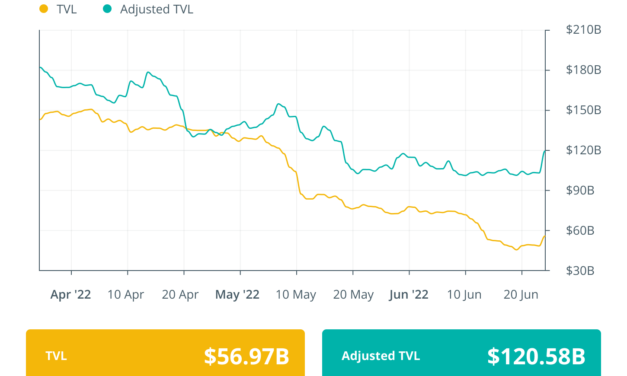
This past week, the decentralized finance (DeFi) ecosystem tried gaining some momentum amid the bear market crash. Uniswap saw a trend reversal and overtook Ethereum regarding network fees paid. However, not all DeFi protocols were as lucky, as Bancor had to pause its “impermanent loss protection” in the wake of a hostile market.DappRadar’s report shows that the GameFi ecosystem continues to thrive despite the current downturn in the market. Solend invalidates Solana whale wallet takeover plan with second governance vote.The top 100 DeFi tokens showed signs of recovery after last week’s mayhem, and several of the tokens registered double-digit gains.DeFi Summer 3.0? Uniswap overtakes Ethereum on fees, DeFi outperformsDecentralized exchange (DEX) Uniswap has overtaken its host blockchain Ethereum in terms of fees paid over a seven-day rolling average.The surge appears part of a recent spate of high demand for DeFi amid the current bear market. Decentralized finance (DeFi) platforms such as Aave and Synthetix have seen surges in fees paid over the past seven days, while their native tokens and others such as Compound (COMP) have also boomed in price.Continue readingGameFi continues to grow despite crypto winter: DappRadar reportBlockchain games were the subject of the latest DappRadar x BGA Games Report #5, published Tuesday. The report looked at healthy ecosystems and investments in GameFi and metaverse markets.The report covered several projects in detail, outlining their continued success and growth. Splinterlands, Illuvium, Galaverse and STEPN have continued bringing new players to their platforms, gaining financial interest and expanding their businesses.Continue readingBancor pauses impermanent loss protection citing ‘hostile’ market conditionsBancor, a DeFi protocol often credited as the pioneer of the DeFi space, paused its impermanent loss protection (ILP) function on Sunday, citing “hostile” market conditions.In a blog post on Monday, the DeFi protocol noted that the ILP pause is a temporary measure to protect the protocol and the users. When a user gives liquidity to a liquidity pool, the ratio of their deposited assets changes at a later moment, potentially leaving investors with more of the lower value token, this is known as impermanent loss.Continue readingSolend invalidates Solana whale wallet takeover plan with second governance voteSolana-based DeFi lending protocol Solend has created another governance vote to invalidate the recently-approved proposal that gave Solend Labs “emergency powers” to access a whale’s wallet to avoid liquidation. On Sunday, the crypto lending platform launched a governance vote titled “SLND1: Mitigate Risk From Whale.” It allowed Solend to reduce the risk the whale’s liquidation poses to the market by letting the lending platform access the whale’s wallet and letting the liquidations happen over the counter.Continue reading DeFi market overviewAnalytical data reveals that DeFi’s total value locked registered a minor recovery rising above $56 billion. Data from Cointelegraph Markets Pro and TradingView shows that DeFi’s top-100 tokens by market capitalization were on the move, and many of the tokens registered double-digit gains over the past week.The majority of the DeFi tokens in the top 100 ranking by market cap were trading in green. Synthetix (SYX) registered the biggest gain with a 90% surge over the past week, followed by Uniswap (UNI), which saw a 37% appreciation in price in the past seven days. COMP gained 31%, while Thorchain (THOR) saw a 22% rise.Before you go!Celsius network, the lending platform that has been in trouble over liquidations and lack of Capital, saw a community-led short squeeze of its native token, CEL. It registered a 300% jump over the past week amid market uncertainty over its future.Thanks for reading our summary of this week’s most impactful DeFi developments. Join us again next Friday for more stories, insights and education in this dynamically advancing space.

Čítaj viac

Crisis in crypto lending shines light on industry vulnerabilities

The crypto market has entered a bearish phase as prices of major cryptocurrencies have fallen to a four-year low. The current downturn in the crypto market has driven several crypto firms to go out of business, while many have made severe job cuts to remain afloat.The crypto market crisis began with the Terra debacle that saw $40 billion in investors’ money vanish from the market. At the time, the crypto market showed good resistance against such a massive collapse. However, the after-effects of the collapse had a greater impact on the crypto market, especially crypto lending firms, which many believe are responsible for the current bearish phase.The lending crisis began in the second week of June when top lending firms started to move their funds to avoid liquidations on overleveraged positions, but the heavy selling that put bearish pressure on prices led to a further downfall.Ryan Shea, a crypto economist at the institutional digital asset service provider Trekx, said that the lending model makes it vulnerable to volatile markets like crypto. He told Cointelegraph:“Asset price reversals are particularly challenging to crypto lenders because their business model is very much like that of a regular bank, namely, it is based on liquidity transformation and leverage, which makes them vulnerable to bank runs.”“During such episodes, customers spooked into thinking they may not get their money back rush to the bank and seek to withdraw their deposits. However, banks do not keep their clients’ money in liquid form, they lend out a large portion of those deposits to borrowers (illiquid) in return for a higher yield — the difference being their revenue source,” he added.He said that only those customers who act quickly are able to withdraw their money which is what makes liquidity crises such dramatic affairs, “which the collapse of Lehman Brothers and more recently Terra — the crypto equivalent — aptly demonstrates.”Drawbacks of unchecked leveragesCelsius Network, a crypto lending firm that has been under regulatory scrutiny over its crypto-interest offering accounts, became the first major victim of the market crisis as it froze withdrawals on the platform June 12 in an effort to remain solvent. The liquidity crisis for Celsius began with a massive drop in Ether (ETH) prices and by the first week of June, the platform had only 27% of its ETH liquid. Reports from different media outlets in the last week also suggested the Celsius Network has lost major backers and onboarded new attorneys amid a volatile crypto market.Securities regulators from five United States states have reportedly opened an investigation into crypto lending platform Celsius over its decision to suspend user withdrawals.Similarly, Babel Finance, a leading Asian lending platform that had recently completed a financing round with a $2 billion valuation, said it is facing liquidity pressure and paused withdrawals.According to previous data from Babel, as of the end of last year, the loan balance reached more than 3 billion US dollars, the average monthly derivatives transaction volume was 800 million, and the issuance of option structured products reached more than 20 billion US dollars.— Wu Blockchain (@WuBlockchain) June 17, 2022Later, Babel Finance has eased some of its immediate liquidity troubles by reaching debt repayments agreements with some of its counterparties.Three Arrow Capital, also known as 3AC, one of the leading crypto hedge funds founded in 2012 with over $18 billion worth of assets under management, is facing an insolvency crisis as well.people think Celsius is the biggest stETH dumper but its 3AC and it isnt relatively close, they are dumping on every account and seed round address they have, most looks like its going to payback debts and outstanding borrows they have pic.twitter.com/9bZnmTXQzj— moon (@MoonOverlord) June 14, 2022

Online chatter about 3AC being unable to meet a margin call began after it started moving assets around to top up funds on decentralized finance (DeFi) platforms such as Aave to avoid potential liquidations amid the tanking price of Ether. There are unconfirmed reports that 3AC faced liquidations totaling hundreds of millions from multiple positions. 3AC reportedly failed to meet margin calls from its lenders, raising the specter of insolvency. Related: Celsius’ crisis exposes problems of low liquidity in bear marketsApart from the top lending firms, several other smaller lending platforms have been adversely affected by the series of liquidations as well. For example, Vauld — a crypto lending startup — recently cut its staff by 30%, firing nearly 36 employees in the process. BlockFi acknowledged they had exposure to 3AC, and it couldn’t have come at a worse time, as it’s been struggling to raise a new round even when it’s at an 80% discount to the previous round. BlockFi recently managed to get a $250 million revolving credit line from FTX.David Smooke, founder and CEO at Hackernoon, told Cointelegraph:“For cryptocurrency to reach the trillions, it was necessary and expected for traditional institutions to buy and hold. The young industry often follows old business models, and in the case of crypto lending firms, too often that meant companies becoming loan sharks. Companies that promise unsustainably high returns for simply holding reserves will do exactly that — not sustain.”Are market conditions to blame?While from a distance, it might seem like market conditions were the primary reasons for the crisis for most of these lending firms, if one looks closely, the issues seem more concerning with the company’s day-to-day functioning and the spiral impact of the bad decision making.The insolvency crisis for Celsius brought out several of its misdeeds from the past, with the likes of Swan Bitcoin founder Cory Klippsten and Bitcoin influencer Dan Held warning about shady business practices from the lending platform. Held in a Twitter thread on June 18, they listed a series of issues with Celsius operations since the start that had gone unnoticed until now.Held highlighted that Celsius has misleading marketing tactics and claimed it was insured while the founders backing the project had a dubious background. The firm also hid the fact that its chief financial officer Yaron Shalem was arrested. Held said, “They had too much leveraged, got margin called, liquidated, leading to some losses for lenders.”4/ Continued… – Had a former 24-year-old pornstar as their head of institutional lending – The founders made dubious claims about their background – The CFO was arrested for fraud pic.twitter.com/hEHBE90pi4— Dan Held (@danheld) June 17, 2022

Similarly, 3AC was heavily invested in the Terra ecosystem — the firm had accumulated $559.6 million worth of the asset now known as Luna Classic (LUNC) — the now-forked Terra (LUNA) — before its eventual collapse. The value of 3AC’s half-billion-dollar investment currently sits at a few hundred dollars.Dan Endelbeck, co-founder of the layer-1 blockchain platform Sei Network, told Cointelegraph about the key issues with 3AC and why it’s facing insolvency:“Three Arrows Capital is a trading firm that is very opaque with their balance sheet and where they are borrowing and deploying capital. We believe that lack of transparency affected their lenders’ risk assessments and led to this market downfall. These circumstances can create extreme risk, especially in times of market volatility. What happened here is a strong signal that DeFi will continue to grow and bring about more transparency and accountability in this space.”Market rumors indicate that 3AC used heavy leverages to make up for the LUNC losses that didn’t go as planned.3AC Backs Terra LunaBefore the Terra collapse last month, 3AC spent $559.6 million to buy Locked Luna.It’s now worth roughly ~$670.There is SPECULATION that the massive losses of Luna caused them to use more leverage to earn it back.Also known as “Revenge trading”— The DeFi Edge ️ (@thedefiedge) June 16, 2022

Dion Guillaume, head of communications at cryptocurrency trading platform Gate.io told Cointelegraph:“Celsius and 3AC both suffered because of their irresponsibility. Celsius saved itself from the LUNA crash, but they got badly burnt by the stETH depeg. They seemed to use their users’ ETH funds in stETH pools to generate their yield. This led to insolvency. In 3AC’s case, they lost around nine figures due to the LUNA debacle. To make back their losses, they traded on heavy leverage. Unfortunately, the bear market made their collateral worthless, and they failed to answer multiple margin calls.”Simon Jones, CEO of decentralized finance protocol Voltz Labs, believes the current crisis brought upon by the crypto lending projects is quite similar to the 2008 recession. Where lenders had extremely high-risk assets on their balance sheet in the form of collateral and these high-risk assets were overvalued or at risk of sudden (large) changes in value.Recent: Lummis-Gillibrand crypto bill comprehensive but still creates divisionThe overvaluation of these assets meant lenders thought they had sufficiently capitalized lending books. When the asset prices corrected, lenders were suddenly at risk of having undercollateralized positions. To try to maintain solvency, collateral had to be sold. However, because of the vast quantities trying to be sold at the same time, it contributed to a downward death spiral in the value of the assets — meaning lenders could only sell for pennies on the dollar. Jones told Cointelegraph:“We should be building a financial services sector that is open source, trustless and antifragile. Not one that’s closed source and taking highly levered bets on retail deposits. This isn’t the future of finance and we should be ashamed to have allowed this to happen to retail users at Celsius. Three Arrows Capital is a hedge fund – so they will never be open source — but better risk management, in particular attention to systematic risk, should have been applied by the lending firms.”Yves Longchamp, head of research at SEBA Bank, believes regulation is the key to redemption for the crypto market. He told Cointelegraph:“Recent operational decisions by unregulated crypto service providers in the industry reflect a need for greater transparency and regulation in the industry. By doing so, we can ensure that businesses and users can operate with confidence in the sector. While regulation is coming across more jurisdictions, with both the U.S. and EU at advanced stages of developing frameworks on digital assets, it should be considered a matter of urgency by regulators.”

Čítaj viac

Wire Network's new protocol aims to end Web3 interoperability woes

Layer-1 blockchain platform Wire Network announced the launch of its blockchain interoperability protocol called Universal Polymorphic Address Protocol (UPAP).In the Web3 ecosystem, which is comparatively nascent to the larger crypto market, the primary interaction occurs over digital goods and NFTs. However, the growing number of Web3 platforms lack interoperability which could be a huge roadblock to a seamless Web3 experience. Wire Network aims to change that with its universal wallet address protocol.Blockchain interoperability is the ability to share information across different blockchain networks without restrictions. With the evolution of the blockchain industry, hundreds of new protocols and blockchain standards have emerged. Thus, the interactions among different blockchains become complex. This is where interoperability helps in bridging that gap.The new UPAP protocol aims to address the interoperability problem in the web3 ecosystem. While there have been several interoperability solutions in the past, most of them were limited to a particular ecosystem or a particular issue such as liquidation and fund transfers. Interoperability can be achieved via different methods such as cross-chains, sidechains, proxy tokens, swaps, etc. Many blockchain platforms have focused on interoperability in the past, for example, Polkadot allows different blockchains to plug into a larger, standardized ecosystem while Cosmos employs an inter-blockchain communication (IBC) protocol to establish blockchain interoperability.Related: Why cross-chain interoperability matters for DeFiUPAP, on the other hand, promises to offer an interoperability solution with universal readable wallet addresses to send and receive nonfungible tokens (NFTs), perform cryptocurrency swaps, and add liquidity pairs across any blockchain.The interoperability solution gets rid of most of the complexities involved with existing solutions and requires no bridges or oracles. Anyone can integrate the UPAP wallet into a blockchain that uses Elliptic Curve Digital Signature Algorithm (ECDSA) cryptographic algorithm. Users will need to import the mnemonic code from their choice of wallet and UPAP would create a universal address, using which users can send any asset across any blockchain.

Čítaj viac

Získaj BONUS 8 € v Bitcoinoch

nakup bitcoin z karty

Registrácia Binance

Burza Binance

Aktuálne kurzy