Autor Cointelegraph By Prashant Jha

Vermont becomes the sixth US state to launch investigation against Celsius

Vermont’s Department of Financial Regulation (DFR) issued a warning against troubled crypto lending firm Celsius on Tuesday, reminding users that the crypto lending firm is not licensed to offer its services in the state.The DFR alleged that Celsius is “deeply insolvent” and doesn’t possess “assets and liquidity” to fulfill its obligations towards the customers. The state regulator accused the crypto lender of mismanaging customers’ funds by allocating them towards risky and illiquid investments.“In addition to the ordinary risks of cryptocurrency investing, holders of Celsius interest accounts were also exposed to credit risk that Celsius would not be able to return their tokens upon withdrawal.”The financial regulator noted that the high crypto interest account offered by Celsius qualifies as unregistered security and the firm also lacks a money transmitter license to offer any investment services in the state. DFR believes Celsius operated without any regulatory oversight and exposed retail customers to high risks investments resulting in heavy losses for them. Keeping these concerns in mind, the state financial regulator has joined the multi-state investigation against the troubled crypto lender.“The Department believes Celsius has been engaged in an unregistered securities offering by offering cryptocurrency interest accounts to retail investors. Celsius also lacks a money transmitter license. The Department has joined a multistate investigation of Celsius arising from the above concerns.”Vermont became the sixth state in America to open an investigation into Celsisus’s crypto interest rate accounts. As Cointelegraph reported earlier, Alabama, Kentucky, New Jersey, Texas and Washington opened investigations into the troubled crypto lender after it paused all withdrawals, swaps and transfers between accounts on June 13, just a day after its chief executive officer Alex Mashinsky claimed all is well with the firm.Related: Risky business: Celsius crisis and the hated accredited investor lawsCelsius became one of the key crypto lenders in the industry during the bull market, managing billions in customers’ funds and churning out high interet rates for account holders. While regulators and analysts did warn about risks associated with such high lending products, crypto lenders continued to play it down claiming it was a ploy of greedy bankers.A recent report in Financial Times highlighted that Celsius aggressively bet with client funds, putting them in risky decentralized finance (DeFi) yield products. The crypto lender’s compliance team had flagged concerns as early as February 2021, where internal documents showed that employees were allowed to invest in funds without gaining explicit permission and without any compliance checks. This reportedly helped the firm to disguise its losses.However, with the advent of the bear market in May initiated by the Terra ecosystem crash, the faults started to show up. Several reports have highlighted that market conditions are not the only reason for the downfall of crypto-lending firms like Celsius. In fact, it was mismanagement and unethical business practices on their part that have brought them to this point.Celsius is currently hiring new legal teams and working on restructuring plans to avoid bankruptcy. The firm has also worked on repayment of several DeFi loans over the past couple of weeks, having paid 20 million in USD Coin (USDC) to Aave on July 11 and paid the remaining $41.2 million debt to Maker protocol on Thursday, freeing up more than $500 million in Wrapped Bitcoin (wBTC) collateral.

Čítaj viac


3AC co-founder returns to Twitter, blames liquidators for “baiting”

Su Zhu, co-founder of Singapore-based crypto venture capital firm Three Arrows Capital (3AC), returned to Twitter after nearly a month of inactivity. In another cryptic tweet, he blamed liquidators for baiting them with respect to StarkWare tokens.The tweet with attached mail from legal counsel claimed that Starkware equity had a token warrant that expired on July 5 and that the liquidator didn’t exercise the warrant, resulting in the loss of Starkware tokens. Zhu blamed liquidators for not using the Starkware tokens and claimed they baited the firm to use information in court.The cryptic tweet from the co-founder comes days after 3AC filed for a Chapter 15 bankruptcy in a New York court after it failed to meet several margin calls from its lenders. The rumors about the firm’s insolvency began in June and later, a British Virgin Islands court-ordered liquidation of 3AC funds. TLDR (thanks @0x_Kun) :• 3AC was handed over to liquidator• Liquidator didn’t exercise Starkware token warrants [which expired worthless]• Zhu Su believes the liquidator baited them for information to use in courtAlpha derived from this post:Starkware token confirmed. https://t.co/zvQGDdVqZk— CC2 (@CC2Ventures) July 12, 20223AC’s trouble began with the bear market turmoil in May that was fueled by the Terra (LUNA) — now called Terra Classic (LUNC) — ecosystem crash. Later, it was revealed that the crypto hedge fund had accumulated $559 million worth of locked LUNA, which depreciated to $650 after the crash. The firm also held a significant position in Solana (SOL) and Avalanche (AVAX), which fell to new lows in the same time frame.With the crypto market crash, most cryptocurrencies lost nearly 70% of their valuation from the top. 3AC also held significant positions in synthetic assets such as Grayscale Bitcoin Trust (GBTC) and Lido’s Staked ETH (stETH). So when the prices of top cryptocurrencies dipped to a four-year low, it led to a series of liquidations for the troubled crypto hedge funds. It has been estimated that 3AC accumulated nearly $400 million in liquidation across multiple platforms.Related: Voyager Digital issues notice of default to Three Arrows CapitalThe apparent insolvency of 3AC has affected lenders across the board with Voyager filing for bankruptcy last week after the hedge fund defaulted on a $500 million loan. BlockFi also struggled with its business after the crypto hedge fund defaulted on a $1 billion loan.The recent tweet from the 3AC co-founder comes amid rumors about the founders of the crypto hedge fund going missing and attracted a wild reaction from the community. Many questioned his whereabouts while others mocked him for expecting “good faith” from liquidators after losing million of investors’ funds. One user wrote:“Zhu really over here talking about “good faith” lmao”Another user called out Zhu for playing the victim card and wrote:“This is a pretty standard “spin” for the architects of financial destruction once things hit the legal stage. Zhusu is playing the “victim” card in the court of public opinion. Disgusting behavior, but to be expected at this stage.”

Čítaj viac

Korean fintech giant plans to create 10K Web3 jobs amid bear market

Dunamu, a major fintech firm in South Korea that operates crypto exchange Upbit and several other blockchain and securities platforms, is planning to invest 500 billion won ($380 million) to create about 10,000 new Web3 jobs in the next five years.The firm is reportedly considering offering specific software and funding to encourage more firms to join the Web3 industry. The $380 million investment is a part of Korea’s efforts to lead the Web3 race, reported Korea JoongAng Daily.Dunamu has already invested about 88 billion won ($67 million) since 2018 toward blockchain-centered firms. Dunamu CEO Lee Sirgoo said in a statement:“We plan to strengthen the competitiveness of domestic industry through an active investment and creation of jobs of the newly growing future industries, like blockchain, nonfungible token (NFT) and the metaverse.”The fintech giant aims to open offices in major cities across the country and develop training programs to induct new people into the Web3 ecosystem. The newly graduated university students would be given priority in the program with a plan to create 500 new startups. Dunamu didn’t immediately respond to Cointelegraph’s request for comment.Dunamu’s announcement to invest significantly in the Web3 ecosystem comes just months after it came under heavy scrutiny from the country’s regulators. Earlier in April this year, the securities regulator took action against the crypto exchange operator to curb its market monopoly.Related: Why NFT adoption is so high in South KoreaThe fintech giant manages over $8 billion in assets and Upbit, the crypto exchange it operates, accounts for more than 80% of crypto trading volumes in the country.The announcement to create 10,000 new jobs comes at a time when several crypto firms have announced job cuts due to the bear market. Leading crypto firms including the likes of Gemini, Bitso, Coinbase, Vauld and several others have made significant layoffs over the past couple of months.While South Korea is known for its strict crypto regulations, the country has been bullish on the Web3 front. The government recently announced it would directly invest 223.7 billion won ($177.1 million) in various metaverse projects.

Čítaj viac

Terra crash highlights stablecoin risk to financial stability: ECB

The European Central Bank (ECB) has released a report analyzing the growth of the cryptocurrency market over the past decade and the risks it poses to the existing financial system.A section of the report dedicated to stablecoins discussed the central role that it plays in the current ecosystem. Stablecoins are increasingly used to interlink various blockchain networks and play a critical role in offering liquidity to the decentralized finance (DeFi) ecosystem.The report further analyzed whether these stablecoins could find a place in the traditional financial system, but concluded that a lack of regulatory oversight added to the recent downfall of algorithmic stablecoins ecosystems such as Terra indicates the contagion effects such stablecoins could have on the financial system. An excerpt from the report read:“The largest stablecoins serve a critical function for crypto-asset markets’ liquidity, this could have wide-ranging implications for crypto-asset markets if there is a run-on or failure of one of the largest stablecoins.”It was not just the algorithmic stablecoins that faced the crisis during the crypto market crash in May, even centralized stablecoin Tether (USDT) lost its peg for a while and saw nearly 10% in outflows.The ECB also shot down the idea of using stablecoins as a means of payment, claiming these are not practical as the speed and cost as well as their redemption terms and conditions have proven “inadequate for use in real economy payments.”The ECB recommended appropriate supervisory and regulatory measures to ensure stablecoins don’t pose a risk to financial stability in European countries. However, the report did note that stablecoin penetration in the region is limited given that European payment service providers have not been very active in stablecoin markets thus far.Related: Experts weigh in on European Union’s MiCa crypto regulationThe European Union recently approved the Markets in Crypto-Assets (MiCa) framework that offers guidance for crypto asset service providers (CASPs) to operate within the Europe region. The provisional agreement includes rules that will cover issuers of unbacked crypto assets, stablecoins, trading platforms and crypto-wallets.3/13 Large stablecoins will be subject to strict operational and prudential rules, with restrictions if they are used widely as a means of payment, and a cap of 200€millions in transactions/day.— Ernest Urtasun (@ernesturtasun) June 30, 2022The ECB aims to curtail stablecoin issuance to e-money institutions and credit institutions to ensure that a Terra-like incident doesn’t lead to investors losing billions of dollars.

Čítaj viac

Finance Redefined: UK government explores DeFi with a focus on staking and lending

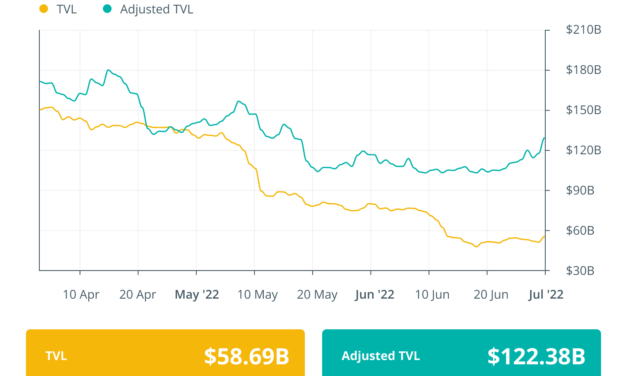
Welcome to Finance Redefined, your weekly dose of key decentralized finance (DeFi) insights, a newsletter crafted to bring you some of the major developments over the last week.This past week, the DeFi ecosystem got recognition from the United Kingdom government, as they sought public feedback on taxation of the DeFi ecosystem, especially staking and lending.MakerDAO is looking to collaborate with the traditional banks, which would take place after the proposal gets community approval. Aave (AAVE) is planning to launch an overcollateralized stablecoin called GHO, subject to the community decentralized autonomous organization’s (DAO’s) approval. The hacker who exploited Solana-based liquidity protocol Crema Finance on July 2 returned most of the funds but was allowed to keep $1.6 million as a white hat bounty.After nearly two weeks of bearish dominance, the top 100 DeFi tokens finally started to trade in the green. The majority of the DeFi tokens registered double-digit weekly gains.UK government seeks public input on DeFi taxationThe government of the United Kingdom is asking the public for input on the taxation of crypto-asset loans and staking in the context of DeFi.In particular, the government is interested in gathering information on the taxation of crypto-asset loans and staking. Her Majesty’s Revenue and Customs (HMRC) call for evidence paper, published on Tuesday, described its intention to study whether administrative hassles and costs may be reduced for taxpayers who participate in the emerging industry, as well as whether the tax treatment might be more aligned with the transactions’ fundamental economics.Continue readingAave to launch overcollateralized stablecoin called GHODeFi giant Aave has unveiled plans to launch an overcollateralized stablecoin called GHO, subject to the community DAO’s approval. The announcement was made by Aave Companies, the centralized entity supporting the Aave protocol, on its Twitter page on Thursday.According to the governance proposal shared on Thursday, GHO would be an Ethereum-based and decentralized stablecoin pegged to the United States dollar that could be collateralized with multiple assets of the user’s choice.Continue readingMakerDAO voting on collaborating with a traditional bankMakerDAO is voting on a proposal that will bring a traditional bank into its ecosystem for the first time, allowing the bank to borrow against its assets using DeFi.At the end of voting on Thursday, 87.1 % of voters were in favor of the proposal. The proposal involves creating a vault with 100 million Dai (DAI) for Huntingdon Valley Bank (HVB) as part of a new collateral type in the Maker Protocol.Continue readingCrema hacker returns $8M, keeps $1.6M in deal with protocolThe hacker who exploited Solana-based liquidity protocol Crema Finance on July 2 returned most of the funds but was allowed to keep $1.6 million as a white hat bounty.The bounty, 45,455 Solana (SOL), is worth a generous 16.7% of the $9.6 million Crema lost initially, which forced the protocol to suspend services. Crema’s team began an investigation to identify the hacker by tracking their Discord handle and tracing the original gas source for the hacker’s address. Just as it seemed the team may have been onto the secret identity, it announced that it had been negotiating with the hacker. On Wednesday, the hacker returned 6,064 Ether (ETH) and 23,967 SOL worth roughly $8 million.Continue readingDeFi market overviewAnalytical data reveals that DeFi’s total value locked registered a minor rise from the past week, rising to a value of $58.69 billion. Data from Cointelegraph Markets Pro and TradingView shows that DeFi’s top-100 tokens by market capitalization showed great signs of recovery with the majority of the tokens trading in green with double-digit gains.Curve (CRV) was the biggest gainer in the top-100 DeFi token list with a weekly surge of 50.18%, followed by Convex Finance (CVX) with 43.15% weekly gains. ThorChain (RUIN) registered a 28% gain over the past seven days, while Aave gained 26% during the same time period.Thanks for reading our summary of this week’s most impactful DeFi developments. Join us next Friday for more stories, insights and education in this dynamically advancing space.

Čítaj viac

Získaj BONUS 8 € v Bitcoinoch

nakup bitcoin z karty

Registrácia Binance

Burza Binance

Aktuálne kurzy