Autor Cointelegraph By Prashant Jha

Avalanche-based Pangolin Dex set to make debut on Flare blockchain

Pangolin, a decentralized exchange (DEX) on the Avalanche network, will debut on the layer-1 blockchain Flare network. Flare is known for its interoperability solutions and Pangolin hopes to utilize the underlying technology to reach new blockchain networks.With its move to Flare blockchain, Pangolin will be able to see new cross-chain token pairs, offer in-dApp swap functionality to partner projects, and bootstrap liquidity for the network. The layer-1 blockchain platform has paid special focus on interoperability, allowing projects on the platform to connect and interact with multiple blockchain networks.Pangolin can offer DEX-as-a-service features to any Flare-based application that wants to incorporate direct token swaps into its user experience. Related: Backlash as Harmony proposes minting 4.97B tokens to reimburse victimsAnother dominating issue in the decentralized finance (DeFi) market has been the recent crash among centralized crypto lending firms, leading to investors losing billions of dollars. Justin Trollip, CEO of Pangolin, told Cointelegraph that recent issues occurred due to hubris and unsustainable leveraged positions by interconnected whales, and Pangolin would ensure such events don’t occur on their platform. He explained:”The beauty of DeFi is that once funds are in a smart contract there’s no veil of secrecy around where those funds are and what they’re being used for. We take the security of our users seriously and provide full transparency along with major investments in audits for any newly deployed smart contracts.”The Pangolin DEX will be able to swap any token that is bridged to Flare, regardless of whether it has smart contract capabilities, using FAssets and LayerCake, the two interoperability solutions offered by the Flare network. Interoperability is seen as the future of DeFi, with many market pundits and Web3 experts predicting that projects with cross-platform support will be the backbone of the next generation of DeFi and Web3 projects.

Čítaj viac

FOMO Pay taps Ripple's liquidity solution for treasury management

Singapore-based institutional digital payment solution provider FOMO Pay has become the latest fintech firm to integrate Ripple’s liquidity solution called on-demand liquidity (ODL).FOMO Pay would use the popular crypto enterprise technology to improve its cross-border treasury settlements. Earlier, the firm used the traditional payment system for cross-border settlement of EUR and USD trades, which took up to two days. However, with ODL integration, the firm aims to achieve an instant settlement with very low transaction costs.Louis Liu, Founder and CEO of FOMO Pay said:“We are excited to partner with Ripple to leverage On-Demand Liquidity for treasury management, which allows us to achieve affordable and instant settlement in EUR and USD globally.” Ripple’s ODL service has gained a lot of popularity in the private banking and payment sector. The enterprise solution uses XRP as a bridge between two currencies, eliminating pre-funding of destination accounts and reducing operational costs. The tech has proven a great success in Asia, where cross-border transactions are among the highest.Ripple didn’t respond to requests for comments from Cointelegraph at the time of publishing.Ripple aims to make headway in the treasury settlement market that sees over $3.5 billion in annual expenditure to manage liquidity crises. With ODL, liquidity is always available in the form of XRP.Related: After 8 years dumping billions of XRP, Jed McCaleb’s stack runs out in weeksJapan’s SBI Remi integrated the ODL solution to transfer money from Japan to the Philippines last year. Some other major firms that have integrated Ripple ODL services include Pyypl, Novatti, Tranglo, iRemit, FlashFX and Azimo.Ripple’s payment technology has been key to its success despite the long-running lawsuit in the U.S over the unregistered sale of XRP. In the latest development of the case, the U.S. Securities and Exchange Commission (SEC) attempted to block Ripple (XRP) holders from aiding in Ripple’s defense and prohibit attorney John E. Deaton from any further participation in proceedings.The SEC claims #XRP itself is a security and anyone who sells it is violating Section 5 of the Securities Act. The SEC claims @Ripple @bgarlinghouse & @chrislarsensf “enriched” themselves at the expense of investors and it is seeking $1.3B in disgorgement from these defendants. https://t.co/9nJ1iNroth— John E Deaton (208K Followers Beware Imposters) (@JohnEDeaton1) July 18, 2022The key executives of Ripple, including CEO Brad Garlighouse, have maintained that they are confident of a positive outcome of the lawsuit. However, the blockchain firm has seen a great demand and adoption for its crypto-based cross-border remittance and liquidity solution. 

Čítaj viac

3AC: A $10B hedge fund gone bust with founders on the run

Three Arrow Capital (3AC), a Singapore-based crypto hedge fund that at one point managed over $10 billion worth of assets, became one of the many crypto firms that went bankrupt in this bear market. However, the fall of 3AC wasn’t purely a market-driven phenomenon. As more information surfaced, the collapse looked more like a self-inflicted crisis brought upon by an unchecked decision-making process.To put it concisely, the hedge fund made a series of large directional trades in Grayscale Bitcoin Trust (GBTC), Luna Classic (LUNC) and Staked Ether (stETH) and borrowed funds from over 20 large institutions. The May crypto crash led to a series of spiral investment collapse for the hedge fund. The firm went bust and the loan defaults have led to mass contagion in crypto.The first hints of possible insolvency occurred in June with a cryptic tweet from the co-founder Zhu Su in the wake of the movement of 3AC funds. The crypto market crash led to a severe decline in the prices of top cryptocurrencies including Ether (ETH), which led to a series of liquidations for the hedge fund.3AC exchanged roughly $500 million worth of Bitcoin (BTC) with the Luna Foundation Guard for the equivalent fiat amount in LUNC just weeks before Terra imploded.The rumors ramped up after Zhu removed all mention of investments in ETH, Avalanche (AVAX), LUNC, Solana (SOL), Near Protocol (NEAR), Mina (MINA), decentralized finance (DeFi) and nonfungible tokens (NFTs) from his Twitter bio, keeping only a mention of Bitcoin (BTC). The series of liquidations for 3AC had a catastrophic impact on crypto lenders such as BlockFi, Voyager and Celsius. Many of the crypto lenders had to eventually file for bankruptcy themselves due to exposure to 3AC.Sam Callahan, a Bitcoin analyst at BTC savings plan provider Swan, told Cointelegraph:“Using only publicly available information, in my opinion, the failure of 3AC can really be broken down into two things, 1) Poor risk management and 2) Unethical and potentially criminal behavior. The first is a classic example of what happens when you use too much leverage, and the trade turns against you. In this case, 3AC borrowed hundreds of millions of dollars, mostly from cryptocurrency lending platforms, to make arbitrage bets in risky DeFi protocols. One such risky bet was on Terra. Of course.”He added that 3AC didn’t own up to the mistakes, went ahead to borrow more money and “allegedly even used clients’ funds to make bets to try to make their money back. This was the moment when 3AC morphed into more of a blatant Ponzi scheme. As general market conditions continued to worsen and liquidity dried up, 3AC was exposed as the Ponzi scheme it had become, and the rest is history.”Looking at the timeline of events in 3AC:May 11–12: Immediately following the Luna collapse, several lenders ask about Luna exposure, 3AC says there is nothing to worry about. May 18: Co-founder Kyle Davies tries to prevent loans from getting calledJune 3: Interest rates raised on loans due to market conditionsJune 7: 3AC team pitches investors on new opportunities to save the companyJune 10–11: Crypto options broker Deribit margin calls 3AC’s account mobyDckJune 13: Davies tries to arrange a new loan from Genesis to pay the margin callJune 16–17: 3AC insolvency widely reported3AC eventually filed for a Chapter 15 bankruptcy on July 1 in a New York court with no known whereabouts of the founders.Recent: Not just Bitcoin price: Factors affecting BTC miner profitabilityMarius Ciubotariu, the co-founder of Hubble Protocol, believes the 3AC lending crisis highlights the resilience of the DeFi ecosystem. He told Cointelegraph:“The challenges that faced 3AC are not unique to cryptocurrency nor financial markets as a whole. Cryptocurrency is currently the only financial market where market dynamics are allowed to play out. 3AC crisis has revealed how resilient DeFi protocols actually are. For example, Celsius suffered from lending losses and was being margin called. In fear of on-chain automated liquidations that are visible to everyone, they rushed to pay their MakerDAO and Compound loans first.”3AC owes creditors $3 billion3AC liquidators have requested a stay of proceedings against the business and access to its Singapore offices in a petition to the High Court of Singapore. The court documents show that 3AC owes about $3 billion to creditors, out of which 3AC’s biggest creditor, trader Genesis Asia Pacific, a subsidiary of Digital Currency Group, loaned $2.36 billion.Among the long list of creditors, Zhu Su also filed a claim for $5 million. In addition to Zhu’s claim, 3AC investment manager ThreeAC Limited is reportedly making a $25 million claim. Kyle Davies’ wife, Kelli Kali Chen, is reportedly seeking a claimed $65.7 million debt in the same filing in the Eastern Caribbean Supreme Court. A court in the British Virgin Islands ordered 3AC into liquidation on June 27.I’ve just seen the list of creditors to #3AC and noticed that @zhusu has filed a claim for $5 million. While being on the run, he has somehow found the time to diligently and ruthlessly fill out forms to pursue a claim against his own Fund. https://t.co/YFfWmYZOoM— Soldman Gachs ⌐◨-◨ (@DrSoldmanGachs) July 18, 2022There is speculation that founders Zhu and Kylie used investors’ funds to make a downpayment on a $50 million yacht purchase. However, other reports have claimed that Zhu tried selling his house in the wake of the 3AC crisis.A report from blockchain analytic firm Nansen showed that there was an active and trackable contagion in the markets. The stETH depeg was prompted in part because of TerraUSD Classic’s (USTC) implosion. The report claimed that 3AC was a victim of this contagion as it sold its stETH position at the peak of the depeg panic, taking a significant haircut.Jonathan Zeppettini, international operations lead at decentralized autonomous currency platform Decred.org, believes market conditions played a bare minimum in the 3AC saga and only helped in preventing the fraud further. He told Cointelegraph:“In reality, they were just participating in other scams such as Terra and acting as a middleman between questionable investments and lenders who thought their record was so impeccable it absolved them from having to do any due diligence. Cascading liquidations caused by the market correcting forced the end of the game. However, in reality, their model was always a ticking time bomb and would have imploded eventually no matter what.”Michael Guzik, CEO of institutional lending platform CLST, told Cointelegraph that 3AC failed to mitigate market risks and the wave of collapses, and the liquidity crisis underneath it all, is a “reminder of the importance of age-old lending/borrowing practices like leverage and counterparty risk assessment.”3AC operated in a very opaque way for being the largest crypto hedge fund, and after the collapse set in, it continued to lie to investors about the extent of losses to lenders, movement of funds and its directional market exposure.Centralization and opaqueness in crypto firms3AC’s fall highlights the fragility of the centralized decision-making process that can turn into a nightmare during the bear market. The centralization of the decision-making process in 3AC’s operations only came to light after its positions started getting liquidated.Zhu and Davies, the founders of the tainted hedge fund, revealed that they received a series of death threats after the collapse of 3AC, which forced them to go into hiding. The two founders admitted that the overconfidence born out of a multiyear bull market, where lenders saw their values swell by virtue of financing firms like theirs, led to a series of bad decisions that should have been avoided.Joshua Peck, founder and chief investment officer at crypto hedge fund Truecode Capital, explained to Cointelegraph that what made 3AC’s failure especially pernicious was its venture capital investing, it often managed the treasury for its portfolio companies, plus it was so well regarded that many other platforms extended them substantial credit, such as Blockchain.com’s $270 million in loans. Recent: Proof-of-time vs proof-of-stake: How the two algorithms compareThe full extent of its interdependence with other digital asset firms was unclear until 3AC’s positions began liquidating during the cryptocurrency bear market in 2022. It rapidly became apparent that many firms were more exposed to 3AC than was broadly understood. Peck told Cointelegraph:“Our view is that to avoid total loss in the crypto market, the totality of the cryptocurrency risk profile must be managed. Managers with a background in the engineering disciplines are more qualified to manage cryptocurrency portfolios because the majority of the risks associated with digital assets have more in common with software projects than financial firms. This was certainly true in the case of Three Arrows Capital.”3AC’s downfall snowballed into a catastrophe that brought down the likes of Celsius, Voyager and a few other crypto lending firms along with them. The extent of the damage caused by 3AC exposure is still unfolding, but it is important to note that the crypto market has managed to get past Terra and the crypto lending fiasco.

Čítaj viac

GameStop 'Falling Man' NFT saga shows people's power at its finest

A recent nonfungible token (NFT) listing on Gamestop’s marketplace became the center of controversy in the NFT world. The listing received heavy backlash from the community prompting the marketplace to take action within a day, showing how a community can come together to reverse the wrong.The NFT in question, titled “Falling Man,” showed a man in a space suit falling downwards. The NFT in question had quite a resemblance to the infamous 9/11 photo of a man falling to his death that since has become a defining moment of the deadly attacks. Many believed the NFT was mimicking the 9/11 victim and also infringed on the copyright of the image taken by original photojournalist Richard Drew.In another discussion on the meme stock subreddit GME_Meltdown, a user pointed out that the figure in the NFT is a render of an existing 3D model of a Russian flight suit created by an independent artist, which was used without the permission of the original artist.The GameStop team eventually took down the NFT and even banned the creator behind the art from minting on the platform. Gamestop got rid of the nft and removed the creators ability to mint thankfully. pic.twitter.com/tJpcmXqkJz— Thrawnbelina (@AltStacie) July 23, 2022The crypto community demanded Gamestop to do better due diligence before approving any artform to its marketplace, where one user wrote:“It’s still not enough how do you even allow this it’s disgusting there needs to be a review team that looks into each NFT for shit like this or stolen art.”GameStop didn’t respond to Cointelegraph’s request for comments at press time.While GameStop faced the community backlash, the incident opened a pandora’s box of evidence highlighting how NFTs became a medium of making quick money for many at the cost of common human decency.Related: Scams in GameFi: How to identify toxic NFT gaming projectsOpenSea, one of the most popular NFT marketplaces today, has the “Falling Man” as NFT up for sale for nearly two months. The Falling Man NFT has been up on @opensea for two months plus. Stupid People are trying to shame @GameStopNFT for taken it down in a day! saying #GameStopNFT needs to do better content control They’re already the best!!! Go FUD elsewhere! https://t.co/DQNLRE6xd2 #GME pic.twitter.com/qQ8kIBvXWI— VanGuardianVI (@VanGuardianVI) July 24, 2022

Another revelation came earlier in January this year when a doctor tried selling an X-ray of the 2015 Paris terrorist attack victim as an NFT. The doctor is currently facing legal and disciplinary actions.The NFT mania began at the height of the bull run in March 2021 after digital artist Beeple’s NFT art fetched a whopping $69.3 million. Since then, NFT has become the buzzword, and every other brand and celebrity has been getting involved with the phenomenon. With the rise in popularity, the ecosystem became a target of scammers as well, leading to an increase in copyright infringements and fake NFT sales. However, the crypto community has always come together to show the power of the people. One such instance took place in May this year when the Solana community came together to “scam” a scammer to get back some stolen NFTs.

Čítaj viac

Finance Redefined: DeFi’s downturn deepens, but protocols with revenue could thrive

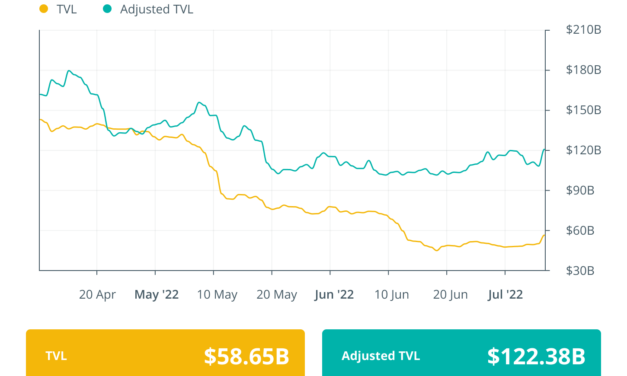
Welcome to Finance Redefined, your weekly dose of key decentralized finance (DeFi) insights — a newsletter crafted to bring you some of the major developments over the last week.This past week, the DeFi ecosystem saw several new developments related to the DeFi lending crisis as Celsius filed for bankruptcy. At a time when bears are more dominant in the current market, DeFi protocols with a revenue system can thrive.Lido Finance has announced plans to offer its Ether (ETH) staking services across the entire L2 system. Aave plans to leverage Pocket’s distributed network of 44,000 nodes to access on-chain data from various blockchains, and gamers are plugging in DeFi through the Razer reward partnership.The majority of the top 100 DeFi tokens traded in green, with many registering double-digit gains over the past week.DeFi downturn deepens, but protocols with revenue and fee sharing could thriveAs the crypto winter drags on, savvy crypto investors have realized that one of the reliable sources of passive income that still exists can be found in protocols that generate revenue and share some of it with their respective communities.Data from Token Terminal shows revenue positive platforms are primarily the nonfungible token (NFT) marketplaces like LooksRare and OpenSea.Continue readingEthereum staking service Lido announces layer-2 expansionIn a Monday blog post, the Lido team noted that it would initially begin by supporting Ether staking via bridges to L2s using wrapped stETH (wstETH). Moving forward, it will eventually enable users to stake directly on the L2s “without the need to bridge their assets back” to the Ethereum mainnet.In terms of partnered L2s, the team stated that before the announcement, it had already integrated its bridged staking services with Argent and Aztec. It added that the next collection of partnerships and integrations would be unveiled over the next few weeks.Continue readingAave taps Pocket Network to beef up decentralized app developmentAave, an open source DeFi protocol, is teaming up with decentralized Web3 infrastructure provider Pocket Network to offer developers increased scalability and ease of use when building decentralized applications (DApps) on the Aave Protocol.According to the statement on Tuesday, Aave will use Pocket’s distributed network of more than 44,000 nodes to access on-chain data from various blockchains to power decentralized applications. Developers building Aave-powered DApps may now access blockchain data from Pocket Network on demand following the new integration. Continue readingGamers plug into DeFi through the new Razer rewards partnershipGamers and customers of IT and gaming hardware firm Razer are set to plug into the world of DeFi through a new rewards swap program in partnership with Cake DeFi.Razer remains a household favorite brand for gamers around the world, with its Razer Gold rewards program allowing gamers to earn and redeem Razer Silver points for a variety of hardware and digital rewards, including Steam games and discount vouchers.Continue readingDeFi market overviewAnalytical data reveals that DeFi’s total value locked registered a near $5 billion rise from the past week, posting a value of $58.65 billion. Data from Cointelegraph Markets Pro and TradingView shows that DeFi’s top-100 tokens by market capitalization had a mixed week, with several tokens trading in red while a few others registered even double-digit gains.Lido DAO (LDO) was the biggest gainer among the top 100 DeFi tokens with an 80% rise over the past week, followed by Fantom (FTM) with a 28% surge. Avalanche (AVAX) registered a 26% surge over the past week, while ThorChain (RUNE) saw a 21% rise in price over the past seven days.Thanks for reading our summary of this week’s most impactful DeFi developments. Join us next Friday for more stories, insights and education in this dynamically advancing space.

Čítaj viac

Získaj BONUS 8 € v Bitcoinoch

nakup bitcoin z karty

Registrácia Binance

Burza Binance

Aktuálne kurzy