Autor Cointelegraph By Prashant Jha

Nomad reportedly ignored security vulnerability that led to $190M exploit

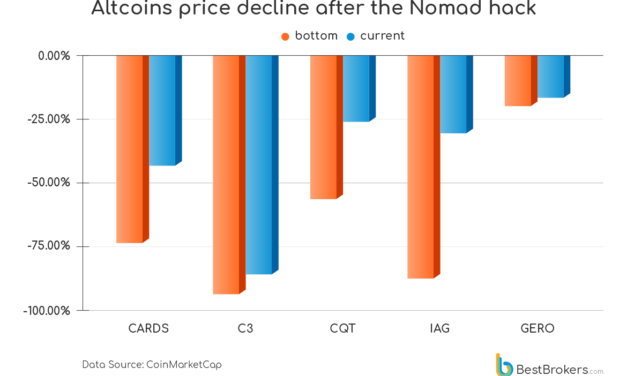
The Nomad token bridge hack on Aug. 3 was the fourth largest crypto hack in history that saw nearly $200 million worth of crypto assets drained from the platform. However, more than the hack, the methodology behind it garnered widespread attention.The exploit took place due to a smart contract vulnerability that saw hundreds of users other than the hacker also get involved, taking away as much as they can by simply copy-pasting the transaction data used by the initial hacker and changing the wallet address to theirs. The event was later deemed as a decentralized robbery by many due to the involvement of normal community members.Later, the Nomad team revealed to Cointelegraph that some of the people who took funds were acting benevolently to protect the crypto from getting into the wrong hands. In the aftermath of the hack, the crypto analysis group BestBrokers found that the first exploit took place on Aug. 1, which drained 400 Bitcoin (BTC) in four different transactions. The hackers later diverted all 22,880 Ether (ETH), then moved on to the over $107 million worth of stablecoins and finally started diverting the altcoins supported by the project.The incident has seen WBTC, Wrapped Ether (WETH), USD Coin (USDC), Frax (FRAX), Covalent Query Token (CQT), Hummingbird Governance Token (HBOT), IAGON (IAG), Dai (DAI), GeroWallet (GERO), Card Starter (CARDS), Saddle DAO (SDL) and Charli3 (C3) tokens taken from the bridge.Related: Ongoing Solana-based wallet hack seeing millions drainedSome altcoins that were stolen from the platform suffered as much as a 94% decline. Data collected by the analysis firm showed that the following altcoins suffered the biggest collapse after the hack:The smart contract vulnerability that was exploited was highlighted in a security audit report done by Quantstamp in the first week of June. The Nomad team even responded to the vulnerability by claiming it to be “effectively impossible to find the preimage of the empty leaf.” The auditors believed that the Nomad team has misunderstood the issue at the time, and within two months, the same vulnerability has been the reason behind nearly $200 million in losses.Cointelegraph reached out to Nomad with queries related to the discovery and will update the story accordingly.

Čítaj viac
Ether creates history as key metric in ETH options exceeds Bitcoin by 32%

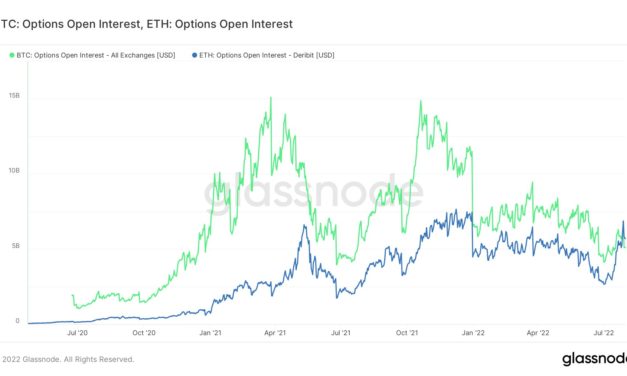
Ether (ETH) has taken over Bitcoin (BTC) in the options market for the first time in history as the open interest (OI) of Deribit Ether options, with a value of $5.6 billion, exceeded the OI of Bitcoin options worth $4.6 billion by 32%.OI is calculated by adding all the contracts from opened trades and subtracting the contracts when a trade is closed. It is used as an indicator to determine market sentiment and the strength behind price trends. Deribit is the world’s biggest BTC and ETH options exchange, accounting for more than 90% of the global trading volume. The data from the Deribit exchange highlighted that ETH options are mainly call options, with a put/call ratio of 0.26. The ETH Put/Call ratio has hit a new yearly low as the Merge date nears. Ethereum Open Interest Put/Call Ratio Source: The BlockUnder the put option, buyers have the right but not the obligation to sell the underlying asset at a predetermined price on or before a specific date. Overall, put buyers are implicitly bearish, while a call option trader is bullish.A put/call ratio greater than 0.7 or exceeding one indicates bearish market sentiment, while a put/call ratio value lower than 0.7 and falling close to 0.5 indicates an emerging bullish trend.Related: Ethereum Merge: How will the PoS transition impact the ETH ecosystem?The recent surge of ETH OI in the options market with an underlying bullish sentiment among traders is being attributed to the upcoming Merge slated for the third week of September.While ETH continues to see growing dominance in the options market, the ETH futures quarterly contracts, scheduled to expire in December 2022, have slipped into backwardation, wherein the futures price becomes lower than the spot price. Ether’s spot and futures price grew to -$8 on Monday. While this might seem like a bearish outlook, BTC surged 15% after price backwardation in June.Apart from the growing bullish anticipation for the upcoming proof-of-stake (PoS) transition, analysts have also pointed toward the possible airdrop scenario in case of a chain split. A survey from Galois Capital revealed that 33.1% of respondents believe the upgrade would lead to a hard fork, while 53.7% anticipated a smooth network transition.

Čítaj viac

Aave DAO approving overcollateralized stablecoin splits crypto community

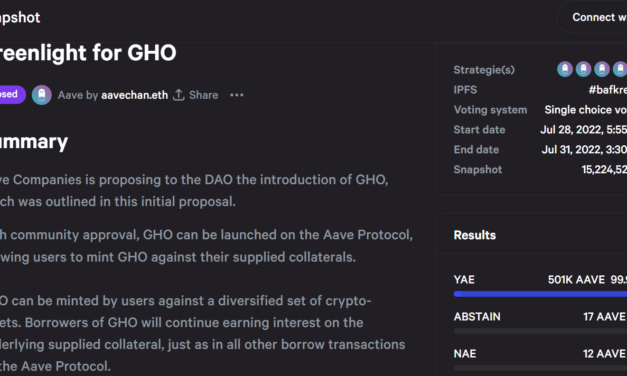
Aave DAO, the governance body behind decentralized finance (DeFi) giant Aave (AAVE) protocol, has unanimously voted in favor of creating an overcollateralized stablecoin called GHO.The Aave company put up the GHO creation proposal on July 28, which received an overwhelming 99.9% community vote over the course of three days. The proposal ended on Jul 31 at 10:00 am GMT with 501,000 AAVE tokens pledged in favor of creating the crypto-collateral backed stablecoin.Aave DAO GHO Voting SnapshotGHO would be an Ethereum-based and decentralized stablecoin pegged to the U.S. dollar that could be collateralized with multiple crypto assets. The next step in the process would be the creation of the GHO using a new Aave improvement protocol (AIP), and any user looking to mint GHO can do so by depositing any other crypto asset accepted by the Aave protocol.Aave is a non-custodial decentralized crypto lending and borrowing platform that is hoping to leverage its overcollateralized stablecoin to offer better liquidity and passive income opportunity.Being an overcollateralized stablecoin, users must always deposit a higher amount of crypto than the minting value of the GHO. This would ensure an overcollateralized loan on these stablecoins. Once the user repays the loan, their position will be liquidated, and their borrowed GHO will be burnt.The lending protocol will also charge interest on loans taken out in GHO, with payments going back to the Aave DAO treasury, rather than the standard reserve factor collected when users borrow other assets.Related: Aave to launch overcollateralized stablecoin called GHOAave’s announcement about a crypto-collateralized stablecoin brought back memories of the recently depegged TerraUSD (UST), the stablecoin collapse that wiped out nearly $40 billion in investors’ money. Many users were quick to dismiss it as another stablecoin slated for depegging.They always work out. Go #AAVEDepegging? Easy.Just deploy more capital. Steady gals. pic.twitter.com/PnNFLwX8mX— Turbolion (@HogSomFan) July 31, 2022Many Aave proponents were quick to point out the flawed working of the UST that made it uncollateralized, which eventually led to its depegging, however, the upcoming GHO would be overcollateralized similar to DAI which means the assets backing the stablecoin will always be of higher value. One user wrote:“UST was uncollateralized and run by a crook that attacked people who called out that he was a crook. Aave is building an overcollateralized algorithmic stablecoin similar to DAI. Aave is the biggest DeFi lending protocol in the world and has been nothing but transparent.”The native token of the popular DeFi protocol rose over 15% over the past week in the wake of the GHO proposal and has seen a 4% surge over the past 24 hours after the approval.

Čítaj viac

Ethereum Merge: How will the PoS transition impact the ETH ecosystem?

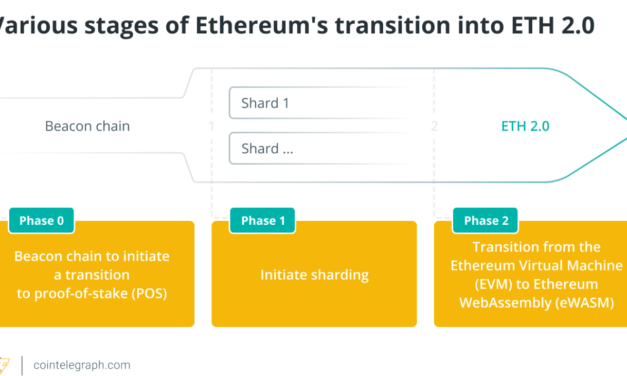
The Ethereum blockchain is on the verge of one of the most crucial technical updates since its inception, moving from proof-of-work (PoW) to proof-of-stake (PoS), also called Ethereum 2.0, or Eth2. Ethereum devs gave Sept. 19 as the perpetual date for the merger of the current PoW chain to the PoS chain. The Merge is expected to be deployed on the Goerli testnet in the second week of August. After the successful integration of the Goerli testnet, the blockchain will initiate the Bellatrix update in early August and roll out the Merge two weeks later.The discussion around the transition began with a focus on scalability, so Ethereum developers proposed a three-phase transformation process. The transition itself is nearly two years in the making, starting on Dec. 1, 2020, with the launch of Beacon Chain, initiating Phase 0 of the three-phase process.The Beacon Chain began the shift to PoS, enabling users to stake their Ether (ETH) and become validators. However, Phase 0 did not affect the main Ethereum blockchain: The Beacon Chain exists alongside Ethereum’s mainnet. However, both the Beacon chain and mainnet will eventually be linked with the Merge.Phase 1 was meant to launch in mid-2021 but was delayed to early 2022, with developers citing unfinished work and code auditing as major reasons. From Phase 1 onward, Eth2 will house Ethereum’s entire history of transactions and support smart contracts on the PoS network. Stakers and validators will officially step into action, as Eth2 will take mining out of the network. Phase 2, the final phase of the transition, will see the introduction of Ethereum WebAssembly, or eWASM, over the current Ethereum Virtual Machine (EVM). WebAssembly was created by the World Wide Web Consortium and is designed to make Ethereum significantly more efficient than it currently stands. Ethereum WebAssembly is a proposed deterministic subset of WebAssembly for the Ethereum smart contract execution layer. The eWASM was specifically designed to replace the EVM, which would see implementation in Phase 2.Marius Ciubotariu, co-founder of Hubble Protocol — a decentralized finance (DeFi) lending platform — told Cointelegraph that he is not really worried about the delays, as any new technology with such vast implications on the ecosystem would take time:“PoS is not live yet; however, I do not see this as a concern. I understand the Merge has taken longer than some would expect. But, with new technology and the opportunity for critical issues, a non-rushed approach is the best one. As this Merge goes live, I’m confident more protocols will show up. We’ll continue innovation within the Ethereum community; something I have and continue to enjoy seeing/experiencing.”Merge’s impact on the Ethereum ecosystemThe upcoming Merge will see the current PoW mainnet merge with the Beacon Chain, transferring the whole Ethereum history to the new chain. A complete change of consensus for an ecosystem as large as Ethereum will have a dramatic impact from both a technical and political perspective.Barney Chambers, co-founder and co-lead developer at cross-chain DeFi platform Umbria Network, told Cointelegraph that the Merge will be challenging:“The accumulation of Ethereum will centralize in the hands of validators who already hold the majority of the tokens. The Ethereum Foundation claims that the merge will not impact the price of Ethereum, but the Merge will cause a fundamental shift in the way that new tokens are distributed and this will have a dramatic effect on the price of both Ethereum and the entire cryptocurrency ecosystem.”The proof-of-work mining difficulty level will skyrocket due to the difficulty bomb, making it unable to conduct mining at economically viable scales. The difficulty bomb is a code ingrained in the Ethereum protocol since 2015. It is set to execute every time a specific number of blocks have been mined and added to the blockchain. It makes the mining activity on the existing proof-of-work blockchain significantly harder.Recent: Metaverse visionary Neal Stephenson is building a blockchain to uplift creatorsAs a result, Ethereum’s proof-of-work chain would be compelled to stop generating blocks, as the difficulty bombs would make mining a block nearly impossible. This situation is described by its developers as an “Ice Age.” The bomb’s simple goal is to encourage miners to merge completely, which will increase the adoption of the proof-of-stake chain. The transition to a new PoS network became necessary for Ethereum, given its expanding ecosystem leading to several network congestion and very high gas fees. Over the past year, however, the narrative has also shifted toward PoS being more environment-friendly than PoW. While some laud Eth2 as paving the way for a more environmentally friendly protocol, Patricia Trompeter, CEO of carbon-neutral crypto mining company Sphere3D, has other thoughts. Trompeter told Cointelegraph:“PoS only leads to unnecessary spending and misallocated energy resources, as ‘Band-Aid solutions,’ and marketing schemes like the ‘Change The Code’ campaign don’t offer any solutions to a full industry shift toward renewable resources.” Patricia believes PoS rather dismantles crypto’s decentralized infrastructure, “pushing power toward the wealthiest holders with unimpeachable control over users.”Post-Merge, ETH issuance will drop to about 0.6 million per year, with a similar 2.7 million ETH burned, meaning a net 2.1 million ETH burned per year, or -7% in yearly ETH supply, making it a deflationary asset. ETH miners will be out of business officially once the difficulty bomb hits, being forced to mine other PoW coins with the same hashing algorithm for their existing equipment or fully exit the market.Ethereum co-founder Vitalik Buterin has predicted that the transition would not only help scale the network but also bring down the energy consumption by 95%. The transaction processing speed is expected to get on par with centralized payment processors. However, none of these features would arrive with the Merge on Sept. 19. The major scalability solution called sharding that allows for parallel transaction processing will only arrive after the completion of Phase 2, which is expected to take place in the second half of 2023.Daniel Dizon, co-founder and CEO of noncustodial and liquid ETH staking protocol the Swell Network, told Cointelegraph:“The Merge represents a significant change to Ethereum’s underlying economic model and hardware requirements, resulting in massive energy output reduction. It is expected there will be a significant demand for ETH as the rewards from participation in ETH staking will be increasing significantly from priority fees and MEV capture. The implication of the Merge is not fully priced in. Increased demand and reduced issuance for ETH will result in structural upward pressure on price compared to the existing state of Ethereum today.”Does the Merge make Ethereum a security?Apart from the technical and financial impact of the Merge, the biggest discussion seems to be around whether Ether would qualify as security once the network makes the move to PoS. The discussion has gained a lot of steam online in recent days and the answer to the question would depend on who you ask.The debate around Ethereum’s security status was prevalent long before the transition to PoS came into the picture. The debate gained a lot of momentum after the United States Securities and Exchange Commission filed a lawsuit against Ripple, deeming its sale of XRP tokens as a security. Many XRP proponents have since pointed to the “pre-mine” of ETH and have often blamed the SEC for giving Ethereum a free pass. The confusion and dilemma around security status arise from a lack of clear regulations for the crypto market. While lawmakers agree that Bitcoin (BTC) can be regarded as an independent asset class, the status of Ethereum has been a topic of debate.Adam Levitin, a research professor at Georgetown University Law Center, outlined what could make the PoS-based Ethereum network a security in the eyes of regulators:I’ve gotten some pushback here, so let me elaborate. “Security” includes an “investment contract.” “Investment contract” is defined by SCOTUS in Howey as a K for investment in a common enterprise where profits are expected “solely from the efforts” of a third party. 2/— Adam Levitin (@AdamLevitin) July 24, 2022He added that “Howey speaks of an investment of ‘money,’ but that has always been interpreted just to mean an investment of value. Putting up a stake readily satisfies this element.”Recent: Decentralized storage providers power the Web3 economy, but adoption still underwayCoin Metrics co-founder Jacob Franek countered Levitin’s argument, suggesting that Ethereum is one of the most decentralized platforms with open-source support.3/ Is there an issue with disclosures today? Ethereum is an open-source, distributed project. It arguably has the most transparent and real-time disclosures of any distributed project and certainly more than a traditional, centralized company.— Jacob Franek (is Hiring) (@panekkkk) July 24, 2022

Another major concern about the PoS transition has been the centralization in the decision-making process. Konstantin Boyko-Romanovsky, CEO of reward-monitoring and block transactions validation platform Allnodes, told Cointelegraph:“While the risk of centralization with Ethereum’s new consensus mechanism PoS exists, it is ways away from being realized. So far, the strong community behind the Ethereum network has tackled every challenge, and there is no reason to assume that the issue of centralization won’t be resolved either.”The Ethereum blockchain has become the backbone of the DeFi, nonfungible tokens and decentralized autonomous organizations. While the ecosystem will continue to support such nascent use cases, the true transition to PoS with sharding and high scalability features will only be available after 2023. The success of Eth2 will highly depend on the execution of the final phase, but many market pundits are still skeptical about it, given the past delays.

Čítaj viac

Ethereum dev confirms Goerli merger date, the final update before the Merge

The Ethereum main net is just one test net merger away from officially transitioning to a proof-of-stake (PoS) blockchain. After multiple shadow forks and test net merges, the years-long journey has reached the final stage with the announcement of the final test net merge to the Beacon chain.The transition to PoS began in December 2020 with the launch of the Beacon chain, starting Phase 0 of the three-phase process. Phase 1, the current phase, was slated to be completed by 2021, however, due to numerous delays and unfinished work on the developers’ end, it is expected to be completed by the third week of September. The final phase of the transition is slated to be completed by late 2023.Lead Ethereum developer Tim Beiko took to Twitter to announce the details of the Goerli test net transition. The Goreli test net will merge with the Beacon Chain called Prater and the combined Goerli/Prater network will retain the Goerli name post-merge. Goerli/Prater Merge Announcement Prater will run through the Bellatrix upgrade on August 4th, and merge with Goerli between August 6-12th: if you run a node or validator, this is your last chance to go through the process before mainnet https://t.co/JAz5AJe12B— Tim Beiko | timbeiko.eth (@TimBeiko) July 27, 2022The test net merger will be completed in two phases starting on Aug. 4 with the Bellatrix upgrade on the consensus layer. The Bellatrix upgrade will be triggered by the epoch height of 112260. Ethereum’s PoS network progresses in epochs instead of blocks, where one epoch is a bundle of up to 32 blocks. The second phase of the upgrade will be called Paris, where the execution layer will transition from proof-of-work to proof-of-stake. This phase is expected to be completed between August 6–12. The Paris upgrade will be triggered by a specific Terminal Total Difficulty (TTD) of 10790000. Once the execution layer crosses the threshold TTD, the next block will be solely produced by a PoS validator.The official announcement noted that the upcoming Goerli merge will be different from the early test net integration since the node operators need to update both their consensus layer and execution layer clients in tandem, rather than just one of the two. The developer team also attached numerous client releases that support the test net Merge.Related: Ethereum options data show pro traders ready to go long into ETH’s MergeThe upcoming final test net merge will only impact the node operators and test net participants, ETH holders and stakers won’t have to make any changes from their end. The test net merge will be the final rehearsal before the Ethereum main net officially merges with the Beacon chain on Sept. 19. However, the perpetual Merge date could see a change depending on the outcome of the Goerli test net. The PoS transition of the Ethereum network is being slated as the biggest upgrade for the blockchain network since its inception. The upgrade is focused on increasing scalability through the introduction of Sharding and reducing high transaction costs. However, most of the scalability features are expected to be integrated after the completion of the final phase of the transition which is expected by the second half of 2023.

Čítaj viac

Získaj BONUS 8 € v Bitcoinoch

nakup bitcoin z karty

Registrácia Binance

Burza Binance

Aktuálne kurzy