Autor Cointelegraph By Prashant Jha

Crypto lending platform Hodlnaut suspends services due to liquidity crisis

Singapore-based crypto lending platform Hodlnaut has become the latest firm to suspend withdrawals, and deposits blaming market conditions and lack of liquidity.The crypto lending firm made an official announcement on Aug. 8, claiming that market conditions have forced it to suspend its services and that it is actively working on recovery plans. Dear users, we regret to inform you that we will be halting withdrawals, token swaps and deposits immediately due to recent market conditions. We have also withdrawn our MAS licence application. Here is our full statement https://t.co/5KfHUBzWsn Our next update will be on 19 Aug.— Hodlnaut (@hodlnautdotcom) August 8, 2022Hodlnaut also stated that it has withdrawn its regulatory license application in Singapore and as a result, it would no longer be able to offer any token swaps features. The official announcement read:“We are actively working on the recovery plan that we hope to provide updates and details on as soon as permissible. We are consulting with Damodara Ong LLC on the feasibility and timelines of our intended execution plan and are strategizing our recovery plan with our users’ best interests in mind.”The crypto lending platform said it would suspend all of its social media accounts except for the official Twitter and Telegram. Apart from the social media suspensions, founder Juntao Zhu has gone private on Twitter.The crypto lending crisis began with the Terra ecosystem collapse followed by the bankruptcy of leading crypto hedge fund Three Arrow Capital (3AC). The back-to-back market turmoil created a domino effect for crypto lenders with exposure to the hedge fund as well as the Terra ecosystem. Voyager Digital, Celsius and Blockchain.com were some major crypto lenders that suspended their services.Hodlnaut managed to avoid any 3AC exposure, but some reports have claimed that the firm was not transparent regarding its investments in Terra’s now defunct algorithmic stablecoin. A report published by Twitter handle Fatman in June pointed toward the large exposure of Hodlnaut during the stablecoin’s depeg and how they misrepresented their position:They sold some UST as low as $0.40, degen shorted through bETH cross-margining, had huge, risky shorts on exchanges in the best case scenario, and in a hilarious move of brave defiance, they even re-entered Anchor after the collapse (small size). https://t.co/yfbTET4U4n (15/25)— FatMan (@FatManTerra) June 26, 2022

Zhu has claimed that the firm neither bought any UST nor incurred any losses on its UST yield services, but failed to offer any documentation as proof.The apparent downfall of another crypto lending platform invoked furious reactions from the crypto community with many advocating for investors to store their crypto off-exchange. Others pointed toward the domino effect that the UST collapse created in May with effects being seen even now.Another one bites the dust. Now that many of the largest players have gone under, which ones are next? If you still have assets with third parties, you should withdraw them to your own wallet ASAP. Not your keys, not your crypto. https://t.co/mY85yBhNbg— Soldman Gachs ⌐◨-◨ (@DrSoldmanGachs) August 8, 2022

Čítaj viac
Nigeria becomes the most crypto-obsessed nation after April crash: Report

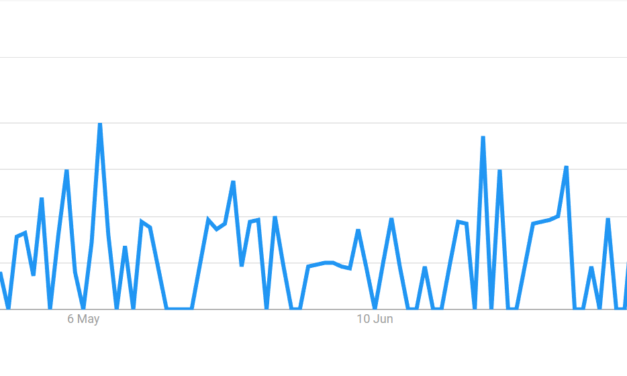
The crypto market crash in April saw most cryptocurrencies lose more than 60% of their valuation from the top, leading to an overall downturn in trading activity, investor interest and venture capital investment. A recent study has highlighted nations’ growing curiosity and interest in crypto after the April crash.The research was based on Google Trends data of popular crypto search terms that often reflect increased interest in the crypto market. The search history of each nation was then compiled to give an overall search score. The countries at the top of the list appear to be most eager to buy the dip.The Coingecko research highlighted a significant rise in curiosity among Nigerians after the crypto market downturn in April. The Nigerian population searched the term ‘cryptocurrency,’ ‘invest in crypto,’ and ‘buy crypto’ the most among the 15 countries that were part of the research and had a total search score of 370.The following two Google trend charts show the data for “invest in crypto” searches in Nigeria compared to the world. The search density for the term has seen similar interest rates after the April downfall in Nigeria, while the worldwide search density has seen a constant decline in comparison.Data for “Invest in Crypto” search term in Nigeria Source: Google TrendsData for “Invest in Crypto” search term worldwide Source: Google TrendsNigeria’s growing interest in crypto is fueled by inadequate financial services in the country, something that has been a key reason for crypto adoption across Africa. As Cointelegraph reported in April, nearly 17.36 million (or 52% of Nigerian crypto investors) have allocated over half of their assets to cryptocurrencies. Nigerians started using crypto as a viable alternative to store and transfer assets.Related: Global Bitcoin adoption to hit 10% by 2030: Blockware reportThe United Arab Emirates (UAE) came in second with a search score of 270, which didn’t come as a surprise to many, given the country’s recent push for crypto adoption. Singapore ranked third with a search score of 260, while the United States was ranked 12th with a search score of 157. The search score data also highlighted some of the top cryptocurrencies that people in these 15 countries searched. Interestingly, Ethereum (ETH) searches outscored Bitcoin (BTC) in 14 of the 15 countries, with Singapore leading the chart with a score of 59. The rise in interest towards ETH over BTC could also be attributed to the upcoming Merge to the proof-of-stake network slated for the third week of September.

Čítaj viac

Finance Redefined: Solana and Nomad bridge fall prey to exploits losing millions

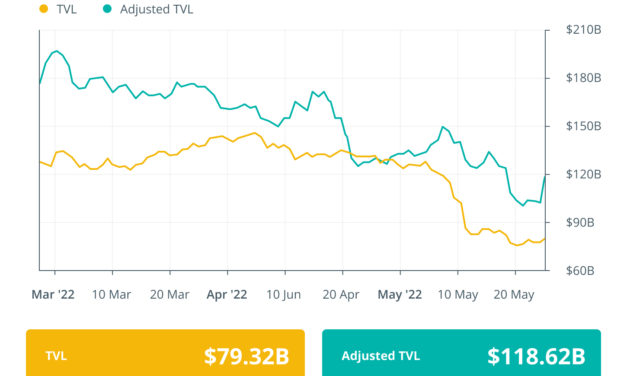
Welcome to Finance Redefined, your weekly dose of essential decentralized finance (DeFi) insights — a newsletter crafted to bring you significant developments over the last week.This past week, the DeFi ecosystem saw two exploits one after another resulting in the loss of millions of dollars. First, cross-bridge token platform Nomad became a victim of what many deemed a decentralized robbery that saw almost $190 million drained out of their wallets.Solana ecosystem became the victim of a widespread unknown attack that saw thousands of wallets getting drained out of all the funds. Apart from a series of exploits, Nansen admitted their negligence toward the DeFi market during the NFT boom.The top-100 DeFi tokens had a mixed price action over the past week, with many seeing a downturn after some bullish action last week.Nomad token bridge drained of $190M in funds in security exploitThe Nomad token bridge appears to have experienced a security exploit that has allowed hackers to systematically drain a significant portion of the bridge’s funds over a long series of transactions.Nearly the entire $190.7 million in crypto has been removed from the bridge, with only $651.54 left remaining in the wallet, according to the DeFi tracking platform DefiLlama. However, Nomad later suggested to Cointelegraph that some of the funds were withdrawn by “white hat friends” who took the funds out with the intention of safeguarding them. Continue readingSlope wallets blamed for Solana-based wallet attackAs the dust settles from yesterday’s Solana ecosystem mayhem, data is surfacing that wallet provider Slope is largely responsible for the security exploit that stole crypto from thousands of Solana users.Slope is a Web3 wallet provider for the Solana layer-1 blockchain. Through the Solana Status Twitter account on Wednesday, the Solana Foundation pointed the finger at Slope, stating that “it appears affected addresses were at one point created, imported, or used in Slope mobile wallet applications.”Continue readingNansen admits neglecting DeFi plans during the NFT crazeCEO and co-founder Alex Svanevik recently spoke about Nansen’s growth, highlighting that the company has registered over 130 million addresses and has grown 30% despite the crypto downturn. Svanevik credited much of his success to the value of blockchain platforms, notably those based on Ethereum.Cointelegraph reached out to Nansen’s Andrew Thurman for more insight into the company’s success. Thurman, a Simian psychometric enhancement technician, explained that after the nonfungible token (NFT) craze, they neglected their DeFi plans a bit.Continue reading Uniswap Foundation proposal gets mixed reaction over $74M price tagThe Uniswap Labs community has already begun mulling over a new proposal that would form a Uniswap Foundation based in the United States, but first, it’s going to cost $74 million.The proposal has garnered mixed feedback from the community so far, with many praising the foundation’s plans to support and expand the Uniswap ecosystem, while others have balked at its hefty price tag.Continue readingDeFi market overviewAnalytical data reveals that DeFi’s total value locked registered a rise of nearly 9 billion dollars from the past week, posting a value of $79.4 billion. Data from Cointelegraph Markets Pro and TradingView shows that DeFi’s top-100 tokens by market capitalization had a mixed week, with several tokens trading in red while a few others registered even double-digit gains.Yearn.finance (YFI) was the biggest gainer among the top 100, registering a 20% surge over the past week, followed by Lido DAO (LDO) with a 16% surge. Fantom (FTM) saw a 10% price rise and PancakeSwap (CAKE) registered an 8% rise on the weekly chart.Thanks for reading our summary of this week’s most impactful DeFi developments. Join us next Friday for more stories, insights and education in this dynamically advancing space.

Čítaj viac

Japan may see a reduced 20% tax on crypto earnings with new proposal

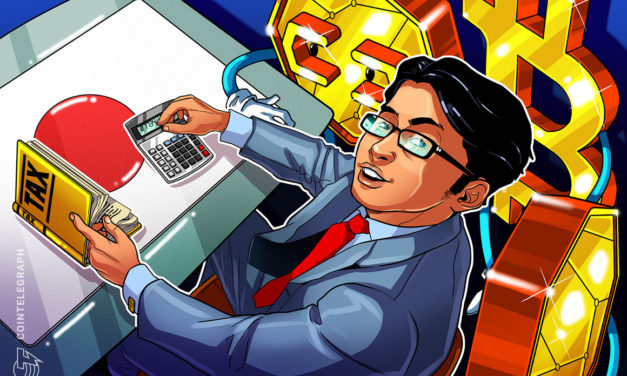
The Japan Crypto-Asset Business Association (JCBA) and the Japan Crypto-Asset Exchange Association (JVCEA), the two prominent crypto advocacy groups in Japan, released a tax reform request that calls for lowering taxes for individual investors on crypto earnings. The fiscal 2023 tax reform request addressed key issues that the advocacy groups believe act as a hindrance to crypto adoption in the country. The proposal focused on the need for improvement in the individual tax filing environment, the importance of crypto assets in Japan’s web3 strategy, and comparison with overseas crypto asset tax systems.The proposal calls for a separate 20% tax for individual crypto investors with provisions to carry forward losses for three years from the following year. The proposal also calls for the same tax structure to be applied on the crypto derivatives market.The 20% separate tax on crypto earnings with an exemption on unrealized gains would prove to be a big relief for crypto investors in Japan who currently faces taxes of up to 55% on their crypto investments. The tax reform proposal comes just a week after Cointelegraph reported about an internal memo for crypto tax reforms slated to be submitted to Japan’s Financial Services Agency (FSA).Related: Half of Asia’s affluent investors have crypto in their portfolioThe Japanese crypto groups have been working to ensure that the crypto industry thrives in the country with a particular focus on tax reforms. These crypto lobby groups believe a high tax rate would make it difficult for businesses and individual investors to hold digital assets in Japan compared to more crypto-friendly nations.Crypto taxes were the focus of several governments around the globe this year, with many countries implementing high tax slabs while others moved to abolish or delay it due to a lack of clear regulations. India imposed a 30% tax on crypto gains in April this year, while Thailand scrapped its 15% crypto tax proposal and even exempted traders from 7% VAT to encourage crypto adoption in the country. Similarly, South Korea postponed its 20% proposed crypto tax policy to 2025.

Čítaj viac

GitHub faces widespread malware attacks affecting projects, including crypto

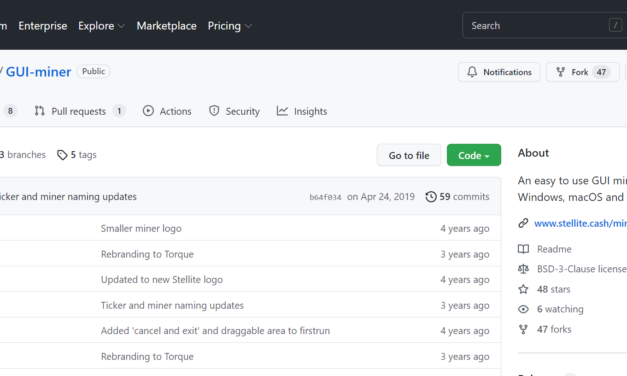
Major developer platform GitHub faced a widespread malware attack and reported 35,000 “code hits” on a day that saw thousands of Solana (SOL)-based wallets drained for millions of dollars.The widespread attack was highlighted by GitHub developer Stephen Lucy who first reported the incident earlier on Wednesday. The developer came across the issue while reviewing a project he found on a Google search.I am uncovering what seems to be a massive widespread malware attack on @github.- Currently over 35k repositories are infected- So far found in projects including: crypto, golang, python, js, bash, docker, k8s- It is added to npm scripts, docker images and install docs pic.twitter.com/rq3CBDw3r9— Stephen Lacy (@stephenlacy) August 3, 2022So far, various projects from crypto, Golang, Python, js, Bash, Docker and Kubernetes were found to be affected by the attack. The malware attack is targeted at the docker images, install docs and npm script, which is a convenient way to bundle common shell commands for a project. To dupe developers and access critical data, the attacker first creates a fake repository (a repository contains all of the project’s files and each file’s revision history) and pushes clones of legit projects to GitHub. For example, the following two snapshots show this legit crypto miner project and its clone.Original Crypto Mining Project Source: GithubCloned Crypto Mining Project Source: GithubMany of these clone repositories were pushed as “pull requests.” Pull requests let developers tell others about changes they have pushed to a branch in a repository on GitHub. Related: Nomad reportedly ignored security vulnerability that led to $190M exploitOnce the developer falls prey to the malware attack, the entire environment variable (ENV) of the script, application, or laptop (electron apps), is sent to the attacker’s server. The ENV includes security keys, AWS access keys, crypto keys and much more. The developer has reported the issue to GitHub and advised developers to GPG sign their revisions made to the repository. GPG keys add an extra layer of security to your GitHub accounts and software projects by providing a way of verifying all revisions come from a trusted source.

Čítaj viac

Získaj BONUS 8 € v Bitcoinoch

nakup bitcoin z karty

Registrácia Binance

Burza Binance

Aktuálne kurzy