Autor Cointelegraph By Prashant Jha

Beijing announces two-year Metaverse innovation and development plan

The Beijing municipal government on Aug. 23 announced a two-year (2022-2024) metaverse innovation and development plan that would require all districts to adhere to the newly released Web3 innovation plan.The development action plan refers to the Metaverse as a new generation of information technology integration and innovation that would drive the growth of the internet towards Web3. The innovation plan focuses on promoting the development of metaverse-related industries and helping Beijing build a benchmark city for the digital economy.The action plan demands that various districts build technological infrastructure at a city level and promote its use in various fields, including education and tourism. The development program would see the Integration of technical means such as 3D visualization and GIS (Geographic Information System) to build a visual urban space digital platform and appropriately advance the layout of digital native intelligent infrastructure.A Google Translate transcript of the official document read:“Promote digital education scenarios, support in-depth cooperation between Metaverse-related technology companies and educational institutions, expand intelligent and interactive online education models, and develop industry-wide digital teaching platforms.”The Metaverse development action plan has also instructed districts and municipalities to offer financial and human resource support to build a virtual reality. The Beijing municipal government also demanded tracking nonfungible token (NFT) technology trends and exploring regulatory sandbox programs to support innovation.While China is known for its anti-crypto stance, the government has shown interest in the metaverse concept from early 2021. Before Beijing, Shanghai also included metaverse in the five-year development plan. However, the government’s interest in nascent tech hasn’t resulted in any favorable regulations for tech companies exploring the same idea.Related: Hong Kong university to inaugurate mixed reality classroom in MetaverseAs Cointelegraph reported in July, Tencent had to shut down one of the two NFT platforms owing to declining sales aided by the regressive monetary policies of the Chinese government. Similarly, Alibaba had to hide all mentions of its NFT marketplace just hours after its launch.Over the past couple of months, two major cities in China have announced multi-year action plans with the Metaverse and NFTs in focus. The rising interest of the Chinese government towards leading Web3 technologies could lead to wider adoption in the country, quite similar to its central bank digital currency (CBDC), which is used by millions in the pilot phase itself.

Čítaj viac


Metaverse promises: Future of Web3 or just a market gimmick?

The Metaverse as a concept is an attempt to fuse physical reality, augmented reality (AR) and virtual reality (VR) into one seamless and immersive experience.The term “metaverse” was first used in Neil Stephenson’s 1982 cyberpunk novel Snow Crash. Stephenson’s metaverse was a virtual place where characters could go to escape a dreary totalitarian reality. Some of the key attributes of the Metaverse include:Even before the Metaverse became a phenomenon amid the nonfungible token (NFT) craze and crypto market boom, the concept was already in focus with the likes of Facebook, now Meta, Apple, Microsoft, Samsung and several other leading companies investing heavily in AR technology since the early 2010s.In 2014, Meta acquired Oculus VR in a $2 billion deal with of focus on developing augmented and virtual reality-based games. In the same year, Sony and Samsung announced they were creating their own VR headsets, and Google released Google Glass AR glasses. In 2020, Apple introduced. Lidar (Light Detection and Ranging) to iPhones and iPods, which offered better depth scanning for photos and introduced AR features. The technology is also paving the way for mixed-reality headsets in the future. In 2021, Facebook rebranded itself to Meta to shift from purely social media to leading the metaverse race. With a downturn in crypto markets, both NFTs and the Metaverse saw a rapid decline in interest and capital flow. Google trend data suggests metaverse was piquing interest until January 2022. However, as the bear market progressed, wiping out nearly 70% of the market valuation, interest in the Metaverse and NFTs have taken a dip.Google Trends data on search term “Metaverse“ since Aug. 9, 2021There has been a drastic change in the approach from brands that, at the start of the year, were all about the Metaverse and NFTs. Recently, Tinder, the popular dating app, has cut down its metaverse plans in the wake of disappointing Q2 earnings. Recent: Ethereum advances with standards for smart contract security auditsEfforts at creating a futuristic AR-based virtual world are presently at a very nascent stage, and some experts believe that current technological barriers both at the hardware and software levels are partially to blame. Lili Zhao, director of ecosystem growth at Neo Blockchain, told Cointelegraph:“The Metaverse is still in its infancy, so existing projects are industry pioneers which mean trials and errors before it reaches product maturity. Currently, neither the hardware nor the software infrastructure is adequate to unleash the full potential of Metaverse. This is an area of technological innovation with fundamental growth opportunities for years to come, regardless of the market condition which is more driven by cycles and sentiment.”Sandra Helou, the head of metaverse and NFT at Zilliqa, said that people view the Metaverse as a new concept. However, she believes the Metaverse is just an enhanced iteration of the internet and the more we embrace it as a new form of engagement, the less threatening it will seem. She told Cointelegraph:“The keyboard never replaced the pen and the pen never replaced the pencil. Web3 shouldn’t be viewed as a replacement for Web2 but rather as an enhancer focusing on greater engagement and connectivity. The future of the Metaverse should look at combining elements of the physical and digital worlds through seamless integration and interactivity accessible for all regardless of industry.”The critique of the MetaverseThe Metaverse as a concept has divided the world into two halves, where on one side, the likes of Meta, Microsoft, Sony and Samsung are all-in on the technology, calling it the future of the internet, while on the other hand, the likes of Elon Musk and Ethereum co-founder Vitalik Buterin believe the present forms of the Metaverse are nothing more than corporate fantasy.Buterin recently said that existing attempts by corporations to create a metaverse are not “going anywhere,” stating that Meta will “misfire.” Buterin’s comments came in the wake of Meta’s $2 billion quarterly loss on its metaverse division.Marius Ciubotariu, the co-founder of decentralized finance stablecoin issuer Hubble Protocol, told Cointelegraph that the involvement of companies such as Meta has given a bad outlook to the industry in recent times, stating, “Companies like Meta are betting on the Metaverse big time. Unfortunately, this has led to many having negative or conflicting ideas about what the Metaverse is.” “Meta, like some of its competitors that have publicly embraced the Metaverse, are selling it as nothing more than an extension of social media data mining, where individuals have no control over their personal information and data. These centralized metaverses contradict principles of decentralization such as immutability, censorship resistance and permissionless access.”He added that the Metaverse has a bright future, but established projects like The Sandbox and Decentraland will likely take the bulk of the market share, and smaller, underfunded projects may not be able to deliver on their enormous promise due to lack of resources, time, experience, funding and the difficulty of development. He went on to predict that “similar to the 2017 initial coin offering phase, most of these projects will either not see the light of day or fail to attain the necessary user base to maintain a healthy funding margin.”Other critics believe that centralized metaverses such as those proposed by Meta and Microsoft may affect the decentralized ownership of goods and services within those ecosystems.Ben Advia, founder and CEO of crypto-collectible and metaverse platform Dissrup, explained the current skepticism around metaverses and how it could potentially change. He told Cointelegraph that even though there have been many attempts to exploit the enthusiasm surrounding Web3 and the Metaverse for corporate and personal gain, it would be cynical to dismiss the efforts being made by many to build something genuinely revolutionary: “It is important to remember that the Metaverse in its ‘true’ form was never going to arrive perfectly polished and flawlessly executed, just as it took time for us to harvest the potential of the internet. The Metaverse takes time to develop into the idealized web-centric utopia that we have all been discussing and envisioning over the past couple of years.” “Until such a time, the concept will continue to be subject to criticism and skepticism, forever associated with the laughable graphics and clunky interfaces of proto-metaverse spaces, while we continue to overlook how it might change the way we function and exist in this emerging hybrid digital/physical space,” he added. Kirk Allen, CEO of metaverse aggregator Kaloscope, told Cointelegraph that the hype around the market and involvement of corporate giants such as Meta and Microsoft have hampered the vision around the concept. He explained:“There is a ‘hype’ within multiple sectors, excited and deeming that the next big thing for Web3 is the Metaverse. Without fully understanding what ‘metaverse’ means, most people are just following suit as Facebook re-branded into Meta. Among skeptics, the term ‘metaverse’ sounds too optimistic, and is commonly questioned for lacking in definition. Having said that, the metaverse is not a badly executed idea or a dream. In fact, if you want to think of it this way, it is in the cocoon stage, and soon will emerge in many more ways to the general public in business and communities.”Looking beyond the hypeThe growing interest of tech giants in the Metaverse has raised concerns about centralization and monopoly, but it is important to note that their billions worth of investment caused a ripple effect for the industry. Their involvement attracts more attention to the sector along with more investment and more tools will reach the market. Such development tools will save entrepreneurs the time needed to create new technologies and will allow them to focus on their innovations. While interest in the Metaverse has cooled, it has not disappeared entirely, especially in the United Arab Emirates. Crown Prince Sheikh Hamdan bin Mohammed bin Rashid Al Maktoum on July 20, announced that Dubai will be hosting a global event to bring metaverse experts together in September 2023. The country is planning to ramp up its efforts and create 40,000 new jobs around the Metaverse, showing that some governments are beginning to understand how valuable this sector can become.Metaverse developers like Decentraland and The Sandbox have come together with several Web3 projects to launch the Open Metaverse Alliance, which focuses on building more transparent, inclusive, decentralized and democratized metaverses. Sean Kelly, founder of Chibi Dinos NFT collection, told Cointelegraph:“There has been no clear-cut winner on which company will have the biggest metaverse yet, but there is no doubt virtual experiences will be a part of our future and the Metaverse will play a massive role in our children’s future.”As the Metaverse brings the online and offline worlds closer together, it offers new opportunities for businesses to scale and individuals to connect. For example, engaging with a virtual 3D avatar customer service agent rather than a corporate employee in a chat window may build a more immersive and memorable customer experience. Recent: Web3 games incorporate features to drive female participationFor an avid video gamer, a metaverse may be the utopia they are hoping for, as they get to conveniently switch between online gaming and virtual socializing. With digital identities, there is also potential for people to explore alternate characters for themselves.Sports leagues could integrate VR/metaverse capabilities to increase viewership as well as an NFT component to reward viewers. Shopping malls and stores have already created virtual stores in which one can shop at home and virtually try on wearables.The future of the Metaverse will depend on stakeholders and how they build the future of Web3. The current form may look underpromising due to a lack of technological innovations, but industry leaders are sure that the Metaverse concept will take center stage in the next iteration of the internet.

Čítaj viac

Crypto tax can wait, free coins can’t: S. Korea mulls ‘gift tax’ for airdrops

The South Korean Ministry of Strategy and Finance on Monday cleared that virtual asset airdrops, staking rewards and hard forked tokens would be subject to a gift tax under the Inheritance and Gift Tax Act despite the postponement of crypto gains tax to 2025.Cryptocurrencies are officially referred to as part of virtual assets under South Korean law.In response to a tax law inquiry about transfers of virtual asset airdrops by crypto exchanges, the South Korean tax authority said that any free virtual asset transfer by crypto exchanges in the form of airdrops, staking rewards and hard-forked tokens would attract a gift tax. The gift tax will be “levied on the third party to whom the virtual asset is transferred free of charge,” reported a local news publication.The tax authority cleared that even though virtual asset gains tax would now be applicable from 2025, free virtual asset transfers would still attract a 10-50% tax under the Inheritance and Gift Tax Act. The said tax requires the recipient of the free “gift” to file a gift tax return within three months of receiving it.Related: Australia’s new government finally signals its crypto regulation stanceHowever, the ministry also cleared that actual taxation on such virtual asset transfers should be considered on a case-to-case basis, given the lack of regulations around the virtual asset market. A statement from the ministry read:“Whether a specific virtual asset transaction is subject to gift tax or not is a matter to be determined in consideration of the transaction situation, such as whether it is a consideration or whether actual property and profits are transferred.”The lack of regulatory guidelines has been responsible for the postponement of the virtual asset gains tax by the authorities on multiple occasions. It becomes quite complex for them to examine all types of virtual asset transactions and form a legal basis around them. Thus, making it difficult to grasp the details of virtual asset donations, even when taxes are levied.

Čítaj viac

Celsius Network coin report shows a balance gap of $2.85 billion: Finance Redefined

Welcome to Finance Redefined, your weekly dose of essential decentralized finance (DeFi) insights — a newsletter crafted to bring you significant developments over the last week.This past week, Celsius’s financial troubles mounted further as a new coin report showed the company had a balance gap of $2.85 billion, more than double what it had shown in the bankruptcy filing. Aave (AAVE) called upon community members to commit to the Ethereum proof-of-stake (PoS) Merge.Coinbase CEO said the exchange would rather wind down its staking services than implement on-chain censorship in the form of regulatory compliance. The crypto market saw another depeg this week, with the Acala ecosystem seeing its native stablecoin lose the peg.With a sudden price drop toward the end of the week, the majority of the DeFi tokens registered a sea of red, falling in double digits on the weekly charts.Celsius Network coin report shows a balance gap of $2.85 billionA new bankruptcy coin report filed on Aug. 14 shows that troubled crypto lender Celsius’ actual debt stands at $2.85 billion against its bankruptcy filing claims of a $1.2 billion deficit.The latest report shows that the company has net liabilities worth $6.6 billion and total assets under management at $3.8 billion. While in their bankruptcy filing, the firm has shown around $4.3 billion in assets against $5.5 billion in liabilities, representing a $1.2 billion deficit.Continue readingCoinbase would rather shut down staking than enable on-chain censorship — Brian ArmstrongIn light of the recent ban on crypto mixing tool Tornado Cash and the subsequent arrest of the Tornado Cash developer, there has been a growing debate over whether crypto services providers would choose decentralization or censorship as a form of compliance.When asked whether Coinbase and others would choose to adhere to compliance requests and impose protocol-level censorship or shut down staking services, Brain Armstrong, the CEO of Coinbase, chose the latter.Continue readingAnother depeg: Acala trace report reveals 3B aUSD erroneously mintedHigh-profile security incidents continue to be a theme in 2022, with the Acala network joining a long list of stricken platforms to fall prey to exploits.The Acala USD (aUSD) token, which acts as a native stablecoin for the Polkadot and Kusama blockchains, saw its value plummet 99% after a misconfiguration of the iBTC/aUSD liquidity pool was exploited after its launch on Aug. 14. Initial estimates from Acala noted that 1.2 billion aUSD was minted without the necessary collateral, seeing the token’s value depeg from its 1:1 peg with the United States dollar to a bottom of $0.01.Continue readingAave calls on members to commit to the Ethereum PoS chainAave token holders have been asked to take part in an Aave Request for Comment (ARC) that would require them to ”commit” to Ethereum’s proof-of-stake (PoS) consensus.The ARC, proposed on Aug. 16, comes in light of Ethereum’s upcoming transition to proof-of-stake. It calls for members to select the Ethereum mainnet running under PoS consensus as the new “canonical” governance system while also giving power to an authority to shut down any Aave deployments on any alternative Ethereum forks.Continue readingDeFi market overviewAnalytical data reveals that DeFi’s total value locked remained mostly unchained from the past week thanks to the market dip toward the end of the week. The TVL value was about $66.21 billion. Data from Cointelegraph Markets Pro and TradingView shows that DeFi’s top 100 tokens by market capitalization had a bearish end of the week, with several tokens registering double-digit losses.Gnosis (GNO) was the only token in the top 100 to be trading in the green on the weekly charts, the rest of the tokens registered double-digit losses over the past week.Thanks for reading our summary of this week’s most impactful DeFi developments. Join us next Friday for more stories, insights and education in this dynamically advancing space.

Čítaj viac

Ethereum Merge prompts miners and mining pools to make a choice

The Ethereum blockchain is all set to make its highly anticipated transition from its current proof-of-work (PoW) mining consensus to proof-of-stake (PoS). The Merge date is officially scheduled for Sept. 15–16 after the successful final Goerli testnet integration to the Beacon Chain on Aug. 11.At present, miners can create new Ether (ETH) by pledging a huge amount of computing power. After the Merge, however, network participants, known as validators, will be required to instead pledge large amounts of pre-existing ETH to validate blocks, creating more ETH and earning staking rewards.The three-phase transition process began on Dec. 1, 2020, with the launch of the Beacon Chain. Phase 0 of the process marked the beginning of the PoS transition, where validators started staking their ETH for the first time. However, Phase 0 didn’t impact the Ethereum mainnet.The terminal total difficulty has been set to 58750000000000000000000.This means the ethereum PoW network now has a (roughly) fixed number of hashes left to mine.https://t.co/3um744WkxZ predicts the merge will happen around Sep 15, though the exact date depends on hashrate. pic.twitter.com/9YnloTWSi1— vitalik.eth (@VitalikButerin) August 12, 2022Phase 1, the integration of the Beacon Chain with the current Ethereum mainnet was scheduled for mid-2021; however, due to several delays and unfinished work on the developer’s end, it got postponed to early 2022. Phase 1 is all set for completion in the third quarter of 2022 with the Merge. This phase would eliminate PoW-based miners from the ecosystem and make many current PoW-based projects redundant.Phase 2 and the final phase of the transition would see the integration of Ethereum WebAssembly or eWASM and introduce other key scalability features, such as sharding, which developers and co-founder Vitalik Buterin believe would help Ethereum achieve processing speeds on par with centralized payment processors.In anticipation of the Merge, there has been active chatter about what would happen to the PoW chain after the mainnet transitions to PoS. Many centralized exchanges have thrown their support behind the Merge but have stated that if PoW-based chains gain traction from miners, then exchanges will list the forked chain and support them.Weighing in the possibility of a successful hard forkChandler Guo, an influential Bitcoin (BTC) miner, was among the first to bring out a case for the PoW Ethereum chain post-Merge. In a tweet on July 28, Guo shared a screenshot of Chinese miners saying that PoW Ethereum is coming soon.ethpow will coming soon pic.twitter.com/v9eAbWO2BZ— Chandler Guo (@ChandlerGuo) July 27, 2022

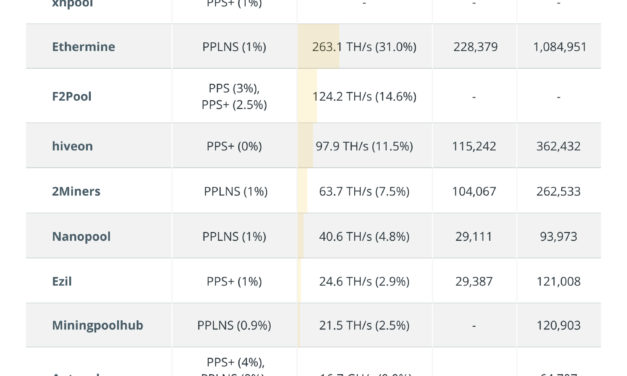
However, Buterin has denounced those who advocate for this forking, claiming that it would just be a ploy for miners to make easy money without benefiting humanity. Perhaps most importantly, it seems that much of the decentralized finance (DeFi) ecosystem has no intention of supporting Ethereum PoW, which is reason enough for Ethereum advocates to take a conservative approach to the Merge.Shane Molidor, CEO of crypto exchange platform AscendEX, believes there is a definite chance of forks, with PoW miners already showing interest, telling Cointelegraph:“Some Ethereum miners may believe it’s in their best interest to fork the newly PoS Ethereum chain back to PoW in order to keep using their expensive mining hardware. If this were to occur, ETH holders would likely be airdropped ‘PoW ETH’ in addition to their original ETH holdings that merged to PoS.”He added that if a fork does not occur, it is likely that other PoW chains such as “Ethereum Classic and GPU-hungry applications like Render Network gain hash power from ex-PoW Ethereum miners.”Daniel Dizon, CEO of noncustodial liquid ETH staking protocol Swell Network, believes the opposite and sees a very small chance of a successful fork. He explained to Cointelegraph that even if miners manage to fork the PoW chain and keep it alive, there is very little chance for them to remain as profitable as they were before the Merge:“Ultimately, the value of Ethereum as a network goes far beyond simply its consensus mechanism. It extends to highly defensible characteristics, such as its user base, developer activity, ecosystem, infrastructure, capital flow and more.”He added that a full PoS Ethereum has consistently had the support of the vast majority of the community and society more broadly, given improved environmental, social and corporate governance outcomes post Merge. Moreover, he said that major “DeFi protocols will simply choose not to recognize the ‘Ethereum PoW’ variant over post-Merge Ethereum, which is another major sticking point for the fork.”The Ethereum mining industry is worth $19 billion, according to an estimate by crypto research group Messari. The report said that mining alternative PoW coins will not be economically sustainable for most existing Ethereum miners. The total market capitalization of GPU-mineable coins, excluding ETH, is $4.1 billion, or roughly 2% of ETH’s market cap. ETH also makes up 97% of total daily miner revenue for GPU-mineable coins.Large mining pools are shifting to stakingThe transition is not that drastic for mining pools when compared to individual miners because pooling firms never generated their own computing power and never invested money in soon-to-be-outdated mining equipment. However, these businesses do have human capital, which is the infrastructure required to organize the pooling of resources, find new consumers, and maintain the satisfaction of thousands of current clients. Existing Ether mining pools are already well on their way to transitioning to staking pools.Ethermine, one of the largest Ether mining pools, announced a beta version of Ethermine Staking in April. Nearly half of the hashing power, or computer power, currently used to mine Ether is shared between Ethermine and F2Pool. The second largest Ether mining pool, F2Pool, announced the end of the PoW mining era in the second week of August. The firm said whether to support the Ethereum fork or not is no longer important. It will let the miner community decide. Dizon believes there will be a far-reaching impact on mining pools, and many of them might turn to other PoW chains, but a majority will focus on the staking industry: “We do see that many of the mining pools are pivoting their operations towards Ethereum staking, which is set to experience exponential growth off the back of the Merge.”Related: The Merge: Top 5 misconceptions about the anticipated Ethereum upgradeWill Szamosszegi, CEO and founder of Bitcoin mining platform Sazmining, told Cointelegraph that the idea of an Ethereum fork is very ideologically driven — many Ethereum enthusiasts consider the costs of a PoW protocol greater than its benefits:“One issue Ethereum miners will face after the Merge is that the cost of their overhead may exceed the revenue they could earn by mining alternatives to Ethereum. They could instead invest their computational resources into Web3 projects that their mining algorithms and hardware can support.”Ethereum Classic vs. the forked Ethereum PoW?Antpool, the mining pool affiliated with mining rig giant Bitmain, announced that it had invested $10 million in the development and apps for Ethereum Classic. Moving ETH’s valuation into a PoS model will change how ETH accrues value from mining to staking and allow investors to earn passive income — like interest in a fiat savings bank. Kent Halliburton, chief operating officer of Sazmining, told Cointelegraph, “Ethereum miners are currently split on what to do after the Merge. Some will continue to mine Ethereum Classic, which will still use a proof-of-work consensus mechanism following Ethereum’s Merge. Other miners are employing their resources towards higher-level crypto projects.”Related: Economic design changes will affect ETH’s value post-Merge, says ConsenSys execEthereum Classic (ETC) seems to be a more prominent choice for many Ether miners over the forked Ethereum chain. Chinese miner Guo, who has made his intentions clear about forking a PoW chain, was reminded by some on Crypto Twitter that ETC could be a better alternative than a forked token.With just under a month remaining before the official Merge, PoW miners and mining pools have already started to look for alternatives. Many believe the chances of a forked chain are negligible, given there is no certainty over its value even after a successful fork. Others predict a rush in mining activity on Ethereum Classic. Ether mining pools seem to be least impacted by the transition, as many of them have shifted their focus on the expanding staking ecosystem.

Čítaj viac

Získaj BONUS 8 € v Bitcoinoch

nakup bitcoin z karty

Registrácia Binance

Burza Binance

Aktuálne kurzy