Autor Cointelegraph By Prashant Jha

Ripple CEO comments on Crypto Leaks, denies funding law firm to target others

Ripple CEO Brad Garlinghouse took to Twitter to deny recent explosive claims made by Crypto Leaks, an online publication focusing on corruption and fraud-related news in the crypto ecosystem.Crypto Leaks published a report on Friday containing a series of short videos from an unknown source. The report claimed that Ava Labs formed a secret pact with the law firm to use the American legal system “gangster style” to “attack and harm crypto organizations.” The same report also alleged that Ripple CEO Brad Garlinghouse funded a law firm to target competitor firms. The report claimed Roche, who founded Roche Freedman, was earlier working with Boies Schiller Flexner, a firm that was representing Ripple in its lawsuit against the United States Securities and Exchange Commission (SEC). Roche allegedly approached Garlinghouse to invest in a law firm that would target competitor crypto firms with lawsuits quite similar to what Ripple was facing at the time. And Kyle claimed that Garlinhouse agreed to his proposal.“For whatever reasons Brad Garlinghouse invested in Kyle Roche and supported him on his current path, it certainly didn’t save him from the SEC.”Ripple CEO took to Twitter to deny any such allegations and claimed that he has “never met or spoken to (much less invested in) Kyle Roche. “Can’t comment on the validity of the slew of allegations in here, but I can unequivocally say that I have never met or spoken to (much less invested in) Kyle Roche. https://t.co/s5Qu91AV2Z pic.twitter.com/DjLZ0eSdbe— Brad Garlinghouse (@bgarlinghouse) August 29, 2022Crypto Leaks’ recent slew of allegations against Ava Labs and Brad Garlinhouse created quite a buzz in the crypto industry as both the CEOs of the firm have denied any allegiance to Kyle Roche and his law firm. Related: Ripple CTO lashes back at Vitalik Buterin for his dig at XRPRipple and XRP community were quick to come to the defense of the company’s CEO, where one user pointed toward the flaw in the argument put forward by Crypto Leaks. The user pointed out that the claims were based on Kyle’s comments, which were later presented as facts without proof.“According to Kyle” pic.twitter.com/avIqcZRnNz— Kevin Smith (@KJS_Brainstorm) August 29, 2022

While Garlinghouse denied investing in a law firm that targets competitors, Ripple’s co-founder and executive chairman Chris Larsen was infamously involved in the campaign to change the code of Bitcoin.

Čítaj viac
Hacker tries to exploit bridge protocol, fails miserably: Finance Redefined

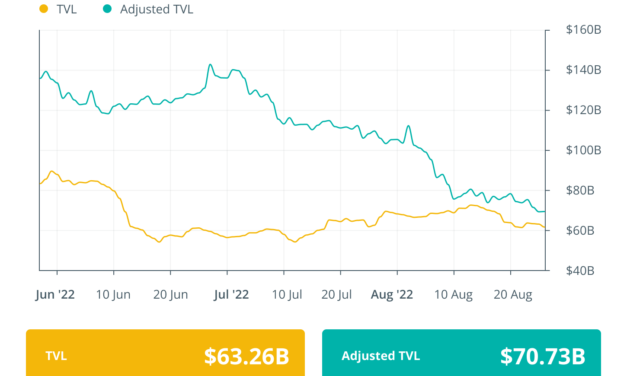
Welcome to Finance Redefined, your weekly dose of essential decentralized finance (DeFi) insights — a newsletter crafted to bring you significant developments over the last week.This past week, there were some major developments in the run-up to the upcoming Ethereum Merge slated for Sept. 15. Bitfinex became the latest crypto exchange to throw its support behind the chain split token.While DeFi bridge hacks have become a norm this year, developers behind Rainbow Bridge managed to foil an exploit attempt within seconds, leading to the hacker losing their safety deposit.The Tornado Cash developer who was arrested last week was sent to 90-day judicial custody awaiting charges. It didn’t go down well with the crypto community, who have actively rallied behind the developer and have accused the authorities of throttling freedom.Cardano’s testnet and Vasil hard fork ran into trouble again this week as founder Charles Hoskinson took to Twitter to claim that the issues surrounding the hard fork as “incredibly corrosive and damaging.”The top-100 DeFi tokens had a mixed week in terms of price action, with the majority of them trading in the red on the weekly charts, barring a few tokens that have shown even double-digit growth.Hacker tries to exploit bridge protocol, fails miserablyCross-chain bridges have increasingly become targeted by malicious entities. However, not all hackers can run away with millions in their exploit attempts. Some end up losing money from their own wallets. In a Twitter thread, Alex Shevchenko, the CEO of Aurora Labs, told the story of a hacker who attempted to exploit the Rainbow Bridge but ended up losing 5 Ether (ETH), worth around $8,000 at the time of writing.Continue readingBitfinex offers new chain split tokens ahead of Ethereum MergeiFinex, the company responsible for Bitfinex Derivatives, announced on Tuesday the launch of a new service offering available to users before the highly-anticipated Ethereum Merge. The exchange now offers Ethereum Chain Split Tokens (CSTs).Tokens available to users represent the two systems involved in the Merge: ETHW, which is proof-of-work (PoW) and ETHS, which is proof-of-stake (PoS). Bitfinex released the new trading tokens so users would be able to trade on the potential forking event. The coins will be available through the Bitfinex derivatives platform.Continue readingRuling to keep Tornado Cash developer in jail for 90 days sparks backlashA judge in the Netherlands ruled that Tornado Cash developer Alexey Pertsev has to stay in jail for 90 more days while waiting for charges. Puzzled by the decision, the crypto community rallied to demand the release of the developer. In a Tweet, crypto investor Ryan Adams argued that the developer did something good for the public with his code contributions, stating that “a few bad guys” decided to use Pertsev’s code and now the developer has to suffer the consequences.Continue readingWhat’s going on with Cardano’s testnet and Vasil hard fork?Cardano founder Charles Hoskinson has continued to refute claims that the Cardano’s testnet is “catastrophically broken,” implying the need to finally move forward with the long-delayed Vasil hard fork.In a Twitter thread on Sunday, Hoskinson shared his frustration concerning some of the videos claiming Cardano’s testnet has a “catastrophic” issue, which stems from a Friday thread from Cardano ecosystem developer Adam Dean.Continue readingDeFi market overviewAnalytical data reveals that DeFi’s total value locked registered a $3 billion decline from the past week thanks to the market dip toward the end of the week. The TVL value was about $63.26 billion at the time of writing. Data from Cointelegraph Markets Pro and TradingView shows that DeFi’s top 100 tokens by market capitalization had a mixed week, with several tokens trading in red while a few others even showed double-digit gains.Theta Fuel (TFUEL) was the biggest gainer with a weekly rise of 19.94% followed by Curve DAO token (CRV) with an 11.76% surge. Convex Finance (CVX) rose by 9.48% on the weekly charts and Pancake Swap (CAKE) saw a weekly gain of 7.56%.Thanks for reading our summary of this week’s most impactful DeFi developments. Join us next Friday for more stories, insights and education in this dynamically advancing space.

Čítaj viac

Celsius bankruptcy proceedings show complexities amid declining hope of recovery

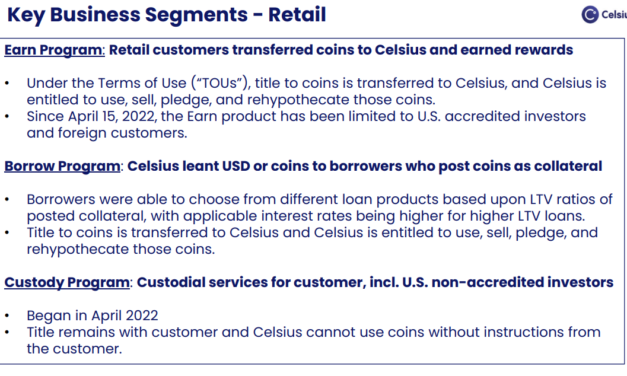
The Celsius Network is one of many crypto lending firms that has been swept up in the wake of the so-called “crypto contagion.” Rumors of Celsius’ insolvency began circulating in June after the crypto lender was forced to halt withdrawals due to “extreme market conditions” on June 13 and eventually filed for chapter 11 bankruptcy a month later on July 13. The crypto lending firm showed a balance gap of $1.2 billion in its bankruptcy filing, with most liabilities owed to its users. User deposits made up the majority of liabilities at $4.72 billion, while Celsius’ assets include CEL tokens as assets valued at $600 million, mining assets worth $720 million and $1.75 billion in crypto assets. The value of the CEL tokens has drawn suspicion from some in the crypto community, however, as the entire market cap for CEL is only $494 million, according to CoinGecko data.Iakov Levin, CEO at centralized and decentralized finance platform Midas, told Cointelegraph that the CEL token value issue could adversely affect its holders. He explained:“Celsius calculated CEL token denominated in $1 per token, requiring someone willing to pay this price for the bankrupt token. The situation is dark not only for Celsius users but also for CEL token holders. CEL has become a sad example of how some events can cause a domino effect, and the broader digital asset market can suffer as a result.”At the time of its bankruptcy filing, the firm had said it aims to use $167 million in cash-on-hand to continue certain operations during the restructuring process and said it intends to eventually “restore activity across the platform” and “return value to customers.”A new bankruptcy report filed nearly a month after its Chapter 11 bankruptcy filing showed that the actual debt of the crypto lender stands at more than double what the firm showed in July. The report found that the company has net liabilities worth $6.6 billion and total assets under management of $3.8 billion. While in their bankruptcy filing, the firm has shown around $4.3 billion in assets against $5.5 billion in liabilities, representing a $1.2 billion difference.Pablo Bonjour, managing director of Macco Restructuring Group, which has worked with several crypto firms going through the bankruptcy process, explained why Celsius’s balance gap increased and what lies ahead for the troubled crypto lender. He told Cointelegraph:“Celsius is really no different than most Chapter 11 bankruptcies in that the debt or shortfall ‘hole,’ if you will, sometimes turns out to be greater than initially expected, especially with regard to cryptocurrency and valuations depending on who and what they owe.” “It’s too early to tell how things will shape up, and Celsius still has a way to before they can sort things out, but I’m sure all of the professionals on all sides are working hard for a better outcome. I anticipate an interesting road ahead and if the examiner is approved, I look forward to reading the examiner’s report. Of course, that may not be ready before the end of 2022. We’ll just have to wait and see,” he added.Recent: How blockchain technology is changing the way people investWith its current debt and cash flow at hand, Celsius is estimated to run out of money by October. A court filing shows Celsius’ three-month cash flow forecast, which estimates steep declining liquidity, indicates the company will experience an approximate 80% drop in liquidity funds from August to September.Brian Pasfield, chief technology officer of decentralized finance protocol Fringe Finance, explained the critical issue that led to the crypto contagion in the first place. He told Cointelegraph:“In order for centralized platforms to compete with fully decentralized alternatives, they need to solve their overhead. However, since decentralized competitors are empowered by lack of overhead, this makes it impossible for players such as Celsius to sustain themselves without incurring fragility strategies, which is what led to this mess in the first place.”Celsius bankruptcy proceedings get messierThe bankruptcy court proceedings for the troubled crypto lender are getting messier by the day. First, Celsius’ lawyers made it clear that the chances of users getting their crypto back are legally impossible since they gave up their rights by signing the terms and conditions.At the first bankruptcy hearing for Celsius, lawyers from the Kirkland law firm led by Pat Nash detailed how retail users with Earn and Borrow accounts transferred the title of their coins to the firm as per its terms of service. As a result, Celsius is free to “use, sell, pledge, and rehypothecate those coins” as it wishes.Terms of Service for Celsius accounts. Source: Celsius PresentationThrough “first day” motions, Celsius said it intends to pay employees and continue their benefits. The company said it will also continue to service existing loans with maturity dates, margin calls and interest payments to continue as they have in the past. Celsius has also appointed a new director to guide it through the restructuring process, including David Barse, a so-called “pioneer” in distressed investing who is the founder and CEO of index company XOUT Capital.The case took another turn when the representative of the United States trustee overseeing the case claimed there was “no real understanding” of the nature or value of Celsius’s crypto holdings — or where it keeps them. The trustee has asked for an examiner to look into allegations of “incompetence or gross mismanagement” as well as “significant transparency issues” surrounding Celsius’ operations in the context of the bankruptcy case.Anna Becker, CEO and co-founder of EndoTech, explained to Cointelegraph what eventually led to Celsuis’s downfall, she told Cointelegraph:“Celsius has built more than a lending machine. It has built a strong community of incentivized believers. This is an example of a company that was very aggressive and successful in its acquisitions efforts, but half-hazard in its risk management. Its ‘tribe’ of believers is bullish but will need to face the harsh realities of its risk management and bankruptcy. So, while there is lots of excitement in the community, the value crater is real and continues to deepen.”On August 17, chief bankruptcy judge Martin Glenn of the Southern District of New York approved Celsuis’ request for running BTC mining and selling operations as a means to reinstate financial stability, against the objections of the U.S. trustee. This means they may have an opportunity to continue as an entity and survive the bankruptcy, of course on a reorganized and restructured basis instead of a liquidation.Celsius community’s efforts might not be fruitfulThe Celsius community remained strong in the aftermath of funds freezing and throughout the bankruptcy proceedings. There’s also an unofficial community-led recovery plan which appears to be gaining traction on Twitter under the hashtag #CELShortSqueeze. The movement is attempting to force short-sellers of the Celsius token to cover their short positions by purposefully driving up the price of the CEL token through the mass purchase and withdrawals of the token from various exchanges.$CEL this actually might become the trade of the year. Shorters got REKT big time… You can’t make this shit up, that’s why I love #Crypto #Celsius #CelShortSqueeze pic.twitter.com/A6OQwoQMhS— DoopieCash® (@DoopieCash) June 21, 2022CEL’s price rose from $0.67 on June 19 to $1.59 on June 21, a 180% spike compared to the crypto market’s 12.37% rise in the same period. However, experts believe that the impact of the short squeeze won’t be long-lived. Jackson Zeng, CEO of crypto brokerage firm Caleb & Brown, told Cointelegraph, “Celsius holds the majority of CEL, 90% based on Etherscan, but can’t sell or move the token amid its bankruptcy proceedings. However, traders still have to pay 0.5-2.5% per day to short the token, so many have been forced to close their short positions over the last two months,” adding: “A company undergoing a bankruptcy is unlikely to have a positive road ahead. Once the supply is unlocked, the shorts can be covered therefore having a negative impact on the price and removing the effect of the short squeeze.”Celsius CEO Alex Mashinsky reportedly “took control” of trading strategy at the crypto lending firm amid January rumors the United States Federal Reserve planned to hike interest rates.Recent: Bitcoin and the banking system: Slammed doors and legacy flawsAccording to a report from the Financial Times, Mashinsky personally directed individual trades and overruled financial experts in an effort to protect Celsius from anticipated declines in the crypto market. The Celsius CEO reportedly ordered the sale of “hundreds of millions of dollars” worth of Bitcoin in one instance, rebuying the coins less than 24 hours later at a loss.As the bankruptcy proceedings reveal more complexities with the crypto lender, Celsius might face a similar fate as many of its peers including Voyager, BlockFi and Hodlnaut.

Čítaj viac

Ethereum dev addresses node centralization concerns in runup to the Merge

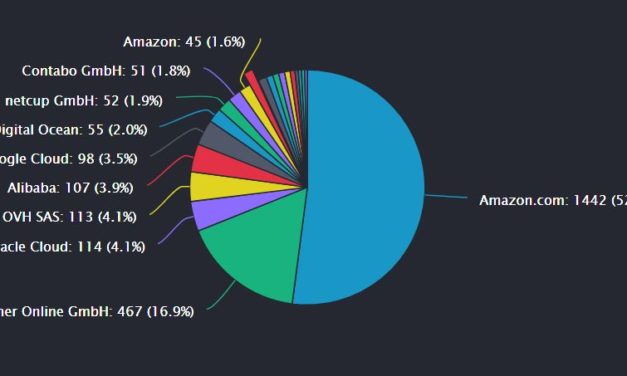
Ethereum is a few weeks away from officially moving to a proof-of-stake (PoS) mining consensus from its current proof-of-work (PoW) one. The transition officially dubbed the Merge is slated for Sept. 15, but in the run-up to the major upgrade, Ethereum node centralization has become a hot topic.As Cointelegraph reported last week, the majority of 4,653 active Ethereum nodes are being run through centralized web providers like Amazon Web Services (AWS), which experts believe could expose the Ethereum blockchain to the central point of failure post Merge.Distribution of Ethereum nodes from web service providers. Source: EthernodesThe same concern was put forward by Maggie Love, co-founder of Web3 infrastructure firm W3BCloud. She claimed that the centralization of nodes in the Ethereum PoS network could become a big concern that nobody seems to be focusing on.Ethereum lead developer Péter Szilágyi addressed the mounting centralization concerns and claimed that they have been aiming to prune the database since Devcon IV. “Pruning” refers to reducing the size of the blockchain to a point where developers can create a reliable registry with a certain size.We’ve been saying it since Devcon IV. Either the state gets pruned, or you will end up with nobody running home nodes.Everyone went crazy at the thought of state rent. Alexey almost got crucified for researching it. Well, now you’re seeing the effect of no pruning.¯_(ツ)_/¯ https://t.co/SkmD2Q39wE— Péter Szilágyi (karalabe.eth) (@peter_szilagyi) August 26, 2022Szilágyi added that the idea received heavy backlash at the time and the current centralization in nodes is a direct result of that. He explained that the Ethereum state needs to be a constant size for people to be able to run their own nodes.Related: ETH whales move holdings onto exchanges before MergeEthereum state refers to a large data structure that holds not only all accounts and balances but a machine state, which can change from block to block according to a pre-defined set of rules. Szilágyi explained:“Ethereum state needs to be ‘constant‘ in size. That way it can run forever. The constant can be pushed up like the block gas limit if need be, but it mustn’t grow unbounded. Until that’s solved, there’s no light at the end of the tunnel.”He noted that active efforts are being made by several parties to resolve the issue, however, in the meantime, the common public shouldn’t be blamed for “not wanting to maintain an ever larger “infrastructure” for running a node.”At present, the cost of running an individual node is very high, something that crypto analytic firm Mesari flagged in its report. Due to such infrastructure costs, people often turn to cloud infrastructure service providers such as AWS. However, high centralization could prove to be a vulnerability in the long term.

Čítaj viac

ETH whales move holdings onto exchanges before Merge

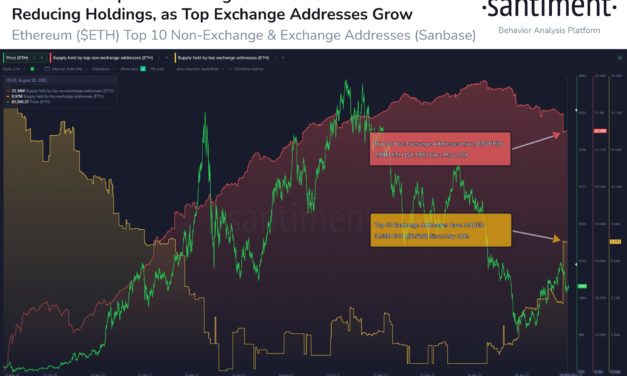
Ethereum blockchain is slated for one of the biggest updates since its inception, as it will transition to a proof-of-stake (PoS) mining consensus from its current proof-of-work (PoW) one. The Merge date is scheduled for Sept. 15, after the successful Goerli test net integration — the final test net merger before the actual transition. Ether (ETH), the native token, was on a bullish surge after the announcement of the Merge date in July with the ETH price rising to a new six-month high of over $2,000 but failed to consolidate the critical resistance.The bullish enthusiasm in terms of token price and market sentiment seems to be on a decline as we near the Merge. A significant chunk of ETH whales has seen a sharp decline in their holdings.Data from crypto analytic firm Santiment indicates that the gap between Ethereum’s top-10 largest non-exchange addresses and exchange addresses is closing. Over the past three months, top whale addresses have sent a significant amount of ETH onto exchanges as non-exchange addresses saw a decline of 11% while exchange-based addresses have seen a 78% surge.Ethereum top-10 exchange and non-exchange wallet Source: SantimentThe flow of crypto onto exchanges is considered a bearish sentiment and is often done by traders to take a profit by selling their tokens. The increase in the amount of ETH by whale addresses on exchanges suggests these whales are expecting the price to go lower in the near future.Many market analysts also believe that the Merge would be a “buy the rumor, sell the news” type of event. Where the market rallied in the aftermath of the Merge date confirmation, but could eventually see a price decline after the key event.  The saying means that if good news is expected sometime in the future, the price will often move higher in anticipation of that date, but not necessarily after.I think #Ethereum will drop so hard on the Merge day. The whole anticipation is getting not bought up on the spot market but on the futures market.Be warned.— Crypto Rover (@rovercrc) August 23, 2022The Merge would mark the completion of the second of three phases in Ethereum’s transition to the PoS consensus. The PoS transition process began in December 2020 with the launch of the Beacon chain. Related: Monthly Ethereum options data suggests $2K will remain an elusive targetThe current phase was scheduled to be completed by mid-2021, however, due to several delays, it is now slated for the third quarter of 2022. The third phase would be the most crucial as it would introduce several scalability features such as sharding and reducing blockchain’s energy consumption significantly.The Sept. 15 event is a significant milestone for Ethereum, however, at the same time, the Merge would only mean a change of mining consensus. Key benefits such as high transaction capacity, lower gas fees and reduction in energy consumption would all come after the completion of the third phase.

Čítaj viac

Získaj BONUS 8 € v Bitcoinoch

nakup bitcoin z karty

Registrácia Binance

Burza Binance

Aktuálne kurzy