Autor Cointelegraph By Prashant Jha

El Salvador's Bitcoin decision: Tracking adoption a year later

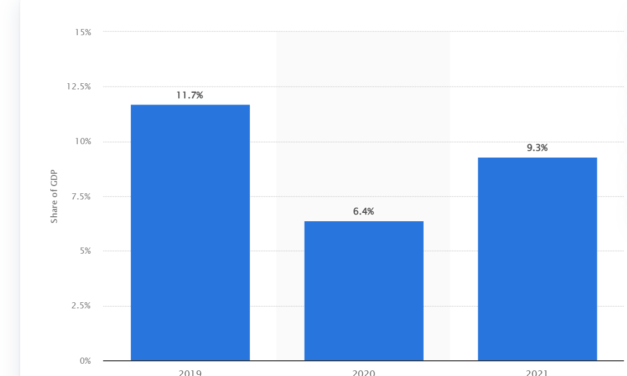
El Salvador, the small Central American nation that made history just over a year ago when it made Bitcoin (BTC), recently marked its first year of BTC adoption.The Salvadoran government touted BTC as a tool to attract foreign investment, create new jobs and cut reliance on the United States dollar in the country’s economy at the time of adoption. Many BTC proponents and the libertarian community rallied behind the small nation despite mounting pressure from global organizations such as the World Bank and International Monetary Fund (IMF) to remove BTC as a legal tender.A lot has changed over the past year since El Salvador became the first “Bitcoin nation.” Enthusiasm and public interest rose immediately after the recognition of BTC, with the price surging to new highs.Salvadoran President Nayib Bukele joined the growing league of Bitcoin proponents to buy several market dips and even reaped the benefits of their BTC purchase in the early days as the country built schools and hospitals with its profits. As market conditions turned bearish, however, the frequency of BTC purchases slowed down, and the president, who was often seen interacting with the crypto community on Twitter and sharing future Bitcoin endeavors, cut back his social media interactions significantly. El Salvador has purchased 2,301 BTC since last September for about $103.9 million. That Bitcoin is presently worth roughly $45 million. The most recent purchase was made in mid-2022 when the nation bought 80 BTC at $19,000 a piece.As the price of BTC tanked, critics who have long been raising concerns about a crypto bubble felt validated, with several comments along the lines of “I told you so.” However, market experts believe El Salvador’s BTC experiment is far from a failure. El Salvador’s Bitcoin Volcanic bond, a project meant to raise $1 billion from investors to build a Bitcoin city, has already been delayed on numerous occasions now and skepticism is growing not just around the project but on the overall BTC adoption itself. Samson Mow, a Bitcoin entrepreneur who played a key role in designing the Bitcoin Volcanic bond — also called the Volcanic token — told Cointelegraph that contrary to common outside perceptions, El Salvador is building through the bear market. He noted that the Volcanic bond was delayed due to several reasons and is currently awaiting the passage of a digital securities law. He explained:“We’re still waiting on the new digital securities laws to go to congress, and once passed, El Salvador can start the capital raise for the Bitcoin Bonds. I’m hopeful that it happens before the end of this year. Much like Bitcoin companies, El Salvador is focused on building through the bear market. I can’t see President Bukele not stacking more at these prices.”The BTC price recorded a new all-time-high of $68,789 just a month after El Salvador’s adoption on Nov. 10. Since then, however, the price has tanked by over 70% and currently trading at around $19,000. Many critics believe that the future of the Volcanic bond and its native token is highly dependent on the crypto market and thus it could only gain traction during bull markets.Paolo Ardoino, chief technical officer at Bitfinex, told Cointelegraph that the Volcanic tokens would generate interest from investors irrespective of the market conditions, he explained:“The Volcanic token will be the first of its kind. While investor appetite for new offerings is typically greater during a bull market, we are confident that the unique proposition that this token represents will garner significant interest regardless of market conditions. The Volcanic token has widespread support in the Bitcoin community and there is manifestly a great appetite for the offering regardless of if we are in a bear or bull market.”Bitfinex is the key infrastructure partner of the El Salvador government responsible for processing transactions from the sale of Volcanic tokens. Bitcoin adoption boosted remittance and tourismWhile critics have called El Salvador’s Bitcoin experiment a failure since the start, proponents see it as a revolution of sorts and believe El Salvador’s adoption could create a domino effect for other nations with similar financial challenges such as a high number of unbanked citizens and significant remittance volumes. Bukele has previously mentioned that the primary focus of recognizing BTC was to offer banking services to more than 80% of unbanked Salvodrans. Within six months of the law passing, the country’s national Bitcoin wallet managed to onboard four million users, ensuring that 70% of the unbanked population got access to payment and remittance services without having to go to a bank.Recent: Metaverse graphics aim for community and accessibility — Not realismAarti Dhapte, a senior research analyst at Market Research Future, told Cointelegraph that El Salvador’s BTC adoption has proven a success on several fronts, be it banking the unbanked or boosting tourism:“We should accept that the digital currency has helped the Central American nation of El Salvador rebuild its tourism industry, despite the country still having difficulty enduring the long crypto winter. According to information from the Ministry of Tourism, El Salvador’s spending on travel has increased by 81% in the post-pandemic period. In 2021 the nation welcomed 1.2 million visitors and 1.1 million during the first half of 2022.”Statista data shows that more than 9% of El Salvador’s GDP is made up of the tourism industry, so a near doubling of tourism is a significant boon for the country.Share of tourism in El Salvador’s GDP. Source: StatistaApart from tourism and offering financial services to the unbanked, BTC adoption has also proven beneficial in terms of cross-border remittances, cutting transaction costs significantly.The El Salvador Central Reserve Bank estimates that from January to May 2022, remittances from citizens residing abroad totaled more than $50 million. The adoption of Bitcoin and the Chivo wallet, an initiative supported by the government of El Salvador, helped boost Lightning Network transactions by 400% in 2022.The downsides of Bitcoin adoptionThe biggest downside of El Salvador’s Bitcoin adoption has been macroeconomic factors that have led to a decline in BTC price along with the amount of pushback it has gotten from around the world. The pushback wouldn’t matter in a bull market, but being a small nation-state with financial challenges, the country cannot afford to be on bad terms with international monetary organizations. Right now, the vast majority of El Salvador’s Bitcoin was purchased at a higher value than it currently enjoys. Bitcoin has been tracking closely with traditional assets, like the stock market — particularly tech stocks. They, too, have taken a beating this year as the world tries to cope with the aftermath of pandemic-related government handouts. Beyond the price of Bitcoin, the bigger problem for El Salvador is how the international financial world views the move. The country’s move toward Bitcoin has limited the country’s access to traditional financial markets, causing Bukele some real problems in financing the repayment of its bond obligations. Moody’s, earlier this year, credited disagreements about Bitcoin as a reason El Salvador was having difficulty coming to terms with the IMF. Recent: Ethereum post-Merge hard forks are here: Now what?Richard Gardner, CEO at institutional infrastructure service provider Modulus, told Cointelegraph that maybe in five years, Bukele’s decision won’t look that bad, but currently, it’s controversial:“Bukele’s move to Bitcoin doesn’t look wise. Even with high inflation for the USD, Bitcoin has ultimately failed as an inflation hedge, given its dip. However, we’re looking at a one-year snapshot during a recession. For a country like El Salvador, access to funding through organizations like the IMF is vital. That makes Bukele’s Bitcoin gambit difficult to defend.”El Salvador’s future depends a lot on the success of the delayed Volcanic bonds, which could bring billions in revenue and set a precedent for others to follow. Until the launch of the bond, the outside world will continue to measure its success based on its BTC purchases.

Čítaj viac


China accounts for 84% of all blockchain patent applications, but there's a catch

China accounts for 84% of all blockchain applications filed worldwide, according to the latest data shared by the country’s government official.China has steered clear of the cryptocurrency market. However, the Beijing government has been supportive of the underlying blockchain technology. The country has actively promoted the use of blockchain tech over the years, and thus the high percentage of blockchain patents isn’t surprising.President Xi Jinping has also played a key role in promoting the nascent blockchain technology. In 2019, the President called upon citizens, tech companies and stakeholders of the ecosystem to actively participate and innovate with the nascent tech as it would play a key role in the future of the next industrial revolution. As Cointelegraph reported earlier, Chinese companies had filed 4,435 blockchain patents within one year of President Xi Jinping’s endorsement of the industry. According to another study, China accounted for roughly 60% of the world’s blockchain patent applications from 2015 to June 2021, followed by the US and South Korea.The figure was released on Tuesday by Wang Jianwei, deputy director of the Ministry of Industry and Information Technology. However, the figures didn’t include a time frame in which these patent applications were filed.Related: Tencent receives patent for blockchain-based missing person posterWhile China accounts for the highest number of blockchain patent applications, the approval rate is significantly low, with only 19% of the total filed applications getting approved, reported South China Morning Post.Another important thing to note here is that China is not very big on decentralization, the same principle that blockchain tech is based on. This was evident from the country’s digital yuan development, where the central bank developed the digital national currency on the curated version of a blockchain with full control over its functioning rather than using the traditional distributed network approach.

Čítaj viac

Opera browser integrates Elrond blockchain services to bolster Web3 adoption

Web3 crypto browser Opera announced plans to integrate Elrond blockchain services for over 300 million users. The integration would help Opera users directly access a host of decentralized applications (DApps) and other popular services through the integrated Opera wallet. Elrond (EGLD) is a scalable blockchain network that offers various infrastructure services for DApps, enterprise use cases and the new internet economy. The blockchain’s adaptive state sharding makes it one of the fastest and more efficient networks. With the integration, Opera users will have access to the Elrond Standard Digital Token (ESDT), a native token issuance standard, in addition to the native EGLD tokens, making it a great entry point for Web3. Users will be able to take part without relying on a third-party wallet, ensuring seamless transactions and added security.In an exclusive conversation with Cointelegraph, Danny Yao, senior product manager at Opera, said that the company is actively pursuing a multi-chain policy, having integrated Ethereum, Bitcoin, Polygon, and BNB Chain earlier. He explained:“Our aim is to be an understandable and secure entry point to Web3 for anyone interested in crypto. This also means we have provided a wallet selector feature that lets our users choose which wallet they want to use to interact with a particular DApp.”Opera browser offers an integrated non-custodial crypto wallet, making it an apt entry point for millions of users that can access multiple blockchain ecosystems from this single entry point.Related: NFT micro-philanthropy gives a new voice to the operaTalking about the growing security vulnerabilities among DApps and how Opera is mitigating those risks, Yao explained:“We have provided a wallet selector feature that lets our users choose which wallet they want to use to interact with a particular DApp. We also have a secure clipboard, safeguarding our user’s data as they copy-paste sensitive data such as wallet addresses or bank account numbers.”Elrond blockchain is one of the first European carbon-negative blockchains, ensuring Opera users will have access to eco-friendly solutions. With a growing focus on environmental, social and governance (ESG) concerns in the crypto ecosystem, the partnership between the two Web3 platforms could set a precedent for similar integrations in the future.

Čítaj viac

Sharding could resolve Ethereum scalability trilemma, says researcher

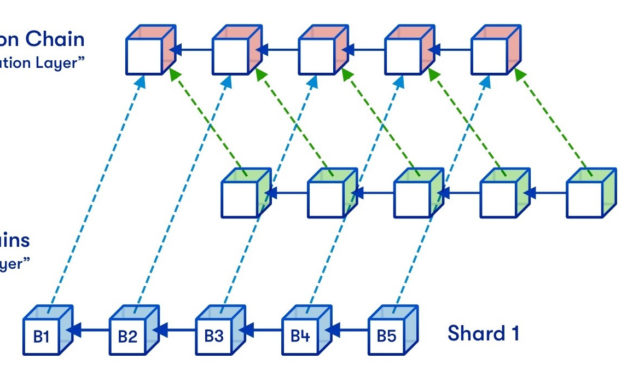
After a successful Ethereum Merge, all eyes are set on the next phase of transition that would introduce key scalability solutions on the platform, including sharding. Market experts believe sharding would be a game changer for the Ethereum network as it could potentially solve the scalability trilemma.In an exclusive conversation with Cointelegraph, Uphold’s head of research, Dr. Martin Hiesboeck, explained how sharding could pave the way for Ethereum to become a truly global network.Hiesboeck believes sharding could eventually solve the long-running scalability trilemma of blockchain networks. Scalability trilemma implies that to scale, blockchains usually need to sacrifice one of their three fundamental cornerstones — security or decentralization, with the third one being scalability itself. He explained:“Sharding is indeed one of the most effective and universal ways to solve the so-called ‘scalability trilemma.’ Not sure it’s sufficient to proclaim it the only true scalability solution, but sharding is definitely among the best ones we have at the moment.”.In layman’s terms, sharding would introduce parallel processing, enabling secure distribution of data storage requirements and making nodes easier to operate. In the current blockchain processing system, transactions are processed one block after the other, while with the introduction of sharding, the network can process multiple blocks of transactions concurrently.Using this mechanism, validators that verify certain blocks will publish signatures attesting to the fact that they did so. Meanwhile, everyone else will have to only verify 10,000 such signatures instead of 100 full blocks, which is a significantly smaller amount of work.Depiction of a Sharded Version of Ethereum. Source: Quantstamp.Hiesboeck explained that sharding would not only increase Ethereum’s throughput by multifold but also lower the gas fees and make the network more energy efficient. He explained that the energy saving and scalability both come from “the smaller packets that have to be moved as sharding stores datasets in manageable blocks and allows additional requests to be executed at the same time.”Earlier, Ethereum developers planned to launch 64 shards which require roughly 8.4 million Ether (ETH) to be staked in Eth2. However, there are already nearly 13.8 million ETH staked by now, so the number of initial shards can potentially be even higher than that.Related: Ethereum co-founder Vitalik Buterin defends DAOs against criticsThe transition to PoS has also raised node centralization concerns, especially in the wake of the United States Securities and Exchange Commission’s (SEC) jurisdiction claims over ETH, since nearly 43% of nodes are clustered in the U.S. Hiesboeck said that the SEC’s assertions over Ethereum are misguided. He argued that the concentration of nodes can change overnight and explained:“Ethereum nodes can pop up anywhere in the world, and while around nearly 43% of them are indeed centralized in the U.S. right now (the second-biggest country being Germany with 11.8%), this can change at a moment’s notice.”Hiesboeck concluded by saying that the Ethereum developer community has a proven track record and has already demonstrated its resilience in the past so that anything can be solved, given time.

Čítaj viac

BNB Chain launches a new community-run security mechanism to protect users

BNB Chain, the native blockchain of Binance, has launched AvengerDAO, a new community-driven security initiative to help users against scams, malicious actors and possible exploits.The security-centric decentralized autonomous organization (DAO) has been developed in association with leading security firms and popular crypto projects such as Certik, TrustWallet, PancakeSwap and Opera, to name a few. The AvengerDAO security initiative mainly consists of three major components, namely a passive API system called Meter, a subscription-based alert system called Watch, and a programmable fund management system called Vault.When a user on the BNB Chain interacts with any applications or counterparties, the AvengerDAO adds an additional layer of security. The Meter API system would fetch security ratings on smart contracts, domains, and addresses and alert users in case of a security vulnerability. The Watch system alerts users in real-time about ongoing exploits, while the Vault acts as an escrow where the funds would only be released once certain pre-set conditions are met.Gwendolyn Regina, investment director at BNB Chain, explained how the community would be responsible for security decisions in an exclusive conversation with Cointelegraph. She said that the community would perform a survey of existing security auditing service providers to see what types of common security vulnerabilities exist. She added:”We think that when additional professional security audit firms join the DAO as members, we will collectively get a deeper understanding of the security landscape, and work on enhancing it.”Some of the AvengerDAO members, including security decentralized application (DApp) Hashdit, have already released an integration with PancakeSwap that would allow its users to fetch the security ratings of smart contracts witthey are interacting with at the start of September.BNB chain has paid special attention to user security and has launched several initiatives over the past few months. Before the AvengerDAO launch, the BNB Chain launched Dappbay equipped with a novel feature called Red Alarm. This feature assesses project risk levels in real time and alerts users of potentially risky DApps.Related: White hat hackers have returned $32.6M worth of tokens to Nomad bridgeWithin a month of its launch, the Red Alarm feature of DappBay identified over 50 on-chain projects that pose a significant risk to users. The security feature analyzed 3,300 contracts in July alone.While Red Alarm was just meant to flag vulnerable smart contracts and projects that possess financial risk, AvengerDAO aims to become a multidimensional security initiative with a focus on detecting real-time vulnerabilities and exploits.

Čítaj viac

Získaj BONUS 8 € v Bitcoinoch

nakup bitcoin z karty

Registrácia Binance

Burza Binance

Aktuálne kurzy