Autor Cointelegraph By Prashant Jha

Crypto exchange Bitkub targeted by Thai SEC with wash trading claims

Thailand’s largest crypto exchange Bitkub has come under regulatory scrutiny from the country’s Securities and Exchange Commission (SEC) over falsifying and creating artificial trading volume on its platform.Thai SEC ordered legal action against the crypto exchange and two individuals alleging the crypto platform was involved in wash trading, a process where investors buy and sell the same assets at the same time in order to manipulate the market by inflating volumes. The latest enforcement action against the leading Thai crypto exchange would be the second penalty for the crypto exchange within three months. Bitkub Capital Group Holdings Chairman Sakolkorn Sakavee was fined $216,000 and banned from managerial roles in the firm for a year earlier in July this year.According to an official statement by the SEC dated Sept. 27, the regulatory body has filed a lawsuit against the crypto exchange and the two individuals, seeking a civil fine and expenses of around $634,000 and a six-month trading prohibition for the duo.Cointelegraph didn’t get a response from Bitkub at press time.Bitkub is among the top crypto exchanges in Thailand, boasting daily trading volumes of millions. However, the crypto exchange has also been at the receiving end of regulatory actions over the past few months. The exchange’s chief technical officer Samret Wajanasathian was fined 8,530,383 baht ($234,000) towards the end of August, on charges of insider trading.Related: The Bank of Thailand to pilot Retail CBDC by the end of 2022The crypto exchange also faced a major setback last month when Thailand’s oldest bank Siam Commercial Bank scrapped its $500 million funding plans. Thailand was once seen as one of the most crypto-progressive nations in the world, thanks to a regulated crypto market and tax breaks for crypto traders. However, several leading crypto exchanges have faced regulatory and compliance challenges in the country from time to time. Even the likes of Binance and Huobi have struggled with regulatory compliance.

Čítaj viac


Report: Korean authorities orders freeze of $67M of Bitcoin tied to Do Kwon

South Korean authorities have requested crypto exchange OKX and Kucoin to freeze 3,313 Bitcoin (BTC) reportedly tied to Do Kwon, the co-founder of Terra blockchain developer Terraform Labs.Kwon, who is currently on the run from the Korean authorities in the securities violation case, reportedly created a new wallet on Sept. 15, just a day after a Korean court issued an arrest warrant against the fugitive crypto founder.According to the crypto analytic group Cryptoquant, a new BTC wallet was created under the name of Luna Foundation Guard (LFG), and a total of 3,313 BTC was then transferred to the KuCoin and OKX exchange.KuCoin received a total of 1,354 BTC, which were frozen immediately after the transfer, while OKX has reportedly ignored authorities’ requests. Thus, a total of 1,959 BTC couldn’t be frozen and could have been moved to other platforms.Cointelegraph reached out to both crypto exchanges for confirmation but didn’t get a response at press time.The movement of BTC from the LFG wallet raised many eyebrows as it contradicts Kwon‘s early claims of having used all the BTC in tLFG reserves to defend the TerraUSD Classic (USTC) peg. Related: Terra co-founder Do Kwon says he’s ‘making zero effort to hide’ following Interpol noticePrior to the issuance of his arrest warrant on Sept. 14, Kwon claimed that he was neither under investigation nor had he been contacted by any authorities, despite numerous reports of several investigations in South Korea. However, right after the arrest warrant was released, Kwon reportedly fled Singapore, forcing authorities to seek help from Interpol.On Sept. 26, Interpol issued a red notice against Kwon, confirming his fugitive status. However, despite all the evidence and an international notice against him, Kwon continues to tweet every now and then, claiming otherwise.For something that has notice in the name it sure gives no notice Tried to search it here, found nothing: https://t.co/SuX3aIu6r6— Do Kwon (@stablekwon) September 26, 2022The $40 billion Terra ecosystem collapse led to a crypto market rout that wiped out nearly a trillion dollars from the crypto market. Even after such mayhem, Kwon continued to garner support from some sections of the community as he claimed his innocence and maintained he ha lost everything in the collapse.

Čítaj viac

Russia aims to use CBDC for international settlements with China: Report

Russia is in the pilot phase of its central bank digital currency development (CBDC), and new reports indicate that the country could use its national digital currency to settle international trade.According to a report published in Reuters, Russia is reportedly planning to use the digital rouble for mutual settlements with China by next year. The digital rouble is currently being tested for settling with the banks and is expected to be completed by early next year.The United States Treasury Department added 22 individuals and two Russia-based entities to the sanction list in the third week of September. With the growing sanctions against Russia from the West in the wake of the ongoing conflict with Ukraine, the country has been actively looking for alternate financial routes and trade settlements. Anatoly Aksakov, head of the finance committee in Russia’s lower house of parliament, recently admitted that the geo-political crisis has limited Russia’s accessibility to the international trade market. This is why they have been actively working for alternate modes of payment and trade settlements, and national digital currency seems to be the primary choice at the moment. He said,“The topic of digital financial assets, the digital rouble and cryptocurrencies are currently intensifying in society, as Western countries are imposing sanctions and creating problems for bank transfers, including in international settlements.” Russia has joined the growing list of countries that are in the final phase of their CBDC development. According to the Bank of Russia’s latest monetary policy update, the authority will begin to connect all banks and credit institutions to the digital rouble platform in 2024.The reports of the use of the digital rouble for mutual trade settlements in the international trade market come within a week of reports that hinted at possible crypto use for cross-border payments.Related: Crypto offers Russia no way out from Western sanctionsRussia adopted a crypto law in 2020, prohibiting the use of cryptocurrencies as a form of payment. However, the law didn’t ban other crypto-focused activities such as mining and crypto trading. With the rise of sanctions and growing uncertainty in the international trade market, Russia has turned to its national digital currency as a medium of exchange to weaken U.S dominance in the international trade market.

Čítaj viac

Charles Hoskinson and ETH dev get into a war of words post-Vasil upgrade

Charles Hoskinson, the founder of Cardano and co-founder of Ethereum blockchain, got into a war of words with Ethereum developers on the implementation of proof-of-stake (PoS) consensus via Merge.On Sunday, Web3 investor Evan Van Ness shared an unpopular opinion claiming that the Ethereum Merge could have been shipped earlier. Vitalik Buterin, the co-founder of Ethereum, agreed to Van Ness’s comments and said they should have implemented NXT-like chain-based PoS. Hoskinson joined in the conversation claiming the Ethereum developers should have implemented snow white protocol instead to ensure a faster migration to proof-of-stake (PoS) consensus. You should have just implemented snow white with Elaine’s help. It would have saved you a heck of a lot of pain and effort.— Charles Hoskinson (@IOHK_Charles) September 25, 2022Snow White is one of the first protocols to provide end-to-end, formal proofs of security for a PoS system and a protocol Hoskinson has advocated for years. However, Hoskinson’s response opened a can of worms, which later led to a heated debate between the Cardano founder and Van Ness along with other Ethereum developersHoskinson claimed that his ideas regarding the technical upgrades on the Ethereum network from 2014 still hold better than what the Ethereum network has upgraded to post Merge. Van Ness quickly reminded Hoskinson that he was fired from Ethereum within six months because of his poor behavior and lack of any significant technical contribution.Related: Cardano Vasil upgrade ready with all ‘critical mass indicators’ achievedEarlier on Monday, Hoskinson in a Tweet thread accused Ethereum developers of ignoring Ouroboros (a secure PoS blockchain and the first protocol to be based on peer-reviewed research) throughout the last five years. He also claimed that the current version of its PoS upgrade with custodial staking is a bad design.Ethereum core developer Hudson Jameson called out Hoskinson’s claims regarding the Ouroboros protocol implementation. He even said that Ethereum devs disliked Cardano primarily because of his “attitude and actions as the face of Cardano.” I guess Charles forgot about his Reddit history and how much he shit on Ethereum as he was building Cardano. Additionally, Vitalik did review Ouroboros a while ago.Ethereum devs aren’t wanting to look at Cardano because of your attitude and actions as the face of Cardano. https://t.co/QB3QYRKkm5 pic.twitter.com/daX56FfwGv— Hudson Jameson (@hudsonjameson) September 26, 2022

Jameson then reminded Hoskinson of his ill-treatment of the Ethereum Classic community and asked him to quit playing the victim.Hoskinson is known for his hot takes on his former project and the war of words between the two communities is nothing new. However, with both blockchains undergoing a key upgrade on their network, the recent exchange between the two sides highlight the disconnect between blockchain communities.

Čítaj viac

Tornado Cash saga left a void, says Chainalysis chief scientist: Finance Redefined

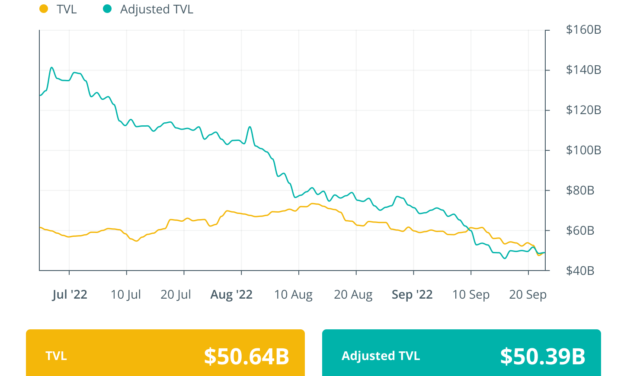
Welcome to Finance Redefined, your weekly dose of essential decentralized finance (DeFi) insights — a newsletter crafted to bring you significant developments over the last week.Chainalysis chief scientist shared his views on the Tornado Cash saga and said that the incident has left a void for illicit fund mixing services, but the real impact of the sanctions could be determined in the long run.The staking ecosystem of Ethereum post Merge could have a significant impact on the crypto economy, according to a new report. Institutional lending platform Mapple Finance launched a $300 million lending pool for Bitcoin mining farms.The Tribe DAO, a decentralized autonomous organization, voted in favor of repaying affected users of the $80 million exploit on DeFi platform Rari Capital’s liquidity pools. BNB Chain launched a new community-led security initiative called Avenger DAO.Top-100 DeFi tokens by market cap have a mixed week in terms of price action, where many tokens traded in red while a few others showed weekly gains.Tornado Cash left a void, time will tell what fills it — Chainalysis chief scientistThe sanctions on cryptocurrency mixer Tornado Cash have left a vacuum for illicit fund mixing services, but more time is needed before we’ll know the full impact, according to Chainalysis’ chief scientist.During a demo of Chainalysis’ recently launched blockchain analysis platform Storyline, Cointelegraph asked Chainalysis chief scientist Jacob Illum and country manager for Australia and New Zealand Todd Lenfield about the impact of the Tornado Cash ban.Continue readingTribe DAO votes in favor of repaying victims of $80M Rari hackAfter months of uncertainty, the Tribe DAO has passed a vote to repay affected users of the $80 million exploit on DeFi platform Rari Capital’s liquidity pools.Following several rounds of voting and governance proposals, Tribe DAO, which consists of Midas Capital, Rari Capital, Fei Protocol and Volt Protocol, took the decision to vote on Sunday with the intent to fully reimburse hack victims.Continue readingStaking providers could expand institutional presence in the crypto space: ReportThe Ethereum blockchain’s carbon footprint is expected to reduce by 99% following last week’s Merge event. By positioning staking as a service for retail and institutional investors, the upgrade could also have a significant impact on the crypto economy, according to a report from Bitwise on Tuesday.The company said it projects potential gains of 4%–8% for long-term investors through Ether (ETH) staking, while J.P. Morgan analysts forecast that staking yields across PoS blockchains could double to $40 billion by 2025.Continue readingMaple Finance launches $300M lending pool for Bitcoin mining firmsOn Sept. 20, institutional crypto lending protocol Maple Finance and its delegate Icebreaker Finance announced that they would provide up to $300 million worth of secured debt financing to public and private Bitcoin mining firms. Qualified entities meeting treasury management and power strategies standards located throughout North America, as well as those in Australia, can apply for funding.On the other hand, the venture seeks to deliver risk-adjusted returns in the low teen percentages (up to 13% per annum) to investors and capital allocators. The pool is only open to accredited investors who meet substantial income and/or net worth qualifications within a jurisdiction.Continue readingBNB Chain launches a new community-run security mechanism to protect usersBNB Chain, the native blockchain of Binance, has launched AvengerDAO, a new community-driven security initiative to help protect users against scams, malicious actors and possible exploits.The security-centric DAO has been developed in association with leading security firms and popular crypto projects such as Certik, TrustWallet, PancakeSwap and Opera, to name a few.Continue readingDeFi market overviewAnalytical data reveals that DeFi’s total value locked registered a minor dip from the past week. The TVL value was about $50.64 billion at the time of writing. Data from Cointelegraph Markets Pro and TradingView show that DeFi’s top 100 tokens by market capitalization had a mixed week, with many tokens making a recovery toward the end of the week while a few others traded in red on the weekly charts.Compound (COMP) was the biggest gainer, registering a 15% gain over the past seven days, followed by PancakeSwap (CAKE) with an 8.8% gain. Theta Network (THETA) was another token in the top 100 to post a 5% weekly gain.Thanks for reading our summary of this week’s most impactful DeFi developments. Join us next Friday for more stories, insights and education in this dynamically advancing space.

Čítaj viac

Získaj BONUS 8 € v Bitcoinoch

nakup bitcoin z karty

Registrácia Binance

Burza Binance

Aktuálne kurzy