Autor Cointelegraph By Prashant Jha

Terra could leave a similar regulatory legacy to that of Facebook’s Libra

New draft legislation on stablecoins in the United States House of Representatives proposed to impose a two-year ban on new algorithmically pegged stablecoins like TerraUSD (UST).The proposed legislation would require the Department of the Treasury to conduct a study of stablecoins similar to UST in collaboration with the United States Federal Reserve, the Office of the Comptroller of the Currency, the Federal Deposit Insurance Corporation and the Securities and Exchange Commission. An algorithmic stablecoin is a digital asset the value of which is kept steady by an algorithm. While an algorithmic stablecoin is pegged to the value of a real-world asset, it is not backed by one.The stablecoin bill has been in the works for several months now and has been delayed on numerous occasions. Treasury Secretary Janet Yellen has repeatedly cited the Terra collapse when calling for more regulation of the crypto space.The Terra ecosystem failure that began with the depegging of its algorithmic stablecoin UST eventually wiped out the $40 billion ecosystem. This led to a crypto contagion that saw the crypto market lose nearly a trillion dollars worth of market value within a couple of weeks.Markets have yet to recover from the contagion, and the Terra collapse definitely cast a shadow on the future of algorithmic stablecoins and became a hot topic for critics including certain policymakers who have been using it to advocate for stricter policies for cryptocurrencies. The latest draft proposal to put a temporary ban on such stablecoins is one such example. Under the current draft of the bill, it would be illegal to issue or create new “endogenously collateralized stablecoins.”The draft proposal evoked mixed emotions from Crypto Twitter. While some market observers called it a good idea, which would help avoid further such collapses, others believed the Terra fiasco has put the industry back by years. Pointing toward the two-year temporary ban, some implied that even though algorithmic stablecoins might not be the culprit, the execution by the Terra team has cast a shadow on the whole algorithmic stablecoin industry. In many ways, Do Kwon set the crypto space back by years. Most Terra fans don’t even realize that the “decentralization maxi” spiel was pure LARP – Terra was one of the most centralized L1s, and UST’s primary backing ($3b in BTC) was sitting in one guy’s wallet with no oversight. https://t.co/MJ2c7U1kgJ— FatMan (@FatManTerra) September 21, 2022Talking about the impact of Terra contagion on the stablecoin regulation, Mriganka Pattnaik, CEO of risk monitoring service provider Merkle Science, told Cointelegraph that regulators need to take a broader approach than going for a temporary ban. She believes lumping all algorithmic stablecoins together and putting a blanket ban on them will hamper innovation, stating:“In light of Terra’s collapse and the ripple effect it created, algorithmic stablecoins will need to regain the trust of regulators and consumers alike. The regulators can push for partially collateralized models, set transparency standards, and require the issuers to submit white papers highlighting how their particular stablecoin offering works, its operational structure, mint and burn mechanism and the kind of algorithm they use to maintain the value, the unique risks the offering presents and analyze whether it can have a potential contagion effect on broader financial stability.”It is important to understand that even within algorithmic stablecoins, there are more minute categorizations, for example, rebase, seigniorage and fractional algorithmic stablecoins. Another vertical to consider here is the fact that algorithmic stablecoins are decentralized in nature — therefore, it will be harder to enforce a ban on them. Patnaik added that it is counterproductive to hold onto the notion that decentralization and regulatory controls can never be in alignment. The most proactive thing stablecoin issuers can do is “come together and propose technical solutions to regulatory problems surrounding algorithmic stablecoins.”Jay Fraser, director of strategic partnerships at Boston Security Token Exchange, explained how Do Kwon’s action and marketing tactics were to be blamed for the bad press algorithmic stablecoins received in the aftermath, telling Cointelegraph:“There’s the issue of how Do Kwon both marketed Terra as well as how he used user funds during and after the collapse. If there were to have been good regulation in place ahead of and during the collapse, part of it would have involved clearer messaging around the risks involved in investing money in untested technology. I think a lot of investors were perhaps not aware of the risks.”He added that the Terra debacle set a precedent for fellow decentralized finance and crypto investors to be more transparent and “regulations will be put in place to ensure consumers and investors aren’t affected by poor practices.”A “Libra moment” for algorithmic stablecoinsThe Terra stablecoin project somewhat recalls the fate of Facebook’s, now Meta, stablecoin project Libra, which was later dubbed Diem. The social media giant got involved in the crypto space in 2019 when it announced its plans to launch a universal stablecoin whose adoption would have been elevated by Facebook’s line of social messaging apps and services including Instagram and Whatsapp. The stablecoin was to be pegged to the value of a basket of fiat currencies including the U.S. dollar, the Great British pound, euro, Japanese yen, Singapore dollar and some short-term assets generally considered to be cash equivalents. Facebook registered the project in Switzerland and hoped to bypass regulatory oversight from multiple nations, but unsuccessfully. Facebook faced immediate pushback from regulators across the globe and founder Mark Zukerberg even faced multiple Congressional hearings regarding the same. The name change to Diem didn’t help its cause much and the project was eventually shut down by the end of January 2022.Like the ill-fated Diem/Libra venture, the disintegration of Terra’s $40 billion ecosystems forced regulators to show interest in the nascent industry and even forced several regulatory changes. Just as Libra forced regulators to wake to the reality of private entities issuing money in the digital era, Terra has made lawmakers take a closer look at who can issue a stablecoin, opening the gates for banks and other financial institutions to get involved in the nascent crypto market.Dion Guillaume, global head of communication at crypto exchange platform Gate.io, told Cointelegraph that Terra was a stress test that could benefit the industry:“It was a huge stress test, for sure. However, I think this will eventually work out for the better. For one, crypto users need to know that when someone offers you crazy high yields, something fishy is going on in the background. Plus, projects need to know how to prioritize long-term goals over short-term pleasure. For example, many analysts have pointed out the flaws in Terra’s UST stablecoin creating a capital-efficient, decentralized stablecoin is impossible, yet users continued to use Terra, and projects continued to build on it. Let’s hope the industry learns a lesson from this setback.”Jason P. Allegrante, chief legal and compliance officer at Fireblocks, explained that quite similar to what Diem did for regulators, Terra’s failure has accelerated Congress’s drafting of a promising bipartisan bill. He told Cointelegraph:“We can see in hindsight that it accelerated Congress’ drafting of a very promising bipartisan bill, which will introduce stablecoin legislation, significantly normalizing the industry in the process. Not only is this a direct response to Terra’s collapse, but the impact will be transformative, providing clarity on the regulatory classifications of stablecoins, what quantity and quality they must be reserved in, how they will be backed by other assets and so on.” He added that the experience from the Terra implosion will unleash innovation in true stablecoin products and ultimately “drive more organizations and individuals to invest in cryptocurrencies and related technologies in the coming years.”The Terra collapse might have led to a crypto contagion, but it created a watershed for the stablecoin industry. It has forced policymakers to look at the broader picture and find better ways to protect consumers. It has also ignited interest from policymakers in the distinct and complex nature of the industry and made them realize that a common policy won’t work for the whole industry.

Čítaj viac
DeFi needs appropriate regulation before moving to retail, says Fed Chair: Finance Redefined

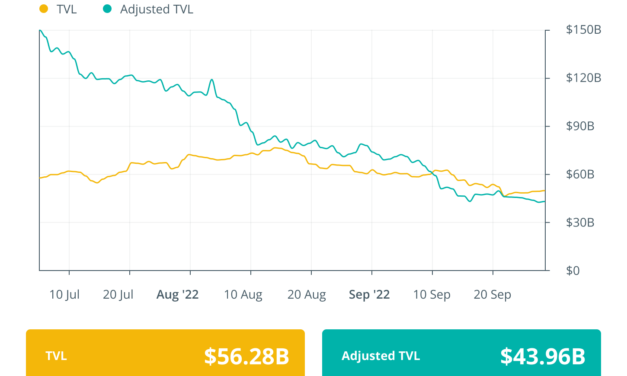
Welcome to Finance Redefined, your weekly dose of essential decentralized finance (DeFi) insights — a newsletter crafted to bring you significant developments over the last week.United States Federal Reserve chairman Jerome Powell has given his verdict on the evolution of the DeFi market, claiming there is a definite need for robust regulation before the nascent market could expand to retail.Maple Finance CEO believes that separating the risk from lending saved DeFi from the market crash. He added that crypto lending has operated as intended through the crypto winter because of the transparency.Members of the Ooki DAO are discussing various ways to respond to the recent lawsuit filed by the Commodity Futures Trading Commission. Another interesting turn of events from the DeFi ecosystem saw a Maximal Extractable Value (MEV) bot gain massive profits worth $1 million by seizing an arbitrage opportunity. However, it was tricked into authorizing a malicious transaction that drained the funds.Top 100 DeFi tokens by market cap have a mixed week in terms of price action, where an almost equal number of tokens were trading in green and red on the weekly charts.DeFi needs appropriate regulation before expanding to retail: Fed Chair PowellUnited States Federal Reserve chairman Jerome Powell has spoken out about the expansion of DeFi and its impact on the traditional finance ecosystem, calling for appropriate regulation.During an event titled the “Opportunities and challenges of the tokenization of finance” hosted by the Banque de France on Tuesday, Jerome Powell said there were “very significant structural issues around the lack of transparency” in the DeFi ecosystem.Continue readingMEV bot earns $1M but loses everything to a hacker an hour laterIn a Twitter thread, Robert Miller, who works at the research firm Flashbots, shared how an MEV bot with the prefix 0xbadc0de was able to earn 800 Ether (ETH), or around $1 million, through arbitrage trades.According to Miller, the bot took advantage of a huge arbitrage opportunity that came when a trader attempted to sell $1.8 million in cUSDC through the decentralized exchange (DEX) Uniswap v2 and only got $500 worth of assets in return. The bot detected this chance and immediately sprung to action and gained massive profits.Continue readingMaple Finance CEO: Separating risk from lending saved DeFi from market crashMaple Finance co-founder and CEO Sid Powell says that transparency has been the saving grace of DeFi amid the prolonged crypto market slump.Speaking to Cointelegraph on the sidelines of the Converge22 conference in San Francisco, Powell noted that throughout the crypto winter, DeFi has continued to operate as intended while centralized finance (CeFi) has become “pretty inactive.”Continue readingOoki DAO members explore options in response to CFTC lawsuitMembers of the decentralized autonomous organization (DAO) known as the Ooki DAO have started looking into an appropriate response to charges filed by the United States Commodities Futures Trading Commission (CFTC).On Sept. 22, the CFTC announced a $250,000 penalty and settlement with bZeroX, the creators of the decentralized lending platform bZx protocol, which suffered from code exploits in 2020 that led to hundreds of thousands in losses. In addition to this, the CFTC also filed a lawsuit against the Ooki DAO over similar alleged violations of digital asset trading laws.Continue readingDeFi market overviewAnalytical data reveals that DeFi’s total value locked registered a minor increase from the past week. The TVL value was about $56.28 billion at the time of writing. Data from Cointelegraph Markets Pro and TradingView show that DeFi’s top 100 tokens by market capitalization had a mixed week, with many tokens making a recovery toward the end of the week while a few others traded in red on the weekly charts.Maker (MKR) was the biggest gainer, registering a 13% gain over the past seven days, followed by Chainlink (LINK) with an 8.8% gain. PancakeSwap (CAKE) continued its bullish momentum registering another 8% weekly surge.Thanks for reading our summary of this week’s most impactful DeFi developments. Join us next Friday for more stories, insights and education in this dynamically advancing space.

Čítaj viac

Bitcoin profitability for long-term holders decline to 4-year low: Data

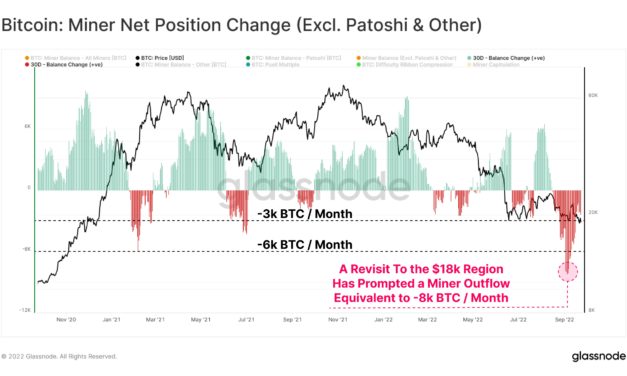
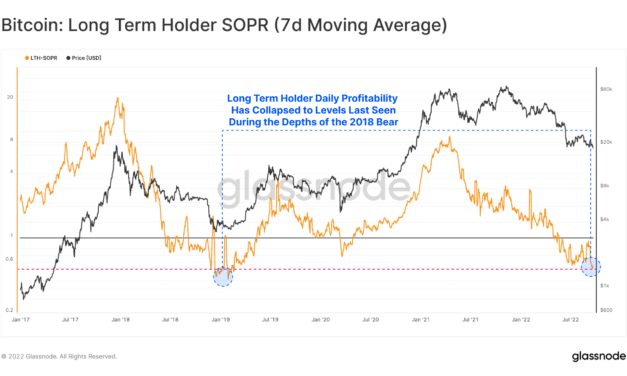
Bitcoin’s (BTC) long-term profitability has declined to levels last seen during the previous bear market in December 2018. According to data shared by crypto analytic firm Glassnode, BTC holders are selling their tokens at an average loss of 42%.Bitcoin long term holders,  Source: GlassnodeThe Glassnode data indicate that long-term holders of the top cryptocurrency selling their tokens have a cost basis of $32,000, meaning the average buying price for these holders selling their stack is above $30,000.The current market downturn added to the declining profitability can be attributed to several macroeconomic factors. The BTC market still has a heavy correlation with the stock market, especially tech stocks, which are currently seeing an even bigger downtrend than crypto.The rising inflation added to central banks’ failure to control it has also added to the pain of BTC investors. With much less to invest at their hands, traders and long-term holders are shifting to short-term profitability and less risky assets.This was evident from the BTC miner sell-offs as well, BTC miners have historically been long-term holders in anticipation of a higher profit. However, the rise in energy costs, added to growing mining difficulty, has narrowed the profit margins of these miners, forcing them to settle for short-term profits.Related: US Treasury yields are soaring, but what does it mean for markets and crypto?Bitcoin miner balance has seen large outflows since prices were rejected from the local high of $24.5k, suggesting aggregate miner profitability is still under a degree of stress. While the miner outflow has ranged between 3k BTC – 8k BTC, however, market data indicate that a price decline to $18,000 could lead to a monthly outflow of 8K BTC.Bitcoin, the top cryptocurrency, is currently trading in the $19,000-$20,000 range, struggling to conquer the $20,000 resistance despite multiple breakouts above it in the month of September.Bitcoin miner’s net position change Source: GlassnodeThe long-term holder profitability added with miner profitability has reached a multi-year low. However, the levels are quite similar to when the crypto market bottomed out during previous cycles.Bitcoin is currently trading in the $19,000-$20,000 range, struggling to conquer the $20,000 resistance despite multiple breakouts above it in the month of September. The top cryptocurrency is currently trading at a 70% discount from its market top of $68,789 posted in November last year. 

Čítaj viac

Bitcoin profitability for long-term holders decline to 4-year low: Data

Bitcoin’s (BTC) long-term profitability has declined to levels last seen during the previous bear market in December 2018. According to data shared by crypto analytic firm Glassnode, BTC holders are selling their tokens at an average loss of 42%.Bitcoin long term holders,  Source: GlassnodeThe Glassnode data indicate that long-term holders of the top cryptocurrency selling their tokens have a cost basis of $32,000, meaning the average buying price for these holders selling their stack is above $30,000.The current market downturn added to the declining profitability can be attributed to several macroeconomic factors. The BTC market still has a heavy correlation with the stock market, especially tech stocks, which are currently seeing an even bigger downtrend than crypto.The rising inflation added to central banks’ failure to control it has also added to the pain of BTC investors. With much less to invest at their hands, traders and long-term holders are shifting to short-term profitability and less risky assets.This was evident from the BTC miner sell-offs as well, BTC miners have historically been long-term holders in anticipation of a higher profit. However, the rise in energy costs, added to growing mining difficulty, has narrowed the profit margins of these miners, forcing them to settle for short-term profits.Related: US Treasury yields are soaring, but what does it mean for markets and crypto?Bitcoin miner balance has seen large outflows since prices were rejected from the local high of $24.5k, suggesting aggregate miner profitability is still under a degree of stress. While the miner outflow has ranged between 3k BTC – 8k BTC, however, market data indicate that a price decline to $18,000 could lead to a monthly outflow of 8K BTC.Bitcoin, the top cryptocurrency, is currently trading in the $19,000-$20,000 range, struggling to conquer the $20,000 resistance despite multiple breakouts above it in the month of September.Bitcoin miner’s net position change Source: GlassnodeThe long-term holder profitability added with miner profitability has reached a multi-year low. However, the levels are quite similar to when the crypto market bottomed out during previous cycles.Bitcoin is currently trading in the $19,000-$20,000 range, struggling to conquer the $20,000 resistance despite multiple breakouts above it in the month of September. The top cryptocurrency is currently trading at a 70% discount from its market top of $68,789 posted in November last year. 

Čítaj viac

Crypto.com scores fresh regulatory approval in France

Singapore-based digital asset platform Crypto.com scored a major regulatory approval in France. The digital asset platform was approved to register as a Digital Asset Service Provider (DASP) by the stock market regulator Autorité des marchés financiers (AMF). The approval was granted after the platform received  clearance from the Autorité de Contrôle Prudentiel et de Résolution (ACPR), the financial regulator in the country.The regulatory approval will help the digital asset platform offer a suite of products and services in compliance with local regulations to customers in France. The platform hopes to bank on the latest approval for expanding its services in Europe.The mobile-first digital asset exchange platform has managed to obtain more than half a dozen regulatory approval in 2022, spreading across North America, Asia and Europe. Earlier in July this year, Crypto.com  managed to gain two regulatory approvals in Europe, one in Cyprus and another in Italy. At that time Kris Marszalek, the co-founder and CEO of the platform, had mentioned that the firm was focused on expansion in Europe.An August, the digital asset platform received the green light from United Kingdom regulators for “certain crypto activities.” Apart from Europe, the digital asset platform has also scored major regulatory approvals in Dubai, Ontario Canada, Cayman Islands, Singapore and South Korea.Related: Crypto.com’s Cronos launches $100M accelerator for DeFi and Web3The regulatory approval in France is also special for the digital asset platform as it comes just within a couple of months of the Formula 1 (F1) sponsorship fiasco. Earlier in July, several F1 international racing teams removed or covered the branding and logos of crypto-related sponsors including Crypto.com. This was done in light of the uncertainty around crypto regulations in the country. The Singapore-based digital asset platform focused primarily on sponsorship deals and acquisitions through the bull market, the platform has turned to the expansion of services to new regions during the bear market.

Čítaj viac

Získaj BONUS 8 € v Bitcoinoch

nakup bitcoin z karty

Registrácia Binance

Burza Binance

Aktuálne kurzy