Autor Cointelegraph By Prashant Jha

Shopify users get their hands on Tezos NFTs with new partnership

TheTezos blockchain partnered with Web3 automation platform Taco to allow Shopify users to access Tezos nonfungible tokens (NFTs) via Taco’s NFT loyalty program. The e-commerce giant has established itself as a growing destination for brands looking for Web3 engagements.TheTaco app allows brands to integrate Web3 solutions such as NFTs to increase engagement with customers and e-commerce platforms such as Shopify use Taco app plugins to offer these services to their merchants.The NFT loyalty programs aid brands in strengthening their bonds with consumers, boosting customer engagement and retention. The latest integration of Tezos NFTs would help the blockchain utilize its NFTs to reward devoted customers with special offers, discounts and experiences.With the latest integration of Tezos into the Taco app, Shopify merchants everywhere now have a new method to interact with customers and connect to the expanding Tezos NFT community.Earlier in June, Shopify announced a new reward system called Tokengate under its connect-to-consumer initiative. Token gate allowed select merchant partners to roll out exclusive goods for NFT stakeholders. The e-commerce giant was among the first to integrate Bitcoin and Lightning payments on its platform.Related: Man United onboards Tezos as its official Web3 and training kit partnerTezos’ energy-efficient architecture, added to its affordable NFT minting and low transaction fees, has drawn a diverse NFT community of artists, collectors and builders from all around the world. The high energy efficiency of Tezos has made it the go-to platform for NFT integration, for example, gaming giant Ubisoft integrated Tezos NFTs for its gaming rewards toward the end of 2021.Tezos, a proof-of-stake blockchain registered a significant bump in on-chain activity and smart contract transactions thanks to a rising NFT market. The platform registered 50,000 transactions per day in the first quarter of 2022 from less than 10,000 per day in January 2021.

Čítaj viac
Germany leaves the US behind in top crypto economies in Q3: Report

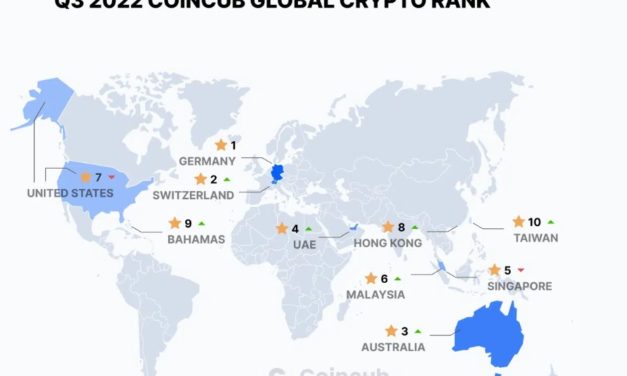
Germany has become the most favorable crypto economy in the world in the third quarter of 2022, according to a new report. The United States, the joint top-rank holder from last quarter, fell six places to rank seventh on the top crypto economy.The crypto economy rankings compiled by Coincub looked into various factors such as favorable crypto outlook, clear crypto tax rules, more transparent regulatory communications and more to rank countries.Germany although not a tax haven, is considered one of the strongest all-around ‘traditional-tax’ crypto economies that reward long-term crypto holders. German law charges zero tax on crypto holdings of over a year.Switzerland ranked second with its positive crypto regulatory stance and is home to some of the top crypto organizations in the world. The next three spots on the list were acquired by Australia, UAE and Singapore, respectively. Australia has shown a great appetite for crypto and the government has been equally supportive of it over the past year, pushing positive crypto legislation along with reasonable tax policy. UAE has invested heavily in Web3 and has a very attractive zero-tax policy on crypto gains. Singapore, on the other hand, has established itself as a crypto powerhouse in Asia, with a significant chunk of the population involved in crypto trading and investment.The U.S dropped to the seventh spot due to its unfavorable crypto tax policy and lack of clarity on the regulatory end. However, the report highlighted that the U.S is the only country to allow crypto to form part of strategic workplace pensions. With some key crypto regulations legislature under work, the U.S could see a significant improvement in its rankings by next quarter.Related: Germany and the US share the top spot in the global crypto rankingsAmong the top crypto-curious nations determined by the number of “Bitcoin” related searches, El Salvador topped the list again, followed by Nigeria and the Central African Republic.The Vietnam population was found to be the biggest hoarders of crypto, with over 20 million or nearly 20% of the population invested in crypto. The U.S has over 46 million crypto holders or nearly 13% of the population invested in crypto.

Čítaj viac

Barely halfway and October already the biggest month in crypto hacks: Finance Redefined

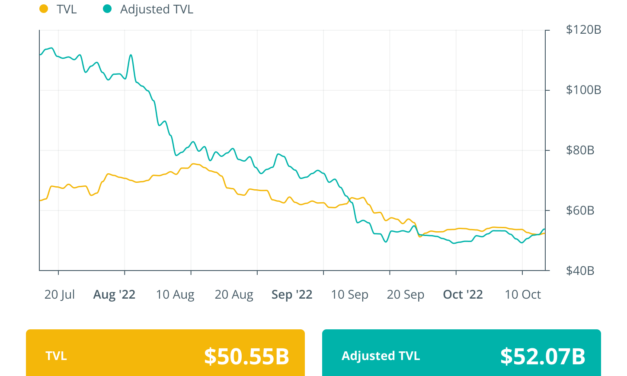
Welcome to Finance Redefined, your weekly dose of essential decentralized finance (DeFi) insights — a newsletter crafted to bring you significant developments over the last week.October is historically associated with the bulls, but in 2022, the month has also become the leader in crypto hacks as barely halfway through, and the DeFi ecosystem has already seen nearly a dozen hacks resulting in losses of hundreds of millions of dollars.The largest hack occurred on Solana’s DeFi platform Mango Markets on Oct. 11, resulting in a loss of over $100 million worth of crypto. The hacker has now come out to demand $70 million in USD Coin (USDC) stablecoin as a bounty to return the stolen crypto.In another hack, TempleDAO was exploited for $2 million on the same day as Mango Market’s exploit. Moving on from the hacker exploits, DappRadar, a DeFi analytic firm, came out with its side of the explanation on why its calculation about daily active users in the $1.6 billion metaverse ecosystem Decentraland came to less than 40.The top 100 DeFi tokens faced bearish pressure throughout the week, with some relief coming late on Thursday. The majority of the tokens traded in red on the weekly charts, barring a few and the total value locked (TVL) dipped below $50 billion.Barely halfway and October is the ‘biggest month’ in crypto hacks: ChainalysisBlockchain analytics firm Chainalysis has labeled October 2022 as “the biggest month in the biggest year ever for hacking activity,” with the total hacked value for the month nearly reaching $718 million.Despite not being more than halfway through the month, Chainalysis said 11 different hacks on DeFi protocols had seen hundreds of millions exploited.Continue readingMango Markets hacker proposes steep settlementOn Oct. 12, one day after $117 million was drained from Solana DeFi platform Mango Markets via a price feed exploit, the hacker responsible for the attack demanded a settlement. The proposal was filed on the Mango Markets decentralized autonomous organization (DAO) governance forum. If passed, the procedure would involve the hacker sending stolen MNGO, SOL (SOL) and Marinade Staked SOL tokens to an address provided by the Mango DAO team. Users without bad debt will be remade whole. However, the hacker demands that any bad debt be viewed as a bug bounty and insurance to be paid out via the community treasury worth 70 million USDC, or $70 million.Continue readingDappRadar explains why it counted less than 40 active users on DecentralandCrypto Twitter was shocked by reports claiming Decentraland, a $1.2 billion metaverse ecosystem, has had less than 40 daily active users recently. The data, courtesy of DeFi analytic firm DappRadar, created quite a buzz among the crypto community, with questions being raised over the future of Web3.Decentraland was quick to refute those metrics and claimed that to get a better insight into the platform’s user activity, one should refer to the dashboard on the website. The metaverse platform noted that it accounted for 1,074 users interacting with smart contracts in September and a total of 56,697 monthly logged-in users.Continue readingMakerDAO revenue tumbles 86% on Ether and Wrapped BTC woesMakerDAO, the governing body of the Maker Protocol, has seen its revenue plummet in the third quarter of 2022, caused by a fall in loan demand and few liquidations, while expenses have remained high. According to an Oct. 13 tweet by Johnny_TVL, a Messari analyst and co-author of “The State of Maker Q3 2022,” the decentralized autonomous organization saw its revenue plunge to just over $4 million in Q3, down 86% from the previous quarter.Continue readingDeFi market overviewAnalytical data reveals that DeFi’s total value registered another dip, with the TVL value falling to $50 billion at the time of writing. Data from Cointelegraph Markets Pro and TradingView show that DeFi’s top 100 tokens by market capitalization had a mixed week, with the majority of the tokens trading in red on the 7-day chart, barring a few.Maker (MKR) continued its bullish momentum into the second week of October, registering a 10. 78% gain over the past seven days. No other DeFi token in top-100 was trading in the green on the weekly chart.Thanks for reading our summary of this week’s most impactful DeFi developments. Join us next Friday for more stories, insights and education in this dynamically advancing space.

Čítaj viac

El Salvador focused on bringing investment to Bitcoin City, says ambassador

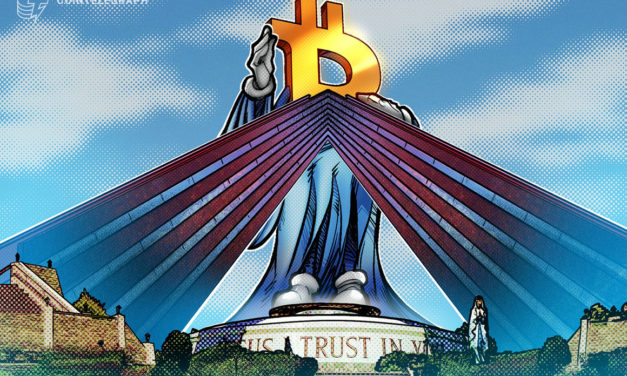
El Salvador, the first nation to make Bitcoin (BTC) a legal tender in September last year, is currently focused on building a Bitcoin City. There have been several delays and disruptions in the plans since its announcement last year owing to the bear market-led investment drought and geo-political tensions.Cointelegraph reporter Joseph Hall got in touch with Héctor Enrique Celarié Landaverde, the deputy ambassador of El Salvador to the kingdom of the Netherlands, to get some insights into the country’s progress with its much-hyped project. Landaverde told Cointelegraph that the government is following a “first come first serve” basis, where businesses that are early with their investment will get better profits. He explained:“The dream of El Salvador is to have a Bitcoin City and from there to make our society bigger, stronger. We are trying to attract more and more investments to this area so we can develop these communities.”The deputy ambassador noted that BTC use in the country has definitely made an impact on the impact and also invited people to the country to see for themselves how BTC is changing lives.Related: El Salvador’s Bitcoin decision: Tracking adoption a year laterThe iconic Bitcoin City was announced in November last year, which would be partly funded by the sales of $1 billion Bitcoin volcano bonds, the world’s first cryptocurrency sovereign-debt product. The debt product was a center of attraction at the bull market’s peak. However, several delays in the past and a downturn in the bear market have cast a shadow of uncertainty.Last month, Bitfinex CTO Paolo Ardoino told Cointelegraph that they were awaiting a license of issuance from the government first, which would be granted after the passing of the digital securities bill that was slated for September. However, there hasn’t been any update on the launch of the Bitcoin bond mid-way through October.

Čítaj viac

Meta’s Web3 hopes face challenge of decentralization and market headwinds

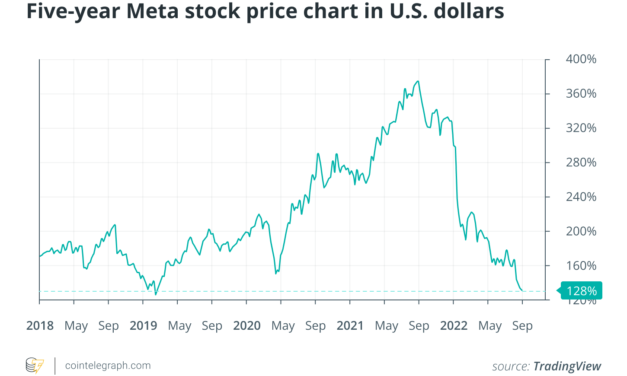
Facebook went under a major brand overhaul to project its focus on the Metaverse and rebranded to Meta in late 2021. The major shift for the social media giant surprised many, but looking at Facebook’s record with emerging tech trends, it was only a matter of time before it jumped into Web3.Meta’s crypto aspirations first came to light in 2019 after a failed experience in the digital payment sector with a Messenger-integrated payment option. The tech giant subsequently revealed its plans to launch a universal stablecoin backed by a basket of fiat currencies from different nations. The plan was to introduce a global digital payment network with the help of its social media reach of more than two billion active users on Facebook, Whatsapp and Instagram. However, with the uncertain nature of the asset and Facebook’s tainted record in managing private user information, regulators around the globe were suspicious at best. Lawmakers in the United States compared it to scrip while others vowed to never let it see the light of day.A rebranding from Libra to Diem did not help the nascent payments project, and the stablecoin officially shut down in February this year.Meta has since shifted its focus toward Web3 and aims to become a leader in the Metaverse. Meta has spent billions of dollars on specialized hardware and virtual reality tools. However, with the advent of the bear market, Meta’s metaverse bet has started to look shaky as well.Richard Gardner, CEO of global software and hardware solution provider Modulus, told Cointelegraph that Meta hasn’t found its core competence yet, stating:“Great companies know their strengths and exploit them. Facebook is now in the unenviable position of attempting to compete within the metaverse economy. Unfortunately, that’s not where the company’s core competencies are.”“Worse, they’re competing against dozens, and maybe hundreds, of smaller companies that are more nimble and agile to adjust to the ever-changing landscape. These companies were specifically built to develop and exist within the metaverse ecosystem. Facebook was not. Shareholders won’t allow this dalliance to continue,” he added.Meta’s biggest challenge is decentralization Meta — which boasts the lion’s share of the world’s social media user base — is currently struggling to transition from its Web2-based origins toward a decentralized Web3 ecosystem. Meta has already experienced a multitude of failures with its stablecoin foray and many experts believe that its metaverse aspirations look misguided at this point as well. John Payne, CEO of metaverse operating system developer Croquet.io, explained to Cointelegraph that the consensus is that big tech firms like Meta making a foray into Web3 must first understand the ethics of it. He explained:“The biggest competitor to Meta’s view of the Metaverse is the open, interoperable standards-based Web. Open technologies usually win. The web is everywhere, on every device with a screen. It has the largest community of developers in the world. And, portals based upon open web standards will make the Metaverse truly independent and interoperable. The web will be the foundation for the Open Metaverse and that is where the vast majority of people will thrive.”Meta’s metaverse aspiration, unlike its stablecoin projects, doesn’t have any regulatory setbacks, but despite that, the company is struggling to keep up in the Web3 race. This is primarily because, unlike the last decade when Meta could copycat their competitors’ new features (e.g., Stories from Snapchat, Dating from Tinder, Live Video from Periscope, etc.), or simply acquire their competitors (e.g., Instagram, WhatsApp, Beluga, etc.), they have to build out this entire platform themselves from the ground-up. Recent: Polkadot: How parachains are changing a blockchain-centric ecosystemAdditionally, there aren’t many mature acquisition targets in the industry right now, and the U.S. government has signaled its distaste for Big Tech’s continued acquisitions of competitors in what it considers possible violations of antitrust laws.Some in the Web3 space believe that the sector’s open and decentralized nature goes against the Web2 company’s main aim of establishing a monopoly. Rick Porter, CEO at decentralized social media platform DSCVR, told Cointelegraph:“The Metaverse has to be open, integratable and unowned by any single entity. Meta’s push to own the Metaverse is antithetical to this concept. Further, Facebook’s historical failure to maintain the open integrations that it first envisioned with Open Graph does not bode well for its Metaverse aspirations. With the advent of Web3 and open ecosystems, it’s hard to see the Metaverse inside Facebook’s walled garden.”Meta’s past conduct continues to haunt its presentBeing the first in a new market gives opportunities, but experts believe Web3 is all about digital data ownership and Meta has to prove that it can be trusted despite a tainted past.In July, The Federal Trade Commission filed a lawsuit against Meta’s acquisition of VR application creator in a bid to restrict the tech giant’s growing monopoly. Later in September, the social media giant was slapped with a $402 million fine by the Irish Data Protection Commission for its handling of children’s privacy settings on Instagram.To become a reliable point of interaction for the masses in the Metaverse, the tech giant must get its act in order and regain the trust of the main public before it goes on exploring the Metaverse.Some have noted Meta’s focus on the hardware aspect of virtual reality — spending $10 billion on its Reality Labs augmented reality and virtual reality division — rather than improving and building a safe metaverse experience for users. There have been social issues within its metaverse platform, Horizon Worlds, where people have complained about facing various types of harassment. While Meta has enjoyed successful sales of its popular VR headsets, Horizon Worlds’ daily active users — which numbered 300,000 as of February 2022 — are dwarfed by the billions of active users across Meta’s other platforms. Recent: Vyper, Solidity and Scrypto: How the smart contract languages compareThe firm is also facing market headwinds. This year’s bear market has been tough on a lot of firms, and Meta has particularly suffered. Since August 2021, the firm’s stock has fallen from an all-time high to lows not seen since 2018.Arthur Sabintsev, chief information officer at Web3 infrastructure provider Pocket Network, told Cointelegraph that Meta’s inexperience in Web3 has forced the firm to find its path by burning a large chunk of investments on untested products such as VR technology. He explained:“This big bet they’re taking is better than trying to compete in an ever-crowded field of social media apps, like YouTube and TikTok, to which they have been perpetually losing market share and mindshare. The hope here with this bet is that over the next decade, as virtual reality technology progresses, just as mobile technology evolved, people will naturally change how they spend their time with the technology online. If this unfolds, Meta will have a massive first-mover advantage at their scale.”The firm has already lost $2.8 billion on Reality Labs and has quietly reduced its workforce by 10% amid growing concerns. With early losses in its heavily invested VR hardware division, a worsening market condition, and Facebook’s failed track record at managing users’ private data, the company’s metaverse endeavor could face more turbulence ahead.

Čítaj viac

Získaj BONUS 8 € v Bitcoinoch

nakup bitcoin z karty

Registrácia Binance

Burza Binance

Aktuálne kurzy