Autor Cointelegraph By Prashant Jha

Ethereum at the center of centralization debate as SEC lays claim

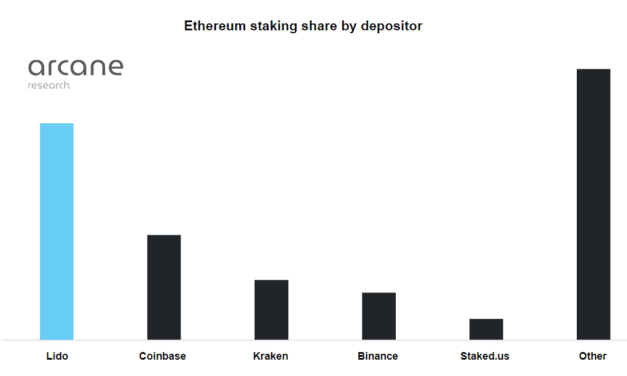
Ethereum went through a key network upgrade on Sept. 15, shifting from its proof-of-work (PoW) mining consensus to a proof-of-stake (PoS) one. The key upgrade is dubbed the Merge. The Merge was slated as a critical change for the Ethereum network that would make it more energy efficient, with later improvements to scalability and decentralization to come. A little over a month later, however, some industry observers fear the PoS transition has pushed Ethereum toward more centralization and higher regulatory scrutiny.The Merge replaced the way transactions were verified on the Ethereum network. Instead of miners putting in their computational power to verify a transition, validators now pledge Ether (ETH) tokens to verify those transactions. The issue with this system is that validators with a higher number of Ether have a larger say, given they have a larger percentage of validator nodes or staked ETH.To become a validator on the Ethereum network, one must stake a minimum of 32 ETH. Thus, whales and big crypto exchanges have staked millions of ETH to have a larger portion of the validator nodes.Current staking activities look very centralized, with the leading liquid staking protocol Lido and leading centralized exchanges such as Coinbase, Kraken and Binance accounting for over 60% of the staked ETH.RA Wilson, chief technology officer of crypto and carbon credits exchange 1GCX, told Cointelegraph that the Merge has enabled large holders of Ether to gain mass control of the network, making it significantly more centralized and certainly less secure and explained:“Many ETH holders stake their crypto on centralized exchanges such as Coinbase, which allows these platforms to become dominant holders on the network, contributing to stakeholder centralization.”The centralization aspect was quite evident right after the Merge, as 46.15% of the nodes for storing data, processing transactions and adding new blockchain blocks could be attributed to just two addresses.Arcane Crypto analyst Vetle Lunde told Cointelegraph that while the PoS transition was important for Ethereum’s long-term goals of energy efficiency and scalability, one should be aware of the trade-offs:“The largest validators being exchanges represent a potential long-term risk. Exchanges already find themselves in a difficult regulatory landscape, and precautionary rejections of transactions may conflict with one important core principle in the crypto ethos, censorship resistance.”While Ethereum proponents claim that anyone with 32 ETH can become a validator, it is important to note that 32 ETH, or around $41,416, is not a small amount for a newbie or common trader, added to the fact that the lock-in period is quite long. Slava Demchuk, CEO of Web3 complaint platform PureFi, told Cointelegraph that the centralization and complexities involved in staking would make centralized entities like Coinbase more powerful:“Most people will be staking with custodians (such as Coinbase) due to the simplicity and the fact that they don’t have 32ETH. This way, large companies will have a majority share of the network, making it more centralized. It means that entities with more ETH will have more control.”The fear of regulatory scrutinyEarlier in 2018, the SEC claimed that Ether is not a security, owing to its decentralized development and expansion over time. However, that may change with the move to PoS, which has complicated the relationship between the Ethereum blockchain and regulators.Gary Gensler, Chair of the United States Securities and Exchange Commission (SEC), testified before the Senate Banking Committee on the day of the Merge, stating that revenue from “expectation of profit to be derived from the efforts of others” would include proof-of-stake digital assets. Gensler also mentioned that staking from large centralized exchanges looks “very similar” to lending, calling out high-yield products that caused the recent crypto market meltdown and lumping these products into the financial instruments under the scrutiny of the SEC.Furthermore, in an SEC lawsuit filed just a week after the Merge, the SEC claimed jurisdiction over the Ethereum network as the majority of nodes are concentrated in the United States.While the SEC’s claims raised some eyebrows and with many criticizing the regulator for its approach, some believe Ethereum has had it coming, as Gensler has already stated that moving to PoS could trigger securities laws. Ruadhan, the lead developer of PoW-based mining token developer Seasonal Tokens, told Cointelegraph:“The argument that many of the validators are located in the U.S. is weak because it’s not even a majority. However, this move does show an intent to regulate, and it would cause a major disruption to the economy if Ethereum were to be classified as a security. Centralized exchanges would need to de-list Ethereum. The world economy is currently very vulnerable, and Ethereum’s market cap is so large that an event like this could have spillover effects and even cause an economic crisis.”Ruadhan predicted that if Ethereum was classified as a security, then it would be much more heavily regulated regardless of how centralized it is: “If there are very few block proposers, all concentrated in the United States, then they can be forced to censor transactions that violate U.S. sanctions, which would mean that Ethereum’s censorship resistance is lost.”Kenneth Goodwin, director of regulatory and institutional affairs at Blockchain Intelligence Group, told Cointelegraph that the move to PoS has certainly provided the SEC with leverage to oversee validators and even the nodes themselves as long as they are connected with a U.S. person, entity or jurisdiction. However, there is an irony to the situation. Goodwin explained:“The irony here is that this could be one of the networks in consideration for the U.S. central bank digital currency given its central nature of it. On the flip side, there would be more regulatory oversight that may include creating a system of registration for validators and Ether protocol-based projects. Nevertheless, it seems as though the SEC is seeking to classify Ethereum as a security.”Jae Yang, CEO and co-founder of noncustodial crypto exchange Tacen, told Cointelegraph that centralization could become a concern for Ethereum if regulators move to impose Anti-Money Laundering (AML) regulations on staking. “Centralization will be a concern if the FinCEN or other regulators impose Know Your Customer, AML or other AML compliance requirements on users simply staking ether. Though a long shot at this point, there is a risk that centralized validators omit certain transactions, establishing themselves as the third-party intermediary on decision-making that goes against the very guiding principles of the decentralized financial system,” he explained.Long-term impact of PoS transitionDespite concerns of over-centralization and regulatory scrutiny, industry observers are confident that the Ethereum blockchain will overcome these short-term issues and continue to play a key role in developing the ecosystem in the long term.Okcoin chief operating officer Jason Lau advocated for an expanded view of the transition. He told Cointelegraph:“When we think about the centralization vs decentralization debate, we need to look at the long-term. Open blockchains require a high level of decentralization to ensure censorship resistance, openness and security, so any shift towards more centralization would be worth keeping an eye on. The community is well aware of the importance of encouraging and ensuring a diverse set of participants, and we will see how this plays out over time.”Wilson noted that the network may become slightly more decentralized over the course of the next 6–8 months, as lock-up periods on Ethereum begin to expire and holders will be able to withdraw their staked tokens.And while node and validator centralization is a valid concern, Chen Zhuling, co-founder and CEO of noncustodial staking service provider RockX, noted PoW mining on Ethereum was as centralized as validators of the current PoS-based network. Chen told Cointelegraph that in the PoW era, “Three mining pools dominated the Ethereum network’s hashrate. You could hardly compete with other miners to verify blocks if you didn’t possess an immense amount of computing power, requiring expensive, energy-guzzling mining rigs.”Chen also advocated for a long-term view of the PoS transition as currently, tokens are mostly controlled by large foundations for the sake of security and on the goodwill assumption that they wouldn’t do anything to corrupt the network. Demchuk was quick to point out that centralization in staking does not mean it will be easy for a large malicious group of stakers to potentially take control of the Ethereum network, as “there is an additional protective measure. ‘Bad’ validators will get slashed, meaning that their ‘stake’ can get confiscated.”Ethereum might have transitioned to a PoS network, but a majority of scalability and other features will only arrive after the completion of the final phase, expected by the end of 2024. Going ahead, it will be interesting to see how Ethereum overcomes the centralization of validators and addresses the growing regulatory concerns facing the network.

Čítaj viac


S. Korean watchdog goes after crypto whales to ensure AML compliance

South Korea’s financial watchdog, The Financial Service Commission (FSC), would monitor crypto whales with assets of over 100 million won ($70,000) to prevent money laundering efforts using digital assets.The FSC noted that the greater the proportion of virtual assets and stablecoins, the higher the money laundering risk. Thus, special focus should be placed on monitoring crypto whales with significant digital asset and stablecoin holdings under the new anti-money laundering guidelines, reported local media.The report also drew attention to the use of stablecoins in money laundering and noted that stablecoins, especially those that are commonly used by the public, are more likely to be used as a means of crime. The report reads:“In the case of an independently listed virtual asset, it is possible that it did not meet the listing criteria of other virtual asset operators, and it can be evaluated that the risk of money laundering of virtual asset operators with a high proportion of the virtual asset is high.”Apart from monitoring crypto whales and their activities, the report also advocated for keeping a check on retail customers making high-value deposits. Those customers making high crypto transactions should be monitored for any significant change in holdings every quarter.”Customers with large virtual asset holdings are at higher risk of money laundering,”South Korea is known for its strict implementation of crypto-related policies, especially in the wake of the Terra-LUNA collapse. The financial regulators have doubled down on their efforts to ensure investor protection and bring crypto legislation by early 2024.Related: Koreans to have access to blockchain-powered digital IDs by 2024In August this year, the chair of FSC said the regulator plans to expedite its review of 13 bills pending in the country’s National Assembly related to digital assets. The aim of the review was to make institutional supplements that will take a balanced approach to blockchain development, investor protection and market stability.

Čítaj viac

How CZ built Binance and became the richest person in crypto

Changpeng “CZ” Zhao, the founder and CEO of global cryptocurrency exchange Binance, is one of the most influential crypto personalities today, but his story is a true rags-to-riches one.CZ was born in a village in Jiangsu, Shanghai, and his family migrated to Vancouver, Canada, in the 1980s when he was 12. He studied computer science engineering in college and spent the next few years building trading systems for popular exchanges such as the Tokyo Stock Exchange and Bloomberg Tradebook.[embedded content]CZ left his lucrative job in 2005 to start his own venture and moved back to Shanghai. In 2013, after eight years of building his company, CZ finally came across Bitcoin (BTC) — which changed everything for him.The Bitcoin bug bit CZ hard, and he went all-in on the nascent digital currency in 2014, selling his house and buying BTC at an average price of $600 per coin. Bitcoin’s price fell soon after and crashed to $200, but CZ’s belief in the tech helped him hodl through the bear market. After two years, the price jumped back up.CZ started his own crypto venture nearly four years after coming across Bitcoin, launching Binance in July 2017 at the peak of the initial coin offering era. Five years later, Binance is one of the leading global crypto exchanges in terms of daily trading volume. Check out the full story on Cointelegraph’s YouTube channel, and don’t forget to subscribe!

Čítaj viac

Unsung hero saves DeFi protocol from potential exploit: Finance Redefined

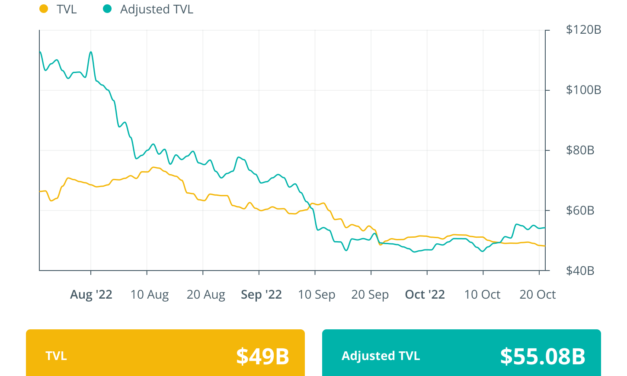
Welcome to Finance Redefined, your weekly dose of essential decentralized finance (DeFi) insights — a newsletter crafted to bring you significant developments over the last week.The last week’s headline was dominated by some of the biggest hacks in DeFi. This week is redemption time for many DeFi protocols that either averted an attempted hack or got a significant chunk of their stolen funds back.The BitBTC bridge reportedly had a bug that would essentially allow an attacker to mint fake tokens on one side of the bridge and swap them for real ones. However, one Twitter user was able to foresee the vulnerability and informed the cross-bridge platform about it.The Moola Market attacker has scored about a half-million dollar “bug bounty” after choosing to return a majority of the cryptocurrency they exploited from the Celo-based lending protocol. Cryptocurrency market maker Wintermute repaid a $92 million TrueFi loan on time despite suffering a $160 million hack.Mango Market hackers that returned a significant chunk of the $117 million stolen from the protocol could still face legal action despite the protocol deciding to award him a $50 million bounty.The top 100 DeFi tokens remained bearish for another week, as the majority of the tokens traded in red, barring a few. The total value locked also remained below $50 billion for the second consecutive week.Twitter user saves cross-chain bridge from potential exploitA cross-chain bridge between BitBTC and the Ethereum layer-2 network Optimism has been able to avoid a potentially costly exploit thanks to the work of an eagle-eyed Twitter user.The custom cross-chain bridge offers a ramp for users to send assets between Optimism’s network and BitAnt’s DeFi ecosystem, which includes yield services, nonfungible tokens (NFTs), swaps and the BitBTC token, in which 1 million BitBTC represents 1 Bitcoin (BTC).Continue reading Moola Market attacker returns most of $9M looted for $500K bountyAn attacker has returned just over 93% of the more than $9 million worth of cryptocurrencies they exploited from the Celo blockchain-based DeFi lending protocol Moola Market.At around 6:00 pm UTC on Oct. 18, the Moola Market team tweeted it was investigating an incident and had paused all activity, adding it had contacted authorities and offered a bug bounty to the exploiter if funds were returned within 24 hours.Continue readingMangoMarket’ss exploiter said actions were ‘legal,’ but were they?The $117 million Mango Markets exploiter has defended his actions as “legal,” but a lawyer suggests that they could still face the consequences.Self-described digital art dealer Avraham Eisenberg outed himself as the exploiter in a series of tweets on Oct. 15, claiming he and a team undertook a “highly profitable trading strategy” and that it was “legal open market actions, using the protocol as designed.”Continue readingWintermute repays $92M TrueFi loan on time despite suffering a $160M hackWhen Wintermute, a cryptocurrency market maker, lost $160 million due to a hack and concerns related to the repayment of debt worth $189.4 million surfaced. However, in an exciting turn of events, Wintermute paid back its largest debt due Oct. 15, involving a $92 million Tether (USDT) loan issued by TrueFi.After repayment of TrueFi’s $92 million loan, Wintermute still owes $75 million to Maple Finance in USD Coin (USDC) and wrapped Ether (wETH) and $22.4 million to Clearpool, a total of $97.4 million in debt.Continue readingBinance delegates 13.2M UNI tokens, becoming Uniswap DAO’s second-largest vote-holderCrypto exchange Binance is now the second-largest entity by voting power in the Uniswap DAO, sitting just behind the venture firm Andreessen Horowitz, or a16z, according to the on-chain list of delegates. On Oct. 18, Binance delegated 13.2 million Uniswap (UNI) tokens from its books, which represents 5.9% of the voting power — a percentage of tokens delegated to the exchange. Compared to the total supply of UNI, the amount delegated represents 1.3%.Continue readingDeFi market overviewAnalytical data reveals that DeFi’s total value registered another dip, with the total value locked (TVL) falling below $50 billion at the time of writing. Data from Cointelegraph Markets Pro and TradingView show that DeFi’s top 100 tokens by market capitalization had a mixed week, with the majority of the tokens trading in red on the 7-day chart, barring a few.Maker (MKR) continued its bullish momentum into the third week of October, registering a 12% gain over the past seven days, followed by Aave (AAVE) with a 10% weekly surge. Lido DAO (LDO) was another DeFi token that registered a 9.45% surge in the weekly chartsThanks for reading our summary of this week’s most impactful DeFi developments. Join us next Friday for more stories, insight,s, and education in this dynamically advancing space.

Čítaj viac

Telegram username auction marketplace 'almost' ready to launch

The popular messaging app Telegram has developed a new marketplace that doesn’t involve nonfungible tokens (NFTs). The social messaging platform said that it is all set to launch its marketplace for auctioning unique usernames for social platforms, an idea first floated in August.In an official announcement on its Telegram channel, the firm said that the development phase of the marketplace is near its end. The marketplace is based on its native blockchain called The Open Network (TON).The idea was first teased by the company founder Pavel Durov in late August this year when he proposed a marketplace that could utilize “NFT-like smart contracts” to auction highly-sought after usernames. Durov made the suggestion after the “success” of domain name auctions by The Open Network (TON), a layer-1 blockchain originally designed by the Telegram team.Durov said at the time that a new marketplace, where username holders could transfer them to interested parties in protected deals — with ownership secured on the blockchain via NFT-like smart contracts — could become a sought-after service in Web3. He added that other elements of the Telegram ecosystem, including channels, stickers or emojis, could later also become part of this marketplace.Telegram didn’t respond to Cointelegraph’s requests for comments at the time of publishing.Related: ‘Unique phenomenon’: All 5B toncoins mined on PoS TON blockchainTelegram started its Web3 and crypto endeavor with hopes of launching a digital payments platform for Telegram. However, like many other platforms from the initial coin offering (ICO) era, Telegram also ran into trouble with the United States regulators for the unregistered sale of its Gram token.After losing a court battle against the U.S. Securities and Exchange Commission in 2020, Durov stepped away from the project to focus on Telegram. Since then, open-source developers have revived the project under the banner of The Open Network.

Čítaj viac

Získaj BONUS 8 € v Bitcoinoch

nakup bitcoin z karty

Registrácia Binance

Burza Binance

Aktuálne kurzy