Autor Cointelegraph By Prashant Jha

Web Summit Lisbon, Nov. 4: Latest updates from Cointelegraph’s ground team

Welcome back to day three of the Web Summit, one of the world’s leading tech conferences, with over 71,000 attendees on the third day. Stationed in Lisbon, Portugal, Cointelegraph’s ground team is ready to bring the most exclusive insights on Web3, crypto and blockchain from the event.The first two days of the summit saw some of the leading Web3 founders share their views on the future of finance, metaverse and gaming. WAX CEO William Quigley told Cointelegraph that traditional firms likely won’t be leading the charge in the next generation of Web3 games. Sandbox co-founder said that the future of the metaverse is in a state of evolution, with both brands and users as important catalysts of growth.Yuga Labs CEO said that NFTs could bring a new form of digital ownership to the masses in Web3 while Chainalysis CEO shared his views on the increasing crypto hacks and how to mitigate them. Read more such exclusive insights from day two of our live coverage.The Cointelegraph team is back on the ground to bring you some of the latest and exclusive insights from the event.Disclaimer: Don’t forget to check this article regularly to be notified about the most recent announcements from the event. All timestamps are in the UTC time zone, and updates are in reverse order (the latest update is placed at the top).10:30 am- The first-panel discussion on the main stage revolved around the future of crypto with the likes of Cardano founder Charles Hoskinson,  Ben McKenzie actor and journalist at Slate and Web3 creator Molly White. Cardano founder Charles Hoskinson, actor and journalist Ben McKenzie discussing BitcoinMcKenzie started the discussion by bashing crypto and calling El Salvador’s Bitcoin adoption a failure since he didn’t see many people using it. Hoskinson was quick to counter the “bizarre” notion and said that cryptocurrencies are reimagining the financial system. On the question about El Salvador, Hoskinson was quick to remind him that BTC is a digital commodity and El Salvador is using it as a bi-monetary system the same way the United States doesn’t use gold directly for transactions.9:30 am- Unlike yesterday’s gloomy, rainy weather, today Lisbon is as sunny as it gets. The Cointelegraph team is ready for the action on day three, but first breakfast and some coffee!Unlike yesterday’s gloomy, rainy weather, today Lisbon is as sunny as it gets ☀️ We’re tempted to go surfing tomorrow morning if the weather keeps treating us right. ‍♂️ pic.twitter.com/d9gXRcNHuV— Cointelegraph (@Cointelegraph) November 4, 2022

Čítaj viac

Web Summit Lisbon, Nov. 3: Latest updates from Cointelegraph ground team

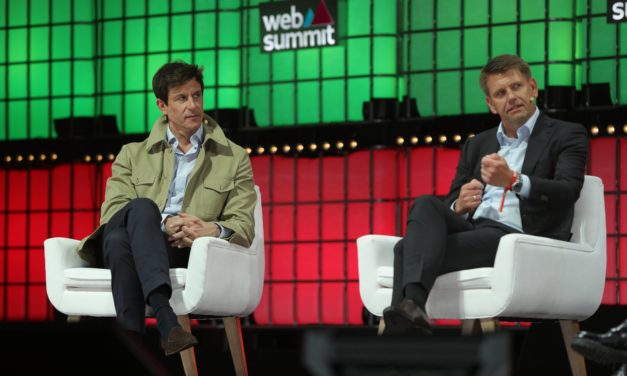
Welcome back to the day two coverage of Web Summit, one of the leading tech conferences in the world, with over 71,000 attendees on day two. The summit is live in Lisbon, Portugal, after two years. The summit is known to bring together some of the most prolific personalities from the tech world together and in 2022, it’s no different.Web3 has increasingly become the most talked about topic in the tech world and Web Summit is no different as leading tech giants such as Apple or Microsoft continue to explore ways to integrate and transition to the Web3 ecosystem.After an eventful first day that saw some major Web3 announcements, including the Web3 alliance to prevent malicious phishing attacks, bad actors and Web3 domain collisions. Binance CEO Changpeng Zhao talked about the importance of building during a bear market. Cointelegraph’s editor-in-chief Kristina Lucrezia Cornèr sat down with crypto executives to discuss the emergence of Web3 tech hubs around the world. Check everything that happened on the first day from our live article, brought to you directly from our ground team. The Cointelegraph team is back on the ground to bring you some of the latest and exclusive insights from the event.Web Summit day two kicked off with a discussion around nonfungible tokens (NFTs) and how these digital properties and ownership could become a way of life in the near future.Disclaimer: Don’t forget to check this article regularly to get notified about the most recent announcements from the event.11: 30- Mercedes formula one team principal and CEO Torger Christian “Toto” Wolff joined Teamviewer CEO Oliver Steil to discuss the role of future software in reducing engineers on track with the help of remote data.Mercedes F1 team principal Toto Wolff along with Teamviewer CEO Oliver Steil, photo by Jose Val Bal11:00: Crypto data analytic firm Chainalysis’s co-founder Michael Gronager was next on stage to discuss how crypto crimes have evolved over the years. Gronager noted that although the number of crypto crimes has gone down, the value of assets stolen in hacks has risen. At the same time, laundering through crypto still remains one of the most difficult tasks. Chainalysis co-founder Michael Gronager  Borget said the popularity of metaverse and virtual worlds are rising because of the certain limitations in the physcial world. The idea that people can meet up in virtual world in different avatars and interact with anyone instantly makes it appealing.Cointelegraph’s Gareth Jenkinson in conversation with Sébastien Borget, photo by Jose Val Bal10:45: Cointelegraph’s Gareth Jenkinson sat down with The Sandbox co-founder Sébastien Borget to discuss the future of the decentralized metaverse. Borget revealed that the land sales in The Sandbox metaverse will begin next week with “major brands,” but he cannot say much about that. Hop onto our latest Twitter thread to get grainer insight from the chat.Land sales on @TheSandboxGame will resume next week with “major brands” but he cannot say much about that @borgetsebastien’s goal is to have “one user, one land” in the game. pic.twitter.com/IOGwOwVXx6— Cointelegraph (@Cointelegraph) November 3, 202210: 40: The second day kicked off with Yuga Labs CEO Nicole Muniz discussing the future of NFTs and why they could become the future of digital ownership. Be it privacy, interoperability and identity, everything is associated with ownership, and Web3 would make way for that sort of ownership. Yuga Labs CEO Nicole MunizCointelegraph’s reporter Gareth Jenkinson is on the ground with the Sandbox co-founder Sébastien Borget to discuss some of the key developments around the project during a panel discussion, so stay tuned.Cointelegraph reporter Gareth Jenkinson with The Sandbox founder Sébastien BorgetThe Cointelegraph team is live on the ground in Lisbon, starting the day with some coffee and local delicacies.We can’t have enough of you @WebSummit We Started the day with some coffee and Portuguese pastries Should fuel us to cover a few panels before lunch pic.twitter.com/UfamAMSsEi— Cointelegraph (@Cointelegraph) November 3, 2022

Čítaj viac

New oracle system to help DApps retrieve millions lost to MEV

A new oracle system aims to retrieve the additional fees paid by decentralized application (DApp) users to miners called maximal extractable value (MEV). It is the maximum value a miner can extract from moving-around transactions when producing a block on a blockchain network.MEV can be defined as the maximum value that can be extracted from block production in excess of the standard block reward and gas fees. The MEV comprises arbitrage and liquidation fees, among others, that could amount to millions and are often extracted by block producers. A new oracle system called oracle extractable value (OEV) promises to change that and return the extra revenue back to the DApp instead of third parties and block producers. Web3 decentralized oracle service provider API3 has come up with the concept of OEV that promises to offer an additional revenue source for decentralized finance (DeFi) protocols.The traditional way of extracting MEV is participating in blockspace auctions, which were often done by third parties and block producers, but OEV-enabled oracles take auctions off-chain and auction the right to extract on-chain value to the same third-party searchers who used to bid for the blockspace. Talking about the working of the OEV oracles and how It would help the DeFi ecosystem,  Burak Benligiray, core technical team lead at API3, told Cointelegraph:”OEV auctions will happen off-chain, which means even when there is a lot of value being extracted, gas prices will not be affected. Furthermore, proceeds of block space auctions are claimed by block validators, while OEV proceeds can be redirected to the dApps that create them.”Data from flashbots suggests that block producers have captured nearly $653 million in MEV. Flashbots is a centralized entity dedicated to transparent and efficient MEV extraction. Related: MEV bot earns $1M but loses everything to a hacker an hour laterOEV-enabled data feeds then return the proceeds of these auctions to the DApps that generate the value in the first place. The OEV-enabled data feeds not only help in retrieving the MEV but also minimize it by updating precisely when needed, achieving a zero deviation threshold.OEV oracle services are available on numerous Ethereum virtual machine (EVM)-compatible networks, including Ethereum, Polygon, Arbitrum, Optimism, BNB Chain, Avalanche, Milkomeda, Fantom and many more.

Čítaj viac

Web Summit Lisbon, Nov. 2: Latest updates from Cointelegraph ground team

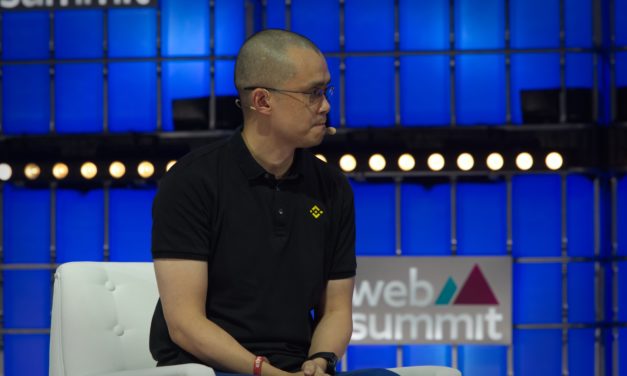
Disclaimer: This article is updated all day long. All time codes are in the UTC time zone, and updates are in reverse order (the latest update is placed at the top).Web Summit, one of the premier world tech conferences, is back live in Lisbon. The event brings together the founders and CEOs of technology companies, fast-growing startups, policymakers, and heads of state to discuss the future of the tech industry.In 2022, Web3 is one of the biggest topics of tech discussion, and Web Summit 2022 is no different. Cointelegraph has set up a team for the event to present the latest updates in a real-time fashion. The opening event of Web Summit saw the Mayor of Lisbon, the minister of the economy of Portugal and Binance CEO Changpang Zhao as keynote speakers. Carlos Moedas, mayor of Lisbon, stressed the importance of tech conferences and the investment it brings to the country. António Costa Silva, the minister of Economy of Portugal, talked about the rise in investment as well as failures and the challenges that the tech industry brings.Binance CEO Changpeng CZ Zhao, photo by Jose Val BalBinance CEO Changpeng Zhao was the first guest to be interviewed, who shed light on the current crypto trends, metaverse and Web3 technologies in general. Zhao said:“Everything is volatile even the most lucrative tech stocks, so yes Bitcoin did drop from $69K to $20K but it depends on the perspective. If you take a 5-10 year time frame crypto is the best-performing asset.”Web Summit day one kicked off with a discussion about the role of artificial intelligence (AI) in the future of tech. The discussion later expanded to more niche topics, including industrialization, public companies and super apps.Don’t forget to check this article regularly to get notified about the most recent announcements from the event.12: 30- Cointelegraph’s Gareth Jenkinson got in touch with Binance’s executive vice president of Europe, Martin Bruncko, to discuss the exchange’s plans in Europe. When asked about the recently approved MiCA regulation and how it would impact crypto exchanges, Bruncko said:”MiCA is good news for every crypto operator, and our mission is to advance crypto adoption rather than on-boarding as many users as possible. I think MiCA would help a lot with our plans for crypto advancements.”11: 30- Cointelegraph CEO Wes Kaplan joined by Nicholas Johnston from Axios and Joy Robins from Washington Post to discuss how monetization works in media.Cointelegraph CEO Wes Kaplan, Nicholas Johnston from Axios and Joy Robins from Washington Post, photo by Gareth JenkinsonRobins said in today’s world advertising is not the only way to make a good revenue model and explained: “I don’t think advertising is a dominant revenue model for news, I think the idea that only advertising can make way for a good revenue model is false and subscription-based models have proved it.”10:50 – Checkout.com and Bolt founders joined CNBC’s Karen Tso to discuss the ongoing trend in the tech world, the adoption of crypto by payment processors and more.Guillaume Pousaz, the founder of checkout.com, explained the advantages and disadvantages of being a public company:”Being a public company forces you to be a very well-operated business. The markets are what they are, and there are not many IPOs in recent times. I have no pressure to go public and I think people care about compounding value rather than going public or being private.”

Čítaj viac

Crypto adoption via regulation: Setting rules for centralized exchanges

Centralized cryptocurrency exchanges have become the backbone of the nascent crypto ecosystem, making way for retail and institutional traders to trade cryptocurrencies despite a constant fear of government crackdowns and lack of support from policymakers. These crypto exchanges over the years have managed to put self-regulatory checks and implemented policies in line with the local financial regulations to grow despite the looming uncertainty. Cryptocurrency regulation continues to occupy mainstream debates and experts’ opinions, but despite public demand and requests from stakeholders of the nascent ecosystem, policymakers continue to overlook the rapidly growing sector that reached a market capitalization of $3 trillion at the peak of the bull run in 2021. Over the past five years, many local and national governments have shown interest in regulating the crypto market but often got perplexed by the vast ecosystem and complexities involved in regulating certain decentralized aspects of the market. As a result, most of the governments that have issued some guidelines or rules related to crypto have done so based on the existing financial regulations, but the evolving market has proven too fast-paced.Some countries have moved to recognize crypto trading as a legal activity, while others have approved Bitcoin (BTC)-based exchange-traded funds. Many countries have also made way for crypto platforms to operate with a license, but the strict requirements often deter certain small platforms to stay away. As a result, there is no universal blueprint for regulators to adhere to, and experts believe leading centralized crypto exchanges can change that.In traditional markets, it is perfectly normal for regulators to work closely with industry participants, including exchanges, to ensure that regulations and guidance work well and keep pace with fast-changing technological advances. However, the same can’t be said for the crypto market, as regulators have maintained a safe distance from the nascent industry.Oliver Linch, CEO of global crypto exchange Bittrex Global, said that the regulators must interact with service providers of the crypto ecosystem to get a better grasp of the industry. He cited the example of Bermuda and Liechtenstein, where the crypto exchange has been working with local lawmakers to make way for positive regulations. He noted that even though decentralized exchanges continue to remain the flag bearer of crypto’s decentralized ethos, which are thus more complex to regulate, centralized exchanges will be key to major adoption:“Centralized exchanges have perhaps the most important role to play here. While decentralized exchanges tend to be the ‘poster boys’ for the industry’s cutting edge, they are naturally hesitant to get involved in regulatory matters. In any event, the majority of activity, especially for ordinary retail users (who are front of mind for regulators) happens on centralized exchanges.”He added that regulating the entire crypto market will follow, but the approach of “Liechtenstein, Bermuda and now the European Union, of regulating service providers, including centralized exchanges, is a good starting place. By properly regulating centralized exchanges, regulators and legislators create a legitimate path for users — from individuals to giant corporates — to get involved in crypto in a safe and regulated manner.”A Binance spokesperson told Cointelegraph that being a centralized exchange, it needs a centralized entity to work well with regulators.“Binance believes it has a fundamental responsibility to work with regulators and believes that a well-regulated crypto market provides greater protection for everyday users. We strongly believe that a stable regulatory environment can support innovation and is essential to establishing trust in the industry that will lead to long-term growth,” the spokesperson added.Centralized exchanges prove to be regulators’ alliesIn major economies and developed countries, regulators have not been very keen on involving industry players, but those nations that see the future in the nascent tech have actively partnered and on-boarded leading centralized crypto exchanges to not only help them build the infrastructure but also assist them with formulating right policies for the crypto market.Binance recently signed a memorandum of understanding with Kazakhstan to help fight financial crimes. The program further aims to identify and block digital assets obtained illegally and used to launder criminal proceeds and finance terrorism. Similarly, Busan onboarded Huobi to develop blockchain infrastructure in the region.Many countries already regulate centralized exchanges, but there is still a lot of uncertainty about what regimes apply and how they will be enforced. For example, United States-based exchanges operate under licenses from the Financial Crimes Enforcement Network but have been alleged to list tokens and offer financial products (like derivatives, staking and interest-bearing deposits) that fall under the purview of the Securities and Exchange Commission or the Commodity Futures Trading Commission. The Lummis–Gillibrand bill is considered one of the most comprehensive pieces of legislation proposed on crypto in the United States. South Africa recently classified crypto as a financial product and will be regulating it accordingly. South Korea implemented strict regulations last year that require exchanges to track all transfers to and from their platform, including identifying the owners of wallets. As a result, exchanges there restricted transfers to and from unverified private wallets.Thus, it is evident from existing regulations that centralized exchanges have become the main point of interaction for not just traders but regulators as well.Mohammed AlKaff AlHashmi, co-founder of Islamic Coin, told Cointelegraph that regulating centralized exchanges will help in regulating the broader crypto market, explaining:“Firstly, it’s Know Your Customer and Anti-Money Laundering. I see that most of the exchanges will outsource it to very famous and authentic KYC/AML entities, as it will bring more reliability and trust rather than doing these procedures by exchanges themselves. Secondly, taxation is an important theme when we talk about regulation. Many countries will regulate crypto if they can do the taxation, and I suggest that exchanges will develop the taxation on the crypto transactions and be the one who collects this data and hand it over to the government.”Habeeb Syed, senior associate attorney at Vicente Sederberg and co-organizer of the Blockchain Technology, Law and Policy Meetup, told Cointelegraph, “Crypto exchanges often determine the winners and losers of the crypto world, as listed on one is an almost surefire way to raise your token price and provide early investors an opportunity for liquidity. Well-thought-out regulation of centralized exchanges could also ripple out into the broader ecosystem.”He added that regulating crypto exchanges would force legitimate projects to know they can’t engage in certain acts “if they ever want to list a token on say Binance, FTX or Coinbase, which would be a powerful motivating force. With regulated options for trading, staking and lending, actors could choose to forego riskier and unregulated DeFi ecosystems.”Regulators must proceed with cautionCrypto exchanges play a central role in the vast crypto ecosystem, as they have numerous services and facilities with many trying to become an all-in-one platform. Some experts are of the opinion that, while regulating centralized exchanges can certainly be the first step toward broader crypto market regulations, that is not enough to ensure smooth operations for the whole industry.Aleksandra Shelepova, head of legal at crypto-backed loan service provider CoinLoan, told Cointelegraph:“When it comes to imposing regulations to any new and evolving market, everything should be done step-by-step. Moreover, the regulators should have a proper understanding of how this market operates in detail, technological aspects included. Regulation should come from the middle-bottom, meaning the contribution of the market’s participants’ know-how is crucial.”She added that regulating just the exchanges is not enough since there are many popular and widely used crypto products, including crypto loans, deposits, etc. that must be regulated as well. Expanding regulation to all aspects of the crypto environment ensures a unified understanding of the products themselves.While monitoring centralized exchanges can definitely pave the way for a better understanding of the crypto market, regulators should refrain from a “one size fits all” formula. Nicole Valentine, fintech director at Milken Institute, told Cointelegraph that regulators should be more focused on decentralized platforms:“Just like there is variation in the digital assets themselves, there is variation in the types of exchanges that enable buyers and sellers to trade those digital assets. Although regulating centralized exchanges can be seen as helpful, there are nuances in decentralized exchanges that should be considered, including the use of digital wallets and smart contracts.” Centralized exchanges are a key part of the cryptocurrency ecosystem; they are where most new crypto users go to buy their first coins. Many leading centralized exchanges already have strict onboarding and identification procedures in place and would welcome more clarity from regulators on questions such as whether or not digital assets are securities.Increased regulation for centralized exchanges is a double-edged sword where, on one hand, it would lead to more new interactions and greater adoption, but on the other hand, increased regulation may drive the more experienced crypto users toward decentralized exchanges, something that experts believe regulators would have a hard time dealing with.

Čítaj viac

Získaj BONUS 8 € v Bitcoinoch

nakup bitcoin z karty

Registrácia Binance

Burza Binance

Aktuálne kurzy