Autor Cointelegraph By Prashant Jha

FTX hacker dumps 50,000 ETH, still among top 40 Ether holders

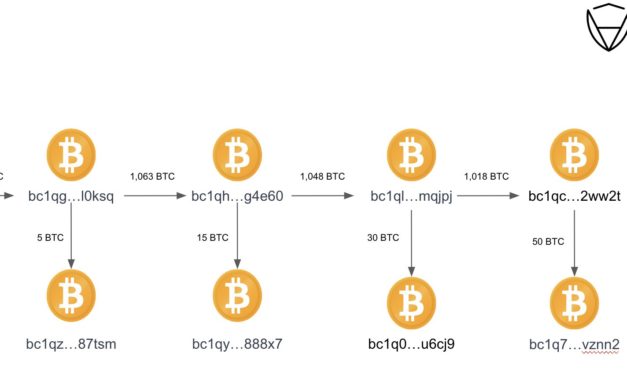
The hacker behind the bankrupt cryptocurrency exchange FTX started transferring their Ether (ETH) holding to a new wallet address on Nov. 20. The FTX wallet drainer was the 27th largest ETH holder after the hack but dropped by 10 positions after the weekend ETH dump.The FTX hacker drained nearly $447 million out of multiple FTX global and FTX.US exchange wallets just hours after the crypto exchange filed for Chapter 11 bankruptcy on Nov. 11. Majority of the stolen funds were in ETH, making the exploiter the 27th largest ETH whale.On Nov.20, the FTX wallet drainer 1 transferred 50,000 ETH to a new address, 0x866E. The new wallet address then swapped the ETH for renBTC (ERC-20 version of BTC) and bridged to two wallets on the Bitcoin blockchain. One of the wallets bc1qvd…gpedg held 1,070 renBTC while another wallet bc1qa…n0702 held 2,444 renBTC.#CertiKSkynetAlert FTX Wallet Drainer is now the 37th largest holder of ETHDropped 10 places after transferring 50,000 ETH to 0x866E this morning We’re also continuing to see ETH swapped for renBTC in 0x866E Wallet currently holds ~1127 renBTC and ~19k ETH pic.twitter.com/sPJjtoWwud— CertiK Alert (@CertiKAlert) November 20, 2022Crypto analytic group CertiK later tracked the bridged renBTC on bc1qvd…gpedg address and found that the address employed a money laundering technique called peel chain to launder the renBTC.A Peel chain is a technique to launder a large amount of cryptocurrency through a lengthy series of minor transactions. A small portion is ‘peeled’ from the subject’s address in a low-value transfer. These incremental laundered funds are often transferred to exchanges where they can be converted to fiat currency or other crypto assets. Related: FTX hacker is now the 35th largest holder of ETHAt the time of the FTX hack, there were two parties involved, one black hat that managed to drain $447 million and a white hat that managed to move $186 million of FTX assets to cold storage. However, when Bahaman Securities and Exchange Commission released a notice suggesting they are trying to move assets from the FTX, it raised many eyebrows, with many claiming that the securities regulator was, in fact, the black hat behind the exploit.Did you see this? Bahamian SEC claims to have (tried to?) “transfer all digital assets” to a digital wallet that they, not FTX, controls. If FTX is the white hat, then isn’t the Bahamian govt the black hat?https://t.co/ddbEmx2nyq— zkSTONKs (@zkSTONKs) November 20, 2022

On-chain analyst ZachXBT highlighted the token transfer pattern of the black hat wallet and said that the wallet was dumping tokens and bridging sporadically was a very different behavior from the other addresses that withdrew from FTX and instead sent to a multisig on chains like Ethereum or Tron.Looking at the movement of funds and the techniques involved in the transfer of these funds, It’s unlikely that FTX wallet drainer 1 is under the control of the Bahamian government based on today’s on-chain activity. The BTC activity is consistent with a peel chain, a form of money laundering that would be highly unusual for a government agency to be involved in.

Čítaj viac
Proof-of-reserves: Can reserve audits avoid another FTX-like moment?

In the wake of the FTX collapse that came about as a result of the now-bankrupt cryptocurrency exchange funneling user funds to mitigate its own risks, crypto exchanges came up with a transparency solution called proof-of-reserves. A practice, which was recently endorsed by Binance CEO Changpeng Zhao, offers a way for exchanges to show provide transparency to users in the absence of clear regulations.All crypto exchanges should do merkle-tree proof-of-reserves. Banks run on fractional reserves. Crypto exchanges should not.@Binance will start to do proof-of-reserves soon. Full transparency.— CZ Binance (@cz_binance) November 8, 2022Proof of reserves (PoR) is an independent audit conducted by a third party that seeks to ensure that a custodian holds the assets it claims to own on behalf of its clients. This auditor takes an anonymized snapshot of all balances held and aggregates them into a Merkle tree.A Merkle is a cryptographic commitment scheme in which each “leaf,” or node, is labeled with a data block’s cryptographic hash. Their chief use to is to verify data that has been handled, sent or stored between computers. While invented in 1979, the concept has found extensive use in blockchain peer-to-peer networks.After taking the snapshot, the auditor obtains a Merkle root: a cryptographic fingerprint that uniquely identifies the combination of these balances at the time when the snapshot was created.The auditor then collects digital signatures produced by the crypto exchange, which prove ownership over the on-chain addresses with publicly verifiable balances. Lastly, the auditor compares and verifies that these balances exceed or match the client balances represented in the Merkle tree so that the client assets are held on a full-reserve basis.A total of five centralized exchanges (CEXs) including Kraken, Bitmex, Coinfloor, Gate.io and HBTC have completed their proof-of-reserve audits while the likes of Binance, OKX, KuCoin, Huobi, Poloniex, Crypto.com, Deribit and Bitfinex have announced their plans to do the same.Recent: Banks still show interest in digital assets and DeFi amid market chaosThe PoR practice made sense and was lauded by many in the crypto community as it seemed like a step toward a more transparent crypto ecosystem. Centralized exchanges can note the liabilities of each account on a public ledger with specific assets held. They would have to publish with a tag that only account owners can know, thereby retaining public anonymity. Hassan Sheikh, co-founder at decentralized venture capital firm DAO Maker, told Cointelegraph that PoR provides a clear summation of due liabilities that can be matched against assets. He added that good PoR practice could make it very difficult for exchanges to fake liabilities, explaining:“If liabilities are ever faked, users can publicly raise a red flag. Even if 1% of users ever bother to verify, it’d be impossible for any CEX to which users would fall in that cautious 1%. The larger accounts would almost always verify, and the CEX could at best get away with skipping only a small fraction of small accounts before being detected.”He added that with publicly released liabilities that retail investors can easily verify, “the asset disclosures which exchanges are making would finally make sense,” adding that the balances presented in these audits only “hold weight under the assumption liabilities are properly presented.”Ben Sharon, the co-founder at digital asset management firm Illumishare SRG, told Cointelegraph that scammers will try to fake any audit, no matter how reliable proof of reserves are. He added that a proof-of-reserves audit is still a viable step to keep a check on crypto exchanges, but it’s not enough and suggested other measures, such as:“Having a separate cash reserve, an asset-backed token, or better yet, having both, in addition to a proof-of-reserves certificate would offer investors a far better solution. At the end of the day, the only solution is complete transparency. When a crypto exchange is fully transparent, users should not be afraid to trust it with their assets.”Showing proof of reserves without the liabilities means nothingWhile the practice of PoR is becoming accepted by centralized exchanges with many starting to release PoR audit data, there is still the issue of crypto platforms moving their funds right after the snapshot for the audit was taken. Crypto.com recently transferred 280,000 Ether (ETH) to Gate.io address after it released its PoR audit, fueling rumors about crypto exchanges potentially faking their reserve audits. Many in the crypto community claimed exchanges were borrowing assets to show a healthy financial book, only to return them back right after the snapshot.Crypto.com CEO Kris Marszalek came out to clarify that the $400 million ETH transfer was a mistake and was meant to be sent to another cold wallet, raising even more suspicion.It was supposed to be a move to a new cold storage address, but was sent to a whitelisted external exchange address. We worked with Gate team and the funds were subsequently returned to our cold storage. New process and features were implemented to prevent this from reoccurring.— Kris | Crypto.com (@kris) November 13, 2022

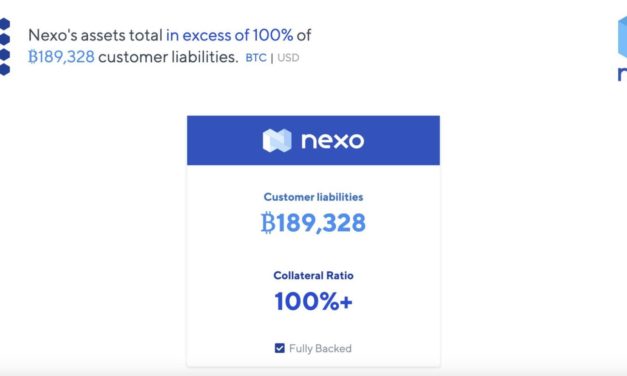
And, while some exchanges give detailed breakdowns of their reserves during a PoR, other firms simply provide quick responses claiming they are in the black. Nexo has simply come up with a one-page snapshot that says they have more assets than customer deposits of around $3.2 billion.Looking at some of the reserves audits published by exchanges, Philipp Zimmerer, core contributor at decentralized finance protocol Spool.fi, told Cointelegraph that the main issue is that there are no formal rules for what exactly constitutes a proper PoR audit. This means that the procedure will differ between exchanges. He explained:“Even if implemented in the most good-faith interpretation, a proof of reserves still cannot prove exclusive ownership of private keys or detect any funds that were borrowed to manipulate the outcome of the audit. Generally, the practice is only as trustworthy as the exchange and the auditors were to begin with, and will never constitute 100% proof of anything.”He further noted that showing assets without showing liabilities is worth nothing. Only ones that can be “trusted to a degree are fully regulated, on-shore banking license holders that undergo regular, complete audits from known and independent firms.” He cited the example of Coinbase, which, as a publicly traded firm, makes its assets and liabilities public information. Zimmerer also noted Kraken, another exchange registered in the United States, that does regular audits, the results of which it publishes and disseminates to the public.Stefan Rust, CEO of data infrastructure provider Truflation, told Cointelegraph that looking at early implementation of PoR, it seems it is a good first step forward but in order to gain more trust and better transparency, a wiser approach will be to look at the overall balance sheet and monitor the liabilities while having transparency around capital reserves. It’s not just the reserves but also the exposure that the company has. In the case of FTX, they had over 130 companies where they had divested the liabilities and the income. The same happened with WeWork and a number of other blowups in corporate land. Rust said:“Proof of reserve is the first step. Proof of liabilities would be great, and in light of FTX, a must-have edition. Lastly, some sort of proof of incorporation or consolidation across related companies. We need to educate the market and the community on not only how to use these tools, but also the benefits of these tools. It’s important for users to understand why decentralization is really an essential part of not only the crypto ecosystem but the future financial and Web3.”When asked the most reliable way to keep tabs on crypto exchanges, Don Guillaume, head of PR and communications at Gate.io, told Cointelegraph, “Regulation. Over the last few years we’ve seen positive steps across the world by regulators to ensure crypto exchanges, and really any company operating in the crypto industry, are regulated and following the rules of the law.”Recent: Could Hong Kong really become China’s proxy in crypto?Overall, the fallout from the collapse of FTX has led to calls for greater regulatory oversight of the crypto market. While key market players continue to offer some form of transparency in order to regain public trust, experts believe proof of reserves alone cannot solely be relied upon.

Čítaj viac

DeFi platforms see profits amid FTX collapse and CEX exodus: Finance Redefined

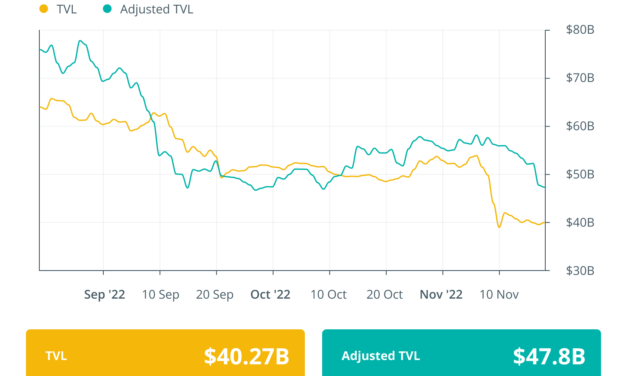
Welcome to Finance Redefined, your weekly dose of essential decentralized finance (DeFi) insights — a newsletter crafted to bring you significant developments over the last week.The FTX collapse has created a sense of uncertainty among large and retail investors alike, who are not very sure whether they should keep their funds on centralized exchanges or not. The dilemma has led to a major uptick among DeFi protocols and decentralized exchanges.DeFi protocols and decentralized exchange (DEX) platforms gained some momentum in the aftermath of the FTX implosion. A new report from Delphi Digital suggests DEX platforms gained 24% volume in the wake of the FTX collapse.In other DeFi news, crypto scammers are actively using black market identities to avoid detection. DeFi protocol 1Inch is looking to optimize gas costs with its new v5 router.The DeFi market like the rest of the crypto market is still recovering from the turmoil in the aftermath of the FTX collapse. Majority of the top 100 DeFi tokens traded in red for the second week barring a few.DeFi platforms see profits amid FTX collapse and CEX exodusA week after the fallout from the FTX and Alameda chaos, some on-chain data points are interesting to observe. Although record amounts of Bitcoin (BTC) and Ether (ETH) are leaving the exchanges, not all DApps and protocols have shown growth, mainly due to reliance on FTX and Alameda. Combined with the migration away from centralized exchanges (CEXs), the volatile crypto market has users trading in record numbers. According to data from Token Terminal, the daily trading volume of perpetual exchanges reached $5 billion, which is the highest daily trading volume since the Terra (LUNA) and TerraUSD (UST) meltdown in May 2022.Continue readingFTX collapse followed by an uptick in stablecoin inflows and DEX activityDelphi Digital used asset baskets to analyze performance between DEX and CEX tokens and found that when comparing the basket prices to BTC, the DEX basket gained 24% whereas the CEX basket is down 2%.Generally, on-chain activity correlates to overall Bitcoin, Ether and altcoin market sentiment, with the current FTX chaos catalyzing historic exchange outflows and CEX tokens’ underperformance. A likely trend to emerge from the current chaos is a steady uptick in self-custodied cryptocurrencies and an increase in DEX use.Continue readingCrypto scammers are using black market identities to avoid detection: CertiKCrypto scammers have been accessing a “cheap and easy” black market of individuals willing to put their name and face on fraudulent projects — all for the low price of $8, blockchain security firm CertiK has uncovered. These individuals, described by CertiK as “Professional KYC actors,” would, in some cases, voluntarily become the verified face of a crypto project, gaining trust in the crypto community prior to an “insider hack or exit scam.”Continue reading1inch seeks to optimize gas costs with its new v5 routerAccording to 1inch, users’ gas costs for swaps will be at least 10% lower than its previous offerings in the DEX segment, therefore making swapping activity on the Ethereum network more profitable for its users. In the Router v5, 1inch estimated that swaps will be approximately 5% more gas efficient than in the previous version and 10% more gas efficient, compared with the second best performing player in the DEX segment.Continue readingDeFi market overviewAnalytical data reveals that DeFi’s total value locked plunged to $40 billion. Data from Cointelegraph Markets Pro and TradingView show that DeFi’s top 100 tokens by market capitalization had a bearish meltdown due to the FTX saga, with the majority of the tokens registering double-digit losses over the past week.Thanks for reading our summary of this week’s most impactful DeFi developments. Join us next Friday for more stories, insights and education in this dynamically advancing space.

Čítaj viac

FTX meltdown triggers FINRA into probing crypto comms

The Financial Industry Regulatory Authority (FINRA), the American self-regulatory organization, has launched an examination into the firm’s retail communications concerning crypto products and services offered by them.The regulatory body, in an official notice, announced that it is launching a targeted exam on firms on how they handled retail communications between July 1 and the end of September. The decision to examine crypto-related retail communications comes in the wake of the collapse of the FTX crypto exchange.Any written (including electronic) message that is issued or made available to more than 25 retail investors within any 30-day period is referred to as a “retail communication” according to FINRA. It also applies to video, social media, mobile apps and websites in addition to writing communications.In its exam notice, FINRA asked firms to provide additional information for each individual communication, such as the date it was first made public, whether it was filed with FINRA’s advertising regulation department, whether a principal at the firm approved the communication and identifying the crypto assets or services mentioned in the communication.In addition to any relevant compliance rules or materials, FINRA has requested that firms submit written supervisory procedures for the “examination, approval, record-keeping and dissemination” of the communications. It also requested information on any contracts made with affiliates on the production or distribution of the messages, as well as any knowledge such affiliates might have regarding the target audience.The probe began on Nov. 14 with an aim to investigate whether any of the retail crypto products or services were falsely advertised. At the peak of the crypto bull run, crypto advertisements became the flavor of many brands and celebrities. Crypto ads ruled the Super Bowl 2022 as well, with FTX being one of the most talked about ads at the time.Related: Thailand SEC to apply strict guidelines for crypto adsThe flood of advertisements became a big concern for regulators given the majority of these advertisements didn’t adhere to any advertisement standards and often hid the risks associated with crypto investments while glorifying the high returns. Many celebrities like Tom Brady, Larry David and Steph Curry, who were brand ambassadors for the FTX crypto exchange, are facing a class-action lawsuit. The lawsuit alleged that celebrities advertised FTX’s fraudulent scheme that was designed to take advantage of unsophisticated investors from across the country.At the start of the year, authorities in the United Kingdom, Singapore and Spain tightened the requirements around crypto firms’ marketing messaging and customer recruitment practices. Many other countries and global brands have also imposed restrictions on crypto advertisements amid market turmoil.

Čítaj viac

Nayib Bukele announces Bitcoin prescription for El Salvador: 1 BTC a day

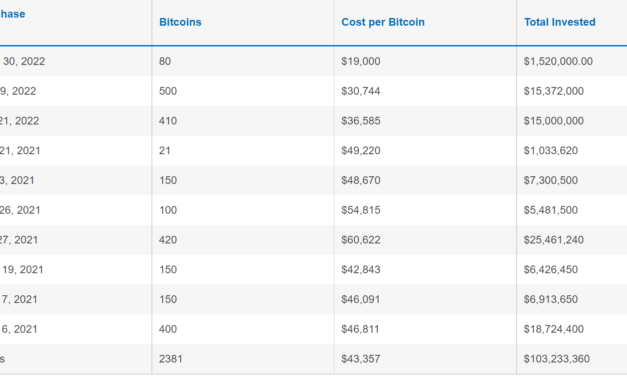
As the world’s first nation to adopt Bitcoin (BTC) as a legal tender in September 2021, El Salvador is going back to its BTC buying days after a pause for months amid bearish market conditions.El Salvador President Nayib Bukele announced on Nov.16 that the Central American nation will start purchasing BTC on a daily basis starting from Nov.17. The announcement comes nearly three months after the nation made its last BTC purchase in July 2022.We are buying one #Bitcoin every day starting tomorrow.— Nayib Bukele (@nayibbukele) November 17, 2022El Salvador started buying BTC in September 2021, right after mankind it a legal tender. At the time BTC was in the mid of a bull cycle and every purchase made by the nation looked lucrative as the price was hitting a new all-time high every other week. However, with the advent of the bear market by the second quarter of 2022, El Salvador’s early BTC purchases started to look like a gamble that incurred heavy losses.According to public records, El Salvador currently holds 2,381 BTC at an average buying price of $43,357. Thus, the country has spent nearly $103.23 million on its BTC purchase and the value of the same BTC currently sits at $39.4 million.El Salvador’s total BTC purchase historyThe announcement of a new BTC purchase routine at a time when the top cryptocurrency is trading at a new cycle low could help El Salvador offset some of its losses in the coming months. Looking beyond the losses incurred by the small nation on their BTC purchases, the top cryptocurrency has been instrumental in helping reduce the cross-border remittance cost significantly and has also given a boost to the tourism sector. Related: El Salvador’s Bitcoin decision: Tracking adoption a year laterCointelegraph reporter Joe Hall is currently on the ground in El Salvador and only surviving on BTC. Some early updates from Hall suggest that BTC is accepted at majority of tourist spots, but mobile applications and services need more refinement.Lunch yday afternoon at El Navegante HUGE sign: #Bitcoin accepted here ⚡️ Waiter is wearing a @Strike t-shirt, chef is wearing a Strike hat (srsly).Tried to pay the bill. Waiter spends 15 mins looking for PoS. He gets his neighbour to fire up Chivo so I can pay ‍♂️ pic.twitter.com/9HaHG8qclQ— Joe Nakamoto (@JoeNakamoto) November 14, 2022

El Salvador’s BTC adoption might not look very promising at the moment due to the intense crypto winter. However, looking at the Bitcoin price cycle history, the nation can easily offset its losses in the next bull cycle by simply holding onto its BTC purchase.

Čítaj viac

Získaj BONUS 8 € v Bitcoinoch

nakup bitcoin z karty

Registrácia Binance

Burza Binance

Aktuálne kurzy