Autor Cointelegraph By Prashant Jha

DeFi sparks new investments despite turbulent market: Finance Redefined

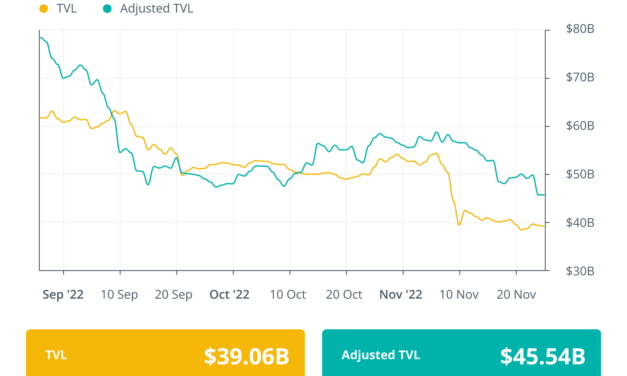
Welcome to Finance Redefined, your weekly dose of essential decentralized finance (DeFi) insights — a newsletter crafted to bring you significant developments over the last week.The prolonged crypto winter aided by the collapse of FTX has kept investors from backing a new protocol that merges DeFi and the foreign exchange market. A new Cosmos blockchain-based DeFi protocol has caught the eyes of investors who have put $10 million behind the project.Cardano-based leading stablecoin ecosystem Ardana abruptly stopped its development after several launch delays. However, the project remains open-source for others to add to it until they restart the development process.Aave community has now proposed a governance change after a failed $60 million short attack. The short attack was later traced to the Mango Markets exploiter, as one of the wallets involved in the attack belonged to the same exploiter.The crypto market remained turbulent throughout the week and the majority of the top 100 DeFi tokens traded in red, barring a few.DeFi protocol raises $10M from Bitfinex, Ava Labs despite turbulent marketOnomy, a Cosmos blockchain-based ecosystem, just secured millions from investors for the development of its new protocol. The project merges DeFi and the foreign exchange market to bring the latter on-chain.According to the developers, the latest funding round garnered $10 million from big industry players such as Bitfinex, Ava Labs, the Maker Foundation and CMS Holdings, among others.Continue readingLeading Cardano stablecoin project shuts down after excruciating launch delaysOn Nov. 24, Ardana, a leading DeFi and stablecoin ecosystem building on Cardano, abruptly halted development, citing “funding and project timeline uncertainty.” The project will remain open-source for builders while treasury balances and remaining funds will be held by Ardana Labs “until another competent dev team in the community comes forward to continue our work.”The move came as a shock to many due to the sudden nature of the announcement. However, it appears that issues were already present for some time. Beginning July 4, Ardana has held an ongoing initial stake pool offering, or ISPO, to fund its operations. Unlike traditional fundraising mechanisms, developers do not receive the Cardano (ADA) delegated by users but instead the staking rewards. Continue readingAave proposes governance changes after failed $60M short attackOn Nov. 23, one day after Mango Markets’ exploiter Avraham Eisenberg attempted to use a series of sophisticated short sales to exploit decentralized finance protocol Aave, project contributors put forth a series of proposals to deal with the aftermath. As told by protocol engineering developer Llama and financial modeling platform Gauntlet, both of whom are deployed on Aave.Llama wrote that the user had been liquidated but at the cost of $1.6 million in bad debt, likely due to slippage. “This excess debt is isolated only to the CRV market,” the firm wrote. “While this is a small amount relative to the total debt of Aave, and well within the limits of Aave’s Safety Module, it is best practice to recapitalize the system to make whole the CRV market.” Continue readingCrypto awakening: Researcher explains ETH exodus from exchangesNansen research analyst Sandra Leow posted a thread on Twitter unpacking the current state of DeFi with a specific focus on the movement of Ether (ETH) and stablecoins from exchanges.As it stands, the Ethereum 2.0 deposit contract contains over 15 million ETH, while some 4 million Wrapped Ether (wETH) is held in the wETH deposit contract. Web3 infrastructure development and investment firm Jump Trading holds over 2 million ETH tokens and is the third largest holder of ETH in the ecosystem.Continue readingDeFi market overviewAnalytical data reveals that DeFi’s total value locked plunged below $40 billion. Data from Cointelegraph Markets Pro and TradingView show that DeFi’s top 100 tokens by market capitalization had a volatile bearish week due to the FTX saga, with the majority of the tokens bleeding throughout the week.Curve DAO Token (CRV) was the biggest gainer among the top 100 DeFi tokens, registering a surge of 23.8% over the past week, followed by Chainlink (LINK) with an 8% surge. The rest of the tokens in the top 100 traded in red on the weekly charts.Thanks for reading our summary of this week’s most impactful DeFi developments. Join us next Friday for more stories, insights and education in this dynamically advancing space.

Čítaj viac


FTX stake in US bank raises concerns about banking loopholes

The bankruptcy proceedings of cryptocurrency exchange FTX have revealed many new aspects of its unethical practices. The latest revelation around its stake in one of the smallest United States banks from rural Washington has raised fresh concerns about its operations and alleged misuse of banking loopholes.Farmington State Bank in Washington State, now renamed Moonstone, is the 26th smallest bank in the U.S. with a single branch and three employees. FTX invested in the rural bank through its now-bankrupt sister company Alameda with an investment of $11.5 million in its parent company FBH in March 2022. The Alameda investment was more than double the bank’s value of $5.7 million, reported The New York Times.The FTX’s ownership in Moonstone is seen as a move to bypass the requirements of owning a banking license in the U.S., which according to many, is quite a complex task. One Reddit user wrote that it takes a lot of work to get a banking license, and thus “buying a small bank is often a back door to getting a license, which would be a natural part of a business plan for something like FTX.”Another user pointed toward the perceived misuse of banking loopholes and the lack of regulatory oversight on crypto.  Others speculated that Sam Bankman-Fried’s political connections could have played a part in the deal as well and said:“With the amount of political connections SBF had, I would not be surprised either if he just got that license for no reason.”Apart from FTX’s stake in a U.S. bank, what drew more attention from the crypto community is the connection between the rural bank’s parent company FBH and another crypto entity, Tether, the largest issuer of a stablecoin in the crypto market currently.Related: How does the FTX collapse affect Dubai’s crypto ecosystem?The chairman of FBH is Jean Chalopin, who also happens to be the chairman of Deltec Bank, who has Tether and Alameda both on their client’s list. After buying the bank in 2020, FBH applied for Federal Reserve approval nearly 100 years after the bank was founded to facilitate cryptocurrency-related transactions. The bank got Federal approval in June 2021, and nine months later, FTX invested in the rural bank, now equipped with Federal Reserve approval. The banking connection between Tether and FTX/Alameda became a concern for many in the crypto community as Tether itself has long been under scrutiny for reserve audits. Tether didn’t respond to Cointelegraph’s requests for comments at press time.

Čítaj viac

Crypto lender Hodlnaut reportedly faces police investigation in Singapore

Singapore-based crypto lender Hodlnaut is reportedly facing a police probe over alleged offenses of cheating and fraud.According to reports published in local media, the police’s commercial affairs department has launched an investigation into the founders of the exchange based on multiple complaints against the platform between August and November 2022. The Singapore police noted that the majority of complaints revolve around false representations and misinformation regarding the company’s exposure to a certain digital token. Police also advised investors impacted by the Hodlnaut crisis to file a complaint online and submit verifiable documents of their transaction histories on the platform.Neither the Singapore police nor Hodlnaut immediately responded to Cointelegraph’s requests for comment.The first signs of trouble for the crypto lender came on Aug. 8 when it suspended withdrawals on the platform citing a liquidity crisis. The suspension of withdrawals came just months after the infamous crypto contagion in the second quarter led by the implosion of the Terra ecosystem.At the time, the platform claimed they had no exposure to the now-defunct algorithmic Terra stablecoin now called TerraUSD Classic (USTC). However, on-chain data contradicted crypto lenders’ claims and suggested they held at least $150 million in USTC.The on-chain data was later confirmed by a judicial report in October. The report noted that the crypto lender lost nearly $190 million to the Terra collapse and later deleted thousands of documents related to their investments in order to hide their exposure. Related: Crypto lender Hodlnaut seeks judicial management to avoid forced liquidationHodlnaut managed to keep its USTC exposure under wraps for almost three months after the collapse of the Terra ecosystem but eventually fell prey to the liquidity crunch forcing it to seek judicial management under which a court appointed a new interim CEO for the firm. Three months down the line, its directors are now facing a police probe for keeping users in the dark.In August, the crypto lender had said it was working on a restructuring plan with hopes of resuming operations soon. 

Čítaj viac

New York governor signs PoW mining moratorium into law

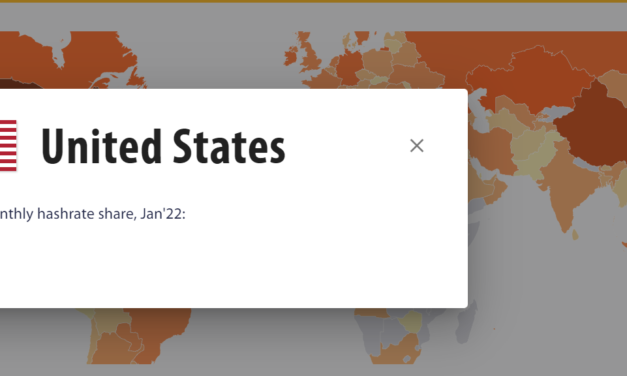
New York governor Kathy Hochul signed the proof-of-work (PoW) mining moratorium into law on Nov. 22, making it the first state in America to ban any PoW crypto mining activity for two years.The PoW mining moratorium will not only prohibit new mining operations but also refuse the renewal of licenses to those who are already operating in the state. Any new PoW mining operation in the state could only operate if it uses 100% renewable energy. The PoW mining bill was first passed by the state assembly in April earlier this year and later got the nod of the State Senate in June. The bill was finally signed into law by governor Huchkul owing to pressure from lobbyists and to meet its carbon emissions targets. Huchkul wrote:“I will ensure that New York continues to be the center of financial innovation, while also taking important steps to prioritize the protection of our environment,” PoW mining consensus is predominantly used by Bitcoin miners and a few other altcoins. It is considered one of the safest and most decentralized ways of authenticating a transaction on a blockchain. However, the practice has been marred by controversies over its high amount of energy consumption.The United States currently sits at the top of Bitcoin mining hashrate share by country with 37.8% of Bitcoin network hashrate coming from the U.S. The two-year moratorium on PoW mining can prove costly and even create a domino effect for other states to follow on a similar path. Blockchain advocacy group Chamber of Digital Commerce called out the false narrative in a Twitter post:“The state’s argument the mining industry’s energy use is exponentially beyond other industries is blatantly false. The Climate Leadership and Community Protection Act requires NY greenhouse gas emissions be reduced by 85% and achieve net zero emissions in all sectors by 2050.”The PoW mining FUD is nothing new and has been debunked many times over, however, there has been a significant lobbying effort over the past year, especially from the proponents of proof-of-stake mining. Greenpeace and Ripple co-founder Chris Larsen has been campaigning for a change in the Bitcoin code.Lawmakers on the other hand have conveniently sidelined available research reports that a significant chunk of Bitcoin mining energy comes from renewable sources. Bitcoin mining council report highlighted that more than 60% of the electricity consumption by the BTC network comes from clean sources.European crypto regulators had proposed a similar PoW ban in their Markets in Crypto Assets (MiCA) legislative. However, proponents of outlawing operations with PoW-based digital assets could not muster enough support, meaning that MiCa legislation was passed without such a ban.

Čítaj viac

FTX ordered to pay reimbursement fees to Bahamian regulators

The bankrupt cryptocurrency exchange FTX’s trouble continues to mount with each passing day, with the latest coming from the Bahamas, once its headquarters.The Supreme Court of Bahamas issued an order in favor of the Securities Commission on November 21, ordering the troubled crypto exchange to pay reimbursement fees to the regulator for holding its digital assets post its bankruptcy filing on Nov. 11.The Supreme Court placed FTX’s digital assets under the supervision of the Securities Commission on Nov. 12. The commission in its public notice acknowledged the judgment and noted that all reimbursements would be done after approval from the Supreme Court. The official statement obtained by Cointelegraph read:“The Order secured today confirms the Commission is entitled to be indemnified under the law and FDM shall ultimately bear the costs the Commission incurs in safeguarding those assets for the benefit of FDM’s customers and creditors, in a manner similar to other normal costs of administering FDM’s assets for the benefit of its customers and creditors.”The Bahamian Securities Commission’s digital asset custody services for FTX also gave fuel to the conspiracies suggesting the commission was behind the hack of multiple FTX wallets. However, the fund transfer patterns of the black hat involved money laundering techniques, which eliminated the chances of a government body behind the hack.Related: SBF, FTX execs reportedly spend millions on properties in the BahamasThe FTX bankruptcy filing exposed several financial holes in the disgraced crypto exchange’s balance sheet. The exchange currently owes $3 billion to 50 of its biggest creditors while the total list of creditors could exceed a million itself. Ray III, who oversaw the Enron bankruptcy proceedings has been appointed as the new interim CEO of FTX and he didn’t hold back during the Chapter 11 filing. He described the situation as the worst he has seen in his corporate career, highlighting the “complete failure of corporate controls” and an absence of trustworthy financial information.

Čítaj viac

Získaj BONUS 8 € v Bitcoinoch

nakup bitcoin z karty

Registrácia Binance

Burza Binance

Aktuálne kurzy