Autor Cointelegraph By Prashant Jha

CFTC chief says Bitcoin is the only commodity in the wake of FTX collapse

The chief of the United States Commodity Futures Trading Commission (CFTC), Rostin Behnam, claimed Bitcoin is the only crypto asset that can be viewed as a commodity during an invite-only crypto event at Princeton University, reported Fortune.Behnam’s comments are quite a contrast to his early statements in October, where he claimed Ether (ETH) could also be viewed as a commodity. The CFTC chief was answering a question on which crypto assets should be seen as commodities and which ones qualify as securities.The CFTC chief’s backtracking of his comments on ETH comes in the wake of heavy scrutiny of U.S regulators and accusations of corruption, with Republican lawmakers accusing the SEC chair of coordinating with FTX ‘to obtain regulatory monopoly.’The debate over which cryptocurrencies qualify as commodities under the law has been a long-drawn one. Bitcoin is unanimously seen as non-security because of its true decentralized nature whereas the status of Ether and several other cryptocurrencies have been a controversial topic. Ripple is currently facing a security lawsuit from the SEC as well.The American financial regulator has found itself in hot waters in the wake of the FTX crypto exchange collapse primarily because of its association with the exchange. CFTC was poised to receive oversight capacity through proposed Senate legislation called the Digital Commodities Consumer Protection Act (DCCPA), The CFTC chief faced a lot of criticism for the same but defended the commission’s actions claiming they don’t have the luxury to wait.Behnam said the committee has limited oversight powers and blamed the “matrix of regulators” as an imperfect system. However, he called for better collaboration among the long list of regulatory bodies to come up with formidable regulations.Related: Here’s how the CFTC could prevent the next FTXThe CFTC chief is slated for a congressional hearing on Dec. 1, discussing the collapse of the now-bankrupt crypto exchange FTX and the lessons learned from the debacle. Breaking: 8 Congress Members tried to stop the SEC from inquiring into FTX by questioning the SEC’s authority to inquire about Crypto5 of those 8 members also received campaign donations from FTX, ranging from $2,900 to $11,600— Nancy Pelosi Stock Tracker ♟ (@PelosiTracker_) November 25, 2022The close ties of former CEO Sam Bankman-Fried with US policymakers and his lobbying efforts to make CFTC the primary crypto regulatory body has been questioned by many in the crypto community. A recent report also alleged that 8 U.S. congressman tried to stop the SEC from inquiring into FTX.

Čítaj viac

Binance acquires regulated crypto exchange in Japan

Cryptocurrency exchange Binance plans to reenter the Japanese market after acquiring a 100% stake in a licensed crypto service provider in the country, Cointelegraph Japan reported.In an official public announcement on Nov. 30, Binance CEO Changpeng Zhao said the crypto exchange was committed to re-entering the Japanese market under regulatory compliance. The acquisition of Sakura Exchange BitCoin (SEBC), a Japan Financial Services Agency-licensed business, would mark the re-entry of global exchange in the Japanese market after four years.#Binance Acquires JFSA Registered Sakura Exchange BitCoin, Committed to Enter Japan Under Regulatory Compliancehttps://t.co/xfdnaY2hiO— CZ Binance (@cz_binance) November 30, 2022Talking about the importance of the latest acquisition, a Binance spokesperson told Cointelegraph:“We can say that the acquisition of SEBC marks Binance’s first license in East Asia, and as Asia is a market with potential, we hope to expand in other regions.”Binance had to shut its operations and plans to open a headquarter in Japan in 2018 after an FSA notice for operating without a license. The Japanese government warned the crypto exchange again in 2021 on similar grounds. Binance’s acquisition of a regulated entity to enter a crypto market where it has found it difficult to acquire a license independently is nothing new. Earlier, Binance managed to reenter the Malaysian market after acquiring a stake in a regulated entity. Similarly, the exchange reentered the Singapore market with an 18% stake in a regulated stock exchange. The crypto exchange also managed to access United Kingdom’s sterling payment network with a partnership with Paysafe after the regulators declined it access to the same.Related: Bank of Japan to trial digital yen with three megabanksCointelegraph reached out to Binance to enquire whether the exchange had applied for an independent license in Japan as well, but a spokesperson declined to comment.Japan is considered one of the first crypto nations to introduce some form of regulation on trading crypto assets. While strict, the Japanese approach to cryptocurrency regulations was widely appreciated, and G20 nations even consulted the nation over global crypto parameters.Recently, Japan has eased up its regulatory policy further to encourage more crypto startups and allow them to flourish and has made coin listings easier.

Čítaj viac

FTX reportedly used Alameda’s bank accounts to process customer funds

The FTX contagion saga sees new revelations around its misconduct every other day, and the latest one solidifies the collusion between the failed crypto exchange and its sister company Alameda Research from the very beginning.FTX, like many other crypto exchanges, found it difficult to get a banking partner to process fiat transactions- as banks have been hesitant to tie up with crypto exchanges due to a lack of regulatory oversight. FTX overcame this problem by using its sister company’s banking accounts to process transactions for the crypto exchange.Former CEO of FTX Sam Bankman-Fried confirmed in a conversation with Vox that the exchange was using Alameda’s bank accounts to wire customer deposits. Some customers were reportedly asked to wire their deposits through Alameda, which had a banking partnership with fintech bank Silvergate Capital.The collision between Alameda and FTX over the customer’s fund later became the main point of failure. Bankman-Fried had claimed that even though FTX never gambled users’ funds, it did loan them to Alameda. The former CEO claimed that he thought Alameda had enough collateral to back the loans, but as reports have suggested, a majority of it was in the native FTX Token (FTT).The claims of the former CEO of the failed crypto exchange regarding misuse of customers’ funds have varied from time to time. First, Bankman-Fried claimed that the exchange and Alameda were independent entities and later also assured that customer funds were safe, only to delete his tweet about the claim later.Related: After FTX: Defi can go mainstream if it overcomes its flawsThe allegations around misuse of banking loopholes arose last week when bankruptcy proceedings revealed that FTX owned a stake in a small rural bank from Washington state via its sister company Alameda. At the time, many alleged that the investment in the rural bank was done to bypass the requirements of getting a banking license. The scope of wrongdoing in using Alameda’s banking accounts for FTX customer deposits depends on the arrangement between the bank and Alameda. In a statement to Bloomberg, Silvergate said that the bank doesn’t comment on customers or their activities as a matter of firm policy. Silvergate didn’t respond to Cointelegraph’s request for comments at the time of writing.

Čítaj viac

FTX collapse put the Singapore government in a parliamentary hot seat

The collapse of the now-bankrupt cryptocurrency exchange FTX has put the Singapore prime minister and the ruling government in a hot seat. Prime Minister Lee Hsien Loong and Deputy Prime Minister Lawrence Wong are set to face grilling questions for their failure to protect retail investors.The Members of Parliament (MP) from the opposition Workers’ party raised 15 questions about Temasek’s investment and FTX collapse. The MPs questioned the government’s credibility in tracking the extent of investments by Temasek and Singapore’s sovereign wealth fund GIC.The discussions around the government policies while investing in digital assets will be scrutinized further in a parliamentary discussion on Nov. 28, reported a Singaporean daily. The opposition MPs have recommended a bipartisan committee to question Temasek on its investment strategies and risk management approaches.Singaporean state-backed investor Temasek was one of 69 investors to invest in the FTX crypto exchange’s $420 million funding round in October 2021. The firm had invested $210 million in the global exchange for a minority stake of 1% and another $65 million in its sister company FTX.US. However, the state-backed investor wrote down its entire $275 million investment in the crypto exchange “irrespective of the outcome of FTX’s bankruptcy protection filing.”Related: The FTX contagion: Which companies were affected by the FTX collapse?Temasek also revealed that despite eight months of due diligence in 2021, it didn’t find any significant red flags in FTXs financials before deciding to invest $275 million into the now-failed cryptocurrency exchange. Apart from Temasek, Sequoia Capital also marked down its entire $214 million investment in the crypto exchange.The impact of the FTX collapse has been far-reaching and the worst hit has been millions of retail investors whose funds were misappropriated and used by the crypto exchange to mitigate its own risk. The collapse has also led to wider regulatory discussion and demand for better regulatory oversight of these centralized entities.

Čítaj viac

After FTX: Defi can go mainstream if it overcomes its flaws

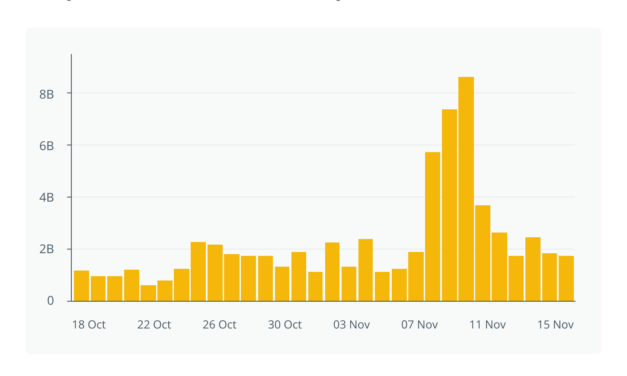
The collapse of the now-bankrupt cryptocurrency exchange FTX has raised many concerns over unregulated centralized platforms. Investors are now coming to question how safe it is to keep one’s funds on these exchanges and have voiced grave concerns about centralized decision-making without any checks. FTX held one billion in a customer’s fund and was found to be using the customer-deposited crypto assets to mitigate its own business losses. Furthermore, a recent report suggests that the downfall of numerous crypto exchanges over the last decade has permanently taken 1.2 million Bitcoin (BTC) — almost 6% of all Bitcoin — out of circulation. The revelation of unethical practices by FTX in its bankruptcy filing has set a panic among investors who are already losing trust in these centralized trading firms. Exchange outflows hit historic highs of 106,000 BTC per month in the wake of the FTX fiasco and the loss of trust in centralized exchanges (CEXs) has pushed investors toward self-custody and decentralized finance (DeFi) platforms.Users have pulled money from crypto exchanges and turned to noncustodial options to trade funds. Uniswap, one of the largest decentralized exchanges (DEX) in the ecosystem registered a significant spike in trading volume on Nov. 11, the day FTX filed for bankruptcy. With FTX’s implosion acting as a catalyst, DEX trading has seen a notable increase in volume. Just last week, Uniswap registered over a billion dollars in 24-hour trading volume, much higher than many centralized exchanges in the same time frame.Aishwary Gupta, DeFi chief of staff at Polygon, told Cointelegraph that the failure of centralized entities like FTX has definitely reminded users about the importance of DeFi:“DeFi-centric platforms simply cannot fall victim to shady business practices because ‘code is law’ for them. Clearly, users realize it as well. In the wake of the FTX implosion, Uniswap flipped Coinbase to become the second-largest platform for trading Ethereum after Binance. As decentralized platforms are run by auditable and transparent smart contracts instead of people, there is simply no way for corruption or mismanagement to enter the equation.”According to data from Token Terminal, the daily trading volume of perpetual exchanges reached $5 billion, which is the highest daily trading volume since the Terra meltdown in May 2022.Recent: Canada crypto regulation: Bitcoin ETFs, strict licensing and a digital dollarCointelegraph reached out to PalmSwap, a decentralized perpetual exchange, to understand investor behavior in the wake of the FTX crisis and how it has impacted their platform in particular. Bernd Stöckl, chief product officer and co-founder of Palmswap, told Cointelegraph that the exchange has seen a significant bump in trading volumes.“The usage of DeFi will surely rise thanks to the FTX downfall. It is said that Crypto.com, Gate.io, Gemini and some other centralized exchanges are in hot waters,” he said, adding, “With so many CEXs falling, trust in custodial wallets is very low and the advantages of DeFi will surely be adopted by more users.”Elie Azzi, co-founder and DeFi infrastructure provider VALK, believes the increase in DEX volumes could be the beginning of a longer-term trend, given a general reluctance from traders to trust CEXs with their assets. He told Cointelegraph:“DEXs are innovating at a much faster rate than their counterparts, with execution and settlement times becoming almost instantaneous on certain chains. The trend is that DEXs are developing the usability and UI of CEXs, whilst improving on the logic in the back end. Combined with the unique features that DEXs bring, including self-custody, the ability to trade from one’s own wallet and retain control of private keys.”He added that CEX platforms might see more stringent controls and transparency initiatives, but this “transparency would exist prima facie in full DeFi. Rather, no one would need to trust CEXs with assets, and any activity, be it trading, liquidity provision or else would be recorded in real-time on-chain.”DeFi’s struggle with targeted hacksWhile DeFi protocols have seen a significant bump in the aftermath of centralized exchange failures, the nascent ecosystem itself has been a prime target for hackers in 2022. According to data from crypto analytics group Chainalysis, nearly 97% of all cryptocurrency stolen in the first three months of 2022 has been taken from DeFi protocols, up from 72% in 2021 and just 30% in 2020.Some of the biggest DeFi exploits of 2022 include the Ronin network exploit in March that resulted in a loss of $620 million worth of funds. The Wormhole bridge hack lost $320 million and the Nomad bridge was compromised for $190 million. In October alone, $718 million worth of crypto assets were stolen from 11 different DeFi protocols.A majority of the hacks in the DeFi ecosystem have occurred on cross-chain bridges, which Jordan Kruger, CEO and co-founder at DeFi staking protocol Vesper Finance, believes shouldn’t be considered as DeFi exploits. “A substantial proportion of those exploits (approx. $3 billion this year) have been bridge attacks. Bridges aren’t ‘DeFi’ so much as infrastructure. CEX losses dwarf this number by an order of magnitude. That said, DeFi will improve and become more secure faster than its centralized counterparts because of its ability to iterate faster. This is similar to the way Linux greatly benefitted from an open-source approach and has achieved a strong reputation for security and phenomenal adoption,” she told Cointelegraph.DeFi is built on the ethos of true decentralization and the decision-making process is often automated via the use of smart contracts. While DeFi does try to eliminate human intervention, vulnerabilities still crop up via different mediums, be it poor coding of smart contracts or breaches of sensitive data.Lang Mei, CEO of AirDAO, told Cointelegraph that nascent DeFi tech is prone to some bugs and issues but one must remember that the majority of hacks “have been related to either lending or cross-chain bridging, it can be immensely challenging to prevent vulnerabilities in technology which is both radically new and often has a highly-accelerated development schedule due to competition.”He suggested additional measures that can be taken by developers to minimize the likelihood of exploitable code in their decentralized apps such as “White hat hacking, bug bounty programs, and testnet incentivization are all valuable tools to help identify and correct mistakes. They can also be used to attract and engage users, so it’s essentially a win-win from a team perspective. Decentralization of governance power is also important through the distribution of token supply and safeguards such as multi-signature wallets.”Till Wendler, co-founder of community-owned DApp ecosystem Peaq, told Cointelegraph that it’s hard to eliminate human-related flaws in smart contacts and design.“Most thorough smart contract security audit only gets you so far — some exploits result from the way smart contracts interact between themselves in the wider ecosystem, not just from their intrinsic design flaws,” he said, stating, “That said, the DeFi space is definitely now in a better shape than it used to be, and it’s working out its own best security practices on the go, growing more and more reliable by the hour.”Mitchell Amador, CEO at bug bounty protocol Immunefi, told Cointelegraph that DeFi can take help from progression in the security department:“There’s a huge explosion of security tech being quietly built in the background to tackle the security problem from all angles.”“Over time, given innovations in UX and security as well as DeFi’s inherent features of transparency, DeFi could permanently overtake centralized platforms, but this dynamic also depends on the wild card of regulations,” Amador added.The collapse of centralized platforms in 2022 and the subsequent rise of noncustodial and DeFi services in its wake is surely a sign of changing times. However, according to many in the crypto space, the most crucial factor in the FTX saga was a lack of understanding and due diligence from the crypto investors.Myriad crypto pundits have been advocating for self-custody and the use of the decentralized platform for quite some time now. Barney Chambers, the co-founder of the Umbria Network, told Cointelegraph:“The cryptocurrency space continues to be the wild, wild west of finance. Here are a few pointers to ensure funds are safe: Never connect your wallet to a website you don’t trust, hold your keys in a trusted place such as a hardware wallet, never trust anonymous strangers on the internet when asking for help, and always [do your own research]!”At present, the only way investors can ensure that their funds are protected is to demand the parties they are investing in to provide transparent and clear information on all accounting and rely on noncustodial solutions in terms of both wallets and trading venues. Darren Mayberry, ecosystem head at decentralized operating protocol dappOS, told Cointelegraph that noncustodial services should be the way forward for investors.Recent: Sustainability: What do DAOs need to succeed in the long run?“Accountability and audits should be standard procedures for all investors, due diligence is a natural part of business, as is fact-checking and investigation. As for non-custodial wallets — they are the most reliable form of storage that transfers liability solely onto their owner and thus negates the possibility of counterparty risks,” he explained.DeFi platforms might have their own set of vulnerabilities and risks, but industry observers believe that proper due diligence and reducing human error could make the nascent ecosystem of DEX platforms a go-to option over CEX platforms.

Čítaj viac

Získaj BONUS 8 € v Bitcoinoch

nakup bitcoin z karty

Registrácia Binance

Burza Binance

Aktuálne kurzy