Autor Cointelegraph By Onkar Singh

What is front-running in crypto and NFT trading?

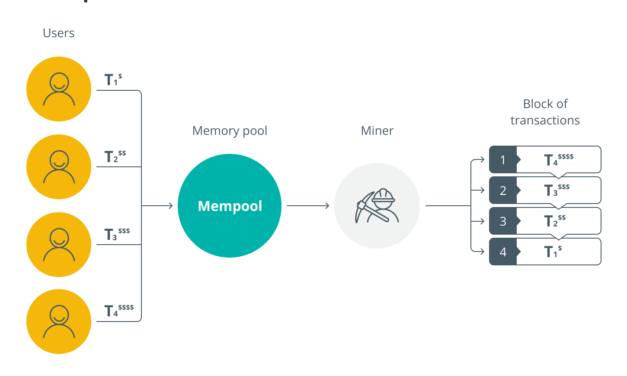
Wash trading is when an investor sells and buys the same asset to inflate the value of security artificially. On the other hand, a front-running attack on a blockchain occurs when a malicious user discovers a swap transaction after it has been broadcasted but before it has been finalized and reorders transactions to their benefit. The NFT market is particularly susceptible to a practice known as wash trading. Several NFT trading platforms allow users to trade without identifying themselves by connecting their wallets to the site. This means that a single user can establish many wallets and link them to a platform.  After that, a person can control both sides of an NFT trade, selling it from one wallet and buying it from another. The trade volume increases as numerous similar transactions are completed. As a result, the underlying asset appears to be in high demand. Similarly, front-running tactics like sandwich attacks focus on exploiting DeFi protocols and services. Sandwiching occurs when two orders are placed, one before and the other after the trade. In this case, the attacker will front-run and back-run simultaneously, sandwiching the original pending transaction in the middle. A victim trades a cryptocurrency asset X, for example, Cardano (ADA), for another crypto-asset Y, for example, Ether (ETH), which is used to make a significant purchase.  Before the hefty trade is approved, a bot detects the transaction and front-runs the victim by purchasing asset Y, i.e., ETH.  This purchase action increases the slippage (based on the volume to be traded and the available liquidity, projected price increase or fall) and boosts the price of asset-Y for the victim trader. Because of the high purchase of asset Y, its price rises, and the victim purchases asset Y at a higher price, which the attacker then sells at a higher price.  Another way of front-running includes a displacement attack in which the miner’s transaction replaces the original transaction; the replaced transaction can still be completed, but the result will not be as intended.

Čítaj viac

What is the Crypto Fear and Greed Index?

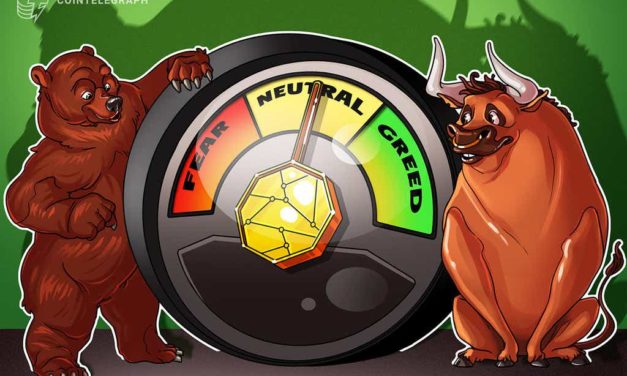
Various Crypto Fear and Greed Index signals that influence the behavior of traders and investors include Google trends, surveys, market momentum, market dominance, social media and market volatility. To determine how much greed is trending in the market, examine trending search phrases. For instance, a high volume of Bitcoin-related searches means a high degree of greed among investors. This factor accounts for 10% of the index value. Historically, increases in Bitcoin-specific Google searches have been correlated with an extreme volatility in crypto prices. To calculate the number each day, the Bitcoin Fear and Greed Index considers a few other factors, such as surveys, which account for 15% of the index value. Surveys with participants of over 2000 drive the index value higher, indicating the presence of greedy investors. Market momentum refers to the market’s ability to maintain a long-term price trend and represents 25% of the index value. This examines the market’s health and direction. The index’s greed side takes momentum into account. Dominance examines the cryptocurrency’s market dominance in the overall crypto industry. For instance, the greater Bitcoin’s dominance, the fewer alternative cryptos exist. However, a drop in Bitcoin dominance suggests increasing greed and accounts for 10% of the index. It’s no wonder that social media has a 15% influence on the index because it’s currently one of the most significant aspects of our life. On the greedy end of the spectrum, aspects like hashtags, engagement, themes and mentions across several social media networks are considered. A quarter portion (i.e., 25%) of the index is made up of market volatility. It examines a cryptocurrency’s current price (such as Bitcoin’s price) and compares it to recent price movements over the previous 30–90 days to determine how volatile the market is. In the index, volatility is used as a fear indicator.

Čítaj viac

What is the Ethereum Arrow Glacier upgrade?

The Ethereum (ETH) Arrow Glacier upgrade is a relatively simple modification implemented in block number 13,773,000 on December 9, 2021.  So, is Ethereum proof-of-stake (PoS) now? No, with the Arrow Glacier upgrade, the Ethereum blockchain gets updated to keep it on track. This means that the Ethereum blockchain is yet to upgrade to the PoS model. Moreover, the Arrow Glacier Ethereum upgrade is significant for crypto miners, users, stakers and the upcoming Ethereum 2.0. Like Muir Glacier, the Arrow Glacier network update alters the difficulty bomb (ice age) parameters, pushing it back several months, giving Ethereum 2.0 developers additional time to prepare for transitioning to the proof-of-stake (PoS) consensus mechanism. The extension of the time bomb is a common feature of Ethereum updates that was initially intended for December 2021 and the London hard fork; however, it is projected to happen around June 2022. One Ethereum Improvement Proposal (EIP) defers the difficulty bomb in this release. An EIP is a proposal for a change that the Ethereum community creates and reviews.  Due to this upgrade, mining on Ethereum will become difficult and uneconomical, motivating miners to expedite the process of moving to the PoS consensus method. Arrow Glacier is especially intriguing because it appears to be the final stretch of the difficulty bomb before the introduction of Ethereum 2.0. This article will discuss the Arrow Glacier upgrade announcement and answer questions like will Ethereum go to PoS? What should you mine after ETH goes PoS?

Čítaj viac

What is Harmony (ONE) blockchain and why it is getting so much traction?

Harmony is getting a lot of traction because it addresses core blockchain concerns, is energy-efficient, has cross-chain capabilities, offers lower gas fees and has a huge potential for nonfungible tokens (NFTs). Maintain decentralization and security Harmony thinks its network can scale while maintaining decentralization and security because it uses sharding, which divides validators into multiple groups and allows them to approve transactions and new blocks simultaneously. Harmony can now process 2,000 transactions per second (TPS), which is comparable to Visa, ONE of the world’s largest payment networks. Harmony believes it will process 10 million TPS in the long run. On the other hand, Harmony does not compromise security or decentralization even as it scales. For example, the network assigns nodes or computers that join the network and validate transactions, to distinct shards via a distributed randomness generation mechanism. Harmony also keeps the minimum number of ONE tokens required for nodes to join the network as validators and preserve decentralization at a low level. Energy-efficient Many blockchain networks are now adopting the proof-of-stake model, which Harmony has employed since its inception. As a result, nodes put up existing tokens as collateral in this procedure to have a chance to be chosen at random to validate transactions. For a block to be approved, several validators must check transactions. Harmony stands out from other networks because its architecture and proof-of-stake consensus method allow it to complete blocks in under two seconds. Cross-chain capabilities Additionally, Harmony introduced Horizon, a cross-chain interoperability bridge with Ethereum, allowing assets to be exchanged between the two networks. This innovation can revolutionize cross-border payments and make cryptocurrency exchanges more convenient. Harmony has also established connections with other blockchains, such as Binance. By allowing nodes on other blockchain networks to validate transactions, Harmony’s platform can transfer data across various blockchain networks, regardless of whether they use proof-of-stake or proof-of-work governance.  Lower gas fees Harmony’s network seldom becomes clogged, thanks to its high TPS and usage of proof-of-stake validation. As a result, it does not have high gas fees, which are now a fraction of a penny per transaction on Harmony.  On the other hand, a network like Ethereum sees far more overall demand and transactions than Harmony. Still, Harmony claims that it can alleviate congestion issues by simply adding additional shards, even if the network is fully utilized and witnessing exceptionally high demand. Huge potential for NFTs The network’s cross-chain capabilities open up some exciting possibilities for NFTs, which are secure digital art, video and audio assets that may be transmitted on a blockchain network. Moreover, cheaper gas expenses may make the network appealing to developers interested in minting NFTs. According to Harmony, bridging NFTs from ONE network to another may be costly at first, but subsequent transactions will be inexpensive. Harmony also announced on Twitter that it is working on NFT lending, NFT verification and fractionalization, among other features.

Čítaj viac

From cash to crypto: The Cantillon effect vs. the Nakamoto effect

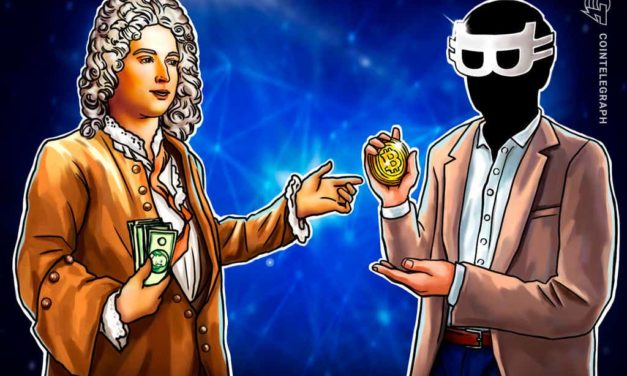
Bitcoin introduces the world to the Cantillon effect 2.0, often known as the Nakamoto effect. Those who live closer to the truth can receive value creation benefits in a Bitcoin world, rather than being rewarded for privilege, status or geography. The issue of why we need Bitcoin (BTC) is a prevalent one these days, but most people’s responses leave them shaking their heads and declaring it to be either a Ponzi scheme or money for criminals. This conclusion falls short of describing how Bitcoin has the potential to address the systemic inequity and corruption that plague our present monetary system.  Miners contributing to the Bitcoin network’s security are rewarded with new Bitcoin and fees based on how much protection they give, referred to as the Nakamoto effect. In contrast, the Cantillon effect, a long-forgotten classical theory on how the distribution of money impacts individual wealth, is one of the injustices in our current society. Our modern monetary system, which is built on the generation of money primarily through bank-issued debt with interest, transfers wealth from the middle to the top, resulting in an unstable monetary system and a society in which the “future doesn’t matter.” Between 1970 and 2010, the International Monetary Fund reported 425 systemic banking, monetary and debt crises, an average of 10 each year. Monopolistic state money is a fragile and unequal system, while countries with many currencies have historically experienced greater stability and equality.  The answer to many of these problems regarding state control of money can be found in cryptocurrencies, a new sort of non-state money. After the Great Financial Crisis of 2007–08, the first and most significant of these, Bitcoin, emerged, with the system going online in January 2009. This article explains the Nakamoto and Cantillon effects, and whether Bitcoin is the antidote to the Cantillon effect. Please read our guide: Who is Satoshi Nakamoto: The creator of Bitcoin, to understand more about the founder of the world’s first decentralized cryptocurrency.

Čítaj viac

Získaj BONUS 8 € v Bitcoinoch

nakup bitcoin z karty

Registrácia Binance

Burza Binance

Aktuálne kurzy