Autor Cointelegraph By Onkar Singh

What is a Web3 browser and how does it work?

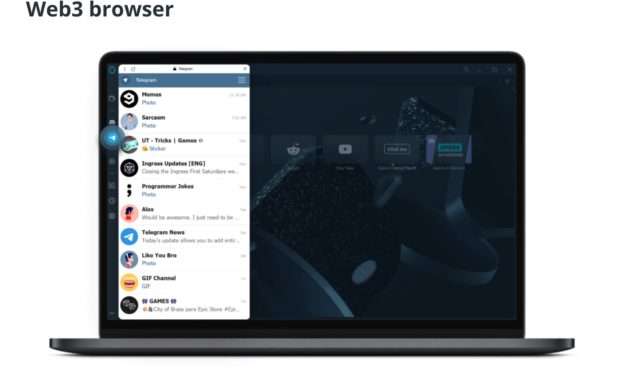
A software program called a web service enables computer-to-computer communication over the internet. However, web services are nothing new and typically take the form of an application programming interface (API). The Web is a collection of related hypertext materials that may be accessed online. For example, a user examines web pages that may contain multimedia using a web browser and uses hyperlinks to move between them.Tim Berners-Lee, who was employed by CERN, The European Organization for Nuclear Research, in Geneva, Switzerland, invented the Web in 1989. Since then, Berners-Lee has actively directed the development of web standards and has pushed for the creation of the Semantic Web, also called Web3. The phrase “Web3” is used to characterize multiple evolutions of web interaction and usage along various paths, including creating a geospatial web, utilizing artificial intelligence tools and making content available through numerous non-browser apps or Web3 browsers. A Web3 browser introduces users to a new world of decentralized apps (DApps) and digital economies. This article will discuss Web3 fundamentals, key features of a Web3 browser, how a Web3 browser works and how to use one.What is a Web3 browser?Web3 browsers help users interact with decentralized applications built on blockchain technology. Web3 technologies like distributed ledgers, artificial intelligence, Metaverse and others aim to create the next-generation internet, which is accessible to everyone and offers benefits.Key features of a Web3 browser include:Immutable ecosystem, i.e., trust that people will download the digital product just as the original creator intended. Enhanced transparency and security, Quicker browsing performance,Complete user anonymity and confidentiality,Integrating cryptocurrency wallets with multiple blockchains,Complete control over the content due to decentralization.Furthermore, search engines can find microcontent texts automatically tagged in Web3, calling for converting countless macro Web1 content into microcontent. Because tagging can somewhat eliminate the uncertainty that homonyms and synonyms introduce to the search process, the end result may be a more accurate search.How does a Web3 browser work?The world of DApps and digital economies is made available by Web3 internet browsers. By leveraging cryptography and public blockchains, the Web3 browser places control with users, wiping out centralized institutions. Additionally, consumers are rewarded financially for interacting with content or viewing carefully selected adverts on decentralized social media platforms and Web3 browsers.But, how do Web3 browsers change the online experience? Web3 browsers enable users to use the standard functionality of browsers. They are essentially decentralized applications that allow users to retain ownership of their data and share its revenue. So, is Chrome a Web3 browser? No, Chrome is a Web2 browser like Firefox and Safari. However, users can access Web3 applications with Web2 browsers using a Web3 wallet like MetaMask.How to use a Web3 browser?The Web3 wallets can be incorporated into traditional web browsers, providing DApp browser functionality by allowing flexible access to decentralized applications without the assistance of other intermediaries while still maintaining full ownership of their assets. In addition, users can access the Web3 economy without going through any Know Your Customer (KYC) or Anti-Money Laundering (AML) procedures. Moreover, crypto assets can be stored and managed effectively using Web3 wallets. However, if one loses their seed phrase, they may lose funds, unlike centralized custodial wallets. So, which Web3 browser would be suitable for your requirements? Let’s learn about various Web3 internet browsers in the sections below.Opera Web3 browserBoth crypto-curious and blockchain-savvy users may enjoy a seamless, private and secure Web3 experience with Opera Crypto Browser with features such as phishing protection, a secure clipboard, a malicious-address checker and the Wallet Selector, the industry’s first multi-wallet management tool. Ether (ETH), ERC-20 and ERC-721 tokens are supported by the built-in crypto wallet and several blockchains, including Ethereum Virtual Machine (EVM)-compatible chains, Bitcoin and layer-2 solutions. Additionally, Opera has a strong partner network with partners like Solana or Polygon across the crypto ecosystem.Furthermore, users can quickly access WhatsApp, Telegram, Discord, Twitter and more social apps in the sidebar of the desktop Crypto Browser to stay connected to their communities at all times. In addition, users may access future airdrops, industry updates and event calendars, gas costs, instructional content and others through the integrated Crypto Corner. If you are interested in using the Opera Web3 browser, you must first download the Opera Crypto Browser for Android, Windows, or Mac (iOS coming soon). Then, if you already have a wallet, you can use it or create an Opera wallet to utilize the functionalities mentioned above.Puma Web3 browserUkrainian-Canadian developer Yuriy Dybskiy founded Puma Browser in January 2019. It provides access to Ethereum Name Service (ENS) and Handshake (HNS) domains and InterPlanetaryFileSystem (IPFS), as well as seamless payments for content creators, app and game developers via Coil Content Network and Interledger Protocol. Using the Puma browser, web monetization works as follows:A monthly charge of $5 is paid by Coil Members to access the content created by the users.Interested users set up a digital wallet and make money from their content. Every hour a Coil Member spends viewing users’ content earns them $0.36 from Coil. While Coil Members enjoy users’ content, Coil streams funds to their wallets.Brave Web3 browserBrave is open-source software that offers privacy-preserving features together with a free-to-use business model. It enhances users’ browser super app with cost-free video calls, fully autonomous search, offline playlists and even a personalized news feed. Brave, by default, bans trackers and obscene advertisements on all websites users visit. Moreover, Brave’s brand-new nonfungible token (NFT) gallery feature provides users with a streamlined interface for viewing and managing NFT collections.Additionally, by watching ads, one can earn passive income in Basic Attention Tokens (BAT). Another notable feature of the Brave Web3 browser is the incorporation of IPFS functionality, which enables built-in decentralized file storage and reduces data concentration by distributing file storage across a worldwide network.Beaker browserBeaker browser allows peer-to-peer website hosting, referred to as Hyperdrives, in a private mode. Only those with the link to a Hyperdrive can access the website once it has been created. To create hostless applications, the Beaker browser offers new APIs while still being compatible with the rest of the Web.Beaker displays the complete site’s structure in a GitHub-like format, in contrast to most browsers showing the page’s source code to the website visitors. Even better, one can host their own fork of the website.Osiris browserThe first net-neutral browser in the world, Osiris hopes to release people from commercialism, the shackles of censorship and bias that have crept into the internet. Osiris asserts that it is a blockchain-based browser that, by default, bans all commercials and trackers and states baldly that it is self-sustaining without advertising money. With Osiris Armor, users can configure privacy settings and view the number of advertising and scripts that have already been banned. In addition, it offers a multi-wallet called Metawallet that embeds a wallet in the browser and supports several cryptocurrencies to enhance the Web3 experience for blockchain users.The future of Web3 browsersWeb platforms have long been without the capability of money transfer, resulting in a deluge of internet advertising and dishonest business practices. As the Semantic Web (Web3) promises to arrange the world’s information in a way that Google’s search engine architecture cannot achieve, it enables web monetization opportunities for developers, gamers, and content creators. Web monetization offers an effective, free, native and automatic means of paying creators, funding essential web infrastructure and supporting API calls.Although Google Chrome is the most used Web2 browser and DApps can be accessed via Web3 wallets, blockchain-friendly web browsers allow users to control their data, funds and assets without intermediaries. Therefore the shift towards decentralized web calls for novel and innovative solutions to enhance the user experience, and Web3 browsers acting as a gateway to DApps are essential to access the digital economy. Despite the fact that there are still many unexplored areas of the Semantic Web and a lot of research to be done, it is evident that Web3 technologies are becoming a significant force in the current Web landscape. And it is expected that Web3 browsers (both existing and upcoming ones) will continue to offer distinct services to serve the needs of blockchain users.

Čítaj viac
What is Bitcoin hash rate and why does it matter?

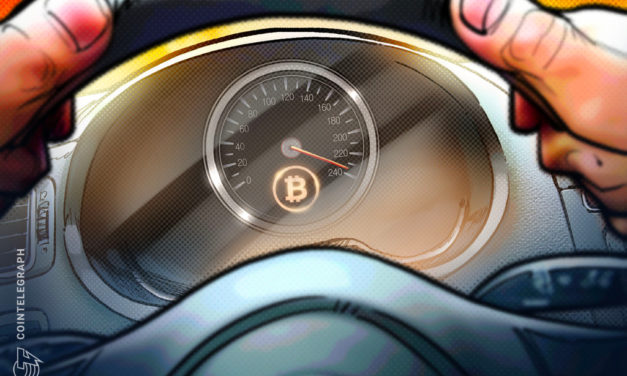
The SHA-256 cryptographic hashing function, which converts any input data into a 256-bit string (the hash), is one of the technologies using which Bitcoin measures its hash rate. Due to the one-way nature of this function, it is simple to determine the hash from an input but not the other way around. A hash rate, which can be expressed in billions, trillions, quadrillions and quintillions, is a measurement of how many calculations can be carried out each second. For instance, a hash rate of 1BH/s indicates that one billion estimates can be made each second. But, how is Bitcoin’s hash rate measured? Exahashes per second (EH/s) that are equivalent to one quintillion hashes are used to express the hash rate of BTC. By comparing the average time between mined blocks with the network difficulty at a particular time, the overall network hash rate may be roughly calculated. So, what is mining difficulty? The mining challenge refers to how tough it is for miners to generate a hash lower than the desired hash, which is accomplished by lowering the hashed block header’s numerical value. On average, a new block (Bitcoin) is found every ten minutes. However, if BTC is discovered less frequently than the average time, the difficulty decreases or vice-versa. Furthermore, it is essential to note that the Bitcoin network’s mining difficulty is automatically changed after 2,016 blocks have been mined. Therefore, depending on the number of miners and their total hashing power in the mining network, the difficulty can be adjusted either higher or downwards. So, what is Bitcoin’s current hash rate? Although the precise hashing power of Bitcoin is unknown, it can be inferred from the number of blocks currently being mined and the level of block difficulty. So, how to monitor Bitcoin’s hash rate? Blockhain.com offers estimates about Bitcoin’s current hash rate, which is 224.383m TH/s as of September 25, 2022.

Čítaj viac

What is veTokenomics and how does it work?

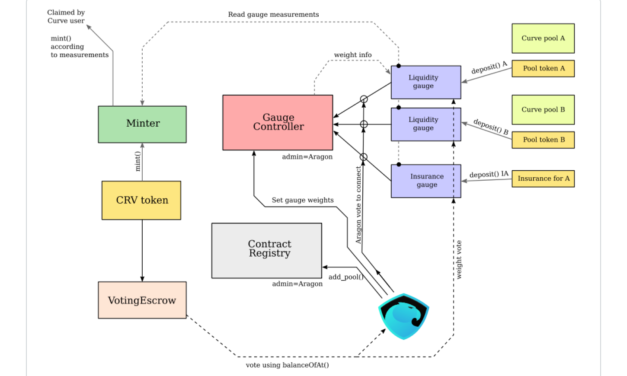
All facets of a token’s production and management, including its allocation to various stakeholders, supply, token burn schedules and distribution, are managed through tokenomics analysis. Tokenomics help to determine the potential value of decentralized finance (DeFi) projects. Since the law of supply and demand cannot be changed, tokenomics dramatically impacts the worth of each nonfungible token (NFT) or cryptocurrency.Related: What is Tokenomics? A beginner’s guide on supply and demand of cryptocurrenciesHowever, there are various loopholes in the tokenomics design, such as a substantial initial supply allocation to insiders, which may be a pump and dump warning sign. Also, there is no manual on how founders, treasury, investors, community and protocol designers should split the tokens optimally. As a result, DeFi protocols, such as Curve, MakerDAO and Uniswap, lack a carefully planned initial token distribution, which results in sub-optimal token distribution because higher contributors might not always get the best allocation or vice-versa. To solve these issues, the Curve protocol introduced vote-escrowed tokenomics or veTokenomics. In this article, you will learn the basic concept of veTokenomics; how veTokenomics works and its benefits, and drawbacks.What is veTokenomics?Under the veTokenomics concept, tokens must be frozen for a set period, which encourages long-term participation and lowers the tokens’ market supply. In return, users receive veTokens that cannot be sold and are non-transferable. That said, to participate in the governance mechanism, one needs to lock their tokens over a fixed time period, which will cause an organic token price increase over time.One can already lock up your tokens in some DeFi initiatives to receive a portion of the protocol revenue. However, the veToken architecture differs in that owners of these locked tokens can control the emission flow, increasing the liquidity of a particular pool. The rate at which cryptocurrencies are created and released is called emission. The cryptocurrency’s economic model, specifically whether it is inflationary or deflationary, affects the emission rate.This leads to better alignment between the protocol’s success and the incentives earned by the tokenholders because whales cannot use their votes to manipulate the token prices. How does veTokenomics work?To understand the working of vote deposit tokenomics, let’s see how Curve implements veTokenomics. Similar to other DeFi protocols, liquidity providers (LPs) earn LP tokens for offering liquidity to Curve’s pools. These LP tokens can be deposited into the Curve gauge to get the Curve DAO token (CRV), which liquidity providers can enhance by locking CRV. The liquidity gauge calculates how much liquidity each user is contributing. For example, one can stake their liquidity provider tokens in each Curve pool’s unique liquidity gauge.Additionally, veCRV holders and LPs share the fees generated by Curve Finance. One must lock their CRV governance tokens for a fixed time period (one week to four years) and give up their liquidity to obtain veCRV. This means that long-term stakers want the project to succeed and are not in it merely to earn short-term gains.veCRV holders can increase stake rewards by locking tokens for a long time, decide which liquidity pools receive token emissions and get rewarded for staking by securing liquidity through swaps on Curve. However, the length of time tokenholders have locked their veTokens affects how much influence they have in the voting process.Consider Bob and Alex, who each have the same amount of CRV. Bob locked his tokens for two years, while Alex only had them for one year. The veCRV, voting power and associated yields are doubled for Bob because he locked his tokens for a longer period than Alex. Such a dynamic promotes long-term engagement in decentralized autonomous organization (DAO) projects and assures that the token issuance is conducted democratically.Other examples of veTokenomics include Balancer, which introduced veBAL tokens in March 2022 with a maximum locking time of up to one year. Frax Finance also suggested using veFXS tokens, letting owners choose gauges that would distribute FXS emissions among various pools on different decentralized exchanges (DEXs).What are the benefits and drawbacks of veTokenomics?From understanding the basics of veTokenomics, it is evident that tokenholders get rewarded for blocking the supply of veTokens, which reduces the supply of LP tokens and thereby selling pressure. This means tokenholders holding a substantial amount of tokens cannot manipulate their price. Furthermore, this popular tokenomics model promotes the addition of more liquidity to pools, strengthening a stablecoin’s ability to keep its peg.Since there was no market for tokens of liquidity providers other than exercising governance rights and speculating, the initial DeFi governance tokens had little to no impact on the price. However, locked veTokens positively impact the supply dynamics because the community expects enhanced yields, valuable governance rights and aligning the priorities of all stakeholders.Despite the above pros of the vetoken model, there are various drawbacks of veTokenomics that stakeholders must be aware of. Since not everyone invests for the long-term, the protocol following the veTokenomics model may not attract short-term investors.In addition, if tokens are locked for longer, the opportunity costs can be too high as one can’t unlock them till the maturity date if they change their mind. Moreover, this model diminishes long-term oriented incentives and weakens the decentralization of governance if the protocol offering such tokens has the majority of veTokens.The future of the veTokenomics modelIn the traditional tokenomics model, governance tokens that only grant the power to vote are considered invaluable by Curve Finance (the pioneer of the veTokenomics model). Moreover, it believes there is little reason for anyone to become fully committed to a project when “governance” is the only factor driving demand.The new tokenomic system called veTokenomics is a significant advancement. Although it lowers the supply, compensates long-term investors and harmonizes investor incentives with the protocol, the veTokenomics model is still immature.In the future, we may experience additional protocols incorporating veTokenomics into their design architecture in addition to developing novel ways to build distinctive economic systems that use veTokens as a middleware base. Nonetheless, as the future is unpredictable, it is not possible to guess how tokenomics models will evolve in the upcoming years.Purchase a licence for this article. Powered by SharpShark.

Čítaj viac

What is a trading journal? And how to use one

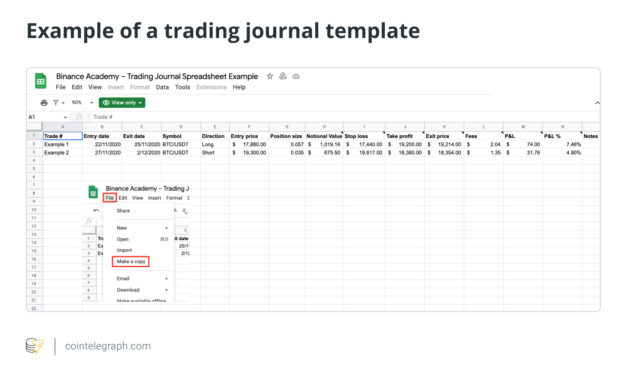
Monitoring price changes using charts is one way to stay updated on the market trends. However, technical or fundamental analyses and tracking other market metrics are not the only means of becoming a successful trader. For example, a disciplined approach that includes maintaining a trading journal would protect you from making emotional decisions concerning your financial investments.In this article, we will discuss the benefits of a trading journal and how to create and use it.What is a trading journal?A trading journal records your trades and their outcomes and gives a summary of your trading experience. However, it is not a brokerage account statement as one can find the reasons behind opting for or avoiding a trading strategy.All successively executed trades are methodically planned, and a trading journal can be a record of the performance of each trading strategy. Regardless of how the market performs, you can adequately assess the potential of a particular trade using a trading journal. Moreover, you don’t need to spend much to create a trading journal. Spreadsheets or Excel would suffice, and it would help you to become disciplined and follow consistent trading strategies. You should record trading entries in your journal if you can’t always stick to your trading strategy. You can figure out how to avoid responding the same way to comparable situations in future trades by noting when things go wrong and why they did so. Why is keeping a trading journal important? Keep reading to find out!What are the benefits of a trading journal?Keeping a trading journal provides many benefits, including helping you to evaluate the strengths and weaknesses of your trading strategy. It helps you make unbiased decisions. For example, one can decide if crypto derivatives best suit their portfolio or if one should start reinvesting crypto profits. The final decision is exclusive of errors in judgment and any irrational beliefs, which helps protect you against an unconscious influence on your investment objectives.Keeping a trading log helps you stay on track with your trading strategy, whether you are a day trader or a swing trader. Becoming distracted by winnings while trading for real money happens easily. After a run of profitable transactions, you can start to use sloppy entry points or acquire more cryptocurrency than usual. A trading plan helps you stay on target and reduces your tendency to make rash, potentially risky trades. Related: Cryptocurrency investment: The ultimate indicators for crypto tradingOne can start trading in the productive zone if they keep track of their trading plans and develop confidence in their skills. Consulting a trading journal can be a tremendous motivator for traders to reflect on how well they have done, and having a successful track record is always a terrific confidence booster. On the other hand, unsuccessful traders can learn from their mistakes and transform unproductive trading strategies into profitable ones.Furthermore, one can also take advantage of what is effective and shift their attention to the current performance by using their journal to track and implement reproducible patterns. This enables traders to generate a steady profit and prevents them from spending time and resources on unsuccessful ideas, eventually helping them to become profitable traders.How to create a trading journal?Any spreadsheet application like Microsoft Excel or Google Sheets in which you record your actual trades and a written document like Microsoft Word or Google Docs to add your thoughts can be used to create a trading journal. You can also start using a free trading journal template like the one prepared by Binance to distinguish between an avoidable and a profitable trading strategy.Regardless of what template you are using, ensure that you have all the necessary columns related to each trade. Additionally, you may take screenshots of the trading charts you have followed and connect them to the appropriate trade on the sheet to make the journal more effective.Let’s understand what columns you should add to your spreadsheet when creating a trading journal:InstrumentAdd the financial instrument you have traded, including the chosen platform; for instance, Bitcoin (BTC) on Coinbase. Related: Binance vs. Coinbase: How do they compare?Date and timeAdd any time and date-specific factors that enable you to engage in a particular trade. For instance, I purchased Cardano (ADA), worth $1,000, during a midday trading lull when ADA was available at a lower price at 1:00 pm. During the lull, crypto values frequently decline because most prominent news stories have already been reported by noon.Trade direction (long/short)Record your short or long positions to reassess your trading strategy. By taking long positions, an investor gets exposure to cryptocurrencies in the hope that prices will climb in the future, allowing them to be sold for a profit. On the other hand, when investors sell cryptocurrency “short,” they borrow it and sell it at the ongoing market rate. When the asset’s value declines, the investor buys it at a discount, pays back the cryptocurrency borrowed and keeps the difference as profit.Entry price, exit price and stop lossThe entry price is the price at which you are beginning the trade. The exit price is the value at which you exit that trade. Investors can establish a stop-loss order in trading to automatically place a sell order when and if the lowest price at which they are ready to sell an asset is reached. Record all these metrics in your trading journal. Trade sizeTo understand how much risk you are taking concerning a particular trade, please record your “tradable amount” in the journal. For instance, you risk 70% of your tradable amount on a single trade if your tradable amount is $200 and you swing trade on ADA with $170.Profit and lossIt is crucial to record the outcome of your trade, either profit or loss, to understand what works best for you and what does not.NotesAs mentioned, add your thoughts/notes in Microsoft Word or Google Docs to reflect on why you chose a particular trading size or strategy. Remember that qualitative factors are as important as quantitative ones.How to use a trading journalA flawless trading journal template is a myth. Every trader should review the pertinent metrics they need or should avoid using while adding transactions in their personal trading journals. A trade journal needs to be tailored in light of this.Use your written document to add reasons behind taking particular positions. It is also essential to write down the indicators you spot during your market watch hours to avoid negatively impacting your trading performance. You’ll also argue whether or not a specific trade concept you implemented is a solid one in your written document. Turning your trade proposals inside out and backward will help you see the advantages and disadvantages of each one.Then turn to your spreadsheet, where you need to record your daily trading activities. Remember to keep it up-to-date and organized to measure your success or failure accurately. Finally, try to record trade details after executing the trade to avoid missing any crucial descriptions. Furthermore, checking your trade log spreadsheet daily is a good habit for estimating the level of exposure you currently hold and any possibility of expanding your trading portfolio. But, how to review your trading journal spreadsheet? Read through the documents on the written document and entries in your spreadsheet carefully while assessing your existing trades.As a result, traders can have their tactics performance-driven rather than influenced by their emotions or conduct by looking back at a trading record and spotting trends they should avoid. Therefore, keeping a trading log enables you to evaluate your trades, spot areas for improvement, and generally become a better trader.

Čítaj viac

What are crypto pump and dump groups? Are they legal?

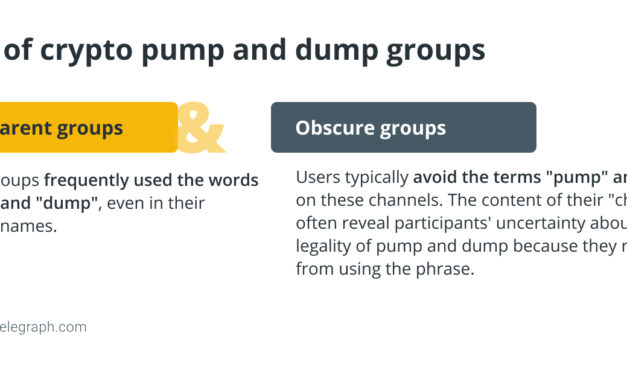
Pump-and-dump operations, which fraudulently manipulate prices by disseminating false information, have existed in economic contexts since at least the 1700s. For instance, con artists with shares in the South Sea Company started making false statements about the business and its revenues in the beginning of the eighteenth century. The plan was to inflate the stock price artificially before selling it to uninformed consumers misled into thinking they were investing in a promising good. Contemporary con artists are following their example with a pump-and-dump strategy known as the South Sea Bubble.However, with the advent of blockchain technology and the rise of crypto trading, the issue has become broader and more severe. Because government regulation has lagged, cryptocurrencies are especially susceptible to this kind of market manipulation.In this article, you will learn what crypto pump-and-dump schemes are, how they work and how to spot them.What are crypto pump and dump groups?A pump-and-dump scam is a sort of fraud in which the perpetrators amass a commodity over time, inflate its price artificially by disseminating false information (pumping) and then sell what they have accumulated to unwary buyers at a higher price (dumping). Once the perpetrators have fraudulently inflated the price, it usually declines, leaving purchasers who made their decision based on misleading information at a loss.Self-organized teams of individuals carry out online pump and dump operations. These pump and dump groups organize the scams in plain sight on the Discord server (voice over internet protocol and text chat service) or Telegram (instant messaging app), making it possible for anybody to join the groups without prior consent.In pump and dumps groups, there is a hierarchy of members and leaders (or admins) who manage the group. Higher ranked members receive the notification that initiates the pump by disclosing the target coin a little earlier than lower ranked users. In this manner, the member has a greater chance of purchasing at a cheaper cost and profiting more from the pump and dump scheme.Most groups are structured using an affiliation system, where members can move up the hierarchy by recruiting new members. The rating rises in proportion to the number of new members added to the group. In contrast, some organizations have a simplified hierarchical structure with just two levels: VIPs and common members. To join these organizations, a user must pay a charge, typically in Bitcoin (BTC), between 0.01 and 0.1 BTC.What are crypto pump and dump signals?A crypto pump signal is a message intended to entice individuals to purchase a cryptocurrency so they can profit from the price manipulation caused by the sudden uptick in demand. After the pumping causes a significant price hike, which are called crypto dump signals, members start selling at a good profit. There are two types of groups on Telegram and Discord that post signals on unknown crypto coins to inflate the value of the underlying coins artificially, as explained below:The messages in pump and dump crypto groups on Telegram and Discord are usually broadcast in the following ways:Info and How-To: These two sections resemble a message-pinned electronic bulletin board. Each segment is made up of a number of rooms, each of which has only one or a small number of messages. The group’s rules, news about the group, information on the affiliation system and frequently asked questions are typically found in the rooms of the info section. Similarly, you may find the guides to the crypto industry or the best practices for taking part in a pump and dump operation in the rooms of the How-To sections.Signal: Only administrators may post in this area, which is its central hub. The pump signal and the trading-signal rooms are often located in this area. The administrators talk about the upcoming pump and dump operation in the first room and exchange trading tips in the second.Invite: The server’s bots live in the rooms in this section. Here, users can ask the bots for invite links to attract new members or find out how many people joined the server using their invite links.Discussion: Group members can converse freely in rooms devoted to various themes in this section.How do crypto pump and dumps work?The numerous pump and dump groups on the internet have varying activity levels. The busiest carry out around one pump-and-dump cycle every day. Less active groups may only carry out one operation a week. Other organizations conduct activities when they think the market conditions are favorable. So, can you make money pumping and dumping crypto?There may be a chance to benefit because a pump and dump technique entails the artificial increase of a crypto asset’s value just before a planned and sudden crash. However, you will be stuck with the unknown coins for a long time if you don’t sell them off quickly enough. Please be aware that nothing is inevitable in the volatile cryptocurrency market; therefore, as a cautionary practice, understand the basic crypto metrics to avoid falling for projects that appear “too good to be true.” Related: The most common crypto metrics: A beginner’s guideTo understand crypto pump and dump scams, please read through the stages crypto scammers follow to trick the channel members:Disseminating the basic informationThe admins communicate the exchange to be used, the precise start time of the operation and whether the scheme will be FFA or Ranked. If it is free for all, those with a VIP rank receive the message at the same time or a few days or hours before the operation.Announcement of the goal of the underlying coinAs the operation’s start time approaches, the announcement is repeated more frequently.Group members are informed of the goal coin when the pump begins. Your position within the hierarchy will determine when you will be informed of the start time. The name of the cryptocurrency is typically written in a graphic that has been deliberately obscured so that only humans can decipher it rapidly. The obfuscation aims to hinder bots’ from parsing the message using optical character recognition (OCR) techniques and launching market operations more quickly than people.OCR is the method used to transform text from an image into a machine-readable text format. Your computer will save the scan as an image file, for instance, if you scan a form or a receipt. The words in the image file cannot be edited, searched for or counted using a text editor.Spreading news to draw outside investorsFinally, market manipulation in crypto begins after the pump starts and the admins post a tweet or share the news, asking everyone in the group to spread the word that the cryptocurrency price is increasing. Aiming to incite the so-called FOMO (Fear of Missing Out) of a fantastic investment opportunity and draw outside investors, users spread their message using Twitter, forums and special chat rooms.How to spot a crypto pump and dump scheme?Because information regarding unknown coins is disseminated in Discord and Telegram channels, you might want to ask if crypto pump and dump groups are legal. Pump-and-dumps are illegal in the stock market, but since most cryptocurrencies are not considered securities, cryptocurrency markets frequently operate in legal limbo. Therefore, even though the pump and dump crypto scams are morally and legally dubious, they might not violate any laws that are currently in force. Nonetheless, regulated crypto exchanges treat such scams as illegal.So, how do you tell if a crypto is a pump and dump? Understanding whether and how quickly someone can execute a pump and dump strategy is crucial for the protection of investors. Although there are no sure-shot indicators of the pump and dump crypto scams, you should not ignore excessive hype around a project or its token as these can be red flags. Therefore, investors should continually evaluate cryptocurrency projects before making informed investment decisions. Related: How to identify and avoid a crypto pump-and-dump scheme?The rapid and parabolic spike in the price of a cryptocurrency is another sign of a pump-and-dump scheme. This is especially relevant if the crypto was previously disregarded, unrecognized or forgotten. In addition, any time you hear a well-known person discuss a cryptocurrency, consider their possible motivations. Many influencers and celebrities have little knowledge of cryptocurrencies; however, if they are paid to do so, they will just promote them (even if they are scams).As a result, one should be wary of such tactics before believing in the future of unknown crypto projects. So, how can crypto investors avoid the pump and dump schemes? Choosing a strategy and sticking to it are crucial components of trading or investing. With this approach, one may ensure that they only invest in cryptocurrency projects or assets with which they are familiar.

Čítaj viac

Získaj BONUS 8 € v Bitcoinoch

nakup bitcoin z karty

Registrácia Binance

Burza Binance

Aktuálne kurzy