Autor Cointelegraph By Onkar Singh

What are distributed systems, and how do they work?

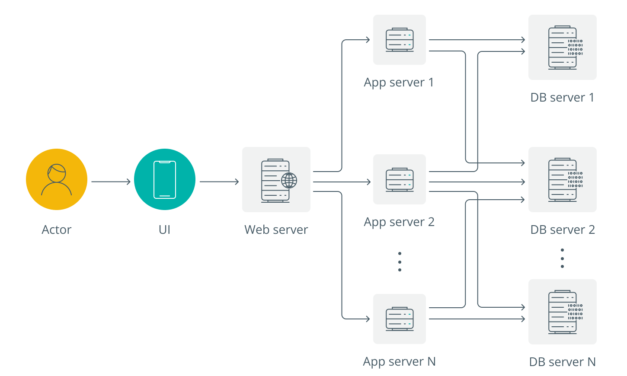
For distributed systems to function, a task must be divided into smaller subtasks and spread over several nodes or computers in a network. These nodes or computers then communicate and cooperate to finish the task. The following four steps provide a brief overview of how distributed systems operate: Decentralized components A distributed system comprises numerous parts or nodes spread over various real or virtual places. These parts can communicate with one another across a network to accomplish a single objective. Communication A distributed system’s components can communicate with one another using a variety of protocols and tools, including TCP/IP, HTTP or message queues. These protocols allow the nodes to communicate by sending and receiving messages or data. Coordination For the parts of a distributed system to function well together, they must coordinate their actions. Several mechanisms, such as distributed algorithms, consensus protocols, or distributed transactions, can be used to achieve this coordination. Fault tolerance A distributed system should be created with fault tolerance in mind. This implies that it should be able to handle failures of specific parts or nodes without impairing the performance or availability of the entire system. Distributed systems employ redundancy, replication or partitioning strategies to achieve fault tolerance. An online search engine is an example of a distributed system since it comprises numerous nodes that carry out various functions, including crawling websites, indexing content and handling user requests. These nodes cooperate to give users quick and effective search results. The blockchain — a decentralized ledger that records transactions securely and transparently — is also an example of a distributed system. It is distributed because the ledger is stored on multiple nodes in the network, with each node holding a copy of the entire ledger, allowing for greater transparency, security and resilience to failures or attacks.

Čítaj viac
How blockchain technology is used in supply chain management?

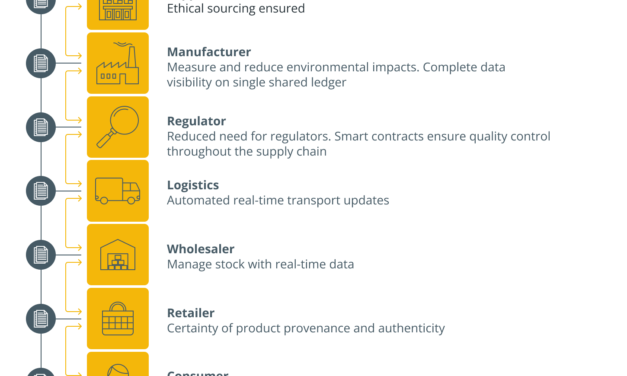
To trace the activities along the supply chain more efficiently, concerned parties can access price, date, origin, quality, certification, destination and other pertinent information using blockchain. Traceability, as used in the supply chain sector, is the capacity to pinpoint the previous and current locations of inventory and a record of product custody. It involves tracking products as they move through a convoluted process, from raw materials to merchants and customers, after passing through many geographic zones. Traceability is one of the significant benefits of blockchain-driven supply chain innovations. As blockchain consists of decentralized open-source ledgers recording data, which is replicable among users, transactions happen in real-time. As a result, the blockchain can build a supply chain that is smarter and more secure since it allows for the tracking of products through a robust audit trail with almost concurrent visibility. By connecting supply chain networks through a decentralized system, blockchain has the potential to enable frictionless movement between suppliers and manufacturers. Furthermore, producers and distributors can securely record information such as the nutritional value of items, product origin and quality and the presence of any allergens using a collaborative blockchain network. In addition, having access to a product’s history gives buyers more assurance that the items they buy are from moral producers, thus making supply chains sustainable. On the contrary, if any health concern or non-compliance with the safety standards is discovered, necessary action can be taken against the manufacturer based on the traceability details stored on the distributed ledger.

Čítaj viac

What is a Helium miner and how does it work?

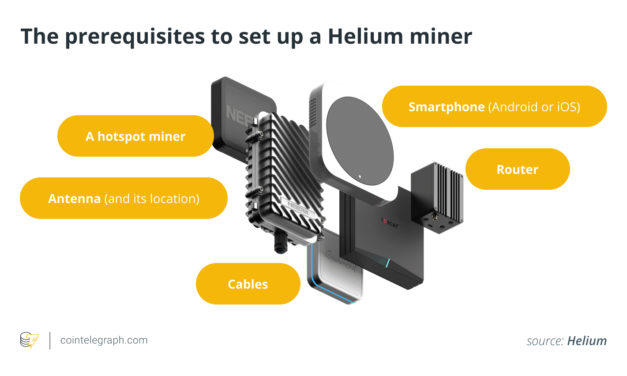
Mining helps verify the legitimacy of transactions conducted via a blockchain network such as the Bitcoin blockchain. Miners can start mining cryptocurrencies using hardware like a central processing unit (CPU) or application-specific integrated circuits (ASICs). Alternatively, they can use smartphones powered by Android and iOS systems to mine the cryptocurrencies of their choice.But, how about mining cryptocurrencies via a decentralized wireless network? Strange it may sound, but miners can now mine cryptocurrencies without relying on expensive infrastructure. Helium Network has made it possible by allowing nodes to act as hotspot devices. This article will discuss the Helium ecosystem, Helium mining, HNT hotspot miner and how does a Helium miner work?What is the Helium network?Helium is a dispersed network of hotspots that offers LoRaWAN-capable Internet of Things (IoT) devices, a long-range wireless service that is publicly accessible by global citizens. LoRaWAN stands for Long Range Wide Area Network, and IoT devices may communicate with one another via LoRa thanks to the open LoRaWAN protocol. IoT devices are smart “gadgets” that connect to a network and exchange data, offering a more comprehensive range of connectivity than Wi-Fi.Helium blockchain was developed exclusively to encourage the development of real, decentralized wireless networks. With Helium, anyone can own and manage a wireless IoT network using a unique, portable radio router known as a hotspot. Hotspots are wireless plug-and-play devices that offer superior connectivity than WiFi. Hotspots are used by miners to build The People’s Network, a long-range wireless network that provides coverage for IoT devices with meager power requirements in exchange for Helium (HNT), the Helium blockchain’s native cryptocurrency. The Helium Community has permitted third-party manufacturers to sell a range of Helium Hotspots.Proof-of-coverage (PoC), a novel work algorithm, is used by the Helium blockchain to confirm that hotspots accurately describe their location and the wireless network coverage they are generating from it. Radio waves are used during the mining process and hotspots are rewarded for acting as witnesses for peers’ performance, completing PoC challenges and sharing device data. The most valuable tool for viewing data linked to POC is the Helium Network Explorer.But, why would someone choose Helium Network over their standard internet service provider? The possible reasons include a high level of security, Helium being completely encrypted and affordable universal internet access.Additionally, users do not need to bear charges that a cellular provider might impose, such as overage fees or the cost of extra hardware like a SIM card. That said, users only pay for the data they used to connect their devices using the Helium Console to begin using the Helium Network.What is a Helium miner?Utilizing specialized hardware known as hotspots, Helium miners offer the Helium network wireless network coverage. By acquiring or constructing a WHIP-compliant hotspot and staking a token deposit corresponding to the density of other miners operating in their area, users become miners on the Helium network.In addition to the blockchain protocol, the Helium Wireless protocol called WHIP, a network of independent providers rather than a single coordinator, offers a bi-directional data transfer method between wireless devices and the internet. The task of verifying to hotspots that device data was sent to the intended location and that the miner should be compensated for their services falls on internet applications that buy encrypted device data from miners called routers.Hotspots are of three types, as explained below:Full hotspots: These hotspots maintain a full copy of the HNT blockchain and receive rewards for all participation activities, including proof-of-coverage.Light hotspots: With the help of the Light Hotspot software, these hotspots use validators to participate as full hotspots without incurring the additional costs of keeping a local copy of the blockchain. In addition, they are rewarded for proof-of-coverage and data transfer activities.Data-only hotspots: Just like light hotspots, these hotspots use validators to get information about the Helium blockchain. However, they are rewarded for data transfer activities only.How does Helium mining work?Radio wave technology is utilized to carry out Helium mining instead of CPUs or ASICs. In addition, blockchain technology is used to create a wireless network that is more reliable than the network provided by established traditional wireless service providers. Helium hotspots or miners provide long-range wireless coverage using special devices called LoRaWAN transmitters. So, how to earn Helium tokens in return? By mining and expanding The People’s Network’s coverage with suitable hotspots, miners gain HNT. The reward amount is correlated with the data a miner will transfer, i.e., more money when miners transfer more device data. In addition, the network automatically and randomly assigns proof-of-coverage tests to verify the location of hotspots. Hotspots get directives or “challenges” from validators to communicate payloads to any nearby hotspots for observation and verification to participate in PoC. These difficulties are also referred to as “beacons.” However, as they can only mine HNT for data transfer and cannot have their beacons confirmed, HNT hotspot miners without neighbors get paid less.Moreover, each compatible device needs data credits (DCs) to send data to the internet. DCs are created by burning HNT to achieve a burn and mint equilibrium (BME), which reduces the total supply of HNT. The BME model uses tokens as a proprietary form of payment, but customers who wish to use a service do not directly pay a counterparty. Instead, they burn tokens. How to set up a Helium miner?As mentioned in the above sections, a hotspot miner, antenna (and its location), cables, smartphone and router are the prerequisites to set up a Helium miner. But how to find the best Helium miner? The position of antennas and one’s geographical location play a key role in finding a suitable Helium miner. The below steps provide an understanding of how one can set up a Helium miner:Download and set up a Helium appThe first step involves downloading a Helium app (available for both Android and iOS devices) and setting up your account. After this, a Helium wallet will be generated that users can utilize to store their information.An application will generate a 12-word seed phrase to back up your Helium wallet. The app will also prompt you to create a six-digit pin that you must enter each time you log in as an additional security measure. Add a Helium minerThe next step is to find out the plus (+) symbol to add a Helium miner, for example, the RAK Hotspot Miner, to the app. The chosen miner needs to be plugged in to operate and a tiny red light will confirm that it is working. Then, press a button on the back of the device for Bluetooth pairing. Alternatively, configure Wi-Fi by choosing from the available network settings in the Helium app. Select the Hotspot, verify its location and set up the antennaNow, the list will include the chosen Hotspot Miner. To proceed, select “Hotspot.” A prompt to add a hotspot will then appear. Add the Hotspot, verify the Hotspot’s location and configure the antenna.The first assertion is free (paid by manufacturers), and users are responsible for paying the transaction fee for further assertions. Press “Skip” if you still need to get ready to set a location. If you are good to go, select “Continue.” The added Hotspot can be viewed and managed under the Hotspots tab of the mobile app.Is it worth it to mine Helium?There are no sure-shot promises in the crypto industry, given its volatility. Helium hotspots execute device data transfer, prove coverage challenges with other nearby hotspots and send signals to create a decentralized wireless network. But, how much do Helium miners make in return? Miners gain data credits in the form of HNT tokens for successfully completing their tasks.However, the rewards depend upon the angle of the antenna and one’s geographical location. That said, the higher the antennas are set, the further the radio frequency will travel. As a result, you can mine more efficiently and get paid more HNT if you can mount your antennas higher.On the other hand, Helium mining may not produce the desired results in a hilly area due to weak signals. Moreover, always conduct due diligence about the project you want to invest in to protect yourself from unbearable losses. 

Čítaj viac

NFT pricing strategy: How to price your NFTs?

Early in 2021, markets for nonfungible tokens (NFTs) started to gain some notoriety, and by the end of March 2021, this new market for digital assets had a total lifetime traded volume of about $550 million. Any digital asset can be an NFT including collectibles, artwork, video game characters, virtual world objects and digitized sports. A blockchain, often one on the Ethereum network, is where an NFT’s ownership is recorded. However, the sale of this digital asset will result in ownership transfers and the blockchain recording of the crypto payment received. This isn’t to say that NFTs and cryptocurrencies are the same. In general, one of the fundamental properties of cryptocurrencies and fiat money is fungibility or interchangeability, whereas the nonfungibility characteristic of NFTs makes them valuable.This article will discuss how to price NFTs with profitability, what makes NFT’s floor price go up, how to know if your NFT is valuable or not and how much you should charge for an NFT.How are NFT prices determined?As artists in the Web3 space begin their NFT journey, they may frequently find themselves considering the vital question: “How does one price their art?” or “what is the best strategy to sell NFTs?” Although there are no fixed strategies to price nonfungible tokens, NFT sellers may choose to sell them at the listing price in a secondary marketplace. Alternatively, they may conclude the sale at a price that a buyer is willing to pay, called buyer price.Regardless, being the creator, you have full authority to choose the best NFT pricing strategy. However, if you set your price too high, you risk never being able to sell that item, and if you select your price too low, it will be more challenging to raise it gradually. So here are a few things to consider to determine how much you should charge for an NFT or how to price your NFT art pieces.Understand different types of costs involvedDifferent kinds of costs are implied while producing and selling NFTs, including creation costs such as the wages of a professional 3D artist if one needs to learn how to create nonfungible tokens themselves. Using a zero code tokenization platform like TokenMint might be an alternative option for those with a non-software development background.Other costs involve minting costs that may vary with the fluctuating gas fees, marketplace fees for minting or listing nonfungible tokens, selling fees charged by NFT marketplaces and the cost of marketing nonfungible tokens.Rarity and functionalityA rare NFT is worth more than a common one because an asset’s supply and type determine if it is rare or not. For instance, a limited edition NFT may be priced higher than one with multiple copies. Similarly, a physical painting may be worth more than its digital image(s) available. In terms of functionality, utility tokens are more valuable because owners may use them to buy goods and services. Therefore, you must consider your clients’ needs when determining the price for these utility NFTs. Build your brand and improve visibilityThe NFT ecosystem is still developing and has enough room to grow. As consistency is one of the most crucial factors to accomplishment and success, the same goes for the nonfungible token artists, i.e., they need to display passion and trust in the process. To make a reputation in the NFT industry, one needs to market their artist’s name to the masses via different mediums such as Twitter, Discord and Telegram to familiarize people with the artistic journey. Additionally, working with other platforms, artists and businesses in the nonfungible token space may open further opportunities to sell your work at the right price.Makes sales your proof-of-concept to raise floor priceHaving an idea that, “if Beeple can sell his Everydays artwork for an astounding $69 million, why can’t I?” is good for motivation. However, overconfidence can be misleading as you may not garner the same sales that another artist in the space achieved. So, what makes the NFT floor price go up? In order to raise the floor price of an NFT, make some consistent sales to establish a proof-of-concept. The floor price is the lowest price for NFT collections and is constantly updated. A nonfungible token’s floor price is initially determined during the minting process by the NFT project’s founder or creator. Then, holders who list their work on a secondary market, once the minting procedure is complete, set the floor price. That said, the floor price for an NFT project rises as it gains popularity. And, proof-of-concept is evidence that intends to assess an idea’s viability or confirm that it will work as intended.Utilize multiple platforms and maintain some consistency in your pricingNFT artists can sell their artwork at marketplaces like OpenSea and Rarible, but their work is considered valuable everywhere, regardless of where it was minted. Therefore, leveraging multiple platforms with consistent prices for your work may be an ideal option to stay active and gain maximum traction.Add value to your NFTs by offering unlockablesFor NFTs, unlockable content creates utility for owners. The artist can enhance the NFT’s real-world worth by creating unlockable content outside of the digital token. There is a setting for unlockables when configuring nonfungible tokens. Unlockable content is the hidden content to be viewable by NFT owners only. Redeemable discounts, thank-you notes, physical objects like signed products and high-resolution video clips are all examples of unlockable content on nonfungible tokens. This strategy aids NFT sellers in building brand equity and selling their work at competitive prices.How to start selling NFTs like a pro?The first step to successfully selling and pricing your NFTs is to understand the industry, blockchains used in NFT development, marketplaces for nonfungible tokens, common types of NFTs already sold by artists in the space and their typical price range. The next step is to choose an NFT marketplace that suits your goals and determine the creation, minting, service and selling costs before defining your token’s unique value proposition. So, can you price an NFT at any price?Being a creator, you can price an NFT at any price you find suitable. However, understanding what makes your nonfungible tokens unique from the competition is critical to charge a higher price for your NFTs and attract more buyers if you have a distinct and appealing value proposition. Then, research the ways to sell NFTs. The techniques you can use to sell your nonfungible tokens depend on your preferences.NFTs can be sold utilizing two most common methods: at a fixed price or an auction, where nonfungible tokens are offered for sale on the open market. Fixed price can be set up for NFTs during the minting process or if you want to test the market, choose an auction in which your NFT is won by the bidder who makes the highest payment at the end, often called an English auction. However, one can opt for a timed auction, a particular kind of English auction in which an NFT is up for bid for a predetermined length of time, with the highest bidder winning at the end. Additionally, a dutch auction is another option available; it is a decreasing-price auction in which the price keeps declining until your NFT is purchased. If NFT sellers want to earn revenue each time their work is sold, they can choose the royalties option. Finally, set a fair price for your NFT after considering the above-mentioned substitutes.How to price your NFTs on OpenSea?Nonfungible token sellers can sell crypto art or NFTs on OpenSea by following the steps below:Click the “Profile” button in the top right corner of the OpenSea page, as shown in the image below. Choose the nonfungible token from your wallet that you want to sell, or learn how to create an NFT to get started. Click “Sell” on the top right of the item page, as shown in the image below.Select the price as a fixed price or timed auction, choose a default sale period or enter a specific duration using the calendar.The item can also be set aside for a specific customer by typing the wallet address into the “Reserve for specific buyer” field under the “More Options” section, as shown in the image below. For this sale, OpenSea charged a 5.5% fee, including a 3% creator fee and a 2.5% service fee.Sign a transaction to complete your listing. A pop-up confirmation will indicate that your item has been listed for sale.Can you sell NFTs without marketing?Marketing is at the heart of selling nonfungible tokens like any other product. So, if you are wondering why your NFT is not selling, it might be due to a lack of awareness among the nonfungible tokens community. But, how hard is it to sell an NFT?Every artist has their own personal preferences: Some choose to be publicly visible, while others like to remain anonymous. However, to raise an NFT project’s profile, informing buyers of your professional background, including name, experience with blockchain technology and crypto art or other nonfungible tokens, is of paramount importance. So, what kind of NFTs sell best? Although there is no definite answer, nonfungible tokens with a solid presence on different social media channels and displaying clear roadmaps may sell better than others. For instance, if an artist frequently tweets about their digital artwork and joins conversations about NFTs, it will help them build a brand and attract people to buy their work. Alternatively, an attractive website listing your NFT collection with an accurate description will indicate genuineness to the community and help convert website visitors to actual buyers. However, avoid under-promising or over-delivering to build customer confidence in your work.

Čítaj viac

How to do mobile cryptocurrency mining?

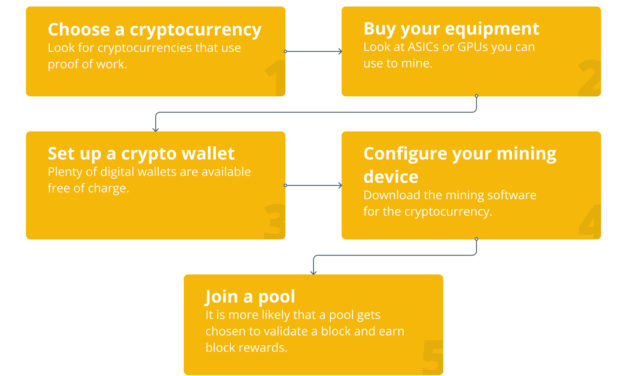
Cryptocurrencies like Bitcoin (BTC) are created using a distributed computing process called mining. Miners (the network participants) undertake mining to verify the legitimacy of transactions on the blockchain and ensure network security by preventing double-spending. In return for their efforts, miners are rewarded with a certain amount of BTC. There are various ways to mine cryptocurrencies, and this article will discuss how to get started with mobile crypto mining from the comfort of your home.What is crypto mining?Mining, a resource-intensive activity that often demands enormous computing power to solve a computational problem and add the next valid block to a blockchain, is a crucial component of cryptocurrencies.Typically, graphics processing units (GPUs) or high-performance hardware are used for cryptocurrency mining. When considering the electricity expenses resulting from the power consumption of the mining process, even application-specific integrated circuits (ASICs) are necessary to generate economic mining outputs. However, mining may be dispersed simultaneously among numerous less powerful devices. Alternatively, miners frequently link to so-called mining pools to pool their computing power and increase the predictability of mining results. But can you mine cryptocurrency on your phone? Proof-of-work (PoW) cryptocurrencies can be mined using smartphones, which is explained in detail in the below sections. What is mobile crypto mining, and how does it work?Mining cryptocurrencies using smartphones that support the iOS and Android systems is called mobile crypto mining. It is crucial to note that rewards will be based on the computational power offered by the crypto miner using smartphones. On mobile devices, cryptocurrency can be mined utilizing apps available for iOS and Android operating systems. However, most apps are only available on third-party crypto mining sites, whose legitimacy must be carefully investigated before use. Cryptocurrency mining apps aren’t available on the iOS App or Google Play Stores because firms offering such apps have regulations prohibiting the apps from using too much processing power or storage space on a device. For instance, in 2018, Google barred cryptocurrency miners from the Play Store for an unknown reason.Despite the low cost of mobile crypto mining, miners join cryptocurrency mining pools to combine their computing resources and accelerate the discovery process by cutting latency or investing in GPUs or ASICs to produce profitable mining outputs.How to mine cryptocurrency on an Android smartphoneTo know how to mine Bitcoin on mobile, you need to understand the type of mining for which you can opt. As a miner, one can either go for Android solo mining or join mining pools like AntPool, Poolin, BTC.com, F2Pool and ViaBTC. As solo mining is less profitable due to its low rewards, miners prefer cryptocurrency mining pools to generate adequate computational processing power and rewards, which will be shared with contributing stakeholders. Cryptocurrency mining apps are required to join a pool of your choice. One can download the Bitcoin miner or MinerGate Mobile Miner app to mine BTC or other altcoins. However, miners’ pay, payment frequency and incentive options depend on the pool size. Also, please note that each mining pool follows a different payment system, and rewards may vary accordingly. For instance, in a pay-per-share system, miners receive a specific payout rate for each share they successfully mine, each worth a particular amount of mineable cryptocurrency. On the contrary, the block reward and the mining service fee are settled according to the theoretical profit. Miners also receive a portion of the transaction fees under the full pay-per-share system. In addition to solo mining and mining pools, cloud mining using a smartphone is an alternative method to mine cryptocurrencies. In cloud mining, third parties rent out computational power to miners, eliminating the need for miners to update and maintain their expensive equipment.Cloud mining apps like Bitdeer are available on Android and iPhone. Miners access computing power through cloud-mining contracts or sell their hash rate to interested buyers via merchant contracts.How to mine cryptocurrency on an iPhoneiOS devices also support cryptocurrency mining apps like CryptoTab, Robomine, etc. The CryptoTab application needs miners to turn on Bitcoin mining before mining BTC on the iPhone. Similarly, Robomine supports mining BTC but consumes less battery power during the process.Regardless of the mining app you use, keep in mind that mobile crypto mining may not be an ideal medium to earn a high yield and is more of a learning experience. Additionally, high-performance and high-capacity devices like ASICs are required to reward your time, efforts and resources reasonably. Another drawback of mining cryptocurrencies on the iPhone is the device’s low performance due to the excessive computing power required and the constant need to charge the phone. Therefore, choose mobile crypto mining only if it suits your mining goals.Is mining cryptocurrency on your phone free?Cryptocurrency mining on the phone requires one to invest in a smartphone, download a cryptocurrency mining app, and get a stable internet connection. Some people use mobile phones to mine as they utilize less computing power and consume less energy than conventional mining equipment. However, the reward for crypto miners is substantially smaller and may not cover the cost of the electricity used to mine. Additionally, your smartphone will experience extreme strain from mining, reducing its lifespan and perhaps destroying its hardware, costing you extra pennies to buy a new smartphone.Is mobile crypto mining profitable?Mining profitability depends upon the equipment used for the crypto-mining process. That said, the more advanced machines one uses to mine cryptocurrencies, the more likely one will earn more profit than those using smartphones. But is mobile mining legal?The legality of mining on smartphones, ASICs or any mining equipment depends upon one’s jurisdiction of residence, as some countries restrict cryptocurrencies. Nonetheless, crypto miners perform a cost-benefit analysis (the advantages of a choice or action less the expenses involved with that choice or activity) to ascertain the mining profitability. Above all, one should first determine their mining goals and prepare their budget before choosing any mining device. Also, environmental concerns about crypto mining should be considered before making any investments.The future of mobile crypto miningDespite the surge in popularity of cryptocurrency mining, it has been criticized for being economically and environmentally harmful, causing PoW cryptocurrencies like Ethereum to move to a proof-of-stake consensus mechanism. Additionally, the legal status of mining cryptocurrency is unclear, enabling mobile service providers to prohibit mobile mining. Such restrictions further cast doubt on the viability of a mining monetization strategy. However, mobile users can use cloud mining to mine cryptocurrencies more efficiently and sustainably.Purchase a licence for this article. Powered by SharpShark.

Čítaj viac

Získaj BONUS 8 € v Bitcoinoch

nakup bitcoin z karty

Registrácia Binance

Burza Binance

Aktuálne kurzy