Gary Gensler is hurting the little guys for Wall Street
Securities and Exchange Commission Chair Gary Gensler is working to protect someone, but it’s not American investors.
Čítaj viac
Securities and Exchange Commission Chair Gary Gensler is working to protect someone, but it’s not American investors.
Čítaj viac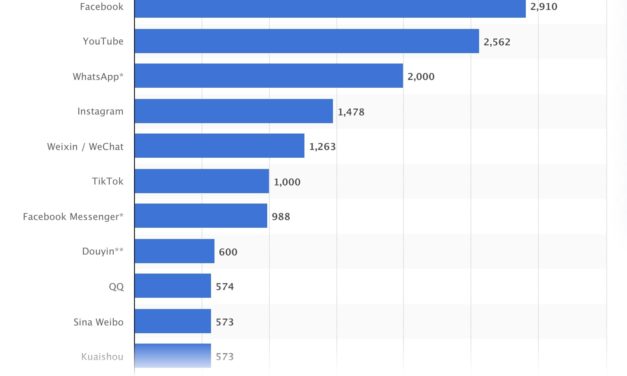
Like many people, I was originally dubious of Elon Musk’s takeover of Twitter given his historic tendency to make bold promises but later back away. That said, there is merit to his idea of adding a subscription layer to Twitter and using it to both improve curation and diversify away from advertising. If you believe in the core values of crypto, you should believe in it.To see why, we need to revisit the basics of Bitcoin (BTC). Most people focus their attention on the coin, but the more remarkable thing about Satoshi Nakamoto’s invention was the design of the platform. Before Bitcoin, the general belief was that an open (aka permissionless) system where participants are anonymous and free to come and go could never be secured. Solutions like Byzantine fault tolerance — the network equivalent of democracy — had solved the problem of participants reaching consensus in a closed system, but couldn’t be applied to an open network due to the risk of one participant pretending to be many, also known as a Sybil attack.Sybil attacks are a threat to any democratic system, thus the need for restrictions like voter registration or parliamentary roll call. They are particularly pesky online, where one person pretending to be many people is easy. Thus the prevalence of spam email, fake reviews and bot armies on the internet.Social media as designed today solves this problem in the same way that payment systems (like PayPal) did in the past: They put an authority in charge and give it the power to censor some users to protect others. But this approach had its own drawbacks, including some people being censored unfairly and the authority extracting significant value for itself. Twitter’s current reliance on surveillance capitalism, and its arbitrary (not to mention unfair) blue check mark solution are good examples.Related: Facebook is on a quest to destroy the Metaverse and Web3Bitcoin took a different approach. It allowed anyone to do anything, including participating in consensus, but required those who did the most important work to incur an upfront cost. This was a positive form of self-censorship: Anyone could be a miner, but they had to prove honest intent by spending money.This proof-of-work (PoW) approach to building Sybil resistance has succeeded, at least for a payment system. The Bitcoin platform is paradoxically both the most open and most secure platform on the internet. Tellingly, PoW was originally invented in the 1990s to fight spam email.Elon Musk’s proposed subscription model for Twitter is philosophically similar. Users who pay a monthly fee are less likely to be bots or click farms, so the rest of the network can trust them more — similar to how Bitcoin nodes defer to miners who’ve done the most “work.”Most popular social networks worldwide as of January 2022 ranked by number of monthly active users (in millions). Source: StatistaIf the Twitter algorithm also prioritizes comments and retweets from subscribers, then curation can also improve — similar to how proof-of-stake (PoS) systems often appoint one validator to propose a new block and empower a committee of other validators to double-check their work. All else being equal, a tweet from a paying subscriber that’s liked and retweeted by other paying subscribers is more likely to be useful.People who complain that this approach discriminates against the poor misunderstand how social media already works. A lot of creators are already paying to get more traction. They just do it in the black market. Why else would there be so many ways to buy influence? So many fake accounts don’t happen by accident. Charging people directly has more integrity because we’ll know exactly who is paying.Paying subscribers also allows Twitter to diversify away from ad revenues, throttling down the surveillance capitalism. Today, users who don’t pay to buy influence still pay with their attention, which the algorithms constantly try to hijack with polarizing content to sell more ads. Subscription models tend to lead to content that prioritizes quality over quantity, thus the success of Substack and Netflix.Related: Nodes are going to dethrone tech giants — from Apple to GoogleElon Musk has also hinted at open-sourcing the search algorithm and someday paying content creators. These features would bring the Bitcoin analogy full circle. If Twitter lets anyone pay for a subscription, then redirects a portion of those revenues to the most popular creators and curators, it will better align incentives between content creators and consumers. In Bitcoin, the greediest miner is forced to become the most honest one. Twitter should work the same way. To be clear, a centralized platform owned by private investors is still a far cry from a fully decentralized network like Bitcoin. But the idea of introducing a cost to doing the most important work, then rewarding those who do a good job is arguably the most important contribution crypto has made to society. We should applaud any attempt to port these ideas over to existing platforms, however limited they might be.Someday we’ll hopefully have fully decentralized social media. Until then, we can use a better Twitter. Omid Malekan is a nine-year veteran of the crypto industry and an adjunct professor at Columbia Business School, where he lectures on blockchain and crypto. He is the author of the upcoming book Re-Architecting Trust: The Curse of History and the Crypto Cure for Money, Markets, and Platforms.This article is for general information purposes and is not intended to be and should not be taken as legal or investment advice. The views, thoughts, and opinions expressed here are the author’s alone and do not necessarily reflect or represent the views and opinions of Cointelegraph.
Čítaj viac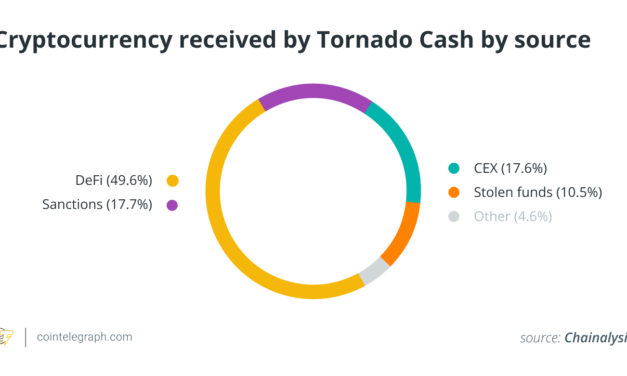
The United States’ move to sanction the open-source code that makes up the Tornado Cash privacy protocol may be shocking, but it’s not surprising. America has been tightening her grip over the global financial system for decades, ostensibly to cut down on bad behavior, but also to project power abroad.Economic sanctions, like the ones enforced by the aptly named Office of Foreign Assets Control, are a powerful weapon. The agency’s website states that it “enforces economic and trade sanctions based on U.S. foreign policy and national security goals.” It does this to fight drug dealers, terrorists, and “other threats to the national security, foreign policy or economy of the United States.” Scary stuff, particularly when enforced by the issuer of the global reserve currency. But therein lies the rub because the more the U.S. weaponizes access to the dollar, the greater the incentive for every other country to find an alternative. One likely winner from this dynamic is Bitcoin (BTC). To see why, we need to study the architecture of money.Fiat currencies like the U.S. dollar have no inherent transfer mechanism. Large payments can only be made through the banking system, and banks need government charters to operate. This symbiotic relationship enables governments to not only control the issuance of their money, but also access to it. For the issuer of a reserve currency, monetary censorship becomes a powerful weapon, arguably as destructive as bombs and bullets.Related: Tornado Cash shows that DeFi can’t escape regulationBitcoin is different because it has its own censorship-resistant payment system. Anyone can make payments to anyone else — with or without the involvement of a licensed intermediary. Governments can still wield power over individual exchanges, custodians, or miners, but they can’t stop the protocol or the community that runs it.Bitcoin is also apolitical in ways that fiat currencies can never be. Along with ever stricter sanctions regimes, the U.S. has recently taken the drastic step of freezing the foreign exchange reserves of Russia and Afghanistan. Regardless of one’s opinion of the legitimacy of such acts, they drive home the point that dollar reserves are only useful so long as their owners stay on America’s good side.A critic could argue that the sanctioning of Tornado Cash proves cryptocurrencies are not immune from politics. Indeed, the U.S. has been sanctioning Ethereum and Bitcoin addresses for years. What makes crypto unique is the fact that the decentralized protocols in question don’t care, at least not in a way a bank might. After all, the permissionless nature of these networks means that anyone can do anything, including continuing to process transactions for sanctioned addresses. That doesn’t mean that a European miner or South American exchange wants to upset Washington, but it does mean that they could if they had to. This optionality may come in handy in a crisis. Tornado Cash dev arrestedDo Kwon still free and doing media interviewsThe world is a silly place— sassal.eth (@sassal0x) August 15, 2022None of this means that global adoption of Bitcoin is imminent. The infrastructure remains raw, and most governments remain cautious, in part because censorship resistance also challenges their monetary grip at home. But the more globalization reverses, and the more America tries to enforce her will on other countries, the greater the need for a backup plan.Related: Tornado Cash DAO goes down without explanation following vote on treasury fundsThis relatively new threat to the dollar is one explanation for why America refuses to pass sensible crypto regulations, despite a thriving domestic industry. The more the U.S. normalizes Bitcoin as a store of value internally, the higher the odds that it gets adopted as a reserve asset abroad. If it’s good for Blackrock, then why not a central bank? Countries don’t need to put their entire reserves in Bitcoin to benefit from its utility. Given its relative youth and volatility, it would be risky to own too much — just ask El Salvador. But as a “break-glass-in-case-of-emergency” reserve asset, a little bit would go a long way.Like any aging empire, America is likely to react to this competition. If other countries do start adopting Bitcoin, then Washington may become even more Draconian with the use of sanctions, trying to blacklist coins held by regimes it doesn’t like, and punishing miners who process certain transactions. But that would mostly hurt the American crypto industry while reinforcing the need for a global alternative. Historically, the most popular reserve currencies have been issued by countries with trustworthy legal systems. The more arbitrary American sanctions become, the less trust others will have in her money. Bitcoin always does what it’s supposed to, making it an ideal reserve currency. Omid Malekan is an adjunct professor at Columbia Business School and the author of Re-Architecting Trust: The Curse of History and the Crypto Cure for Money, Markets, and Platforms.
Čítaj viac
