Autor Cointelegraph by Nate Kostar

SoFi tie-up shows stablecoins can provide alternative blockchain settlement rail

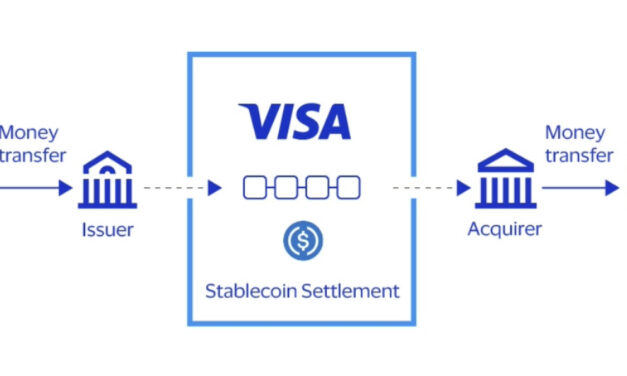
Stablecoins are increasingly being used to settle payments behind existing card networks, allowing money to move around the clock without changing how consumers pay.But rather than cutting Visa, Mastercard or banks out of the process, the technology is beginning to replace a narrower piece of the payments stack: the traditional banking rails used to settle obligations between participants.That shift was in focus this week when SoFi began settling debit and credit card transactions with Mastercard using its SoFiUSD stablecoin. The bank said it is migrating its entire card program, which it expects to process more than $25 billion in annualized volume, to the system.The shift does not remove intermediaries from the card settlement process, a SoFi spokesperson told Cointelegraph, but provides an alternative blockchain-based settlement rail.For customers, the change largely happens behind the scenes. SoFi cardholders will continue using their debit and credit cards as normal, while moving the process onchain allows the bank to settle transactions faster, according to the spokesperson.Visa is also moving settlement onchain. In April, the company said its stablecoin settlement pilot had reached a $7 billion annualized run rate as it expanded support to nine blockchains, describing blockchain settlement as a “viable complement to traditional settlement rails.”Related: US weighs overseas push for dollar-backed stablecoins: BloombergStablecoins don’t eliminate payment intermediariesFederal Reserve researchers wrote in a March note that stablecoins could change the economics of payments without necessarily eliminating banks.Cointelegraph spoke with payments and investment experts to better understand what moving card settlement onchain actually changes, and what remains largely the same.“I wouldn’t call it disintermediation at this stage,” Martins Benkitis, co-founder and CEO of emerging-markets liquidity provider Gravity Team, told Cointelegraph.“Visa and Mastercard are still there. The banks are still there. The network is still calculating the obligations, managing the transaction and deciding how participants interact with it,” he said.Visa stablecoin settlement model. Source: VisaAs a result, stablecoins could become a larger part of payments without businesses or consumers necessarily interacting with them directly.“If stablecoins become a major part of payments, most businesses probably won’t care that there is a stablecoin somewhere in the process,” Benkitis said. “They’ll care that settlement is available when they need it and that the money arrives.”The economics of faster settlementVarun Datta, venture capitalist and founder of Truth Ventures, agreed that continuous settlement could reduce delays and the amount of capital firms need to keep in different locations for payments, particularly across borders.But those benefits do not necessarily translate into cheaper payments, he said. Conversion, compliance, integration and stablecoin-management costs still need to be considered.“I don’t think speed on a blockchain automatically means a cheaper end-to-end payment,” Datta said. He added that he would want to see evidence of lower total costs and better liquidity management at scale before calling the economic case proven.Related: US stablecoin adoption could surge with bank-like protections: Visa surveyStablecoins still need local liquidityThe economics can become more complicated when stablecoins ultimately need to be converted into local currencies.Benkitis said that while dollar-denominated stablecoins can move between balance sheets within minutes, completing payments in emerging markets can be more complicated. Local currency liquidity can be thinner, fewer banks may handle the flows, and access to the domestic banking system is still required.“The stablecoin gets the value there quickly,” Benkitis said. “You still need the local liquidity to finish the payment.”Magazine: Winners and losers of the SEC’s new tokenized stocks rules

Čítaj viac

Trump reveals up to $100K Strategy stock purchase in ethics filing

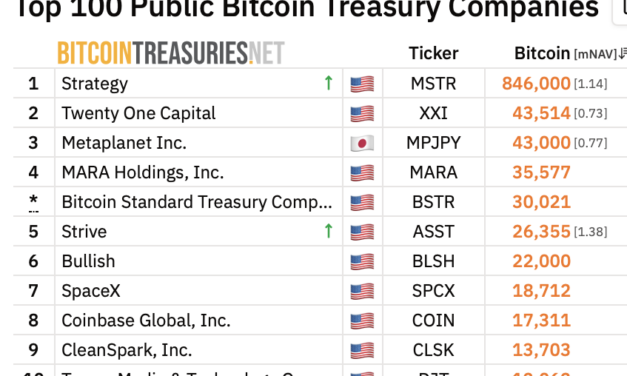
President Donald Trump disclosed purchasing $50,001 to $100,000 worth of Strategy shares in July, according to a US Office of Government Ethics filing released Tuesday.The filing shows Trump bought $50,001 to $100,000 worth of Strategy shares on July 27, following a smaller $1,001 to $15,000 purchase three days earlier. Strategy is the world’s largest publicly traded corporate Bitcoin holder, with 846,000 BTC, according to BitcoinTreasuries.net data.Trump also disclosed transactions involving several other crypto-linked companies, including a Coinbase stock purchase and sales of Bitcoin miners MARA Holdings and CleanSpark in July. The July 27 Strategy purchase was the largest of the crypto-linked transactions identified in the filing.Top 10 Bitcoin treasury companies. Source: BitcoinTreasuries.NETThe transaction matched Trump’s largest previously disclosed Strategy purchase, a $50,001 to $100,000 buy on Feb. 12, according to BitcoinTreasuries.NET. His accounts have also reported several smaller purchases and sales of Strategy shares this year.The filings do not show how many Strategy shares remain in Trump’s portfolio, as transactions are reported in value ranges rather than as a running share balance.Strategy purchase a small part of broader portfolio activityThe Strategy purchase represented a small portion of Trump’s broader portfolio activity in July. The filing shows sales of $5 million to $25 million each of Microsoft and Amazon stocks on July 20, along with several purchases and sales valued at between $1 million and $5 million.On Tuesday, the White House told CNBC that Trump’s stock and bond portfolio is independently managed by third-party financial institutions, without input from Trump or his family.Strategy shares have rallied nearly 30% over the past five trading days and about 37% over the past month, according to Yahoo Finance data.Strategy (MSTR) stock. Source: Yahoo FinanceDisclosure comes amid crypto policy pushTrump’s Strategy disclosure comes as his administration has pursued a series of policies aimed at supporting the US crypto industry, even as comprehensive market structure legislation remains stalled in Congress.Although the Senate failed to advance the CLARITY Act on Sept. 15, federal regulators have moved ahead using their existing authority. Two days after the failed cloture vote, the Securities and Exchange Commission (SEC) cleared limited onchain trading of tokenized US stocks under a temporary exemption, while the Commodity Futures Trading Commission (CFTC) eased registration requirements for certain software providers offering access to regulated derivatives markets.The CFTC separately sent a broader crypto market rulemaking initiative for White House review on Sept. 17. Dubbed “Regulation Crypto Asset Transactions and Regulation Crypto Asset Markets,” the initiative is still in its preliminary stages and has yet to become a formal proposal.Source: CFTCThe administration’s crypto push has also extended to Bitcoin itself. Last week, the House Financial Services Committee voted 28-21 to advance legislation that would codify Trump’s Strategic Bitcoin Reserve into law and require Bitcoin placed in the reserve to be held for at least 20 years.The US government currently holds an estimated 324,527 BTC, according to Arkham Intelligence data.Magazine: Winners and losers of the SEC’s new tokenized stocks rules

Čítaj viac
NYSE, Blockchain.com in tie-up to bring tokenized US stocks to crypto users

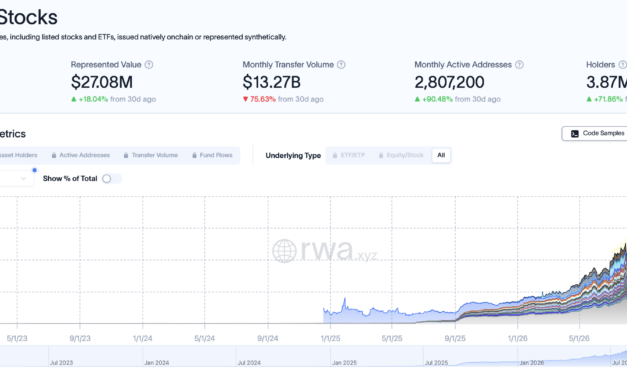
Blockchain.com and the New York Stock Exchange have signed a memorandum of understanding to give Blockchain.com users access to tokenized US-listed stocks and exchange-traded funds through NYSE’s planned digital trading platform.Under the proposed arrangement, Blockchain.com would distribute tokenized US equities and ETFs traded on NYSE’s digital alternative trading system (ATS), subject to regulatory approval. The deal would extend NYSE’s planned tokenized securities offering to Blockchain.com’s global customer base.The agreement also covers an exchange of market data. NYSE affiliate ICE Data Services plans to distribute Blockchain.com’s crypto market data and analytics to its clients, while Blockchain.com would add certain ICE and NYSE market data feeds to its platform.Reid Noch, vice president of US equity market structure at TD Securities, told Cointelegraph that NYSE’s planned tokenized ATS appears “primarily like a play for retail flow,” pointing to its planned 24/7 trading and request-for-quote functionality. Because retail trades are already pre-funded, Noch said the shift to instant settlement would require little change to existing retail workflows.“The bigger differentiator is true weekend trading,” Noch said. “This could be impactful for retail heavy names or around episodic news events, similar to what we saw with tokenized oil PERPs during the start of the Iran conflict that started over the weekend.”Related: Ondo lets institutions convert stocks directly into tokenized sharesExchanges race into tokenized stocks“Crypto venues are becoming multi-asset platforms, and traditional assets are adopting the 24/7, programmable structure crypto pioneered,” Tanay Ved, senior research associate at institutional digital asset technology firm Talos, said in comments shared with Cointelegraph.That shift is playing out across major exchanges. Kraken offers xStocks and has partnered with Nasdaq on a separate tokenized equity model, while Binance, Coinbase and Robinhood have rolled out their own approaches to bringing equities onchain.However, Ved said the different approaches involve trade-offs between ownership and accessibility:The models of tokenization sit across a spectrum, from issuer-native equity to custodial exposure to pure derivatives. Each trades ownership for accessibility. Which model wins out is yet to be seen, as we sit in the early innings of adoption. For exchanges, the opportunity is a more diversified revenue base and for the market, the line between crypto and traditional assets continues to blur.Meanwhile, the tokenized stock market has been expanding rapidly. Distributed value reached $3.14 billion as of Wednesday, up more than 18% over the past 30 days, while the number of holders climbed nearly 72% to 3.87 million, according to RWA.xyz data.Tokenized stocks. Source: RWA.xyzSEC opens path for tokenized stocksThe partnership also comes less than a week after the US Securities and Exchange Commission (SEC) introduced a five-year “Innovation Exemption” for certain tokenized securities venues.Under the exemption, eligible tokenized securities venues can use permissioned automated market maker liquidity pools to facilitate trading without being treated as exchanges under the Exchange Act. Among the conditions, venues must ensure that tokenized stocks carry the same rights and privileges as equivalent traditional shares.Those requirements exclude some existing products from the exemption in their current form, including Kraken’s xStocks and Robinhood’s Stock Tokens, which provide exposure to underlying equities but do not give holders the same rights as conventional shareholders. However, SEC Commissioner Hester Peirce has said that while the exemption covers one specific model for tokenized securities, it leaves open the possibility of other approaches outside the framework. Magazine: Big Questions: Does Satoshi actually own 1.1 million Bitcoin?

Čítaj viac

Arch Lending eyes tokenized stocks as next collateral market

Crypto lender Arch Lending plans to expand into loans backed by tokenized equities as the market for onchain stocks expands and lenders begin exploring new uses for the assets as collateral.Arch co-founder and chief revenue officer Himanshu Sahay told Cointelegraph’s Chain Reaction podcast that the lender plans to enter the market “pretty soon,” pointing to a need for credit against tokenized stocks.Sahay said tokenized equities have grown rapidly over the past year, but lending against the assets remains limited, and predicted that more lenders will enter the market.He pointed to tokenized equities issued by firms including Superstate, Robinhood and Securitize, predicting that multiple lenders will eventually participate in the market to provide credit against the assets.Source: CointelegraphArch has already expanded beyond cryptocurrencies into tokenized real-world assets, launching loans backed by Paxos Gold and Tether Gold in recent weeks, according to Sahay.But crypto still dominates Arch’s existing loan book, with Bitcoin (BTC) accounting for more than 80%, Sahay said. He added that the lender has recently seen growing interest in XRP as collateral, particularly among US borrowers. Related: Kraken brings DeFi yield to tokenized stocks and ETFsTokenized stocks enter lending marketsArch would not be the first lender to enter the tokenized equity credit market, with tokenized stocks and exchange-traded funds (ETFs) already entering lending and collateral products.In February, Ondo Finance launched DeFi lending markets for two of its tokenized ETFs through an integration with lending protocol Morpho. Ondo’s tokenized versions of the SPDR S&P 500 ETF and Invesco QQQ can be used as collateral for borrowing on Ethereum.Tokenized stocks are also beginning to find uses beyond dedicated lending markets. Kraken made 10 xStocks eligible to back futures and margin positions in July, while Coinbase’s B20 stocks launched on Base in August with price-feed infrastructure designed to support uses including DeFi borrowing and lending.Tokenized equities. Source: RWA.xyzThe growth in lending use cases comes as the tokenized equities market itself has expanded sharply. Distributed tokenized stock value has climbed to about $3.15 billion from roughly $630 million a year ago, according to RWA.xyz data.Magazine: Kyle Samani predicts SOL flippening, claims ‘no one’ uses ETH

Čítaj viac

Získaj BONUS 8 € v Bitcoinoch

nakup bitcoin z karty

Registrácia Binance

Burza Binance

Aktuálne kurzy