
Autor Cointelegraph by Nate Kostar

Paystand launches Bitcoin-based stablecoin USDb for enterprise payments

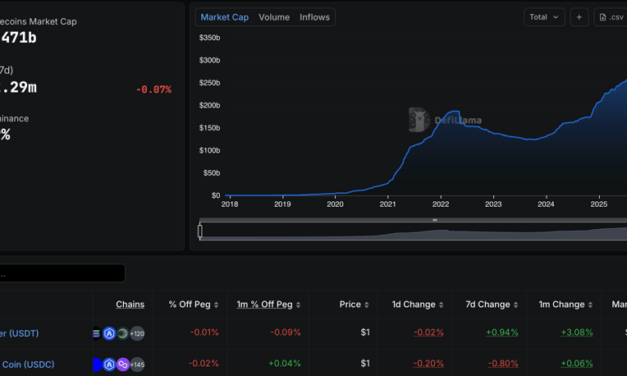
Paystand is launching USDb, a US dollar-backed stablecoin built on Bitcoin-linked infrastructure for use in business payments, including accounts receivable, accounts payable, payroll and treasury operations.According to Tuesday’s announcement, the token is issued on Bitcoin-linked rails, including Rootstock, and interoperates with infrastructure from Blockstream. It will roll out first across Paystand’s payments network, which the company says has processed more than $20 billion in volume for over one million businesses.Santa Cruz, California-based Paystand is a blockchain payments company that provides accounts receivable and accounts payable infrastructure to businesses across North America and Latin America.USDb is backed 1:1 by US dollar reserves and will be used within Paystand’s existing products, including cross-border payroll through its Bitwage platform, with plans to expand access to additional partners and customers in 2026.The stablecoin is launching with support from Rootstock, Blockstream and Ibex, which will act as its initial minting partner and liquidity provider, and is designed to be compatible with Bitcoin-based networks such as the Lightning Network and Liquid.Total stablecoin market cap. Source: DeFiLlamaTotal stablecoin market cap. Source: DeFiLlamaThe token is built to integrate with enterprise finance systems, including ERP-ledger mapping, and support automated settlement workflows within Paystand’s network.Bitwage, a workforce payments platform Paystand acquired in 2025, serves more than 90,000 workers and 4,500 businesses across nearly 200 countries, the company said.Related: Stablecoin transfer volume drops 19% even as supply keeps rising: RWA.xyzStablecoins push into payroll and payoutsStablecoins are increasingly being used for business payments, including payouts, payroll, vendor settlements and cross-border transfers, as companies expand their use beyond trading and remittances.Last week, DoorDash said it is working with Tempo to enable stablecoin payments for drivers and merchants, allowing transactions to be settled in digital assets across more than 40 countries. The companies cited faster payouts, lower cross-border costs and greater flexibility as key drivers of the integration.Western Union also plans to launch its US dollar-backed stablecoin, USDPT, in May, CEO Devin McGranahan told analysts last week. The company first announced in October that the token would be issued by Anchorage Digital on the Solana blockchain and integrated with its digital asset network for payments.On Tuesday, Paxos said it integrated its Amplify platform with Toku to let users earn yield on stablecoin salaries held in payroll wallets without moving funds off-platform. The feature supports USDC, USDT and USDG and is available across Toku’s payroll network.The stablecoin market is currently valued at around $320 billion, dominated by Tether’s USDT (USDT) at about $189.7 billion and Circle’s USDC (USDC) at roughly $77.7 billion, according to DeFiLlama data.Supply remains concentrated on a few chains, with Ethereum (ETH) accounting for about 52% of the market, followed by Tron (TRX) at around 28%, while smaller shares are distributed across networks like Solana, BNB Chain and others.Stablecoin supply by blockchains. Source: DeFiLlamaStablecoin supply by blockchain. Source: DeFiLlamaMagazine: Adam Back says current demand is ‘almost’ enough to send Bitcoin to $1MCointelegraph is committed to independent, transparent journalism. This news article is produced in accordance with Cointelegraph’s Editorial Policy and aims to provide accurate and timely information. Readers are encouraged to verify information independently.

Čítaj viac
Bybit Pay enters South Africa through MoneyBadger integration

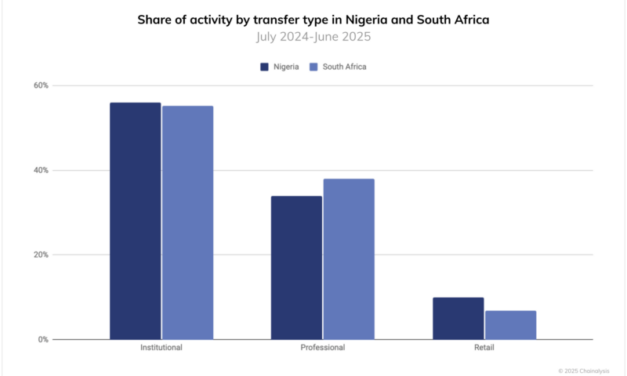
Crypto exchange Bybit has expanded its Bybit Pay service to South Africa through an integration with local payments provider MoneyBadger, allowing users to pay with cryptocurrency at merchants nationwide using QR codes while businesses receive settlement in local currency.According to Bybit’s Tuesday announcement, the rollout connects Bybit Pay to existing payment networks, giving users access to more than 650,000 merchants via Scan to Pay, 31,000 through Zapper and over 1,500 Pick n Pay stores, with additional support for online payments through Peach and Ozow.Users can pay with Bitcoin (BTC), stablecoins and more than 20 other digital assets, with transactions processed in seconds while MoneyBadger converts funds to South African rand at the point of sale to limit exposure to price volatility, allowing merchants to accept crypto without holding it.The service supports in-store QR payments and online checkout, with transactions typically settling within 10 to 15 seconds and payment limits ranging from $0.06 to $2,500 per transaction, the exchange said.Chart showing share of cryptocurrency by transfer type in South Africa and Nigeria.South Africa and Nigeria are Africa’s biggest users of crypto. Source: Chainalysis. South Africa has an estimated 5.8 million cryptocurrency users, with roughly half already using digital assets for payments, according to 2024 Triple-A estimates. The country stands out in Sub-Saharan Africa for its advanced regulatory framework, which has fostered a more institutionalized crypto market, Chainalysis said in a September 2025 report.Related: Rwanda swats Bybit’s P2P platform offering franc-to-crypto tradingCross-border remittances fuel crypto adoption in AfricaCrypto use across Africa is increasingly tied to payments and financial access, even as regulators warn of potential risks to the traditional system.In January, former UN under-secretary-general Vera Songwe said remittances are becoming more significant than foreign aid in parts of the continent, with stablecoins gaining traction as a lower-cost alternative for cross-border transfers. Speaking at the World Economic Forum, she noted that traditional transfers can cost about $6 per $100 sent, while stablecoins reduce fees and settlement times to minutes, particularly in markets facing high inflation and limited access to banking services.Stablecoins are widely used for payments and remittances, though Bitcoin (BTC) is also being used directly in some local economies. Stafford Masie, a South African technology executive and executive chairman of Africa Bitcoin Corporation, said in March that Bitcoin functions as everyday money in parts of the region, with some communities transacting directly in satoshis. He told Natalie Brunell on the Coin Stories podcast that adoption is being driven by high inflation and limited access to stable financial systems, particularly among younger users bypassing traditional banking infrastructure.Stafford Masie (left) speaking on Natalie Brunell’s Coin Stories podcast. Source: Coin StoriesStafford Masie (left) speaking on Natalie Brunell’s Coin Stories podcast. Source: Coin StoriesThe growing use of crypto and stablecoins has drawn pushback from some central banks. In November 2025, the South African Reserve Bank warned that rising crypto and stablecoin use could pose risks to financial stability, citing 7.8 million users across the country’s largest exchanges and about $1.5 billion in custody.Magazine: Will the CLARITY Act be good — or bad — for DeFi?Cointelegraph is committed to independent, transparent journalism. This news article is produced in accordance with Cointelegraph’s Editorial Policy and aims to provide accurate and timely information. Readers are encouraged to verify information independently.

Čítaj viac
Tether launches open-source mining framework to unify Bitcoin infrastructure

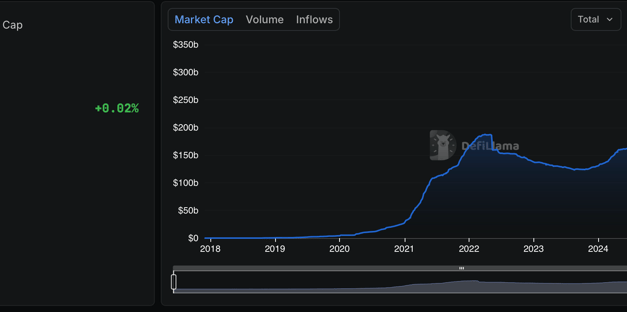
Tether has released an open-source development framework for Bitcoin mining, aimed at giving operators and developers unified control over hardware and software across mining operations.According to Monday’s announcement, the framework combines a backend SDK and user interface tools to replace fragmented, vendor-specific systems, allowing miners to monitor devices, manage operations and build custom applications across sites from a single control layer.It uses a modular architecture in which hardware exposes standardized functions and independent modules can be added without altering the core system, enabling integration across different machines, services and locations.The toolkit supports deployment across Windows, macOS and Linux, and is designed to scale from individual setups to large industrial operations, with features for automation, monitoring and coordinated hardware management, Tether said.The framework is designed to reduce reliance on proprietary tools and simplify operations across fragmented mining setups, where vendor lock-in and interoperability challenges can increase costs and limit flexibility.Tether said the release builds on the company’s earlier open-sourcing of its Mining OS, extending its mining software stack with a development layer for building dashboards, workflows and analytics tools on top of existing infrastructure.The move comes about a week after the company disclosed an 8.2% stake in Antalpha, a Bitcoin-focused lender and equipment financing provider with close ties to mining hardware supplier Bitmain.Tether is the issuers of USDT (USDT), the largest stablecoin by market capitalization, accounting for about $190 billion of the roughly $320.7 billion global stablecoin market cap, according to DefiLlama data.Total stablecoin market cap. Source: DefiLlama Total stablecoin market cap. Source: DefiLlama Related: Mining companies move deeper into AI, HPC as MARA may sell BitcoinMiners continue to push into AI infrastructureAs Tether moves deeper into Bitcoin mining infrastructure, traditionally pure-play mining operators across the industry are increasingly turning to artificial intelligence and high-performance computing workloads to diversify revenue.One of the earliest companies to pivot was CoreWeave, originally a crypto mining operation that began shifting toward cloud and high-performance computing in 2019 as demand for AI compute increased.Since then, a growing number of publicly traded miners, including Riot Platforms, HIVE Digital, MARA Holdings, TeraWulf and Cipher Mining, have pursued similar strategies, redirecting power capacity and infrastructure toward AI and high-performance computing.Top 10 publicly traded Bitcoin miners by market cap. Source: Bitcoinminingstock.ioTop 10 publicly traded Bitcoin miners by market cap. Source: Bitcoinminingstock.ioLast week, Core Scientific said it plans to raise $3.3 billion through senior secured notes due in 2031 to fund data center expansion and refinance short-term debt. On Monday, Hut 8 said in a filing that it is seeking to raise $3.25 billion in senior secured notes to fund a 245-megawatt AI data center in Louisiana, tied to a 15-year, $7 billion lease agreement with Fluidstack, according to The Miner Mag.Some miners are moving further. Also on Monday, analysts from Bernstein said IREN, the largest publicly traded Bitcoin miner by market capitalization, will likely phase out its mining operations over time as it scales its AI cloud business.Magazine: 6 weirdest devices people have used to mine Bitcoin and cryptoCointelegraph is committed to independent, transparent journalism. This news article is produced in accordance with Cointelegraph’s Editorial Policy and aims to provide accurate and timely information. Readers are encouraged to verify information independently.

Čítaj viac
Ethereum backers pledge up to 30,000 ETH to rsETH recovery after bridge incident

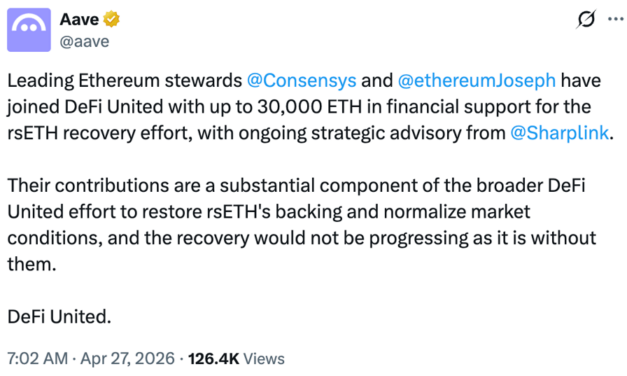
Consensys and Ethereum co-founder Joe Lubin have joined DeFi United, committing as much as 30,000 ETH to a recovery effort aimed at restoring rsETH backing after a $290 million bridge exploit triggered widespread disruptions across DeFi.The initiative, led by participants in Aave DAO, aims to support affected users and stabilize rsETH markets, with governance approvals still pending across involved protocols.The funding is intended to provide immediate liquidity while governance processes continue, with an eye on limiting disruption across DeFi protocols. Sharplink, a publicly traded Ethereum treasury company, has joined in an advisory role to help structure the recovery plan.Source: AaveSource: Aave on XDeFi United was announced April 23 by service providers to Aave DAO, with participants including Lido, EtherFi, Ethena, Mantle and Frax, among others.The recovery effort follows an April 18 exploit that drained roughly 116,500 rsETH, worth about $290 million, from a LayerZero-based bridge operated by Kelp DAO.The incident triggered disruptions across the DeFi ecosystem, with dozens of protocols pausing some functions. On Aave, the attacker used rsETH as collateral to borrow liquidity, contributing to as much as $200 million in bad debt and forcing the protocol to freeze rsETH markets.According to LayerZero Labs, the exploit was linked to a configuration issue in Kelp’s setup that relied on a single verification path for cross-chain messages.Separately, Circle said Monday that its venture arm is purchasing AAVE tokens to support the protocol and broader DeFi ecosystem.Source: CircleSource: Circle on XRelated: Aave asks Arbitrum to send 30K ETH from Kelp exploiter to ‘DeFi United’DeFi hacks surge in AprilThe incident comes amid a wave of recent attacks targeting DeFi protocols. According to DefiLlama, about $729 million has been lost to crypto hacks over the last 90 days, with roughly $623 million occurring in April alone.The month began with a roughly $280 million exploit of Drift Protocol on April 1, carried out through a social engineering attack by an attacker suspected to have ties to North Korea.DeFi hacks, February-April 2026. Source: DefiLlamaTwo weeks later, Rhea Finance said an attacker exploited a vulnerability in its margin trading feature to manipulate liquidity pools, resulting in roughly $7.6 million in losses, according to CertiK. The protocol has since paused operations and is undergoing a phased recovery, with most funds recovered and some USDT still frozen pending release by Tether.The string of attacks also includes smaller exploits earlier in the month, such as a $410,000 loss at Dango on April 13, a $392,000 oracle-related incident at Silo Finance on April 3 and a $423,000 access control exploit at Aethir on April 9.While none of the recent attacks have been conclusively linked to artificial intelligence, researchers say advances in the technology are making it easier to identify and exploit vulnerabilities in DeFi systems. In late 2025, researchers at Anthropic found that AI models could identify more than half of known smart contract exploits, highlighting how the technology could accelerate future attacks.Data from Polymarket shows traders are pricing in a high likelihood of another major crypto hack this year, with odds at 84% by the end of 2026.Source: PolymarketOdds of another crypto hack over $100 million. Source: PolymarketMagazine: AI-driven hacks could kill DeFi — unless projects act nowCointelegraph is committed to independent, transparent journalism. This news article is produced in accordance with Cointelegraph’s Editorial Policy and aims to provide accurate and timely information. Readers are encouraged to verify information independently.

Čítaj viac

Aurelion allocates $48M in tokenized gold to newly launched yield protocol

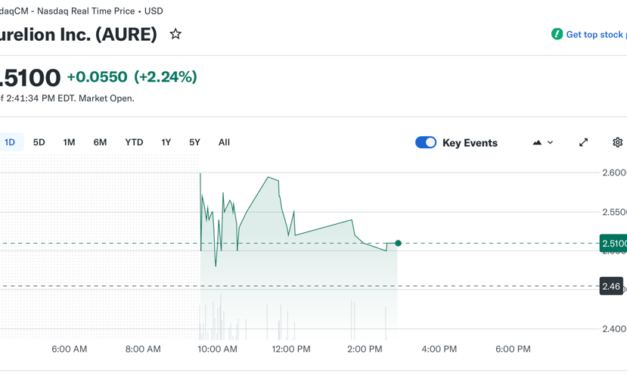
Aurelion, a Nasdaq-listed company building a Tether Gold-backed treasury, has allocated 10,000 units of the token, worth about $48 million, to a newly launched protocol designed to generate yield on tokenized gold.The DeFi protocol, XAUE, was introduced earlier this week by the Aurise Foundation as a treasury layer for Tether Gold, allowing tokenized gold to be used in yield-generating strategies while maintaining exposure to the underlying asset.Aurelion is the rebranded form of wealth and asset manager Prestige Wealth and is positioning Tether Gold as a primary reserve asset. In October 2025, the company raised $150 million in financing, including a $100 million private investment in public equity and a $50 million debt facility, to support the strategy.According to the Aurise Foundation’s initial announcement on Wednesday, Antalpha, a digital asset financial services company, was also among ecosystem partners that committed a combined 16,052 XAUT, or around $76 million, to seed the protocol.XAUE generates yield through strategies such as institutional lending and quantitative trading, with returns reflected in an increase in the gold backing per token rather than being distributed separately.The protocol operates on Ethereum and uses a fixed-supply model, in which deposited XAUT is converted into XAUE at a 1,000:1 ratio. Under this structure, reserves may grow over time as yield accrues while token supply remains unchanged.Users can redeem XAUE for the underlying gold-backed tokens. Access is limited to whitelisted, KYC/KYB-verified institutional participants in eligible jurisdictions, the foundation said.Aurelion said it will hold a total of 33,318 units of Tether Gold following the allocation, including 10,000 units deployed to XAUE and 23,318 units held outside the protocol.The price of Aurelion (AURE) stock was up about 2.6% in midday trading, according to Yahoo Finance data.Source: Yahoo FinanceAurelion stock price. Source: Yahoo FinanceRelated: Bitcoin ETFs could eventually be larger than gold ETFs: AnalystTokenized gold moves toward yield-generating structuresGold has traditionally been considered a non-yielding asset, offering price exposure without generating income. But tokenization, the process of representing real-world assets like gold on blockchain networks, is beginning to introduce new structures that enable yield while maintaining exposure to the underlying commodity.In March, crypto exchange Bybit launched a yield-bearing product tied to Tether Gold, allowing users to earn interest on tokenized gold while maintaining exposure to the underlying asset.That same month, tokenization platform Theo introduced a yield-bearing model backing its gold-linked stablecoin thUSD, using deposited funds to purchase tokenized gold while simultaneously shorting gold futures to hedge price exposure. In April, DeFi protocol Altura introduced an onchain gold arbitrage strategy that puts user deposits into short-duration physical gold trades, aiming to generate returns from price discrepancies rather than long-term exposure to bullion.Tokenized commodities are largely concentrated in gold-backed assets, which typically provide price exposure without yield. Data from RWA.xyz shows the sector at roughly $5.25 billion, with Tether Gold and Paxos Gold accounting for the majority of the market.Tokenized commodities. Source: RWA.xyzTokenized commodity market size. Source: RWA.xyzMagazine: Adam Back says current demand is ‘almost’ enough to send Bitcoin to $1MCointelegraph is committed to independent, transparent journalism. This news article is produced in accordance with Cointelegraph’s Editorial Policy and aims to provide accurate and timely information. Readers are encouraged to verify information independently.

Čítaj viac

Získaj BONUS 8 € v Bitcoinoch

nakup bitcoin z karty

Registrácia Binance

Burza Binance

Aktuálne kurzy