
Autor Cointelegraph by Nate Kostar

Bitwise enters tokenized funds via Superstate’s crypto carry vehicle

Bitwise Asset Management plans to take over management of Superstate’s tokenized crypto carry fund, marking the crypto asset manager’s entry into tokenized investment products.The fund, currently called the Superstate Crypto Carry Fund (USCC), seeks to generate yield through crypto cash-and-carry trades, which involve capturing the premium between spot crypto prices and futures contracts. The fund is available to qualified purchasers and is expected to be renamed the Bitwise Crypto Carry Fund after the transition closes on June 1.Superstate said it will step back from fund management to focus on FundOS, its infrastructure platform for tokenized funds, while Bitwise assumes investment management responsibilities for USCC. The company will continue operating the fund’s onchain infrastructure, including token issuance, transfer agency services and smart contracts.USCC’s investors include hedge funds, venture funds, corporations, wealthy individuals and crypto protocols, according to the announcement. Data from RWA.xyz shows the fund has about $224.6 million in assets under management.Superstate Crypto Carry Fund. Source: RWA.xyz Superstate Crypto Carry Fund. Source: RWA.xyz Bitwise, which says it manages about $11 billion in client assets, offers crypto investment products including exchange-traded funds, private funds and staking, while Superstate operates blockchain-based fund infrastructure and tokenized Treasury products.Superstate raised $82.5 million in January to expand its blockchain-based infrastructure for tokenized equities and onchain securities issuance.Related: EtherFi turns to real-world assets for yield with $25M Plume allocationActive crypto investment strategies expand onchainThis year has seen tokenized investment products expand beyond Treasury-backed funds into more actively managed strategies. RWA.xyz data shows tokenized real-world assets have grown to more than $31 billion, including about $1.2 billion tied to active-strategy products.RWA.xyz currently tracks 29 tokenized active-strategy products, with the Superstate Crypto Carry Fund ($224.6 million) ranking among the largest, alongside Spiko Amundi Overnight Swap Fund (EUR) ($367.6 million) and Mantle Index Four Fund ($134.1 million).Active tokenized funds. Source: RWA.xyzActive tokenized funds. Source: RWA.xyzBeyond tokenized funds, crypto exchange-traded products have also moved beyond passive price-tracking exposure into more actively managed and yield-generating strategies. In an exclusive interview with Cointelegraph in March, 21Shares President Duncan Moir said crypto’s fast-evolving market structure makes the asset class particularly suited to actively managed investment products.In January, regulated DeFi exchange DigiFT launched what it described as the first actively managed tokenized equity fund on Ethereum in partnership with BNY, while Laser Digital introduced a tokenized Bitcoin yield fund using arbitrage, lending and options strategies to generate returns beyond spot BTC exposure.Globally, actively managed ETFs held close to $1.8 trillion in assets by the end of 2025, according to Morningstar and Goldman Sachs Asset Management data.Magazine: Guide to the top and emerging global crypto hubs: Mid-2026Cointelegraph is committed to independent, transparent journalism. This news article is produced in accordance with Cointelegraph’s Editorial Policy and aims to provide accurate and timely information. Readers are encouraged to verify information independently.

Čítaj viac
Coinbase and AWS launch USDC payment rails for AI agents

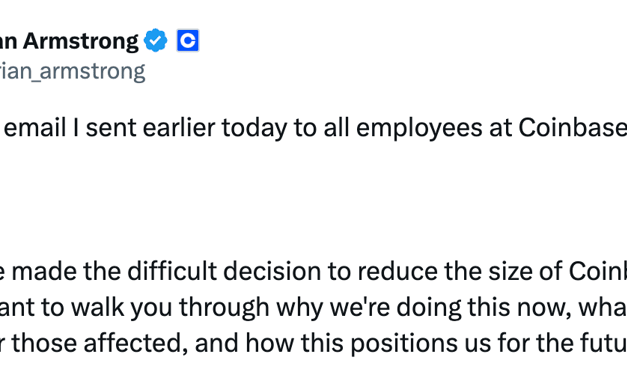
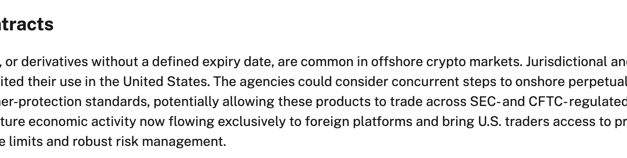
Amazon Web Services has integrated Coinbase’s x402 payments protocol and wallet infrastructure into Amazon Bedrock AgentCore, allowing agents to make USDC micropayments and access services autonomously through AWS-managed payment controls.According to Coinbase, the integration enables developers to deploy AI agents that can discover services, make micropayments and settle transactions in USDC (USDC) on Base and Solana (SOL) without direct access to private keys.The announcement comes after the crypto exchange announced earlier this week that it was cutting about 14% of its workforce as the company restructures around smaller AI-focused teams and increased use of automation tools.Source: Brian ArmstrongSource: Brian ArmstrongThe system uses x402, an open protocol based on the HTTP 402 “Payment Required” status code, to support machine-to-machine payments. Coinbase said the protocol has processed more than 169 million payments across over 590,000 buyers and 100,000 sellers.Coinbase said the platform is intended to address compliance, audit and payment authorization challenges that have limited the deployment of autonomous AI agents in enterprise environments.AgentCore Payments includes spending limits, transaction monitoring and compliance controls for sanctions and illicit finance screening, while enterprises can track payments through logs, metrics and dashboards integrated into the platform.AgentCore agents can also connect to x402-enabled services through Coinbase MCP integrations, allowing them to purchase data, search tools and backend services from providers including Exa, Messari and Browserbase.Related: Coinbase faces lawsuit over frozen funds from $55M crypto theftCrypto firms race to build payment infrastructure for agentic AICrypto and payments companies are increasingly building infrastructure for AI agents capable of making autonomous transactions using stablecoins and blockchain-based payment rails.In recent months, companies including Visa, MoonPay and Stripe-backed Tempo have introduced tools aimed at programmatic payments, agent-driven commerce and high-throughput stablecoin settlement for AI systems.On Tuesday, crypto bank Anchorage Digital launched an “agentic banking” service designed to give AI agents access to both traditional financial and crypto payment rails, according to co-founder and CEO Nathan McCauley. He added that institutions are increasingly experimenting with automation across treasury, payments and procurement systems that were not originally designed for machines.Meanwhile, Aptos Labs and the Aptos Foundation said Thursday they would commit more than $50 million toward infrastructure, trading and AI partnerships, describing autonomous systems and machine-speed transactions as a major future source of blockchain activity.Source: AptosSource: AptosMagazine: AI-driven hacks could kill DeFi — unless projects act nowCointelegraph is committed to independent, transparent journalism. This news article is produced in accordance with Cointelegraph’s Editorial Policy and aims to provide accurate and timely information. Readers are encouraged to verify information independently.

Čítaj viac
Kraken brings spot margin trading onshore for eligible US retail traders

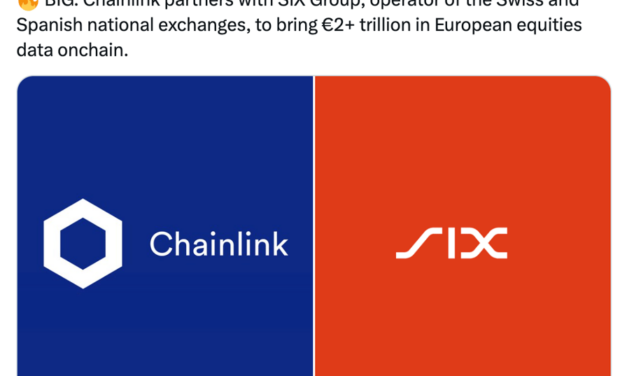
Kraken has launched spot margin trading for eligible US retail users on Kraken Pro through a CFTC-registered entity, expanding access to leveraged crypto trading on a regulated domestic platform.The product allows traders to borrow against crypto holdings without selling them, offering up to 10x leverage for long and short positions, according to the company. Kraken said the platform displays liquidation prices and borrowing costs before trades are executed.The crypto exchange said regulated margin trading in the United States has historically been limited to institutions and high-net-worth individuals classified as Eligible Contract Participants, pushing many retail traders toward offshore platforms offering leverage products.The company said borrowing costs are charged every four hours at rates shown before a position is opened. It added that geographic restrictions apply, though it did not specify which US jurisdictions are excluded.The launch comes days after Kraken’s parent company Payward completed its acquisition of crypto derivatives venue Bitnomial, a deal the company said would support the expansion of federally regulated trading products in the US, including spot margin, perpetuals and options.In May 2025, Kraken acquired futures trading platform NinjaTrader in a roughly $1.5 billion deal.Related: Thailand approves crypto as underlying assets in derivatives marketsRegulatory shift triggers derivatives expansionBitnomial has spent years navigating the uncertain regulatory environment surrounding crypto derivatives in the United States, where exchanges launching new products have faced overlapping federal oversight from the Securities and Exchange Commission (SEC) and Commodity Futures Trading Commission (CFTC).In 2024, Bitnomial sought to launch XRP (XRP) futures through CFTC self-certification, but the SEC challenged the move, arguing the contracts could require securities exchange registration.Bitnomial later sued the SEC over the dispute before dropping the case in March 2025. Later that month, the company launched regulated XRP futures for US users, citing shifting SEC policy around digital assets.The regulatory environment has since shifted. In a joint statement published in September 2025, the SEC and CFTC said they were exploring ways to better align oversight of crypto markets, including potential frameworks for derivatives and perpetual-style products that have historically operated largely offshore.Source: SEC/CFTC joint statementSource: SEC/CFTC joint statementAgainst this backdrop, US exchanges have begun expanding regulated crypto derivatives offerings. In April, CME Group announced plans to launch futures tied to Sui (SUI) and Avalanche (AVAX), following earlier proposals for Chainlink (LINK), Cardano (ADA) and Stellar (XLM) contracts, while also moving toward 24/7 crypto futures and options trading pending regulatory approval.Magazine: Guide to the top and emerging global crypto hubs: Mid-2026Cointelegraph is committed to independent, transparent journalism. This news article is produced in accordance with Cointelegraph’s Editorial Policy and aims to provide accurate and timely information. Readers are encouraged to verify information independently.

Čítaj viac
SIX Group wins Swiss approval to offer crypto custody alongside traditional securities

SIX Group said it has received approval from Swiss regulator FINMA to integrate crypto custody into its central securities depository infrastructure, allowing financial institutions to access digital asset custody through the same regulated post-trade system used for traditional securities.The approval also allows SIX to merge its digital central securities depository, SIX Digital Exchange, into SIX SIS AG, consolidating digital and traditional asset services under a single legal entity.SIX said the structure is intended to give institutions a single infrastructure layer for settlement and custody across both traditional and digital assets.Source: CointelegraphSource: CointelegraphSIX Group operates both Switzerland’s and Spain’s stock exchange and provides financial market infrastructure services including securities settlement, custody and payments systems for institutional clients.The move follows an April partnership between SIX Group and Chainlink to make equities data tied to more than 2 trillion euros in Swiss and Spanish-listed stocks available onchain across more than 75 blockchain networks.Related: Switzerland’s Amina becomes first regulated bank to custody Canton CoinExchanges and clearing firms expand tokenization effortsTraditional exchange operators and post-trade infrastructure providers are increasingly expanding into tokenized equities and blockchain-based settlement systems as financial markets move toward onchain versions of traditional securities.In March, Nasdaq said it was connecting its European trading venues to Börse Stuttgart Group’s Seturion tokenized settlement platform to support blockchain-based settlement for tokenized securities across European capital markets.Nasdaq has also expanded tokenization efforts in the US. The same month, the exchange said it was working with Kraken parent company Payward and Backed to develop infrastructure for tokenized equities and blockchain-based market access.On Monday, Depository Trust & Clearing Corporation (DTCC), a US securities clearing and settlement infrastructure provider, said it plans to pilot tokenized securities trading with more than 50 traditional finance and crypto companies ahead of a broader launch expected later this year.Earlier this year, the New York Stock Exchange and parent company Intercontinental Exchange said they were developing infrastructure for tokenized stocks and exchange-traded funds with blockchain-based settlement and support for 24/7 trading.Data from RWA.xyz shows the market value of tokenized equities has risen about 33% over the past 30 days to around $1.29 billion.Tokenized equities. Source: RWA.xyzTokenized equities. Source: RWA.xyzMagazine: Adam Back says current demand is ‘almost’ enough to send Bitcoin to $1MCointelegraph is committed to independent, transparent journalism. This news article is produced in accordance with Cointelegraph’s Editorial Policy and aims to provide accurate and timely information. Readers are encouraged to verify information independently.

Čítaj viac

Kraken partners with MoneyGram for global crypto cash-outs

Kraken has teamed up with MoneyGram to let users convert crypto into cash for pickup across more than 100 countries, expanding access to off-ramps through its global retail network.According to Tuesday’s announcement, Kraken users will be able to convert digital assets into local currency and collect cash instantly or near-instantly through MoneyGram’s payout network, which supports hundreds of fiat currencies.The service will roll out in phases across regions including the US, Europe, Latin America, Africa and parts of Asia-Pacific, with plans to add bank deposits and cross-border payouts later.Source: KrakenfxSource: KrakenfxKraken said it will handle customer onboarding and compliance, while MoneyGram provides the locally licensed payout infrastructure through its global money transfer network. The initial launch focuses on cash withdrawals, with both companies planning to expand the integration into additional payment rails and remittance-style flows over time.MoneyGram, one of the largest global remittance providers, operates about 500,000 locations across more than 200 countries and territories, according to the company.Related: Polygon rolls out private stablecoin payments targeting institutionsStablecoins gain traction in remittances and emerging marketsStablecoins are playing a growing role in cross-border payments, from remittance companies integrating new rails to rising use in emerging markets.On Monday, MoneyGram rival Western Union launched its US dollar-denominated stablecoin, USDPT, on the Solana (SOL) network. The token is initially rolling out in Bolivia and the Philippines, with plans to expand to more than 40 countries in 2026, according to the company and infrastructure partner Fireblocks.In March, Western Union announced its planned Digital Asset Network would allow users to convert digital dollars into local currency at more than 360,000 collection points worldwide.Speaking at the World Economic Forum in January, economist Vera Songwe said remittances have become “more important than aid” across parts of Africa, highlighting their growing role in household income and cross-border payments.In Latin America, stablecoins are also seeing increased use. A 2025 report from Bitso found they accounted for 40% of crypto purchases among its users, compared with 18% for Bitcoin (BTC). The regional remittance market is estimated at around $174 billion, according to commentary from former Bybit executive Claudia Wang.Despite growing adoption, some countries are taking a more cautious approach. Brazil’s central bank recently barred the use of virtual assets in certain cross-border payment services, requiring providers to use traditional foreign exchange rails instead.The stablecoin market value currently stands at about $322 billion, up from roughly $243 billion a year ago, per DeFiLlama data.Stablecoin market cap. Source: DefiLlama Stablecoin market cap. Source: DefiLlama Magazine: How to fix suspected insider trading on Polymarket and KalshiCointelegraph is committed to independent, transparent journalism. This news article is produced in accordance with Cointelegraph’s Editorial Policy and aims to provide accurate and timely information. Readers are encouraged to verify information independently.

Čítaj viac

Získaj BONUS 8 € v Bitcoinoch

nakup bitcoin z karty

Registrácia Binance

Burza Binance

Aktuálne kurzy