
Autor Cointelegraph by Nate Kostar

Circle makes USDC push into AI agent payment tools

Circle launched a suite of tools designed to let AI agents hold wallets, discover services and make programmable payments using USDC, as companies race to build financial infrastructure for autonomous software systems.The products, released under Circle’s new “Agent Stack,” include agent-focused wallets, a command-line developer interface, a marketplace for agentic services and a nanopayments protocol for machine-to-machine transactions.Circle said the nanopayments infrastructure supports gas-free USDC (USDC) transfers as small as $0.000001 and is designed for high-frequency autonomous payment flows between software systems.The company said the tools are built to allow AI agents to transact autonomously within predefined permissions, spending controls and policy guardrails across supported blockchains and payment networks.The rollout also includes Circle CLI, a command interface for developers and AI agents building applications on Circle’s platform, and Agent Wallets, which the company said are designed for agents to hold, send and manage funds independently.Circle is the issuer of the USDC stablecoin, the second-largest stablecoin by market capitalization with roughly $78 billion in circulation, according to DeFiLlama data. Shares of Circle (CRCL) were up around 18% in midday trading and more than 51% over the past month.Source: Yahoo FinanceSource: Yahoo FinanceRelated: Why stablecoins and SWIFT may have to coexistStablecoins emerge as payment rails for AI agentsCircle’s launch comes as crypto companies increasingly position stablecoins and blockchain networks as financial infrastructure for AI agents.In March, MoonPay released an open-source wallet standard designed to let AI agents manage funds and execute transactions across blockchains through a shared wallet framework with built-in policy controls and encrypted key storage. That same month, BitGo launched an AI-focused developer tool that allows AI agents and assistants to access wallet tools, API resources and technical documentation through natural-language prompts.Visa also introduced a command-line tool for AI-driven payments without exposing API keys, while Stripe-backed Tempo launched a blockchain and payments protocol designed for stablecoin transactions between autonomous software systems.Meanwhile, Coinbase said its Ethereum layer-2 network Base was upgrading infrastructure for an “AI agent economy,” with plans focused on stablecoin payments, tokenized assets and developer tools for autonomous software systems.Last week, Exodus launched XO Cash, a Solana-based stablecoin and developer toolkit designed to let AI agents make payments through agent-linked wallets with configurable spending controls and access to Visa payment rails.The growing push toward AI-driven automation has already begun to reshape company workforces. Earlier this month, Coinbase said it would cut roughly 14% of its staff, as CEO Brian Armstrong pointed to advances in AI as one of the factors changing how its teams operate.Source: Brian Armstrong Source: Brian ArmstrongMagazine: AI-driven hacks could kill DeFi — unless projects act now

Čítaj viac
US banking lobby urges senators to close ‘stablecoin loophole’ ahead of crypto bill markup

The American Bankers Association is lobbying US senators ahead of this week’s Senate Banking Committee markup of crypto legislation, warning that proposed stablecoin rules could incentivize consumers to move deposits out of banks.In a Sunday message to member bank CEOs shared on X by Punchbowl News reporter Brendan Pedersen, ABA president and CEO Rob Nichols said the current version of the CLARITY Act does not adequately prevent crypto companies from offering interest-like rewards tied to payment stablecoins.Nichols urged bankers to contact senators and encourage employees to do the same before Thursday’s committee markup, describing the issue as an “urgent advocacy fight” for the banking industry.“The legislation would permit stablecoin issuers and associated business partners to pay interest or interest-like incentives to stablecoin holders,” Nichols wrote, adding that the provision could create “a digital asset loophole” that would allow deposits to migrate outside the traditional banking system.Source: Brendan PedersenSource: Brendan Pederson Nichols said the ABA had been “working hard behind the scenes for months” on the issue and warned that allowing non-bank stablecoin issuers to offer interest-like incentives could threaten “economic growth and financial stability.”The latest lobbying effort follows a Friday letter from the ABA and other major US banking associations urging Senate lawmakers to strengthen the bill’s stablecoin yield restrictions, arguing the current language still allows structures that could incentivize users to move deposits out of banks.Related: 7 Democrats seen as ‘key’ to advancing CLARITY Act: GalaxyCLARITY Act stablecoin yield fight continues ahead of Senate voteThe CLARITY Act, which aims to establish a federal regulatory framework for digital assets and is scheduled for a Senate Banking Committee vote on Thursday, has fueled months of debate between banks and the crypto industry over stablecoin yield provisions.In April, the ABA criticized a White House report that said banning stablecoin yield would have only a limited impact on bank lending, while Bank of America CEO Brian Moynihan warned earlier this year that such products could pull as much as $6 trillion out of the banking system.Crypto companies, meanwhile, have pushed back against the banking industry’s position, with Coinbase CEO Brian Armstrong among the most vocal critics of banks for offering near-zero interest rates on customer deposits while opposing yield-bearing stablecoin products.X post September 29, 2025. Source: Brian ArmstrongX post Sept. 29, 2025. Source: Brian ArmstrongEarlier this month, lawmakers attempted to strike a compromise by publishing updated stablecoin yield provisions prohibiting crypto companies from offering interest or yield solely for holding payment stablecoins while still permitting rewards tied to “bona fide activities.” However, some banking groups argued the revised restrictions did not go far enough.While debate over stablecoin yield provisions continues, recent polling suggests support for broader crypto legislation is growing across party lines. A HarrisX survey of 2,008 registered US voters found that 52% support the CLARITY Act, while 47% said they would consider voting across party lines for a candidate who backed the legislation.Prediction market Polymarket at last look gives the CLARITY Act a 65% chance of being signed into law before the end of the year, up from around 46% at the end of April. Platform users have staked $672,289 on the outcome, at last look.Source: PolymarketSource: PolymarketMagazine: XRP ‘probably going to $12,’ Bitcoin ETFs add $1B: Market Moves

Čítaj viac

Swiss Bitcoin reserve campaign set to lapse after failing to gather signatures

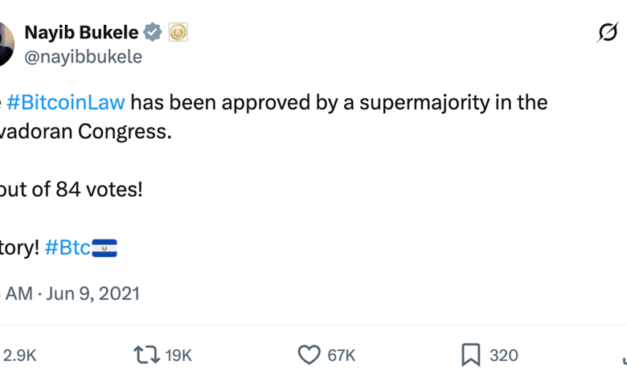
A campaign to require the Swiss National Bank to hold Bitcoin is set to lapse after failing to gather enough signatures to trigger a national referendum, Reuters reported.The initiative sought to amend Switzerland’s constitution to require the central bank to hold Bitcoin (BTC) alongside gold and foreign currency assets, but organizers said they collected only about half of the 100,000 signatures required under Swiss law.The Swiss National Bank (SNB) has repeatedly opposed adding cryptocurrencies to its holdings, saying digital assets do not meet its reserve management standards due to concerns about volatility and liquidity, Reuters reported.Campaign founder Yves Bennaim told Reuters the effort was always considered unlikely to succeed, but said the initiative helped advance debate around Bitcoin’s role in global finance.Supporters of the campaign said Bitcoin could help diversify Switzerland’s reserves away from dollar- and euro-denominated assets, which Reuters said account for roughly three-quarters of the SNB’s foreign currency holdings.Related: Bitcoin profit-taking may ‘accelerate’ as price hits 3-month high: AnalystCountries experiment cautiously with sovereign Bitcoin reservesWhile 2025 saw a wave of publicly traded companies adopt Bitcoin treasury strategies, sovereign adoption of Bitcoin as a reserve asset has remained limited.El Salvador was the first country to formally adopt Bitcoin as part of a sovereign reserve strategy after President Nayib Bukele began government BTC purchases in 2021 alongside the country’s move to make Bitcoin legal tender. The country currently holds 7,645 BTC, according to data from BitcoinTreasuries.com.Source: Nayib BukeleSource: Nayib BukeleBhutan, also one of the world’s largest sovereign holders of Bitcoin, built much of its treasury through state-backed mining operations powered by surplus hydroelectric energy as part of a broader strategy to turn renewable energy into a digital export and expand the country’s role in crypto finance.However, data from Arkham Intelligence shows Bhutan-linked wallets have sharply reduced their holdings in recent months, with reserves falling from around 13,000 BTC at the end of 2024 to roughly 3,654 BTC by April 2026 following a series of large transfers and apparent sales.Unlike El Salvador and Bhutan, which actively accumulated Bitcoin through purchases or mining, the three largest sovereign Bitcoin holders — United States, China and the United Kingdom — primarily acquired their holdings through criminal seizures and forfeiture proceedings.Top 5 countries holding Bitcoin. Source: Bitcointreasuries.netTop 5 countries holding Bitcoin. Source: BitcoinTreasuries.netOn March 6, 2025, US President Donald Trump signed an executive order establishing a Strategic Bitcoin Reserve capitalized with government-held Bitcoin, stating that BTC held by the reserve “shall not be sold” and would be maintained as reserve assets of the United States.While the executive order allows Treasury and Commerce officials to explore budget-neutral strategies for acquiring additional Bitcoin, the reserve is initially backed by BTC already held by the government through forfeiture proceedings.Magazine: Adam Back says current demand is ‘almost’ enough to send Bitcoin to $1M

Čítaj viac

Exodus launches AI agent-focused stablecoin on Solana

Crypto wallet provider Exodus has launched XO Cash, a Solana-based stablecoin and software toolkit designed to let AI agents make payments and access services without directly controlling private keys.According to Friday’s announcement, the system, developed with MoonPay, allows developers to create agent-linked wallets, assign spending limits and issue virtual debit cards tied to Visa payment rails.XO Cash integrates with Exodus Pay and includes a software development kit that allows users to fund AI agent wallets using their Exodus Pay balances while maintaining custody of their private keys. Users can set transaction caps, merchant restrictions and daily spending limits for each agent wallet.Exodus said AI agents using XO Cash can transact with Visa merchants through infrastructure provided by Monavate and MoonPay, with payments automatically converted into stablecoins such as USD Coin (USDC) and Tether (USDT) at checkout.The company added that XO Cash transactions are fee-free and designed for high-frequency automated payments. The stablecoin and developer documentation went live through XOCash.com on Thursday.Related: How AI became crypto’s favorite reason to cut staffCrypto and payment companies prepare for AI-driven commerceInfrastructure for autonomous AI agents to transact with stablecoins has become one of crypto’s biggest narratives in recent months.In March, Anchorage Bank launched an “agentic banking” service designed to give AI agents access to traditional financial and crypto payment rails under preset spending and compliance controls.Visa’s crypto division also introduced Visa CLI, a command-line tool designed to let AI agents make same-day payments without exposing API keys, while Stripe-backed Tempo launched a blockchain-based payments protocol for automated onchain transactions.On Thursday, Amazon Web Services integrated Coinbase’s x402 payments protocol into Amazon Bedrock AgentCore, enabling AI agents to settle USDC payments on Base and Solana without directly handling private keys. The shift toward AI-driven operations has coincided with layoffs and restructuring across parts of the crypto and payments sectors.Coinbase announced it would cut about 14% of its workforce this week as it reorganizes around smaller AI-focused teams and increased automation, while payments company Block said in February it would reduce staff by roughly 40% as the company expanded its use of AI tools.Source: Brian ArmstrongSource: Brian ArmstrongMagazine: AI-driven hacks could kill DeFi — unless projects act nowCointelegraph is committed to independent, transparent journalism. This news article is produced in accordance with Cointelegraph’s Editorial Policy and aims to provide accurate and timely information. Readers are encouraged to verify information independently.

Čítaj viac

Bitwise enters tokenized funds via Superstate’s crypto carry vehicle

Bitwise Asset Management plans to take over management of Superstate’s tokenized crypto carry fund, marking the crypto asset manager’s entry into tokenized investment products.The fund, currently called the Superstate Crypto Carry Fund (USCC), seeks to generate yield through crypto cash-and-carry trades, which involve capturing the premium between spot crypto prices and futures contracts. The fund is available to qualified purchasers and is expected to be renamed the Bitwise Crypto Carry Fund after the transition closes on June 1.Superstate said it will step back from fund management to focus on FundOS, its infrastructure platform for tokenized funds, while Bitwise assumes investment management responsibilities for USCC. The company will continue operating the fund’s onchain infrastructure, including token issuance, transfer agency services and smart contracts.USCC’s investors include hedge funds, venture funds, corporations, wealthy individuals and crypto protocols, according to the announcement. Data from RWA.xyz shows the fund has about $224.6 million in assets under management.Superstate Crypto Carry Fund. Source: RWA.xyz Superstate Crypto Carry Fund. Source: RWA.xyz Bitwise, which says it manages about $11 billion in client assets, offers crypto investment products including exchange-traded funds, private funds and staking, while Superstate operates blockchain-based fund infrastructure and tokenized Treasury products.Superstate raised $82.5 million in January to expand its blockchain-based infrastructure for tokenized equities and onchain securities issuance.Related: EtherFi turns to real-world assets for yield with $25M Plume allocationActive crypto investment strategies expand onchainThis year has seen tokenized investment products expand beyond Treasury-backed funds into more actively managed strategies. RWA.xyz data shows tokenized real-world assets have grown to more than $31 billion, including about $1.2 billion tied to active-strategy products.RWA.xyz currently tracks 29 tokenized active-strategy products, with the Superstate Crypto Carry Fund ($224.6 million) ranking among the largest, alongside Spiko Amundi Overnight Swap Fund (EUR) ($367.6 million) and Mantle Index Four Fund ($134.1 million).Active tokenized funds. Source: RWA.xyzActive tokenized funds. Source: RWA.xyzBeyond tokenized funds, crypto exchange-traded products have also moved beyond passive price-tracking exposure into more actively managed and yield-generating strategies. In an exclusive interview with Cointelegraph in March, 21Shares President Duncan Moir said crypto’s fast-evolving market structure makes the asset class particularly suited to actively managed investment products.In January, regulated DeFi exchange DigiFT launched what it described as the first actively managed tokenized equity fund on Ethereum in partnership with BNY, while Laser Digital introduced a tokenized Bitcoin yield fund using arbitrage, lending and options strategies to generate returns beyond spot BTC exposure.Globally, actively managed ETFs held close to $1.8 trillion in assets by the end of 2025, according to Morningstar and Goldman Sachs Asset Management data.Magazine: Guide to the top and emerging global crypto hubs: Mid-2026Cointelegraph is committed to independent, transparent journalism. This news article is produced in accordance with Cointelegraph’s Editorial Policy and aims to provide accurate and timely information. Readers are encouraged to verify information independently.

Čítaj viac

Získaj BONUS 8 € v Bitcoinoch

nakup bitcoin z karty

Registrácia Binance

Burza Binance

Aktuálne kurzy

