
Autor Cointelegraph by Nate Kostar

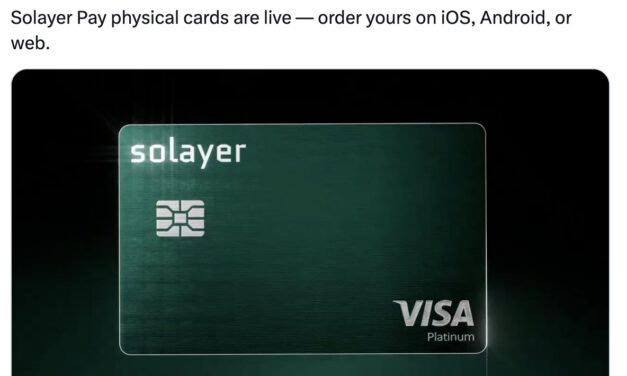
Solayer launches Visa-compatible card for USDC payments

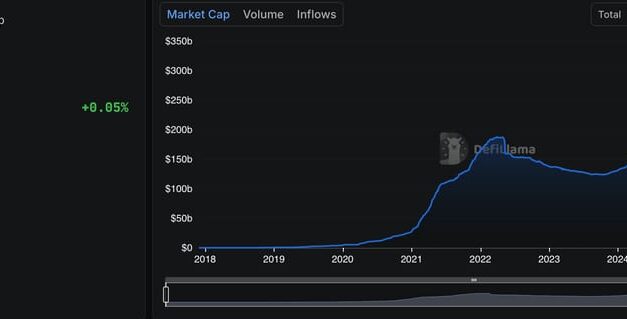
Layer-1 blockchain developer Solayer launched a Visa-compatible payment card that allows users to spend USDC balances through in-store, online and contactless transactions.The card supports ATM withdrawals in supported regions and can be ordered through the Solayer Pay app, according to the announcement. Existing users can request the card for free, while new users pay a $20 annual activation fee.Source: Solayer PaySolayer Pay launched in April 2025 under the name Emerald Card and initially rolled out to 40,000 users across more than 100 countries, according to the company. Solayer said the new physical card expands the existing Solayer Pay platform, which supports storing, transferring and spending digital assets through Visa-linked payment infrastructure. The company said the card enables users to spend USDC (USDC) balances globally through Visa payment infrastructure directly from their Solayer Pay accounts. Solayer develops infiniSVM, a layer-1 network compatible with the Solana Virtual Machine that is designed for high-throughput onchain applications using Solana (SOL) for gas fees.Related: Dartmouth endowment invests in Solana ETF, holds $14M in crypto exposureStablecoin payment cards expandThe launch from Solayer comes as rypto and payments companies have increasingly launched stablecoin-linked payment cards tied to traditional card networks including Visa and Mastercard.In January, crypto exchange OKX launched a Mastercard-linked payment card for European users through regulated issuer Monavate, allowing verified customers to spend stablecoins, including USDC and Paxos’ Global Dollar (USDG).The following month, MetaMask expanded its Mastercard-linked crypto payment card across the United States, including New York for the first time, allowing users to spend digital assets directly from self-custodial wallets.In March, Visa and Stripe-owned Bridge expanded their stablecoin-linked card program to 18 countries and said they planned to roll out the product across more than 100 countries by the end of 2026. The companies also began testing stablecoin settlement through Visa’s pilot program.The same month, Mastercard agreed to acquire stablecoin infrastructure company BVNK in a deal valued at up to $1.8 billion. BVNK provides infrastructure for businesses to send and receive stablecoin payments across blockchain networks in more than 130 countries.Data from DefiLlama shows the stablecoin market has grown from about $243.3 billion in May 2025 to around $322.5 billion today, an increase of about $79 billion.Tether remains the dominant stablecoin issuer, with its USDt (USDT) commanding a market capitalization of about $189.7 billion, representing around 58.8% of the total stablecoin market, while Circle’s USDC ranks second with a market capitalization of about $76.7 billion.Source: DefiLlamaMagazine: eToro founder timed Bitcoin top perfectly due to belief in 4 year cycles

Čítaj viac
Bitwise launches US-listed Hyperliquid fund with staking rewards

Bitwise Asset Management has launched a US-listed investment product tied to Hyperliquid, offering investors spot exposure to the token and staking rewards linked to the decentralized derivatives platform.The fund, trading under the ticker BHYP on the New York Stock Exchange, is the second US-listed Hyperliquid product to launch this week. Bitwise said the fund plans to stake a significant portion of its HYPE (HYPE) holdings through its in-house staking division.Hyperliquid is a decentralized trading-focused layer 1 blockchain launched in 2023 that offers perpetual futures, spot trading and lending services. Bitwise said the platform processed about $2.9 trillion in trading volume in 2025 and accounted for roughly 60% of global onchain derivatives open interest as of May 5, citing DefiLlama data.HYPE was trading at around $44 on Friday with a market capitalization of roughly $11.22 billion, making it the 10th-largest cryptocurrency by market value, according to CoinMarketCap data. The token is used for staking, governance and ecosystem participation.Bitwise, which manages about $11 billion in client assets across crypto investment products including exchange-traded funds, private funds and staking strategies, said the fund will charge a 0.34% sponsor fee, which will be waived for the first month on the fund’s first $500 million in assets.HYPE token price. Source: CoinGeckoRelated: Wells Fargo lifts Ether ETF holdings in Q1 as Bitcoin positions shiftHyperliquid draws growing institutional interestThe launch comes as institutional interest in Hyperliquid and HYPE-linked investment products expands across crypto asset managers, venture capital firms and trading platforms.Earlier this week, 21Shares launched its THYP Hyperliquid fund in the US, drawing about $1.2 million in net inflows and $1.8 million in trading volume on its first trading day, according to Bloomberg ETF analyst James Seyffart. Grayscale Investments is also awaiting a decision on its proposed Hyperliquid fund.On Wednesday, onchain analytics account Lookonchain said wallets linked to venture capital company Andreessen Horowitz had accumulated about $67 million worth of HYPE over the previous month and staked roughly $51 million worth of the token.Source: LookonchainThe following day, Coinbase announced it would become the official treasury deployer for USDC (USDC) on Hyperliquid, where the stablecoin’s supply has grown to around $5 billion since the network launched in 2023, according to DeFiLlama data.As Hyperliquid gains traction as a decentralized derivatives exchange, centralized crypto companies have also expanded deeper into perpetual futures and offshore derivatives markets through new trading products and international launches.Earlier this year, Coinbase launched stock perpetual futures for eligible non-US users, while Kraken rolled out tokenized equity perpetual futures tied to assets including Nvidia (NVDA), Apple (AAPL) and Tesla (TSLA) for offshore clients.Magazine: ETH stalls at $2.4K five times, SOL to rally to $120: Market Moves

Čítaj viac

Tether-backed Oobit expands crypto payments platform into Colombia

Oobit launched its crypto payments platform in Colombia, expanding the Tether-backed company’s operations across Latin America.The company said Colombia is its ninth live market and follows expansion into countries including Brazil, Argentina and Chile. Chainalysis data cited in the announcement showed the Colombian peso ranked second globally in the share of centralized exchange stablecoin purchases by currency.Oobit operates a non-custodial crypto payments platform that allows users to spend digital assets directly from their wallets through a Visa-linked payment system accepted at more than 150 million merchants across more than 80 countries, according to the company. Users spend crypto directly from their wallets without converting funds through traditional bank off-ramp services.Oobit said it has seen activity in Brazil increase more than 200% since launching there in November 2024, with active users spending an average of about $400 per month across 20 transactions.The company said USDT (USDT) accounted for the largest share of transactions on the platform, ahead of Oobit’s native token and USDC (USDC). Spending at grocery stores and supermarkets accounted for 35% of activity across its Latin American markets, followed by restaurants, food stores and department stores. In Brazil, users also spent crypto at gas stations, beauty shops and electronics retailers, Oobit said.Related: Stablecoin payments startup Kast raises $80M at $600M valuation: ReportCrypto payments expand across emerging marketsStablecoins and other digital assets are increasingly being used for everyday purchases and consumer payments across emerging markets.In April, Mercado Libre, Latin America’s largest online marketplace, launched stablecoin-based transfers between Brazil, Mexico and Chile using its Meli Dollar token. The stablecoin can also be used within Mercado Libre’s marketplace ecosystem and distributed to users as cashback, according to the company.The expansion comes as stablecoin adoption is on the rise across the region.A 2025 report from Bitso found that US dollar-linked stablecoins accounted for 40% of crypto purchases on its platform in 2025, more than double Bitcoin’s (BTC) 18% share. The exchange said the trend reflected growing use of stablecoins for payments and other everyday financial transactions across Latin America.Data from DefiLlama shows the stablecoin market has grown from about $243 billion a year ago to more than $322 billion today.Source: DefiLlamaSource: DefiLlamaBitcoin is also being used directly for payments in some emerging markets. Africa Bitcoin Corporation executive chairman Stafford Masie said on the Coin Stories podcast in March that BTC functions as everyday money in parts of Africa, describing local economies where merchants accept payments directly in satoshis instead of dollars or local currencies.Magazine: eToro founder timed Bitcoin top perfectly due to belief in 4 year cycles

Čítaj viac
Tezos launches quantum-resistant private payments prototype on testnet

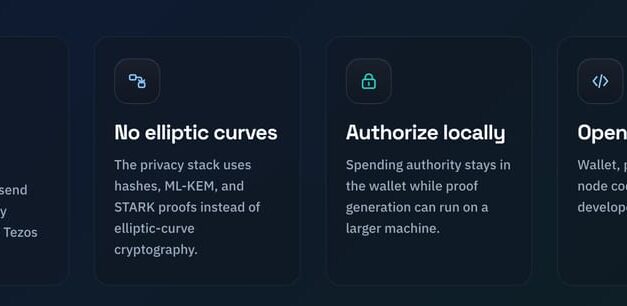
Developers behind the Tezos ecosystem launched a testnet prototype for private blockchain payments designed to resist future quantum computing attacks, as concerns grow that advances in quantum technology could eventually compromise existing blockchain privacy systems.The prototype, called TzEL, uses post-quantum cryptography and zk-STARK proofs to shield transaction data and encrypted payment metadata that could otherwise be vulnerable to “harvest now, decrypt later” attacks, where encrypted blockchain data collected today is decrypted in the future, according to Tezos. The prototype also uses Tezos’ Data Availability Layer to handle the larger proof sizes associated with post-quantum cryptography, which developers say has been one of the main technical barriers to building scalable quantum-resistant privacy systems onchain.Source: TezosAccording to the project’s whitepaper, the quantum-resistant zk-STARK proofs used by TzEL are roughly 300KB in size, significantly larger than privacy proofs commonly used in existing blockchain systems.TzEL is currently live on the Tezos testnet and remains in development, while the broader Tezos (XTZ) ecosystem is still in the early stages of transitioning toward post-quantum cryptography.Related: Rushed quantum fix may backfire for Bitcoin, Samson Mow warnsThe crypto industry ramps up post-quantum security effortsThe crypto industry increased efforts to prepare for quantum computing risks throughout April, as concerns continue to grow over the long-term security of blockchain cryptographic systems.Two major validator clients on the Solana (SOL) network introduced a test version of a post-quantum signature system called Falcon, designed to help protect the blockchain against future quantum threats while minimizing performance tradeoffs.Meanwhile, MARA Holdings launched the MARA Foundation to support Bitcoin network development, including research into quantum-resistant security measures.Source: MARA HoldingsSource: MARA HoldingsCoinbase researchers also said Algorand (ALGO) and Aptos (APT) appeared further along in preparing for potential quantum threats, citing efforts to integrate quantum-resistant cryptography into their networks.However, the researchers warned that proof-of-stake blockchains may face greater exposure to quantum computing risks because of the signature systems used by network validators.According to Bernstein researchers, the crypto industry has around three to five years to transition toward quantum-resistant cryptographic standards before quantum computing becomes a threat to Bitcoin (BTC) security. But not everyone agrees. In May, Adam Back, an early cypherpunk and Bitcoin contributor, said that computers capable of breaking Bitcoin signatures are likely still at least 20 years away.Magazine: Kraken’s $600M stablecoin firm, Huione scandal deepens: Asia Express

Čítaj viac

CME and Nasdaq to launch crypto index futures featuring BTC, ETH, SOL and XRP

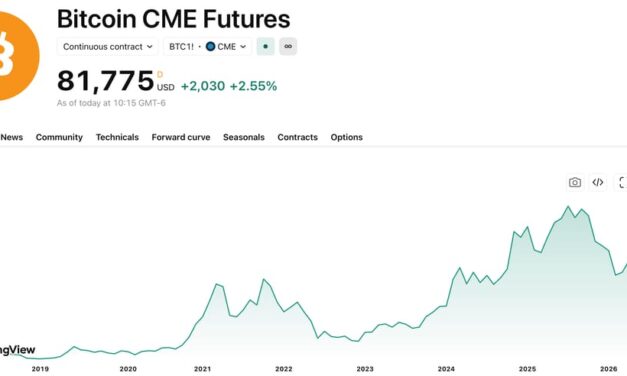
CME Group, the company behind the world’s largest financial derivatives exchange, plans to launch the Nasdaq CME Crypto Index futures, a cryptocurrency futures index featuring exposure to seven digital assets in a single contract, on June 8. The new Nasdaq CME Crypto Index futures will track a market-cap weighted basket of cryptocurrencies, including Bitcoin (BTC), Ether (ETH), Solana (SOL), XRP (XRP), Cardano (ADA), Chainlink (LINK) and Stellar (XLM), according to Thursday’s announcement.The contracts will be offered in both standard and micro-sized versions and will settle in cash using the index’s reference price at expiration. Nasdaq and CME said the index is designed to measure the performance of the largest and most actively traded cryptocurrencies by market capitalization.The upcoming launch marks CME’s first market-cap weighted crypto futures product and comes as exchanges expand regulated derivatives offerings tied to a broader range of digital assets. CME said average daily trading volume across its cryptocurrency derivatives products has risen 43% year-to-date amid growing institutional participation in regulated crypto markets. Earlier this month, CME introduced Bitcoin volatility futures, a regulated financial instrument tracking expected Bitcoin market volatility over a 30-day period.Bitcoin CME futures chart. Source: TradingViewBitcoin CME futures price chart. Source: TradingViewRelated: CME Group expands crypto futures with Avalanche and Sui contractsCrypto derivatives expand beyond Bitcoin and EtherCrypto exchanges and trading platforms are expanding derivatives offerings tied to a broader range of digital and traditional financial assets.In February, Kraken began offering perpetual contracts for tokenized stocks and commodities, giving international users 24/7 access to leveraged exposure across traditional markets.The following month, Coinbase launched perpetual futures for US stocks and indexes for users outside the United States. The contracts offer leveraged, cash-settled exposure to assets including Nvidia (NVDA) and Apple (AAPL).In April, Blockchain.com added perpetual futures trading to its self-custody wallet through Hyperliquid (HYPE), allowing users to trade leveraged crypto positions directly, using self-custodial Bitcoin as collateral, removing the need to transfer the BTC to a centralized exchange.Crypto perpetual futures volume from 2022 to 2026. Source: DeFiLlamaPrediction market platforms are also moving into crypto derivatives. Earlier this month, Kalshi was reported to be preparing a push into crypto perpetual futures trading, potentially expanding beyond event-based contracts into leveraged digital asset markets.Still, most cryptocurrency perpetual futures products remain unavailable to retail users in the US, where much of the market has historically been pushed offshore due to uncertainty around regulation. However, according to derivatives publication FOW, CFTC Chair Michael Selig said in March that the agency was working toward allowing “true perpetual futures” in the country within “the next month or so.”Magazine: eToro founder timed Bitcoin top perfectly due to belief in 4 year cycles

Čítaj viac
Získaj BONUS 8 € v Bitcoinoch

nakup bitcoin z karty

Registrácia Binance

Burza Binance

Aktuálne kurzy

