Autor Cointelegraph By Martin Young

Coinbase exec says major Ethereum scaling improvements coming soon

Coinbase Chief Product Officer Surojit Chatterjee is the latest to publish his predictions for the crypto industry in 2022 and he foresees major advances in the scaling of Ethereum.Industry leaders, analysts, and investors are sharing their 2022 predictions for the crypto ecosystem, and Coinbase’s Surojit Chatterjee is confident that Ethereum will be at the forefront of Web3 and the crypto-economy as it scales. The CPO shared his predictions in a company blog post on Jan. 4 in which he stated that Ethereum scalability will improve but alternative layer 1 networks will also see traction.“I am optimistic about improvements in Eth scalability with the emergence of Eth2 and many L2 rollups.”He added that newer layer 1 networks focused on gaming and social media will also emerge. Chatterjee predicts that scalability will be vastly improved by advances in layer 1 to layer 2 bridges, adding that the industry will “desperately seek improvements in speed and usability of cross-L1 and L1-L2 bridges.”These bridges enable tokens to be moved from a layer 1 network such as Ethereum to a layer 2 network such as Arbitrum and vice versa.Referring to scaling technologies, the CPO specifically mentioned ZK-rollups stating that they will “attract both investor and user attention.” Zero-Knowledge scaling “rolls up” transactions data in batches for more efficient processing on Ethereum’s layer 1.Firms such as Matter Labs have advanced in leaps and bounds in 2021 with the development and deployment of their rollup-based zkSync layer 2 platform. The layer 2 ecosystem has undergone massive expansion in 2021 with a surge in adoption for all major platforms. According to L2beat, which tracks the L2 ecosystem, the total value locked surged by nearly 11,000% over the past year from around $50 million in January 2021 to $5.5 billion by the end of the year.Related: Even with Ethereum 2.0 underway, L2 scaling is still key to DeFi’s futureChatterjee predicted that there will be more privacy-focused applications emerging but this could attract more regulatory attention as more KYC/AML (know your customer/anti-money laundering) restrictions are enforced.“We’ll see new privacy-centric use cases emerge, including privacy-safe applications, and gaming models that have privacy built into the core.”Other predictions he made include more regulation industry-wide, larger institutional participation in DeFi, the emergence of more DeFi insurance, greater brand involvement in Metaverse and NFTs, and Web2 companies scrambling to get into Web3.

Čítaj viac

More billionaires turning to crypto on fiat inflation fears

Previously anti-crypto investors are increasingly turning to Bitcoin and its brethren as a hedge against fiat currency inflation concerns.One example is Hungarian-born billionaire Thomas Peterffy who, in a Jan. 1 Bloomberg report, said that it would be prudent to have 2-3% of one’s portfolio in crypto assets just in case fiat “goes to hell”. He is reportedly worth $25 billion.Peterffy’s firm, Interactive Brokers Group Inc., announced that it would be offering crypto trading to its clients in mid-2020 following increased demand for the asset class. The company currently offers Bitcoin, Ethereum, Litecoin, and Bitcoin Cash, but will be expanding that selection by another 5-10 coins this month.Peterffy, who holds an undisclosed amount of crypto himself, said that it is possible that digital assets could reap “extraordinary returns” even if some could also go to zero according to Bloomberg. “I think it can go to zero, and I think it can go to a million dollars,” he added before stating “I have no idea.”In early December, the billionaire predicted that Bitcoin could spike as high as $100,000 before markets begin to retreat.Related: Tom Peterffy Believes Bitcoin Could Wreck Might Go to $100K Before CrashingBridgewater Associates founder Ray Dalio is another renowned billionaire that revealed his portfolio contained some Bitcoin and Ethereum last year. This revelation came just a few months after he questioned crypto’s properties as a store of value.He has now changed that stance and views crypto asset investments as “alternative money” in a world where “cash is trash’’ with inflation eroding purchasing power.In late December, Dalio commented that he was impressed at how crypto as lasted, before stating “Cash, which most investors think is the safest investment is, I think, the worst investment.”Billionaire hedge fund manager Paul Tudor Jones also bought Bitcoin last year, labeling the move as a hedge against inflation.Pandemic-induced stimulus packages have caused economic turmoil across the globe, the fallout from which could linger for decades. In the United States, inflation is at a 4 decade high of 6.8%. This has resulted in a surge in the Consumer Price Index (CPI) as the costs of daily goods continue to increase.The billionaires are already seeing the danger signs with fiat currencies and central bank manipulation, and they are increasingly turning to crypto assets. The year 2022 could see more wealthy investors join their ranks if the trend continues.

Čítaj viac

Top crypto winners and losers of 2021

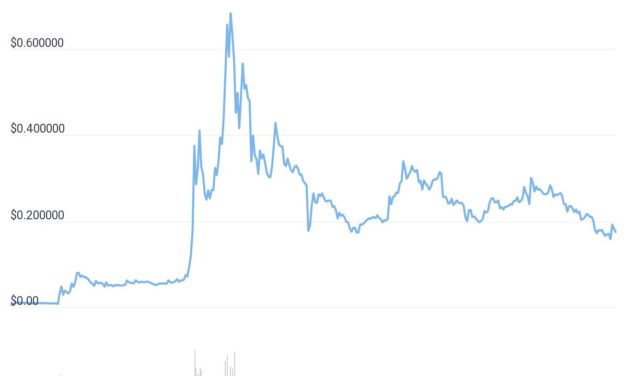
The year 2021 has undoubtedly been a bull market with Bitcoin (BTC) raising the all-time high price bar several times this year. But not all crypto assets have performed equally. There have been a number of losers in addition to the majority of winners in terms of price gains.Since the beginning of 2021, total crypto market capitalization has gained 190% from just under $800 million to over $2.3 trillion today. It hit an all-time high of just over $3 trillion in early November.Top 3 crypto gainers in 2021The crypto top-ten in terms of market capitalization looked a little different on Jan. 1, 2021, as it contained Litecoin (LTC), Chainlink (LINK), and Bitcoin Cash (BCH). These have dropped out and have given way to Solana (SOL), USDC, and Avalanche (AVAX) by the year’s end.Dogecoin (DOGE)Dogecoin has skyrocketed this year, driven primarily by Elon Musk’s surreptitious social media posts. On New Year’s Day, DOGE was priced at just $0.004 and largely ignored by the majority of crypto traders. DOGE had its first little spurt in February following the first of what would be a number of subsequent Elon pumps.DOGE prices really went on a wild ride in April and May when they surged more than 1,100% to an all-time high of $0.731 on May 8, pushing it up the crypto market cap charts to the fourth spot.Musk extolled the virtues of DOGE as a payments network in June, resulting in another round of FOMO for the memecoin. DOGE has been falling from that epic pump since May, both against Bitcoin and USD. But all of the additional mainstream media it has got, in addition to major trading platform listings, has still given the Shiba Inu-inspired joke coin a monumental gain of 3,800% so far this year. In BTC terms, DOGE has gained 2,100% on the year from 168 satoshis to 3,696 sats in mid-December.DOGE/USD YTD – coingecko.comStarting position by market capitalization on Dec. 15: 26 — Final position: 11Solana (SOL)The native token for the enterprise blockchain Solana has also had a bumper year in terms of gains. At the beginning of 2021, SOL was priced at just $1.52, at the time of writing it was trading for a little over $150. This is an epic gain of more than 9,800% in less than a year.SOL hit an all-time high of $260 in early November but has retreated as markets began correcting late in the year. The massive move has given SOL a fifth spot in the market cap charts after peaking at fourth. Against BTC, SOL has gained 6,473% over the year.Major investments and increased adoption in the wake of surging transaction prices on Ethereum have driven momentum for Solana, which has also been touted as an “Ethereum killer.” In June, Solana Labs raised $314 million via a private token sale led by Andreessen Horowitz and Polychain Capital.SOL/USD YTD – coingecko.comStarting position: 112 — Final position: 5Terra (LUNA)The native token for decentralized financial payment network Terra has also made it into the crypto top ten briefly. LUNA began the year trading at around $0.65 and was largely unknown to mainstream retail traders.Prices were lifted in March and May, but they didn’t really take off until August when a massive pump took LUNA to an all-time high of $77.73 on Dec. 5. At the time of writing, LUNA was trading up a whopping 8,515% since the beginning of the year. In satoshi terms, LUNA has increased up 5,815% this year against BTC.The rapid expansion of partners on the Terra ecosystem has been largely responsible for the bullish price action.LUNA/USD YTD – coingecko.comStarting position (CMC): 62 — Final position (CMC): 10A few others are also worth a mention for making impressive gains this year and they include Avalanche’s AVAX up 2,330% on the year, Polygon’s MATIC, which has surged more than 12,000%, and Binance Coin (BNB) making 1,271% this year.Top 3 crypto losers in 2021Internet Computer (ICP)Amid a world of hype, Dfinity’s Internet Computer project exploded onto the scene this year after 5 years of largely secretive development. It promised an internet revolution replacing the trillion-dollar legacy internet and IT industry by allowing developers to install their code directly on a “public internet” without having to rely on third-party hosting firms. Speculators in a frenzy for the next big thing in crypto loaded up on ICP tokens when they were listed on major exchanges in mid-May sending prices skyrocketing to a very quick all-time high of $700 on May 10.Since then, ICP prices have virtually collapsed sinking to an all-time low of $24.29 on Dec. 4, a painful 96% down from its peak just 7 months prior. It has also lost 93% against Bitcoin in terms of satoshis.ICP/USD YTD – coingecko.comStarting/Highest position: 8 — Final position: 37EOS (EOS)The once darling of crypto that many touted would kill Ethereum has actually done very little in terms of price movements this year while those around it have surged.EOS had already fallen out of the market cap top ten on Jan. 1 and it continued to fall down the charts all year. EOS prices have only gained a paltry 15% over the year when others were in thre and 4 figures so we would consider that a loser in the grand scheme of things.Block.one’s once-hyped token was trading at $3.25 at the time of writing, having slumped to the 50th spot by market cap. It is currently 86% down from its April 2018 all-time high of $22.71 and has lost 22% against BTC over the year.In early November, members of the EOS ecosystem voiced their dissatisfaction with the direction the network was heading.EOS/USD YTD – coingecko.comStarting position: 15 — Final position: 50Monero (XMR)The privacy-focused cryptocurrency Monero has also fallen heavily down the market cap charts this year as a number of major exchanges delisted digital assets that offer anonymity.XMR prices have mustered just 17% this year and have come nowhere near their January 2018 all-time high of $524. Currently trading at around $183, XMR has slumped 66% from that peak resulting in a fall to 49th in the coin cap tables. Monero has lost 30% against Bitcoin since the beginning of the year.XMR/USD YTD – coingecko.comStarting position: 16 — Final position: 49To put these gains and losses into perspective, Bitcoin is up 67.5% year-to-date (YTD) year while Ethereum gained 440%.

Čítaj viac

Central bank tells Thai banks not to offer crypto trading

The Bank of Thailand has stated that it does not want commercial banks to be directly involved in the trading of crypto assets.The edict came from central bank senior director Chayawadee Chai-Anant on Dec. 7 who cited risks associated with high price volatility.”We don’t want banks to be directly involved in digital asset trading because banks are (responsible) for customer deposits and the public and there is risk.”The latest round of central bank suppression of digital assets comes at a time when commercial banks have been making investments in local cryptocurrency exchanges, according to a Bangkok Post report.In early November, Thailand’s oldest bank Siam Commercial Bank (SCB) announced that it was acquiring a 51% stake in the country’s largest crypto exchange, Bitkub. In late August, the Zipmex crypto exchange raised $1.3 billion in funding from the country’s fifth-largest lender, Bank of Ayudhya.The Bank of Thailand (BoT) has taken an increasingly tougher stance against digital assets despite their growing popularity in the country among individuals, companies, and banks.Last week, BoT senior director Sakkapop Panyanukul warned businesses about accepting crypto, stating: “If other currencies are widely used, it will impact the central bank’s ability oversee the economy.” Referring to tokens not backed by assets, he labeled them as “blank coins.”The central bank has also expressed concern over the use of cryptocurrencies to pay for goods and services. In a related report on Dec. 8, Chai-Anant commented that digital assets could be detrimental to merchants and consumers because they are “associated with high price volatility and risks of cyber theft, personal data leakage, and money laundering.”“If digital assets become widely used as a means of payment for goods and services, such risks could affect payment system stability, financial stability, and consumer protection.”Related: Thai lawmakers urged to approve tourism crypto to entice digital nomadsThe BoT warnings come just a fortnight after the Kingdom’s tourism ministry ramped up its efforts to encourage the crypto-rich to visit the country. The Tourism Authority of Thailand has declared the country “crypto-friendly” but clearly, the central bankers don’t want it to be too friendly.Thailand’s economy is heavily dependent on the tourism industry which has been battered during the pandemic. Much of the Kingdom remains in lockdown with very few arrivals at the time of writing despite efforts to lure crypto nomads and the like to a country where the central bank doesn’t want them using digital currencies.

Čítaj viac

Decentralized exchange aggregator trading volumes surge to new highs

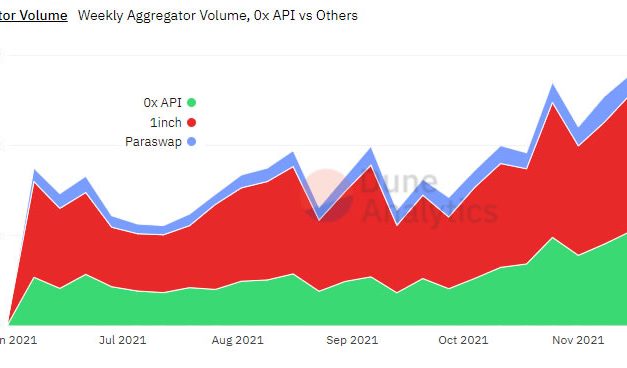
Trading volumes on popular decentralized exchange (DEX) aggregators have surged to new highs over the past few weeks.Decentralized exchange aggregators provide a way for token traders and swappers to scan several DEX platforms to get the best swap rates at the time.According to Dune analytics, popular DEX aggregators such as 1inch, 0x, and Paraswap have seen volumes surging over the past month. The combined volume for those three hit a cumulative weekly all-time high of $6 billion last week, increasing by around 50% since the beginning of November.DEX aggregator weekly volumes – dune.xyz1inch has a minor lead in terms of the current market share at 53%, but 0x is rapidly catching up with 42% recorded for December so far. Last week, 1inch announced a Series B funding round led by Amber Group that raised $175 million.On Dec. 5, 0x actually surpassed 1inch in terms of daily volume share with 49% compared to 43.7% according to Dune. According to 0xTracker, the DEX aggregator has processed $3 billion in volume over the past 7 days.0x provides an application programming interface (API) that can be used by DeFi developers to integrate token swaps sourced from leading DEXes directly into smart contracts.The 0x protocol also has a native DEX called Matcha which has processed $4.7 billion in trade volume over the past 30 days as reported by its dashboard.Related: DeFi aggregator growth ‘set to dwarf 2020’s volume’Dune’s DEX analytics reports that there has been $4 billion in trading volume on decentralized exchanges over the past 24 hours and $33 billion for the past week. The aggregator share of that volume is currently 20%.Uniswap is the current DEX market leader by a long way with a 79% share according to Dune. It has processed $26.2 billion in trading volume over the past week. SushiSwap, which was originally cloned from Uniswap, ranks in second place with a 9.8% share of the DEX market.

Čítaj viac

Získaj BONUS 8 € v Bitcoinoch

nakup bitcoin z karty

Registrácia Binance

Burza Binance

Aktuálne kurzy