Autor Cointelegraph By Martin Young

Crypto billionaires increase by 60% in a year: Who made Forbes annual list?

The Forbes crypto billionaires list has been updated, and the number of individuals who have made vast fortunes in digital assets has increased substantially.The crypto elite list now has 19 billionaires on it, which is seven more than last year and expands the list by 58%. The publication released its latest crypto richest on April 5, but the king of the crop remains unchanged.Binance CEO and founder Changpeng “CZ” Zhao is still the richest man in the industry and now the 19th richest in the world due to his relatively newly accrued wealth. The outlet has downgraded CZ’s fortune from an estimated $96 billion last year to a current estimation of $65 billion. This still makes him the most affluent person in the industry, however.FTX founder and CEO Sam Bankman-Fried has secured the second spot after “CZ” with a whopping $24 billion in estimated net worth. He has been dubbed the “Crypto Robin Hood,” as he has repeatedly stated that he wants to give the majority of this fortune away. But with $24 billion still on hand, he’s clearly not managed to do so yet. Coinbase CEO and founder Brian Armstrong is in third place with $6.6 billion. Ripple’s Chris Larsen and the Winklevoss twins from Gemini remain on the list with around $4 billion to their names. Newcomers to the crypto billionaires list include FTX co-founder and chief technology officer Gary Wang with a net worth of $5.6 billion from his 16% stake in the company. and Nikil Viswanathan and Joseph Lau, co-founders of the blockchain and Web3 company Alchemy. The pair reportedly have a net worth of $2.4 billion each, ranking them at eleventh. OpenSea NFT marketplace co-founders Devin Finzer and Alex Atallah are also newcomers on this year’s crypto-rich list with an estimated net worth of $2.2 billion apiece.There are several other notable names on the list, including Song Chi-hyung, the founder of South Korea’s Upbit exchange, who is reportedly worth $3.7 billion. Executive vice president of South Korea’s Dunamu, Kim Hyoung-nyon, owns an estimated 13% of Upbit, giving him a net worth of $1.9 billion.Related: 3X as many crypto figures make it onto Forbes 2021 billionaires list as last yearMicroStrategy’s Michael Saylor has remained a crypto billionaire with an estimated net worth of $1.6 billion. Company stock has quadrupled in the last two years following a big Bitcoin bet that has paid off.Forbes originally published the first crypto elite list back in 2018 when just a handful of executives made the grade. Back then, the bar was much lower, with a wealth figure of $350 million to get on the list.

Čítaj viac


Visa should be 'scared': Lightning Labs raises $70M to add stablecoins

Bitcoin software firm Lightning Labs has secured a large funding round enabling it to further develop the Lightning Network for faster, cheaper Bitcoin and stablecoin transactions.The $70 million Series B funding round was led by Valor Equity Partners, with participation from Baillie Gifford, Goldcrest Capital, and several other angel investors. Lightning Labs builds additional features and software for the Lightning Network (LN), Bitcoin’s layer-two transaction solution.The funding will be channeled into a new protocol it has developed called Taro, which will enable stablecoins to be transferred using the LN, according to reports. Lightning Labs will not issue stablecoins, but the infrastructure will allow them to be sent over the network.Stablecoin transactions were made possible with the Bitcoin Taproot upgrade in November 2021, which also introduced smart contract capabilities.The firm believes that Taro will enable further Bitcoin adoption as it potentially allows the unbanked in developing countries to send money using stablecoins.Speaking to Forbes, Elizabeth Stark, CEO and co-founder of Lightning Labs, said, “That’s really significant because the potential here is for all the world’s currencies to route through Bitcoin over the Lightning Network.” Speaking to Tech Crunch, she added:“If I were Visa, I’d be scared because there are a lot of people out there that have mobile phones, but now don’t need to tap into the traditional system.”Lightning Labs raised $10 million from its Series A in September, which followed a $2.5 million seed round in 2018.The LN is currently being used extensively in El Salvador, the first country to make Bitcoin legal tender. It has also been put into action on the payments platform Strike and the tipping tool on Twitter. The current network collateral is 3,693 BTC, worth around $167 million, a 5.8% increase over the past month, according to the stats. Related: First publicly listed, purpose-built Lightning Network company launches new accessible platformStablecoins are now an integral part of the digital currency ecosystem and are slowly being accepted by global regulators. The latest to give fiat-pegged assets the green light is the United Kingdom’s Economic and Finance Ministry which intends to adjust the existing regulatory framework to incorporate stablecoins as a payment method.

Čítaj viac

13 apps removed after researchers uncover Trojan crypto wallet scheme

Research by cyber security firm ESET has uncovered a “sophisticated scheme” that disseminates Trojan apps disguised as popular cryptocurrency wallets.The malicious scheme targets mobile devices using Android or Apple (iOS) operating systems which become compromised if the user downloads a fake app.According to ESET’s research, these malicious apps are distributed through bogus websites, and imitate legitimate crypto wallets, including MetaMask, Coinbase, Trust Wallet, TokenPocket, Bitpie, imToken, and OneKey.The firm also discovered 13 malicious apps impersonating the Jaxx Liberty wallet, available on the Google Play Store. Google has since removed the offending apps, which were installed more than 1,100 times, but there are still many more lurking out there on other websites and social media platforms.The threat actors disseminated their wares through social media groups on Facebook and Telegram, intending to steal crypto assets from their victims. ESET claims to have uncovered “dozens of trojanized cryptocurrency wallet apps,” going back to May 2021. It also stated that the scheme, which it believes is the work of one group, was primarily targeting Chinese users via Chinese websites.Lukáš Štefanko, the researcher who unraveled the scheme, said that there were other threat vectors, such as sending seed phrases to the attacker’s server using unsecured connections, adding:“This means that victims’ funds could be stolen not only by the operator of this scheme but also by a different attacker eavesdropping on the same network.”The fake wallet apps behave slightly differently depending on where they are installed. On Android, it targets a new cryptocurrency that the user may not have previously traded, prompting the user to install the appropriate wallet. While on iOS the apps need to be downloaded using arbitrary trusted code-signing certificates circumnavigating Apple’s App Store. This means that the user can have two wallets installed simultaneously, the genuine one and the Trojan, but poses less of a threat since most users rely on App Store verification for their apps. Related: Hodlers beware! New malware targets MetaMask and 40 other crypto walletsESET advises cryptocurrency investors and traders to only install wallets from trusted sources that are linked to the official website of the exchange or company.In February, Google Cloud unveiled the Virtual Machine Threat Detection (VMTD) system, which scans for and detects “cryptojacking” malware designed to hijack resources to mine digital assets.According to a January Chainalysis report, cryptojacking accounted for 73% of the total value received by malware-related wallets and addresses between 2017 and 2021.

Čítaj viac

Democrat division over crypto isn’t all bad news for regulation

The Biden Administration has just passed an executive order furthering research into crypto assets in view of regulating them, but politicians within the ruling Democrat party remain deeply divided on digital currency.The lack of consensus among Democrats could mean that a progressive regulatory framework for cryptocurrencies could still be a long way off —but also makes it more likely the eventual regulations won’t be too harsh thanks to the work of crypto-friendly representatives. The crypto community is familiar with the names cropping up time and time again in the digital asset debate.On the one side, you have vehemently anti-crypto politicians such as Democrat Senators Elizabeth Warren and Sherrod Brown, and in the pro-innovation camp are the likes of Democrat Congress members Ritchie Torres and Jim Himes.The division runs deep, and political wrangling could further delay any regulatory processes in the United States.Senator Warren recently crafted a bill to restrict crypto exchanges to prevent digital assets from being used for sanctions evasion. However, it has been widely reported that Russia will not switch to cryptocurrencies to circumvent sanctions, even if so individual Russians do. Warren has continued her war on crypto with letters to the Treasury urging further crackdowns on the industry. According to reports, she recently criticized the banking system, adding in reference crypto:“However, substituting an unregulated, unverified system in which scammers and cheats and terrorists mix in with ordinary consumers, and no one can tell who’s on the other side of a transaction is not a safe substitute.”Fortunately, several Democrat lawmakers favor the crypto industry and the innovation it will bring to the U.S. financial system. One such policymaker is New York representative Ritchie Torres who said, “the project of radically decentralizing the internet and finance strikes me as a profoundly progressive cause,” before adding:“You should never define any technology by its worst uses… There’s more to crypto than ransomware, just like there’s more to money than money laundering.”Related: Biden’s executive order promises great things for the crypto industry — EventuallyDemocrat Josh Gottheimer, who represents New Jersey, has pushed plans to regulate cryptocurrencies and stablecoins. Last month, he put forward the Stablecoin Innovation and Protection Act, stating at the time that the “expansion of cryptocurrency offers tremendous potential value for our economy.”Four Democrats put their names to a bipartisan letter sent to the Securities and Exchange Commission on March 16. Gottheimer, and Torres signed of course, along with Florida representative Darren Soto and Massachusetts Congressman Jake Auchincloss.Republican congressman Tom Emmer drafted the letter, which was also signed by three other Republicans, addressing the issue of overburdening crypto companies with excessive reporting requests and increased scrutiny of the industry by the agency.

Čítaj viac

MakerDAO community proposal to replace MKR governance token

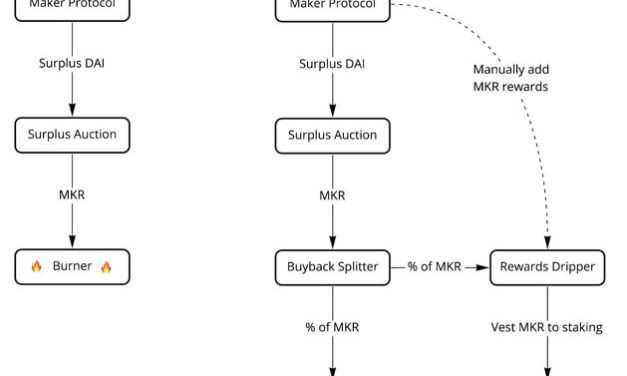
The community behind decentralized stablecoin platform MakerDAO is mulling over a major tokenomics shift that could replace its governance token, MKR.A proposal was made on the MakerDAO forum by community leader “monet-supply” on March 14, outlining an alternative token economic mechanism. If the proposal passes a full governance vote, the protocol could replace its current governance token, MKR, with a new token called stkMKR.There were many responses to the proposal within just a few hours of it being posted, most of which were positive and regarding the technicalities of the solution. From the proposal and discussion stage, it will need to be submitted as a MIP (Maker Improvement Proposal) for a formal vote by MKR holders which usually takes two weeks. The staking proposal addresses some issues and inefficiencies with the current tokenomics model, which operates a “buyback and burn” mechanism. It was suggested by ‘monet-supply’ that there are several drawbacks to the existing mechanism, including a lack of targeted incentives since buyback and burn returns all capital to MKR holders.There is also a “weak crypto narrative” according to ‘monet-supply’ who said that MKR issuance could be put towards improving the protocol. The current system also has limited deterrence against governance attacks or voting manipulation.⚒️ @MonetSupply presented an idea of an alternative token economic mechanism that could supplement the current MKR buyback value accrual system.stkMKR? Read the entire thread:https://t.co/1hEORZTblu— Maker (@MakerDAO) March 14, 2022The proposed solution is a new stkMKR token which would replace MKR as the core governance token of MakerDAO. It would act as a staking or bonding token issued to those who have deposited MKR for governance purposes.“stkMKR will be non-transferable, and represents MKR staked in governance. Staked tokenholders will receive a share of MKR tokens purchased through surplus auctions, so stkMKR will be backed by an increasing amount of MKR over time.”Surplus utilization mechanism. Source: forum.makerdao.com ‘Monet-supply’ said the rewards mechanism has been improved upon, and there will be greater incentives to stake using the new system.MakerDAO allows users to deposit crypto assets as collateral to generate the decentralized stablecoin DAI. This can then be used elsewhere, such as other DeFi protocols or liquidity pools. The DAI is burnt when the “loan” is repaid, and the collateral is withdrawn.Related: Shift toward full decentralization pushes Maker (MKR) price above $4KMKR prices were trading flat on the day at $1,766 at the time of writing, according to CoinGecko. However, the token has dropped 11% over the past fortnight and is currently down 72% from its May 2021 all-time high of $6,292.

Čítaj viac

Získaj BONUS 8 € v Bitcoinoch

nakup bitcoin z karty

Registrácia Binance

Burza Binance

Aktuálne kurzy