
Autor Cointelegraph By Martin Young

AI boom fuels inflation fears, complicating Fed’s next rate move

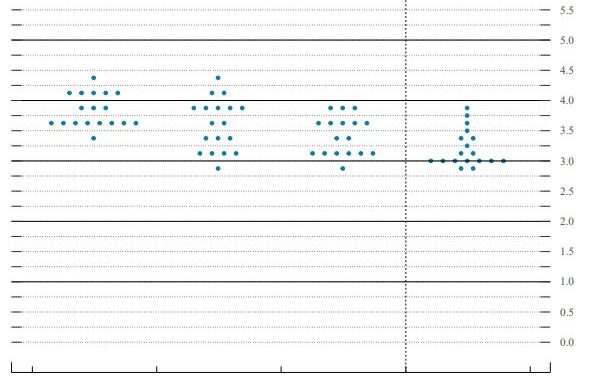
Federal Reserve officials were split last month on whether to increase interest rates or keep them steady, with many seeing accelerating demand for artificial intelligence as a driver of inflation, according to meeting minutes released on Wednesday. The minutes covered the first monetary policy meeting under Fed Chair Kevin Warsh. Many Federal Open Market Committee members said that “ongoing strong demand for AI infrastructure would likely sustain upward pressure on prices for technology products and electricity,” according to the minutes.  AI-related inflationary pressure, colloquially known as “chipflation,” stems from the rising cost of semiconductors used by data centers. This surge in demand, along with data center competition for energy, has pushed up consumer prices for a wide range of electronic goods, devices and power, and may continue as AI demand increases.Higher inflation is generally bad news for risk assets such as crypto, as it results in lower liquidity and spending power and higher interest rates, making borrowing more expensive and cash investments more attractive. Inflation will remain elevated in the near termParticipants anticipated that inflation would “remain elevated in the near term” but may decline as the Middle East conflict eases. However, they judged that the “risks to the inflation outlook were still tilted to the upside.”AI growth remained a strong theme, both boosting economic growth and contributing to inflation at the same time. “Most participants remarked that growth in economic activity that exceeded that of potential output, owing in part to strong AI business investment, could contribute to more persistent inflationary pressures.”Related: Central bankers sound alarms over agentic AI finance risksThe Fed’s “dot plot” signals hikes, not cuts, with nine of 18 voting members projecting at least one rate hike before the end of 2026 and six expecting two 25-basis-point increases. The central bank’s PCE inflation projection for year-end also jumped from 2.7% to 3.6%.A hawkish dot plot signals that interest rates are likely to stay higher for longer this year. Source: Federal ReserveThe Fed kept rates steady at 3.5% to 3.75% at its June meeting, while CME futures markets currently show a 70% probability that they will remain unchanged at the next meeting on July 29.  AI infra buildout driving higher inflationNick Ruck, director of LVRG Research, told Cointelegraph that the Fed’s recent meeting highlights how the massive AI infrastructure buildout is “driving higher inflation through surging demand for semiconductors, energy and data centers, even as it promises future productivity gains.” “While this short-term pressure complicates monetary policy, it also underscores the need for innovative solutions in decentralized technologies to optimize resource allocation and ease bottlenecks in the digital economy,” he said. Analysts said this week that crypto markets could benefit from any Fed intervention to backstop the booming US equity market in a downturn. Features: The biggest blockchain upgrades still to come in 2026

Čítaj viac

Crypto could benefit if Fed steps in to backstop US stock market: Analysts

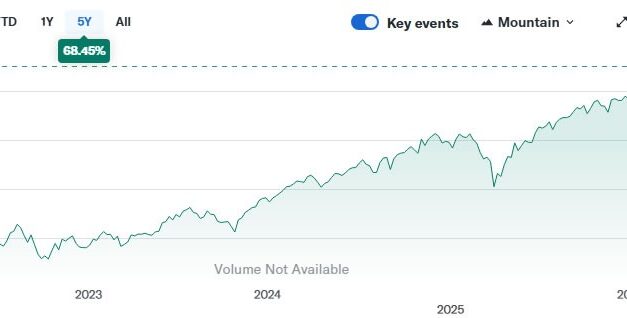
Crypto markets could benefit from increased liquidity if the US central bank steps in to support the $75 trillion equity market in a bear market, as it is “too big and too important to fail,” according to analysts. The US equity market has grown by 68% over the past five years and has added roughly $6 trillion in market value so far this year. However, analysts and experts, such as goldbug Peter Schiff, have warned that years of rapid growth could be setting up the market for a major correction. Such a correction could see the Fed “break decades of precedent” and buy equity ETFs to support the stock market, Bloomberg’s ETF expert Eric Balchunas said on Tuesday, while other analysts said the resulting move to increase liquidity could set up an environment for cryptocurrencies to benefit.”Once the Fed steps in, rate cuts, balance-sheet expansion, even targeted ETF purchases, crypto has historically entered a medium-to-long-term uptrend, similar to what we saw in 2021, as risk appetite returns and capital rotates back into high-beta assets,” Bitget Wallet chief operating officer Alvin Kan told Cointelegraph. Stocks deeply embedded in American householdsBalchunas said that 58% of Americans own stocks, so “the political pressure to keep stocks out of a prolonged bear market is going to be very powerful.”In 2020, the Fed bought corporate bond ETFs during COVID-19 to act as a “buyer of last resort” to restore liquidity to frozen credit markets. The unprecedented move saw it acquire $8.7 billion worth of ETFs, which helped to limit economic damage from the pandemic. “I think there’s a good chance the Fed will buy equity ETFs in the next major downturn to support [the] market, and it will be common practice going forward,” said Balchunas.Related: Crypto turns ‘contrarian bet’ as AI stocks draw investor attention: BitwiseCentral banks in China and Japan currently use indirect equity ETF purchases via authorized intermediaries with public funds to boost liquidity, and America could follow, he added. “This is just one byproduct of the ‘Nothing Stops This Train’ monetary supply explosion and debt extravaganza sweeping the world, but especially in the US, which at this point feels irreversible.”US stock market cap growth over the past five years, as measured by the Wilshire 5000 Total Market Index. Source: Yahoo FinanceCrypto remains tied to dollar liquidityHashKey Group senior researcher Tim Sun said that a prolonged, severe bear market “would do far more than just erode investor wealth — it would directly shock consumer spending, compromise pension stability, stall corporate credit expansion, and dent tax revenues.”While cryptocurrencies will not receive direct backing from the central bank, “their macro pricing remains fundamentally tied to US dollar liquidity, real interest rates, and equity market risk sentiment,” Sun added. “Once market participants are convinced that a policy floor effectively underpins risk assets, the risk premium demanded for highly volatile assets will compress. As a result, Bitcoin and mainstream crypto assets are poised to benefit significantly from improving liquidity expectations and a broader revival in risk appetite.”Bitcoin has underperformed US stock markets this year. Source: Google FinanceStrong incentive to backstop major drawdowns“This structural backstop supports a more resilient macro backdrop, and that’s ultimately bullish for crypto’s role as a growth and diversification asset in a world of expanding global liquidity,” Kan said. Meanwhile, Jeff Mei, the operating chief of BTSE, told Cointelegraph that in the event of a downturn, “it’s difficult to see the Fed printing more money to stimulate it, given that inflation is still high. However, there are other tools they can deploy to take action.”Features: The biggest blockchain upgrades still to come in 2026

Čítaj viac
Secret Network cites AI exploit risks in proposed Arbitrum move

Privacy-focused layer-1 blockchain Secret Network is proposing to move from its longtime home on Cosmos to Ethereum layer-2 Arbitrum, citing security risks from artificial intelligence, among other reasons. Secret Network has been running privacy-preserving smart contracts on Cosmos since 2020, as the ecosystem had strong momentum back then, but the “environment has changed,” the team said Tuesday.  “The security risk is the part we take most seriously,” it said. “Old code is becoming dramatically easier to analyze … With AI, the cost of attacking stale code is falling across the board.” The recent Axelar-Secret IBC bridge exploit highlighted growing security risk from aging, under-maintained code — a risk the team argues AI-assisted exploitation is making worse. The release of advanced AI models such as Anthropic’s Claude Mythos 5 has dramatically increased the capabilities for discovering and potentially exploiting code vulnerabilities. Liquidity has thinnedThe Secret team described Arbitrum as having “deep liquidity, tooling, wallet and exchange support, and thousands of builders composing with one another,” and said “liquidity has thinned” on Cosmos while builders have “drifted to other ecosystems.” “The tooling you’d want to count on is shakier than it used to be, and a number of projects that once anchored Cosmos have migrated,” it added. “Attacks that used to take deep manual effort are getting cheaper as models get better at reading contracts, tracing assumptions, and turning a forgotten edge case into a working exploit.”The proposal, which requires a governance vote, follows a bridge exploit in June that resulted in the loss of $4.7 million in bridged assets but did not affect Secret’s native token, SCRT.Related: Secret Network bridge exploited for $4.7M with ‘infinite mint’ bugFor SCRT to endure, it needs a new stable home, and the Ethereum ecosystem is that home, the team said. The team is planning a one-time snapshot of SCRT balances on Sept. 1, which will be used to issue a new ERC-20 SCRT contract on Arbitrum.Dwindling DeFi value locked The total value locked in the Cosmos ecosystem is around $2 billion, down 88% from its peak during the 2021 bull market. Comparatively, Arbitrum is the leading layer-2 network by total value secured, which is $17.4 billion, according to L2Beat. Secret Network has just $1.3 million in TVL on Cosmos, according to DefiLlama. SCRT holders did not react well to the news, with the token tanking 24% over the past 24 hours to 4.1 cents, down more than 99% from its 2021 peak, according to CoinGecko. Secret is not the only network to leave Cosmos. In February, privacy-focused blockchain NilChain, built with the Cosmos SDK, left the ecosystem in a move to Ethereum. The Sei Network completed a full Cosmos-to-EVM transition in June, closing down its native Cosmos transaction layer entirely and becoming Ethereum-based. Stablecoin blockchain Noble also announced it was moving from the Cosmos ecosystem to Ethereum in January. Features: The biggest blockchain upgrades still to come in 2026

Čítaj viac

Strategy’s Bitcoin sale may give BTC a ‘durable bottom,’ Grayscale says

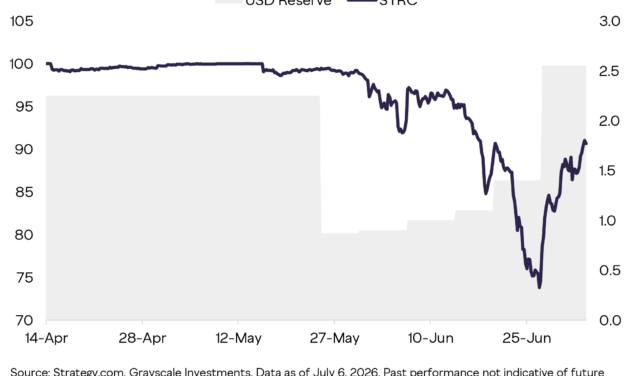
Strategy’s $216 million Bitcoin sale on Monday should be seen as a positive development for the price of Bitcoin and as a move that renews confidence in STRC, according to analysts.The sale of 3,588 BTC to fund preferred stock dividend payments and replenish cash has boosted Strategy’s dollar reserves to cover 17 months of dividend payments. “The rebound in STRC suggests investors are responding positively to this decision,” Grayscale Research said Monday.Andri Fauzan Adziima, research lead at Bitrue Research Institute, told Cointelegraph that Strategy’s recent sale was a “smart, stabilizing move that actually strengthens the setup for Bitcoin.”Zach Pandl, Grayscale’s head of research, said Strategy’s actions should “restore market confidence” in its financing structure, and may help Bitcoin’s price “find a more durable bottom,” as it relieves the pressure of further BTC sales from Saylor’s company. Strategy’s announcement that it sold Bitcoin caused the asset to drop 2.4% in a matter of hours. However, both Bitcoin and Strategy’s yield-bearing STRC product rebounded soon after, suggesting that investor concern was short-lived.Restoring market confidence There is nothing wrong with Strategy’s balance sheet, and the company clearly has sufficient financial resources to service its debt and dividend obligations, Pandl said. “Nevertheless, shifting market conditions created uncertainty about how Strategy would balance competing priorities.”Related: Strategy will be ‘less important’ in Bitcoin after STRC incident: BitwiseStrategy clarified in late June that it would issue shares and sell Bitcoin as needed to maintain sufficient US dollar reserves to cover its dividend obligations. Strategy’s dollar reserves now total $2.55 billion, or the equivalent of about 17 months of dividend cover. Meanwhile, the rebound in the price of STRC — which topped $91 for the first time in three weeks on Monday — “suggests investors are now more confident about the instrument,” Pandl said. Bitcoin sales funded Strategy’s USD Reserve and bolstered investor confidence. Source: GrayscaleThe sale reduces forced-selling risks“By using the proceeds to pad cash reserves for roughly 17 months of STRC dividends, they’ve cut near-term financing pressure and overhang, which helped spark Bitcoin’s quick recovery above $64k while lifting STRC near $90,” Adziima said.“In my view, this reduces forced-selling risks, rebuilds confidence in their structure and paves the way for a more durable bottom as other buyers step in, prudent balance-sheet management rather than any kind of capitulation.”BTC recovered to reach $64,400 in late trading on Monday, but had dipped to $63,120 at the time of writing. Magazine: AI is banking the unbanked in Africa… faster than crypto

Čítaj viac

L1s face decentralization 'tug-of-war' as adoption grows: Injective CEO

Layer-1 blockchains will come under increasing pressure to sacrifice decentralization for speed and efficiency as adoption of the technology grows, according to Injective CEO Eric Chen.This pressure will come from the need to satisfy users’ desire for faster speeds or more block space for higher throughput, Chen told Cointelegraph’s Chain Reaction podcast on Monday. “In our mind, it’s essentially about finding scaling opportunities without compromising the fundamental pillars that define what a blockchain is,” he said. With blockchain adoption accelerating due to institutional adoption and agentic AI finance, this tension is about to be tested on a much larger scale. Part of crypto’s original pitch was to create a “trustless” financial system in which individuals could transact without relying on traditional intermediaries. Centralization comes with risksChen said centralizing is the easy way out — “it might be a very, very easy choice to move everyone in the same data warehouse, or literally have a leader validator that calls all the shots for everyone” — but warned this creates a single point of failure: “If that one server has a certain fault, the entire chain goes down.”Related: DAOs may need to ditch decentralization to court institutionsEric Chen chats with Ciaran Lyons on the Chain Reaction. Source: Cointelegraph Chen added that for Injective — an interoperable layer-1 blockchain designed for DeFi applications — it’s about “figuring out ways to optimize the entire chain,” and there are other opportunities to do this without reducing block time. One option he suggested was “scaling venues,” where there are “dedicated zones” and layer-2 scaling to ensure that all the high-demand transactions can make it through.“It’s always a constant tug-of-war, and it’s about keeping the fundamental pillars and then kind of seeing where the space moves.”The blockchain trilemma remains a challengeIt is said the perfect blockchain boasts three elements: security, decentralization and scalability. The principle of the blockchain trilemma is that it is only possible to fully optimize two of the three properties at once. Decentralization means no single point of control, with many independent participants validating the network. Security means resistance to attacks, fraud and manipulation. Scalability means the ability to handle high transaction volumes at speed.Pushing too hard on any one, such as scalability, will result in sacrificing another, such as decentralization, Chen said. The blockchain trilemma. Source: OKXMagazine: AI is banking the unbanked in Africa… faster than crypto

Čítaj viac

Získaj BONUS 8 € v Bitcoinoch

nakup bitcoin z karty

Registrácia Binance

Burza Binance

Aktuálne kurzy

