
Autor Cointelegraph By Marcel Pechman

5 ways derivatives could change the cryptocurrency sector in 2022

We‘ve all heard stories of billion-dollar future contracts liquidations being the cause of 25% intraday price crashes in Bitcoin (BTC) and Ether (ETH) but the truth is, the industry has been plagued by 100x leverage instruments since BitMEX launched its perpetual futures contract in May 2016.The derivatives industry goes far beyond these retail-driven instruments, as institutional clients, mutual funds, market makers and professional traders can benefit from using the instrument‘s hedging capabilities. In April 2020, Renaissance Technologies, a $130 billion hedge fund, received the green light to invest in Bitcoin futures markets using instruments listed at the CME. These trading mammoths are nothing like retail crypto traders, instead they focus on arbitrage and non-directional risk exposure.The short-term correlation to traditional markets could riseAs an asset class, cryptocurrencies are becoming a proxy for global macroeconomic risks, regardless of whether crypto investors like it or not. That is not exclusive to Bitcoin because most commodities instruments suffered from this correlation in 2021. Even if Bitcoin price decouples on a monthly basis, this short-term risk-on and risk-off strategy heavily impacts Bitcoin‘s price.Bitcoin/USD on FTX (blue, right) vs. U.S. 10-year yield (orange, left). Source: TradingViewNotice how Bitcoin‘s price has been steadily correlated with the United States 10 year Treasury Bill. Whenever investors are demanding higher returns to hold these fixed income instruments, there are additional demands for crypto exposure.Derivatives are essential in this case because most mutual funds cannot invest directly in cryptocurrencies, so using a regulated futures contract, such as the CME Bitcoin futures, provides them with access to the market.Miners will use longer-term contracts as a hedgeCryptocurrency traders fail to realize that a short-term price fluctuation is not meaningful to their investment, from a miners‘ perspective. As miners become more professional, their need to constantly sell those coins is significantly reduced. This is precisely why derivatives instruments were created in the first place.For instance, a miner could sell a quarterly futures contract expiring in three months, effectively locking in the price for the period. Then, regardless of the price movements, the miner knows their returns beforehand from this moment on.A similar outcome can be achieved by trading Bitcoin options contracts. For example, a miner can sell a $40,000 March 2022 call option, which will be enough to compensate if the BTC price drops to $43,000, or 16% below the current $51,100. In exchange, the miner‘s profits above the $43,000 threshold are cut by 42%, so the options instrument acts as insurance.Bitcoin‘s use as collateral for traditional finance will expandFidelity Digital Assets and crypto borrowing and exchange platform Nexo recently announced a partnership that offers crypto lending services for institutional investors. The joint venture will allow Bitcoin-backed cash loans that can t be used in traditional finance markets.That movement will likely ease the pressure of companies like Tesla and Block (previously Square) to keep adding Bitcoin to their balance sheets. Using it as collateral for their day-to-day operations vastly increases their exposure limits for this asset class.At the same time, even companies that are not seeking directional exposure to Bitcoin and other cryptocurrencies might benefit from the industry‘s higher yields when compared to the traditional fixed income. Borrowing and lending are perfect use cases for institutional clients unwilling to have direct exposure to Bitcoin‘s volatility but, at the same time, seek higher returns on their assets.Investors will use options markets to produce “fixed income”Deribit derivatives exchange currently holds an 80% market share of the Bitcoin and Ether options markets. However, U.S. regulated options markets like the CME and FTX US Derivatives (previously LedgerX) will eventually gain traction. Institutional traders dig these instruments because they offer the possibility to create semi “fixed income” strategies like covered calls, iron condors, bull call spread and others. In addition, by combining call (buy) and put (sell) options, traders can set an options trade with predefined max losses without the risk of being liquidated.It‘s likely that central banks across the globe will worldwide keep interest rates near zero and below inflation levels. This means investors are forced to seek markets that offer higher returns, even if that means carrying some risk. This is precisely why institutional investors will be entering crypto derivatives markets in 2022 and changing the industry as we currently know.Reduced volatility is comingAs previously discussed, crypto derivatives are presently known for adding volatility whenever unexpected price swings happen. These forced liquidation orders reflect the futures instruments used for accessing excessive leverage, a situation typically caused by retail investors.Yet, institutional investors will gain a broader representation in Bitcoin and Ether derivatives markets and, therefore, increase the bid and ask size for these instruments. Consequently, retail traders‘ $1 billion liquidations will have a smaller impact on the price.In short, a growing number of professional players taking part in crypto derivatives will reduce the impact of extreme price fluctuations by absorbing that order flow. In time, this effect will be reflected in reduced volatility or, at least, avoid problems such as the March 2020 crash when BitMEX servers “went down” for 15 minutes.The views and opinions expressed here are solely those of the author and do not necessarily reflect the views of Cointelegraph. Every investment and trading move involves risk. You should conduct your own research when making a decision.

Čítaj viac
New to crypto trading? Here are 5 tips on how to start 2022 on the right foot

It doesn’t matter how experienced you are at trading because nothing can be done to protect a person against the might of cryptocurrencies’ price swings. Currently, Bitcoin’s (BTC) volatility, the standard measure for daily fluctuations, stands at 64% annualized. As a comparison, the same metric for the S&P 500 stands at 17%, while the volatility spec for WTI crude oil is at 54%.However, it is possible to avoid the psychological impact of an unexpected 25% intraday price swing by following five basic rules. Fortunately, these tactics do not require advanced tools or large sums of money to hold through periods of high volatility.Plan to refrain from withdrawing money in less than 2 yearsLet’s assume that you’ve got $5,000 to invest, but there’s a good possibility that you might need at least $2,000 of that amount within 12 months for travel or car maintenance or some other task.The worst thing you can do is do a 100% allocation in crypto because you might need to sell your position at the worst time ever, maybe at a cycle bottom. Even if one plans to use the proceeds in decentralized finance (DeFi) pools, there’s always the risk of impairment losses or hacks that compromise access to the funds.In short, any funds allocated to cryptocurrencies should have a two-year vesting period.Always dollar cost averageEven professional traders get swept away by the fear of missing out (FOMO), ceding to an urgency to build a position as quickly as possible. But, if everyone is getting 50% and higher returns consistently and even meme coins are posting stellar returns, how can you stand aside and merely watch?The DCA strategy consists of buying the same dollar amount every week or month, regardless of the market’s movements; for example, buying $200 every Monday afternoon for a year removes the anxiety and pressure caused by the constant need to decide whether to add a position.Avoid buying all the positions in less than three or four weeks at all costs. Remember, the crypto adoption rate is still in its infancy.Don’t use too many indicators when conducting analysisThere are countless technical indicators, including the moving average, Fibonacci retracement levels, Bollinger Bands, the directional movement index, the Ichimoku Cloud, the parabolic SAR, the relative strength index and more. If you consider that each one has multiple setups, there are endless possibilities for tracking these indicators.The best traders are experienced enough to know that reading the market correctly is more important than picking the best indicator. Some prefer to track correlations to traditional markets, while others focus exclusively on crypto price charts. There’s no right and wrong here, except for trying to track five different indicators simultaneously.Markets are dynamic, and in crypto, that is especially true considering how fast things change. Learn when to step asideEventually, you will read the market incorrectly while finding bottoms or altcoin seasons. Every trader gets it wrong sometimes and there’s no need to compensate by immediately increasing the bet size to recoup the losses. That is precisely the opposite of what one should be doing.Whenever you catch a “bad break,” step aside for a couple of days. The psychological impact of losses is a heavy burden and will negatively impact your capacity to think clearly. Even if a clear opportunity arises, let that one slide. Go for a walk, or try to organize your life aside from trading.Truly successful traders are not the most gifted, but those who survive the longest.Continue to invest in winnersThis might be the hardest lesson of them all because investors have a natural tendency to take profit on our winning positions. As discussed previously, crypto market volatility is extremely high, so aiming for a 30% gain will not cover your previous (or future) losses.Instead of selling winners, traders should be buying more of those. Of course, one should not neglect the market data or the overall sentiment but if your expectations remain bullish, then consider adding to the position until the overall market signals some form of weakness.One will eventually catch a 300% or 500% gain by being brave and holding on to the most profitable positions. These are the returns you expected when entering such a risky market, so don’t be afraid when they pop up.Every rule is meant to be brokenIf a roadmap to cryptocurrency trading success existed, many people would have found it after many years and the returns would quickly fade. That is why you should always be ready to break your own rules every once in a while.Do not follow investment advice from influencers or experienced money managers blindly. Everyone has their own risk appetite and capacity to add positions after an unexpected setback. But, more importantly, make sure to take care of yourself along the way!The views and opinions expressed here are solely those of the author and do not necessarily reflect the views of Cointelegraph. Every investment and trading move involves risk. You should conduct your own research when making a decision.

Čítaj viac
Crypto regulation is coming, but Bitcoin traders are still buying the dip

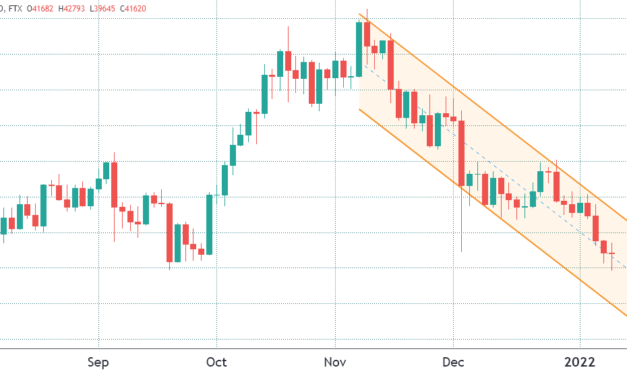
Looking at the Bitcoin chart from a weekly or daily perspective presents a bearish outlook and it’s clear that (BTC) price has been consistently making lower lows since hitting an all-time high at $69,000.Bitcoin/USD on FTX. Source: TradingViewCuriously, the Nov. 10 price peak happened right as the United States announced that inflation has hit a 30-year high, but, the mood quickly reversed after fears related to China-based real estate developer Evergrande defaulting on its loans. This appears to have impacted the broader market structure. Traders are still afraid of stablecoin regulation This initial corrective phase was quickly followed by relentless pressure from regulators and policy makers on stablecoin issuers. First came VanEck’s spot Bitcoin ETF rejection by the U.S. Securities and Exchange Commission on Nov. 12. The denial was directly related to the view that Tether’s (USDT) stablecoin was not solvent and concerns over Bitcoin’s price manipulation.On Dec. 14, the U.S. Banking, Housing and Urban Affairs Committee held a hearing on stablecoins focused on consumer protection and their risks and on Dec. 17, the U.S. Financial Stability Oversight Council (FSOC) voiced its concern over stablecoin adoption and other digital assets. “The Council recommends that state and federal regulators review available regulations and tools that could be applied to digital assets,” said the report.The worsening mood from investors was reflected in the CME’s Bitcoin futures contracts premium. The metric measures the difference between longer-term futures contracts to the current spot price in regular markets. Whenever this indicator fades or turns negative, this is an alarming red flag. This situation is also known as backwardation and indicates that bearish sentiment is present.Bitcoin CME 2-month forward contract premium versus Coinbase/USD. Source: TradingViewThese fixed-month contracts usually trade at a slight premium, indicating that sellers are requesting more money to withhold settlement for longer. Futures should trade at a 0.5% to 2% annualized premium in healthy markets, a situation known as contango.Notice how the indicator moved below the “neutral” range after Dec. 9 as Bitcoin traded below $49,000. This shows that institutional traders are displaying a lack of confidence, although it is not yet a bearish structure.Top traders are increasing their bullish betsExchange-provided data highlights traders’ long-to-short net positioning. By analyzing every client’s position on the spot, perpetual and futures contracts, one can better understand whether professional traders are leaning bullish or bearish.There are occasional discrepancies in the methodologies between different exchanges, so viewers should monitor changes instead of absolute figures.Exchanges top traders Bitcoin long-to-short ratio. Source: Coinglass.comDespite Bitcoin’s 19% correction since Dec. 3, top traders at Binance, Huobi, and OKEx have increased their leverage longs. To be more precise, Binance was the only exchange facing a modest reduction in the top traders’ long-to-short ratio. The figure moved from 1.09 to 1.03. However, this impact was more than compensated by OKEx traders increasing their bullish bets from 1.51 to 2.91 in two weeks.Related: SEC commissioner Elad Roisman will leave by end of JanuaryThe lack of a premium in CME 2-month future contracts should not be considered a ‘red alert’ because Bitcoin is currently testing the $46,000 resistance, its lowest daily close since Oct. 1. Furthermore, top traders at derivatives exchanges have increased their longs despite the price drop.Regulatory pressure probably won’t lift up in the short term, but at the same time, there’s not much that the U.S. government can do to suppress stablecoin issuance and transactions. These companies can move outside of the U.S. and operate using dollar-denominated bonds and assets instead of cash. For this reason, currently, there is hardly a sense of panic present in the market and from data shows, pro traders are buying the dip.The views and opinions expressed here are solely those of the author and do not necessarily reflect the views of Cointelegraph. Every investment and trading move involves risk. You should conduct your own research when making a decision.

Čítaj viac
Here's why Ethereum traders could care less about ETH's current weakness

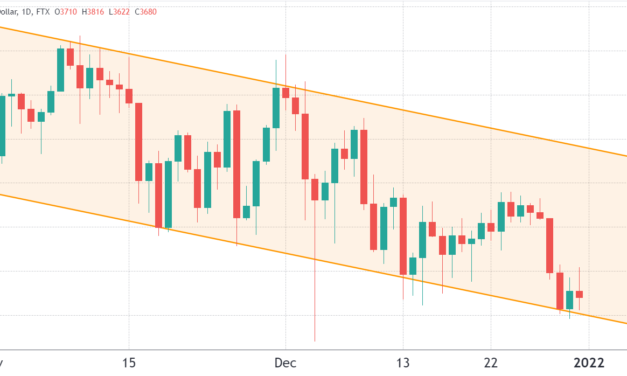
Since hitting an all-time high at $4,870 on Nov. 10, Ether (ETH) price has been posting lower lows over the past 50 days. If this downtrend continues, the lower trendline support suggests that the altcoin will bottom at $3,600. Still, derivatives data is signaling that pro traders are not concerned about the seemingly bearish market structure.Ether/USD price on FTX. Source: TradingViewNotice how the price peaks are getting lower on the 12-hour time frame as mounting regulatory concerns drive investors away from the sector. In a press conference on Dec. 17, Russia’s Central Bank governor, Elvira Nabiullina, stated that banning crypto in the country is “quite doable.”Nabiullina cited crypto’s frequent use for illegal operations and significant risks for retail investors. Russian President Vladimir Putin also recently criticized cryptocurrency by saying they are not backed by anything. Interestingly, the country plans to launch its own central bank digital currency even as the Russian ruble lost 44% against gold over the past four years.In the United States, a bipartisan group of U.S. senators has called on Treasury Secretary Janet Yellen to clarify the language in the infrastructure bill relating to the crypto tax reporting requirements. Under the current broader “broker” definition, miners, software developers, transaction validators and node operators will likely be required to report digital asset transactions worth more than $10,000 to the Internal Revenue Service.Even with the regulatory uncertainty and negatively skewed price action, traders should monitor the futures contracts premium — also known as the “basis rate” — to analyze how bullish or bearish professional traders are.Pro traders are neutral despite the price weaknessThe basis indicator measures the difference between longer-term futures contracts and the current spot market levels. A 5% to 15% annualized premium is expected in healthy markets. This price gap is caused by sellers demanding more money to withhold settlement longer.However, a red alert emerges whenever this indicator fades or turns negative, also known as “backwardation.”Ether 3-month futures basis rate. Source: Laevitas.chNotice how the sharp decrease after the 24% intraday crash on Dec. 3 caused the annualized futures premium to reach its lowest level in two months. After the initial panic, the Ether futures market recovered to the current 9% level, which is close to the middle of the “neutral” range.To confirm whether this movement was specific to that instrument, traders should also analyze the options markets. The 25% delta skew compares similar call (buy) and put (sell) options. The indicator will turn positive when “fear” is prevalent because the protective put options premium is higher than similar risk call options.When market makers are bullish, the 25% delta skew indicator shifts to the negative area, and readings between negative 8% and positive 8% are usually deemed neutral.Ether 30-day options 25% delta skew. Source: Laevitas.chRelated: Senate hearing on stablecoins: Compliance anxiety and Republican pushbackFor the past three weeks, the 25% delta skew ranged between a positive 3 and 8 which is in the neutral zone. Consequently, options market data validate the sentiment seen in futures markets and signals that whales and market makers are not worried about the recent price weakness.If investors “zoom-out” a bit, they will see that Ether’s year-to-date gains are at 300%, and this explains why pro traders are not worried about a 20% drop from the $4,870 all-time high.Furthermore, the Ethereum network’s total value locked in smart contracts doubled over the past six months to $148 billion. This data gives derivatives traders the confidence needed to remain calm even with the current short-term price weakness.The views and opinions expressed here are solely those of the author and do not necessarily reflect the views of Cointelegraph. Every investment and trading move involves risk. You should conduct your own research when making a decision.

Čítaj viac

3 reasons why Solana (SOL) price could see additional upside in 2022

Solana (SOL) has become a top contender in the smart contract industry and in the past year, the network’s total value locked (TVL) grew by $660 million and stretches across more than 40 decentralized applications to hit an all-time high above $11 billion.Even with this growth, investors have reason to question whether the current $56 billion market capitalization is justified and how it compares to competing networks like Binance Smart hain (BNB), Avalanche (AVAX) and Polygon (MATIC).Avalanche, Solana, Binance Coin, and Polygon, priced in USD. Source: TradingViewBy analyzing the past six-month price performance, there’s an apparent decoupling from Terra (LUNA), Solana and Avalanche when compared to other smart contract platform competitors.There is strong institutional appetite for Solana’s ecosystemSolana’s market capitalization is more than double that of Avalanche and Terra, each of which has a $26 billion market cap. Searching Solana’s latest news on Cointelegraph yields an exciting array of institutional investments, ranging from the $314 million private token sale by Solana Labs in June, to an $18 million fundraise in September by Solana’s DEX project Orca.There’s solid evidence of a growing ecosystem judging by investor appetite. However, to understand how successful Solana’s scalability solution is, we have to evaluate its usage metrics.Looking at the number of active addresses on Solana’s DApps is a good place to start.Solana, Ethereum, Avalanche and Polygon 7-day most active dApps. Source: DappRadarEthereum’s leading DApp by active addresses is Uniswap, which has 188,200. Therefore, Raydium’s 97,600 weekly users is rather impressive, considering it was launched just 10 months ago. Meanwhile, back in Feb. 2021, Uniswap already held over $4.3 billion TVL.As for Solana’s NFT marketplace Magic Eden, its 58,400 weekly active addresses also account for more than half of Ethereum’s OpenSea, the sector’s absolute market leader in volume and users activity.Avalanche user activity is highly concentrated on the Trader Joe decentralized finance app, but its $715 million weekly volume pales in comparison to Uniswap’s $22.1 billion or Raydium’s $12.5 billion. The same can be said by Polygon, which has $573 million in trading activity at its QuickSwap DEX.Solana has the third largest futures marketSolana currently holds the third largest futures open interest, which is the most relevant metric in derivatives contracts. This indicator aggregates the total number of contracts held by market participants regardless of the recent trading activity.Solana futures aggregate open interest. Source: CoinGlassDespite the sharp drop since the Nov. 8 peak at $1.9 billion, the current $860 million futures open interest ranks Solana the third derivatives market by size. For example, Binance Coin (BNB) futures holds $520 million, followed by Terra (LUNA) with $430 million.Solana leads in TVL, users and derivatives marketsUndoubtedly, there’s an impressive amount of activity coming from Solana’s on-chain data and derivatives markets. The network’s TVL increased by 15x over the past six months and Solana’s DApps users is nearly half the amount of users on the Ethereum network.Solana seems to be quickly closing the gap in three important metrics: TVL, active users and derivatives markets. Competitors like Terra, Avalanche and Polygon seem a long way behind, which possibly justifies the market capitalization premium.The views and opinions expressed here are solely those of the author and do not necessarily reflect the views of Cointelegraph. Every investment and trading move involves risk. You should conduct your own research when making a decision.

Čítaj viac

Získaj BONUS 8 € v Bitcoinoch

nakup bitcoin z karty

Registrácia Binance

Burza Binance

Aktuálne kurzy